
Succession Planning Prepared by Yunus Triyonggo Ph D
Succession Planning Prepared by: Yunus Triyonggo, Ph. D. 30 April 2016
Sasaran Umum Setelah mengikuti kuliah ini, Mahasiswa/i diharapkan memahami konsep Manajemen suksesi
Sasaran Khusus Mampu: • Membuat perencanaan suksesi • Menyusun parameter pekerja bertalenta • Menginventarisasi pekerja bertalenta di organisasi • Menentukan pekerja bertalenta untuk dikembangkan dan masuk dalam program manajemen suksesi

Agenda • Succession Planning: Definition & Scope • Succession Planning as a critical business process • Trends influencing Succession Planning practices • Nurture and develop Talent in the Succession Planning process
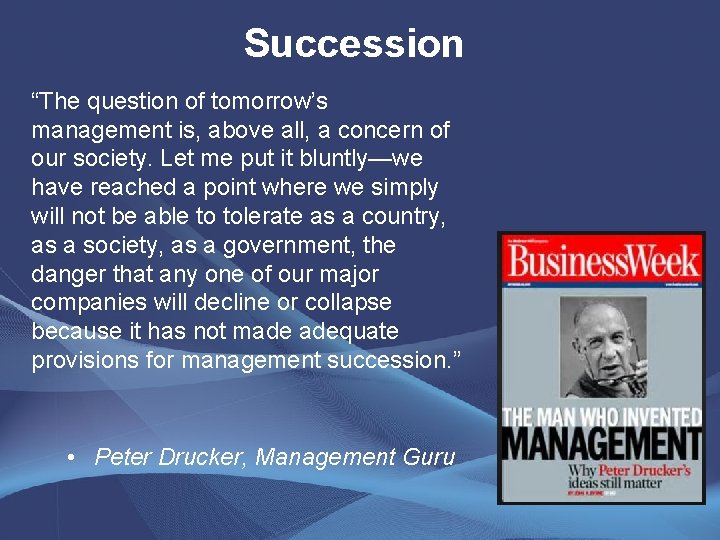
Succession “The question of tomorrow’s management is, above all, a concern of our society. Let me put it bluntly—we have reached a point where we simply will not be able to tolerate as a country, as a society, as a government, the danger that any one of our major companies will decline or collapse because it has not made adequate provisions for management succession. ” • Peter Drucker, Management Guru
Need for Succession • Determine Vacancy, due to : -Normal retirement -Business expansion -Attrition/turn over -Movement (Rotation/Promotion) • Determine Availability of Candidates /Pool Successor • Match Up Profile Requirement and Current Capacity to determine “Readiness” and development plan • Rank Successor based on overall readiness
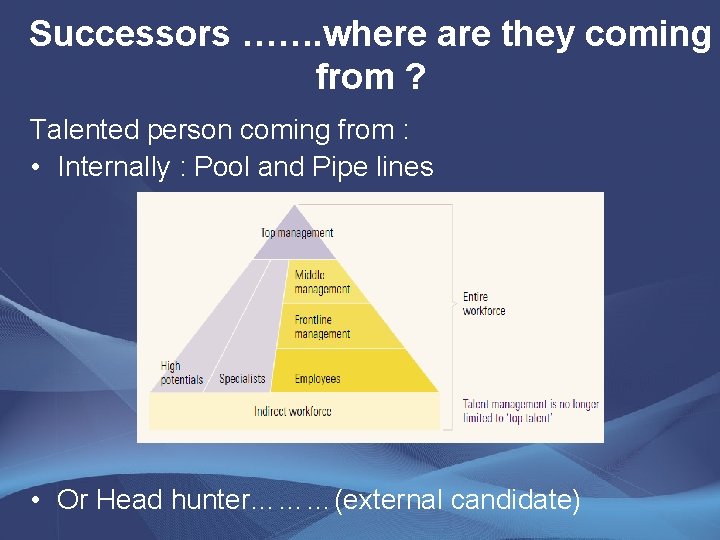
Successors ……. where are they coming from ? Talented person coming from : • Internally : Pool and Pipe lines • Or Head hunter………(external candidate)
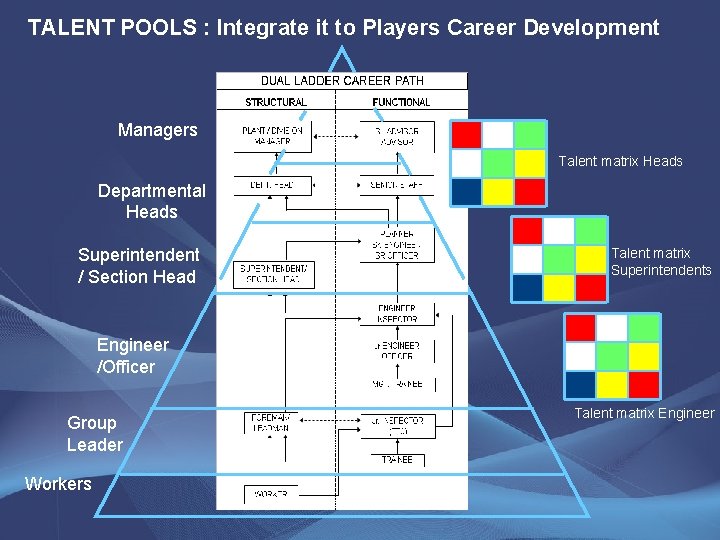
TALENT POOLS : Integrate it to Players Career Development Managers Talent matrix Heads Departmental Heads Superintendent / Section Head Talent matrix Superintendents Engineer /Officer Group Leader Workers Talent matrix Engineer
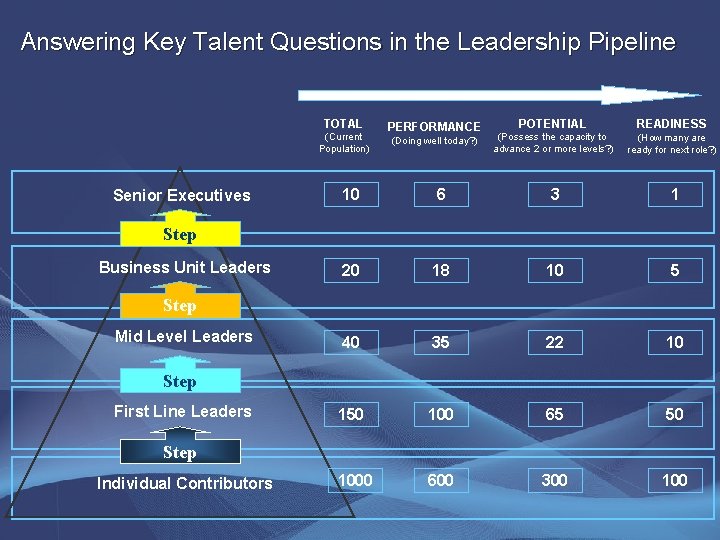
Answering Key Talent Questions in the Leadership Pipeline TOTAL (Current Population) Senior Executives PERFORMANCE (Doing well today? ) POTENTIAL READINESS (Possess the capacity to advance 2 or more levels? ) (How many are ready for next role? ) 10 6 3 1 20 18 10 5 40 35 22 10 150 100 65 50 1000 600 300 100 Step Business Unit Leaders Step Mid Level Leaders Step First Line Leaders Step Individual Contributors
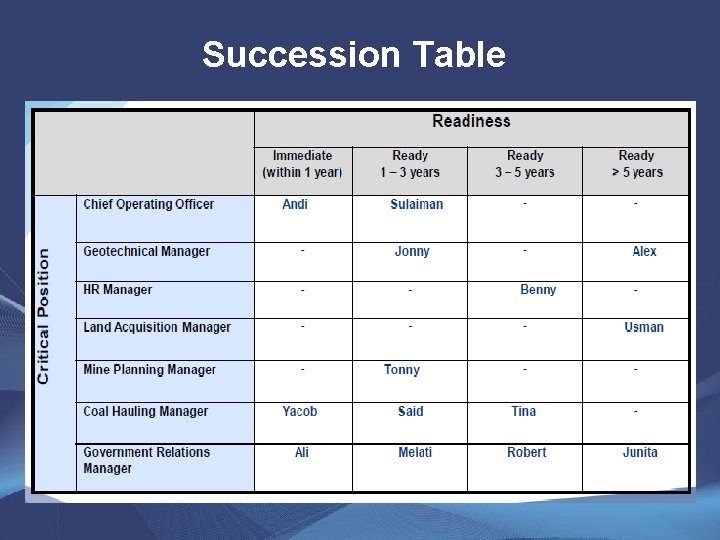
Succession Table
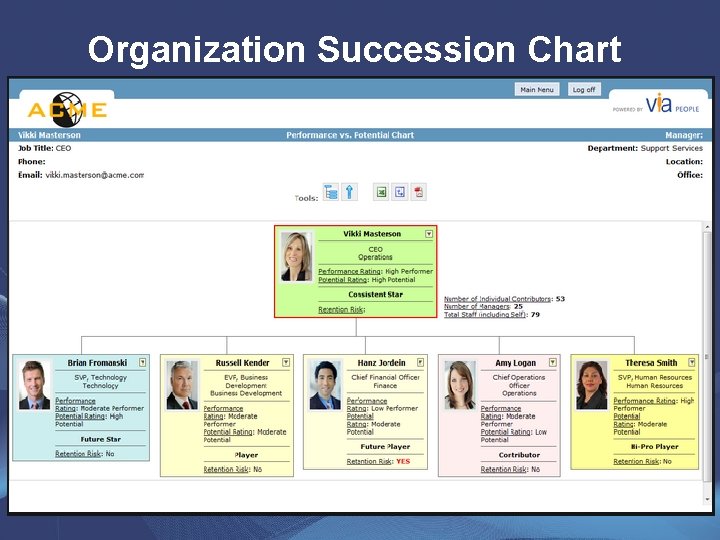
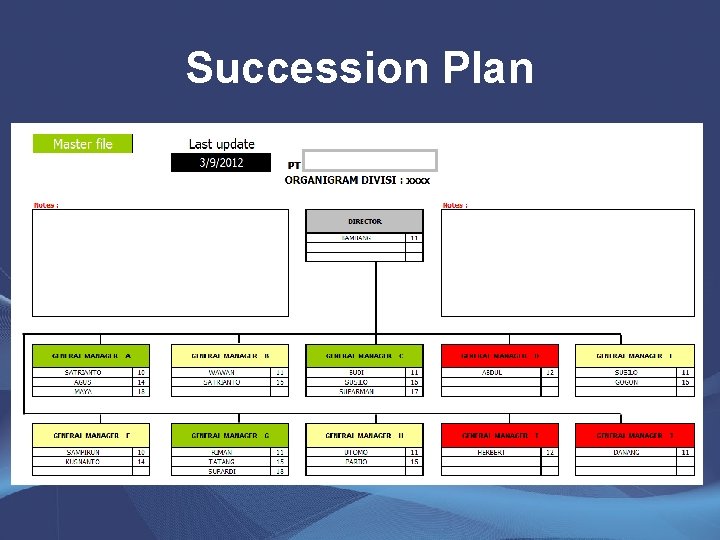
Organization Succession Chart
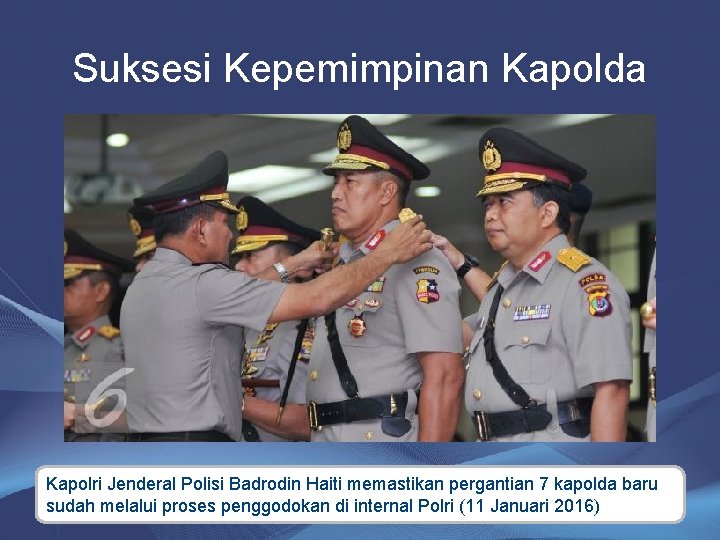
Suksesi Kepemimpinan Kapolda Kapolri Jenderal Polisi Badrodin Haiti memastikan pergantian 7 kapolda baru sudah melalui proses penggodokan di internal Polri (11 Januari 2016)
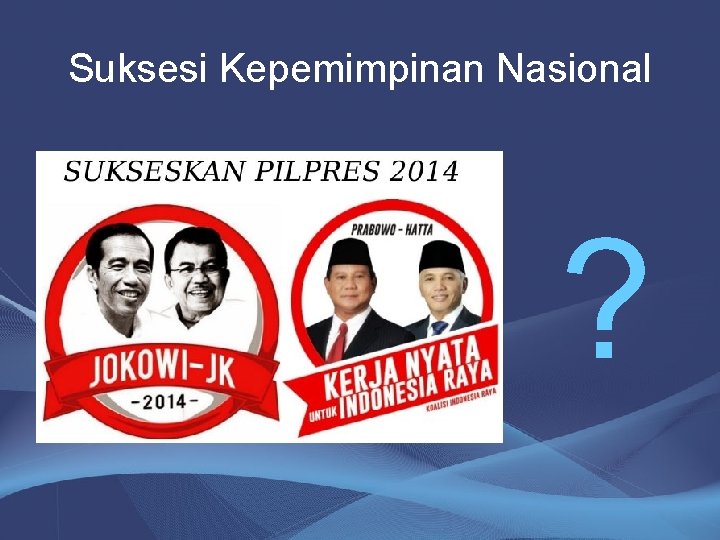
Suksesi Kepemimpinan Nasional ?
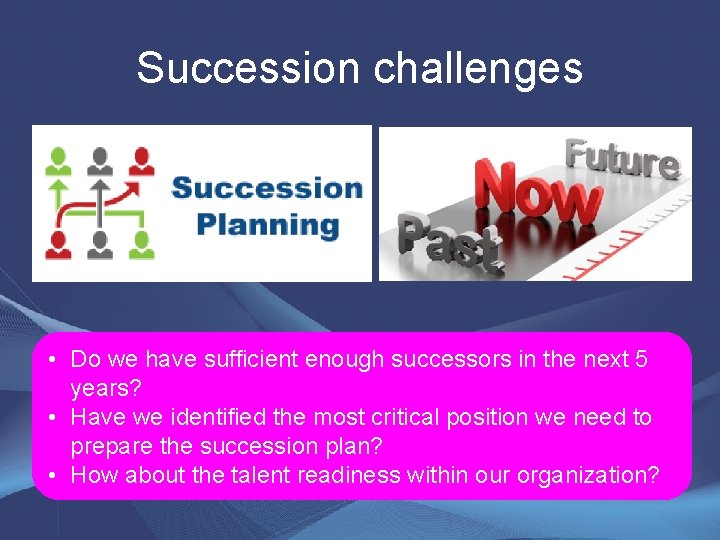
Succession challenges • Do we have sufficient enough successors in the next 5 years? • Have we identified the most critical position we need to prepare the succession plan? • How about the talent readiness within our organization?
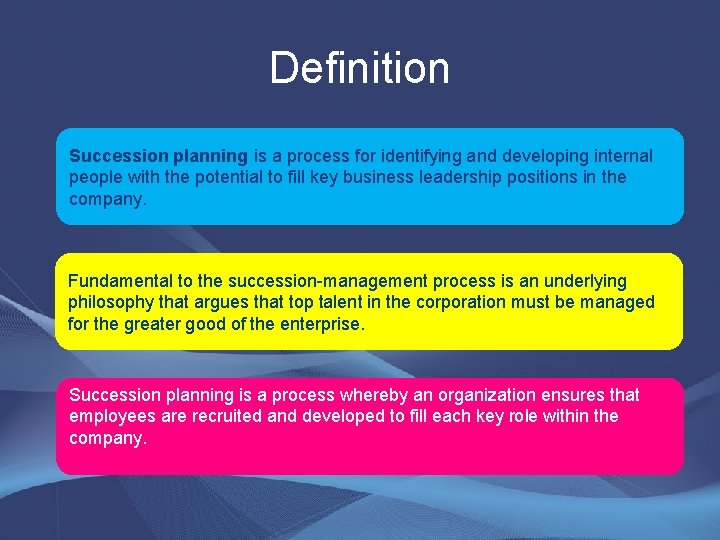
Definition Succession planning is a process for identifying and developing internal people with the potential to fill key business leadership positions in the company. Fundamental to the succession-management process is an underlying philosophy that argues that top talent in the corporation must be managed for the greater good of the enterprise. Succession planning is a process whereby an organization ensures that employees are recruited and developed to fill each key role within the company.
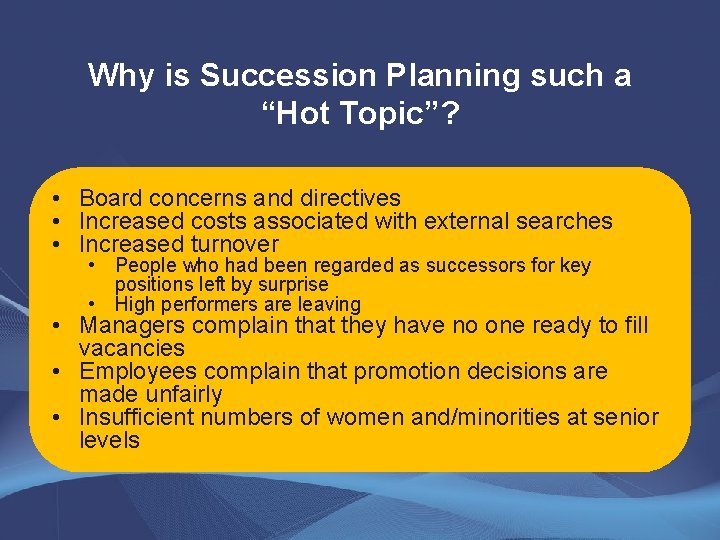
Why is Succession Planning such a “Hot Topic”? • Board concerns and directives • Increased costs associated with external searches • Increased turnover • People who had been regarded as successors for key positions left by surprise • High performers are leaving • Managers complain that they have no one ready to fill vacancies • Employees complain that promotion decisions are made unfairly • Insufficient numbers of women and/minorities at senior levels
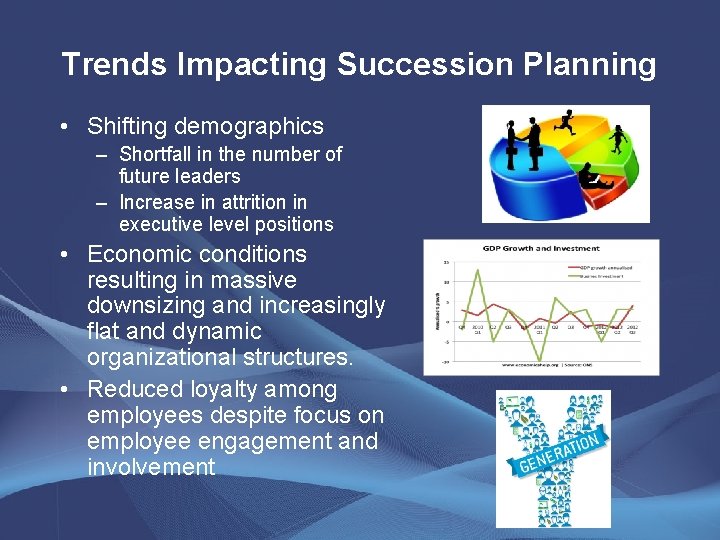
Trends Impacting Succession Planning • Shifting demographics – Shortfall in the number of future leaders – Increase in attrition in executive level positions • Economic conditions resulting in massive downsizing and increasingly flat and dynamic organizational structures. • Reduced loyalty among employees despite focus on employee engagement and involvement
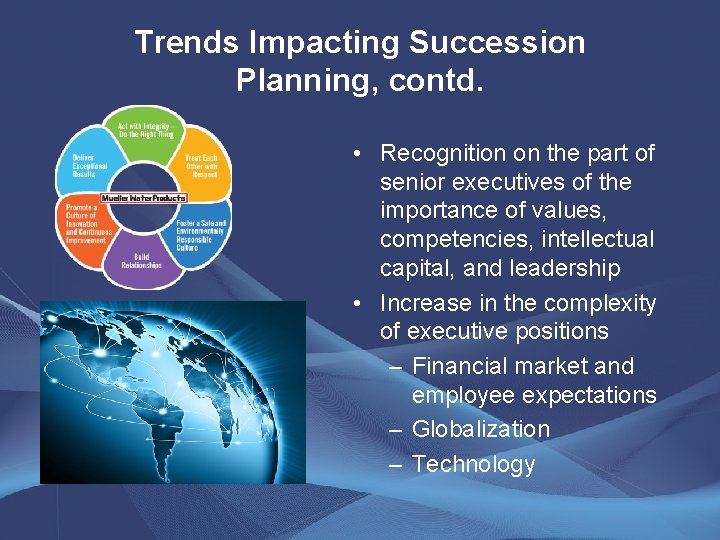
Trends Impacting Succession Planning, contd. • Recognition on the part of senior executives of the importance of values, competencies, intellectual capital, and leadership • Increase in the complexity of executive positions – Financial market and employee expectations – Globalization – Technology
The Four Succession Risks • Vacancy Risk: when a critical leadership position is not filled • Readiness Risk: underdeveloped successors • Transition Risk: poor assimilation of executive talent • Portfolio Risk: poor deployment of talent against business goals
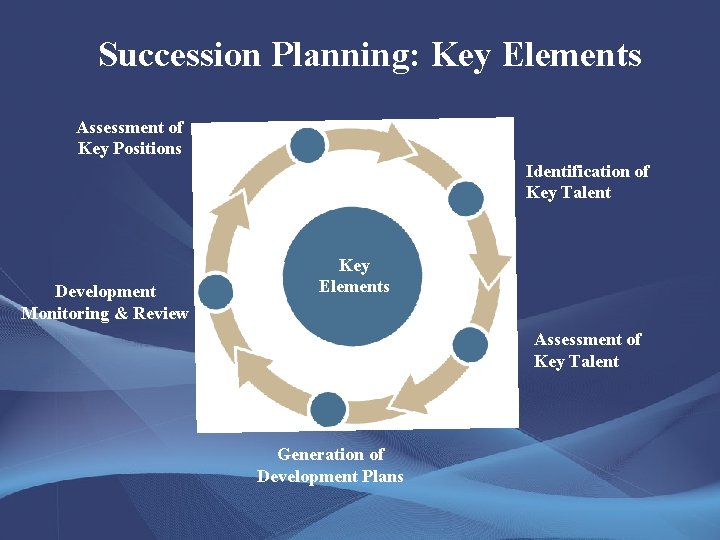
Succession Planning: Key Elements Assessment of Key Positions Identification of Key Talent Development Monitoring & Review Key Elements Assessment of Key Talent Generation of Development Plans
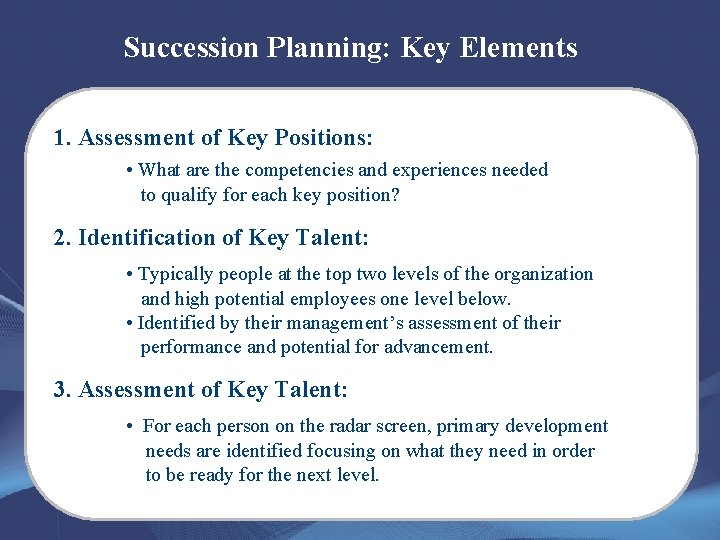
Succession Planning: Key Elements 1. Assessment of Key Positions: • What are the competencies and experiences needed to qualify for each key position? 2. Identification of Key Talent: • Typically people at the top two levels of the organization and high potential employees one level below. • Identified by their management’s assessment of their performance and potential for advancement. 3. Assessment of Key Talent: • For each person on the radar screen, primary development needs are identified focusing on what they need in order to be ready for the next level.
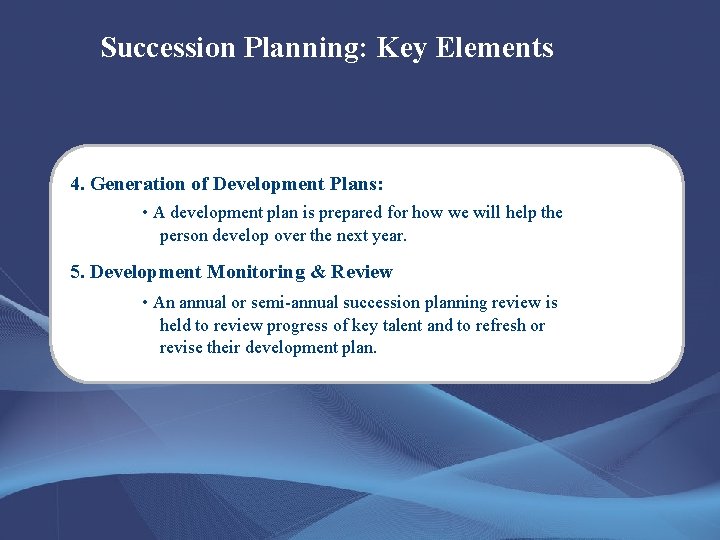
Succession Planning: Key Elements 4. Generation of Development Plans: • A development plan is prepared for how we will help the person develop over the next year. 5. Development Monitoring & Review • An annual or semi-annual succession planning review is held to review progress of key talent and to refresh or revise their development plan.
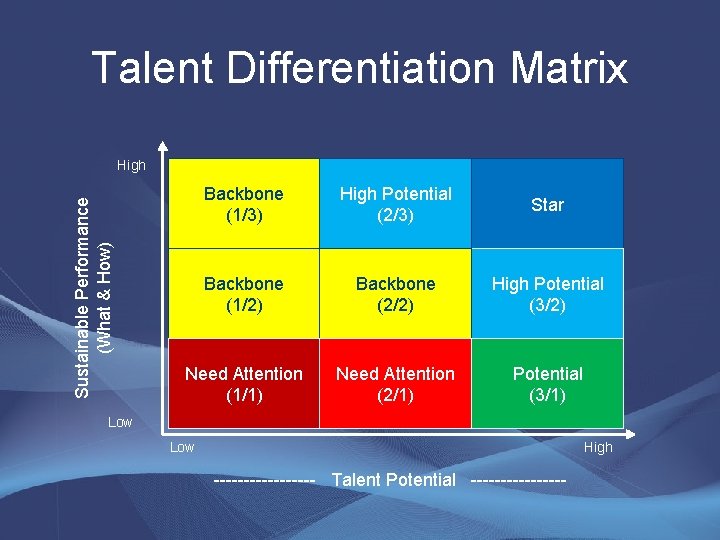
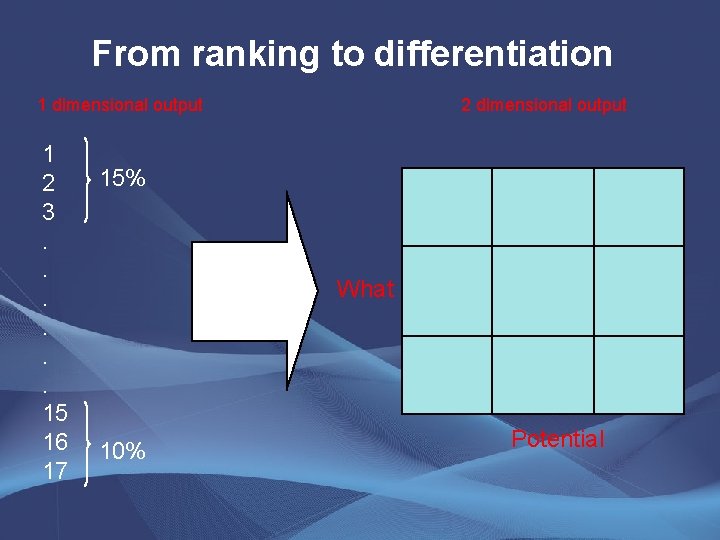
Talent Differentiation Matrix Sustainable Performance (What & How) High Backbone (1/3) High Potential (2/3) Star Backbone (1/2) Backbone (2/2) High Potential (3/2) Need Attention (1/1) Need Attention (2/1) Potential (3/1) Low High --------- Talent Potential --------
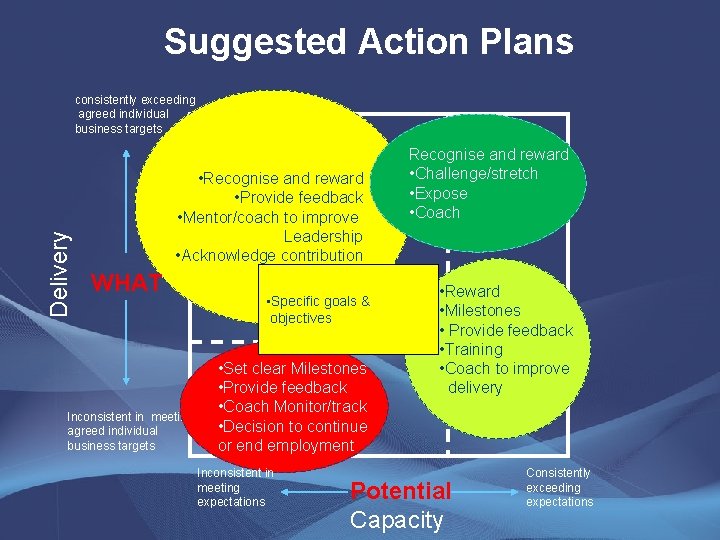
Suggested Action Plans Delivery consistently exceeding agreed individual business targets • Recognise and reward • Provide feedback • Mentor/coach to improve Leadership • Acknowledge contribution WHAT Inconsistent in meeting agreed individual business targets • Specific goals & objectives • Set clear Milestones • Provide feedback • Coach Monitor/track • Decision to continue or end employment Inconsistent in meeting expectations Recognise and reward • Challenge/stretch • Expose • Coach • Reward • Milestones • Provide feedback • Training • Coach to improve delivery Potential Capacity Consistently exceeding expectations
Potential discussion (High Potential) Skills Experiences Performance PT nf ir o & C al s us t ent i c s Di Po & B PT m Competencies & living values
From ranking to differentiation 1 dimensional output 1 2 3. . . 15 16 17 2 dimensional output 15% What 10% Potential
Talent Development 2/26/2021 28
Succession Plan
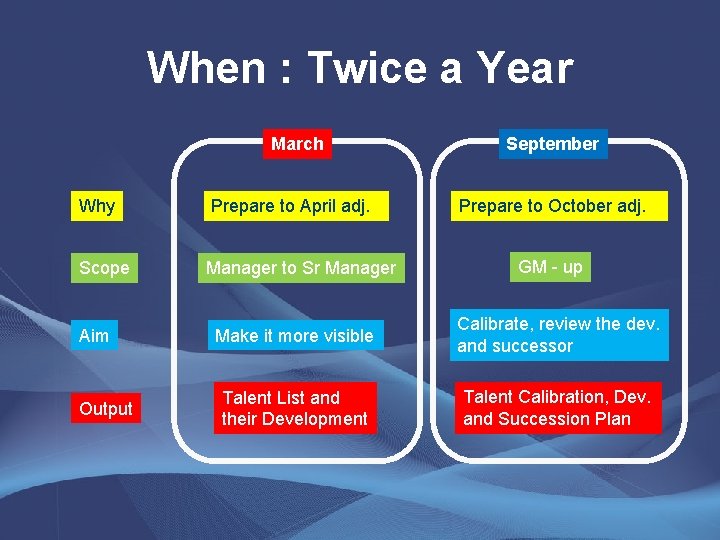
When : Twice a Year March Why Prepare to April adj. Scope Manager to Sr Manager Aim Output September Prepare to October adj. GM - up Make it more visible Calibrate, review the dev. and successor Talent List and their Development Talent Calibration, Dev. and Succession Plan
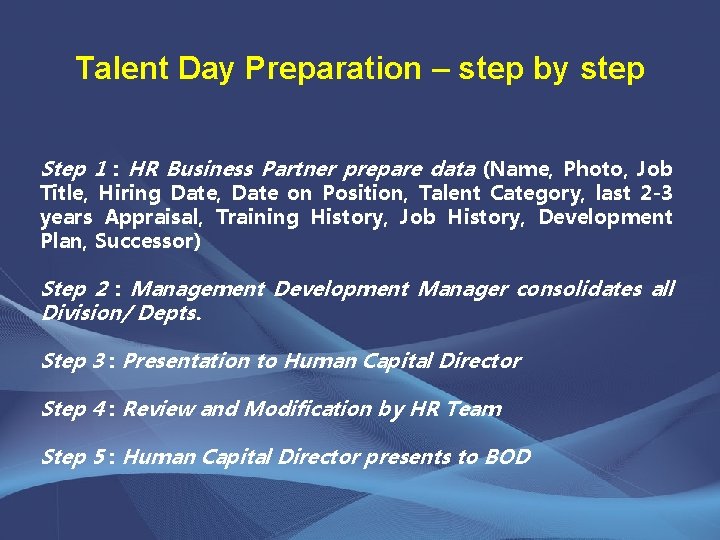
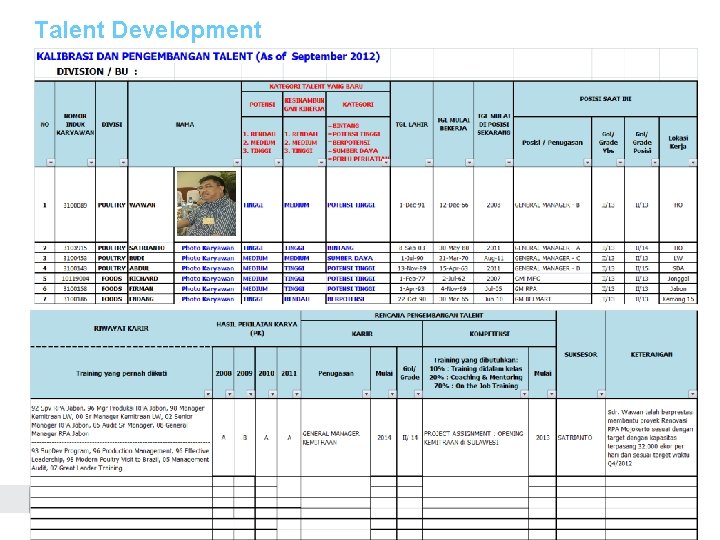
Talent Day Preparation – step by step Step 1 : HR Business Partner prepare data (Name, Photo, Job Title, Hiring Date, Date on Position, Talent Category, last 2 -3 years Appraisal, Training History, Job History, Development Plan, Successor) Step 2 : Management Development Manager consolidates all Division/ Depts. Step 3 : Presentation to Human Capital Director Step 4 : Review and Modification by HR Team Step 5 : Human Capital Director presents to BOD
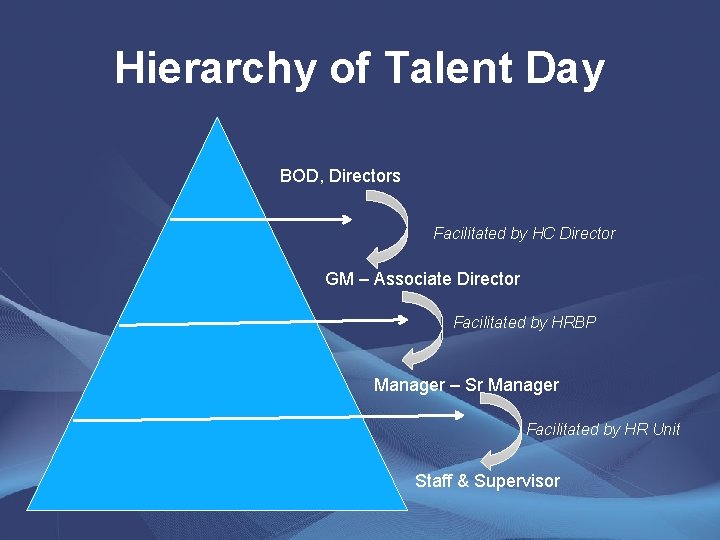
Hierarchy of Talent Day BOD, Directors Facilitated by HC Director GM – Associate Director Facilitated by HRBP Manager – Sr Manager Facilitated by HR Unit Staff & Supervisor
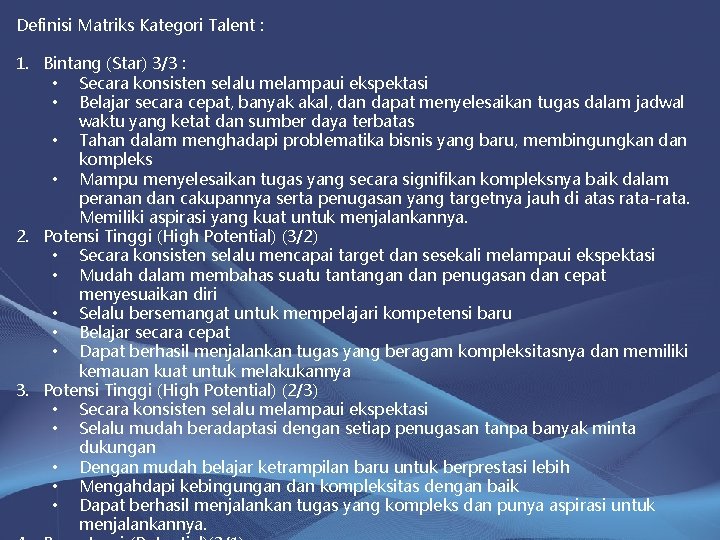
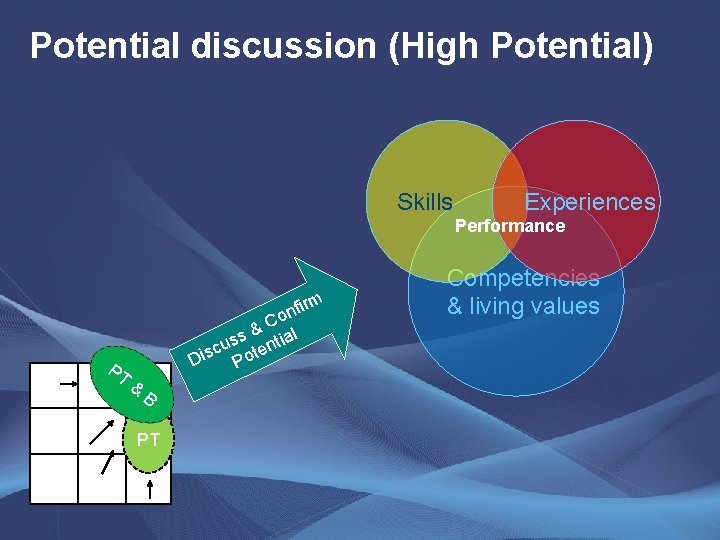
Definisi Matriks Kategori Talent : 1. Bintang (Star) 3/3 : • Secara konsisten selalu melampaui ekspektasi • Belajar secara cepat, banyak akal, dan dapat menyelesaikan tugas dalam jadwal waktu yang ketat dan sumber daya terbatas • Tahan dalam menghadapi problematika bisnis yang baru, membingungkan dan kompleks • Mampu menyelesaikan tugas yang secara signifikan kompleksnya baik dalam peranan dan cakupannya serta penugasan yang targetnya jauh di atas rata-rata. Memiliki aspirasi yang kuat untuk menjalankannya. 2. Potensi Tinggi (High Potential) (3/2) • Secara konsisten selalu mencapai target dan sesekali melampaui ekspektasi • Mudah dalam membahas suatu tantangan dan penugasan dan cepat menyesuaikan diri • Selalu bersemangat untuk mempelajari kompetensi baru • Belajar secara cepat • Dapat berhasil menjalankan tugas yang beragam kompleksitasnya dan memiliki kemauan kuat untuk melakukannya 3. Potensi Tinggi (High Potential) (2/3) • Secara konsisten selalu melampaui ekspektasi • Selalu mudah beradaptasi dengan setiap penugasan tanpa banyak minta dukungan • Dengan mudah belajar ketrampilan baru untuk berprestasi lebih • Mengahdapi kebingungan dan kompleksitas dengan baik • Dapat berhasil menjalankan tugas yang kompleks dan punya aspirasi untuk menjalankannya.
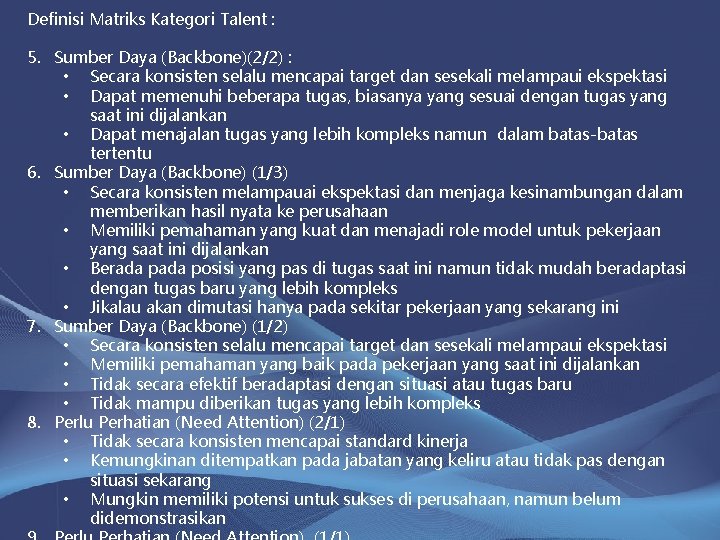
Definisi Matriks Kategori Talent : 5. Sumber Daya (Backbone)(2/2) : • Secara konsisten selalu mencapai target dan sesekali melampaui ekspektasi • Dapat memenuhi beberapa tugas, biasanya yang sesuai dengan tugas yang saat ini dijalankan • Dapat menajalan tugas yang lebih kompleks namun dalam batas-batas tertentu 6. Sumber Daya (Backbone) (1/3) • Secara konsisten melampauai ekspektasi dan menjaga kesinambungan dalam memberikan hasil nyata ke perusahaan • Memiliki pemahaman yang kuat dan menajadi role model untuk pekerjaan yang saat ini dijalankan • Berada posisi yang pas di tugas saat ini namun tidak mudah beradaptasi dengan tugas baru yang lebih kompleks • Jikalau akan dimutasi hanya pada sekitar pekerjaan yang sekarang ini 7. Sumber Daya (Backbone) (1/2) • Secara konsisten selalu mencapai target dan sesekali melampaui ekspektasi • Memiliki pemahaman yang baik pada pekerjaan yang saat ini dijalankan • Tidak secara efektif beradaptasi dengan situasi atau tugas baru • Tidak mampu diberikan tugas yang lebih kompleks 8. Perlu Perhatian (Need Attention) (2/1) • Tidak secara konsisten mencapai standard kinerja • Kemungkinan ditempatkan pada jabatan yang keliru atau tidak pas dengan situasi sekarang • Mungkin memiliki potensi untuk sukses di perusahaan, namun belum didemonstrasikan
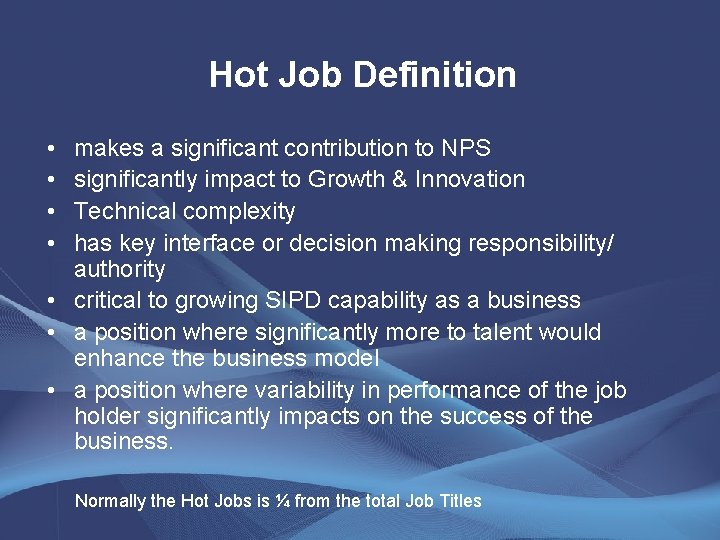
Hot Job Definition • • makes a significant contribution to NPS significantly impact to Growth & Innovation Technical complexity has key interface or decision making responsibility/ authority • critical to growing SIPD capability as a business • a position where significantly more to talent would enhance the business model • a position where variability in performance of the job holder significantly impacts on the success of the business. Normally the Hot Jobs is ¼ from the total Job Titles
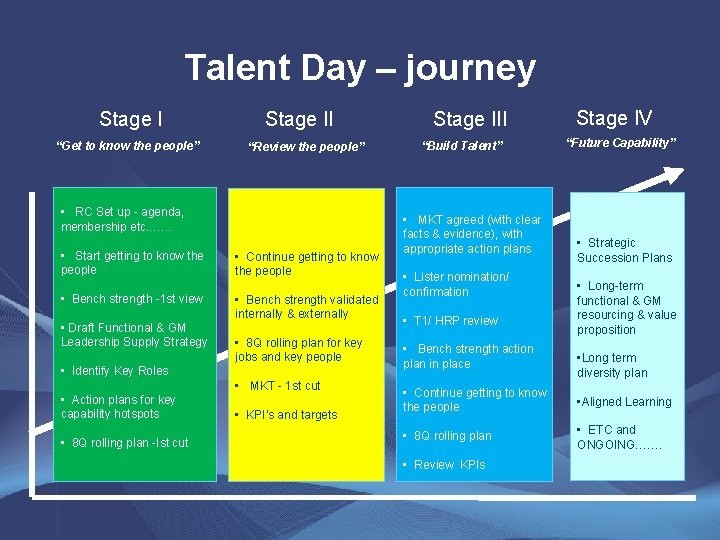
Talent Day – journey Stage I “Get to know the people” Stage II “Review the people” • RC Set up - agenda, membership etc. . …. . • Start getting to know the people • Continue getting to know the people • Bench strength -1 st view • Bench strength validated internally & externally • Draft Functional & GM Leadership Supply Strategy • Identify Key Roles • Action plans for key capability hotspots • 8 Q rolling plan -Ist cut • 8 Q rolling plan for key jobs and key people • MKT - 1 st cut • KPI’s and targets Stage III “Build Talent” • MKT agreed (with clear facts & evidence), with appropriate action plans • Lister nomination/ confirmation • T 1/ HRP review • Bench strength action plan in place Stage IV “Future Capability” • Strategic Succession Plans • Long-term functional & GM resourcing & value proposition • Long term diversity plan • Continue getting to know the people • Aligned Learning • 8 Q rolling plan • ETC and ONGOING……. • Review KPIs

Thank You
- Slides: 37