
Successful Interviewing for Academic Positions A Department Heads

- Slides: 16
Successful Interviewing for Academic Positions: A Department Head’s Perspective Dan Bernardo Dept. Head, Kansas State University Dean, Washington State University
Three Stages to Landing an Academic Position 1. 2. 3. Preparing for success in an academic position Successful interviewing Keys to success on the job
Job Preparation n Know and prepare for the diverse roles of a faculty member in today’s academic department. ¨ ¨ ¨ Teaching Research Extension Service Advising
Source: Carnegie Foundation, 1999 Do the following activities contribute more/ less – for purposes of advancement – than they did five years ago?
Forces Contributing to Broader Faculty Roles & Responsibilities Increased demand for improvement of oncampus instruction C Reductions in the resources committed to research, extension, and on-campus instruction C More pressing, issue-driven demands by clientele C Broader range of subject matter areas covered by the agricultural economics profession. C
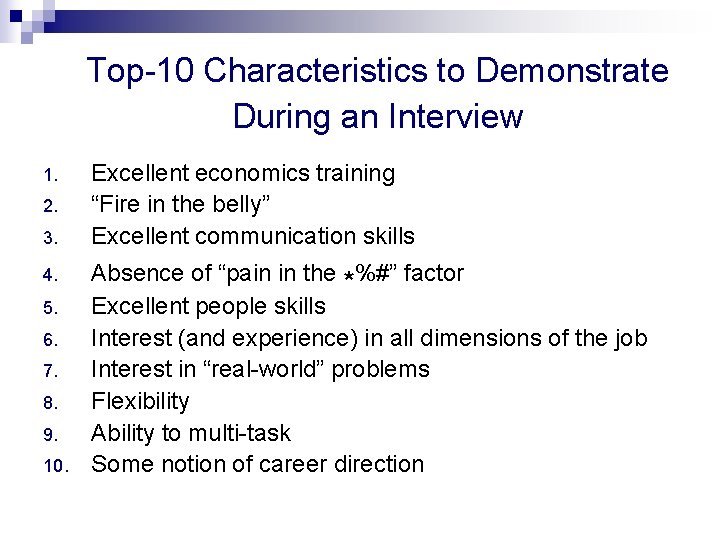
Top-10 Characteristics to Demonstrate During an Interview 1. 2. 3. 4. 5. 6. 7. 8. 9. 10. Excellent economics training “Fire in the belly” Excellent communication skills Absence of “pain in the *%#” factor Excellent people skills Interest (and experience) in all dimensions of the job Interest in “real-world” problems Flexibility Ability to multi-task Some notion of career direction
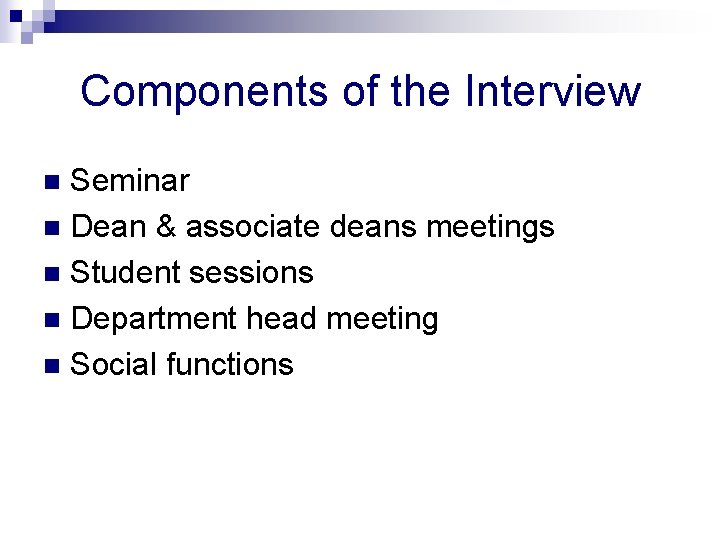
Components of the Interview Seminar n Dean & associate deans meetings n Student sessions n Department head meeting n Social functions n
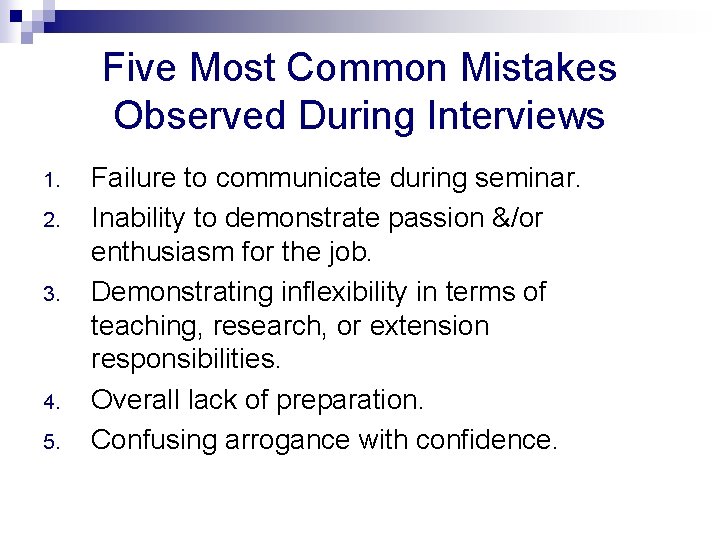
Five Most Common Mistakes Observed During Interviews 1. 2. 3. 4. 5. Failure to communicate during seminar. Inability to demonstrate passion &/or enthusiasm for the job. Demonstrating inflexibility in terms of teaching, research, or extension responsibilities. Overall lack of preparation. Confusing arrogance with confidence.
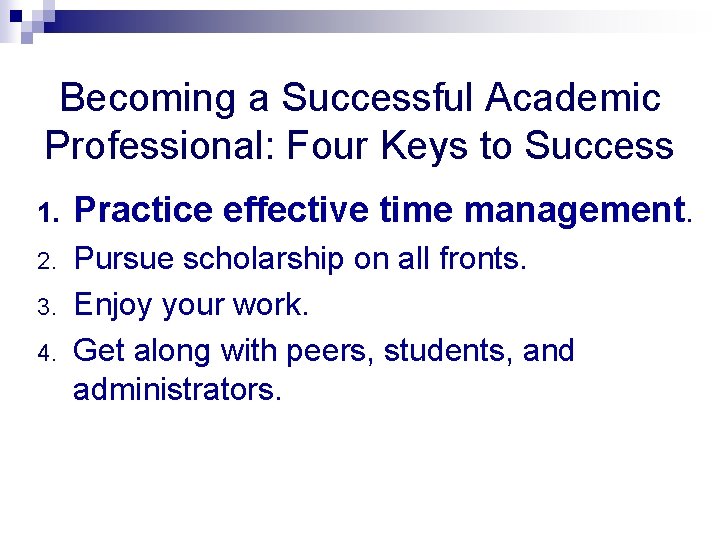
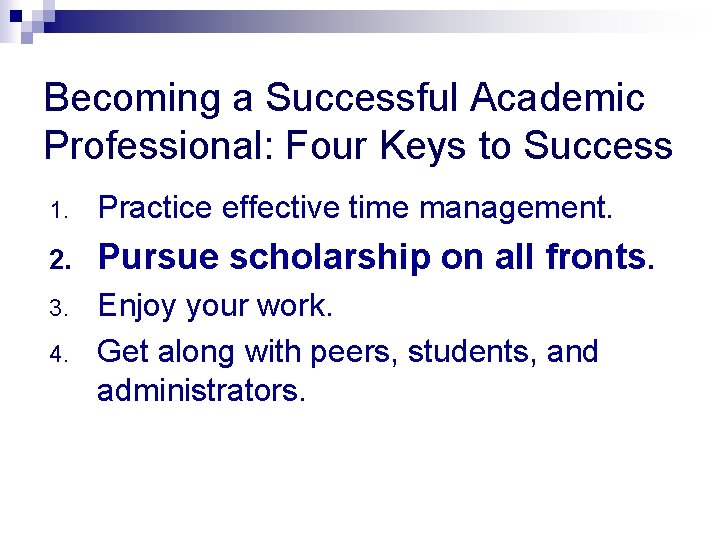
Becoming a Successful Academic Professional: Four Keys to Success 1. Practice effective time management. 2. Pursue scholarship on all fronts. Enjoy your work. Get along with peers, students, and administrators. 3. 4.
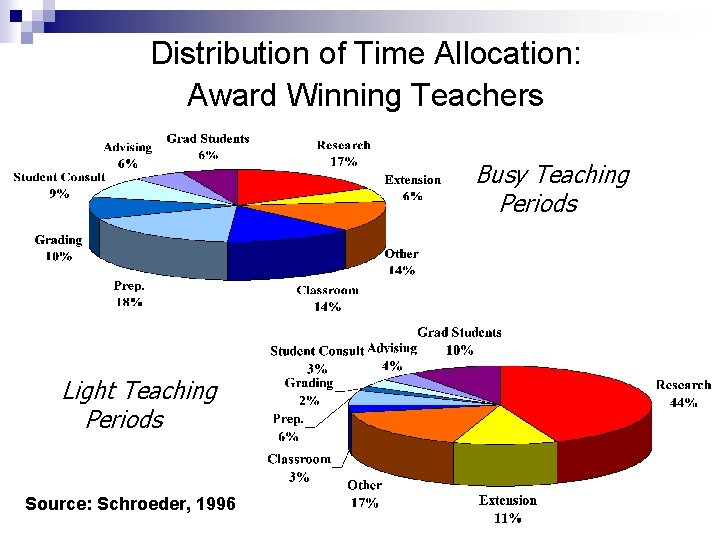
Distribution of Time Allocation: Award Winning Teachers Busy Teaching Periods Light Teaching Periods Source: Schroeder, 1996
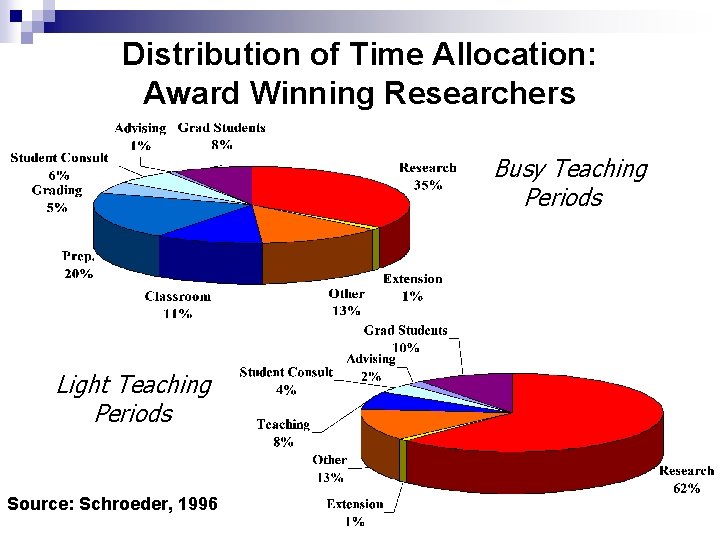
Distribution of Time Allocation: Award Winning Researchers Busy Teaching Periods Light Teaching Periods Source: Schroeder, 1996
Becoming a Successful Academic Professional: Four Keys to Success 1. Practice effective time management. 2. Pursue scholarship on all fronts. 3. Enjoy your work. Get along with peers, students, and administrators. 4.
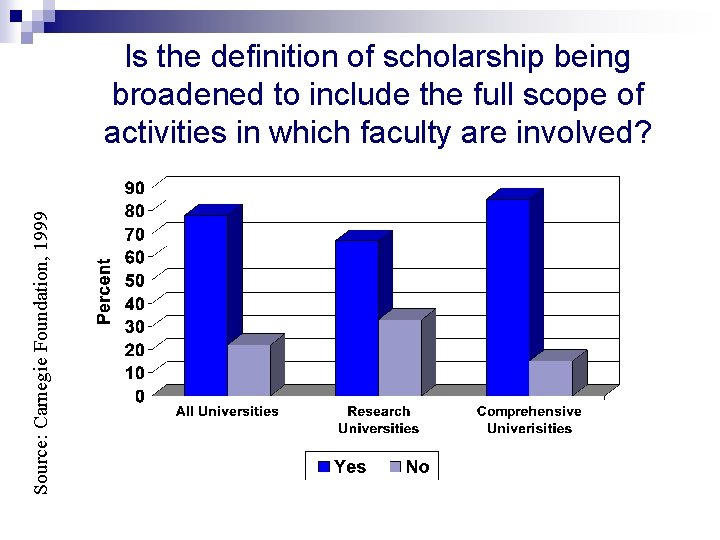
Source: Carnegie Foundation, 1999 Is the definition of scholarship being broadened to include the full scope of activities in which faculty are involved?
Becoming a Successful Academic Professional: Four Keys to Success 2. Practice effective time management. Pursue scholarship on all fronts. 3. Enjoy your work. 4. Get along with peers, students, and administrators. 1.
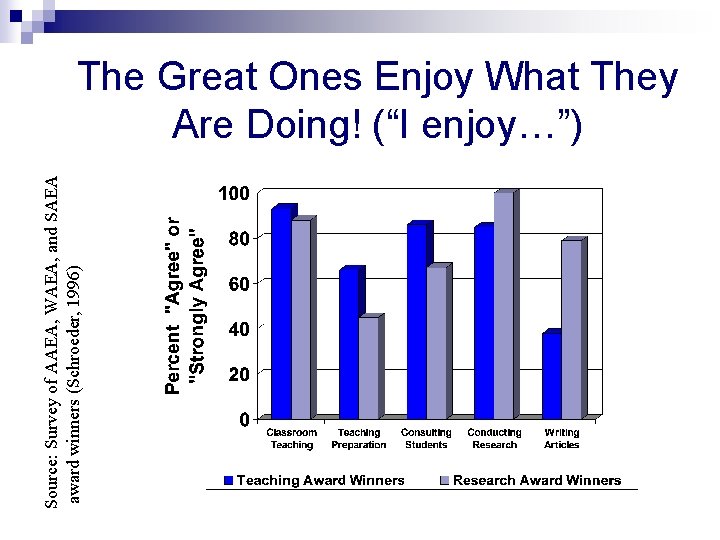
Source: Survey of AAEA, WAEA, and SAEA award winners (Schroeder, 1996) The Great Ones Enjoy What They Are Doing! (“I enjoy…”)
Becoming a Successful Academic Professional: Four Keys to Success 1. 2. 3. 4. Practice effective time management. Pursue scholarship on all fronts. Enjoy your work. Get along with peers, students, and administrators.