
Successful Implementation of GIS Techniques for Route Alignment







- Slides: 38
Successful Implementation of GIS Techniques for Route Alignment & Surveys of Power Transmission Projects of POWERGRID Power Grid Corporation Of India Ltd
Why Surveying Is Important ? q To optimize cost of transmission line ü Line length, number of locations, deviations ü Minimum river crossings ü Minimum forest areas ü Accessibility, right of way considerations ü To assess route constraints and do construction planning q To ensure statutory clearances ü Ground clearance ü Horizontal/Right of way clearance ü Clearances from power lines, railway lines, road crossings etc.
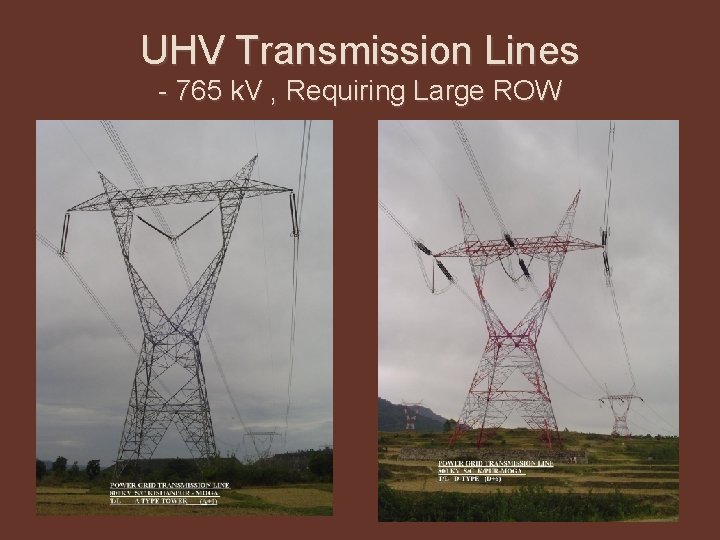
UHV Transmission Lines - 765 k. V , Requiring Large ROW
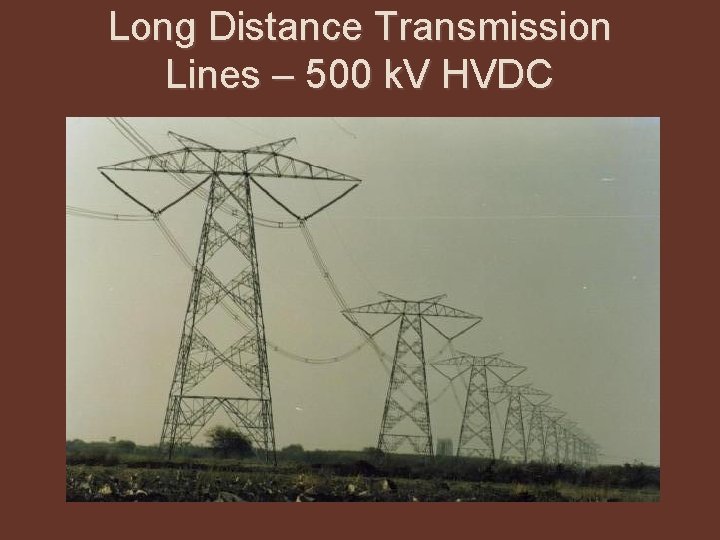
Long Distance Transmission Lines – 500 k. V HVDC
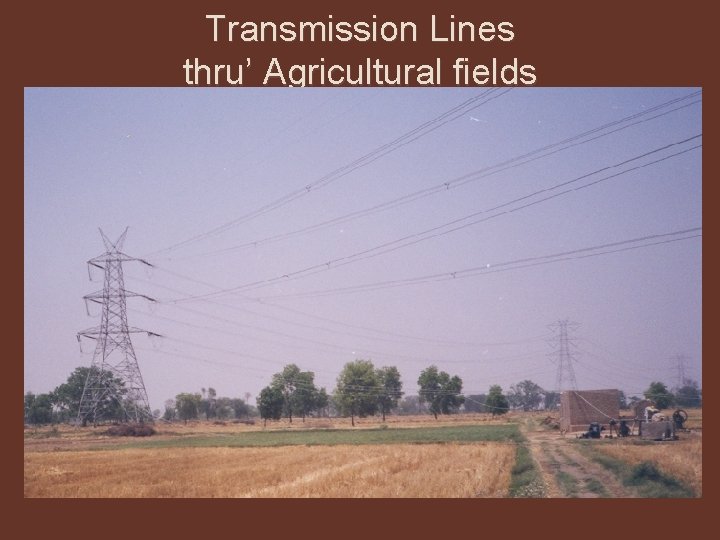
Transmission Lines thru’ Agricultural fields
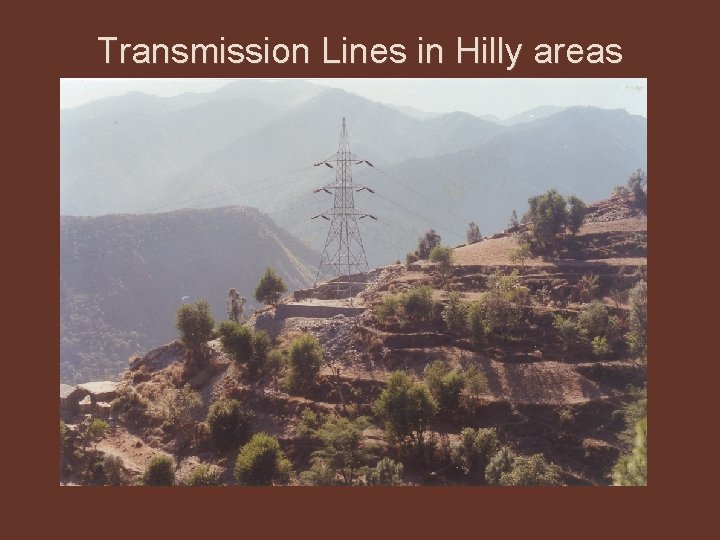
Transmission Lines in Hilly areas
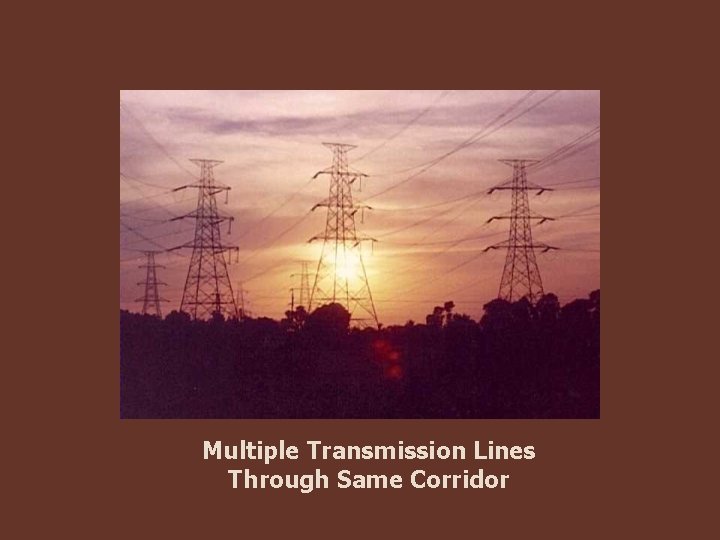
Multiple Transmission Lines Through Same Corridor
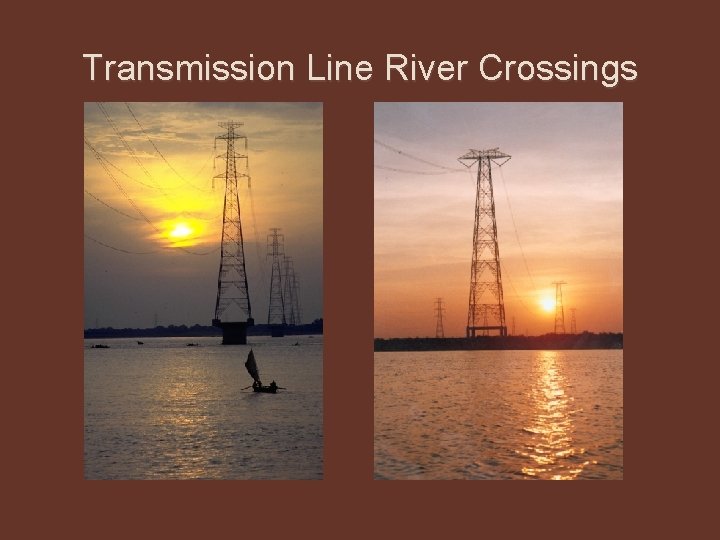
Transmission Line River Crossings
Transmission Line Surveying q. Project Conceptualization / Project Feasibility Stage ØFaster and accurate techniques required to evaluate various line routes q. Pre-Construction Stage ØRoute alignment, Detailed Mapping of right of way, ground profiling, finalisation of tower locations with geo technical details ØDetailed contouring of undulated terrain for estimation of benching and revetment quantities q. Project Construction Stage ØCheck Survey only
Advantages of Conducting Detailed Survey in Advance ü Large Quantity variations during execution stage avoided ü Constraints assessed in advance ü Engineering activities can be taken in advance ü Construction work can be taken up immediately after contract award ü Reduction in IDC due to reduction in project execution time – offsetting cost of survey using modern techniques ü Reduction of even 1 -2 kms line length would offset cost of surveying using modern techniques
Detailed Survey – Modern Techniques Route Alignment using latest satellite imageries (PAN + LISS III Merged products) superimposed on Survey of India Topographical Maps u Digital terrain modeling in hilly terrain using contouring data u Detailed Survey using GPS, Total stations or alternatively ALTM u Digitized contouring at undulated / hilly tower locations u Identification of Route constraints, u Identification of infrastructure details u
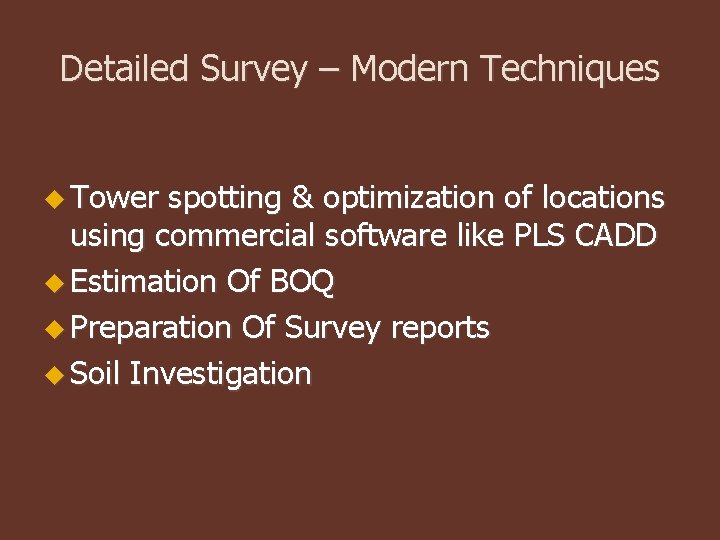
Detailed Survey – Modern Techniques u Tower spotting & optimization of locations using commercial software like PLS CADD u Estimation Of BOQ u Preparation Of Survey reports u Soil Investigation
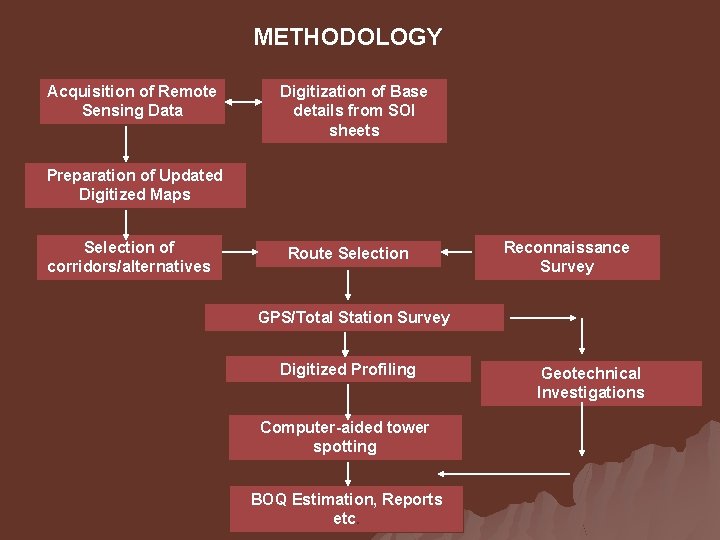
METHODOLOGY Acquisition of Remote Sensing Data Digitization of Base details from SOI sheets Preparation of Updated Digitized Maps Selection of corridors/alternatives Route Selection Reconnaissance Survey GPS/Total Station Survey Digitized Profiling Computer-aided tower spotting BOQ Estimation, Reports etc. Geotechnical Investigations
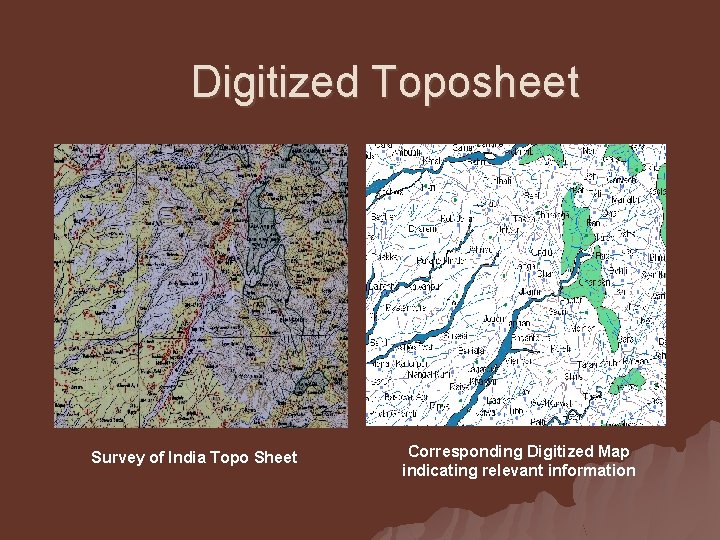
Digitized Toposheet Survey of India Topo Sheet Corresponding Digitized Map indicating relevant information
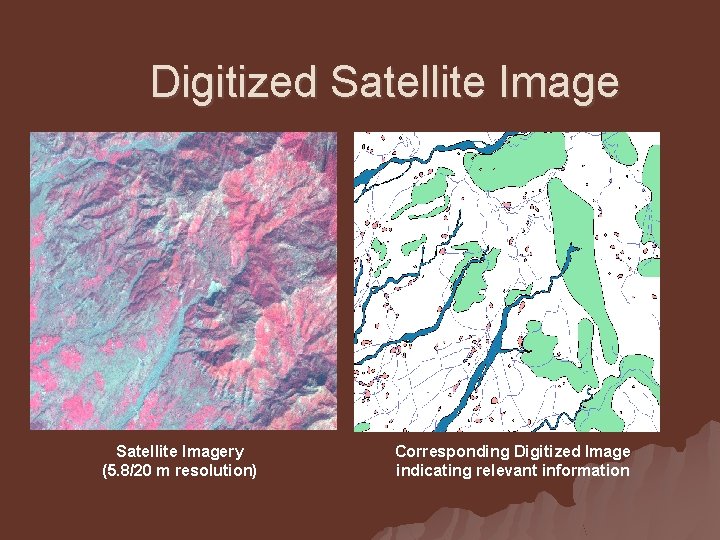
Digitized Satellite Imagery (5. 8/20 m resolution) Corresponding Digitized Image indicating relevant information
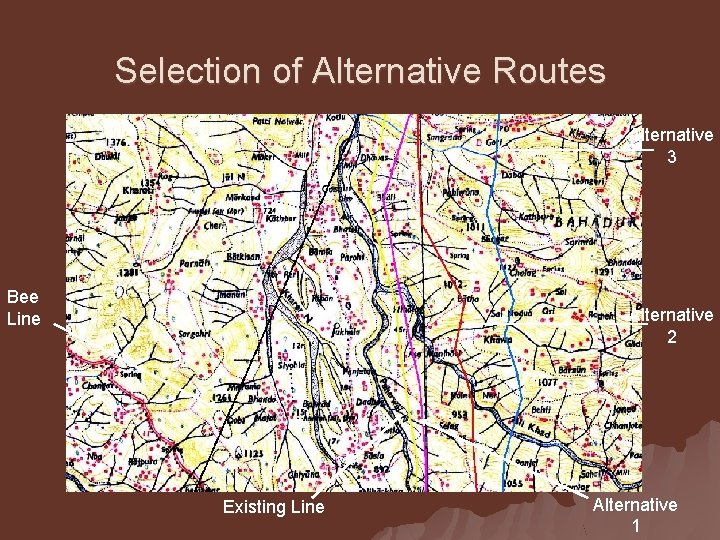
Selection of Alternative Routes Alternative 3 Bee Line Alternative 2 Existing Line Alternative 1
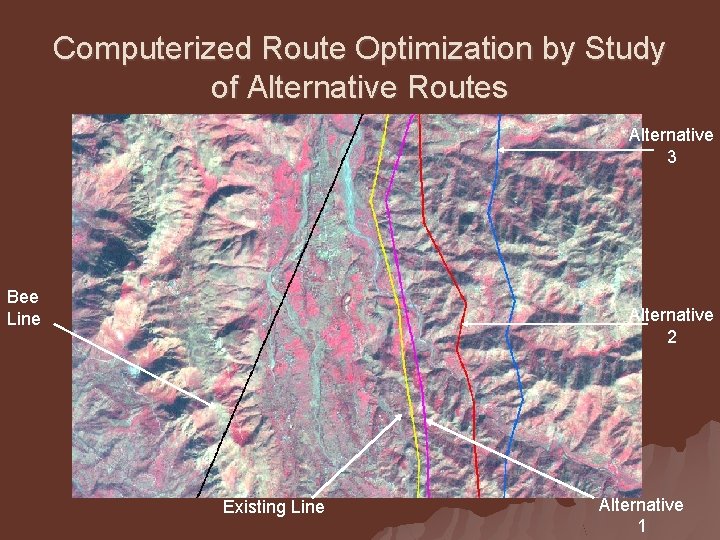
Computerized Route Optimization by Study of Alternative Routes Alternative 3 Bee Line Alternative 2 Existing Line Alternative 1
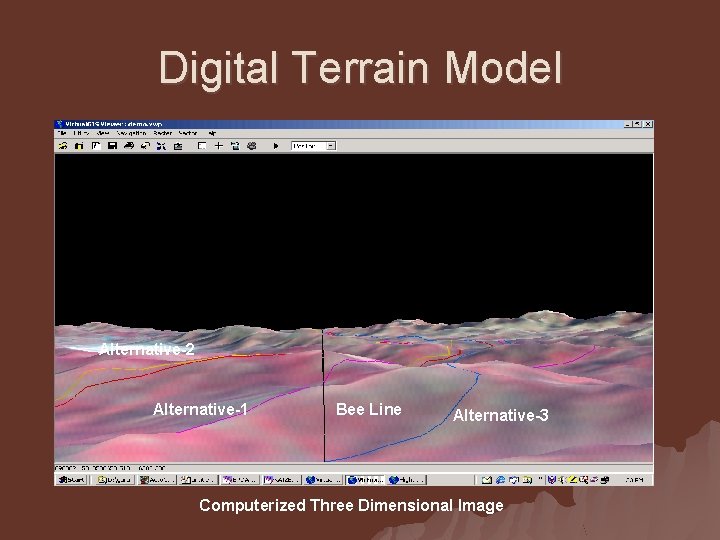
Digital Terrain Model Alternative-2 Alternative-1 Bee Line Alternative-3 Computerized Three Dimensional Image
Advantages of Modern Survey Techniques over Traditional survey Method
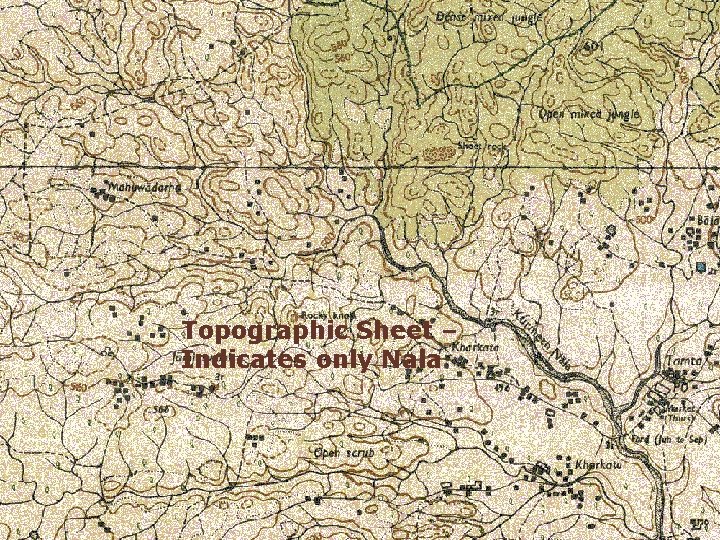
Topographic Sheet – Indicates only Nala
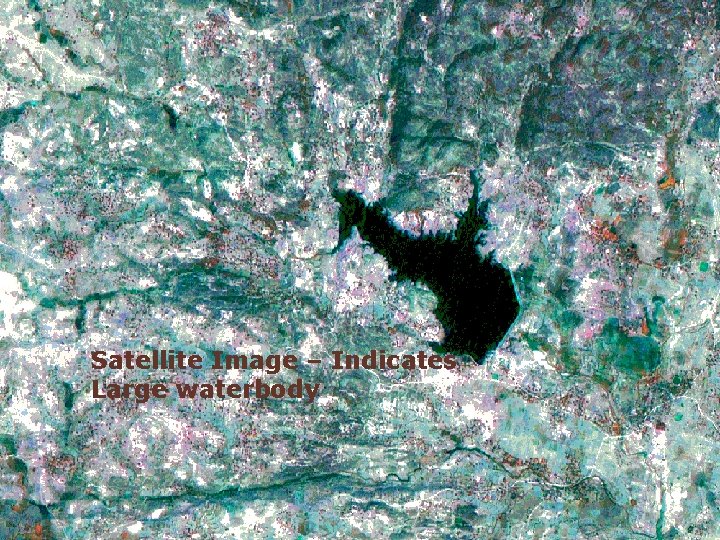
Satellite Image – Indicates Large waterbody
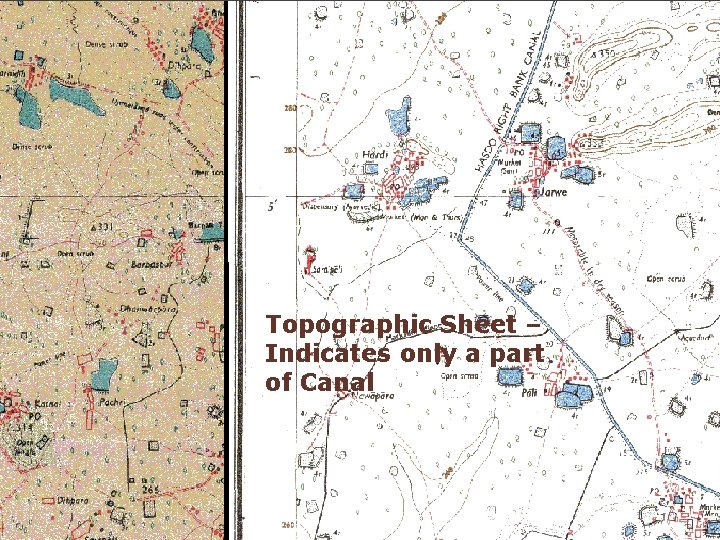
Topographic Sheet – Indicates only a part of Canal
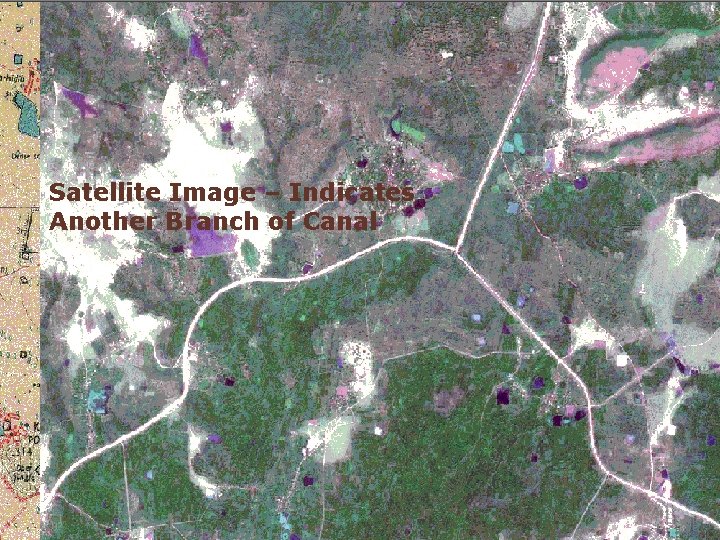
Satellite Image – Indicates Another Branch of Canal
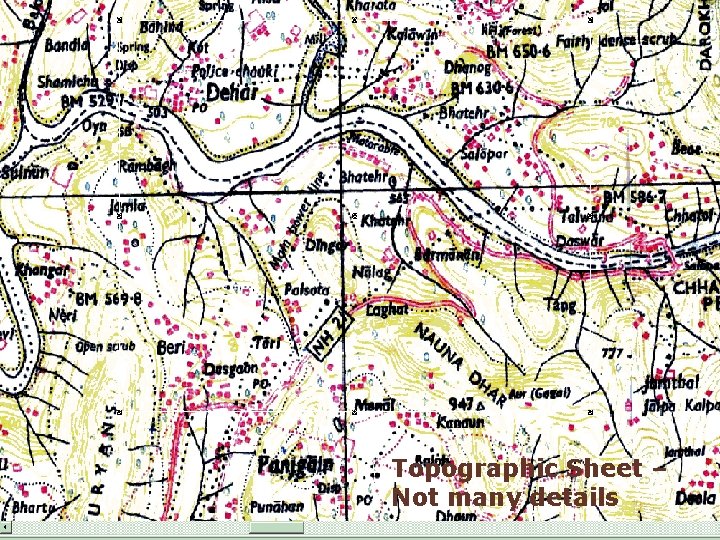
Topographic Sheet – Not many details
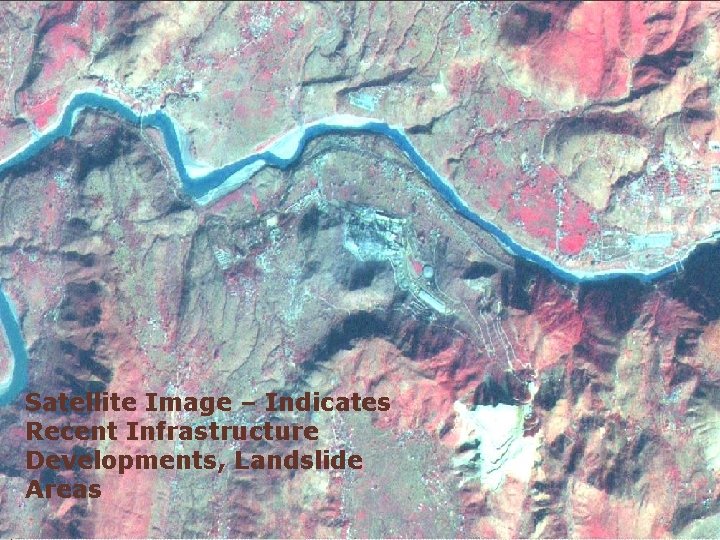
Satellite Image – Indicates Recent Infrastructure Developments, Landslide Areas
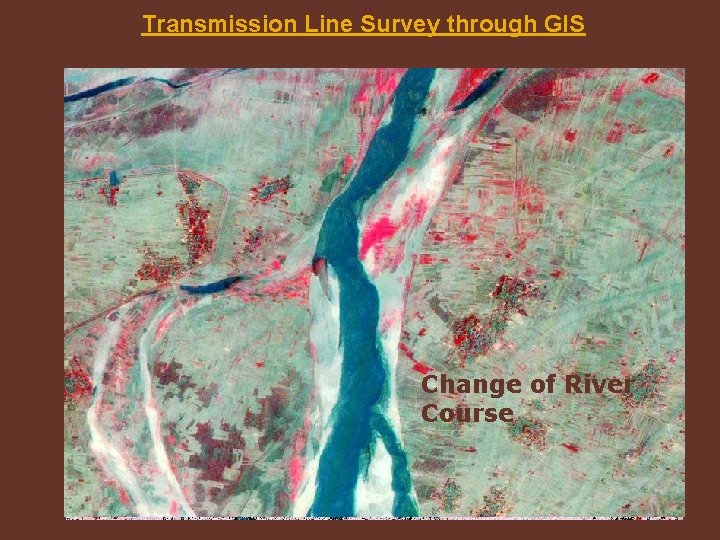
Transmission Line Survey through GIS Change of River Course
Detailed Survey on Selected Route v Detailed Survey is done on the selected route using Total Stations. v Plotting of Surveyed Route on the Topographical Maps v Tower Spotting and profiling is done using PLS-CADD Software.
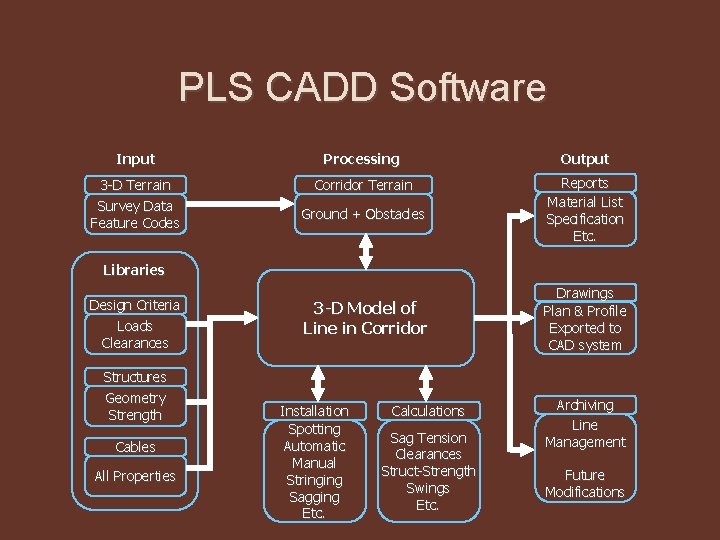
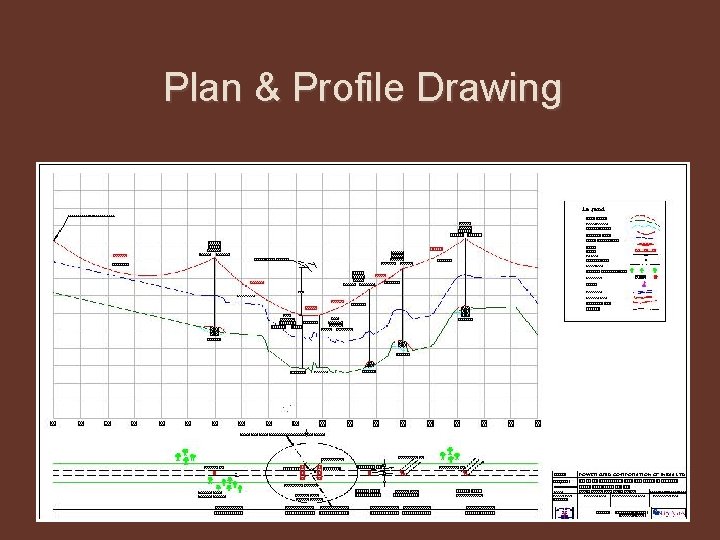
PLS CADD Software Power Line Systems Computer Aided Design and Drafting (PLS CADD) is a software developed by Power line systems Inc. USA. Ø The software is used for Tower Spotting. Ø The software automatically provide SAG Clearances. Ø The software automatically calculates wind & Weight Span. Ø The software prepares the “Plan & Profile View” of the T/L line. Ø Report Generation. The overall organization of the PLS CADD software is shown in the following slide.
PLS CADD Software Input Processing Output 3 -D Terrain Survey Data Feature Codes Corridor Terrain Ground + Obstacles Reports Material List Specification Etc. 3 -D Model of Line in Corridor Drawings Plan & Profile Exported to CAD system Libraries Design Criteria Loads Clearances Structures Geometry Strength Cables All Properties Installation Spotting Automatic Manual Stringing Sagging Etc. Calculations Sag Tension Clearances Struct-Strength Swings Etc. Archiving Line Management Future Modifications
Plan & Profile Drawing
Key Advantages u PLS Cadd – software used for preparing “Plan & Profile Drawing” and “Report Generation” u Eliminates manual error in Report generation. u Empowers Managers to move / modify structures and see the effect on the Line. u Reports / Calculations of modified structures can be viewed instantly.
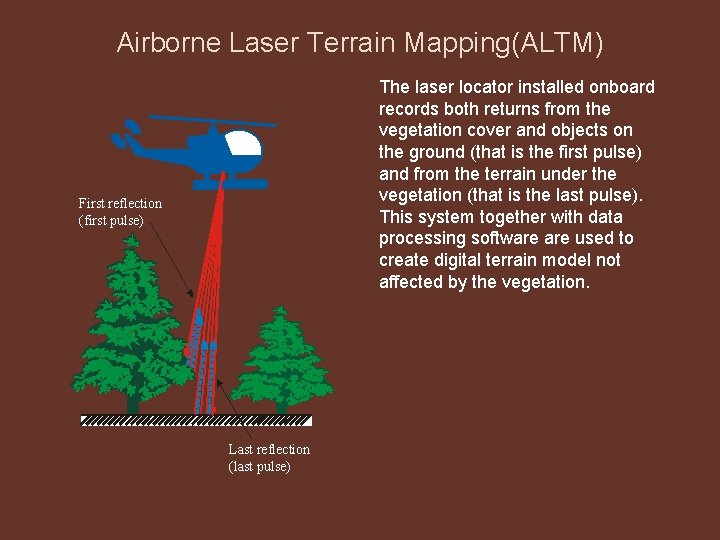
Airborne Laser Terrain Mapping(ALTM) The laser locator installed onboard records both returns from the vegetation cover and objects on the ground (that is the first pulse) and from the terrain under the vegetation (that is the last pulse). This system together with data processing software used to create digital terrain model not affected by the vegetation. First reflection (first pulse) Last reflection (last pulse)
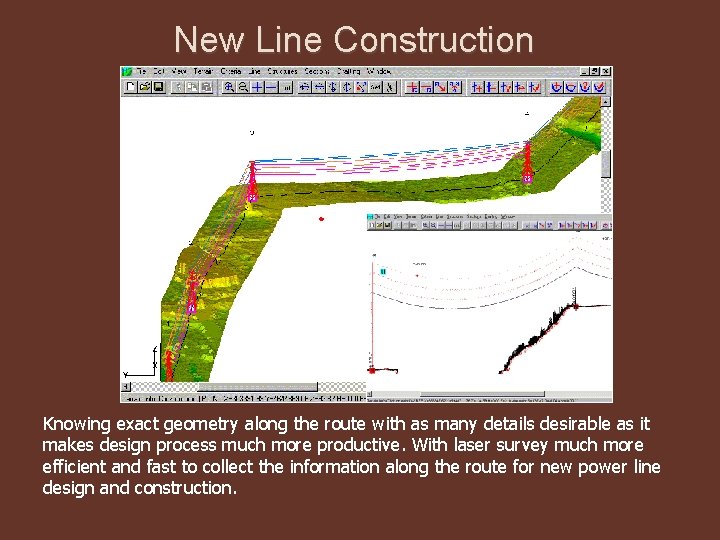
New Line Construction Knowing exact geometry along the route with as many details desirable as it makes design process much more productive. With laser survey much more efficient and fast to collect the information along the route for new power line design and construction.
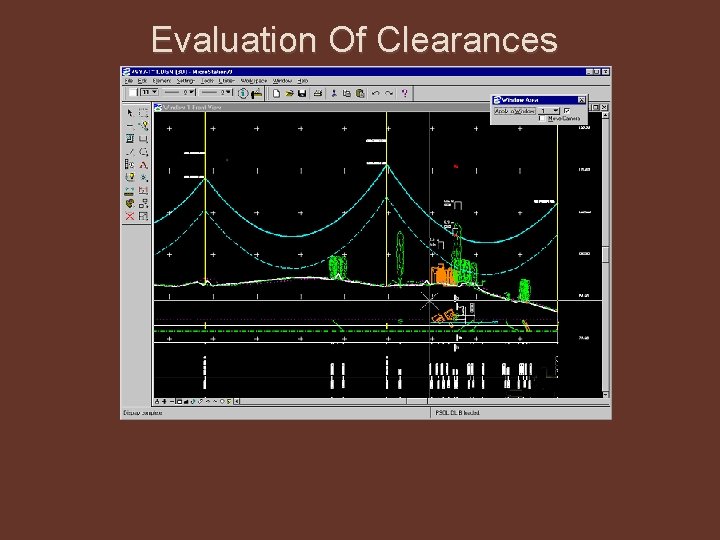
Evaluation Of Clearances
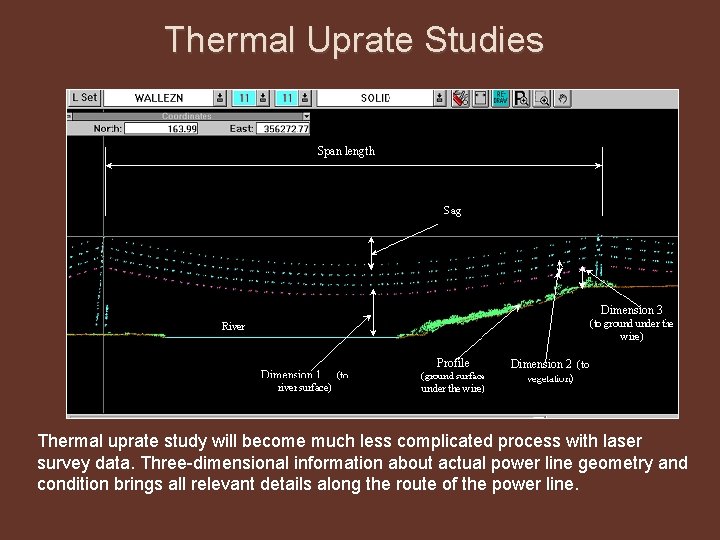
Thermal Uprate Studies Thermal uprate study will become much less complicated process with laser survey data. Three-dimensional information about actual power line geometry and condition brings all relevant details along the route of the power line.
DETAILED SURVEY USING MODERN TECHNIQUES FOR PROJECTS – COMPLETED / UNDER IMPLEMENTATION Ø TEESTA-V (Route Alignment using satellite imagery) Ø SRINAGAR-LEH (Route Alignment using satellite imagery) Ø PARBATI-II, KOLDAM Ø KAHALGAON Ø BARH Ø KUDAMKULAM Ø NEYVELI Ø RANCHI-SIPAT Ø RAPP-5&6 Ø MAITHON Ø WR STRENGTHENING Ø PARBATI-III Ø URI-II Ø etc.
Thank You