
Successful Cox Maze Procedure During Mitral Valve Surgery


- Slides: 15
Successful Cox Maze Procedure During Mitral Valve Surgery Restores Patient Survival Without Increasing Operative Risk Niv Ad, MD Chief, Cardiac Surgery Inova Heart and Vascular Institute
Niv Ad, MD I have no real or apparent conflicts of interest to report.
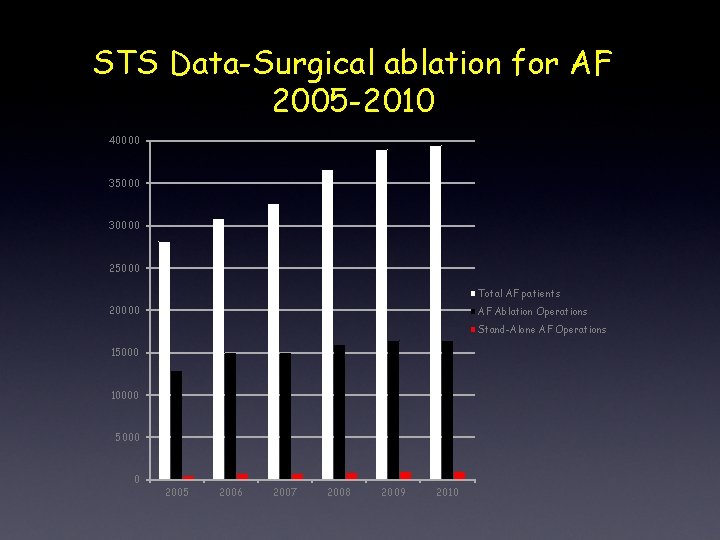
STS Data-Surgical ablation for AF 2005 -2010 40000 35000 30000 25000 Total AF patients 20000 AF Ablation Operations Stand-Alone AF Operations 15000 10000 5000 0 2005 2006 2007 2008 2009 2010
Introduction • Recent reports indicated that patients experiencing significant atrial fibrillation (AF) at the time of mitral valve (MV) surgery have decreased survival compared to patients in sinus rhythm (NSR). • The purpose of this study was to determine the impact of Cox Maze III/IV (CM) for AF on patient outcomes and survival following MV surgery.
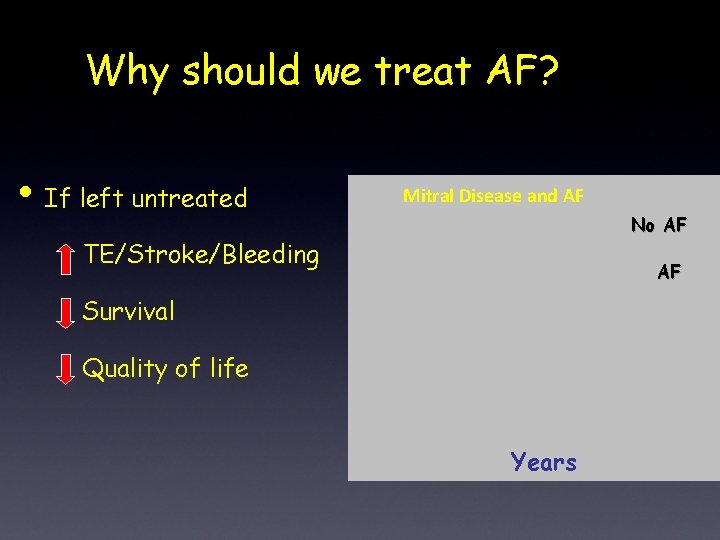
Why should we treat AF? AF • If left untreated Mitral Disease and AF No AF TE/Stroke/Bleeding AF Survival Quality of life Years
Introduction • Recent reports indicated that patients experiencing significant atrial fibrillation (AF) at the time of mitral valve (MV) surgery have decreased survival compared to patients in sinus rhythm (NSR). • The purpose of this study was to determine the impact of Cox Maze III/IV (CM) for AF on patient outcomes and survival following MV surgery.
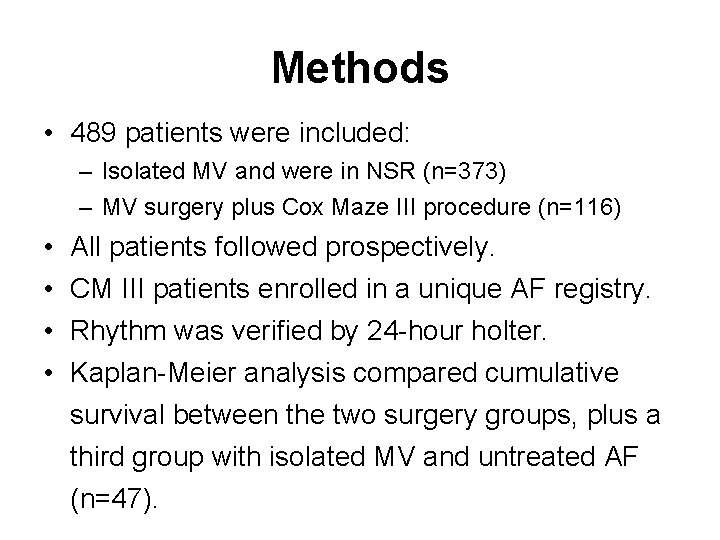
Methods • 489 patients were included: – Isolated MV and were in NSR (n=373) – MV surgery plus Cox Maze III procedure (n=116) • • All patients followed prospectively. CM III patients enrolled in a unique AF registry. Rhythm was verified by 24 -hour holter. Kaplan-Meier analysis compared cumulative survival between the two surgery groups, plus a third group with isolated MV and untreated AF (n=47).
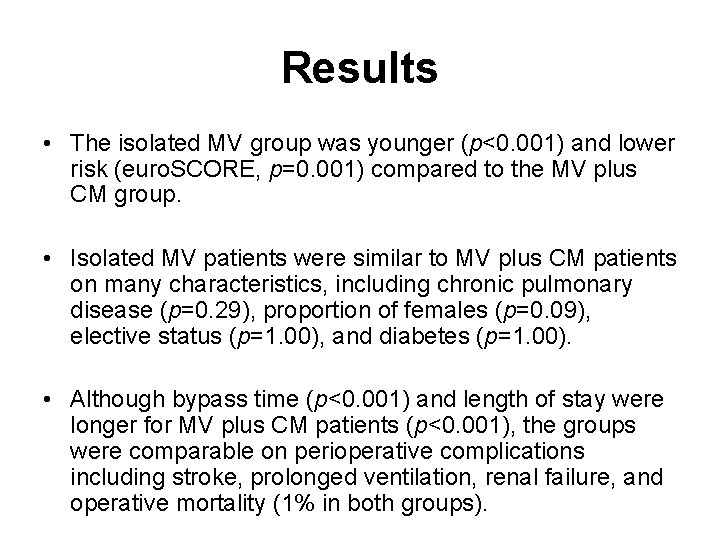
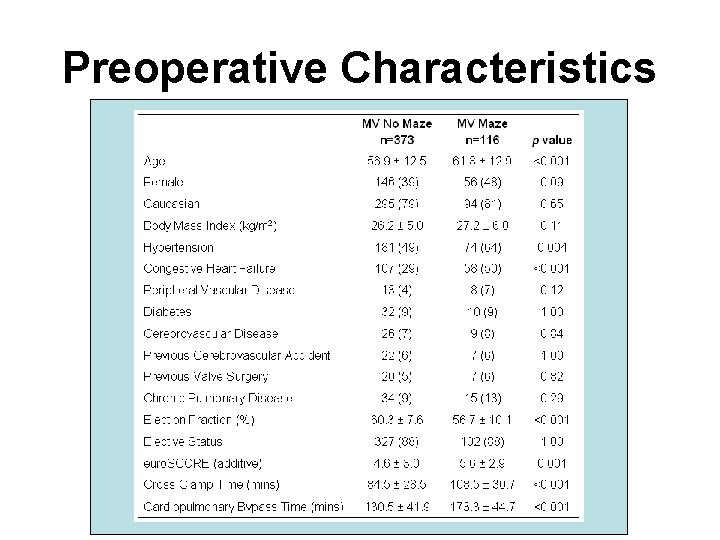
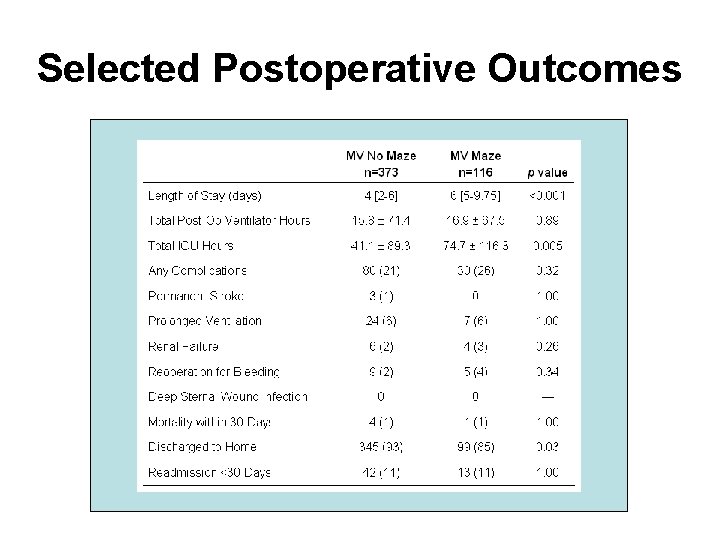
Results • The isolated MV group was younger (p<0. 001) and lower risk (euro. SCORE, p=0. 001) compared to the MV plus CM group. • Isolated MV patients were similar to MV plus CM patients on many characteristics, including chronic pulmonary disease (p=0. 29), proportion of females (p=0. 09), elective status (p=1. 00), and diabetes (p=1. 00). • Although bypass time (p<0. 001) and length of stay were longer for MV plus CM patients (p<0. 001), the groups were comparable on perioperative complications including stroke, prolonged ventilation, renal failure, and operative mortality (1% in both groups).
Preoperative Characteristics
Selected Postoperative Outcomes
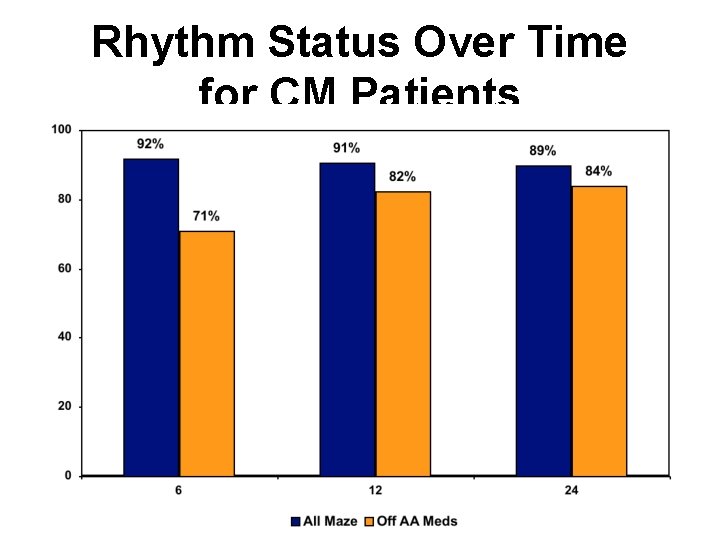
Rhythm Status Over Time for CM Patients
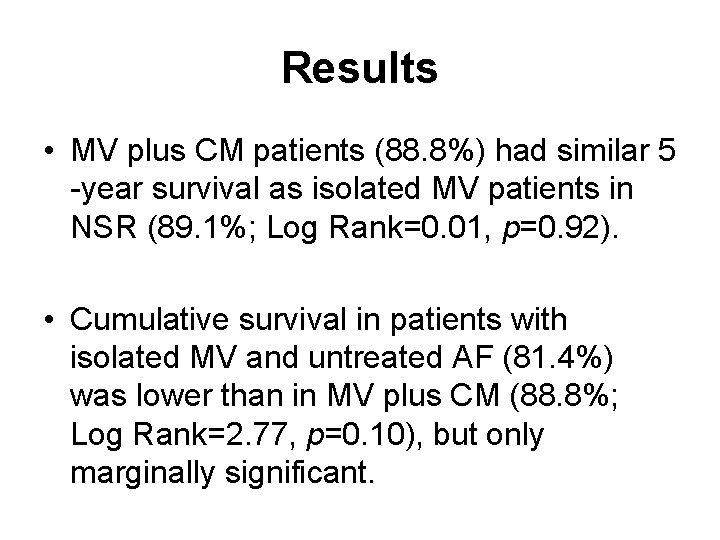
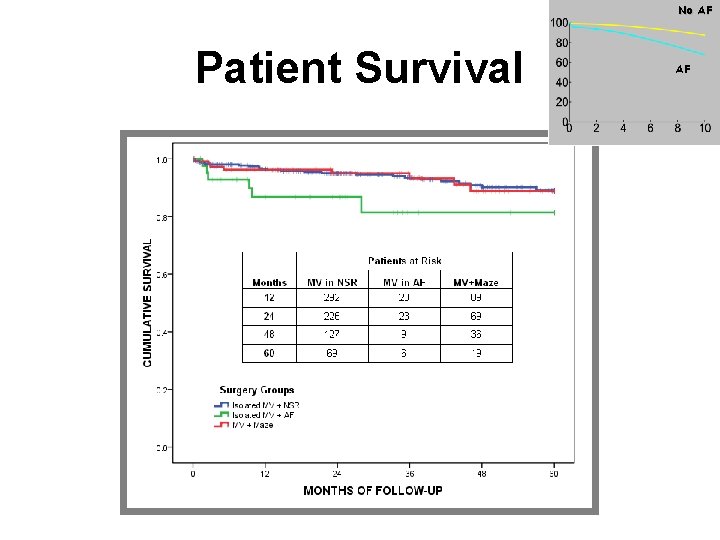
Results • MV plus CM patients (88. 8%) had similar 5 -year survival as isolated MV patients in NSR (89. 1%; Log Rank=0. 01, p=0. 92). • Cumulative survival in patients with isolated MV and untreated AF (81. 4%) was lower than in MV plus CM (88. 8%; Log Rank=2. 77, p=0. 10), but only marginally significant.
No AF Patient Survival AF
Conclusions • Patients with mitral valve disease and atrial fibrillation should expect similar outcomes when compared to patients presenting to surgery in sinus rhythm when the CM procedure was added. • The addition of the Cox Maze procedure did not negatively impact perioperative outcomes. • Consideration should be given to addressing atrial fibrillation at the time of mitral valve surgery.
Thank You