
Success Through Synergy Developing a Framework For Student





- Slides: 55
Success Through Synergy Developing a Framework For Student Success Session #1817 OLA Super Conference 2009 Janet Dixon | Sarah Bowler Anita Brooks Kirkland Waterloo Region District School Board http: //www. flickr. com/photos/soylentgreen 23
Our Story of how a dream for Student Success took root and flourished … a tale of opportunity, innovation and convergent thinking
The KEYS to Our Success
Graphic. Freebies. com
OLA Super Conference e h t s s o r c ya l t n e t s i s n o c t h g u a t ills k s n o i t a Inform curriculum Assign ments Tool-kit of s with em bedded caffolding s trategies ’s p u n ‘Grow n e r e f n tyle co proces s skills s t n e d u t ce for s
a l l “A a e lon …”nda Lee I m Bre
Find a way to make yourself indispensable… Provide solutions… Build Trust Demonstrate your Relevance
Presentation to Heads’ Council
All too often… submitted assignments: üare not focused ülack depth üuse questionable sources üintentionally or unintentionally plagiarize üare referenced incorrectly, if at all
A further problem… Inconsistency • Teachers have different expectations, different levels of awareness, or assume that students know (…they don’t!) • Teacher-librarian may work collaboratively with some teachers in some subjects, teaching some students some of the skills….
The Answer… • If we slow down and concentrate on the process, the students will ultimately achieve more • We need to build understanding, competency and comfort levels through repetition and consistency across subject areas
The Win…? üStudent research projects are: focused, creative, deeper, accurate and referenced appropriately üPlagiarism concerns are alleviated üStudents have core information skills that will help them to achieve success…now and later
Seize opportunities! Scare yourself…often! Build a team that is forwardthinking, enthusiastic…
Be flexible, open to possibilities… Be willing to dig in and do the necessary work!
Branching out… Learning Skills Conference Scaffolding Strategies Tool-kit Anita Brooks Kirkland presentation Research Projects Skills Development Checklist Staff P. D. Event
Learning Skills Conference Grade 9 Applied Level
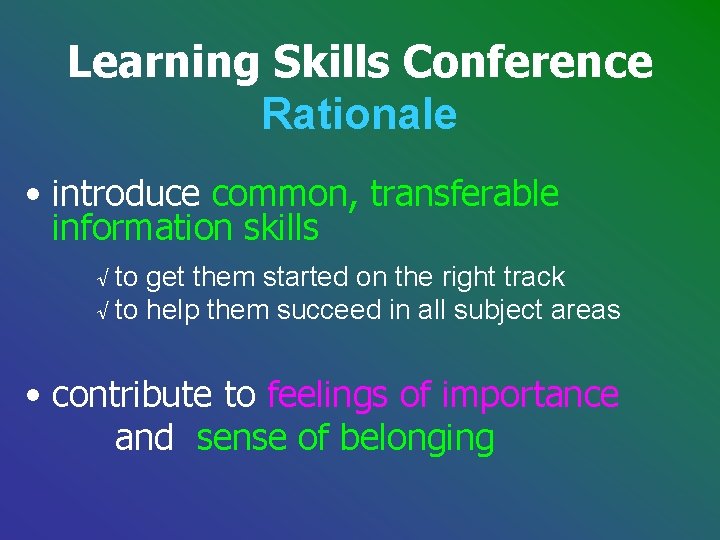
Learning Skills Conference Rationale • introduce common, transferable information skills √ to get them started on the right track √ to help them succeed in all subject areas • contribute to feelings of importance and sense of belonging
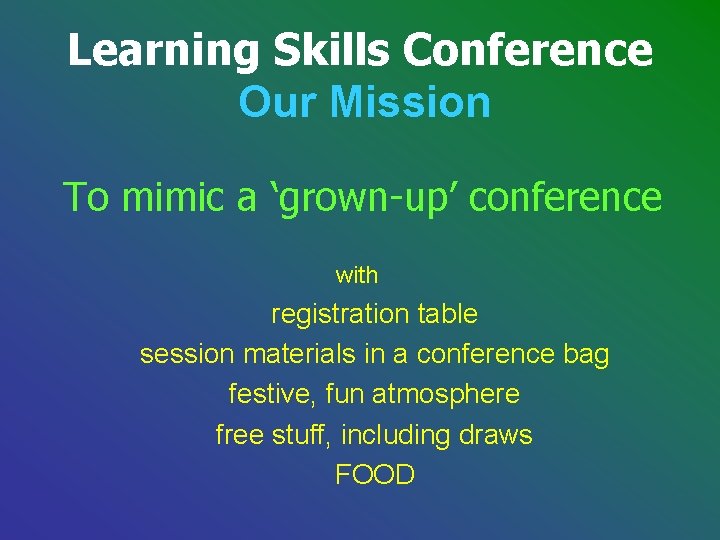
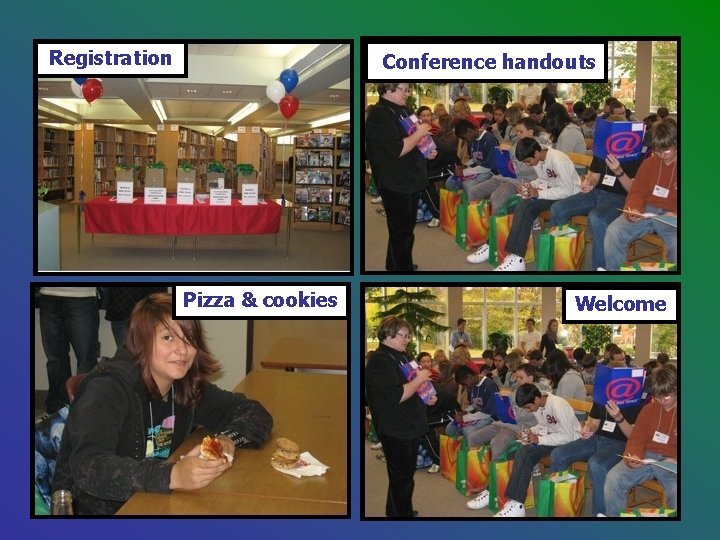
Learning Skills Conference Our Mission To mimic a ‘grown-up’ conference with registration table session materials in a conference bag festive, fun atmosphere free stuff, including draws FOOD
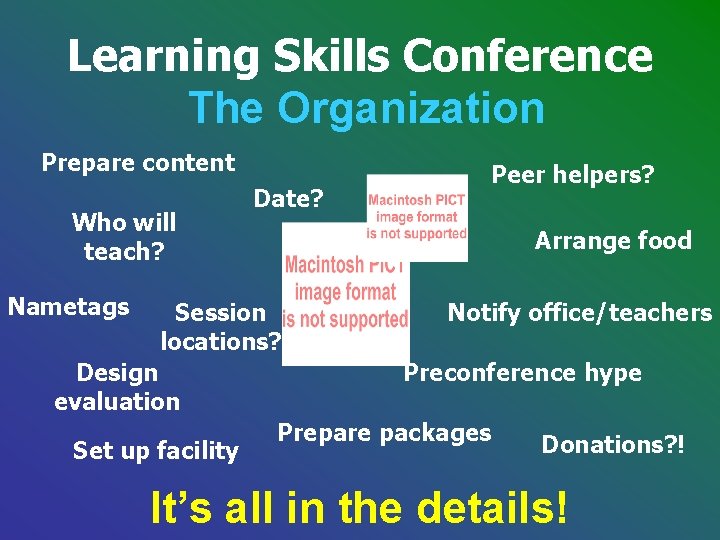
Learning Skills Conference The Organization Prepare content Who will teach? Nametags Date? Arrange food Session locations? Design evaluation Set up facility Peer helpers? Notify office/teachers Preconference hype Prepare packages Donations? ! It’s all in the details!
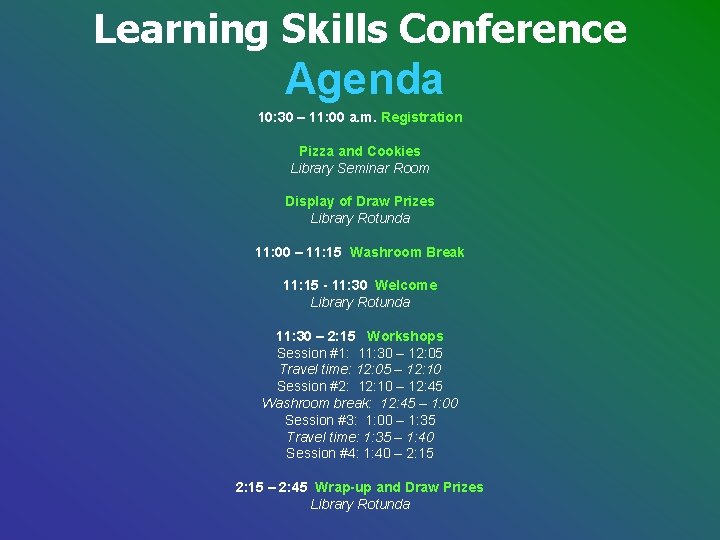
Learning Skills Conference Agenda 10: 30 – 11: 00 a. m. Registration Pizza and Cookies Library Seminar Room Display of Draw Prizes Library Rotunda 11: 00 – 11: 15 Washroom Break 11: 15 - 11: 30 Welcome Library Rotunda 11: 30 – 2: 15 Workshops Session #1: 11: 30 – 12: 05 Travel time: 12: 05 – 12: 10 Session #2: 10 – 12: 45 Washroom break: 12: 45 – 1: 00 Session #3: 1: 00 – 1: 35 Travel time: 1: 35 – 1: 40 Session #4: 1: 40 – 2: 15 – 2: 45 Wrap-up and Draw Prizes Library Rotunda
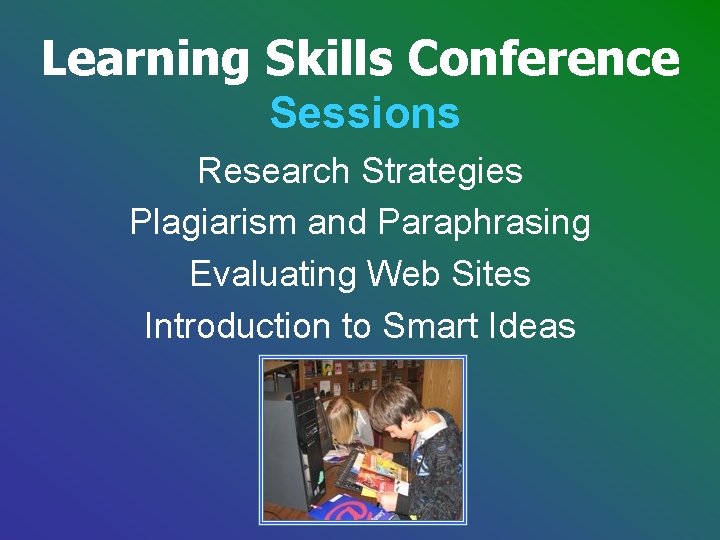
Learning Skills Conference Sessions Research Strategies Plagiarism and Paraphrasing Evaluating Web Sites Introduction to Smart Ideas
Registration Conference handouts Pizza & cookies Welcome
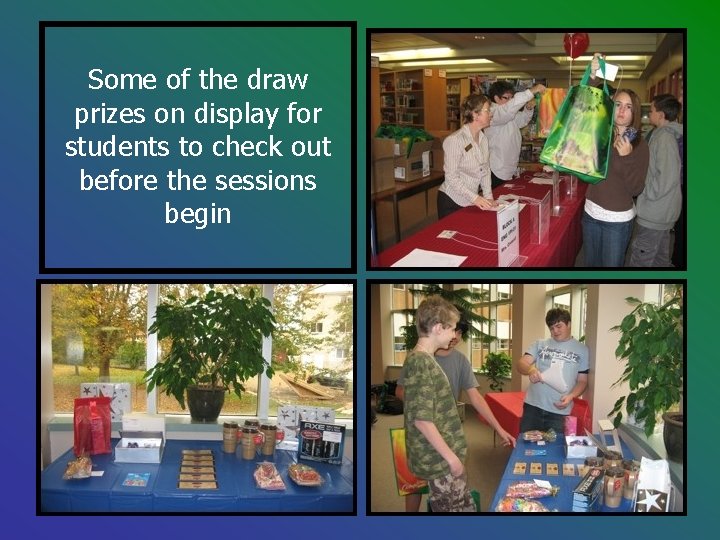
Some of the draw prizes on display for students to check out before the sessions begin
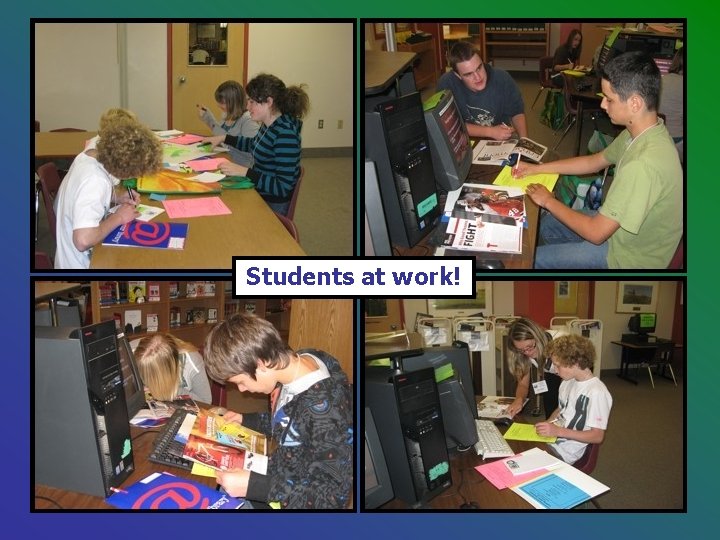
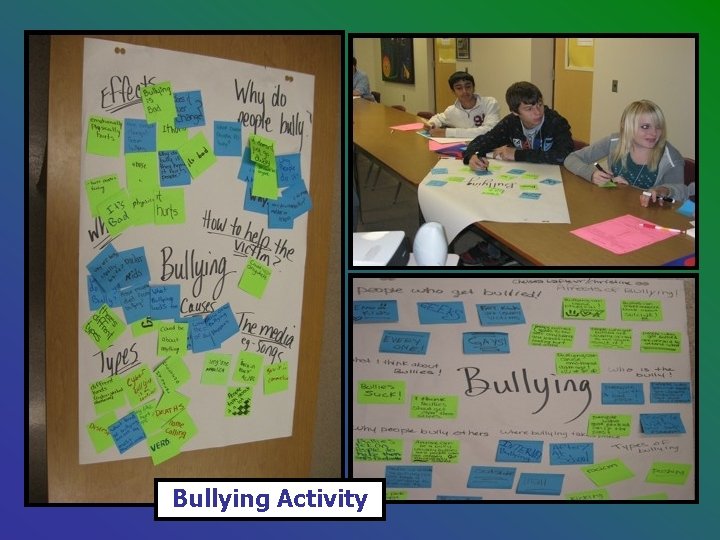
Students at work!
Bullying Activity
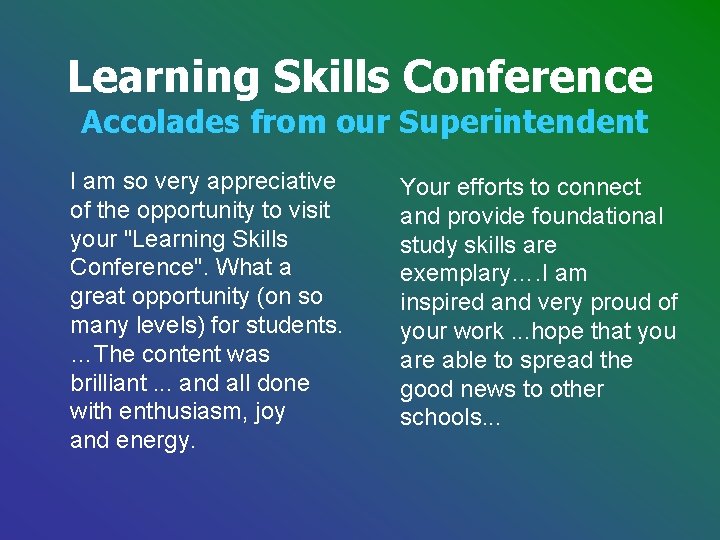
Learning Skills Conference Accolades from our Superintendent I am so very appreciative of the opportunity to visit your "Learning Skills Conference". What a great opportunity (on so many levels) for students. …The content was brilliant. . . and all done with enthusiasm, joy and energy. Your efforts to connect and provide foundational study skills are exemplary…. I am inspired and very proud of your work. . . hope that you are able to spread the good news to other schools. . .
Anita Brooks Kirkland Library Consultant, ITS, Waterloo Region District School Board From Confused to Confident “Research Strategies for Student Success”
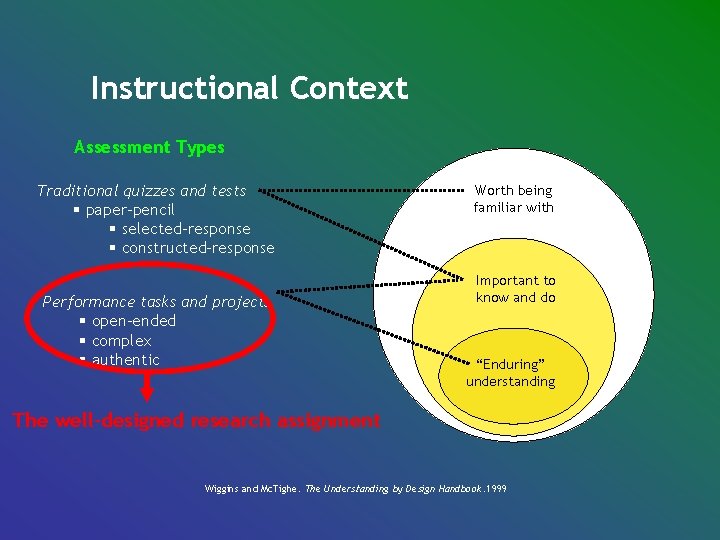
Instructional Context Assessment Types Traditional quizzes and tests § paper-pencil § selected-response § constructed-response Performance tasks and projects § open-ended § complex § authentic Worth being familiar with Important to know and do “Enduring” understanding The well-designed research assignment Wiggins and Mc. Tighe. The Understanding by Design Handbook. 1999
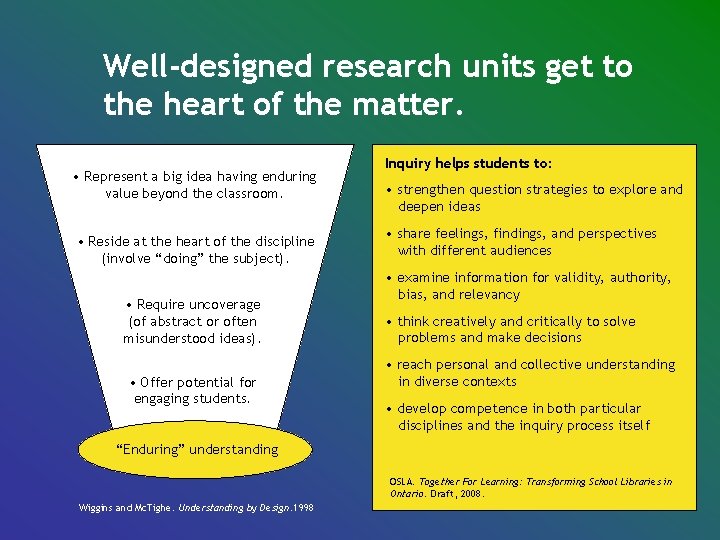
Well-designed research units get to the heart of the matter. • Represent a big idea having enduring value beyond the classroom. • Reside at the heart of the discipline (involve “doing” the subject). • Require uncoverage (of abstract or often misunderstood ideas). • Offer potential for engaging students. Inquiry helps students to: • strengthen question strategies to explore and deepen ideas • share feelings, findings, and perspectives with different audiences • examine information for validity, authority, bias, and relevancy • think creatively and critically to solve problems and make decisions • reach personal and collective understanding in diverse contexts • develop competence in both particular disciplines and the inquiry process itself “Enduring” understanding OSLA. Together For Learning: Transforming School Libraries in Ontario. Draft, 2008. Wiggins and Mc. Tighe. Understanding by Design. 1998
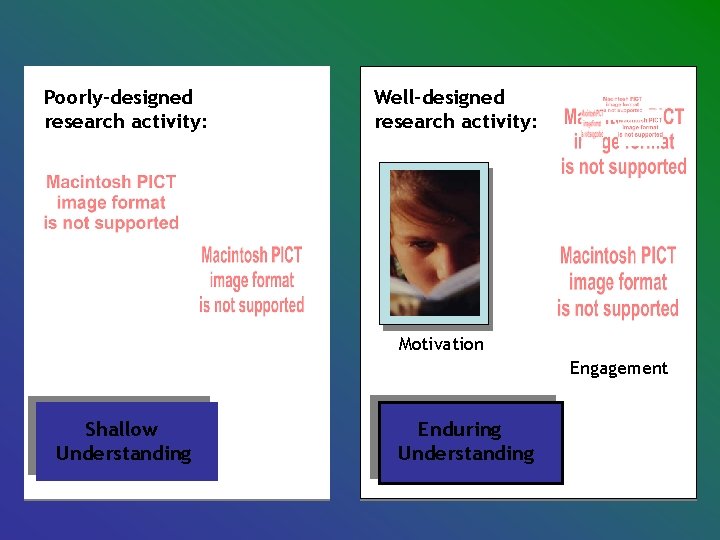
Poorly-designed research activity: Well-designed research activity: Boredom Motivation S Shallow Understanding Engagement Confusion Enduring Understanding
Helping Our Students Improve Their Research Strategies Improving Our Own Teaching Practice
Kicking it up a notch @ WCI Take a critical look at your research units. Does your key question foster critical thinking and enduring understanding? Does the culminating task foster creativity, critical thinking and enduring understanding? Have you provided an instructional scaffold to help all students develop process skills? Are you collaborating with each other and with your teacher-librarian to provide the best learning experience for your students? Does your assessment strategy include formative and summative components? Are you assessing process as well as product?
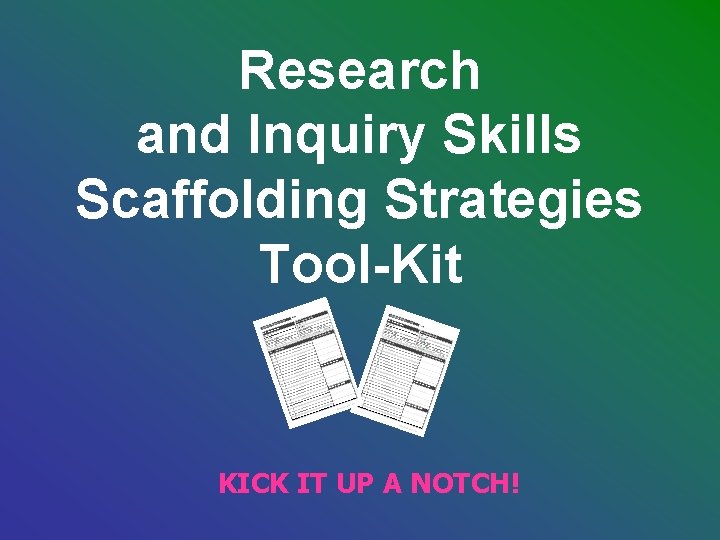
Research and Inquiry Skills Scaffolding Strategies Tool-Kit KICK IT UP A NOTCH!
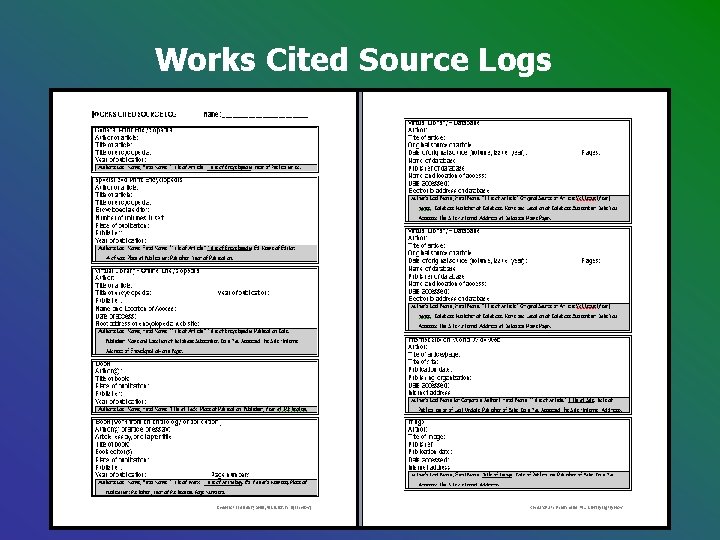
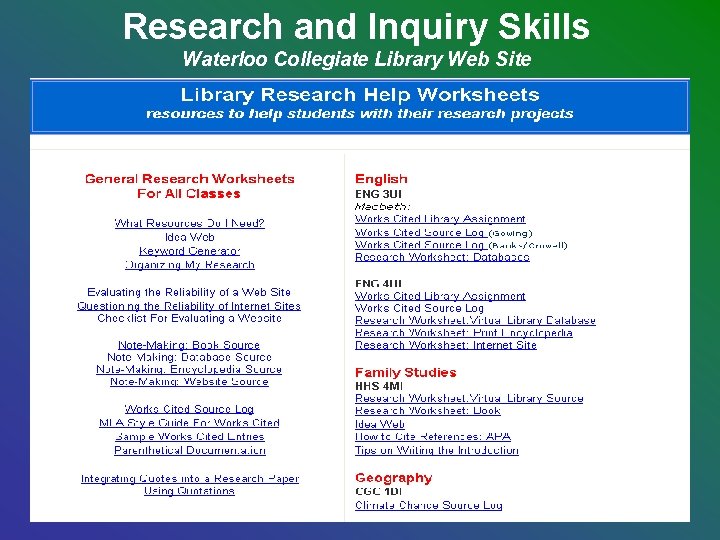
Works Cited Source Logs
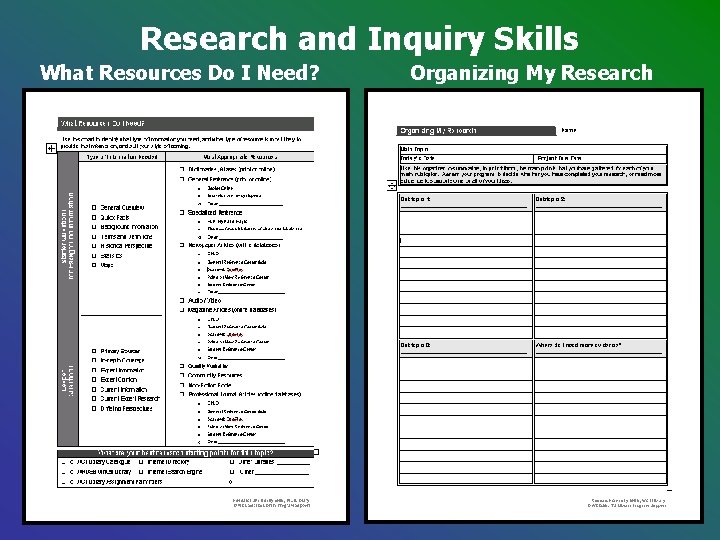
Research and Inquiry Skills What Resources Do I Need? Organizing My Research
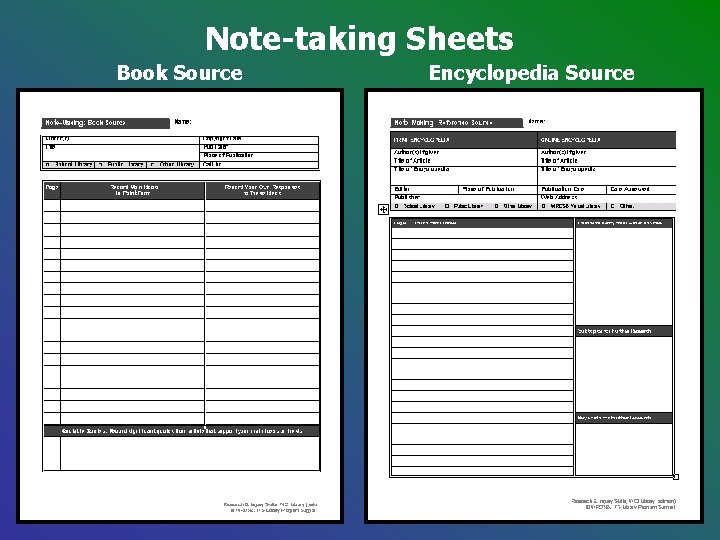
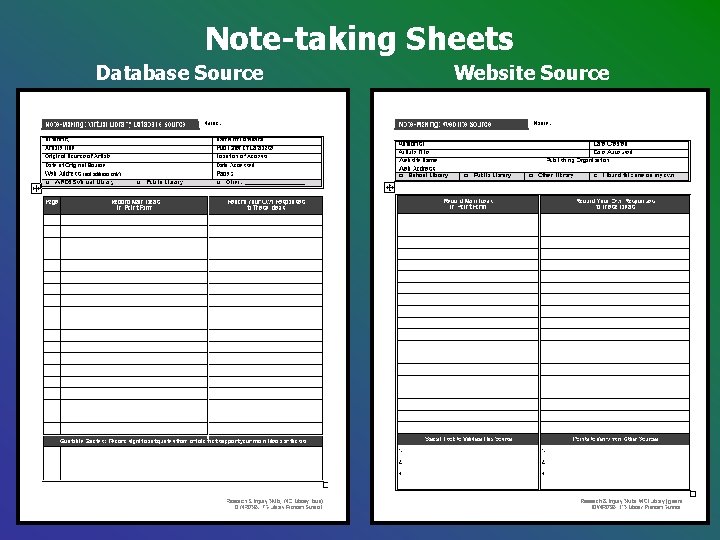
Note-taking Sheets Book Source Encyclopedia Source
Note-taking Sheets Database Source Website Source
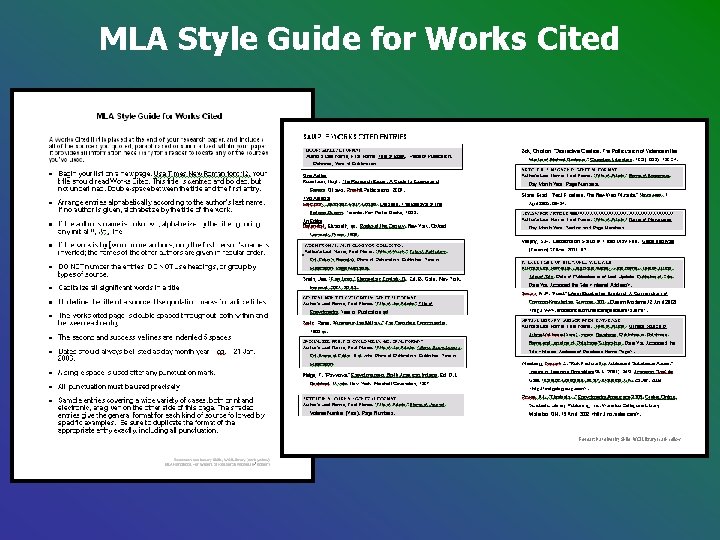
MLA Style Guide for Works Cited
Research and Inquiry Skills Waterloo Collegiate Library Web Site
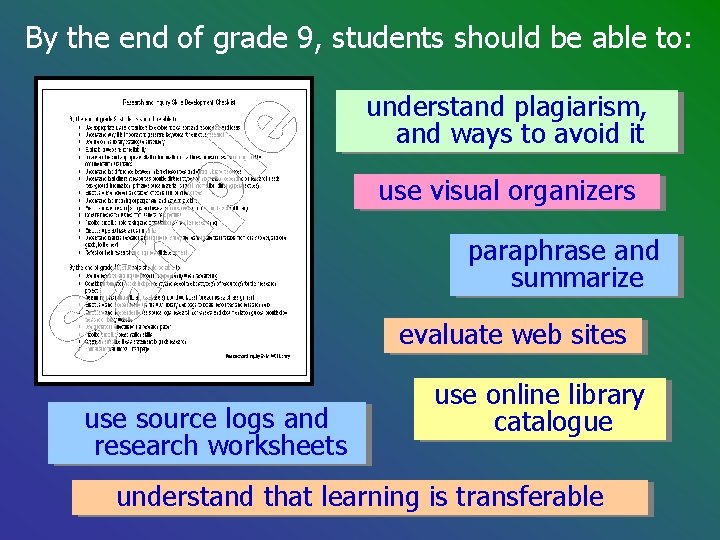
Research and Inquiry Skills Development Checklist
By the end of grade 9, students should be able to: understand plagiarism, and ways to avoid it use visual organizers paraphrase and summarize evaluate web sites use source logs and research worksheets use online library catalogue understand that learning is transferable
Subject-specific research assignments that embed process skills
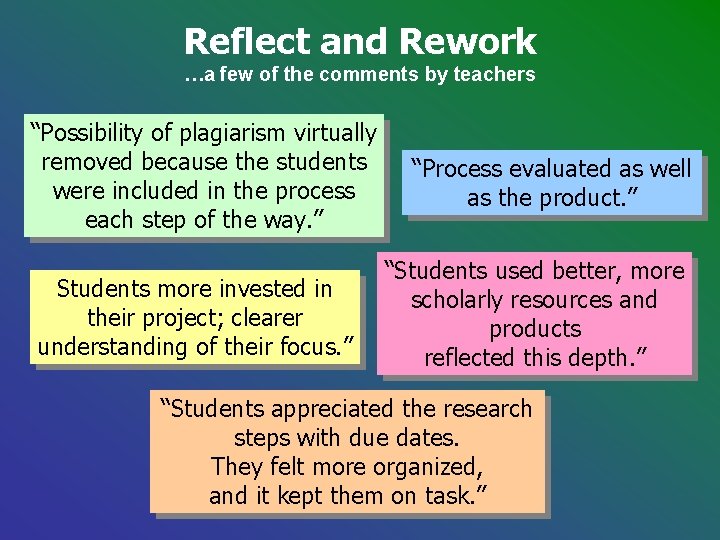
Reflect and Rework …a few of the comments by teachers “Possibility of plagiarism virtually removed because the students were included in the process each step of the way. ” Students more invested in their project; clearer understanding of their focus. ” “Process evaluated as well as the product. ” “Students used better, more scholarly resources and products reflected this depth. ” “Students appreciated the research steps with due dates. They felt more organized, and it kept them on task. ”
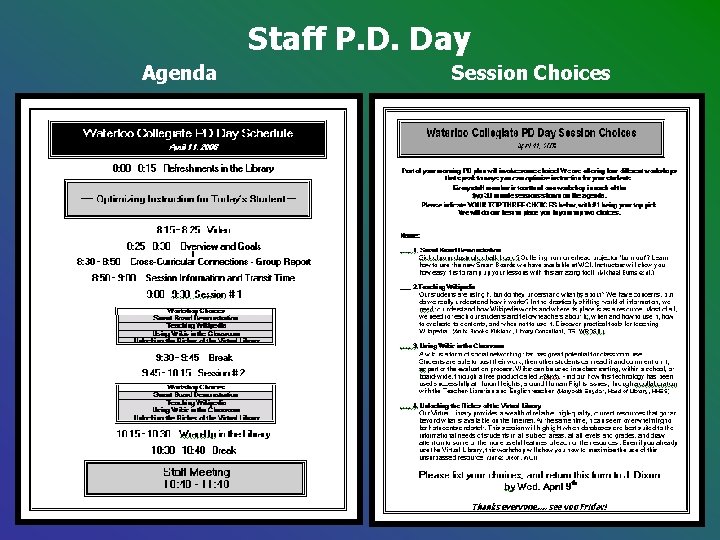
P. D. Day for Staff “Optimizing Instruction for Today’s Student” April 2008
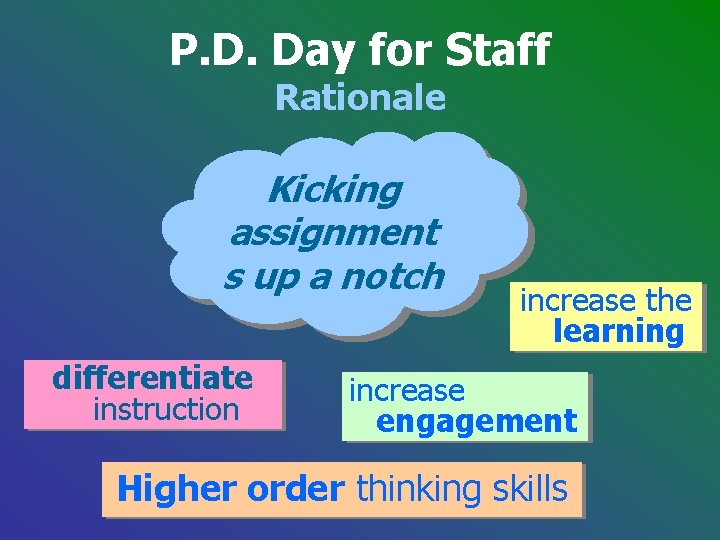
P. D. Day for Staff Rationale Kicking assignment s up a notch differentiate instruction increase the learning increase engagement Higher order thinking skills
Staff P. D. Day Agenda Session Choices
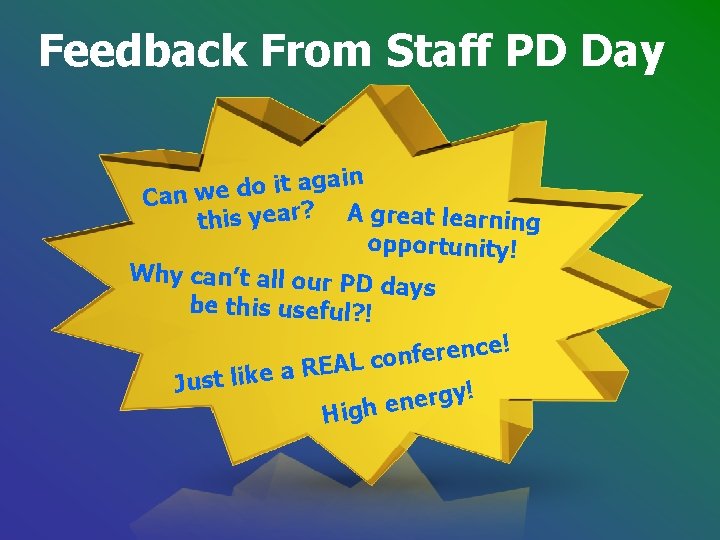
Feedback From Staff PD Day gain a t i o d e Can w this year? A great learning opportunity! Why can’t all our PD days be this useful? ! ce! n e r e f n o Lc A E R a e Just lik y! g r e n High e
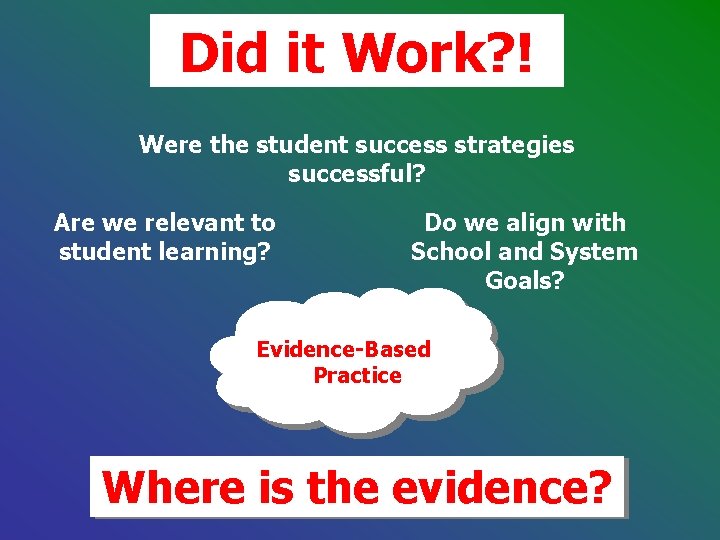
Did it Work? ! Were the student success strategies successful? Are we relevant to student learning? Do we align with School and System Goals? Evidence-Based Practice Where is the evidence?
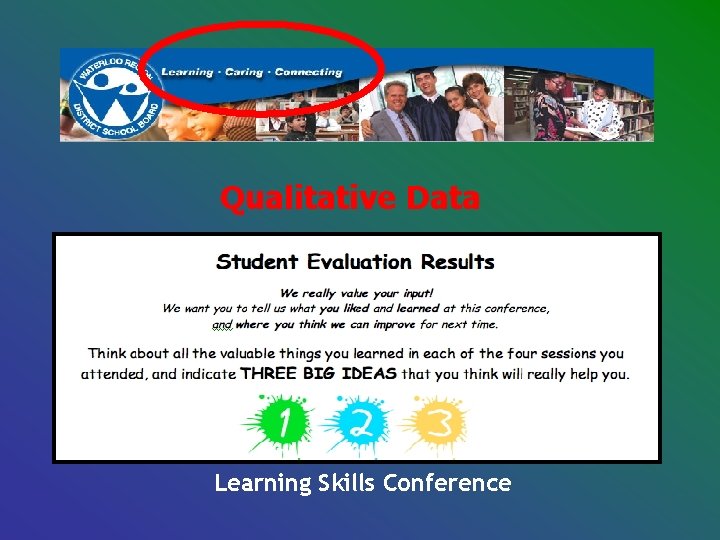
Qualitative Data Learning Skills Conference
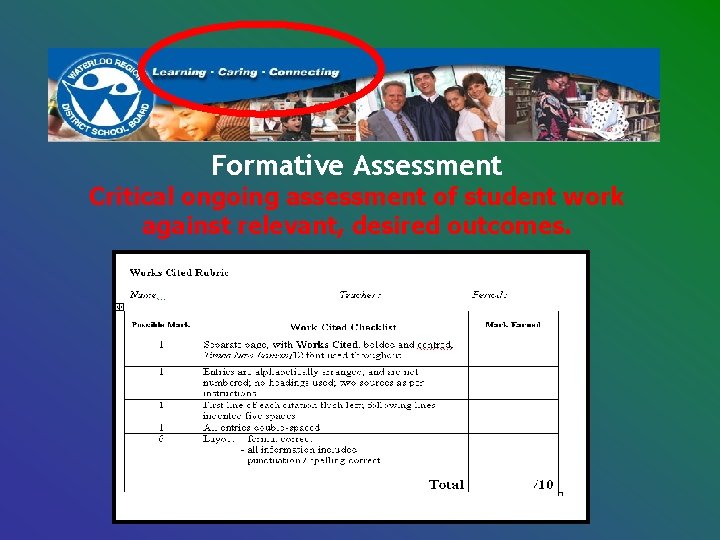
Formative Assessment Critical ongoing assessment of student work against relevant, desired outcomes.
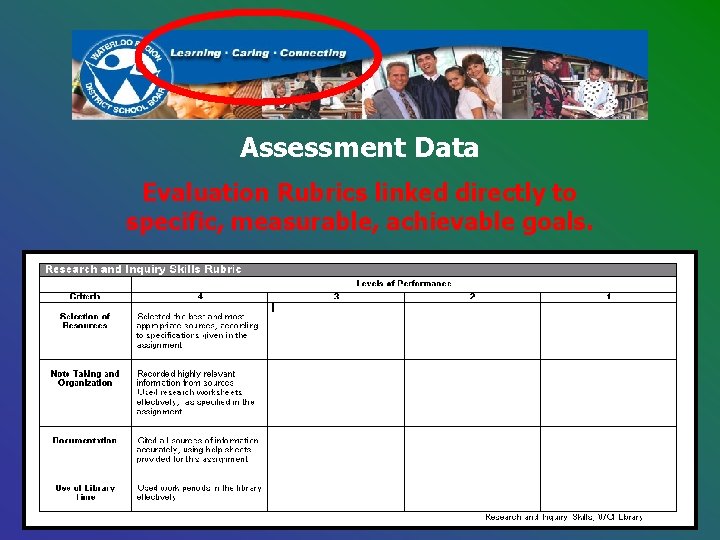
Assessment Data Evaluation Rubrics linked directly to specific, measurable, achievable goals.
“Now this is not the end. It is not even the beginning of the end. But it is, perhaps, the end of the beginning. ” Winston Churchill
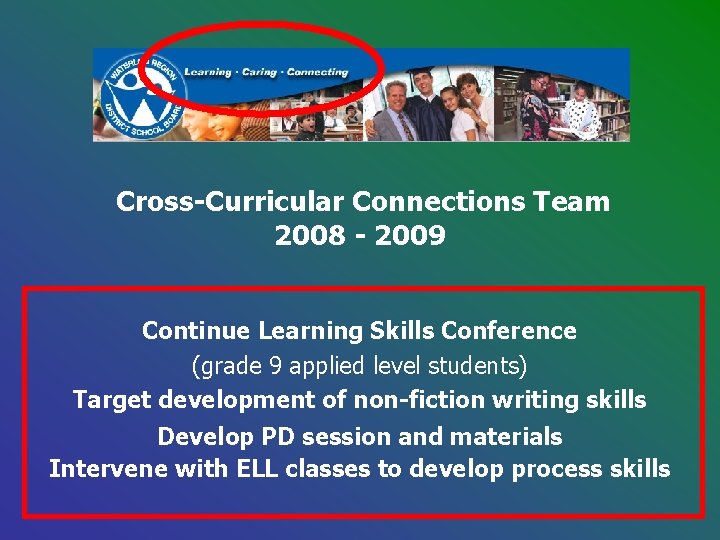
Cross-Curricular Connections Team 2008 - 2009 Continue Learning Skills Conference (grade 9 applied level students) Target development of non-fiction writing skills Develop PD session and materials Intervene with ELL classes to develop process skills
"A SHARED VISION is not an idea. . . it is rather a force in people's hearts… a force of impressive power. It may be inspired by an idea, but once it goes further - if it is compelling enough to acquire the support of more than one person - then it is no longer an abstraction. People begin to see it as if it exists. Shared visions derive their power from common caring. Shared vision is vital for the learning organization because it provides the focus and energy for learning. “ Peter Senge Johnson, Doug. The Indispensable Librarian: Surviving (and Thriving) in School Media Centers. Linworth Publishing Inc. , Worthington, Ohio. 1997.