
Subterranean Termite Control Update Daniel R Suiter Department
Subterranean Termite Control Update Daniel R. Suiter Department of Entomology UGA Griffin Campus Griffin, GA 770 -233 -6114; dsuiter@uga. edu www. gabugs. uga. edu
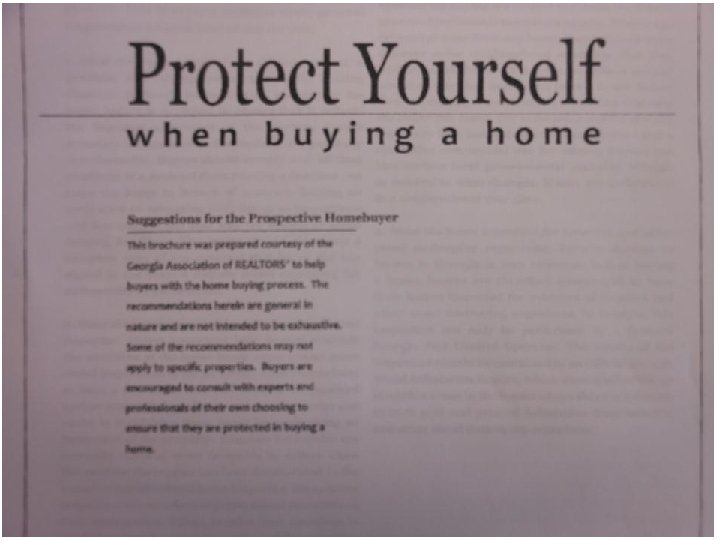
Current Issues in the Termite and Pest Control Industry 1. Fipronil (Termidor) patent issues. 2. BASF has two new termite control products: a. Termidor Dry b. Termidor HE 3. Dow Agro. Sciences has upgraded Sentricon, their termite bait. 4. Du. Pont registered a new termiticide, called Altriset, in 2010. 5. On-going issue with termite inspections and the Georgia Association of Realtors. 6. Non-Termite Issue: Pyrethroid insecticide use restrictions around homes.
Current Issues in the Termite and Pest Control Industry 1. Fipronil (Termidor) patent issues. 2. BASF has two new termite control products: a. Termidor Dry b. Termidor HE 3. Dow Agro. Sciences has upgraded Sentricon, their termite bait. 4. Du. Pont registered a new termiticide, called Altriset, in 2010. 5. On-going issue with termite inspections and the Georgia Association of Realtors. 6. Non-Termite Issue: Pyrethroid insecticide use restrictions around homes.
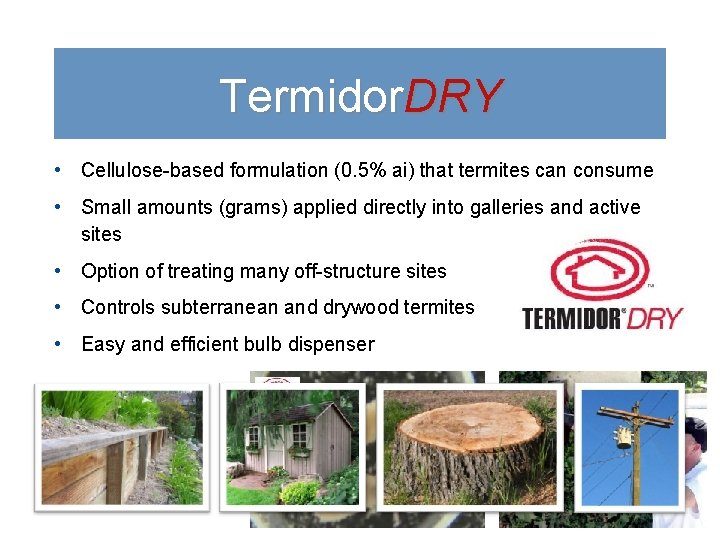
Termidor. DRY • Cellulose-based formulation (0. 5% ai) that termites can consume • Small amounts (grams) applied directly into galleries and active sites • Option of treating many off-structure sites • Controls subterranean and drywood termites • Easy and efficient bulb dispenser
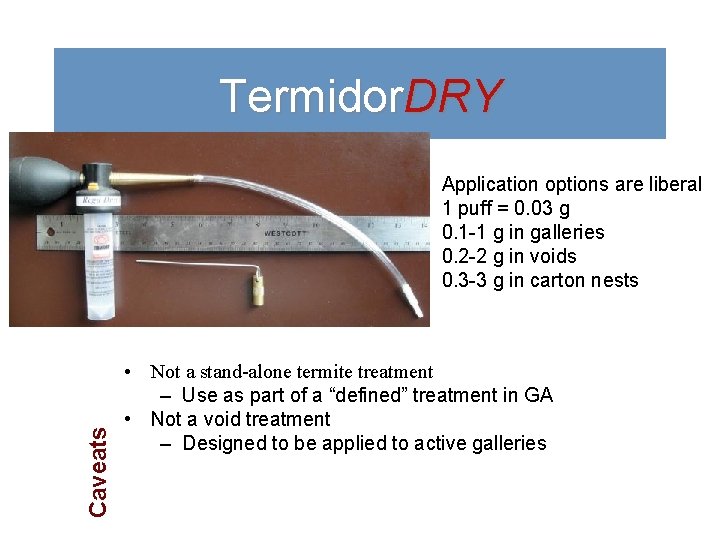
Termidor. DRY Caveats Application options are liberal 1 puff = 0. 03 g 0. 1 -1 g in galleries 0. 2 -2 g in voids 0. 3 -3 g in carton nests • Not a stand-alone termite treatment – Use as part of a “defined” treatment in GA • Not a void treatment – Designed to be applied to active galleries
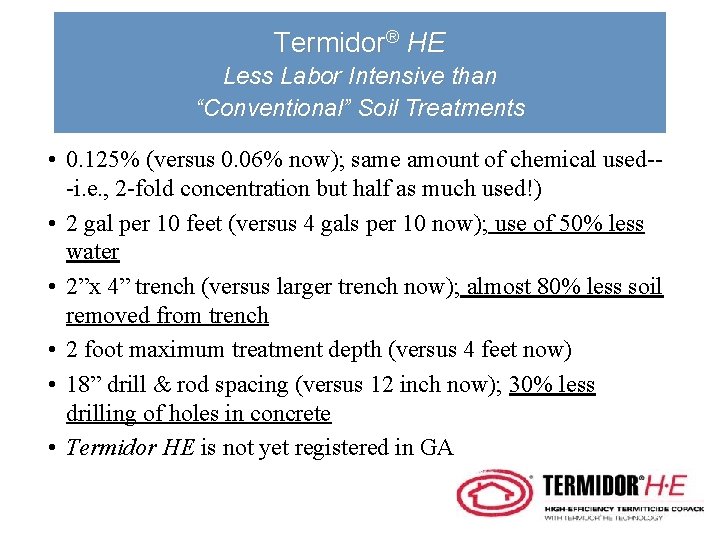
Termidor® HE Less Labor Intensive than “Conventional” Soil Treatments • 0. 125% (versus 0. 06% now); same amount of chemical used--i. e. , 2 -fold concentration but half as much used!) • 2 gal per 10 feet (versus 4 gals per 10 now); use of 50% less water • 2”x 4” trench (versus larger trench now); almost 80% less soil removed from trench • 2 foot maximum treatment depth (versus 4 feet now) • 18” drill & rod spacing (versus 12 inch now); 30% less drilling of holes in concrete • Termidor HE is not yet registered in GA
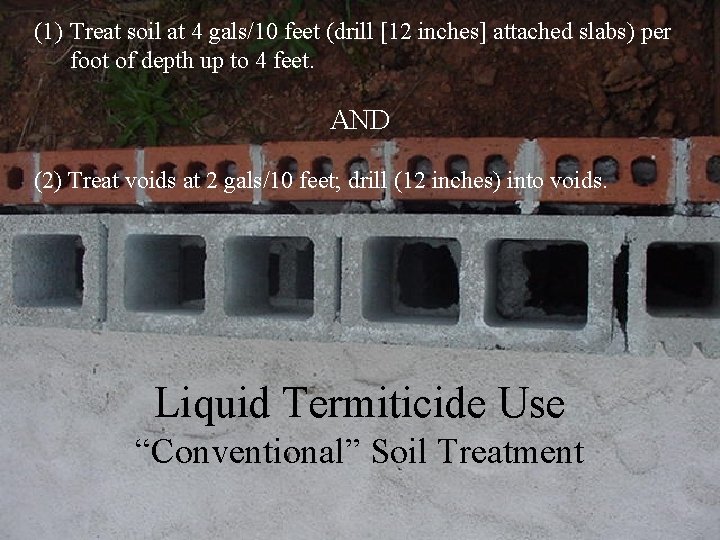
(1) Treat soil at 4 gals/10 feet (drill [12 inches] attached slabs) per foot of depth up to 4 feet. AND (2) Treat voids at 2 gals/10 feet; drill (12 inches) into voids. Liquid Termiticide Use “Conventional” Soil Treatment
Current Issues in the Termite and Pest Control Industry 1. Fipronil (Termidor) patent issues. 2. BASF has two new termite control products: a. Termidor Dry b. Termidor HE 3. Dow Agro. Sciences has upgraded Sentricon, their termite bait. 4. Du. Pont registered a new termiticide, called Altriset, in 2010. 5. On-going issue with termite inspections and the Georgia Association of Realtors. 6. Non-Termite Issue: Pyrethroid insecticide use restrictions around homes.
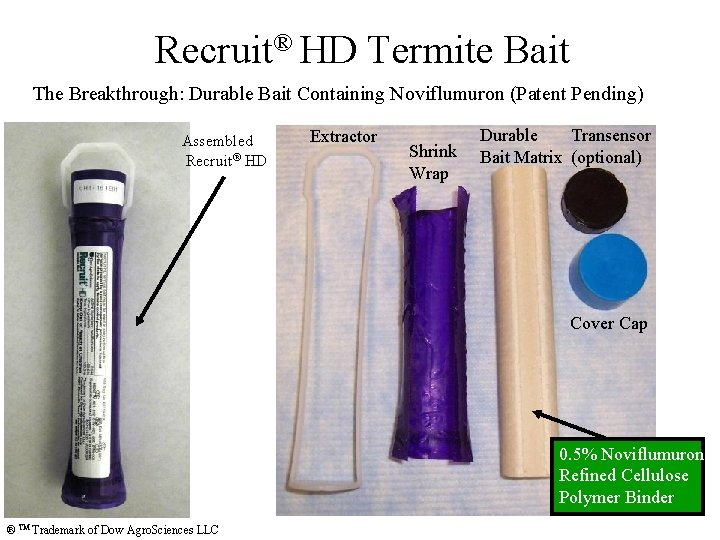
Recruit® HD Termite Bait The Breakthrough: Durable Bait Containing Noviflumuron (Patent Pending) Assembled Recruit® HD Extractor Shrink Wrap Transensor Durable Bait Matrix (optional) Cover Cap 0. 5% Noviflumuron Refined Cellulose Polymer Binder ® TM Trademark of Dow Agro. Sciences LLC
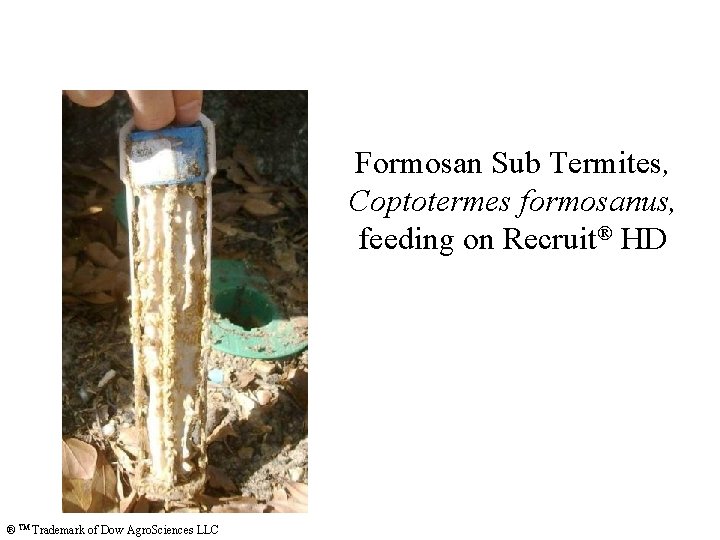
Formosan Sub Termites, Coptotermes formosanus, feeding on Recruit® HD ® TM Trademark of Dow Agro. Sciences LLC
Current Issues in the Termite and Pest Control Industry 1. Fipronil (Termidor) patent issues. 2. BASF has two new termite control products: a. Termidor Dry b. Termidor HE 3. Dow Agro. Sciences has upgraded Sentricon, their termite bait. 4. Du. Pont registered a new termiticide, called Altriset, in 2010. 5. On-going issue with termite inspections and the Georgia Association of Realtors. 6. Non-Termite Issue: Pyrethroid insecticide use restrictions around homes.
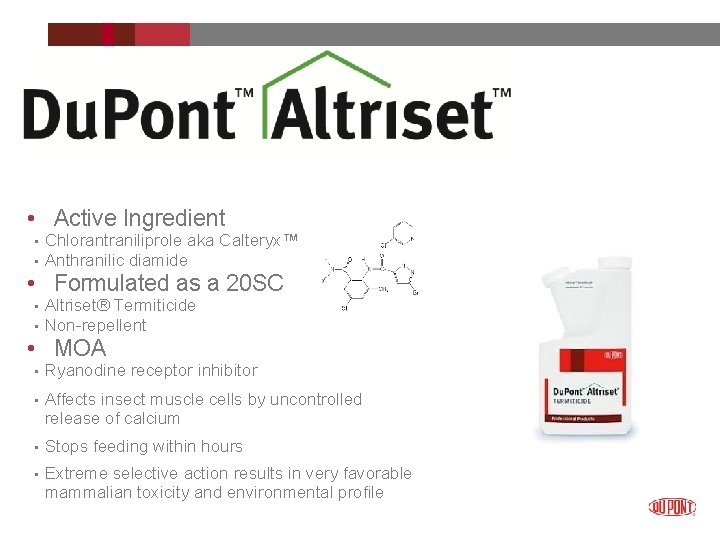
• Active Ingredient • • Chlorantraniliprole aka Calteryx™ Anthranilic diamide • Formulated as a 20 SC • • Altriset® Termiticide Non-repellent • MOA • Ryanodine receptor inhibitor • Affects insect muscle cells by uncontrolled release of calcium • Stops feeding within hours • Extreme selective action results in very favorable mammalian toxicity and environmental profile
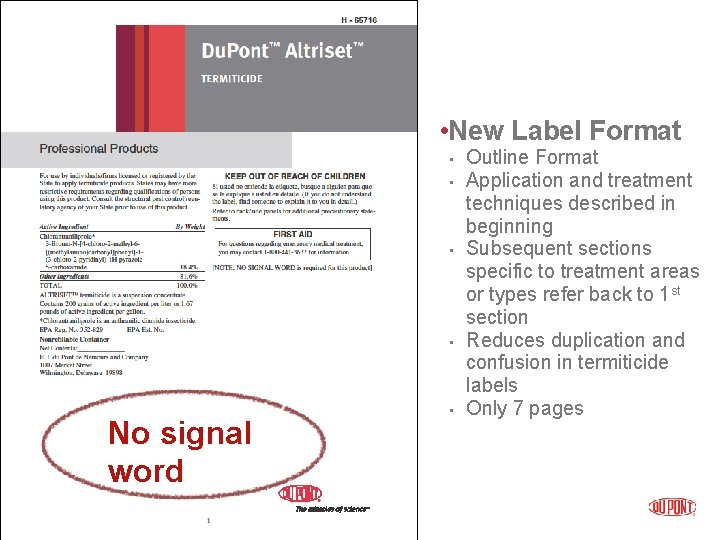
• New Label Format • • No signal word • Outline Format Application and treatment techniques described in beginning Subsequent sections specific to treatment areas or types refer back to 1 st section Reduces duplication and confusion in termiticide labels Only 7 pages
Current Issues in the Termite and Pest Control Industry 1. Fipronil (Termidor) patent issues. 2. BASF has two new termite control products: a. Termidor Dry b. Termidor HE 3. Dow Agro. Sciences has upgraded Sentricon, their termite bait. 4. Du. Pont registered a new termiticide, called Altriset, in 2010. 5. On-going issue with termite inspections and the Georgia Association of Realtors. 6. Non-Termite Issue: Pyrethroid insecticide use restrictions around homes.
Current Issues in the Termite and Pest Control Industry 1. Fipronil (Termidor) patent issues. 2. BASF has two new termite control products: a. Termidor Dry b. Termidor HE 3. Dow Agro. Sciences has upgraded Sentricon, their termite bait. 4. Du. Pont registered a new termiticide, called Altriset, in 2010. 5. On-going issue with termite inspections and the Georgia Association of Realtors. 6. Non-Termite Issue: Pyrethroid insecticide use restrictions around homes.
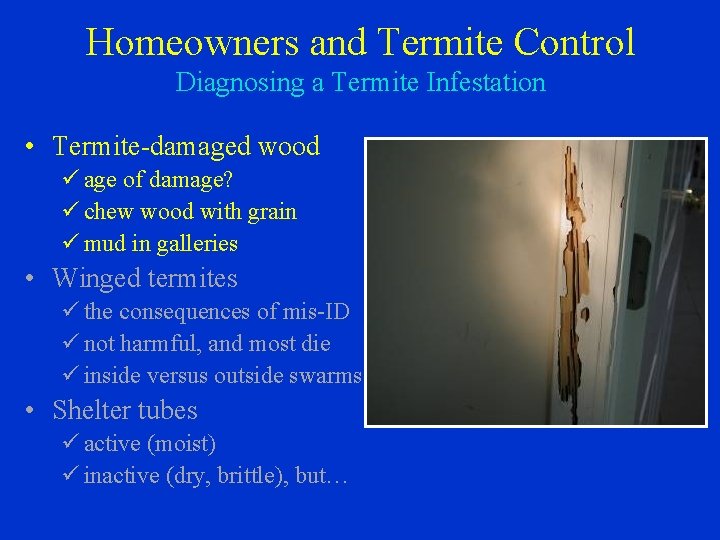
Homeowners and Termite Control Diagnosing a Termite Infestation • Termite-damaged wood ü age of damage? ü chew wood with grain ü mud in galleries • Winged termites ü the consequences of mis-ID ü not harmful, and most die ü inside versus outside swarms • Shelter tubes ü active (moist) ü inactive (dry, brittle), but…
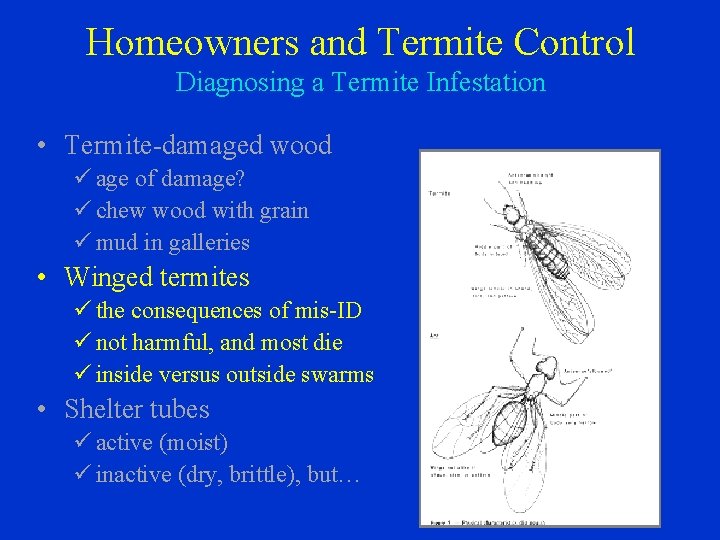
Homeowners and Termite Control Diagnosing a Termite Infestation • Termite-damaged wood ü age of damage? ü chew wood with grain ü mud in galleries • Winged termites ü the consequences of mis-ID ü not harmful, and most die ü inside versus outside swarms • Shelter tubes ü active (moist) ü inactive (dry, brittle), but…
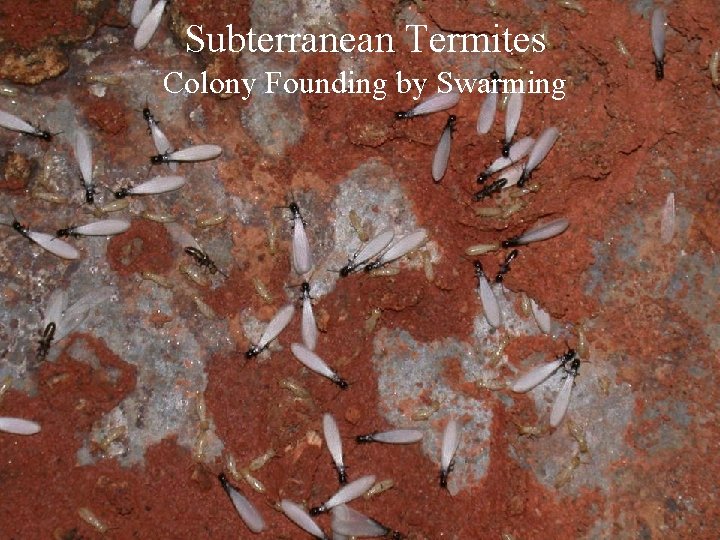
Subterranean Termites Colony Founding by Swarming
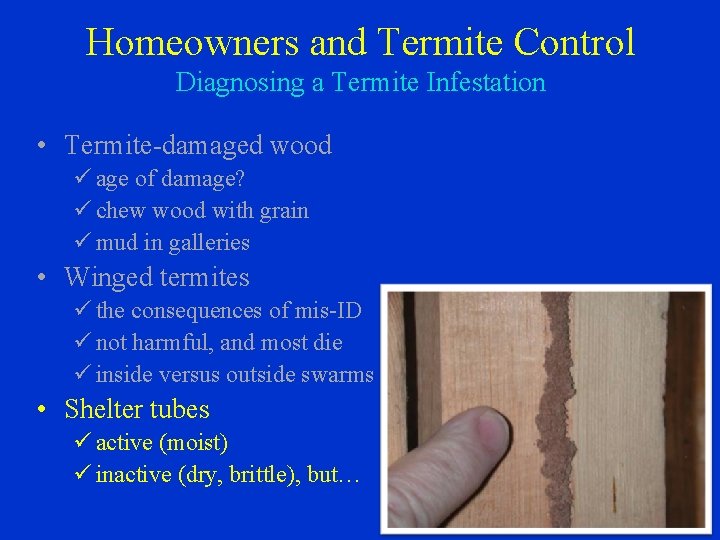
Homeowners and Termite Control Diagnosing a Termite Infestation • Termite-damaged wood ü age of damage? ü chew wood with grain ü mud in galleries • Winged termites ü the consequences of mis-ID ü not harmful, and most die ü inside versus outside swarms • Shelter tubes ü active (moist) ü inactive (dry, brittle), but…
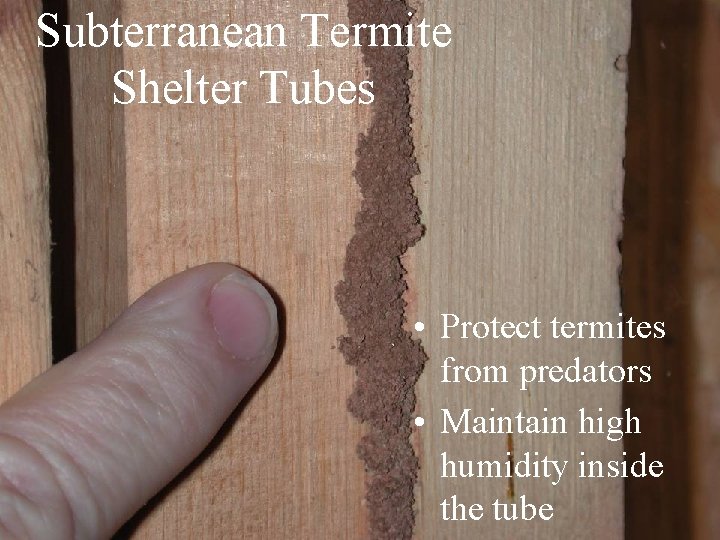
Subterranean Termite Shelter Tubes • Protect termites from predators • Maintain high humidity inside the tube
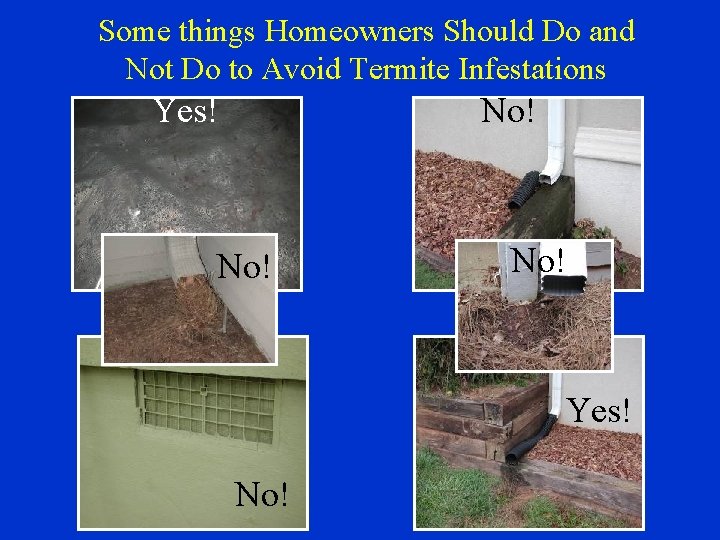
Some things Homeowners Should Do and Not Do to Avoid Termite Infestations Yes! No! No! Yes! No!
Products Used to Control Termites A New Era in Termite Control • Before 1995 termite control was defensive. The wood inside a structure was protected with repellent, liquid termiticides. ü Termite populations in the vicinity of the structure are not lessened with repellent products; termite threat remains. • Beginning in 1995, termite control became offensive. The wood inside a structure is protected with baits and nonrepellent, liquid termiticides. ü Termite populations in the vicinity of a structure are lessened with baits and non-repellents; termite threat is reduced.
Non-Repellent, Liquid Termiticides • Termidor 9. 1 SC (BASF Corporation) ü 0. 06 fipronil üwww. termidoronline. com • Premise 75 WP (Bayer Corporation) ü 0. 05 or 0. 10% imidacloprid üwww. nobugs. com • Phantom (BASF Corporation) üchlorfenapyr
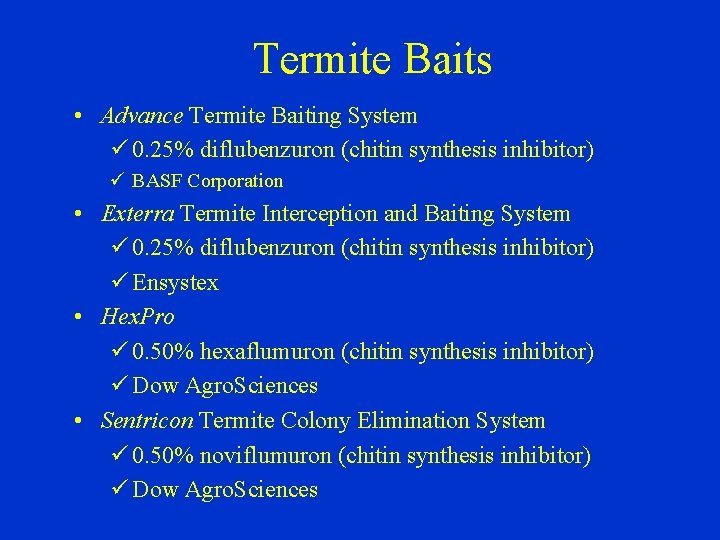
Termite Baits • Advance Termite Baiting System ü 0. 25% diflubenzuron (chitin synthesis inhibitor) ü BASF Corporation • Exterra Termite Interception and Baiting System ü 0. 25% diflubenzuron (chitin synthesis inhibitor) ü Ensystex • Hex. Pro ü 0. 50% hexaflumuron (chitin synthesis inhibitor) ü Dow Agro. Sciences • Sentricon Termite Colony Elimination System ü 0. 50% noviflumuron (chitin synthesis inhibitor) ü Dow Agro. Sciences
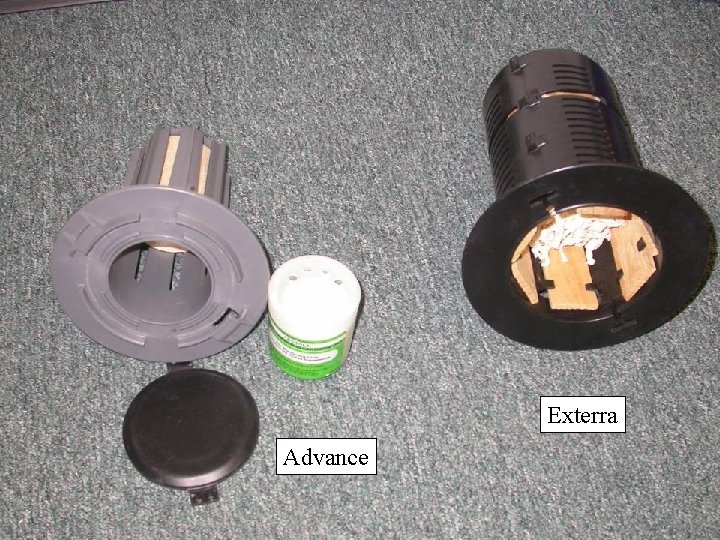
Exterra Advance
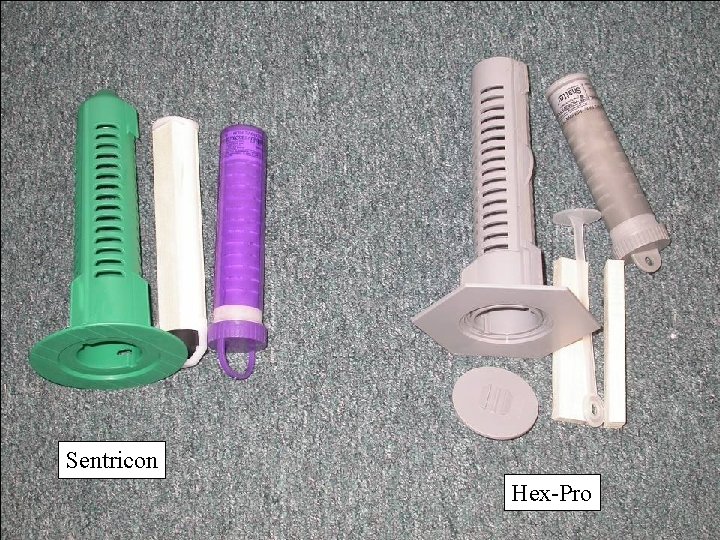
Sentricon Hex-Pro
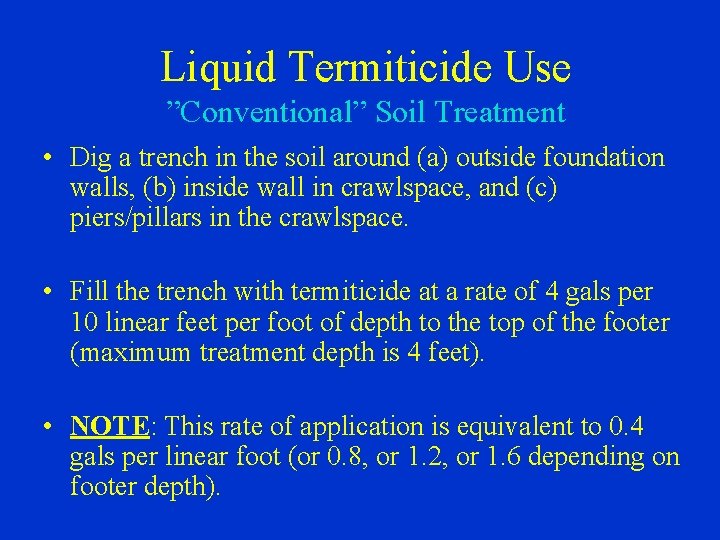
Liquid Termiticide Use ”Conventional” Soil Treatment • Dig a trench in the soil around (a) outside foundation walls, (b) inside wall in crawlspace, and (c) piers/pillars in the crawlspace. • Fill the trench with termiticide at a rate of 4 gals per 10 linear feet per foot of depth to the top of the footer (maximum treatment depth is 4 feet). • NOTE: This rate of application is equivalent to 0. 4 gals per linear foot (or 0. 8, or 1. 2, or 1. 6 depending on footer depth).
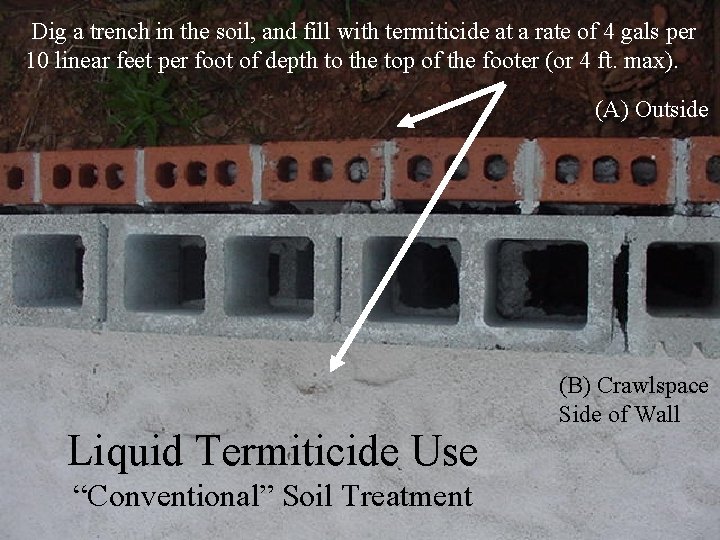
Dig a trench in the soil, and fill with termiticide at a rate of 4 gals per 10 linear feet per foot of depth to the top of the footer (or 4 ft. max). (A) Outside Liquid Termiticide Use “Conventional” Soil Treatment (B) Crawlspace Side of Wall
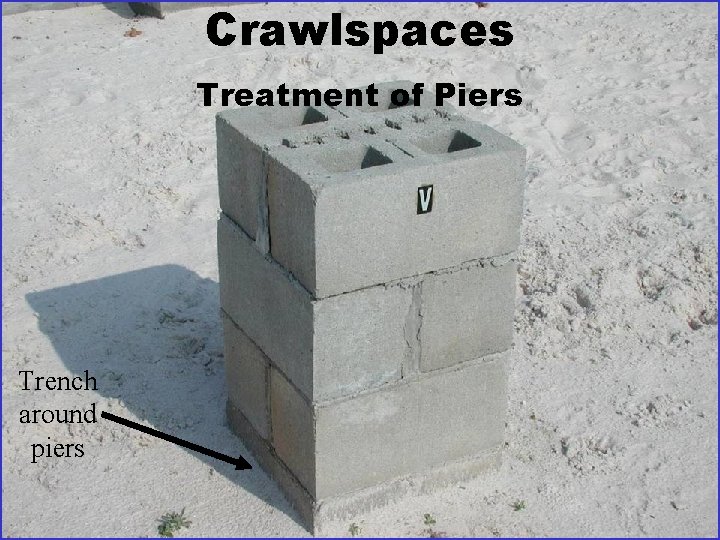
Crawlspaces Treatment of Piers Trench around piers
Liquid Termiticide Use Treating the Soil That’s Under Concrete Slabs • Wherever a trench cannot be dug along a foundation wall, because concrete is in the way, the concrete must be drilled every 12 inches and the termiticide then injected through each hole into the sub-slab soil. • The rate is the same as if concrete were not present (4 gals per 10 linear feet per foot of depth to the top of footer or 4 feet). • NOTE: If the holes are 12 inches apart (per State Regulation), each hole receives 0. 40 gals.
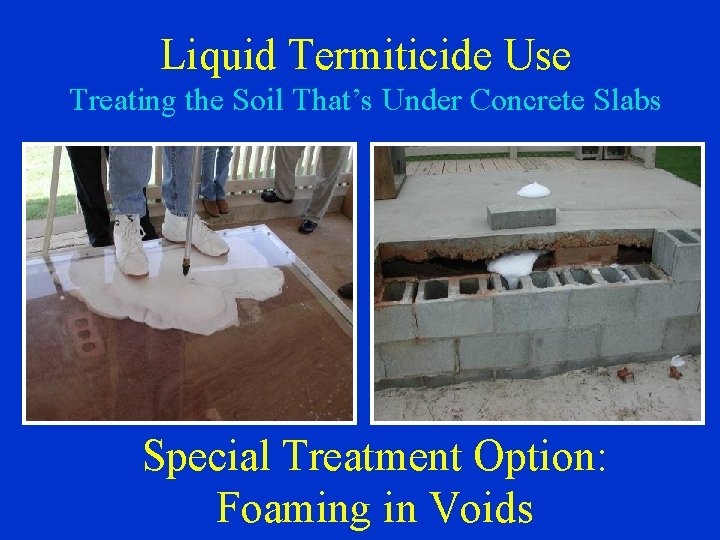
Liquid Termiticide Use Treating the Soil That’s Under Concrete Slabs Special Treatment Option: Foaming in Voids
Liquid Termiticide Use ”Conventional” Treatment of Masonry Voids • Drill holes in concrete block/brick wall and pier voids so that termiticide can be injected into the masonry void. • Rate of application is 2 gals per 10 linear feet of wall. • NOTE: If the holes are 12 inches apart (per State Regulation), each hole receives 0. 2 gals.
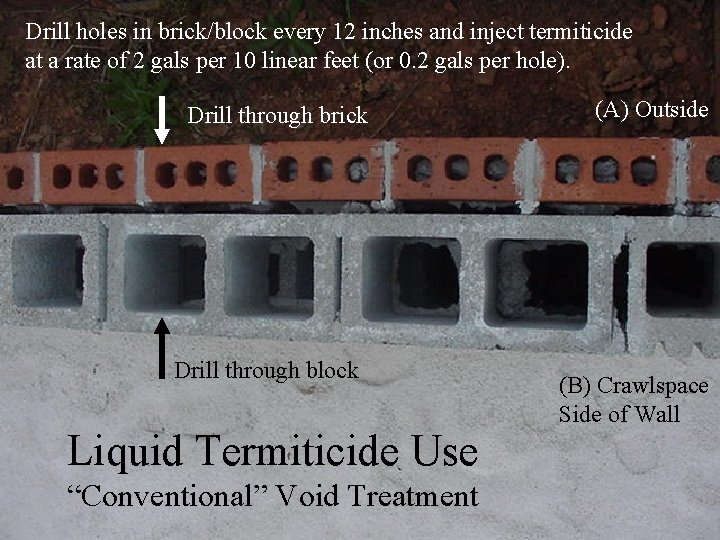
Drill holes in brick/block every 12 inches and inject termiticide at a rate of 2 gals per 10 linear feet (or 0. 2 gals per hole). Drill through brick Drill through block Liquid Termiticide Use “Conventional” Void Treatment (A) Outside (B) Crawlspace Side of Wall
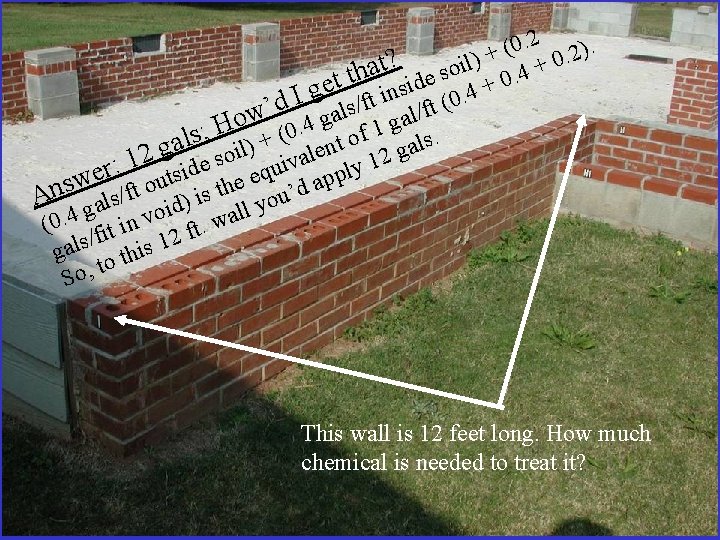
. 2 0. ( ) 2 +. 0 ? soil) 4 + t a h. t e 0 t d i e + s g n i. 4 I t 0 f ( d / t ’ ls /f a l w a g o g H. 4 of 1 0 ; ( s l s. + l t a ) a n g l g e i l o 2 2 a s 1 1 v i e : y u d r l i e outs he eq p p w a s An gals/ft id) is t l you’d l o a 4 v. w 0 n ( i t. t f i f 2 / gals o this 1 t So, This wall is 12 feet long. How much chemical is needed to treat it?
- Slides: 35