
Subsystem Design Review P 14231 UAV Aerial Imaging
Subsystem Design Review P 14231 - UAV Aerial Imaging Aaron Willbee | Tim Fratangelo | Reed Abraham | Alex Klymkow | Spencer Hanson
Agenda • • Review of previous work Camera Design Communication APM (autopilot) Aircraft Test Plan Schedule
Key Stakeholders Customer & Guide: Dr. Jason Kolodziej, ME Department, RIT Team: Project Lead: Project Engineers: Reed Abraham (Aeronautics) Tim Fratangelo (Code Master) Spencer Hanson (Aeronautics) Alex Klymkow (Power Systems) Aaron Wilbee (Camera Integration) Interested Parties: Rochester Institute of Technology College of Imaging Science Mechanical Engineering Department

Project & Objectives • Integrate Ardu. Pilot and Image Capture System o o Aerial images with associated GPS, aircraft altitude and attitude telemetry Waypoint-based shutter trigger Airframe-independent autopilot system Manual take-off/land, autonomous, waypoint-guided flight. • Combine the work of previous projects • Carry a payload of imaging equipment o o Initial: Go. Pro Expansion: Professional imaging devices

Customer Requirements 1. Record & Associate Telemetry Data with Photographs 1. Airframe Independent System 1. Dynamic Mission Updating (APM “Guide” mode) 1. Picture on Command 1. Functional Autopilot
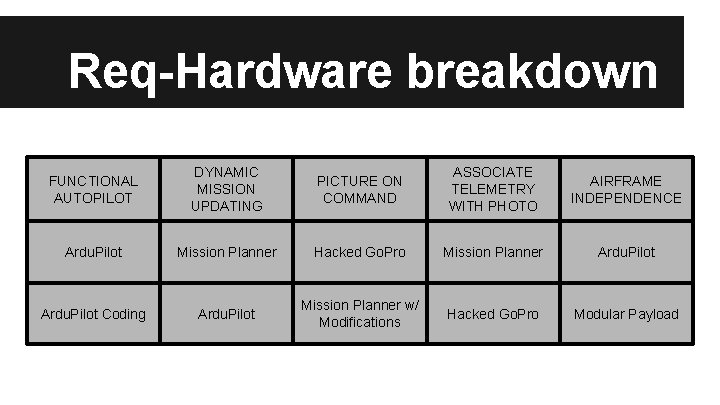
Req-Hardware breakdown FUNCTIONAL AUTOPILOT DYNAMIC MISSION UPDATING PICTURE ON COMMAND ASSOCIATE TELEMETRY WITH PHOTO AIRFRAME INDEPENDENCE Ardu. Pilot Mission Planner Hacked Go. Pro Mission Planner Ardu. Pilot Coding Ardu. Pilot Mission Planner w/ Modifications Hacked Go. Pro Modular Payload
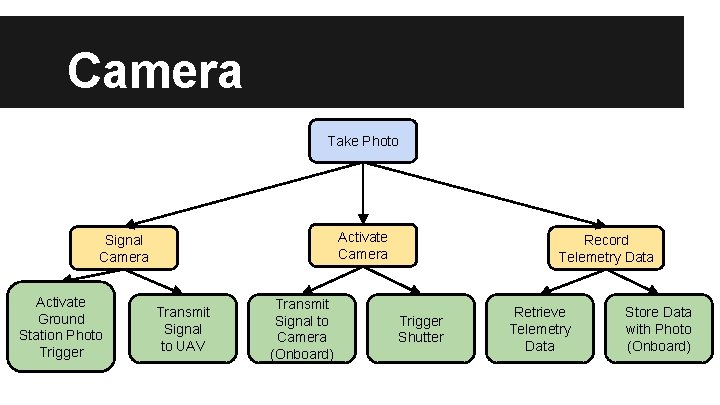
Camera Take Photo Activate Camera Signal Camera Activate Ground Station Photo Trigger Transmit Signal to UAV Transmit Signal to Camera (Onboard) Record Telemetry Data Trigger Shutter Retrieve Telemetry Data Store Data with Photo (Onboard)
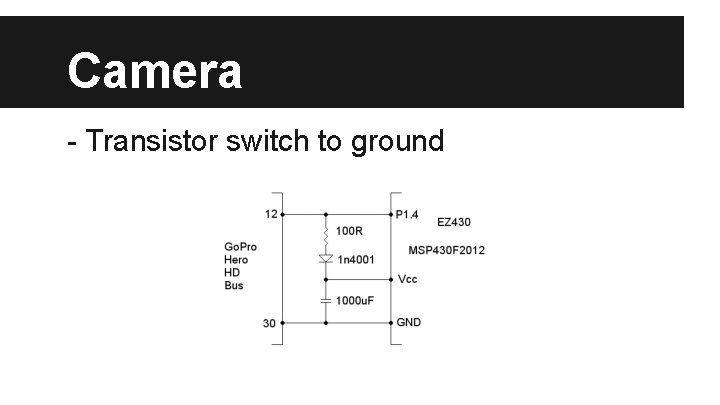
Camera - Transistor switch to ground
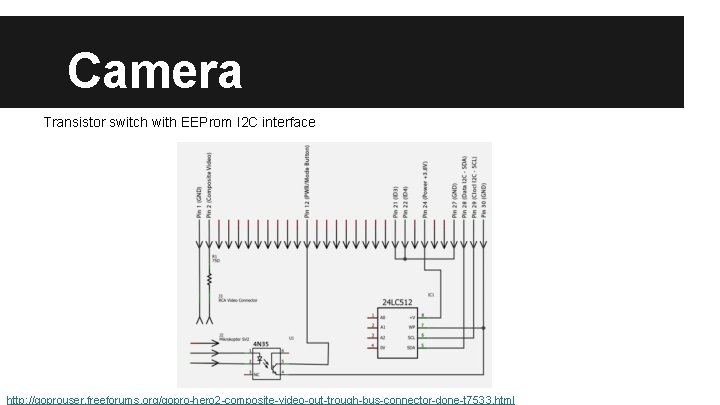
Camera Transistor switch with EEProm I 2 C interface http: //goprouser. freeforums. org/gopro-hero 2 -composite-video-out-trough-bus-connector-done-t 7533. html
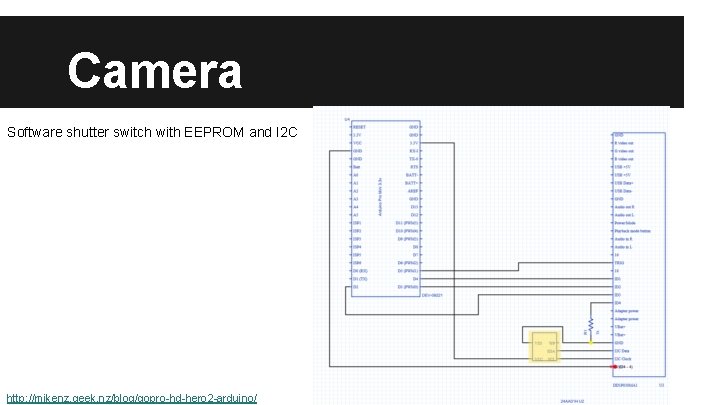
Camera Software shutter switch with EEPROM and I 2 C http: //mikenz. geek. nz/blog/gopro-hd-hero 2 -arduino/
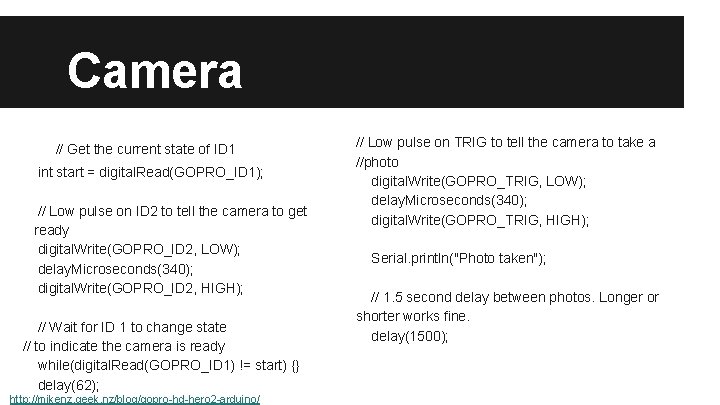
Camera // Get the current state of ID 1 int start = digital. Read(GOPRO_ID 1); // Low pulse on ID 2 to tell the camera to get ready digital. Write(GOPRO_ID 2, LOW); delay. Microseconds(340); digital. Write(GOPRO_ID 2, HIGH); // Wait for ID 1 to change state // to indicate the camera is ready while(digital. Read(GOPRO_ID 1) != start) {} delay(62); http: //mikenz. geek. nz/blog/gopro-hd-hero 2 -arduino/ // Low pulse on TRIG to tell the camera to take a //photo digital. Write(GOPRO_TRIG, LOW); delay. Microseconds(340); digital. Write(GOPRO_TRIG, HIGH); Serial. println("Photo taken"); // 1. 5 second delay between photos. Longer or shorter works fine. delay(1500);

Camera Parts • • Breakout board 24 AA 0 SOT-23 -5 package EEProm Current limiting resistor PNP transistor switch 2 digital pins 2 PWM Pins 3. 3 v Microcontroller or Buck Converter
Communication • • • Lightweight Large range: ~1 mile Fully supported by APM mission planner
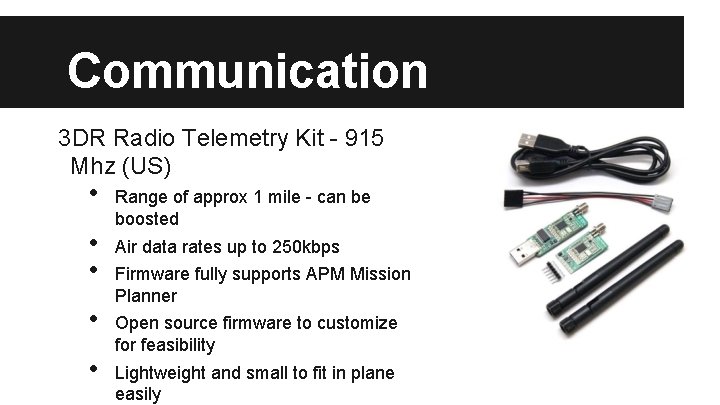
Communication 3 DR Radio Telemetry Kit - 915 Mhz (US) • • • Range of approx 1 mile - can be boosted Air data rates up to 250 kbps Firmware fully supports APM Mission Planner Open source firmware to customize for feasibility Lightweight and small to fit in plane easily
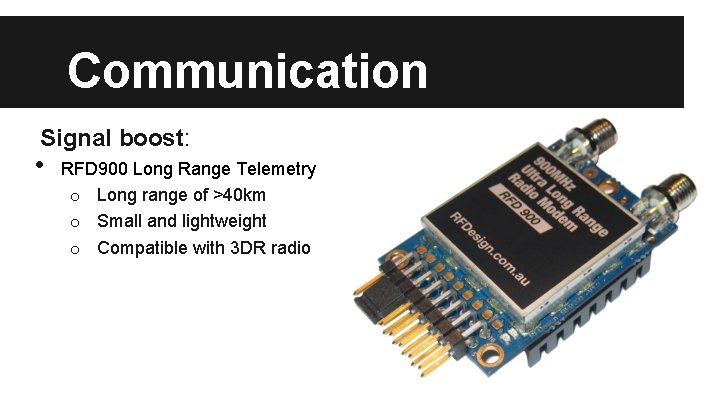
Communication Signal boost: • RFD 900 Long Range Telemetry o Long range of >40 km o Small and lightweight o Compatible with 3 DR radio
APM Hurdles • • Ardu. Pilot is no longer Arduino based Lacking thorough code documentation
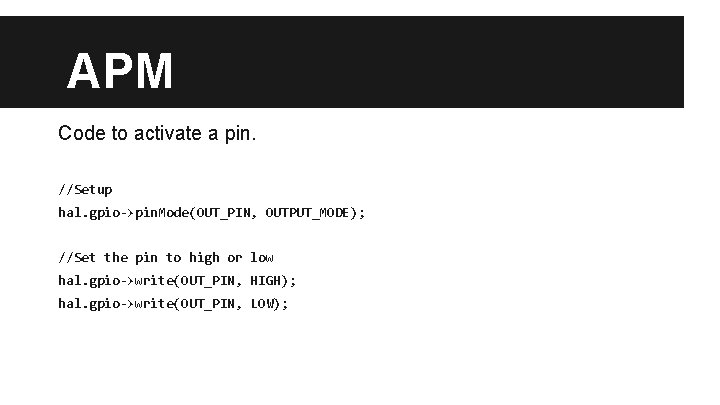
APM Code to activate a pin. //Setup hal. gpio->pin. Mode(OUT_PIN, OUTPUT_MODE); //Set the pin to high or low hal. gpio->write(OUT_PIN, HIGH); hal. gpio->write(OUT_PIN, LOW);

APM Telemetry data located in the AP_AHRS class ● ahrs. yaw ● ahrs. pitch ● ahrs. roll GPS data located in the mavlink_gps_raw struct ● gps_raw->lat ● gps_raw->lon ● gps_raw->alt

APM Next Steps ● ● Locate an output pin in code Test pin with camera Insert camera function in waypoint detection function Add telemetry and GPS capture to the camera function.
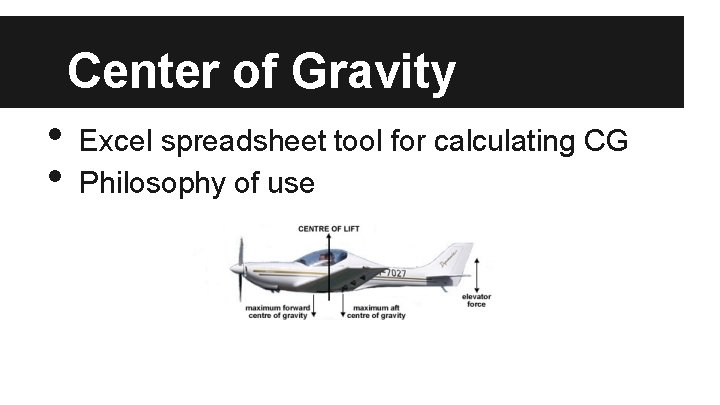
Center of Gravity • • Excel spreadsheet tool for calculating CG Philosophy of use
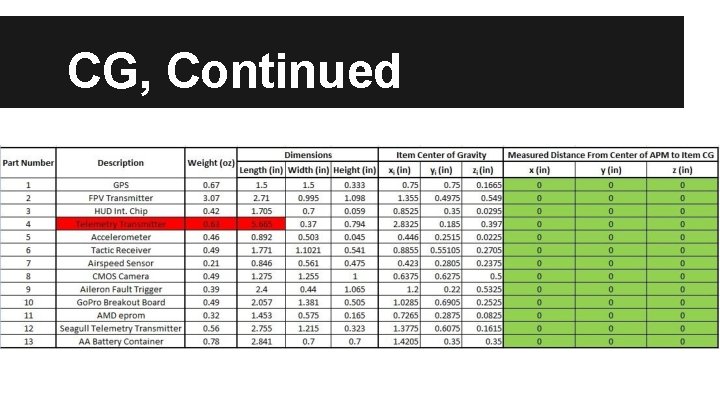
CG, Continued
Aircraft Selection Major Criteria: Modifiability (feasibility vs. man hours) Internal volume Lift capacity Cost • •

Options ● ● ● ● ● Telemaster 40 kit ~ $150 Telemaster 40 ARF** ~ $200 Alpha 450 ARF ~ $130 Alpha 450 PNP ~ $250 Mystique ARF~ $370 EPO foam wing kit ~ $170 Radian BNF ~ $250 Phoenix 2000 ARF ~ $60 Penguin ARF ~$105

Phoenix 2000 ($60) ● Benefits: ○ ○ High efficiency design Long flight times Sufficient internal volume for Go. Pro payload Community used (FPV) - info easily available ● Drawbacks: ○ Insufficient internal volume for multispectrum camera ○ Post - construction modification of nylon fuselage ○ Additional parts required ○ Possible low quality stock hardware (research ongoing, easily replaceable/repairable) ● Additional Cost Estimate: ARF: $60, PNP: $100 Quick Specs: Wingspan: 78. 74 inches (2000 mm) Powerplant: Configurable (Brushless 2815 (1050 Kv) PNP) Max. Flight weight: 34. 5 ounces (980 g)

Penguin ($105 - $214) ● Benefits: ○ ○ ○ Sufficient internal volume for either camera Pre-cut downward facing camera hole + mount High max flight weight Community used - info readily available Spare parts/mods readily available, inexpensive ● Drawbacks: ○ ○ Post - construction modification of foam Creation of replacement canopy (preferred) Aerodynamically irresponsible canopy Additional parts depending on model purchased ● Additional Cost Estimate: Quick Specs: Wingspan: 67. 7 inches (1720 mm) Powerplant: Brushless M 2815 (1280 kv) Max. Flight weight: 77. 0 ounces (2200 g)

Pugh Selection Matrix

Conclusion - Aircraft Selection The best commercially available aircraft to accomplish our goals is the Penguin. • • Large internal volume Easy to fly Purpose-built for FPV & aerial imaging Durable, lightweight construction Easily available, inexpensive spare parts Wide variety of modifications available Growing community user base

Aircraft - Next steps • • Vendors contacted for internal fuselage dimensions of Radian, Penguin, Phoenix Community research ongoing on RC Groups o Focus on power system - ESC, Motor, Prop

Test Plan • • • Identify pins on Go. Pro breakout board to trigger camera Identify how much Ardu. Pilot memory can be used to store flight data before affecting system performance Identify pins on Ardu. Pilot available to use to trigger camera Create initial wiring setup, test on breadboard (no data connection, not wireless) Transfer setup to a breadboard-based handheld test board, complete with aircraft power source and all components. o Drive or walk to waypoints to simulate aircraft flight, test data connection, dynamic waypoint updating. o Use this setup to develop telemetry to image association

Schedule ● ● ● Schedule is highly dependent on when new Go. Pro camera is received from Go. Pro. ○ Estimate at least two weeks from today Development of software does not need to halt in its place. Milestones for the next three weeks: ○ 10/24 - 10/30 - Final Aircraft decided upon & ordered (Spencer, Reed) ○ 10/24 - 11/13 - Software Camera Trigger development (Tim, Aaron) ■ Breadboard test with Camera starting on 11/10 ○ 10/24 - 11/06 - Handheld Test Board design & production (Spencer, Reed) ○ 11/06 - 11/10 - Go. Pro Exposure (Aaron, Alex) ○ 11/06 - 11/13 - Design any modifications to the aircraft ■ (That require physical access to the hardware)
Questions?
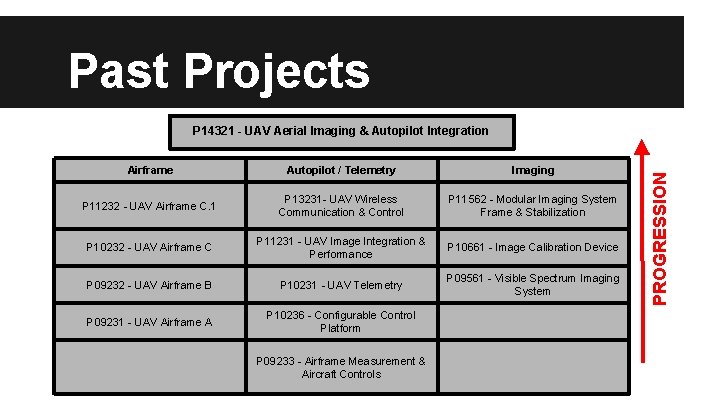
Past Projects Airframe Autopilot / Telemetry Imaging P 11232 - UAV Airframe C. 1 P 13231 - UAV Wireless Communication & Control P 11562 - Modular Imaging System Frame & Stabilization P 10232 - UAV Airframe C P 11231 - UAV Image Integration & Performance P 10661 - Image Calibration Device P 09232 - UAV Airframe B P 10231 - UAV Telemetry P 09561 - Visible Spectrum Imaging System P 09231 - UAV Airframe A P 10236 - Configurable Control Platform P 09233 - Airframe Measurement & Aircraft Controls PROGRESSION P 14321 - UAV Aerial Imaging & Autopilot Integration

Risks Risk ID # Describe the risk Effect What are the possible cause(s) of this risk? Likelihood Severity L*S Action(s) to take to prevent, reduce the impact of 5 Short circuit: camera Camera is destroyed and a new one must be acquired. Improperly connected Incorrect supply 3 3 9 Review data sheets draw a layout. use current limiting resistors, insulate pins. 12 Communication failure with ground station Aircraft no longer able to land, plane will crash Loss of power to radio module, short circuit in radio module, out of range 3 3 9 Perform range tests periodically with equipment on ground and ensure the autopilot never flies farther than 50% of range 17 Loss of GPS signal in flight Possible loss of aircraft, possible loss of electrical components Cloud cover, aircraft orientation, signal interference 3 3 9 Fly on calm, clear days. Test GPS chip to determine how much inclination is allowed 19 Autopilot software incorrectly programmed Loss of control, loss of aircraft Not checking the autopilot algorithms thoroughly enough 3 3 9 Sweep code and verify that the flight dynamic and aerodynamic principles behind the algorithms are correct and are able to be executed by the hardware. 23 Loss of inertial positioning data mission failure due to insufficient data memory overflow, indexing error 1 3 3 Rigorous testing to ensure that the code reliably saves the data
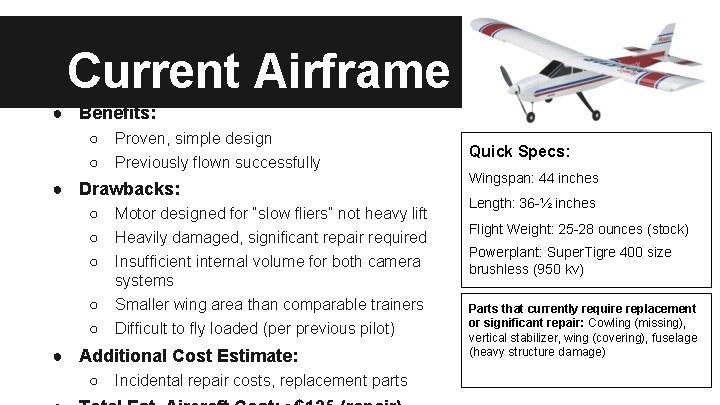
Current Airframe ● Benefits: ○ Proven, simple design ○ Previously flown successfully ● Drawbacks: ○ Motor designed for “slow fliers” not heavy lift ○ Heavily damaged, significant repair required ○ Insufficient internal volume for both camera systems ○ Smaller wing area than comparable trainers ○ Difficult to fly loaded (per previous pilot) ● Additional Cost Estimate: ○ Incidental repair costs, replacement parts Quick Specs: Wingspan: 44 inches Length: 36 -½ inches Flight Weight: 25 -28 ounces (stock) Powerplant: Super. Tigre 400 size brushless (950 kv) Parts that currently require replacement or significant repair: Cowling (missing), vertical stabilizer, wing (covering), fuselage (heavy structure damage)
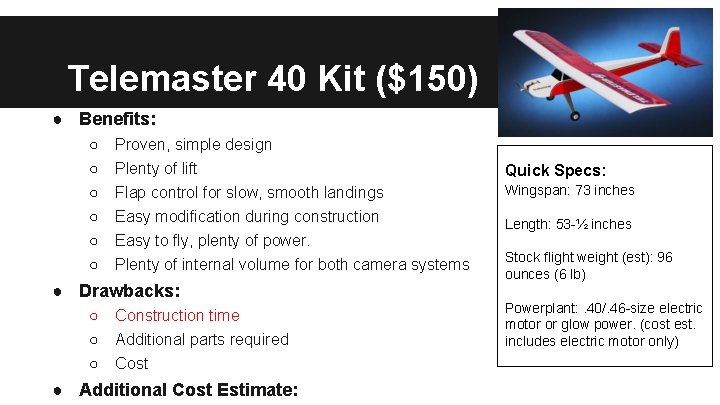
Telemaster 40 Kit ($150) ● Benefits: ○ ○ ○ Proven, simple design Plenty of lift Quick Specs: Flap control for slow, smooth landings Wingspan: 73 inches Easy modification during construction Length: 53 -½ inches Easy to fly, plenty of power. Plenty of internal volume for both camera systems ● Drawbacks: ○ Construction time ○ Additional parts required ○ Cost ● Additional Cost Estimate: Stock flight weight (est): 96 ounces (6 lb) Powerplant: . 40/. 46 -size electric motor or glow power. (cost est. includes electric motor only)

Telemaster 40 ARF ($200) ● Benefits: ○ ○ ○ Same aircraft as kit, pre-built Proven, simple design Plenty of lift Flap control for slow, smooth landings Easy to fly, plenty of power. Plenty of internal volume for both camera systems ● Drawbacks: ○ Post-construction modification ○ Additional parts required ○ Cost ● Additional Cost Estimate: Quick Specs: Same as Telemaster 40 Kit
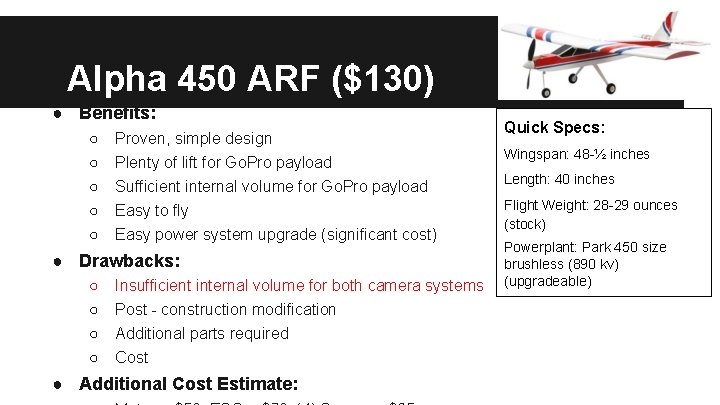
Alpha 450 ARF ($130) ● Benefits: ○ ○ ○ Proven, simple design Plenty of lift for Go. Pro payload Wingspan: 48 -½ inches Sufficient internal volume for Go. Pro payload Length: 40 inches Easy to fly Flight Weight: 28 -29 ounces (stock) Easy power system upgrade (significant cost) ● Drawbacks: ○ ○ Quick Specs: Insufficient internal volume for both camera systems Post - construction modification Additional parts required Cost ● Additional Cost Estimate: Powerplant: Park 450 size brushless (890 kv) (upgradeable)
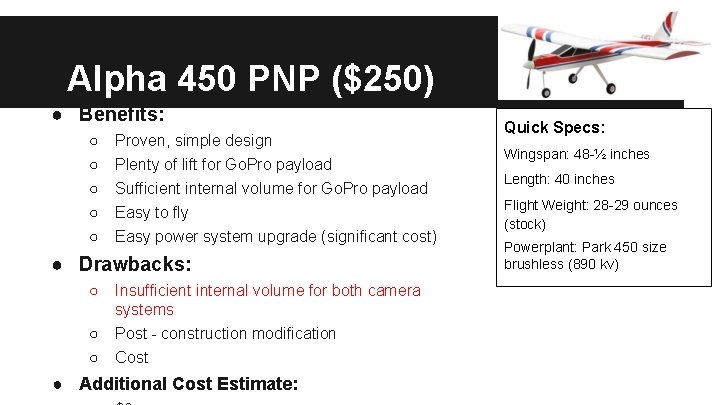
Alpha 450 PNP ($250) ● Benefits: ○ ○ ○ Proven, simple design Plenty of lift for Go. Pro payload Sufficient internal volume for Go. Pro payload Easy to fly Easy power system upgrade (significant cost) ● Drawbacks: ○ Insufficient internal volume for both camera systems ○ Post - construction modification ○ Cost ● Additional Cost Estimate: Quick Specs: Wingspan: 48 -½ inches Length: 40 inches Flight Weight: 28 -29 ounces (stock) Powerplant: Park 450 size brushless (890 kv)
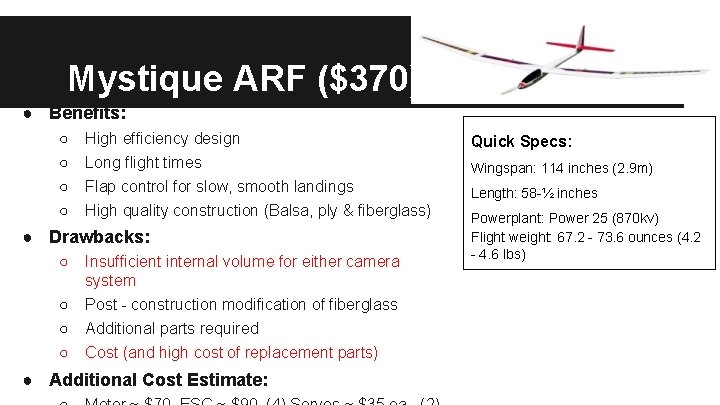
Mystique ARF ($370) ● Benefits: ○ ○ High efficiency design Quick Specs: Long flight times Wingspan: 114 inches (2. 9 m) Flap control for slow, smooth landings Length: 58 -½ inches High quality construction (Balsa, ply & fiberglass) ● Drawbacks: ○ Insufficient internal volume for either camera system ○ Post - construction modification of fiberglass ○ Additional parts required ○ Cost (and high cost of replacement parts) ● Additional Cost Estimate: Powerplant: Power 25 (870 kv) Flight weight: 67. 2 - 73. 6 ounces (4. 2 - 4. 6 lbs)

X 8 Flying Wing kit ($164) ● Benefits: ○ ○ Designed for UAV/FPV enthusiasts High aerodynamic efficiency Plenty of lift Sufficient internal volume either payload ● Drawbacks: ○ ○ Difficult to modify due to EPO foam construction Additional parts & Construction required Cost High speed dive wing flutter (!) ● Additional Cost Estimate: ○ Motor ~ $50, ESC ~ $140, (2) Servos ~ $35 ea. Folding Quick Specs: Wingspan: 83 -½ inches (2122 mm) Powerplant: Turnigy Aerodrive SK 3 (500 kv) Max. Flight weight: 123. 5 ounces (3500 g)
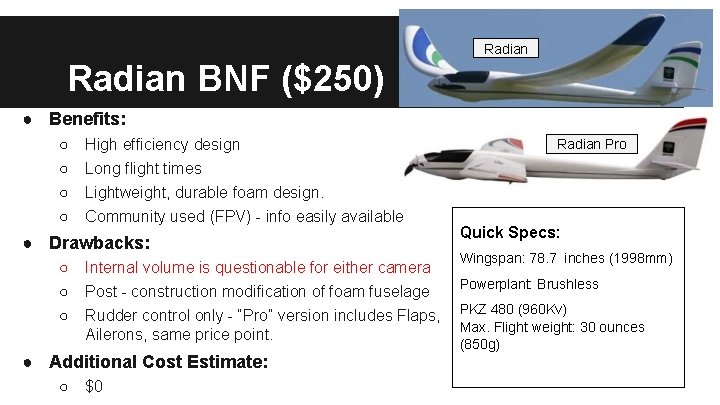
Radian BNF ($250) ● Benefits: ○ ○ High efficiency design Radian Pro Long flight times Lightweight, durable foam design. Community used (FPV) - info easily available ● Drawbacks: ○ Internal volume is questionable for either camera ○ Post - construction modification of foam fuselage ○ Rudder control only - “Pro” version includes Flaps, Ailerons, same price point. ● Additional Cost Estimate: ○ $0 Quick Specs: Wingspan: 78. 7 inches (1998 mm) Powerplant: Brushless PKZ 480 (960 Kv) Max. Flight weight: 30 ounces (850 g)
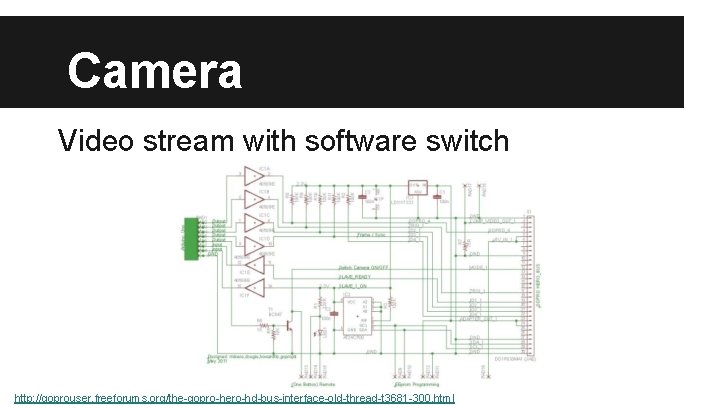
Camera Video stream with software switch http: //goprouser. freeforums. org/the-gopro-hero-hd-bus-interface-old-thread-t 3681 -300. html
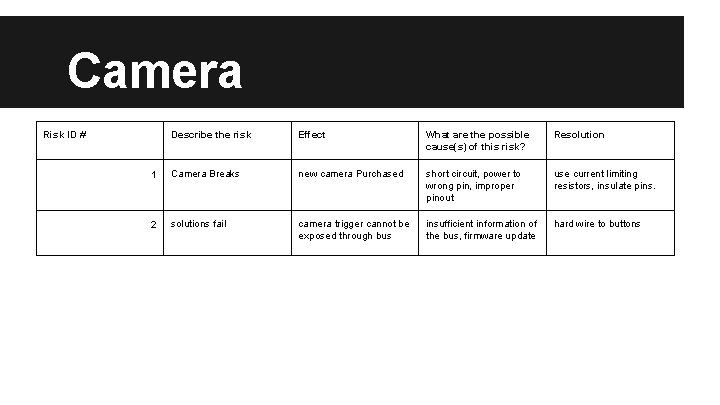
Camera Risk ID # Describe the risk Effect What are the possible cause(s) of this risk? Resolution 1 Camera Breaks new camera Purchased short circuit, power to wrong pin, improper pinout use current limiting resistors, insulate pins. 2 solutions fail camera trigger cannot be exposed through bus insufficient information of the bus, firmware update hard wire to buttons
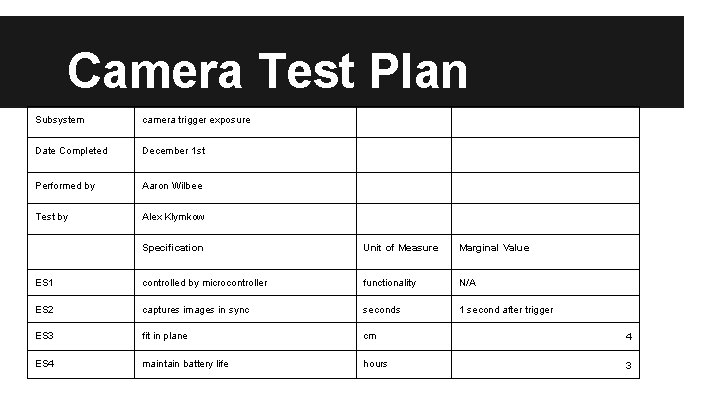
Camera Test Plan Subsystem camera trigger exposure Date Completed December 1 st Performed by Aaron Wilbee Test by Alex Klymkow Specification Unit of Measure Marginal Value ES 1 controlled by microcontroller functionality N/A ES 2 captures images in sync seconds 1 second after trigger ES 3 fit in plane cm 4 ES 4 maintain battery life hours 3
Communication Test • Hook up radio kit to Ardupilot and ground station Drive Ardupilot around with ground station not moving o See if Ardupilot receives signal § Determine distance § Signal strength when received § Noise o
Ardu. Pilot Test ● Drove Ardu. Pilot around in car ● Successes: ○ Ardupilot tracked car’s position within ~2 -3 meters consistently with GPS lock ○ Recorded flight data in mission planner ● Issues: ○ Loss of GPS lock causes loss of velocity vector and location, system wanders. ○ Heading vector appeared to be consistently off by ~20
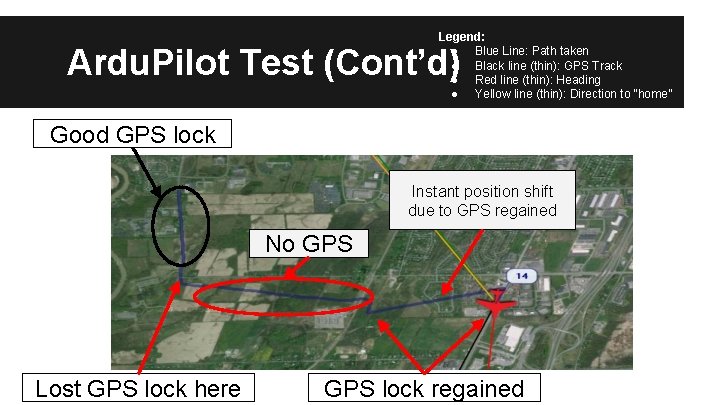
Legend: ● Blue Line: Path taken ● Black line (thin): GPS Track ● Red line (thin): Heading ● Yellow line (thin): Direction to “home” Ardu. Pilot Test (Cont’d) Good GPS lock Instant position shift due to GPS regained No GPS Lost GPS lock here GPS lock regained
- Slides: 47