
Subsurface Hydrology Unsaturated Zone Saturated Zone Water table
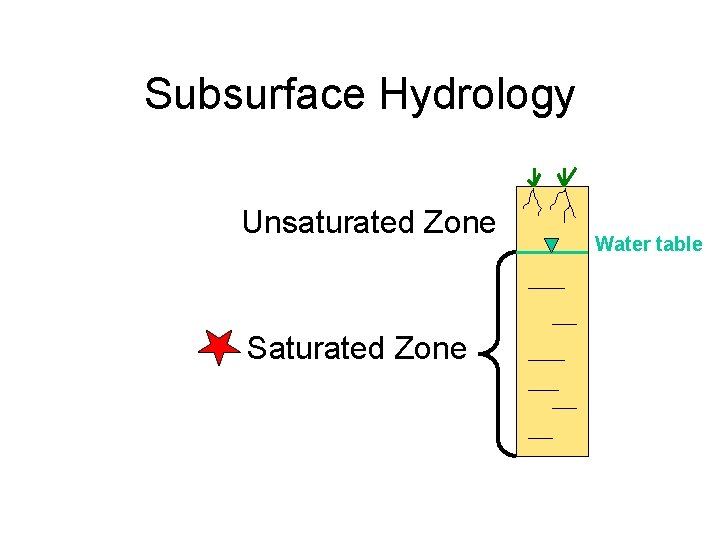
Subsurface Hydrology Unsaturated Zone Saturated Zone Water table
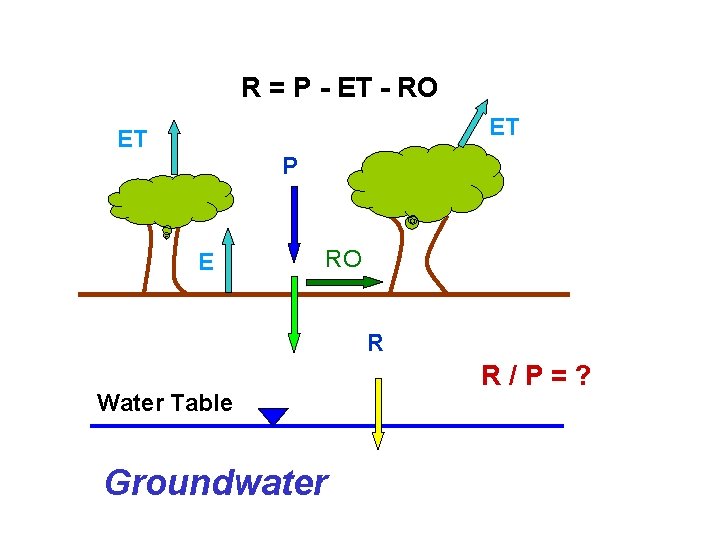
R = P - ET - RO ET ET P E RO R Water Table Groundwater R/P=?
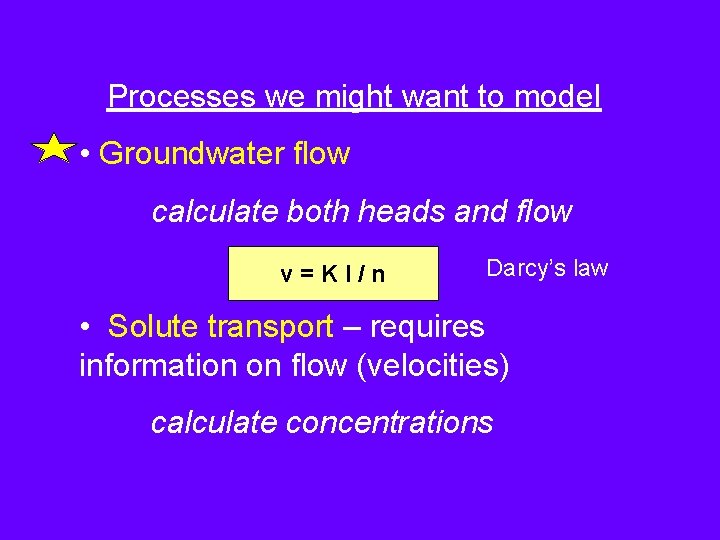
Processes we might want to model • Groundwater flow calculate both heads and flow v=KI/n Darcy’s law • Solute transport – requires information on flow (velocities) calculate concentrations
Conceptual Model A descriptive representation of a groundwater system that incorporates an interpretation of the geological & hydrological conditions. Generally includes information about the water budget.
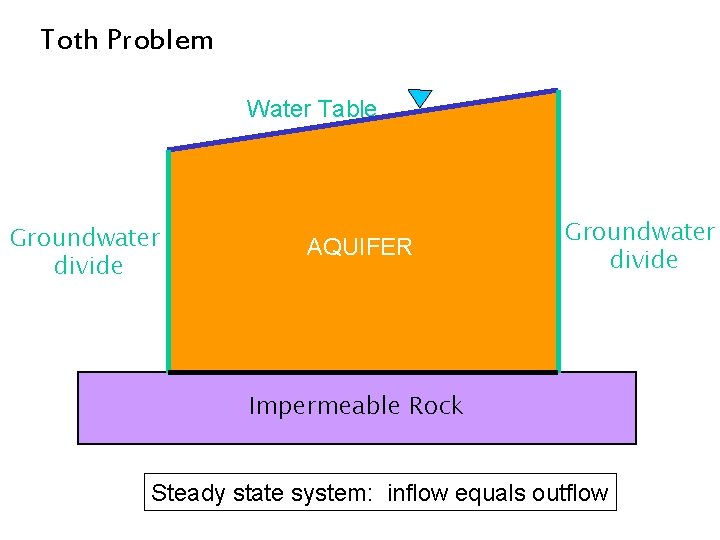
Toth Problem Water Table Groundwater divide AQUIFER Groundwater divide Impermeable Rock Steady state system: inflow equals outflow
Types of Models • Physical (e. g. , sand tank) • Analog (electric analog, Hele-Shaw) • Mathematical
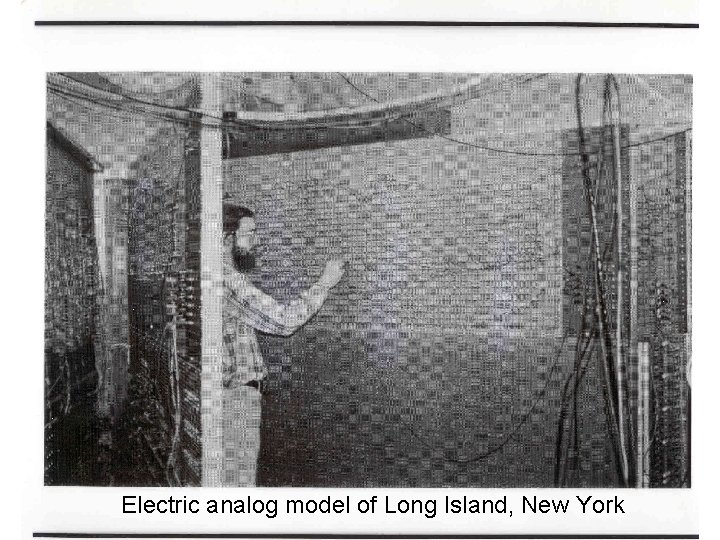
Electric analog model of Long Island, New York
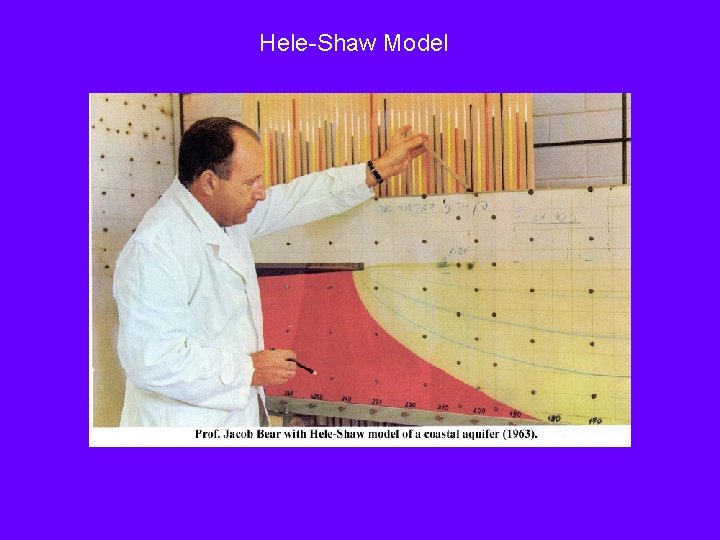
Hele-Shaw Model
Types of Models • Physical (e. g. , sand tank) • Analog (electric analog, Hele-Shaw) • Mathematical
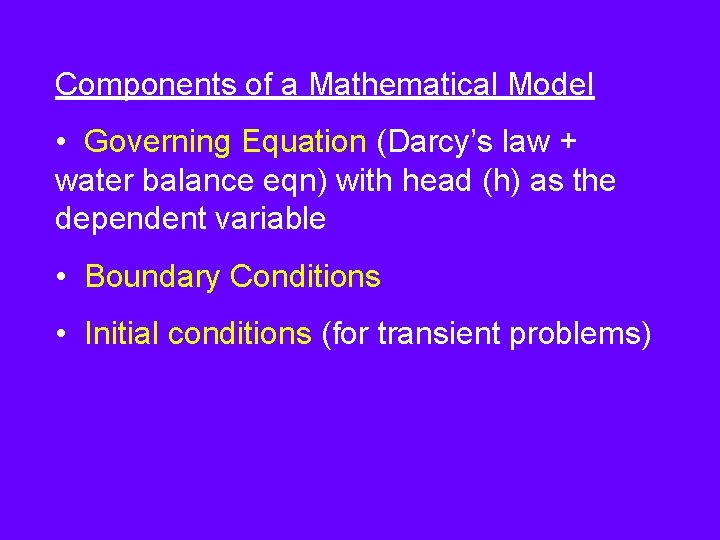
Components of a Mathematical Model • Governing Equation (Darcy’s law + water balance eqn) with head (h) as the dependent variable • Boundary Conditions • Initial conditions (for transient problems)
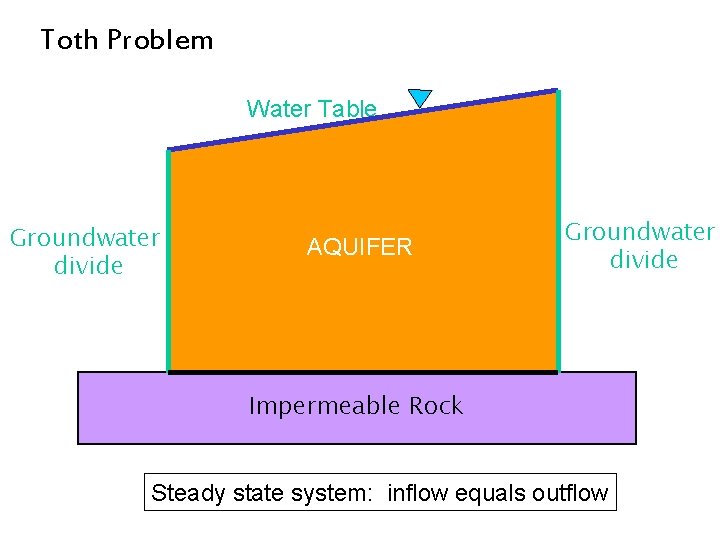
Toth Problem Water Table Groundwater divide AQUIFER Groundwater divide Impermeable Rock Steady state system: inflow equals outflow
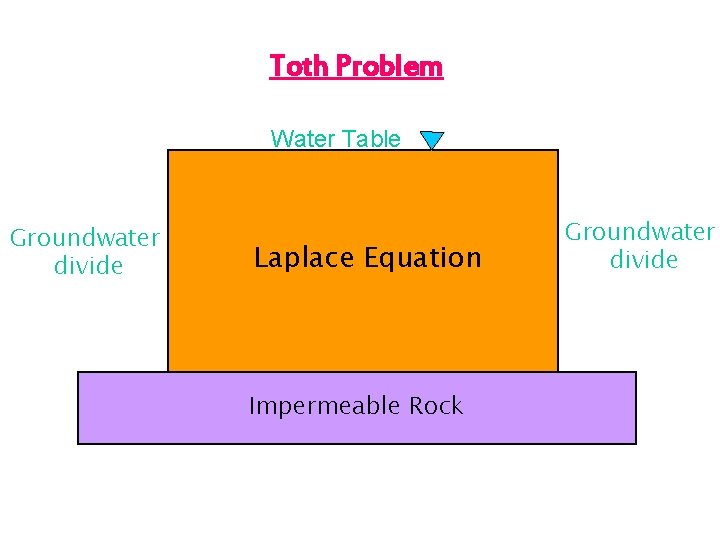
Toth Problem Water Table Groundwater divide Laplace Equation Impermeable Rock 2 D, steady state Groundwater divide
Types of Solutions of Mathematical Models • Analytical Solutions: h= f(x, y, z, t) (example: Theis eqn. ) • Numerical Solutions Finite difference methods Finite element methods • Analytic Element Methods (AEM)
Topo-Drive Finite element model of a version of the Toth Problem for regional flow in cross section.
Finite difference models may be solved using: • a computer program or code (e. g. , a FORTRAN program) • a spreadsheet (e. g. , EXCEL)

MODFLOW a computer code that solves a groundwater flow model using finite difference techniques Several versions available • MODFLOW 88 • MODFLOW 96 • MODFLOW 2000 • MODFLOW 2005
Steps in Groundwater Modeling 1. Model Design 2. Calibration (History matching) 3. Prediction (of heads)
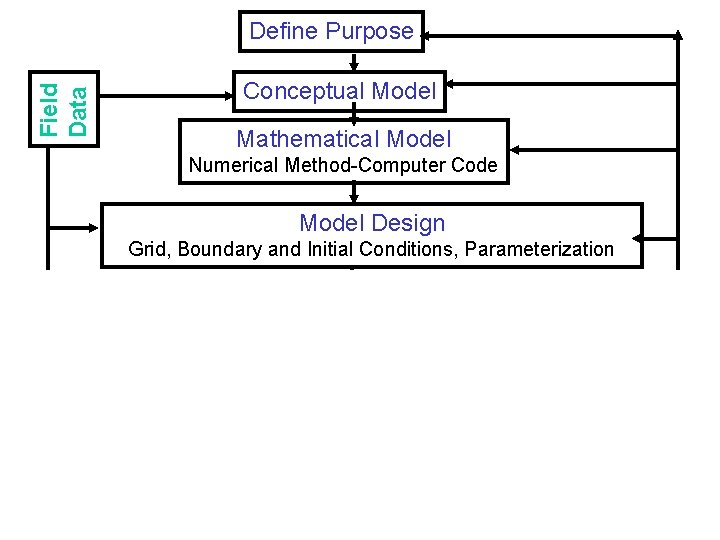
Field Data Define Purpose Conceptual Model Mathematical Model Numerical Method-Computer Code Model Design Grid, Boundary and Initial Conditions, Parameterization Calibration and Sensitivity Analyses Predictive Simulation Presentation of Results Postaudit
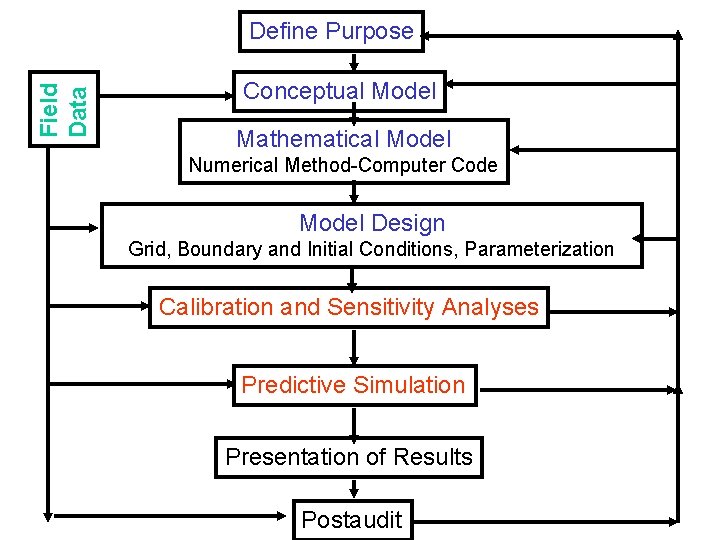
Field Data Define Purpose Conceptual Model Mathematical Model Numerical Method-Computer Code Model Design Grid, Boundary and Initial Conditions, Parameterization Calibration and Sensitivity Analyses Predictive Simulation Presentation of Results Postaudit
- Slides: 19