
Substances of Abuse Jonathan Buchholz MD Mark Duncan
Substances of Abuse Jonathan Buchholz, MD Mark Duncan, MD University of Washington
Goals for today • Practical basics for most common substances of abuse • Key concepts to know in any medical practice • Preparation for the board exams Steps 2 -3
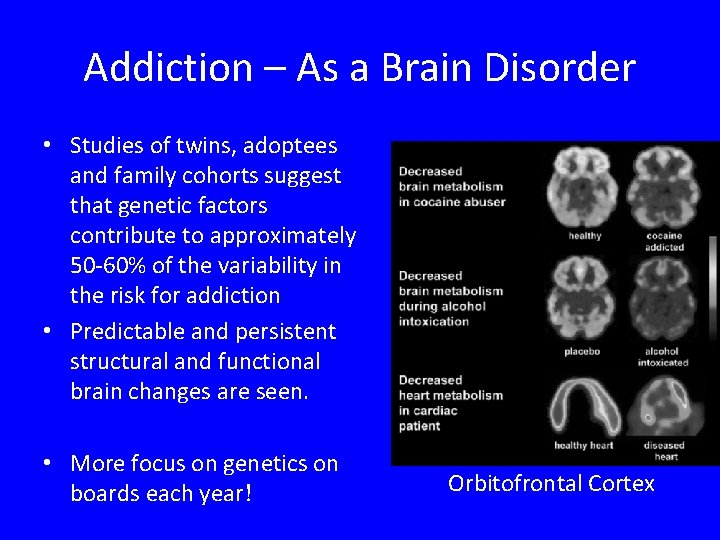
Addiction – As a Brain Disorder • Studies of twins, adoptees and family cohorts suggest that genetic factors contribute to approximately 50 -60% of the variability in the risk for addiction • Predictable and persistent structural and functional brain changes are seen. • More focus on genetics on boards each year! Orbitofrontal Cortex
Addiction as a Complex Biopsychosocial Disorder • “It is impossible to understand addiction without asking what relief the addict finds, or hopes to find, in the drug or the addictive behavior. ” Gabor Mate, MD • Higher rates of addiction in patients with chronic pain, psychiatric disorders, history of trauma, and raised in homes with substance abuse
Addiction as a Chronic Disease • How is it similar or different to DMII? • Chronic disease model • Course, etiologic factors, pathophysiology, response to treatment are similar to other chronic diseases (HTN, DMII, and Asthma) • Relapse is common • 40 -60% of patients treated for a SUD return to regular use within a year following treatment
Approach • Non-judgmental and compassionate – “Tell me about your alcohol (or drug use)” – Discussing their past use can make it easier – Patients are often embarrassed and vulnerable • 75% of primary care patients who screened positive for alcohol misuse showed motivation to change. This increased as the severity went up.
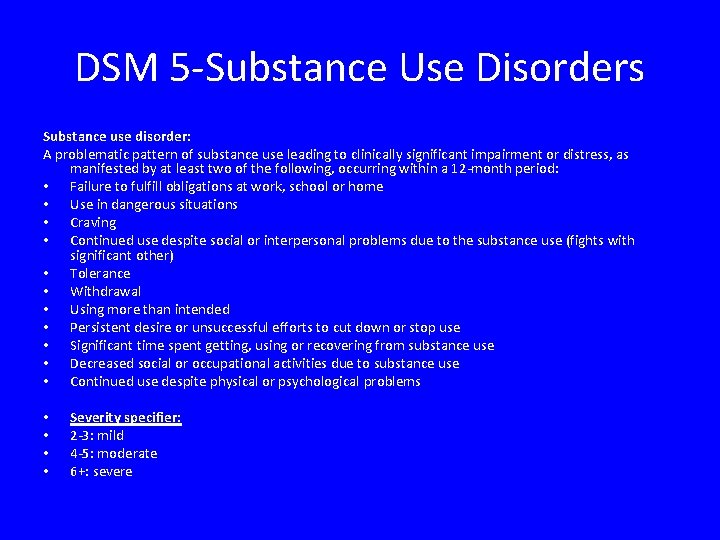
DSM 5 -Substance Use Disorders Substance use disorder: A problematic pattern of substance use leading to clinically significant impairment or distress, as manifested by at least two of the following, occurring within a 12 -month period: • Failure to fulfill obligations at work, school or home • Use in dangerous situations • Craving • Continued use despite social or interpersonal problems due to the substance use (fights with significant other) • Tolerance • Withdrawal • Using more than intended • Persistent desire or unsuccessful efforts to cut down or stop use • Significant time spent getting, using or recovering from substance use • Decreased social or occupational activities due to substance use • Continued use despite physical or psychological problems • • Severity specifier: 2 -3: mild 4 -5: moderate 6+: severe
Cannabis
Mechanism of Action • Mouse Party – (http: //learn. genetics. utah. edu/content/addiction/mouse/)
Effects • Intoxication – Common • Amotivation, perceptual disturbance (slowed time), tachycardia, anxiety, increased appetite, conjunctival injection, dry mouth – Severe • Paranoia, hallucinations, delusions • Withdrawal – Sleep disruption, anxiety, irritability, cravings
Totally safe? !?
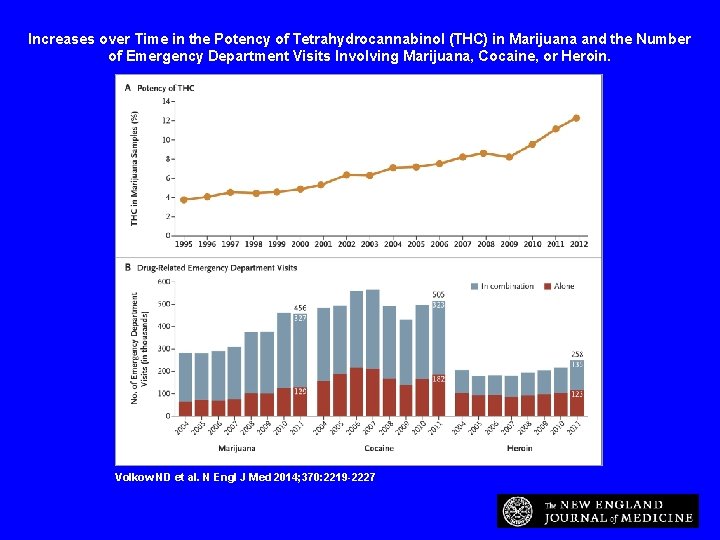
Increases over Time in the Potency of Tetrahydrocannabinol (THC) in Marijuana and the Number of Emergency Department Visits Involving Marijuana, Cocaine, or Heroin. Volkow ND et al. N Engl J Med 2014; 370: 2219 -2227
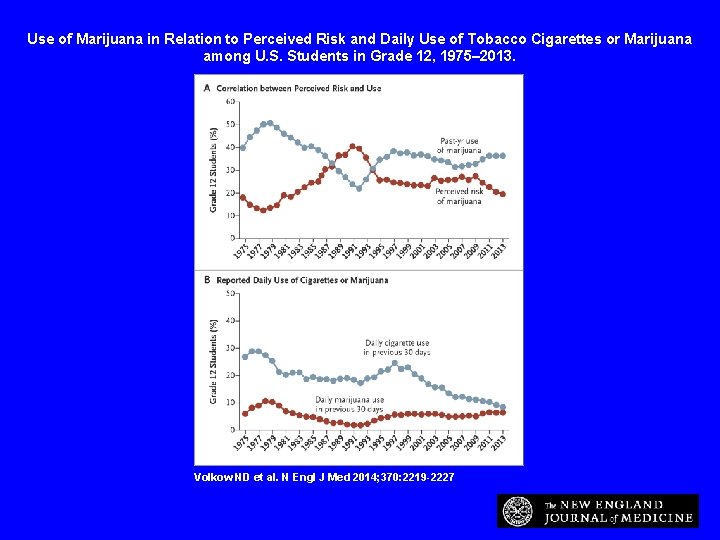
Use of Marijuana in Relation to Perceived Risk and Daily Use of Tobacco Cigarettes or Marijuana among U. S. Students in Grade 12, 1975– 2013. Volkow ND et al. N Engl J Med 2014; 370: 2219 -2227
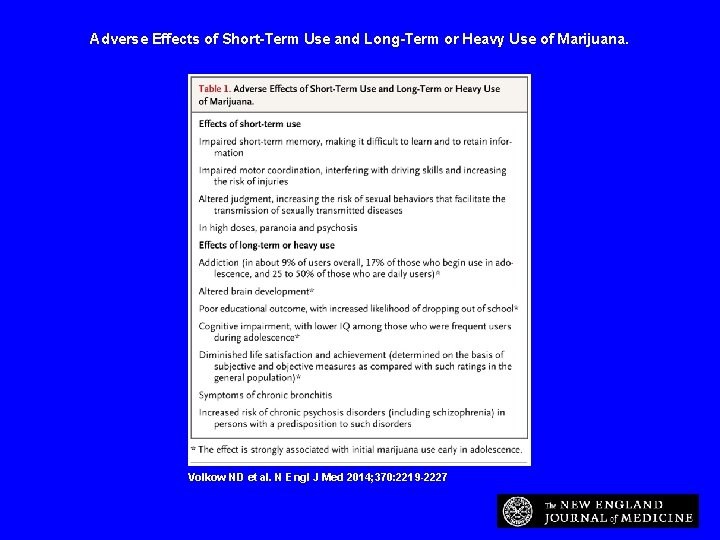
Adverse Effects of Short-Term Use and Long-Term or Heavy Use of Marijuana. Volkow ND et al. N Engl J Med 2014; 370: 2219 -2227
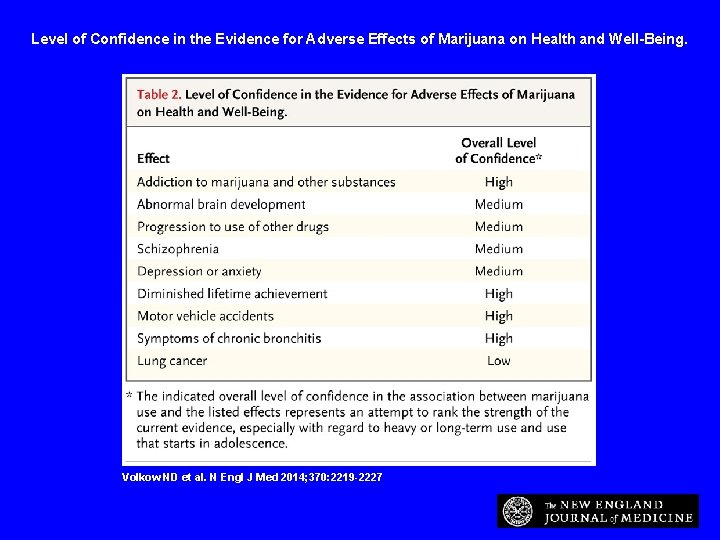
Level of Confidence in the Evidence for Adverse Effects of Marijuana on Health and Well-Being. Volkow ND et al. N Engl J Med 2014; 370: 2219 -2227
A 42 y. o. man with schizophrenia presents to the ED after being found yelling at cars in traffic. On interview, the patient has AVH, paranoia and persecutorial delusions. Initial toxicology screening shows only cannabis in urine. Patient’s only medication is Risperidone Consta 50 mg IM q 2 weeks. You call the patient’s case manager to get a sense of baseline. Case manager states that current symptoms are clearly worse than usual. Chose the correct statement regarding the case above.
A. Cannabis use among patients with schizophrenia is associated with more hospital stays and longer episodes of acute care B. It is unknown what, if any, effect cannabis has on patients with schizophrenia C. Cannabis makes everyone who smokes it prone to transient psychosis D. Δ-9 -tetrahydrocannabinol (THC) is the only cannabinoid in marijuana that is psychoactive and it is likely responsible for the acute psychotic presentation of the patient
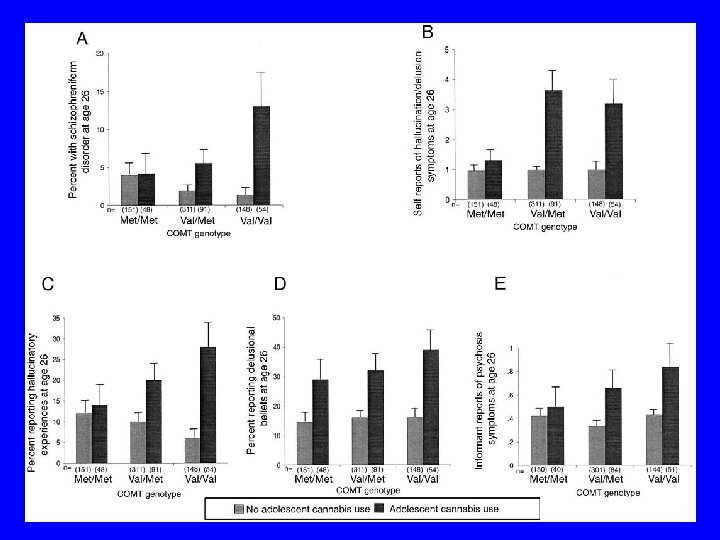
Adolescents and Marijuana: Genetic Links – Swedish males using marijuana 6 x more likely to be diagnosed with schizophrenia – Catechol-O-methyltransferase (COMT) -degrades dopamine, epinephrine and norepinepherine • COMT Val 108 Met allele homozygotes more likely to develop schizophrenia with THC exposure • Carriers of the Val/Met allele more sensitive to psychotic effects of THC
Questions?
Case • You are on your family medicine rotation in Spokane, Wa working at an outpatient clinic. A 24 y. o. man with history of PTSD his first appointment in this clinic after moving from Alasak for work. Your attending says, “Go in and get a history, then come back and present – we’ll see her together after that. ”
The patient appears to be in distress saying, “I really need help, I’ve run out of my xanax and I need a refill right away. My anxiety is out of control and I am not sleeping. ” As the history unfolds the patient says that he was seeing a psychiatrist previously in Alaska but lost his prescription for xanax during his move. He has been out three days and has gone to multiple EDs to attempt getting refills with no avail. “All they do is give me a dose of clonazepam and offer me detox. I’m not an addict! I have PTSD and my doctor prescribes me the medicine!”
As you attempt to get more history about his use one question you ask is “did you call your doctor in Alaska to ask about a refill? ” The patient gets upset and says, “So you probably think I’m an addict too! I tried that and he is out of town. ” The patient begins to cry and says, “are you going to help me or not? ” His vitals are BP 160/85, HR 105, RR 18, Temp 37. 4. You say, “I’d really like to help you but there are just a few more questions I’d like to ask.
• What do you want to know? • What is your attending going to want to know?
• Xanax 1. 5 mg TID, no other medications or medical problems known • Has never run out of meds in the past, no history of addiction to other substances, no family history of addiction • Employed as an asphalt paver, has been employed for 5 years consistently • PTSD stems from assault he suffered after being beaten severely outside a bar 1. 5 years ago
Diagnosis? • You present the information to your attending. He says “Great, another straightforward case. ” • What is this patient’s diagnosis? Do we have enough information to make one?
Physiologic Dependence/Tolerance • Patient is in benzodiazepine withdrawal • Patient is physiologically dependent on benzodiazepines and has developed tolerance to the medications • He does NOT meet criteria for a benzodiazepine use disorder, benzodiazepine abuse, benzodiazepine dependence in the “addiction” sense of the term…. AS OF YET
Substance use disorder/Addiction • Pathological use of a substance which results in repeated adverse social consequences related to the drug use. – Failure to meet work, school, family obligations – Interpersonal conflicts • Patients with severe substance use disorders often have features of physiologic dependence and tolerance • Having dependence and tolerance does NOT in itself equal substance use disorder – *see subspecifier in handout
Opioids • What are the signs and symptoms of opiate overdose? • What are the signs and symptoms of opiate withdrawal?
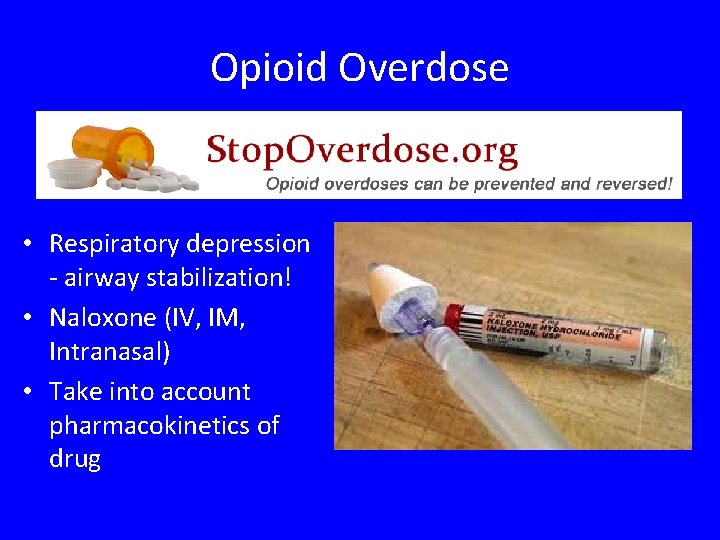
Opioid Overdose • Respiratory depression - airway stabilization! • Naloxone (IV, IM, Intranasal) • Take into account pharmacokinetics of drug
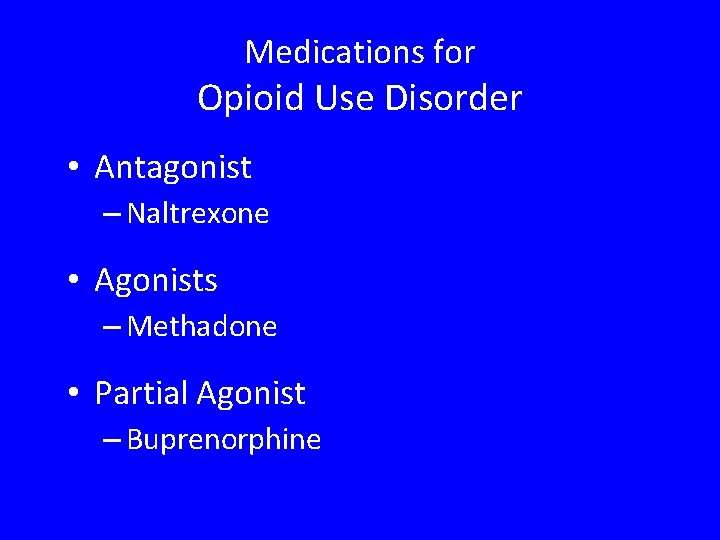
Medications for Opioid Use Disorder • Antagonist – Naltrexone • Agonists – Methadone • Partial Agonist – Buprenorphine
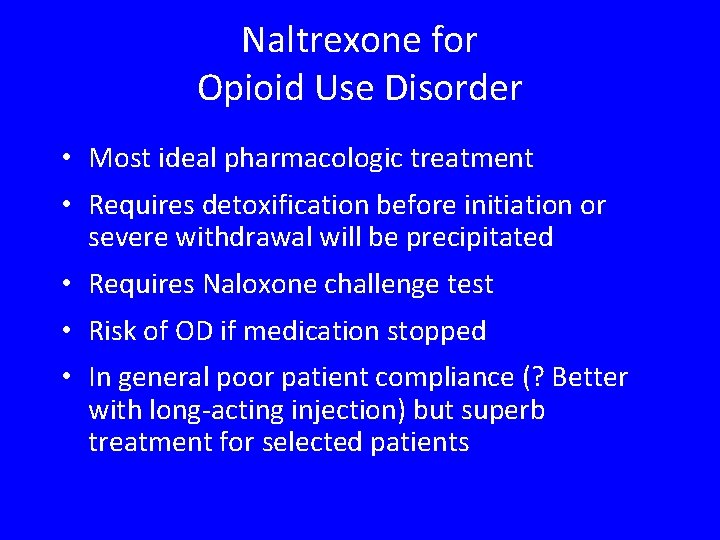
Naltrexone for Opioid Use Disorder • Most ideal pharmacologic treatment • Requires detoxification before initiation or severe withdrawal will be precipitated • Requires Naloxone challenge test • Risk of OD if medication stopped • In general poor patient compliance (? Better with long-acting injection) but superb treatment for selected patients
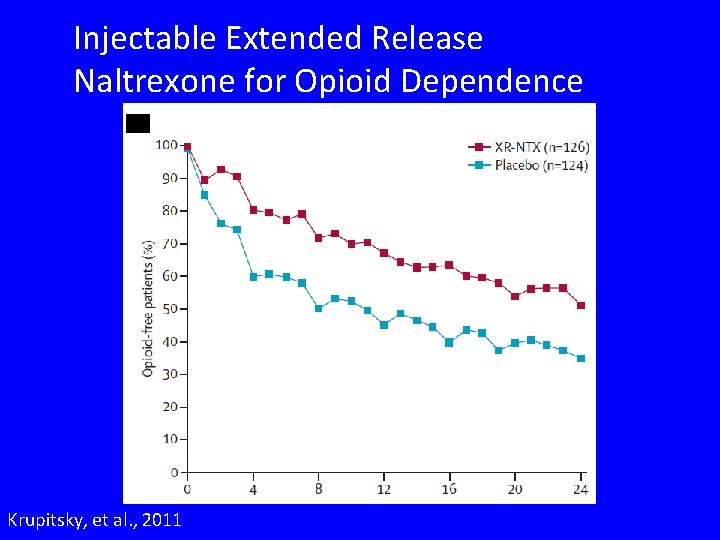
Injectable Extended Release Naltrexone for Opioid Dependence Krupitsky, et al. , 2011
Methadone Pharmacokinetics and Dosing • Rapidly absorbed • Peak Levels in 4 hours • t 1/2=24 hours • Metabolized in liver (p 450 3 A/4) • Doses should be individualized but higher doses generally more effective (≈80 -120 mg)
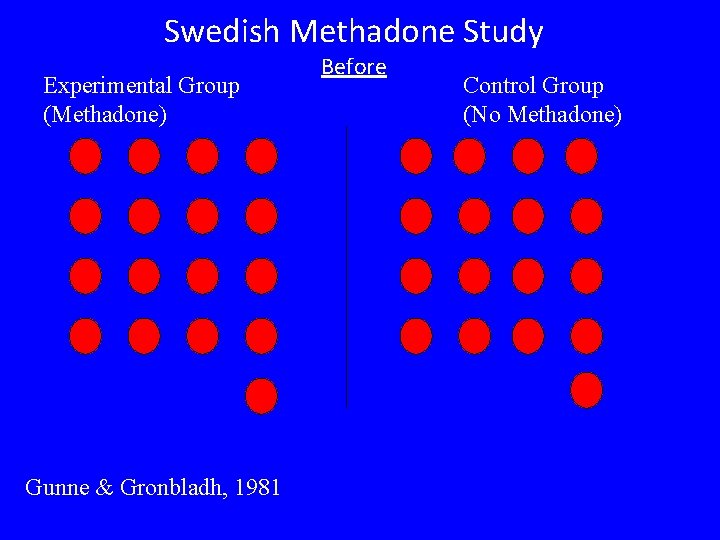
Swedish Methadone Study Experimental Group (Methadone) Gunne & Gronbladh, 1981 Before Control Group (No Methadone)
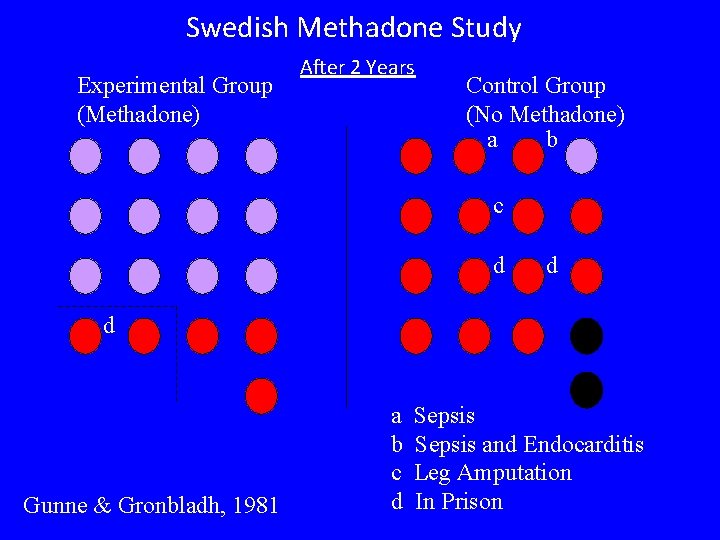
Swedish Methadone Study After 2 Years Experimental Group (Methadone) Control Group (No Methadone) a b c d d d Gunne & Gronbladh, 1981 a b c d Sepsis and Endocarditis Leg Amputation In Prison
Methadone Side Effects Minimal sedation once tolerance achieved Constipation Increased Appetite/Weight Gain Lowered Libido; May decrease gonadal hormone levels • Prolonged Qtc (screen pts w/cardiac disease!) • • • Exhaustively studied in all other organ systems with no evidence of chronic harm
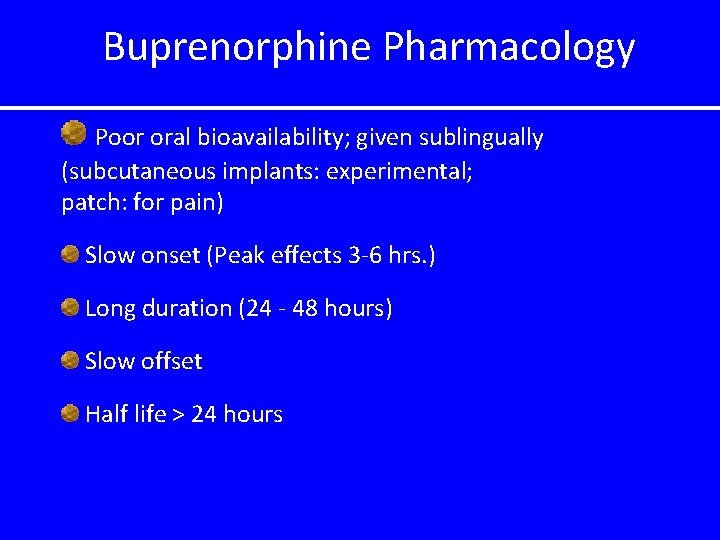
Buprenorphine Pharmacology Poor oral bioavailability; given sublingually (subcutaneous implants: experimental; patch: for pain) Slow onset (Peak effects 3 -6 hrs. ) Long duration (24 - 48 hours) Slow offset Half life > 24 hours
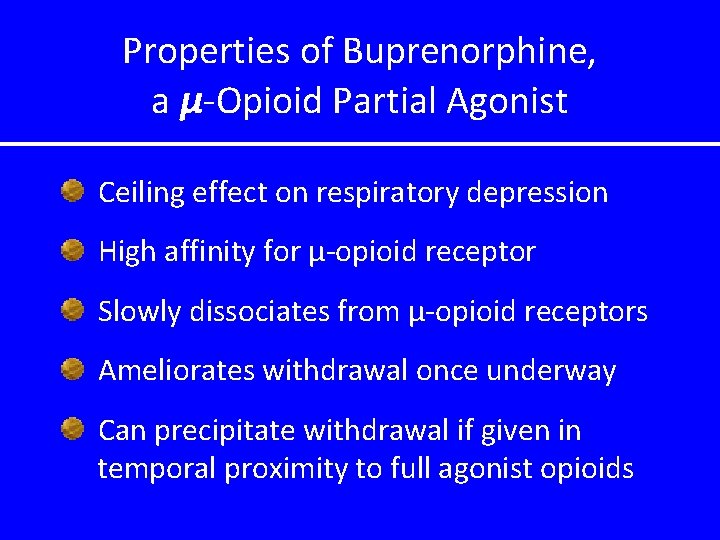
Properties of Buprenorphine, a µ-Opioid Partial Agonist Ceiling effect on respiratory depression High affinity for µ-opioid receptor Slowly dissociates from µ-opioid receptors Ameliorates withdrawal once underway Can precipitate withdrawal if given in temporal proximity to full agonist opioids
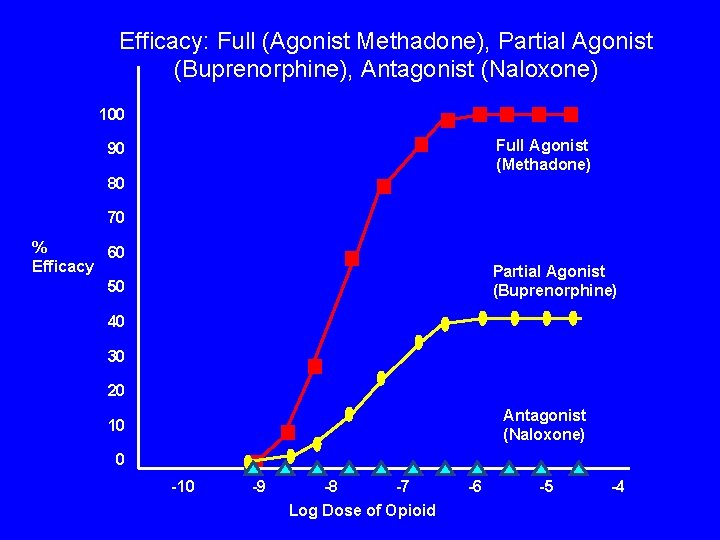
Efficacy: Full (Agonist Methadone), Partial Agonist (Buprenorphine), Antagonist (Naloxone) 100 Full Agonist (Methadone) 90 80 70 % 60 Efficacy 50 Partial Agonist (Buprenorphine) 40 30 20 Antagonist (Naloxone) 10 0 -10 -9 -8 -7 Log Dose of Opioid -6 -5 -4
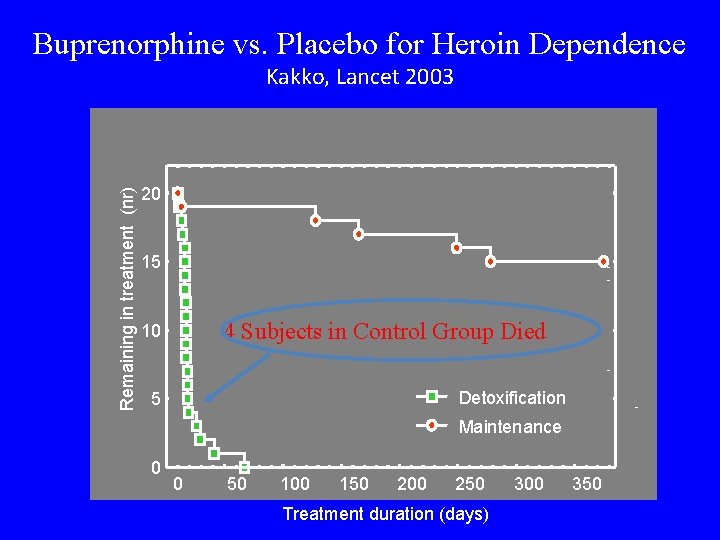
Buprenorphine vs. Placebo for Heroin Dependence Remaining in treatment (nr) Kakko, Lancet 2003 20 15 4 Subjects in Control Group Died 10 Detoxification 5 Maintenance 0 0 50 100 150 200 250 Treatment duration (days) 300 350
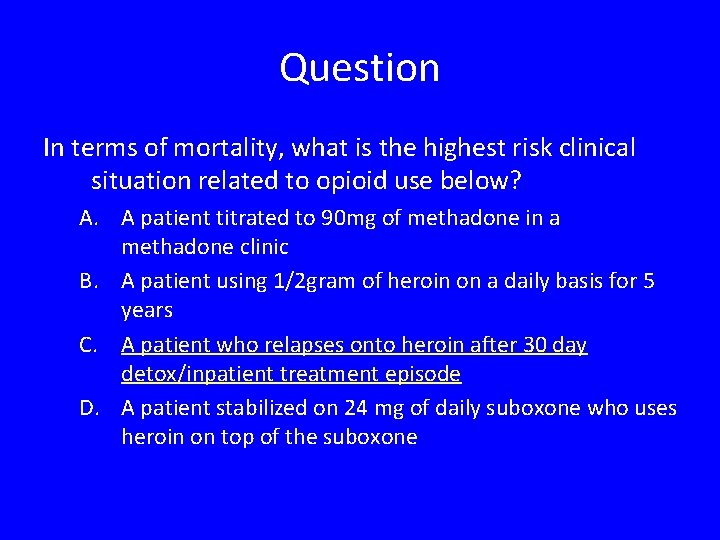
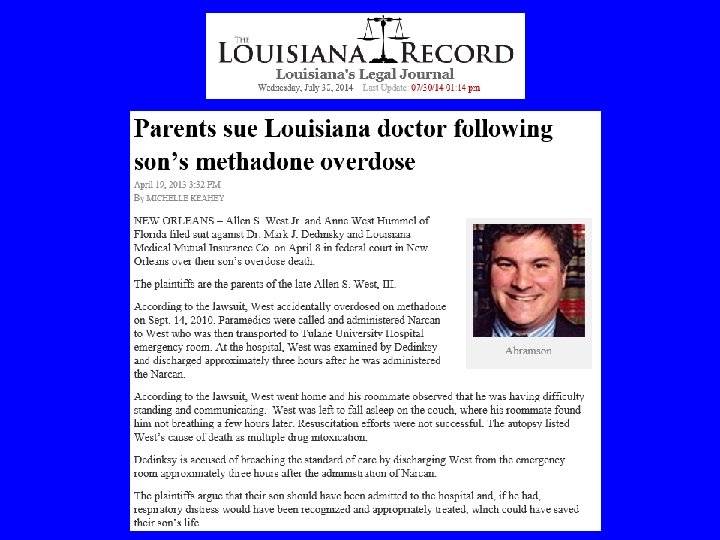
Question In terms of mortality, what is the highest risk clinical situation related to opioid use below? A. A patient titrated to 90 mg of methadone in a methadone clinic B. A patient using 1/2 gram of heroin on a daily basis for 5 years C. A patient who relapses onto heroin after 30 day detox/inpatient treatment episode D. A patient stabilized on 24 mg of daily suboxone who uses heroin on top of the suboxone
Take Home • Life threatening aspect of opioid overdose is respiratory depression – stabilize airway and give naloxone (consider t 1/2) • Methadone and buprenorphine replacement have been shown to decrease morbidity and mortality while engaging patients in treatment and improving patient outcomes • IM naltrexone potentially good option for some patients
Questions?
Name the Drug?
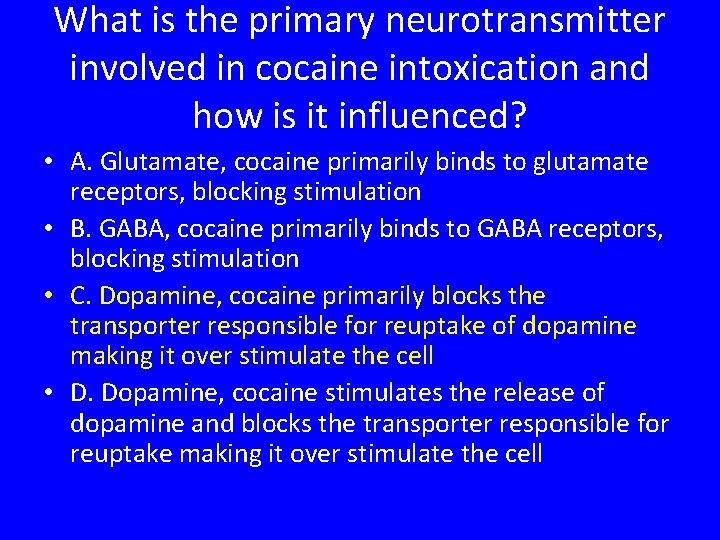
What is the primary neurotransmitter involved in cocaine intoxication and how is it influenced? • A. Glutamate, cocaine primarily binds to glutamate receptors, blocking stimulation • B. GABA, cocaine primarily binds to GABA receptors, blocking stimulation • C. Dopamine, cocaine primarily blocks the transporter responsible for reuptake of dopamine making it over stimulate the cell • D. Dopamine, cocaine stimulates the release of dopamine and blocks the transporter responsible for reuptake making it over stimulate the cell
Stimulants – Cocaine and Methamphetamine • Mouse party – (http: //learn. genetics. utah. edu/content/addiction/mouse/) • Mechanism of action with neurotransmitter dopamine. Be sure to know the difference! This is a favorite test question of the boards.
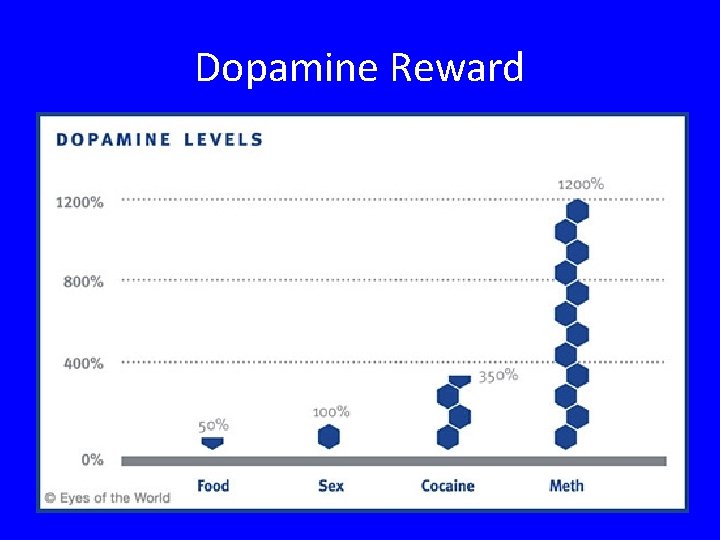
Dopamine Reward
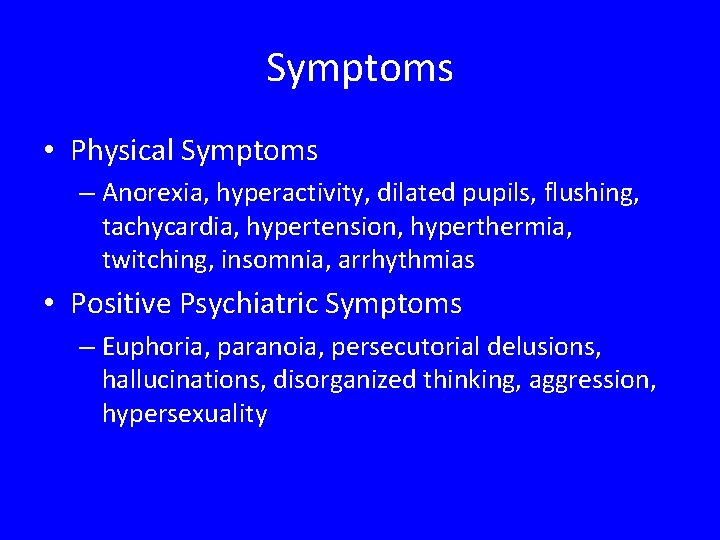
Symptoms • Physical Symptoms – Anorexia, hyperactivity, dilated pupils, flushing, tachycardia, hypertension, hyperthermia, twitching, insomnia, arrhythmias • Positive Psychiatric Symptoms – Euphoria, paranoia, persecutorial delusions, hallucinations, disorganized thinking, aggression, hypersexuality
Overdose • Life threatening condition – Vasoconstriction can result in MI and Stroke – Cardiac Arrhythmias and seizures also common conditions seen on boards • Treatment – Ensure Cardiac stabilization, Supportive Care, symptomatic treatment
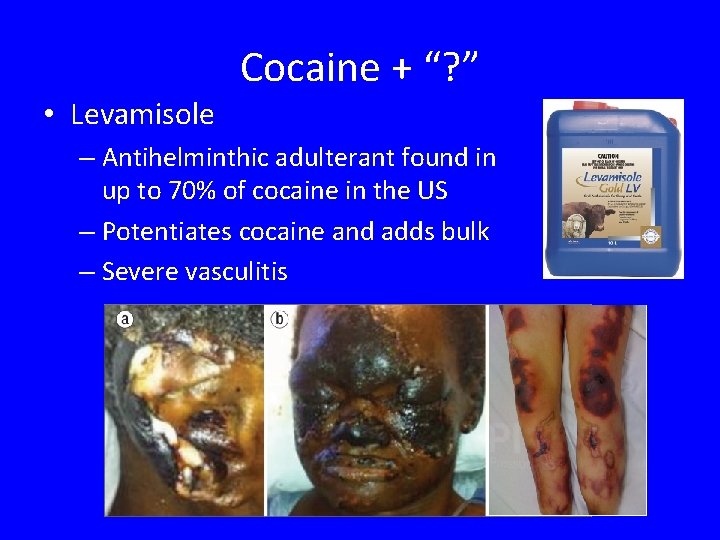
Cocaine + “? ” • Levamisole – Antihelminthic adulterant found in up to 70% of cocaine in the US – Potentiates cocaine and adds bulk – Severe vasculitis
Long Term Treatment • Disulfiram - possibly to help reduce cravings • Contingency management – most evidence – Reward positive behavior
Review • A patient presents to the Emergency Department in severe distress. Unfortunately, the man speaks no English aside from screaming “Help!” Vitals are BP: 184/114; HR: 122, RR: 18, Temp 37. 8. On physical exam his pupils are dilated, he is sweating profusely and clinching his stomach. What is the next step in management?
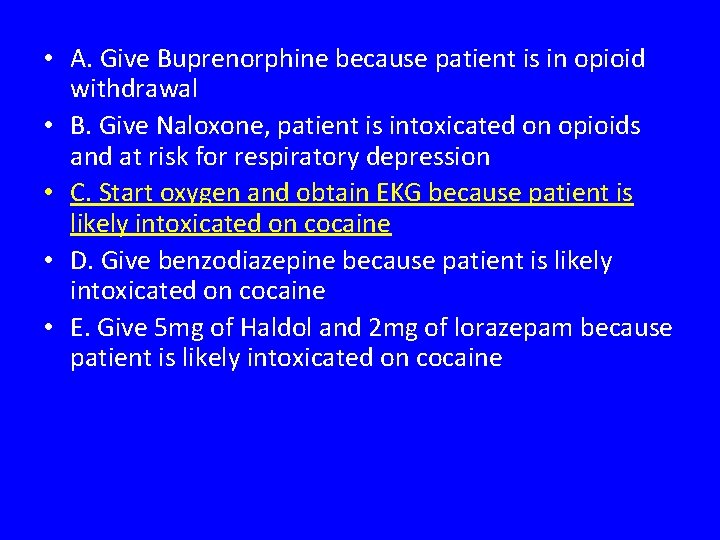
• A. Give Buprenorphine because patient is in opioid withdrawal • B. Give Naloxone, patient is intoxicated on opioids and at risk for respiratory depression • C. Start oxygen and obtain EKG because patient is likely intoxicated on cocaine • D. Give benzodiazepine because patient is likely intoxicated on cocaine • E. Give 5 mg of Haldol and 2 mg of lorazepam because patient is likely intoxicated on cocaine
Amphetamines • Similar intoxication syndrome to cocaine but usually longer • No vasoconstrictive effect • Possible neurotoxicity in chronic use: possibly from glutamate and axonal degeneration • Can see permanent amphetamine psychosis with long term use • Pathogenesis – Reverses and blocks transport of DA, NE, Serotonin – Stimulates release of DA – Inh monamine oxidase activity
Treatment – amphetamines • Withdrawal can last for >2 weeks and mimic anxiety and depressive disorders • CD treatment: including support, education, skills, CA – Treatment similar as for cocaine but no known substances to reduce cravings • No specific medications have been found helpful in treatment
• Responsible for 88, 000 deaths each year • 3 rd leading preventable cause of death in the US from behavioral factors • 40% of all traffic fatalities are related to its use in 2000 ALCOHOL
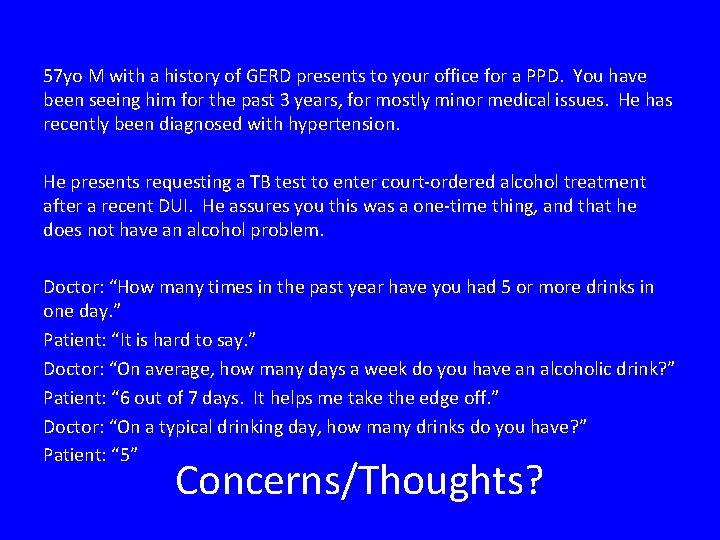
57 yo M with a history of GERD presents to your office for a PPD. You have been seeing him for the past 3 years, for mostly minor medical issues. He has recently been diagnosed with hypertension. He presents requesting a TB test to enter court-ordered alcohol treatment after a recent DUI. He assures you this was a one-time thing, and that he does not have an alcohol problem. Doctor: “How many times in the past year have you had 5 or more drinks in one day. ” Patient: “It is hard to say. ” Doctor: “On average, how many days a week do you have an alcoholic drink? ” Patient: “ 6 out of 7 days. It helps me take the edge off. ” Doctor: “On a typical drinking day, how many drinks do you have? ” Patient: “ 5” Concerns/Thoughts?
57 yo M with a history of GERD presents to your office for a PPD. You have been seeing him for the past 3 years, for mostly small medical issues. He has recently been diagnosed with hypertension. He presents requesting a TB test to enter court-ordered alcohol treatment after a recent DUI. He assures you this was a one-time thing, and that he does not have an alcohol problem. Doctor: “How many times in the past year have you had 5 or more drinks in one day. ” Patient: “It is hard to say. ” Doctor: “On average, how many days a week do you have an alcoholic drink? ” Patient: “ 6 out of 7 days. It helps me take the edge off. ” Doctor: “On a typical drinking day, how many drinks do you have? ” Patient: “ 5” Concerns/Thoughts?
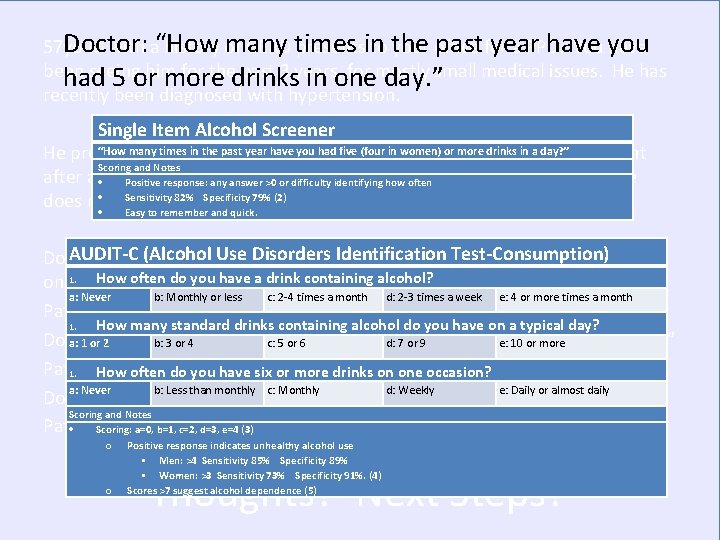
Doctor: “How many times in the past year have you 57 yo M with a history of GERD presents to your office for a PPD. You have been seeing him for the past 3 years, for mostly small medical issues. He has had 5 or more drinks in one day. ” recently been diagnosed with hypertension. Single Item Alcohol Screener “How many times in the past year have you had five (four in women) or more drinks in a day? ” He presents requesting a TB test to enter court-ordered alcohol treatment Scoring and Notes after a recent DUI. He assures you this was a one-time thing, and that he Positive response: any answer >0 or difficulty identifying how often Sensitivity 82% Specificity 79% (2) does not have an alcohol problem. Easy to remember and quick. AUDIT-C (Alcohol Use Disorders Identification Test-Consumption) Doctor: “How many times in the past year have you had 5 or more drinks in 1. How often do you have a drink containing alcohol? one day. ” a: Never b: Monthly or less c: 2 -4 times a month d: 2 -3 times a week e: 4 or more times a month Patient: “It is hard to say. ” 1. How many standard drinks containing alcohol do you have on a typical day? Doctor: “On average, how many days a week do you have an alcoholic drink? ” a: 1 or 2 b: 3 or 4 c: 5 or 6 d: 7 or 9 e: 10 or more Patient: “ 6 out of 7 days. It helps me take the edge off. ” 1. How often do you have six or more drinks on one occasion? a: Never b: Less than monthly c: Monthly d: Weekly e: Daily or almost daily Doctor: “On a typical drinking day, how many drinks do you have? ” Scoring and Notes Patient: “ 3” Scoring: a=0, b=1, c=2, d=3, e=4 (3) o o Positive response indicates unhealthy alcohol use Men: >4 Sensitivity 85% Specificity 89% Women: >3 Sensitivity 73% Specificity 91%. (4) Scores >7 suggest alcohol dependence (5) Thoughts? Next Steps?
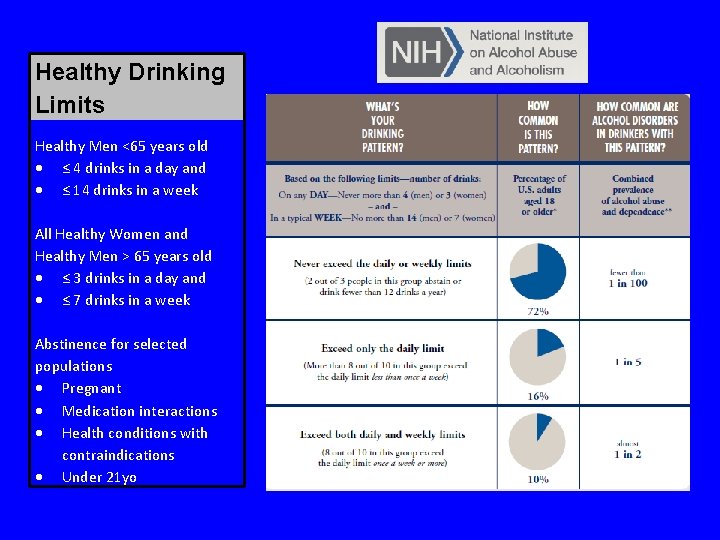
Healthy Drinking Limits Healthy Men <65 years old ≤ 4 drinks in a day and ≤ 14 drinks in a week All Healthy Women and Healthy Men > 65 years old ≤ 3 drinks in a day and ≤ 7 drinks in a week Abstinence for selected populations Pregnant Medication interactions Health conditions with contraindications Under 21 yo
Next Steps? • Make a diagnosis
DSM 5 -Substance Use Disorders Substance use disorder: A problematic pattern of substance use leading to clinically significant impairment or distress, as manifested by at least two of the following, occurring within a 12 -month period: • Failure to fulfill obligations at work, school or home • Use in dangerous situations • Craving • Continued use despite social or interpersonal problems due to the substance use (fights with significant other) • Tolerance • Withdrawal • Using more than intended • Persistent desire or unsuccessful efforts to cut down or stop use • Significant time spent getting, using or recovering from substance use • Decreased social or occupational activities due to substance use • Continued use despite physical or psychological problems • • Severity specifier: 2 -3: mild 4 -5: moderate 6+: severe
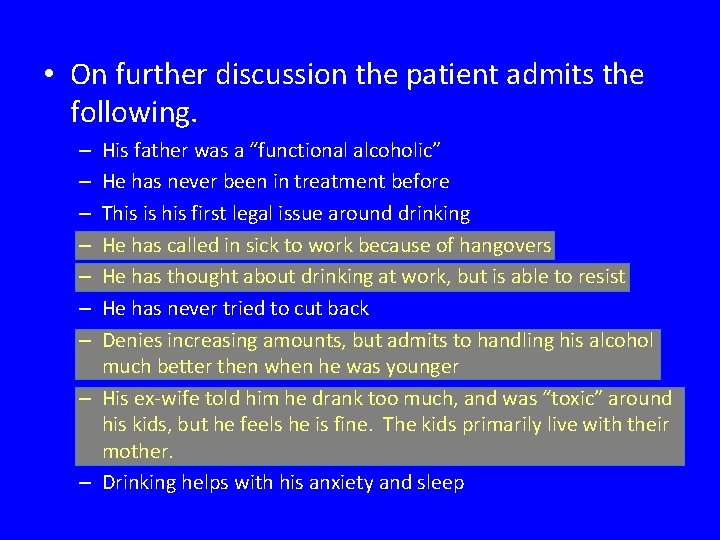
• On further discussion the patient admits the following. His father was a “functional alcoholic” He has never been in treatment before This is his first legal issue around drinking He has called in sick to work because of hangovers He has thought about drinking at work, but is able to resist He has never tried to cut back Denies increasing amounts, but admits to handling his alcohol much better then when he was younger – His ex-wife told him he drank too much, and was “toxic” around his kids, but he feels he is fine. The kids primarily live with their mother. – Drinking helps with his anxiety and sleep – – – –
Next Steps? • Make a diagnosis • Evaluate medical and psychiatric stability
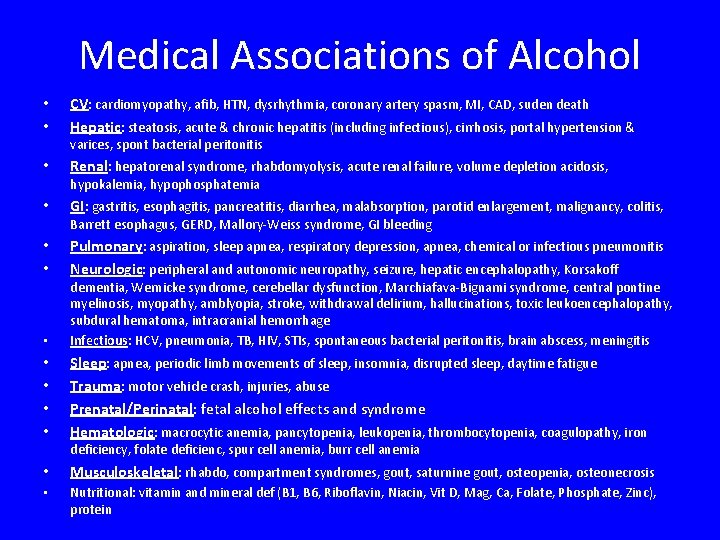
Medical Associations of Alcohol • • CV: cardiomyopathy, afib, HTN, dysrhythmia, coronary artery spasm, MI, CAD, suden death Hepatic: steatosis, acute & chronic hepatitis (including infectious), cirrhosis, portal hypertension & varices, spont bacterial peritonitis • Renal: hepatorenal syndrome, rhabdomyolysis, acute renal failure, volume depletion acidosis, hypokalemia, hypophosphatemia • GI: gastritis, esophagitis, pancreatitis, diarrhea, malabsorption, parotid enlargement, malignancy, colitis, Barrett esophagus, GERD, Mallory-Weiss syndrome, GI bleeding • • Pulmonary: aspiration, sleep apnea, respiratory depression, apnea, chemical or infectious pneumonitis Neurologic: peripheral and autonomic neuropathy, seizure, hepatic encephalopathy, Korsakoff • dementia, Wernicke syndrome, cerebellar dysfunction, Marchiafava-Bignami syndrome, central pontine myelinosis, myopathy, amblyopia, stroke, withdrawal delirium, hallucinations, toxic leukoencephalopathy, subdural hematoma, intracranial hemorrhage Infectious: HCV, pneumonia, TB, HIV, STIs, spontaneous bacterial peritonitis, brain abscess, meningitis • • Sleep: apnea, periodic limb movements of sleep, insomnia, disrupted sleep, daytime fatigue Trauma: motor vehicle crash, injuries, abuse Prenatal/Perinatal: fetal alcohol effects and syndrome Hematologic: macrocytic anemia, pancytopenia, leukopenia, thrombocytopenia, coagulopathy, iron deficiency, folate deficienc, spur cell anemia, burr cell anemia • Musculoskeletal: rhabdo, compartment syndromes, gout, saturnine gout, osteopenia, osteonecrosis • Nutritional: vitamin and mineral def (B 1, B 6, Riboflavin, Niacin, Vit D, Mag, Ca, Folate, Phosphate, Zinc), protein
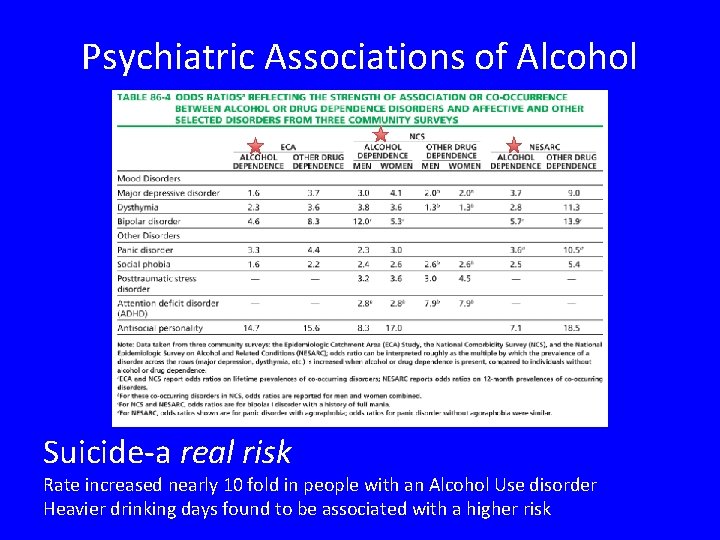
Psychiatric Associations of Alcohol Suicide-a real risk Rate increased nearly 10 fold in people with an Alcohol Use disorder Heavier drinking days found to be associated with a higher risk
Next Steps? • Make a diagnosis • Evaluate medical and psychiatric stability • Evaluate interest in change
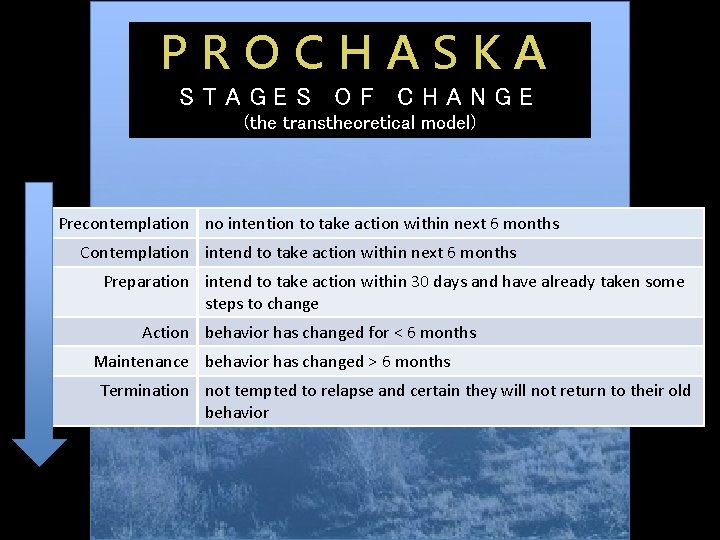
PROCHASKA STAGES OF CHANGE (the transtheoretical model) Precontemplation no intention to take action within next 6 months Contemplation intend to take action within next 6 months Preparation intend to take action within 30 days and have already taken some steps to change Action behavior has changed for < 6 months Maintenance behavior has changed > 6 months Termination not tempted to relapse and certain they will not return to their old behavior
Next Steps? • Make a diagnosis • Evaluate medical and psychiatric stability • Evaluate interest in change • Evaluate risk of withdrawal
Uncomplicated alcohol withdrawal • Usually 6 -8 hours after the last drink (or reduction in heavy drinking) • Peaks in 24 -48 hours • Subsides within 5 -7 days • Common symptoms: anxiety, tremor, GI upset, diaphoresis, sleep disturbance, increases in blood pressure and heart rate • There is a ‘protracted withdrawal syndrome’ that can continue several months after acute detox is complete; this includes anxiety, mood disturbance, and poor sleep.
When to admit for inpatient detox? • High ciwa score (12), elevated vitals, with a still elevated Breathalyzer • History of complicated withdrawal (DT’s) • Medical issues (heart arrhythmia) • Unstable psychiatric issues (suicidal) • Failure of outpatient treatment (not applicable here)
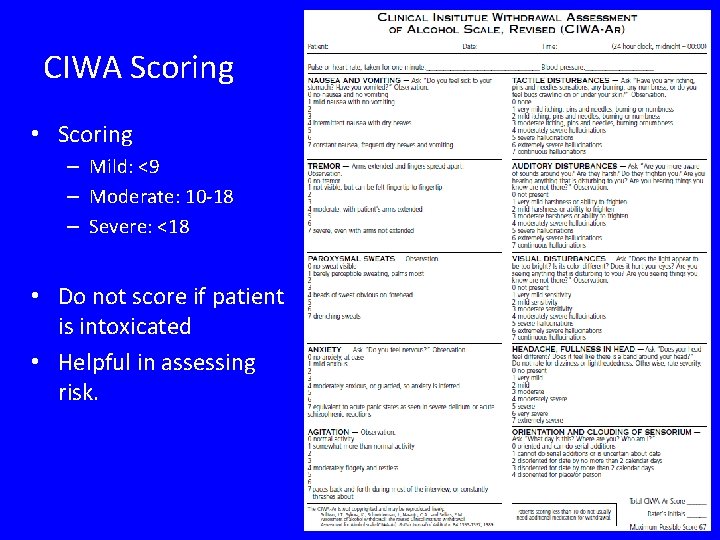
CIWA Scoring • Scoring – Mild: <9 – Moderate: 10 -18 – Severe: <18 • Do not score if patient is intoxicated • Helpful in assessing risk.
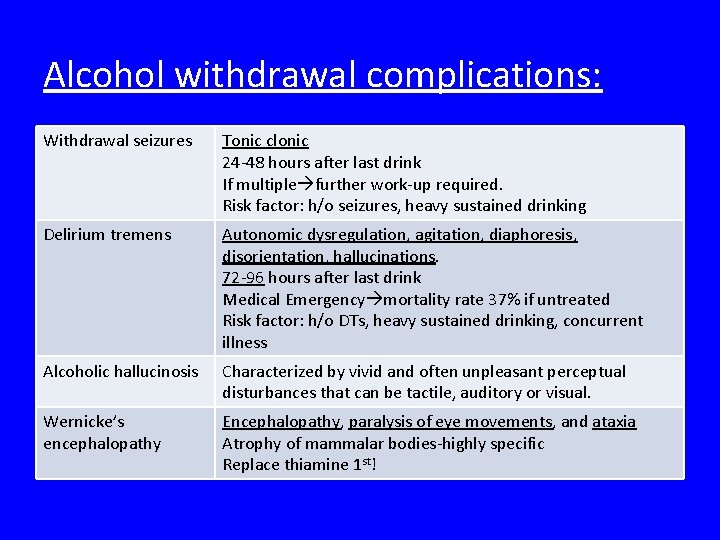
Alcohol withdrawal complications: Withdrawal seizures Tonic clonic 24 -48 hours after last drink If multiple further work-up required. Risk factor: h/o seizures, heavy sustained drinking Delirium tremens Autonomic dysregulation, agitation, diaphoresis, disorientation, hallucinations. 72 -96 hours after last drink Medical Emergency mortality rate 37% if untreated Risk factor: h/o DTs, heavy sustained drinking, concurrent illness Alcoholic hallucinosis Characterized by vivid and often unpleasant perceptual disturbances that can be tactile, auditory or visual. Wernicke’s encephalopathy Encephalopathy, paralysis of eye movements, and ataxia Atrophy of mammalar bodies-highly specific Replace thiamine 1 st!
Next Steps? • Make a diagnosis • Evaluate medical and psychiatric stability • Evaluate interest in change • Evaluate risk of withdrawal • Consider treatment options
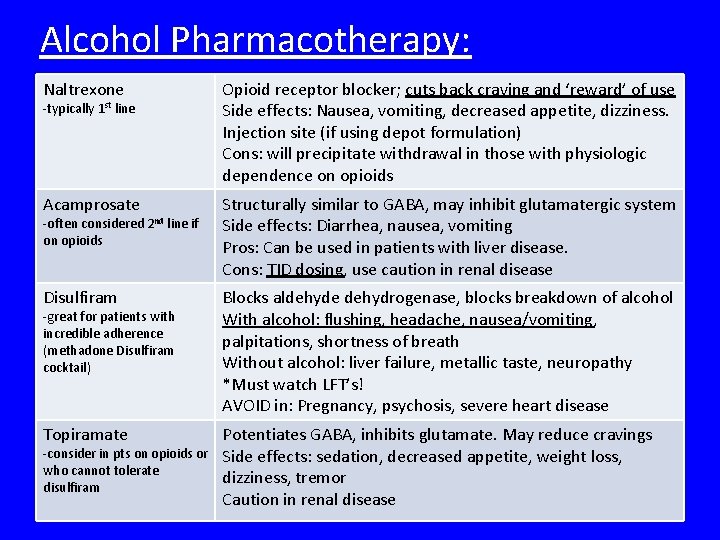
Alcohol Pharmacotherapy: Naltrexone Opioid receptor blocker; cuts back craving and ‘reward’ of use Side effects: Nausea, vomiting, decreased appetite, dizziness. Injection site (if using depot formulation) Cons: will precipitate withdrawal in those with physiologic dependence on opioids Acamprosate Structurally similar to GABA, may inhibit glutamatergic system Side effects: Diarrhea, nausea, vomiting Pros: Can be used in patients with liver disease. Cons: TID dosing, use caution in renal disease -typically 1 st line -often considered 2 nd line if on opioids Disulfiram Blocks aldehyde dehydrogenase, blocks breakdown of alcohol With alcohol: flushing, headache, nausea/vomiting, palpitations, shortness of breath Without alcohol: liver failure, metallic taste, neuropathy *Must watch LFT’s! AVOID in: Pregnancy, psychosis, severe heart disease Topiramate Potentiates GABA, inhibits glutamate. May reduce cravings Side effects: sedation, decreased appetite, weight loss, dizziness, tremor Caution in renal disease -great for patients with incredible adherence (methadone Disulfiram cocktail) -consider in pts on opioids or who cannot tolerate disulfiram
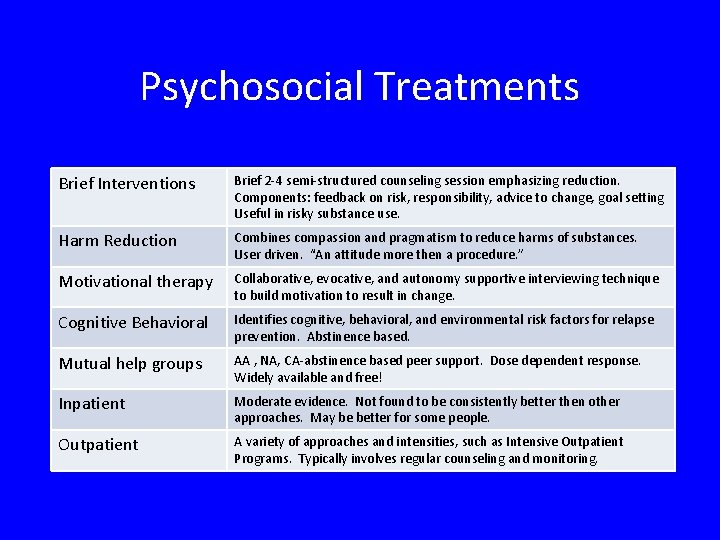
Psychosocial Treatments Brief Interventions Brief 2 -4 semi-structured counseling session emphasizing reduction. Components: feedback on risk, responsibility, advice to change, goal setting Useful in risky substance use. Harm Reduction Combines compassion and pragmatism to reduce harms of substances. User driven. “An attitude more then a procedure. ” Motivational therapy Collaborative, evocative, and autonomy supportive interviewing technique to build motivation to result in change. Cognitive Behavioral Identifies cognitive, behavioral, and environmental risk factors for relapse prevention. Abstinence based. Mutual help groups AA , NA, CA-abstinence based peer support. Dose dependent response. Widely available and free! Inpatient Moderate evidence. Not found to be consistently better then other approaches. May be better for some people. Outpatient A variety of approaches and intensities, such as Intensive Outpatient Programs. Typically involves regular counseling and monitoring.
Summary: Alcohol • Universal screening is recommended • Full medical and psychiatric evaluation is needed if addicted • Monitor for alcohol withdrawal complications • Long term follow-up is needed
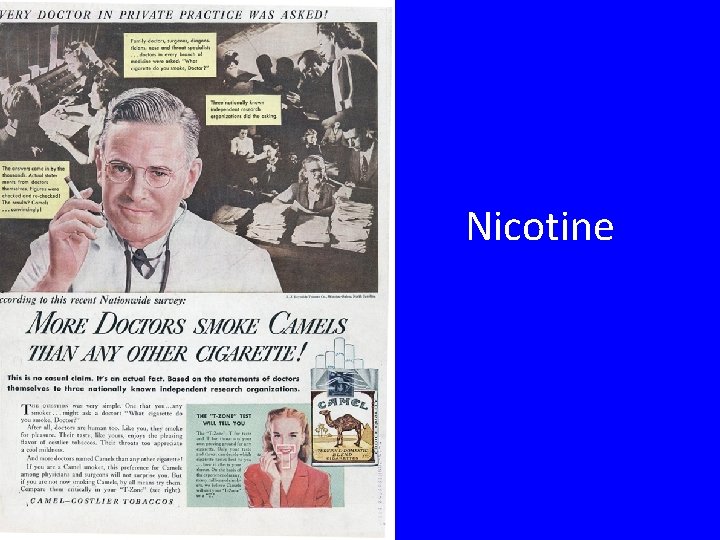
Nicotine
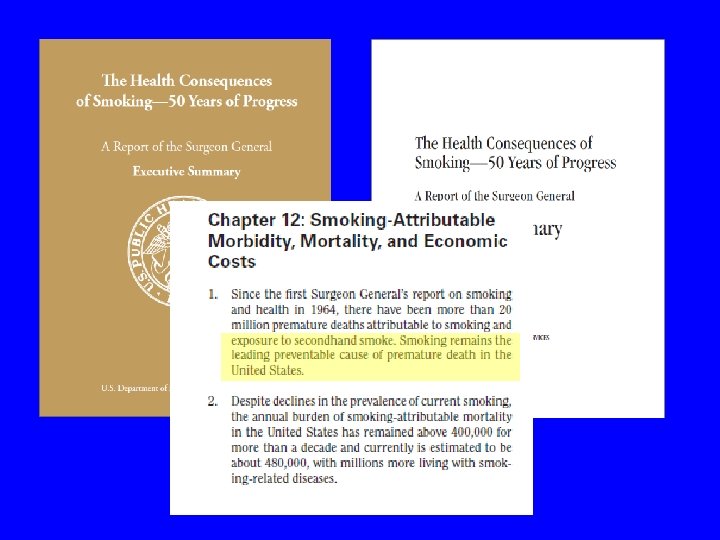
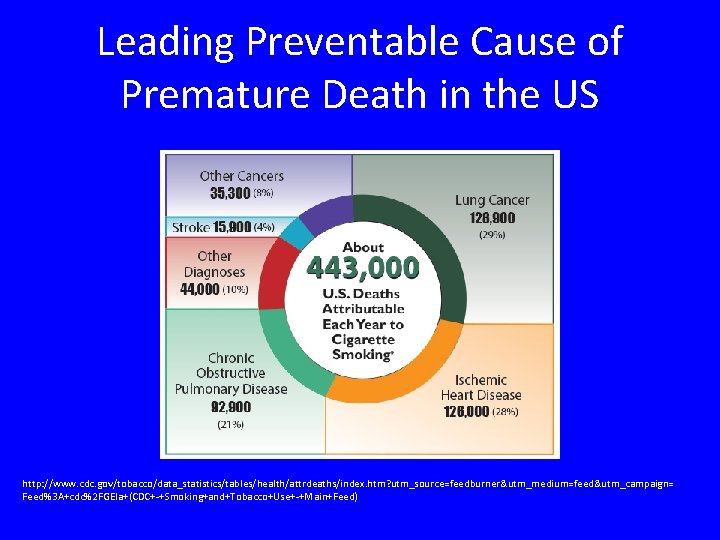
Leading Preventable Cause of Premature Death in the US http: //www. cdc. gov/tobacco/data_statistics/tables/health/attrdeaths/index. htm? utm_source=feedburner&utm_medium=feed&utm_campaign= Feed%3 A+cdc%2 FGEla+(CDC+-+Smoking+and+Tobacco+Use+-+Main+Feed)
Nicotine • Effects of smoking: restlessness, insomnia, anxiety • Withdrawal: craving, dysphoria, anxiety, poor concentration, increased appetite, irritability, insomnia • Cancers associated with smoking – Cause proven • • • Colorectal Head and neck Liver Lower urinary tract, including renal pelvis, ureter, and bladder Lung Mesothelioma Myeloid leukemia Nasal cavity and paranasal sinuses Pancreas Penis Stomach Uterine cervix
Benefits of Stopping • • • Live longer Reduce CV risk after MI by > 1/3 over 5 years Reduce cancer risk Improve lung function Reduce risk of infections Decreased risk for DMII Reduce risk of hip fractures Decrease reproductive disorders Etc. Smoking reduction vs cessation? – Maybe helpful for heavy smokers-controversial – Smokers often compensate-longer puffs, etc.
Smoking Cessation Varenicline (Chantix) • A 4 B 2 nicotinic cholinergic receptor (n. ACh. R) partial agonist • Mimics the action of nicotine & prevents withdrawal symptoms • Side effects: GI upset, psychiatric changes Bupropion (zyban) • Antidepressant that is also a partial agonist at n. ACh. R and inhibitor of dopamine reuptake • Helps reduce withdrawal symptoms. • Tremor, anxiety. Nicotine Replacement (gum, lozenge, inhaler, patch) • Replaces nicotine, without additives of tobacco. Often used as a combination of patch (long acting ‘basal’ nicotine level) and gum or lozenge for break through cravings. • Anxiety, restlessness, GI upset, tremor, sleep disturbance
Helping patients QUIT • The Five A’s Model for facilitating smoking cessation: • Ask about tobacco use during each visit • Advise all patients who smoke to quit • Assess the patient’s willingness to quit • Assist the patient in their quit attempt • Arrange for follow up
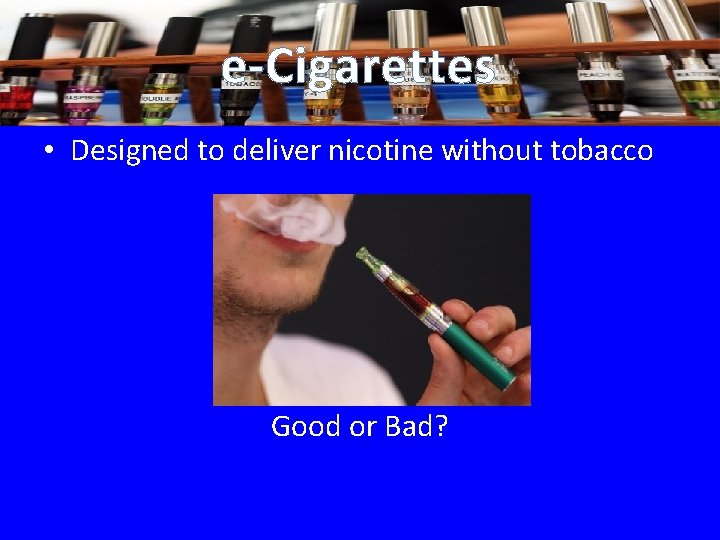
e-Cigarettes • Designed to deliver nicotine without tobacco Good or Bad?
e-Cigarettes: current findings • Not found to be a gateway to smoking tobacco • Content – Propylene glycol, glycerol mostly safe – Impurities and toxicants in liquid not safe, but safer then tobacco – Nicotine delivered varies **Long term effects of these additives are unknown**
e-Cigarettes • Adverse effects: mouth and throat irritation, increase in blood pressure – More serious: exploding cartridge, lipoid pneumonia, afib in eldery pt – CV: increased heart rate – Resp: increased resistance after 5 min of use, but deemed not clinically significant – Nicotine poisoning: 1 report of a child death after drinking e-liquid • Less calls to poison control then for tobacco exposure • Effect on smoking behavior – Reduces urge to smoke – Preliminary evidence for reduction and cessation – Method choice in England
Summary: Nicotine • • Don’t forget to address nicotine use! Cessation is the goal Multiple quit attempts likely needed There are several products that can be helpful including: patches, gum, bupropion, Varenicline, and e-cigarettes

QUESTIONS?

THANKS
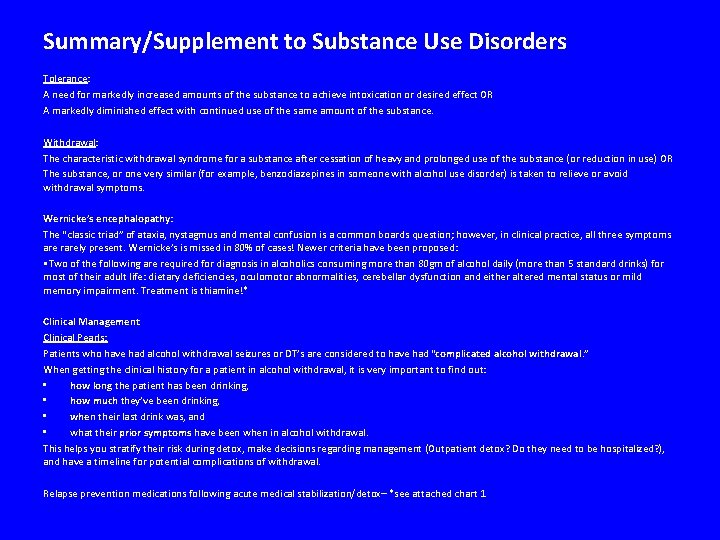
Summary/Supplement to Substance Use Disorders Tolerance: A need for markedly increased amounts of the substance to achieve intoxication or desired effect OR A markedly diminished effect with continued use of the same amount of the substance. Withdrawal: The characteristic withdrawal syndrome for a substance after cessation of heavy and prolonged use of the substance (or reduction in use) OR The substance, or one very similar (for example, benzodiazepines in someone with alcohol use disorder) is taken to relieve or avoid withdrawal symptoms. Wernicke’s encephalopathy: The “classic triad” of ataxia, nystagmus and mental confusion is a common boards question; however, in clinical practice, all three symptoms are rarely present. Wernicke’s is missed in 80% of cases! Newer criteria have been proposed: • Two of the following are required for diagnosis in alcoholics consuming more than 80 gm of alcohol daily (more than 5 standard drinks) for most of their adult life: dietary deficiencies, oculomotor abnormalities, cerebellar dysfunction and either altered mental status or mild memory impairment. Treatment is thiamine!* Clinical Management Clinical Pearls: Patients who have had alcohol withdrawal seizures or DT’s are considered to have had “complicated alcohol withdrawal. ” When getting the clinical history for a patient in alcohol withdrawal, it is very important to find out: • how long the patient has been drinking, • how much they’ve been drinking, • when their last drink was, and • what their prior symptoms have been when in alcohol withdrawal. This helps you stratify their risk during detox, make decisions regarding management (Outpatient detox? Do they need to be hospitalized? ), and have a timeline for potential complications of withdrawal. Relapse prevention medications following acute medical stabilization/detox– *see attached chart 1
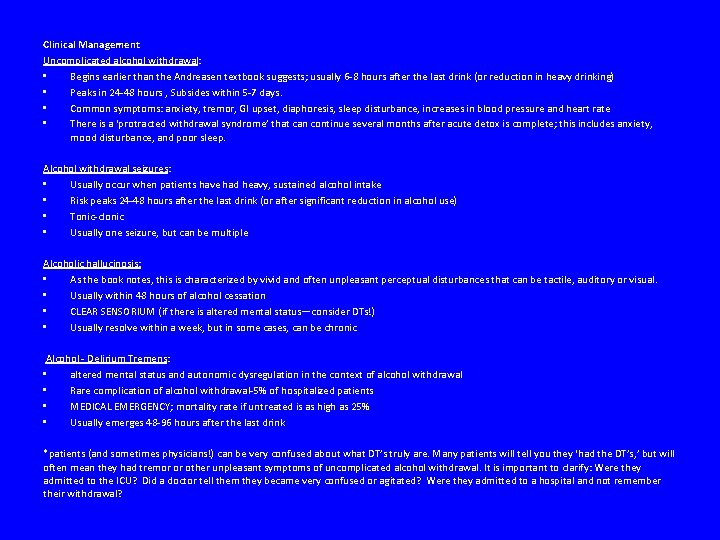
Clinical Management Uncomplicated alcohol withdrawal: • Begins earlier than the Andreasen textbook suggests; usually 6 -8 hours after the last drink (or reduction in heavy drinking) • Peaks in 24 -48 hours , Subsides within 5 -7 days. • Common symptoms: anxiety, tremor, GI upset, diaphoresis, sleep disturbance, increases in blood pressure and heart rate • There is a ‘protracted withdrawal syndrome’ that can continue several months after acute detox is complete; this includes anxiety, mood disturbance, and poor sleep. Alcohol withdrawal seizures: • Usually occur when patients have had heavy, sustained alcohol intake • Risk peaks 24 -48 hours after the last drink (or after significant reduction in alcohol use) • Tonic-clonic • Usually one seizure, but can be multiple Alcoholic hallucinosis: • As the book notes, this is characterized by vivid and often unpleasant perceptual disturbances that can be tactile, auditory or visual. • Usually within 48 hours of alcohol cessation • CLEAR SENSORIUM (if there is altered mental status—consider DTs!) • Usually resolve within a week, but in some cases, can be chronic Alcohol - Delirium Tremens: • altered mental status and autonomic dysregulation in the context of alcohol withdrawal • Rare complication of alcohol withdrawal-5% of hospitalized patients • MEDICAL EMERGENCY; mortality rate if untreated is as high as 25% • Usually emerges 48 -96 hours after the last drink *patients (and sometimes physicians!) can be very confused about what DT’s truly are. Many patients will tell you they ‘had the DT’s, ’ but will often mean they had tremor or other unpleasant symptoms of uncomplicated alcohol withdrawal. It is important to clarify: Were they admitted to the ICU? Did a doctor tell them they became very confused or agitated? Were they admitted to a hospital and not remember their withdrawal?
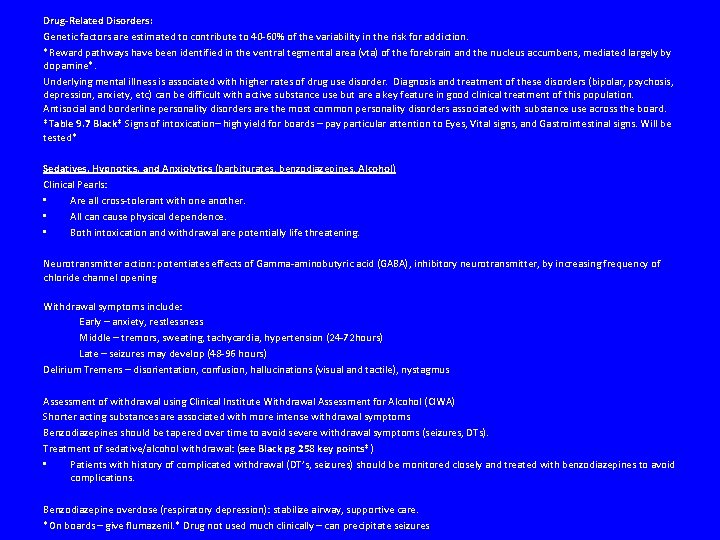
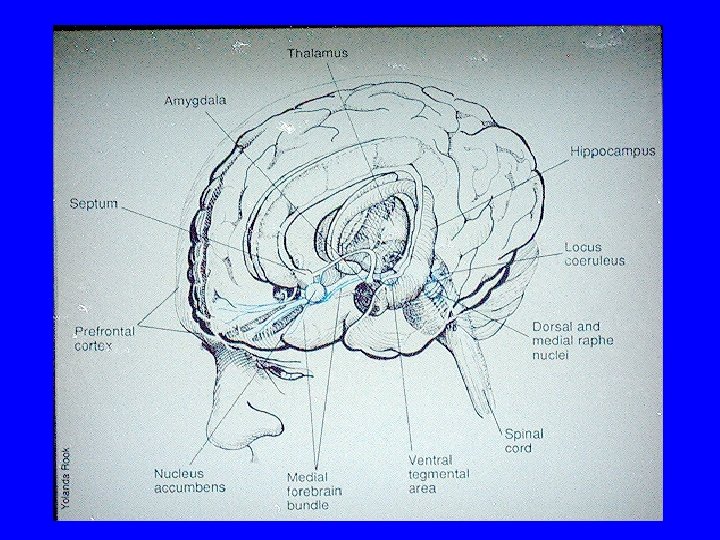
Drug-Related Disorders: Genetic factors are estimated to contribute to 40 -60% of the variability in the risk for addiction. *Reward pathways have been identified in the ventral tegmental area (vta) of the forebrain and the nucleus accumbens, mediated largely by dopamine*. Underlying mental illness is associated with higher rates of drug use disorder. Diagnosis and treatment of these disorders (bipolar, psychosis, depression, anxiety, etc) can be difficult with active substance use but are a key feature in good clinical treatment of this population. Antisocial and borderline personality disorders are the most common personality disorders associated with substance use across the board. *Table 9. 7 Black* Signs of intoxication– high yield for boards – pay particular attention to Eyes, Vital signs, and Gastrointestinal signs. Will be tested* Sedatives, Hypnotics, and Anxiolytics (barbiturates, benzodiazepines, Alcohol) Clinical Pearls: • Are all cross-tolerant with one another. • All can cause physical dependence. • Both intoxication and withdrawal are potentially life threatening. Neurotransmitter action: potentiates effects of Gamma-aminobutyric acid (GABA), inhibitory neurotransmitter, by increasing frequency of chloride channel opening Withdrawal symptoms include: Early – anxiety, restlessness Middle – tremors, sweating, tachycardia, hypertension (24 -72 hours) Late – seizures may develop (48 -96 hours) Delirium Tremens – disorientation, confusion, hallucinations (visual and tactile), nystagmus Assessment of withdrawal using Clinical Institute Withdrawal Assessment for Alcohol (CIWA) Shorter acting substances are associated with more intense withdrawal symptoms Benzodiazepines should be tapered over time to avoid severe withdrawal symptoms (seizures, DTs). Treatment of sedative/alcohol withdrawal: (see Black pg 258 key points*) • Patients with history of complicated withdrawal (DT’s, seizures) should be monitored closely and treated with benzodiazepines to avoid complications. Benzodiazepine overdose (respiratory depression): stabilize airway, supportive care. *On boards – give flumazenil. * Drug not used much clinically – can precipitate seizures
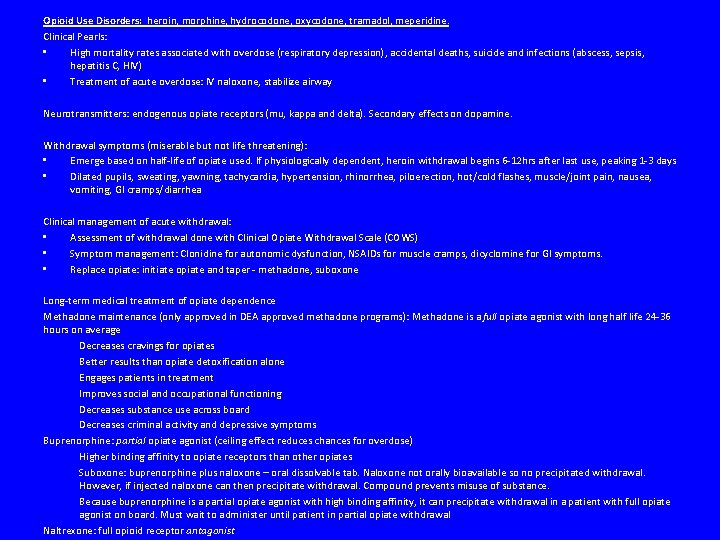
Opioid Use Disorders: heroin, morphine, hydrocodone, oxycodone, tramadol, meperidine. Clinical Pearls: • High mortality rates associated with overdose (respiratory depression), accidental deaths, suicide and infections (abscess, sepsis, hepatitis C, HIV) • Treatment of acute overdose: IV naloxone, stabilize airway Neurotransmitters: endogenous opiate receptors (mu, kappa and delta). Secondary effects on dopamine. Withdrawal symptoms (miserable but not life threatening): • Emerge based on half-life of opiate used. If physiologically dependent, heroin withdrawal begins 6 -12 hrs after last use, peaking 1 -3 days • Dilated pupils, sweating, yawning, tachycardia, hypertension, rhinorrhea, piloerection, hot/cold flashes, muscle/joint pain, nausea, vomiting, GI cramps/diarrhea Clinical management of acute withdrawal: • Assessment of withdrawal done with Clinical Opiate Withdrawal Scale (COWS) • Symptom management: Clonidine for autonomic dysfunction, NSAIDs for muscle cramps, dicyclomine for GI symptoms. • Replace opiate: initiate opiate and taper - methadone, suboxone Long-term medical treatment of opiate dependence Methadone maintenance (only approved in DEA approved methadone programs): Methadone is a full opiate agonist with long half life 24 -36 hours on average Decreases cravings for opiates Better results than opiate detoxification alone Engages patients in treatment Improves social and occupational functioning Decreases substance use across board Decreases criminal activity and depressive symptoms Buprenorphine: partial opiate agonist (ceiling effect reduces chances for overdose) Higher binding affinity to opiate receptors than other opiates Suboxone: buprenorphine plus naloxone – oral dissolvable tab. Naloxone not orally bioavailable so no precipitated withdrawal. However, if injected naloxone can then precipitate withdrawal. Compound prevents misuse of substance. Because buprenorphine is a partial opiate agonist with high binding affinity, it can precipitate withdrawal in a patient with full opiate agonist on board. Must wait to administer until patient in partial opiate withdrawal Naltrexone: full opioid receptor antagonist
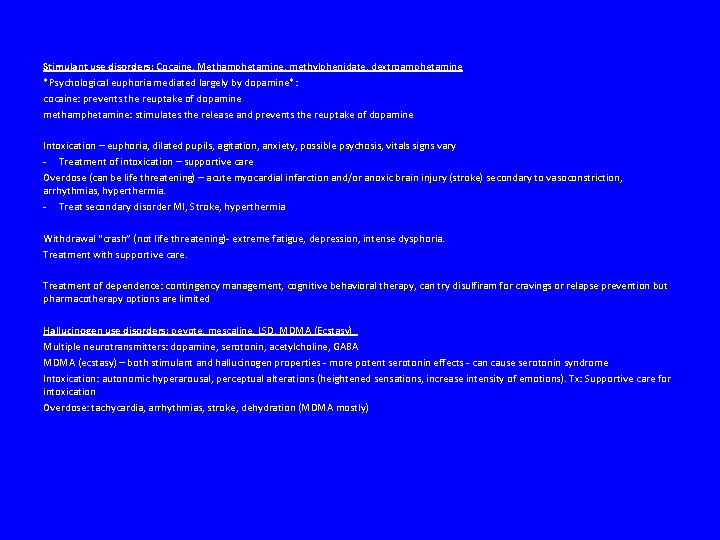
Stimulant use disorders: Cocaine, Methamphetamine, methylphenidate, dextroamphetamine *Psychological euphoria mediated largely by dopamine*: cocaine: prevents the reuptake of dopamine methamphetamine: stimulates the release and prevents the reuptake of dopamine Intoxication – euphoria, dilated pupils, agitation, anxiety, possible psychosis, vitals signs vary - Treatment of intoxication – supportive care Overdose (can be life threatening) – acute myocardial infarction and/or anoxic brain injury (stroke) secondary to vasoconstriction, arrhythmias, hyperthermia. - Treat secondary disorder MI, Stroke, hyperthermia Withdrawal “crash” (not life threatening)- extreme fatigue, depression, intense dysphoria. Treatment with supportive care. Treatment of dependence: contingency management, cognitive behavioral therapy, can try disulfiram for cravings or relapse prevention but pharmacotherapy options are limited Hallucinogen use disorders: peyote, mescaline, LSD, MDMA (Ecstasy) Multiple neurotransmitters: dopamine, serotonin, acetylcholine, GABA MDMA (ecstasy) – both stimulant and hallucinogen properties - more potent serotonin effects - can cause serotonin syndrome Intoxication: autonomic hyperarousal, perceptual alterations (heightened sensations, increase intensity of emotions). Tx: Supportive care for intoxication Overdose: tachycardia, arrhythmias, stroke, dehydration (MDMA mostly)
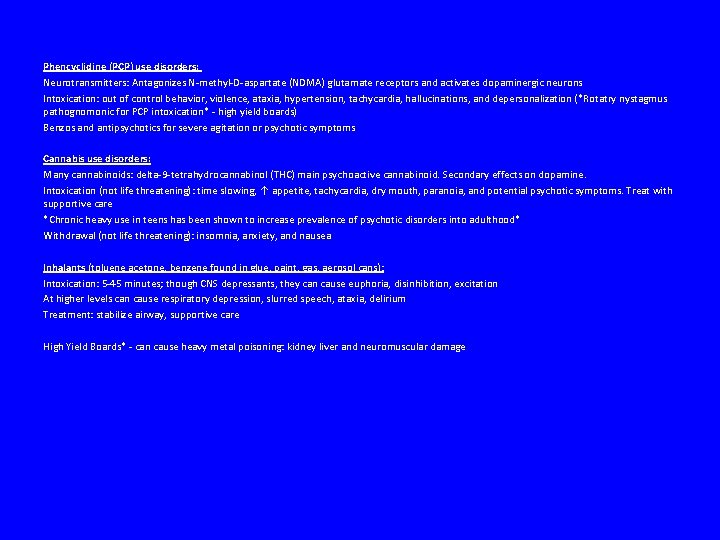
Phencyclidine (PCP) use disorders: Neurotransmitters: Antagonizes N-methyl-D-aspartate (NDMA) glutamate receptors and activates dopaminergic neurons Intoxication: out of control behavior, violence, ataxia, hypertension, tachycardia, hallucinations, and depersonalization (*Rotatry nystagmus pathognomonic for PCP intoxication* - high yield boards) Benzos and antipsychotics for severe agitation or psychotic symptoms Cannabis use disorders: Many cannabinoids: delta-9 -tetrahydrocannabinol (THC) main psychoactive cannabinoid. Secondary effects on dopamine. Intoxication (not life threatening): time slowing, ↑ appetite, tachycardia, dry mouth, paranoia, and potential psychotic symptoms. Treat with supportive care *Chronic heavy use in teens has been shown to increase prevalence of psychotic disorders into adulthood* Withdrawal (not life threatening): insomnia, anxiety, and nausea Inhalants (toluene acetone, benzene found in glue, paint, gas, aerosol cans): Intoxication: 5 -45 minutes; though CNS depressants, they can cause euphoria, disinhibition, excitation At higher levels can cause respiratory depression, slurred speech, ataxia, delirium Treatment: stabilize airway, supportive care High Yield Boards* - can cause heavy metal poisoning: kidney liver and neuromuscular damage
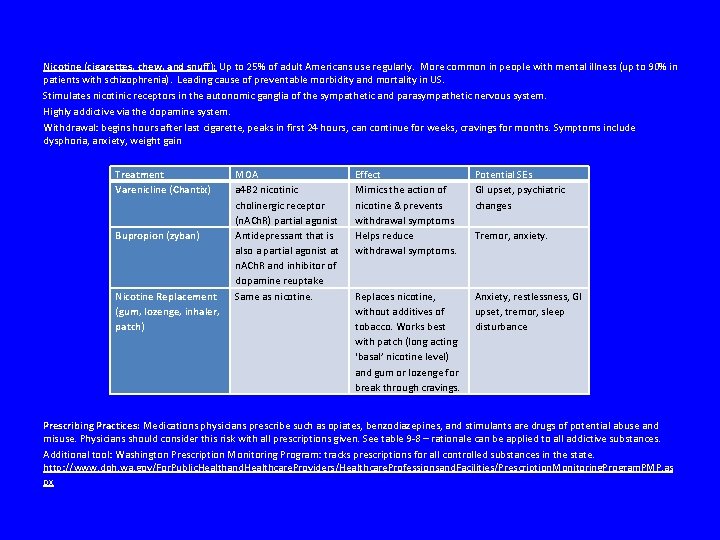
Nicotine (cigarettes, chew, and snuff): Up to 25% of adult Americans use regularly. More common in people with mental illness (up to 90% in patients with schizophrenia). Leading cause of preventable morbidity and mortality in US. Stimulates nicotinic receptors in the autonomic ganglia of the sympathetic and parasympathetic nervous system. Highly addictive via the dopamine system. Withdrawal: begins hours after last cigarette, peaks in first 24 hours, can continue for weeks, cravings for months. Symptoms include dysphoria, anxiety, weight gain Treatment Varenicline (Chantix) Bupropion (zyban) Nicotine Replacement (gum, lozenge, inhaler, patch) MOA a 4 B 2 nicotinic cholinergic receptor (n. ACh. R) partial agonist Antidepressant that is also a partial agonist at n. ACh. R and inhibitor of dopamine reuptake Same as nicotine. Effect Mimics the action of nicotine & prevents withdrawal symptoms Helps reduce withdrawal symptoms. Potential SEs GI upset, psychiatric changes Replaces nicotine, without additives of tobacco. Works best with patch (long acting ‘basal’ nicotine level) and gum or lozenge for break through cravings. Anxiety, restlessness, GI upset, tremor, sleep disturbance Tremor, anxiety. Prescribing Practices: Medications physicians prescribe such as opiates, benzodiazepines, and stimulants are drugs of potential abuse and misuse. Physicians should consider this risk with all prescriptions given. See table 9 -8 – rationale can be applied to all addictive substances. Additional tool: Washington Prescription Monitoring Program: tracks prescriptions for all controlled substances in the state. http: //www. doh. wa. gov/For. Public. Healthand. Healthcare. Providers/Healthcare. Professionsand. Facilities/Prescription. Monitoring. Program. PMP. as px
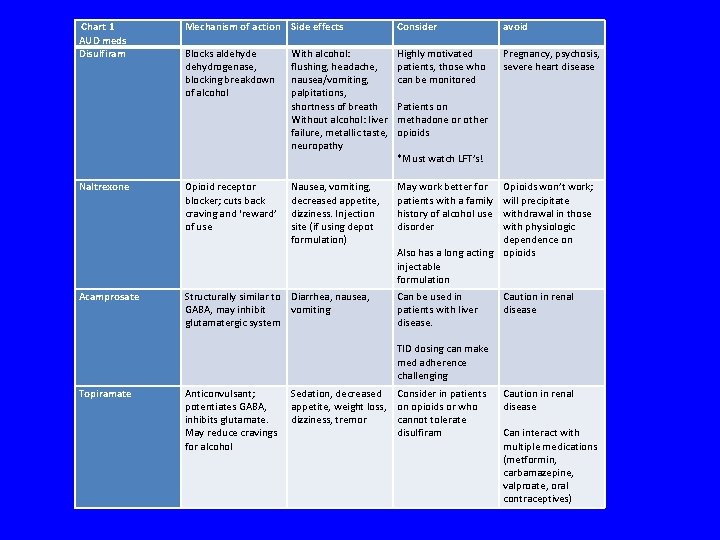
Chart 1 AUD meds Disulfiram Mechanism of action Side effects Consider avoid Blocks aldehyde dehydrogenase, blocking breakdown of alcohol With alcohol: flushing, headache, nausea/vomiting, palpitations, shortness of breath Without alcohol: liver failure, metallic taste, neuropathy Highly motivated patients, those who can be monitored Patients on methadone or other opioids *Must watch LFT’s! Pregnancy, psychosis, severe heart disease Naltrexone Opioid receptor blocker; cuts back craving and ‘reward’ of use Nausea, vomiting, decreased appetite, dizziness. Injection site (if using depot formulation) May work better for patients with a family history of alcohol use disorder Also has a long acting injectable formulation Opioids won’t work; will precipitate withdrawal in those with physiologic dependence on opioids Acamprosate Structurally similar to Diarrhea, nausea, GABA, may inhibit vomiting glutamatergic system Can be used in patients with liver disease. TID dosing can make med adherence challenging Caution in renal disease Topiramate Anticonvulsant; potentiates GABA, inhibits glutamate. May reduce cravings for alcohol Sedation, decreased Consider in patients appetite, weight loss, on opioids or who dizziness, tremor cannot tolerate disulfiram Caution in renal disease Can interact with multiple medications (metformin, carbamazepine, valproate, oral contraceptives)
- Slides: 102