
Substance Use Disorders Diagnostic and Statistical Manual of
Substance Use Disorders
Diagnostic and Statistical Manual of Mental Disorders 5 th edition, (DSM-5) Substance-Related and Addictive Disorders “A syndrome characterized by clinically significant disturbance in an individual’s cognition, emotion regulation, or behavior that reflects a dysfunction in the psychological, biological, or developmental processes underlying mental functioning. ”
DSM-5: Substance-Related and Addictive Disorders § § § 10 classes of substances Addictive Disorders = Gambling Substance-related disorders divided into two groups: § Substance Use Disorders § Previously split into abuse or dependence § Involves: impaired control, social impairment, risky use, and pharmacological criteria § Substance-Induced Disorders
10 Classes of Substances § § § Alcohol Caffeine Cannabis Hallucinogens § PCP § others Inhalants Gambling § § § Opioids Sedatives, hypnotics, and anxiolytics Stimulants Tobacco Other

Substance Use Disorder Diagnosis Criteria § § § Using larger amounts or for longer time than intended Persistent desire or unsuccessful attempts to cut down or control use Great deal of time is spent obtaining, using, or recovering Craving or a strong desire or urge to use Failure to fulfill major roles at work, school, or home Persistent social or interpersonal problems caused by substance use Important social, occupational, recreational activities given up or reduced Use in physically hazardous situations Use despite physical or psychological problems caused by use Tolerance Withdrawal (not documented after repeated use of PCP, inhalants, hallucinogens)

Severity: Mild, Moderate, Severe Depends on the number of symptom criteria experienced Mild: 2 -3 symptoms § Moderate: 4 -5 symptoms § Severe: 6 or more symptoms §
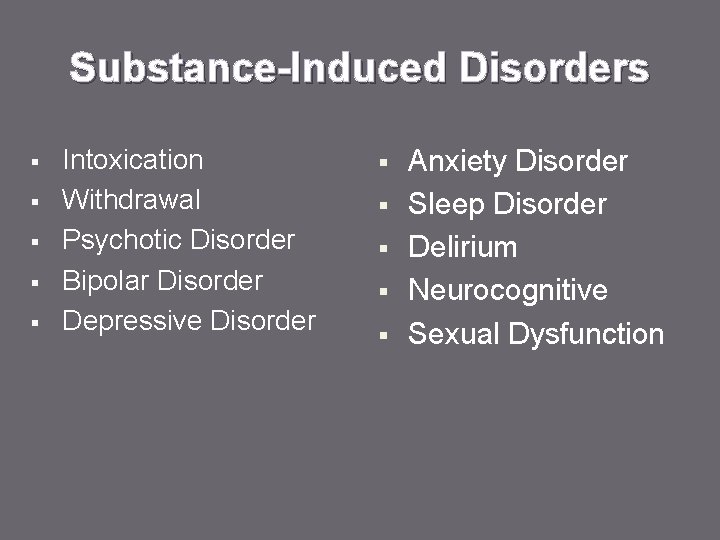
Substance-Induced Disorders § § § Intoxication Withdrawal Psychotic Disorder Bipolar Disorder Depressive Disorder § § § Anxiety Disorder Sleep Disorder Delirium Neurocognitive Sexual Dysfunction
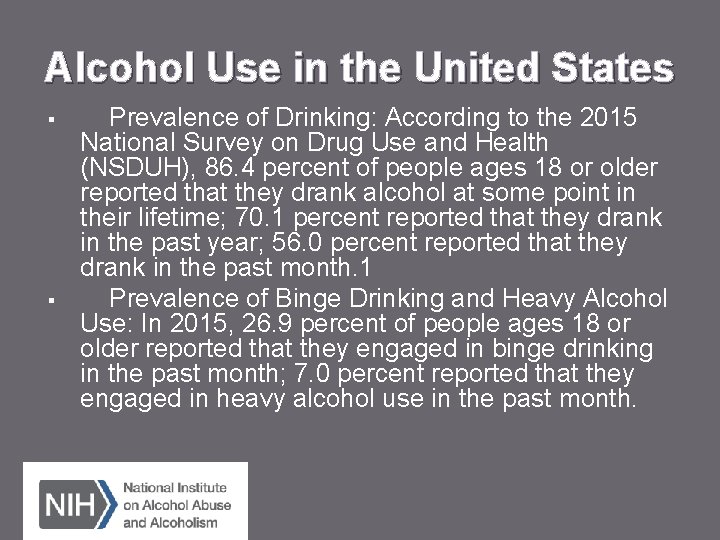
Alcohol Use in the United States § § Prevalence of Drinking: According to the 2015 National Survey on Drug Use and Health (NSDUH), 86. 4 percent of people ages 18 or older reported that they drank alcohol at some point in their lifetime; 70. 1 percent reported that they drank in the past year; 56. 0 percent reported that they drank in the past month. 1 Prevalence of Binge Drinking and Heavy Alcohol Use: In 2015, 26. 9 percent of people ages 18 or older reported that they engaged in binge drinking in the past month; 7. 0 percent reported that they engaged in heavy alcohol use in the past month.
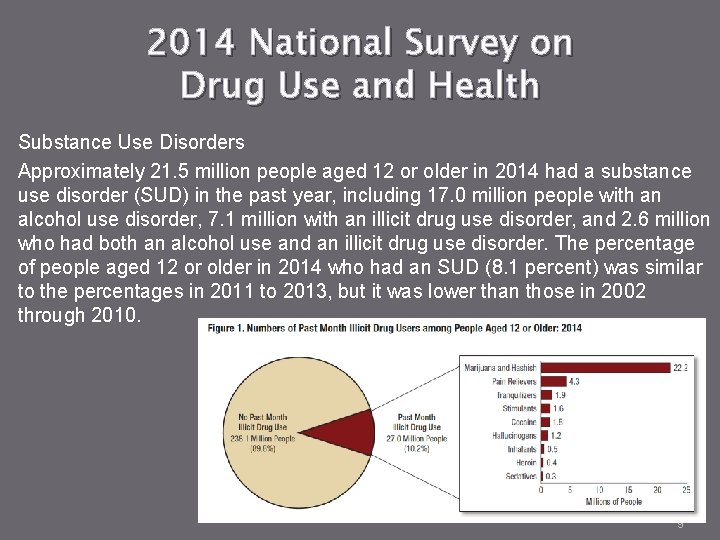
2014 National Survey on Drug Use and Health Substance Use Disorders Approximately 21. 5 million people aged 12 or older in 2014 had a substance use disorder (SUD) in the past year, including 17. 0 million people with an alcohol use disorder, 7. 1 million with an illicit drug use disorder, and 2. 6 million who had both an alcohol use and an illicit drug use disorder. The percentage of people aged 12 or older in 2014 who had an SUD (8. 1 percent) was similar to the percentages in 2011 to 2013, but it was lower than those in 2002 through 2010. 9
Knowledge and Skills for Brief Interventions § § Overall attitude of understanding and acceptance Counseling skills such as active listening and helping clients explore and resolve ambivalence A focus on intermediate goals Working knowledge of the stages-of-change model
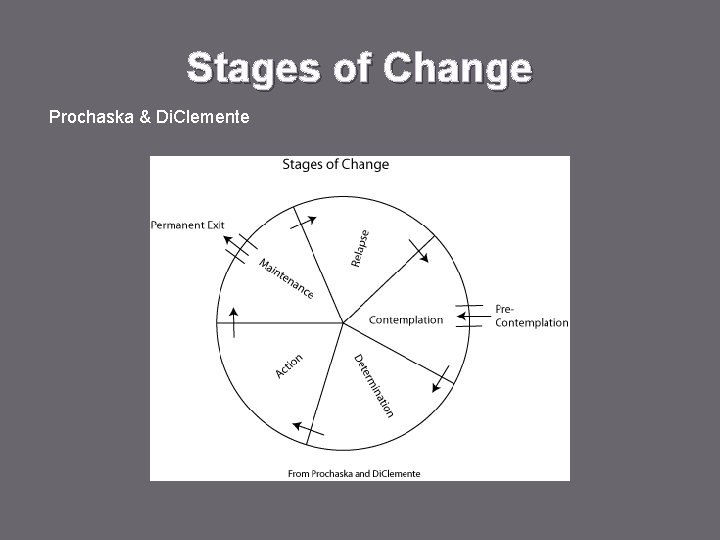
Stages of Change Prochaska & Di. Clemente
Resources § § National Institute on Drug Abuse https: //www. drugabuse. gov/nidamed/videos/hearrecovering-patients SAMHSA’s National Registry of Evidence Based Programs and Practices http: //nrepp. samhsa. gov/ Addiction by Prescription http: //store. samhsa. gov/product/Addiction-by. Prescription-DVD-/DVD 182 Co-Occurring Disorders (introductory video) http: //youtu. be/n. Lse. Av. C 8 Heo Motivational Enhancement Therapy https: //pubs. niaaa. nih. gov/publications/projectmatc h/match 02. pdf
THANK YOU!
- Slides: 14