
Substance Related and Addictive Disorders Substance Use Disorder
Substance Related and Addictive Disorders
Substance Use Disorder 1. A maladaptive pattern of substance use leading to significant impairment or distress. 2. Presence of two or more of the following symptoms within a 12 -month period.
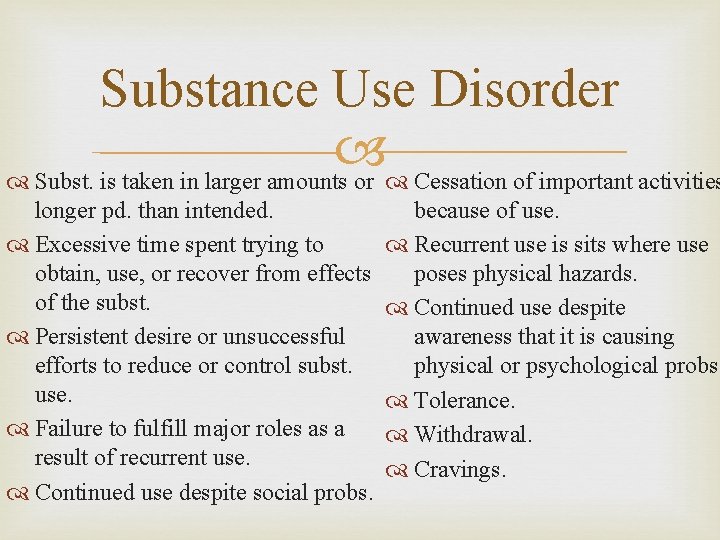
Substance Use Disorder Subst. is taken in larger amounts or Cessation of important activities longer pd. than intended. Excessive time spent trying to obtain, use, or recover from effects of the subst. Persistent desire or unsuccessful efforts to reduce or control subst. use. Failure to fulfill major roles as a result of recurrent use. Continued use despite social probs. because of use. Recurrent use is sits where use poses physical hazards. Continued use despite awareness that it is causing physical or psychological probs. Tolerance. Withdrawal. Cravings.
Drug Classifications Depressants Stimulants Opiates Hallucinogens Other drugs of abuse Inhalants Anabolic steroids Medications
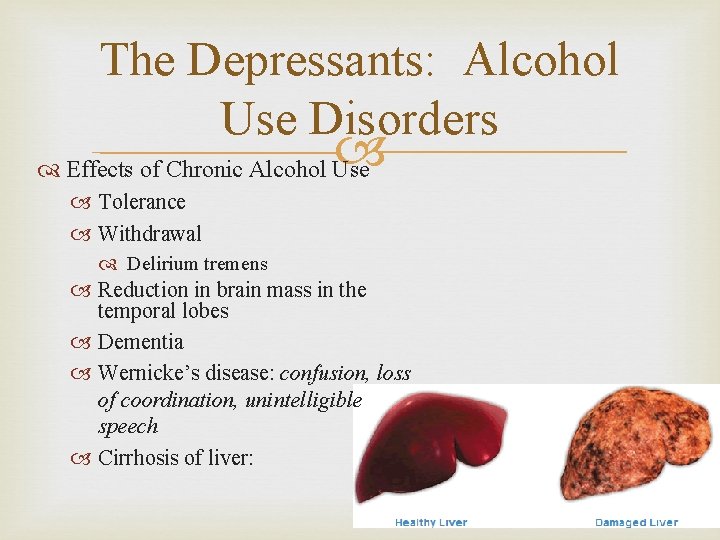
The Depressants: Alcohol Use Disorders Effects of Chronic Alcohol Use Tolerance Withdrawal Delirium tremens Reduction in brain mass in the temporal lobes Dementia Wernicke’s disease: confusion, loss of coordination, unintelligible speech Cirrhosis of liver:
Statistics on Use and Abuse Lifetime prevalence of alcohol abuse: Binge drinking: >5 drinks in short period of time About 20% of those with severe substance use spontaneously remit.
Stimulants: An Overview Nature of Stimulants Most widely consumed drug (US) Increase alertness and energy Examples: Amphetamines Cocaine Nicotine Caffeine
Hallucinogens: An Overview Marijuana Tolerance: Withdrawal and dependence: Effects: LSD and Other Hallucinogens Tolerance: Withdrawal symptoms: Variable Reactions:
Possible Causes of Substance Abuse biological influences • genetic influence • pleasure centers (James Olds) psychological dimensions • operant conditioning • opponent process theory (Solomon, 1980) – increase in positive feelings will be followed by increase in negative feelings
Possible Causes of Substance Abuse expectancies cravings social and cultural influences
Treatment of Substance Abuse agonist substitution: provide a safe drug with a similar chemical makeup - Methadone, nicotine gum antagonist treatment: - block or counter the effects - Naltrexone – opiate antagonist aversive treatments - Antabuse
Treatment of Substance Abuse Twelve-Step programs - Alcoholics Anonymous controlled drinking contingency management: reward self for making changes
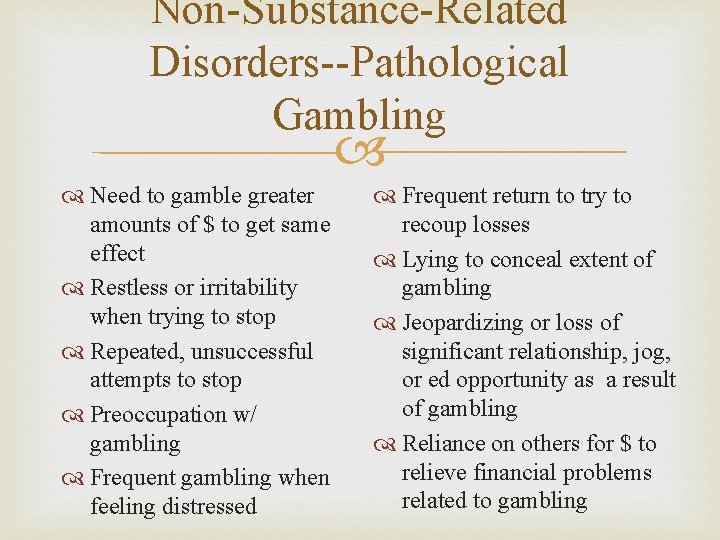
Non-Substance-Related Disorders--Pathological Gambling Need to gamble greater amounts of $ to get same effect Restless or irritability when trying to stop Repeated, unsuccessful attempts to stop Preoccupation w/ gambling Frequent gambling when feeling distressed Frequent return to try to recoup losses Lying to conceal extent of gambling Jeopardizing or loss of significant relationship, jog, or ed opportunity as a result of gambling Reliance on others for $ to relieve financial problems related to gambling
- Slides: 13