
Substance Abuse in the Aging Tiffany Lorton UAMS
Substance Abuse in the Aging Tiffany Lorton, UAMS, 2009
Learning Objectives § List key components of assessing older adults for substance abuse § Identify nursing interventions for older adults who abuse substances § Identify s/s of ETOH abuse and withdrawal in older adults and corresponding nursing interventions § Identify s/s prescription, nonpresciption, nicotine, and caffeine abuse in older adults and corresponding nursing interventions
Substance Abuse Among older persons, commonly abused substances are: § ETOH § Prescription and nonprescription drugs § Nicotine § Caffeine
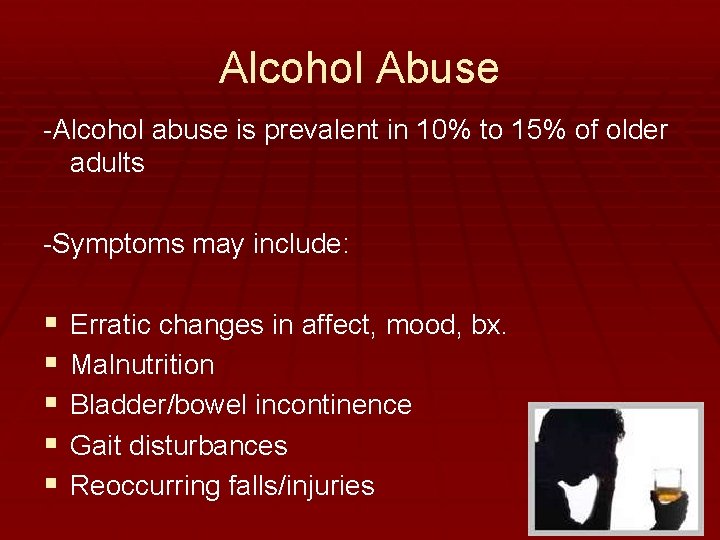
Alcohol Abuse -Alcohol abuse is prevalent in 10% to 15% of older adults -Symptoms may include: § § § Erratic changes in affect, mood, bx. Malnutrition Bladder/bowel incontinence Gait disturbances Reoccurring falls/injuries
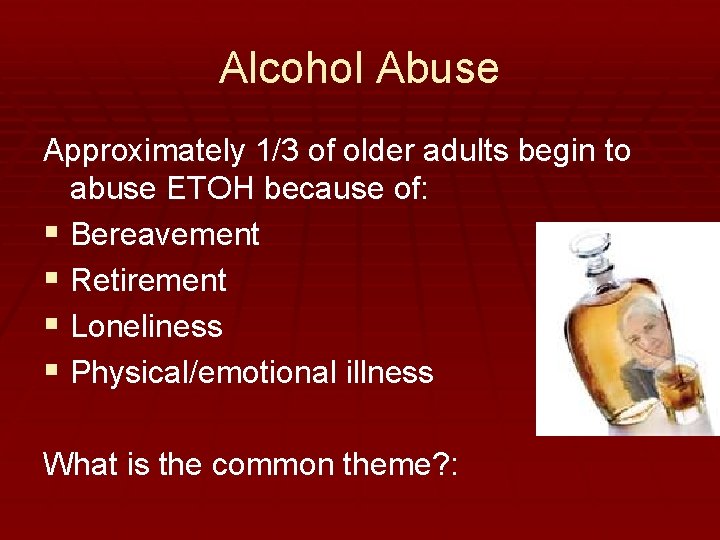
Alcohol Abuse Approximately 1/3 of older adults begin to abuse ETOH because of: § Bereavement § Retirement § Loneliness § Physical/emotional illness What is the common theme? :
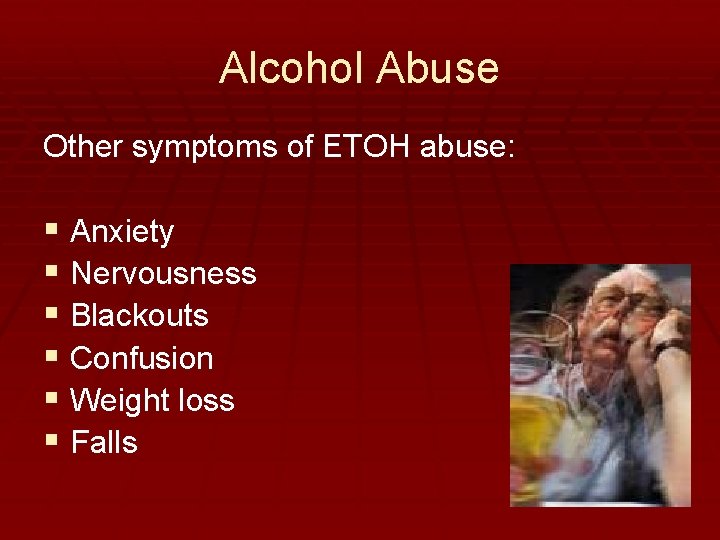
Alcohol Abuse Other symptoms of ETOH abuse: § Anxiety § Nervousness § Blackouts § Confusion § Weight loss § Falls
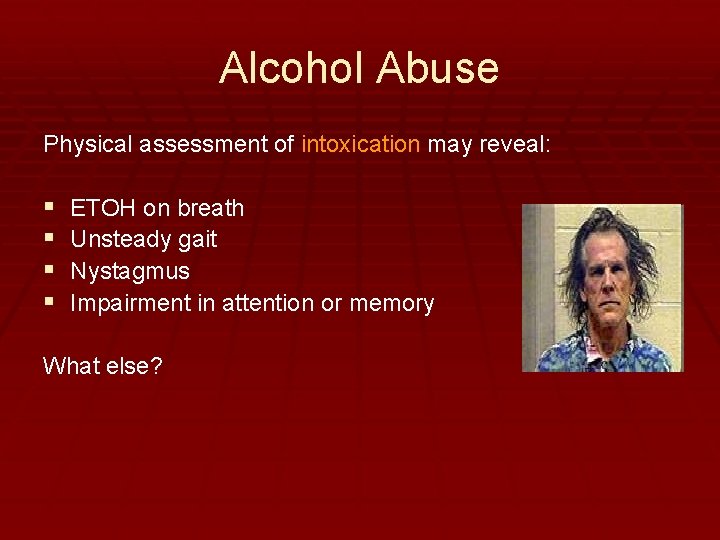
Alcohol Abuse Physical assessment of intoxication may reveal: § § ETOH on breath Unsteady gait Nystagmus Impairment in attention or memory What else?
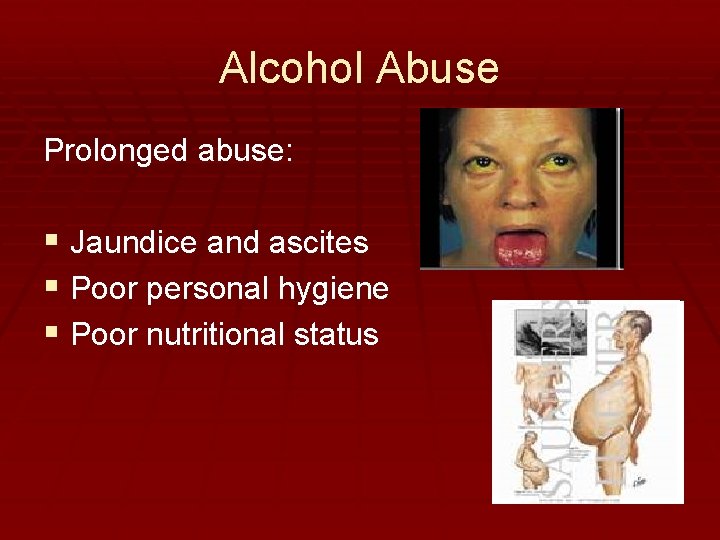
Alcohol Abuse Prolonged abuse: § Jaundice and ascites § Poor personal hygiene § Poor nutritional status
Alcohol Abuse Screening Tools MAST-G § Modified form of The Michigan Alcoholism Screening Test for geriatric population http: //ucsfagrc. org/module_four/pdfs/MAST_G. pdf § More reliable and valid in older population than other instruments
Alcohol Abuse Alcohol Withdrawal § Begins 4 -12 hrs. after ETOH intake is stopped/reduced § Elevated BP & HR, autonomic hyperactivity § Goal: Prevent DTs and seizures
Alcohol Abuse Detox § Continual assessments -Clinical Institute Withdrawal Assessment tool-measures the severity of withdrawals based on 10 common s/s -http: //www. agingincanada. ca/CIWA. HTM § Low stimulation environment, seizure precautions § Meds- minimize withdrawal symptoms and prevent seizures
Alcohol Abuse Rehab Recommended nursing interventions include: § Education -Relapse prevention § Con’t med administration § Group, individual, and/or family therapy § 12 -step program
Alcohol Abuse Evaluation of tx. § Determination of safe detoxification -weaning from ETOH without seizures, DTs, or withdrawal complications § Adherence to a tx. plan for sobriety § Outpatient support § Multidisciplinary approach- treatment options (AA)
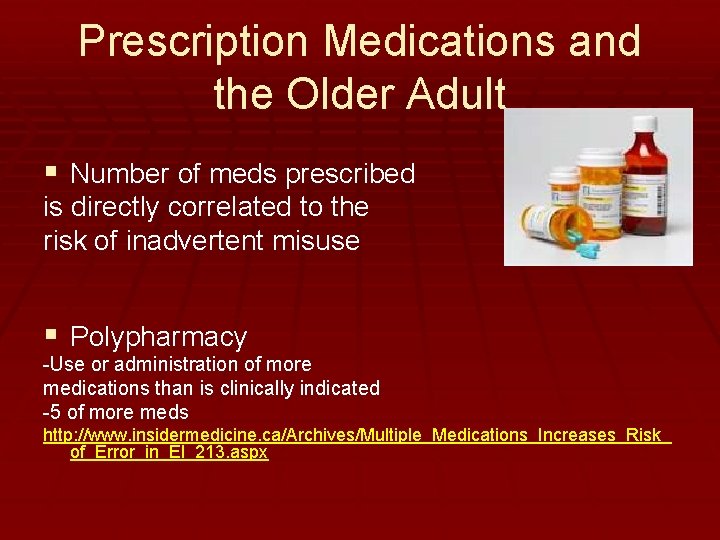
Prescription Medications and the Older Adult § Number of meds prescribed is directly correlated to the risk of inadvertent misuse § Polypharmacy -Use or administration of more medications than is clinically indicated -5 of more meds http: //www. insidermedicine. ca/Archives/Multiple_Medications_Increases_Risk_ of_Error_in_El_213. aspx
Prescription Medication Commonly Used Drugs § Cardiovascular meds * Benzodiazepines § Diuretics § Cathartics *Benzodiazepine dependence is most common § § § Antacids Thyroidal meds Anticoagulants
Prescription Meds Assessment § Very similar to ETOH § Prescriptions from multiple physicians § May use the MAST-G -substitute prescription meds for ETOH § Be aware of repeatedly losing prescriptions/pills - “I threw them away by accident” § Congruency b/w the complaint and clinical presentation § Above average knowledge about meds § S/S withdrawals
Prescription Meds Interventions § Assess all meds and develop a safe detox plan § Low stimuli environment/seizure precautions § Meds to minimize withdrawal § Nutritional support § Multidisciplinary approach- treatment options (NA, individual/group/family therapy
Prescription Meds Evaluation Follow-up is essential § Participation in treatment program § Decreased drug-seeking bx § Pt. education- appropriate med use and effects of misuse
Non Prescription Medications Interventions § Assess clients’ nonprescription med history -Don’t forget natural and herbals § Stress the importance of consulting physician and/or pharmacist before taking nonprescription meds § Evaluate clients’ understanding of the effects of nonprescription meds
Safe Use of Medication § Know the name, amt. , type, freq. , purpose, and side effects of prescription/nonpresc ription meds § Bring all meds to every MD visit § Never borrow or share meds § Assess client’s ability to self-administer (vision, judgment, memory etc. ) § Simplify regimen as much as possible § Use a single pharmacy
Nicotine § Tobacco use is a risk factor in many of the leading causes of death for older adults § Many >50 y/o express the desire to quit; only those with chronic illness tend to have the motivation to do so § Older adults who stop tobacco usage can increase life expectancy
Nicotine Assessment § S/S nicotine withdrawal -Depressed mood, insomnia, irritability, frustration, restlessness, increased appetite § Tobacco use pattern § Fagerstorm Nicotine Tolerance Quiz (Box 18 -9) http: //www. cancer. org/docroot/PED/content/PED_10_13 x_Smoking_Ha bits_Quiz. asp
Nicotine Interventions § Nicotine Replacement- reduces withdrawal symptoms -nicotine gum -nasal spray - transdermal patches -Nicotrol inhaler- 45% quit rate after 6 wks. § Clonidine Antihypertensive that blocks the neurologic symptoms that produce nicotine withdrawal
Nicotine Postpone/Inhale/Reconsider § B-mod program that decreases tobacco use and helps with stress mgmt. 1. Take a cigarette from a pack, replace, wait 5 minutes. 2. During the 5 min interval place 2 fingers to the mouth as if smoking and inhale slowly. 3. Repeat as necessary. § Clients have reduced smoking by 50% using this technique.
Nicotine Evaluation Assess for: § Decreased tobacco use § Compliance with regimen to quit § Understanding of the effects that tobacco and nicotine have on the body
Caffeine Many symptoms associated with caffeine intoxication can mimic many symptoms including: § § § § Nervousness Restlessness Excitement Insomnia Diuresis GI Disturbances Muscle twitching Tachycardia, arrhythmias
Caffeine Product Caffeine (mg) Drip-brewed coffee Instant coffee Decaffeinated coffee Tea Cola Hot Cocoa Chocolate bar Excedrin Anacin 90 -140 60 -100 2 -4 30 -100 25 -50 25 -35 60 30
Caffeine Assessment § S/S intoxication and withdrawal -Withdrawal- HA, fatigue, depression, anxiety, N&V, muscle pain/stiffness § § § Interventions & Evaluation Encourage noncaffeinated products Educate on the effects of meds and caffeine Document teaching
- Slides: 28