
Substance Abuse in Elderly Prof Dr Philip George

Substance Abuse in Elderly Prof Dr. Philip George Consultant Psychiatrist International Medical University
Take home message l l Most elderly are resilient and cope well with ageing Most elderly are still contributing significantly to families, communities and the country at large Our focus is on the minority who are deprived of a quality of life they deserve in their twilight years Towards being a developed nation, we need to develop in services for people who are deprived and in need including the Ageing.
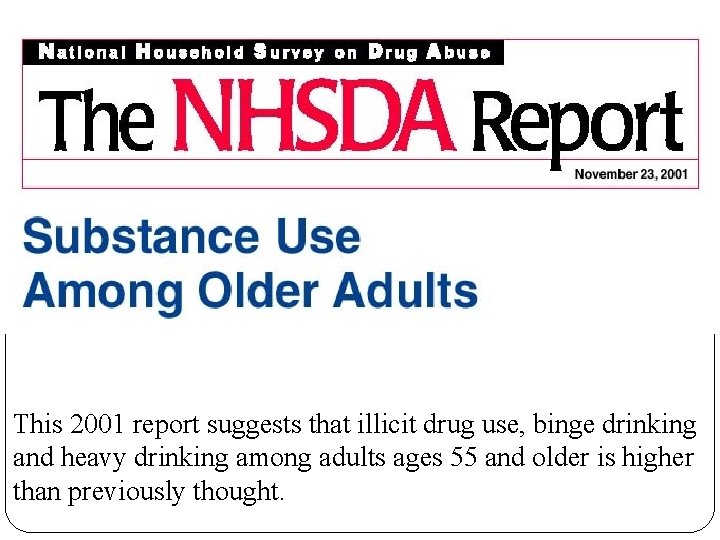
This 2001 report suggests that illicit drug use, binge drinking and heavy drinking among adults ages 55 and older is higher than previously thought.
The scenario l l l As people age, the social support system becomes more important but the longer people live, the more likely they are to live alone ½ of all females in the 75 -84 and 58% of females older than 85 lived alone in 1999 1/3 of people providing support to the elderly are adult children Those with adult children are less likely to have them living in the same general area The new community!
Who is at risk? l Elderly in the community who: • • • Live alone Are economically disadvantaged Have no relatives or friends nearby Have experienced recent losses Have been ill or have a progressive or chronic illness • Have experienced a head injury causing loss of consciousness • Loss of role
THE PHYSIOLOGY OF AGING IN RELATION TO SUBSTANCE ABUSE l l l Increased fat stores and overall decrease in body water content Decreased muscle mass Increased peak alcohol level at lower doses Long acting benzodiazepines get stored in the fat and stay around a lot longer Lower doses of short acting benzos attain higher peak levels more quickly
l l l Blood flow through the liver decreases and the metabolic capacity decreases with age Acute alcohol abuse impairs liver function Chronic alcohol abuse may actually increase liver enzyme induction and increase metabolism of some drugs (until the liver becomes really damaged) Drug clearance may fluctuate because of this – especially in binge drinking. With drugs like warfarin or anticonvulsants, this can have catastrophic consequences Combination of benzos and alcohol has a more deleterious effect on liver function
More physiology concerns l l Decreased immune function as we age Alcohol itself in large doses is an immunosuppressant This increases problems with infection and poorer outcomes when an infection occurs Alcohol, benzos & opioids decrease the level of consciousness and are CNS depressants – which also increase the risk of aspiration pneumonia.
Substance Abuse Definition: Chronic or habitual use of any chemical substance to alter states of body or mind for other than medically warranted purposes. Substances that are commonly abused: Alcohol Nicotine Narcotics Benzodiazepine
Alcohol Abuse Definition: A disorder characterized by the excessive consumption of and dependence on alcoholic beverages, leading to physical and psychological harm and impaired social and vocational functioning Prevalence: The prevalence of heavy drinking (12 to 21 drinks per week) in older adults is estimated at 3 to 9 percent (Liberto et al. , 1992)
Literature review • Limited data on health status of Elderly in Malaysia • Most recent large scale study of Elderly: Mental Health and Quality of life of Older Malaysians Survey. Conducted from 2003 to 2005 and employed a cross sectional design. 2980 community dwelling older persons in Malaysia, ranging in the age group from 60 to 104 years were sampled and interviewed on self-rated health, quality of life and prevalence of disability. Most of statistics presented in this section are based on the findings from this study
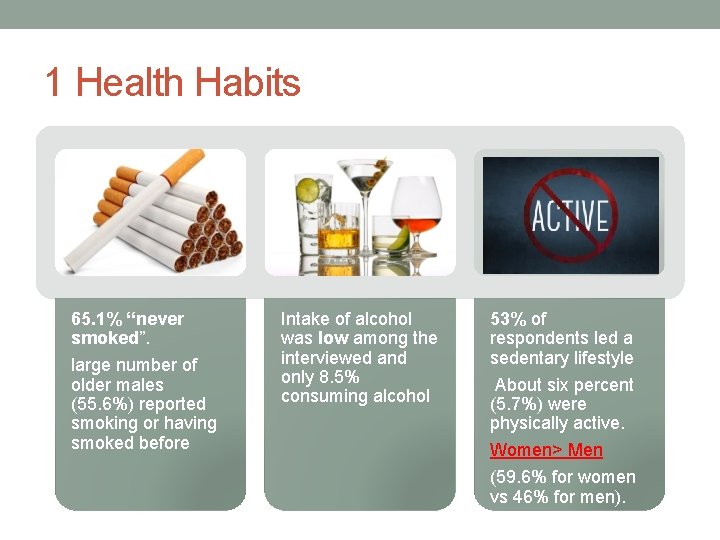
1 Health Habits 65. 1% “never smoked”. large number of older males (55. 6%) reported smoking or having smoked before Intake of alcohol was low among the interviewed and only 8. 5% consuming alcohol 53% of respondents led a sedentary lifestyle About six percent (5. 7%) were physically active. Women> Men (59. 6% for women vs 46% for men).
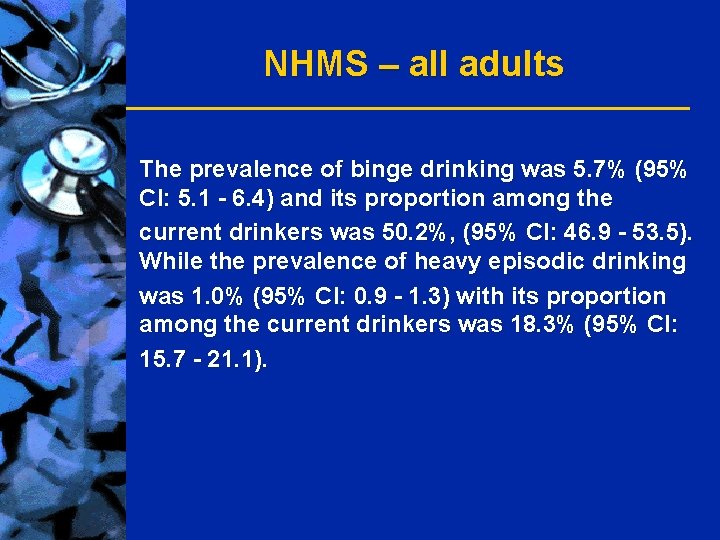
NHMS – all adults The prevalence of binge drinking was 5. 7% (95% CI: 5. 1 - 6. 4) and its proportion among the current drinkers was 50. 2%, (95% CI: 46. 9 - 53. 5). While the prevalence of heavy episodic drinking was 1. 0% (95% CI: 0. 9 - 1. 3) with its proportion among the current drinkers was 18. 3% (95% CI: 15. 7 - 21. 1).
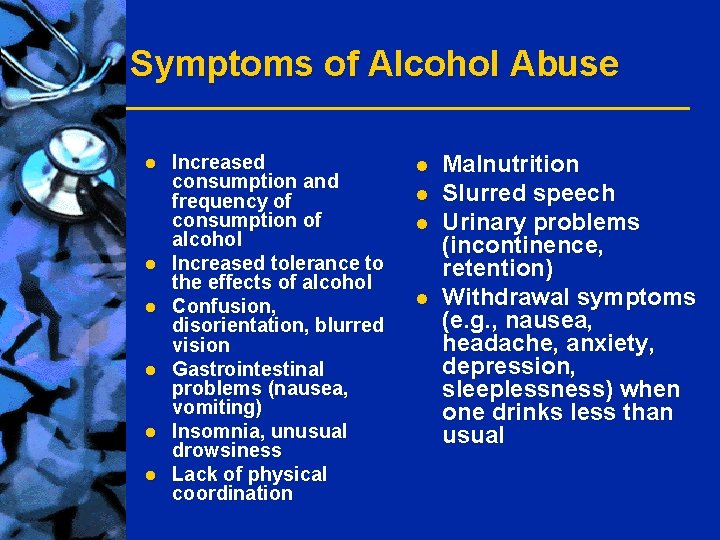
Symptoms of Alcohol Abuse l l l Increased consumption and frequency of consumption of alcohol Increased tolerance to the effects of alcohol Confusion, disorientation, blurred vision Gastrointestinal problems (nausea, vomiting) Insomnia, unusual drowsiness Lack of physical coordination l l Malnutrition Slurred speech Urinary problems (incontinence, retention) Withdrawal symptoms (e. g. , nausea, headache, anxiety, depression, sleeplessness) when one drinks less than usual
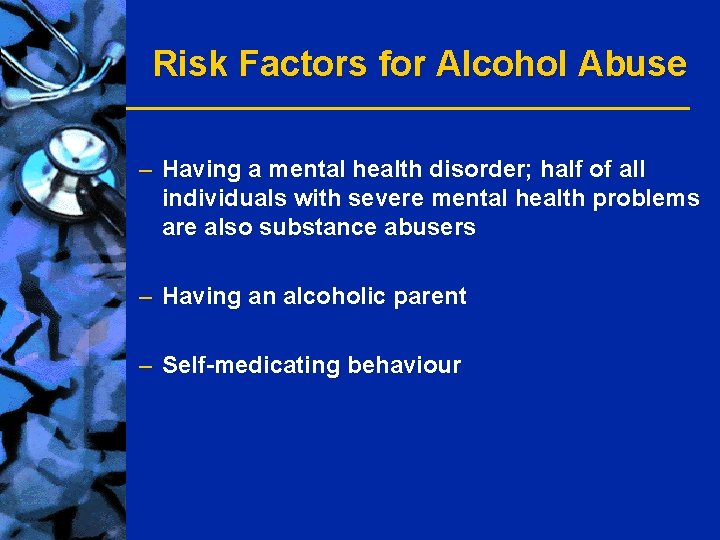
Risk Factors for Alcohol Abuse – Having a mental health disorder; half of all individuals with severe mental health problems are also substance abusers – Having an alcoholic parent – Self-medicating behaviour
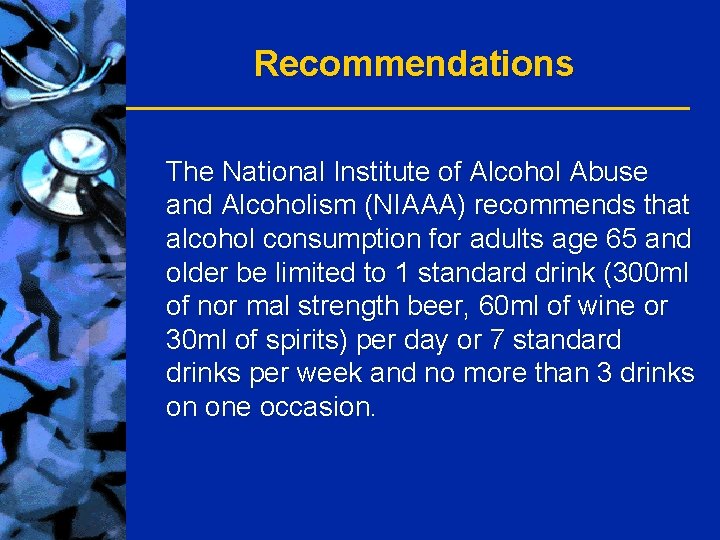
Recommendations The National Institute of Alcohol Abuse and Alcoholism (NIAAA) recommends that alcohol consumption for adults age 65 and older be limited to 1 standard drink (300 ml of nor mal strength beer, 60 ml of wine or 30 ml of spirits) per day or 7 standard drinks per week and no more than 3 drinks on one occasion.
Benzodiazepine Abuse Definition: a type of medication known as tranquilizers. Familiar names include Valium and Xanax. When people without prescriptions take these drugs for their sedating effects, use turns into abuse (www. emedicinehealth. com/benzodiazepine ) Prevalence: Older adults represent only 14% of the U. S. population, yet they receive 27% of all prescription benzodiazepines (www. positiveaging. org) Eg: Elderly with Dementia on Zolpidem
Benzodiazepine Abuse l Symptoms of abuse – Excessive daytime sedation – Ataxia (loss of the ability to coordinate muscular movement) – Problems with attention and memory – Anxiety, agitation – Impaired psychomotor abilities – Drug-related delirium or dementia l Risk factors for abuse – Medical hospitalization is a significant risk factor for initiation and continuation of benzodiazepines (positiveaging. org)
Case Discussion 40+ single Mother h/o chronic knee pain after surgery 4 years ago IM Morphine + Stilnox Seizures Started Suboxone as inpatient and continued as outpatient • Decided when improved that she will proceed with Maintenance • • •
• In Malaysia, the use of opioids in patients with chronic cancer and non-cancer pain is low. • The Malaysian Statistics on Medicine 2008 found that the total opioid consumption in Malaysia was 0. 4 DDD/1000 population/day, c/w Australia -(8. 2 DDD/1000 population /day) • However, the use of intermittent short acting opioids (e. g. intramuscular pethidine) for chronic non-cancer pain is common. • Not evidence-based and has the potential to lead to addiction and opioid-seeking behaviour for short term pain relief
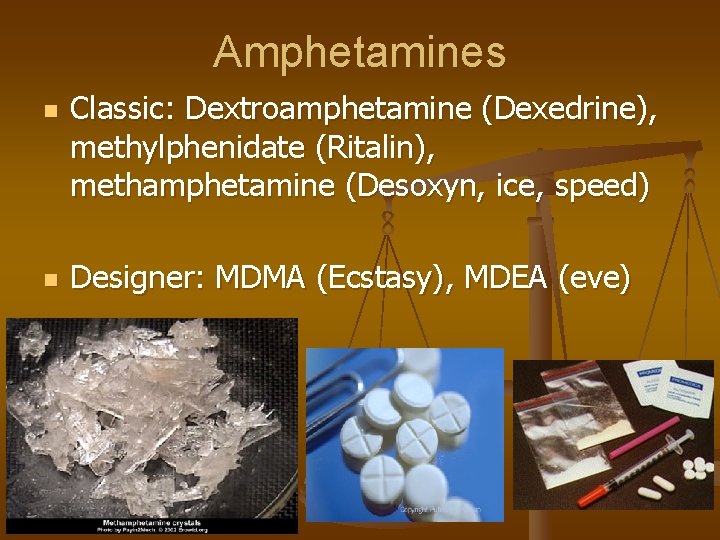
Amphetamines n n Classic: Dextroamphetamine (Dexedrine), methylphenidate (Ritalin), methamphetamine (Desoxyn, ice, speed) Designer: MDMA (Ecstasy), MDEA (eve)
Amphetamines Ø Stimulant like cocaine Ø influence from neighbouring countries Ø crystals that are taken thru chasing or melted & taken intravenously Ø Euphoria, increased energy, mental clarity, alertness, decrease appetite Ø hallucinations, persecutory delusions Ø hostile & aggressive
Co-occurring Disorders Definition: Dual diagnosis is a term that refers to patients who have both a mental health disorder and substance use disorder. It may be used interchangeably with "co-occurring disorders" or "comorbidity. " Prevalence: According to the U. S. Substance Abuse and Mental Health Services Administration (SAMHSA), an estimated 10 million people in the United States will have a combination of at least one mental health and one substance abuse disorder in any twelvemonth period (www. minddisorders. com/Del-Fi/Dual-diagnosis. html)
Assessment l l Short - Michigan Alcoholism Screening Test Geriatric Version (SMAST-G) Laboratory tests – Raised MCV – Liver Enzymes - carbohydrate-deficienttransferrin (CDT), gamma glutamyl transferase (GGT), AST & ALT (AST to ALT ratio of 2: 1 or greater is suggestive of alcoholic liver disease
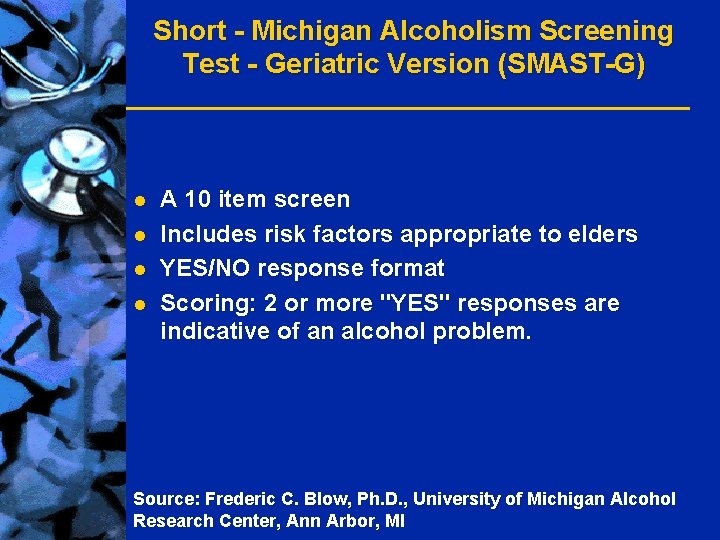
Short - Michigan Alcoholism Screening Test - Geriatric Version (SMAST-G) l l A 10 item screen Includes risk factors appropriate to elders YES/NO response format Scoring: 2 or more "YES" responses are indicative of an alcohol problem. Source: Frederic C. Blow, Ph. D. , University of Michigan Alcohol Research Center, Ann Arbor, MI
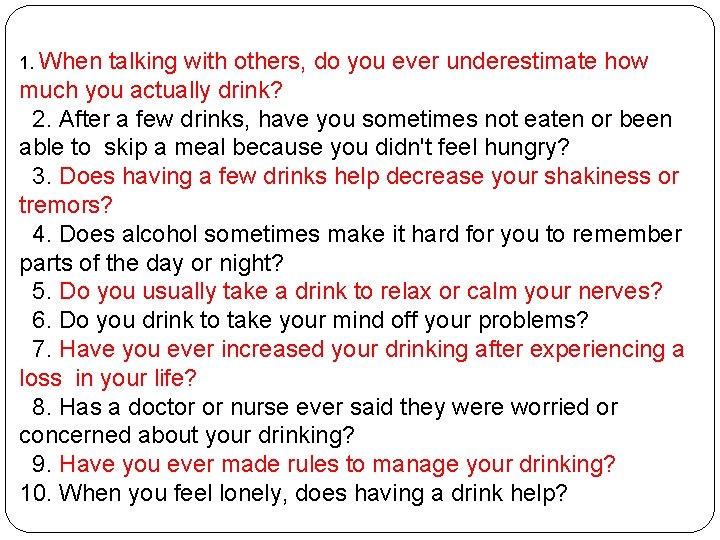
1. When talking with others, do you ever underestimate how much you actually drink? 2. After a few drinks, have you sometimes not eaten or been able to skip a meal because you didn't feel hungry? 3. Does having a few drinks help decrease your shakiness or tremors? 4. Does alcohol sometimes make it hard for you to remember parts of the day or night? 5. Do you usually take a drink to relax or calm your nerves? 6. Do you drink to take your mind off your problems? 7. Have you ever increased your drinking after experiencing a loss in your life? 8. Has a doctor or nurse ever said they were worried or concerned about your drinking? 9. Have you ever made rules to manage your drinking? 10. When you feel lonely, does having a drink help?
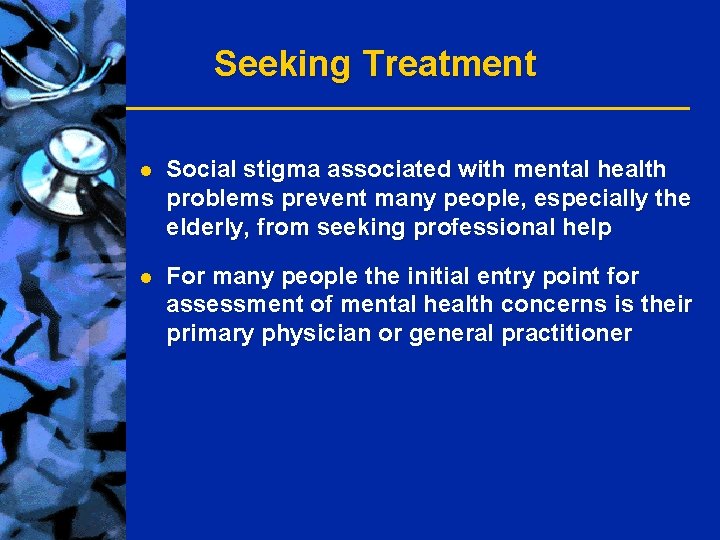
Seeking Treatment l Social stigma associated with mental health problems prevent many people, especially the elderly, from seeking professional help l For many people the initial entry point for assessment of mental health concerns is their primary physician or general practitioner
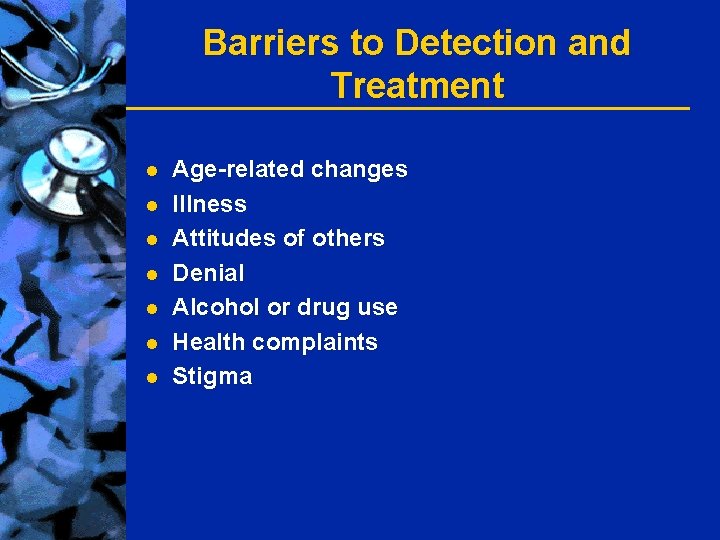
Barriers to Detection and Treatment l l l l Age-related changes Illness Attitudes of others Denial Alcohol or drug use Health complaints Stigma
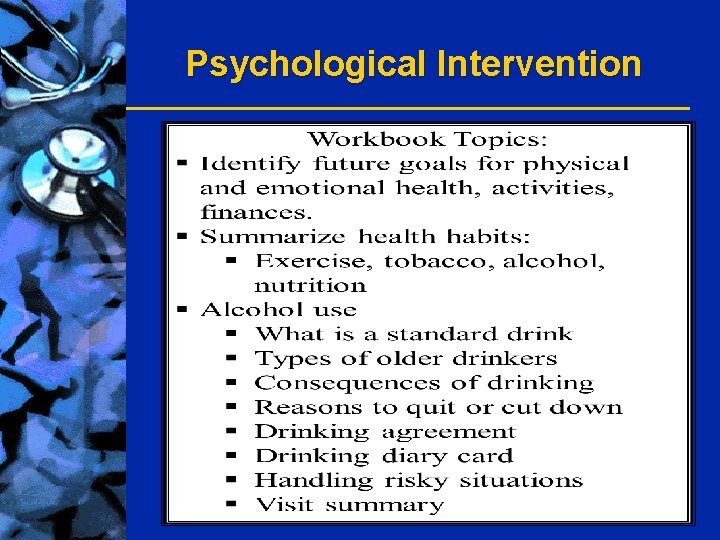
Psychological Intervention
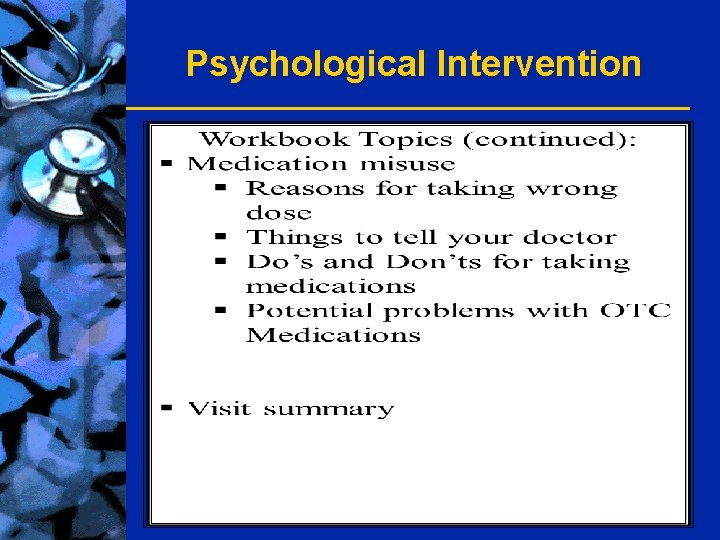
Psychological Intervention
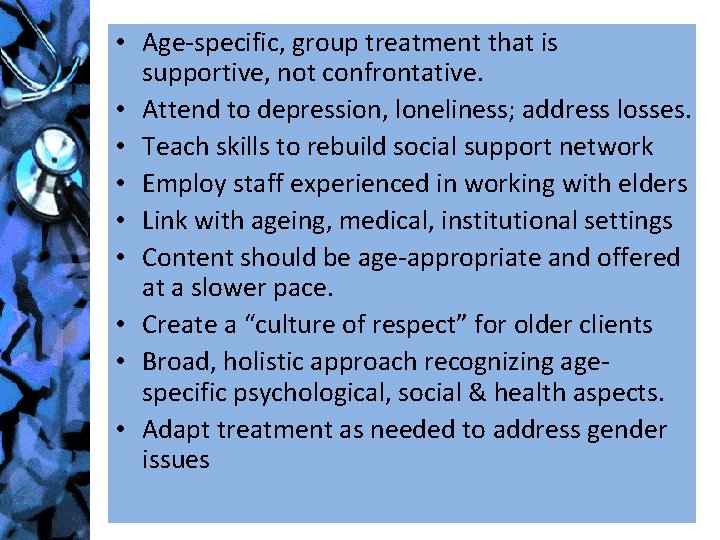
• Age-specific, group treatment that is supportive, not confrontative. • Attend to depression, loneliness; address losses. • Teach skills to rebuild social support network • Employ staff experienced in working with elders • Link with ageing, medical, institutional settings • Content should be age-appropriate and offered at a slower pace. • Create a “culture of respect” for older clients • Broad, holistic approach recognizing agespecific psychological, social & health aspects. • Adapt treatment as needed to address gender issues
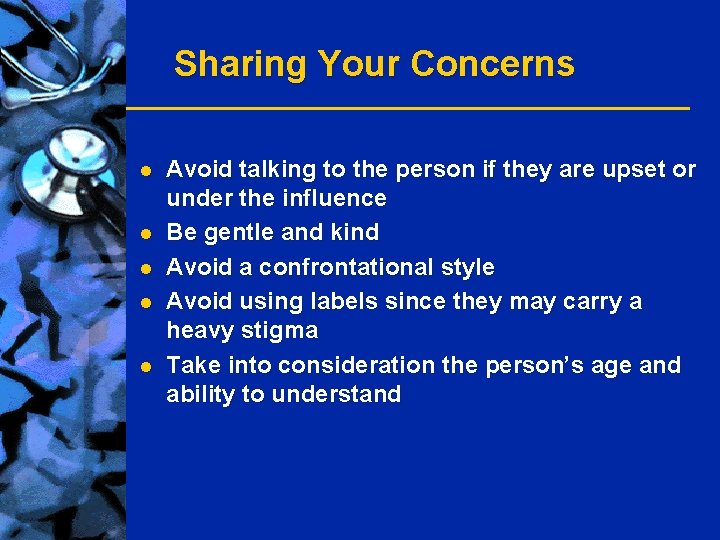
Sharing Your Concerns l l l Avoid talking to the person if they are upset or under the influence Be gentle and kind Avoid a confrontational style Avoid using labels since they may carry a heavy stigma Take into consideration the person’s age and ability to understand
Sharing Your Concerns l l Be consistent and patient in your expression of concern without exerting undue pressure Be direct; treat the individual as an adult Give specific examples of behaviors that concern you Use I statements as in “I am concerned about you”

- Slides: 35