
Substance Abuse and its Impact on Parenting A
Substance Abuse and its Impact on Parenting: A Medical Perspective Elizabeth C. Oehler, MD Emergency Medicine Physician HCCASA Board of Directors 2019 -Present
Overview ✤ Introduction ✤ Objectives ✤ Define Addiction/Substance Abuse ✤ Neurology of Addiction 101 ✤ Review Specific Drugs of Abuse ✤ Questions ✤ BREAK!!! ✤ Discuss Impact of Substance Abuse on Parenting ✤ Recovery ✤ Questions
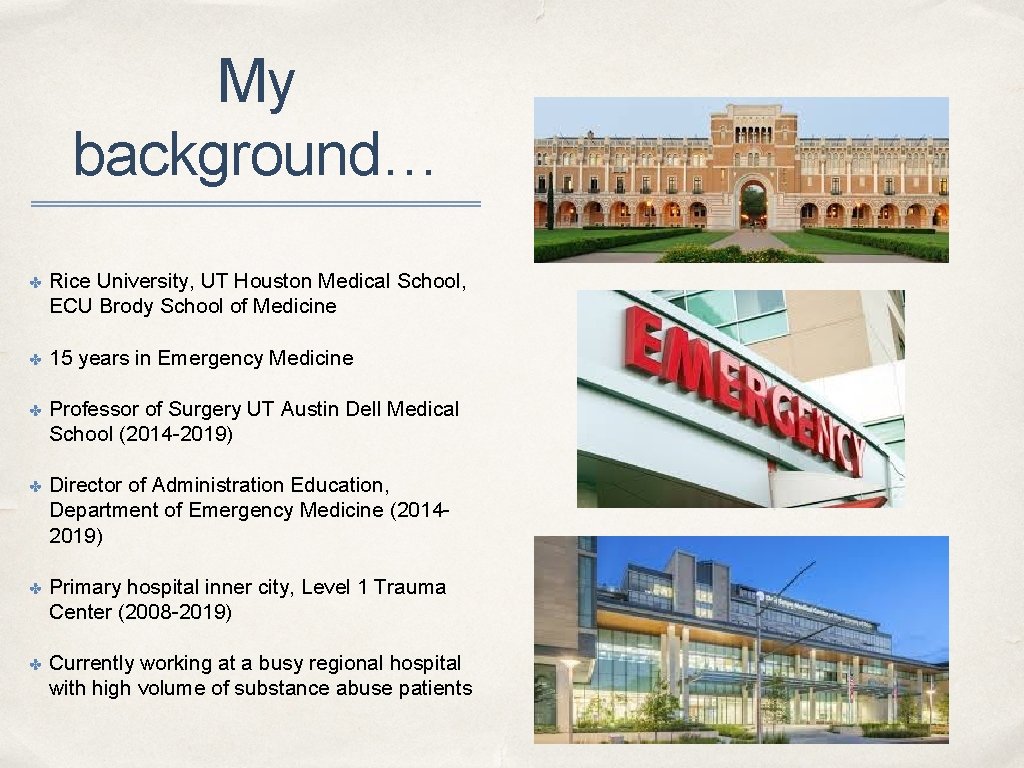
My background… ✤ Rice University, UT Houston Medical School, ECU Brody School of Medicine ✤ 15 years in Emergency Medicine ✤ Professor of Surgery UT Austin Dell Medical School (2014 -2019) ✤ Director of Administration Education, Department of Emergency Medicine (20142019) ✤ Primary hospital inner city, Level 1 Trauma Center (2008 -2019) ✤ Currently working at a busy regional hospital with high volume of substance abuse patients
Objectives ✤ Define drug/alcohol addiction ✤ Discuss the biological, psychosocial, and environmental variables that contribute to drug abuse and addiction ✤ Review specific drugs of abuse and their clinical effects ✤ Consider the effects of drugs of abuse on key aspects of parenting: decision making capacity, risk taking behaviors, and judgment ✤ What is “willpower”? What role does this concept play in recovery? ✤ Evaluate barriers to recovery ✤ Discuss the current best practice recommendations for successful long term substance abuse recovery
What is Addiction? “ Dramatic increase in cravings for a drug or activity, as well as impairments in the ability to successfully regulate this impulse, despite the knowledge and experience of many consequences related to the addictive behavior. ” -American Psychological Association
What is Addiction? ✤ Chronic, relapsing disorder with biological, psychological, social, and environmental factors ✤ Half of risk is biological ✤ Biology/genetics influence: ✤ degree of “reward” experienced when using the substance (self-reinforcing) ✤ way substances are processed by the body/brain
What is Addiction? ✤ Increased desire to repeatedly use substances influenced by: ✤ Psychological Factors: stress, mental health issues, history of trauma, intergenerational trauma ✤ Social Factors: culture of substance abuse in families or communities ✤ Environmental Factors: accessibility of substances, diseases of poverty, economic impacts
Neurology of Addication 101 ✤ Chronic substance use leads to lasting changes in the brain ✤ Prefrontal Cortex and Limbic System ✤ These areas control: rewards, motivations, memory, impulse control, judgment ✤ Takes days to years to reverse these changes after cessation of substance use
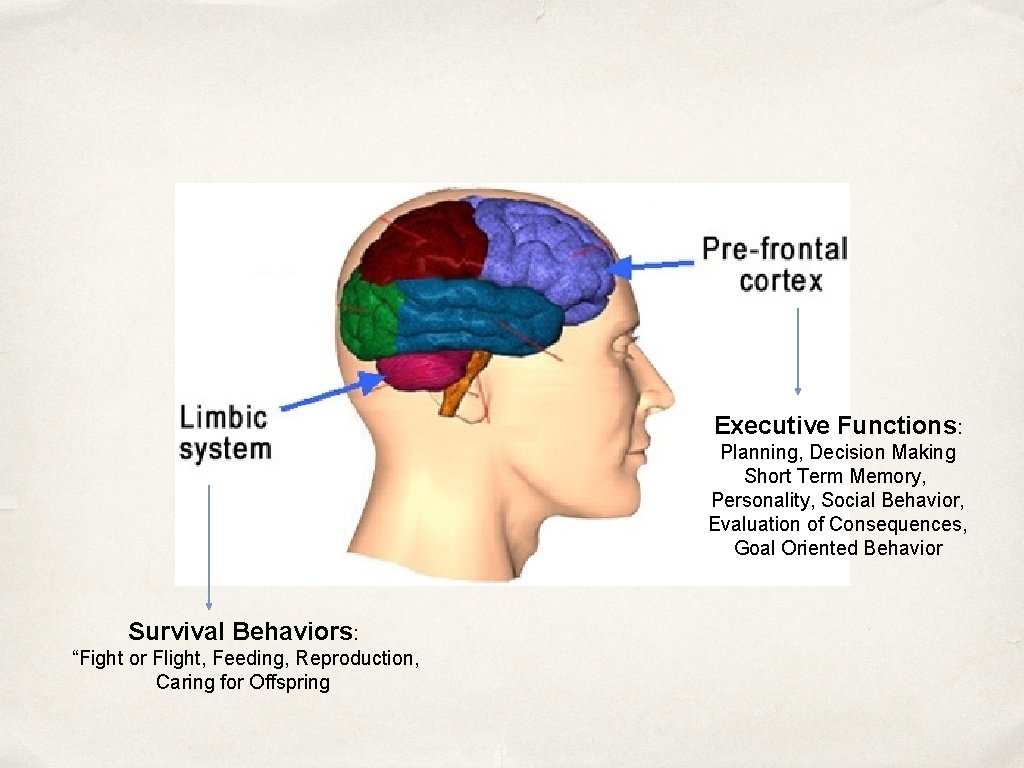
Executive Functions: Planning, Decision Making Short Term Memory, Personality, Social Behavior, Evaluation of Consequences, Goal Oriented Behavior Survival Behaviors: “Fight or Flight, Feeding, Reproduction, Caring for Offspring
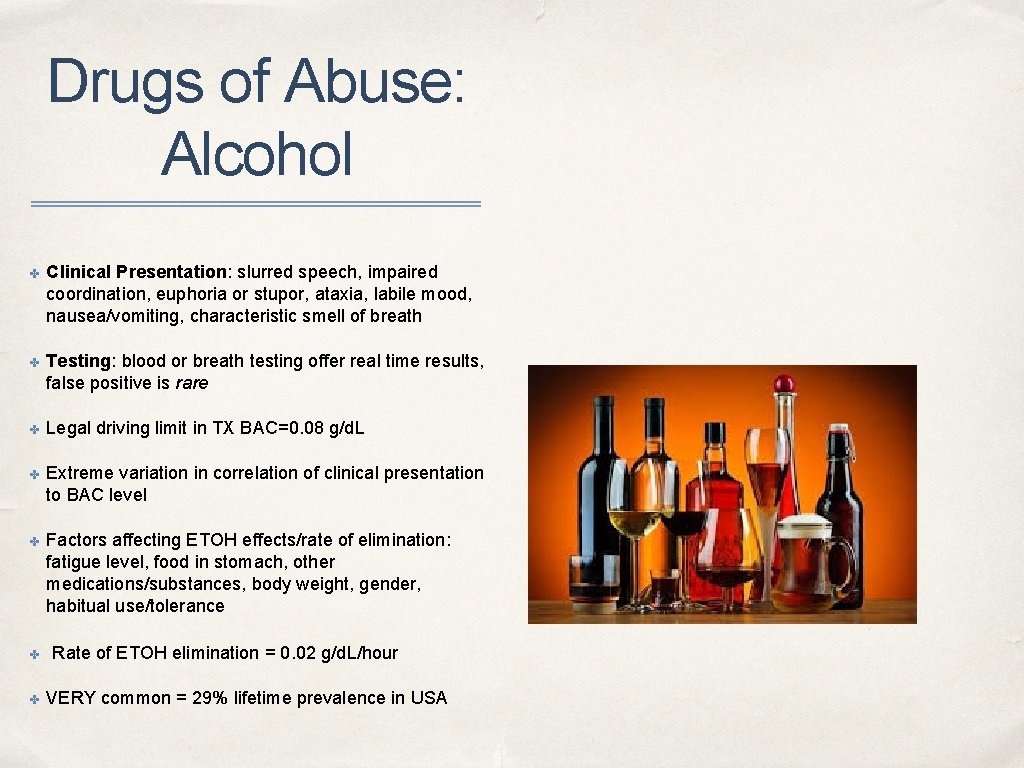
Drugs of Abuse: Alcohol ✤ Clinical Presentation: slurred speech, impaired coordination, euphoria or stupor, ataxia, labile mood, nausea/vomiting, characteristic smell of breath ✤ Testing: blood or breath testing offer real time results, false positive is rare ✤ Legal driving limit in TX BAC=0. 08 g/d. L ✤ Extreme variation in correlation of clinical presentation to BAC level ✤ Factors affecting ETOH effects/rate of elimination: fatigue level, food in stomach, other medications/substances, body weight, gender, habitual use/tolerance ✤ ✤ Rate of ETOH elimination = 0. 02 g/d. L/hour VERY common = 29% lifetime prevalence in USA
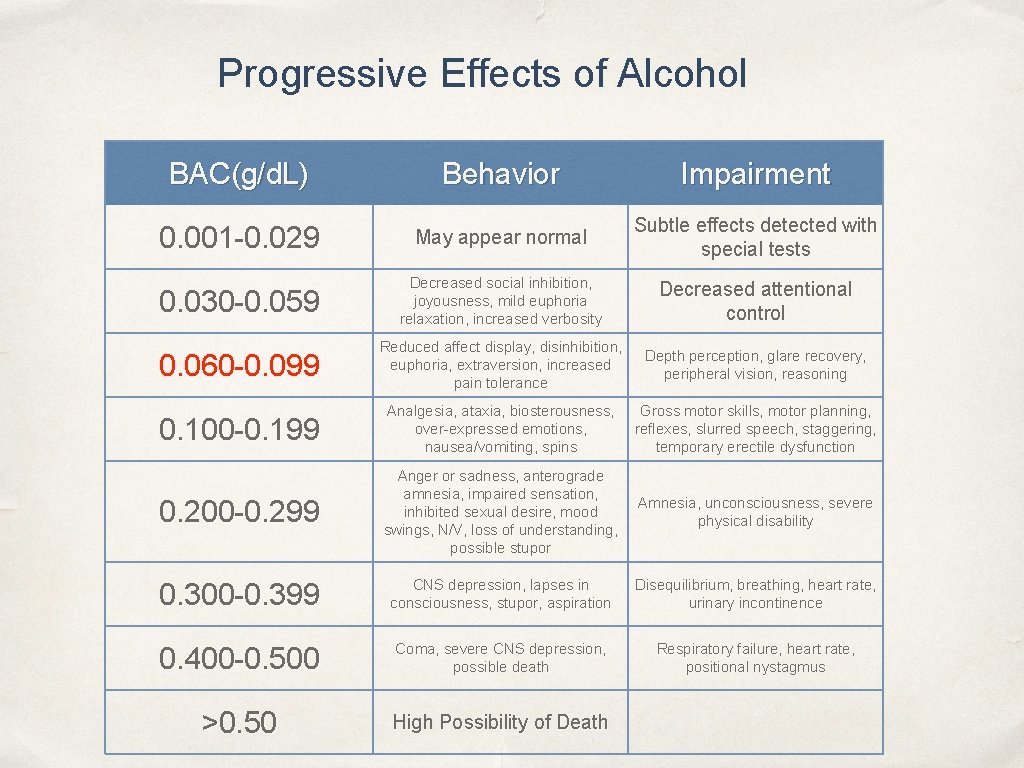
Progressive Effects of Alcohol BAC(g/d. L) Behavior Impairment 0. 001 -0. 029 May appear normal Subtle effects detected with special tests 0. 030 -0. 059 Decreased social inhibition, joyousness, mild euphoria relaxation, increased verbosity Decreased attentional control 0. 060 -0. 099 Reduced affect display, disinhibition, euphoria, extraversion, increased pain tolerance Depth perception, glare recovery, peripheral vision, reasoning 0. 100 -0. 199 Analgesia, ataxia, biosterousness, over-expressed emotions, nausea/vomiting, spins Gross motor skills, motor planning, reflexes, slurred speech, staggering, temporary erectile dysfunction 0. 200 -0. 299 Anger or sadness, anterograde amnesia, impaired sensation, inhibited sexual desire, mood swings, N/V, loss of understanding, possible stupor Amnesia, unconsciousness, severe physical disability 0. 300 -0. 399 CNS depression, lapses in consciousness, stupor, aspiration Disequilibrium, breathing, heart rate, urinary incontinence 0. 400 -0. 500 Coma, severe CNS depression, possible death Respiratory failure, heart rate, positional nystagmus >0. 50 High Possibility of Death
Drugs of Abuse: Alcohol ✤ No one test for chronic alcohol use/abuse ✤ Some disease processes point to chronic use/abuse: liver cirrhosis, pancreatitis, alcoholic gastritis, multiple EMS/Police interactions due to active intoxication
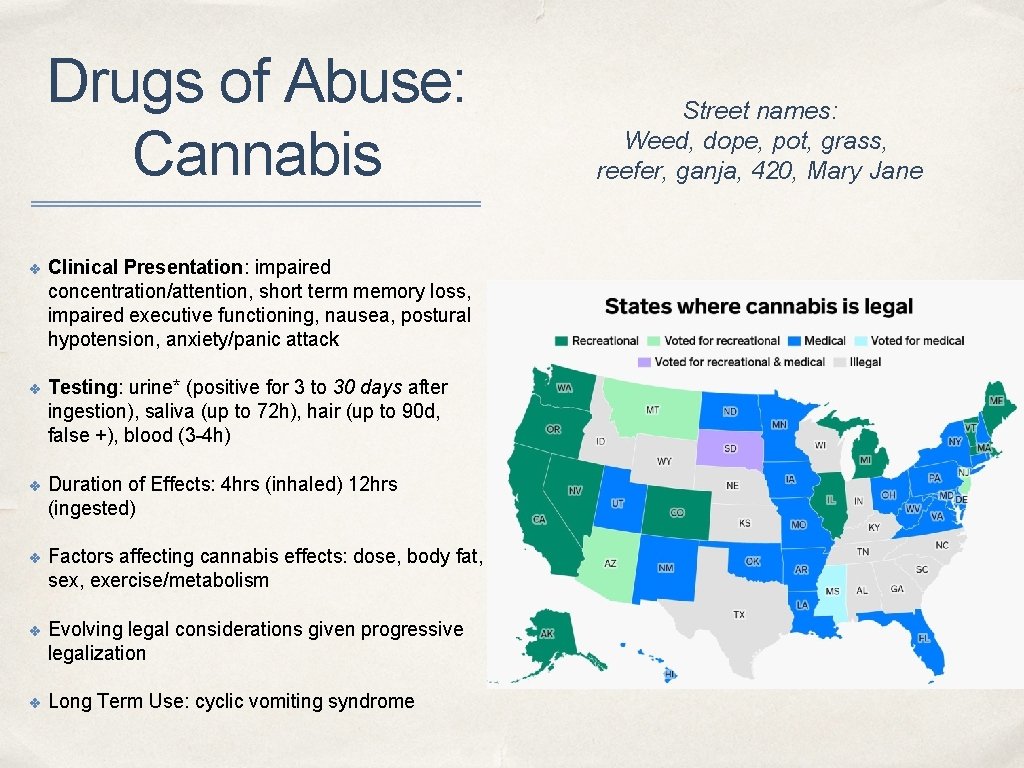
Drugs of Abuse: Cannabis ✤ Clinical Presentation: impaired concentration/attention, short term memory loss, impaired executive functioning, nausea, postural hypotension, anxiety/panic attack ✤ Testing: urine* (positive for 3 to 30 days after ingestion), saliva (up to 72 h), hair (up to 90 d, false +), blood (3 -4 h) ✤ Duration of Effects: 4 hrs (inhaled) 12 hrs (ingested) ✤ Factors affecting cannabis effects: dose, body fat, sex, exercise/metabolism ✤ Evolving legal considerations given progressive legalization ✤ Long Term Use: cyclic vomiting syndrome Street names: Weed, dope, pot, grass, reefer, ganja, 420, Mary Jane
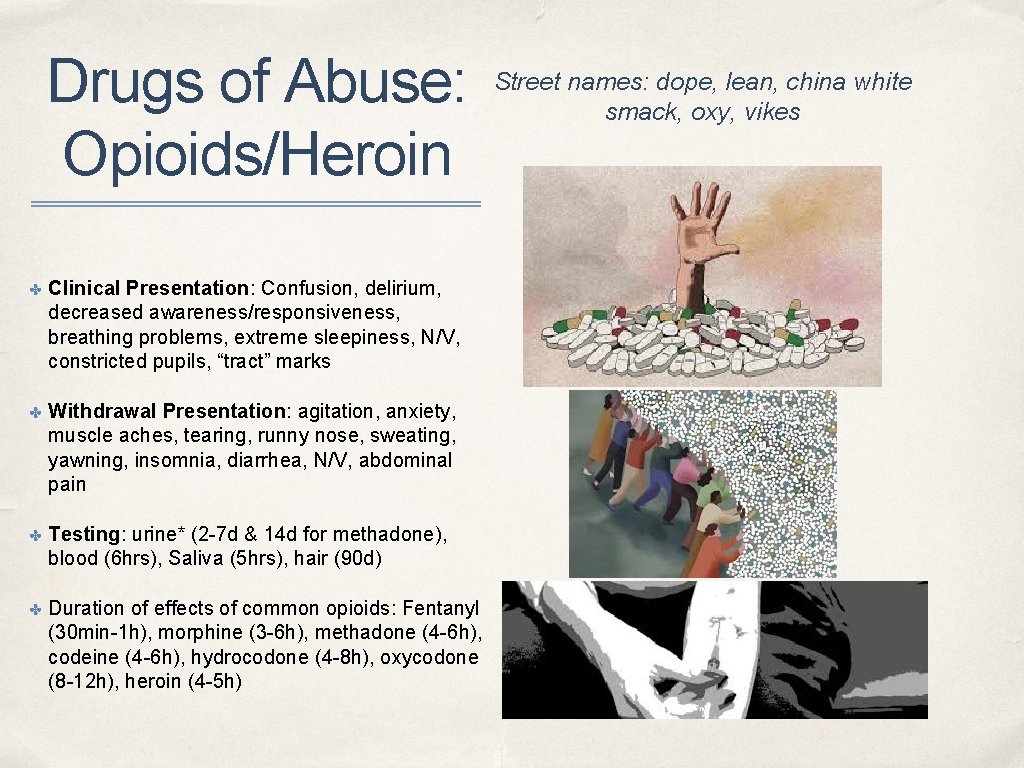
Drugs of Abuse: Opioids/Heroin ✤ Clinical Presentation: Confusion, delirium, decreased awareness/responsiveness, breathing problems, extreme sleepiness, N/V, constricted pupils, “tract” marks ✤ Withdrawal Presentation: agitation, anxiety, muscle aches, tearing, runny nose, sweating, yawning, insomnia, diarrhea, N/V, abdominal pain ✤ Testing: urine* (2 -7 d & 14 d for methadone), blood (6 hrs), Saliva (5 hrs), hair (90 d) ✤ Duration of effects of common opioids: Fentanyl (30 min-1 h), morphine (3 -6 h), methadone (4 -6 h), codeine (4 -6 h), hydrocodone (4 -8 h), oxycodone (8 -12 h), heroin (4 -5 h) Street names: dope, lean, china white smack, oxy, vikes
Drugs of Abuse: Opioids ✤ Diseases related to long term abuse: overdose, physical dependance, tolerance, chronic constipation, correlation with psychiatric disorders especially depression and anxiety, skin conditions/infections (often rare/unusual) related to IV drug use/abuse
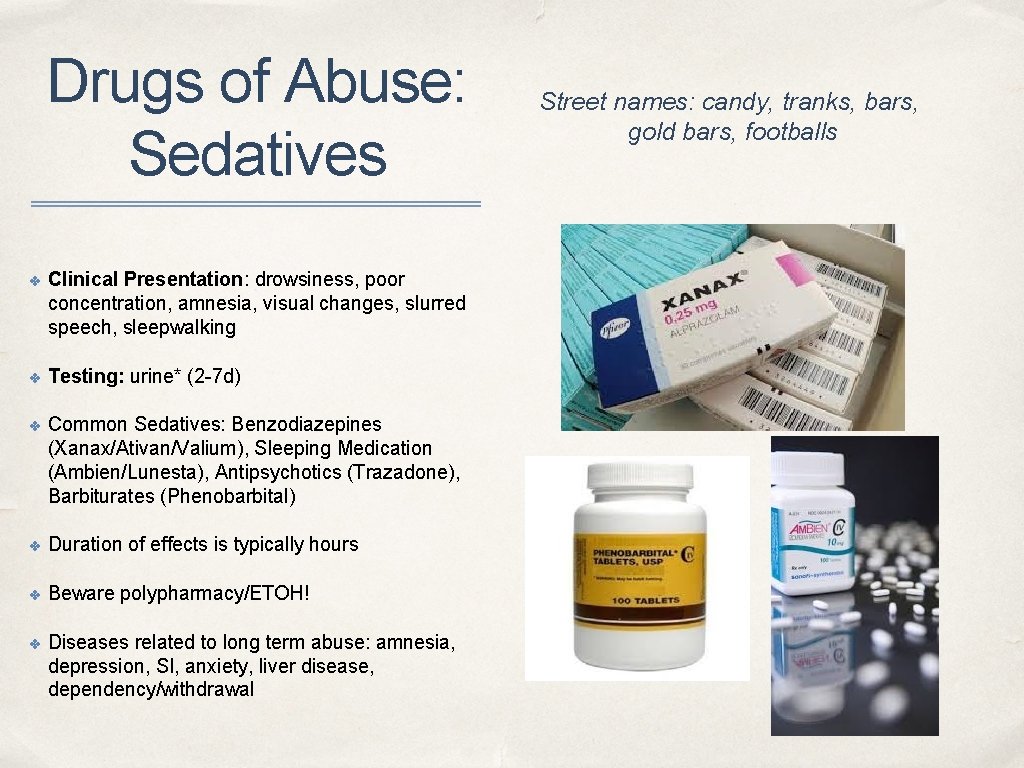
Drugs of Abuse: Sedatives ✤ Clinical Presentation: drowsiness, poor concentration, amnesia, visual changes, slurred speech, sleepwalking ✤ Testing: urine* (2 -7 d) ✤ Common Sedatives: Benzodiazepines (Xanax/Ativan/Valium), Sleeping Medication (Ambien/Lunesta), Antipsychotics (Trazadone), Barbiturates (Phenobarbital) ✤ Duration of effects is typically hours ✤ Beware polypharmacy/ETOH! ✤ Diseases related to long term abuse: amnesia, depression, SI, anxiety, liver disease, dependency/withdrawal Street names: candy, tranks, bars, gold bars, footballs
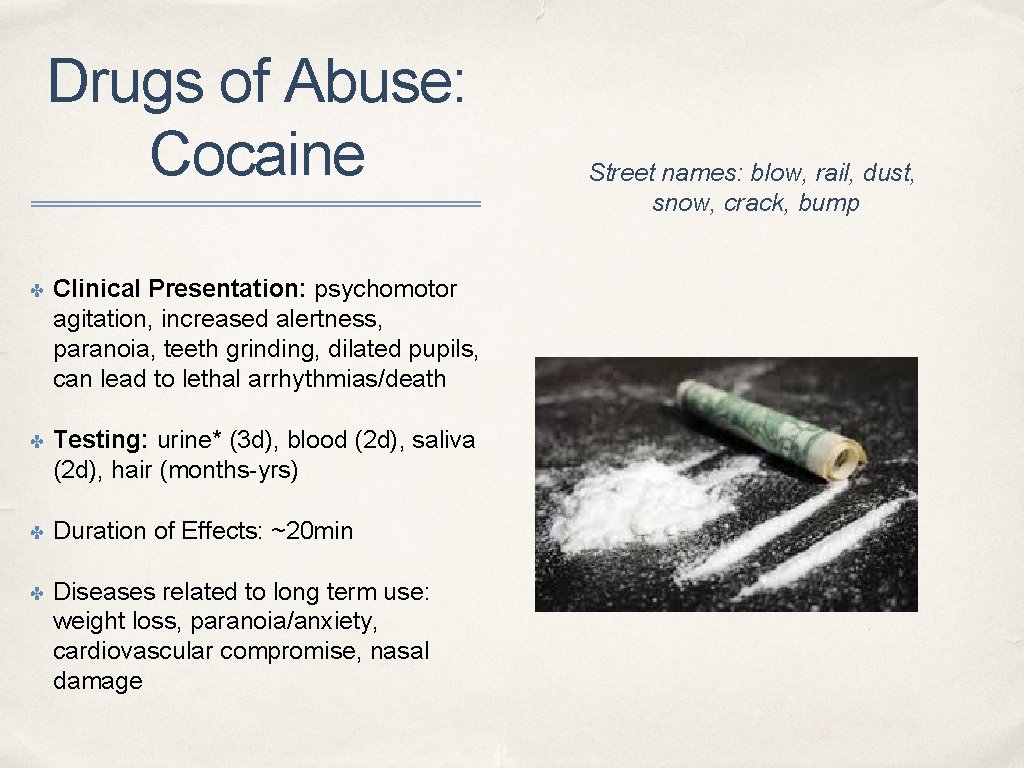
Drugs of Abuse: Cocaine ✤ Clinical Presentation: psychomotor agitation, increased alertness, paranoia, teeth grinding, dilated pupils, can lead to lethal arrhythmias/death ✤ Testing: urine* (3 d), blood (2 d), saliva (2 d), hair (months-yrs) ✤ Duration of Effects: ~20 min ✤ Diseases related to long term use: weight loss, paranoia/anxiety, cardiovascular compromise, nasal damage Street names: blow, rail, dust, snow, crack, bump
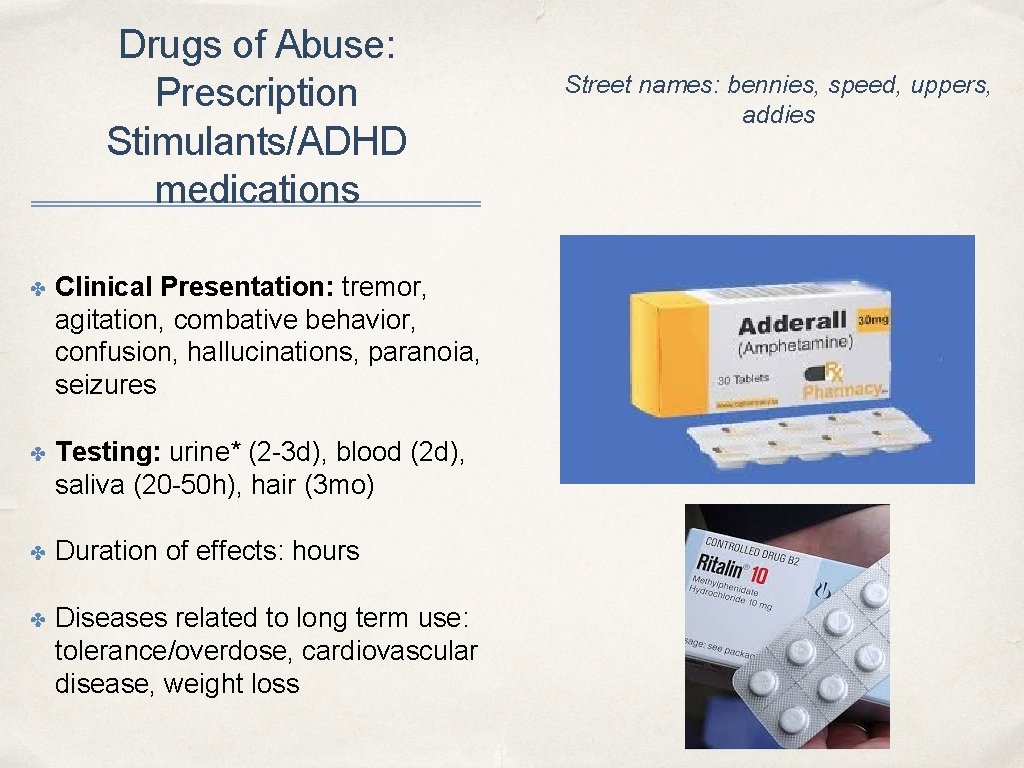
Drugs of Abuse: Prescription Stimulants/ADHD medications ✤ Clinical Presentation: tremor, agitation, combative behavior, confusion, hallucinations, paranoia, seizures ✤ Testing: urine* (2 -3 d), blood (2 d), saliva (20 -50 h), hair (3 mo) ✤ Duration of effects: hours ✤ Diseases related to long term use: tolerance/overdose, cardiovascular disease, weight loss Street names: bennies, speed, uppers, addies
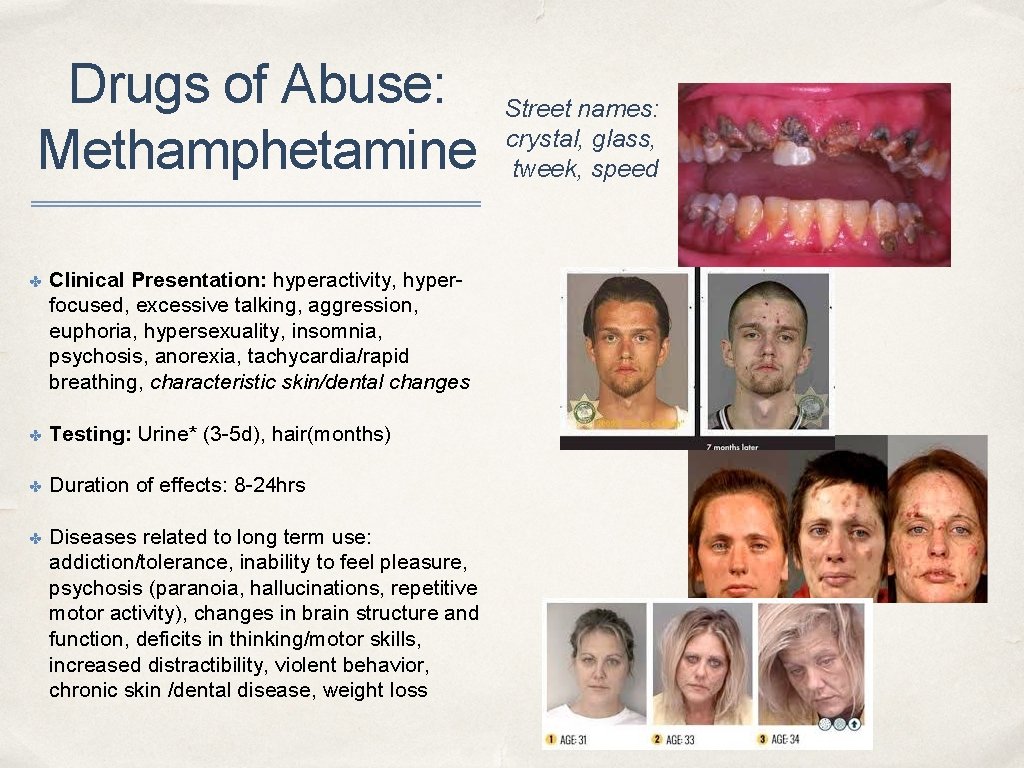
Drugs of Abuse: Methamphetamine ✤ Clinical Presentation: hyperactivity, hyperfocused, excessive talking, aggression, euphoria, hypersexuality, insomnia, psychosis, anorexia, tachycardia/rapid breathing, characteristic skin/dental changes ✤ Testing: Urine* (3 -5 d), hair(months) ✤ Duration of effects: 8 -24 hrs ✤ Diseases related to long term use: addiction/tolerance, inability to feel pleasure, psychosis (paranoia, hallucinations, repetitive motor activity), changes in brain structure and function, deficits in thinking/motor skills, increased distractibility, violent behavior, chronic skin /dental disease, weight loss Street names: crystal, glass, tweek, speed
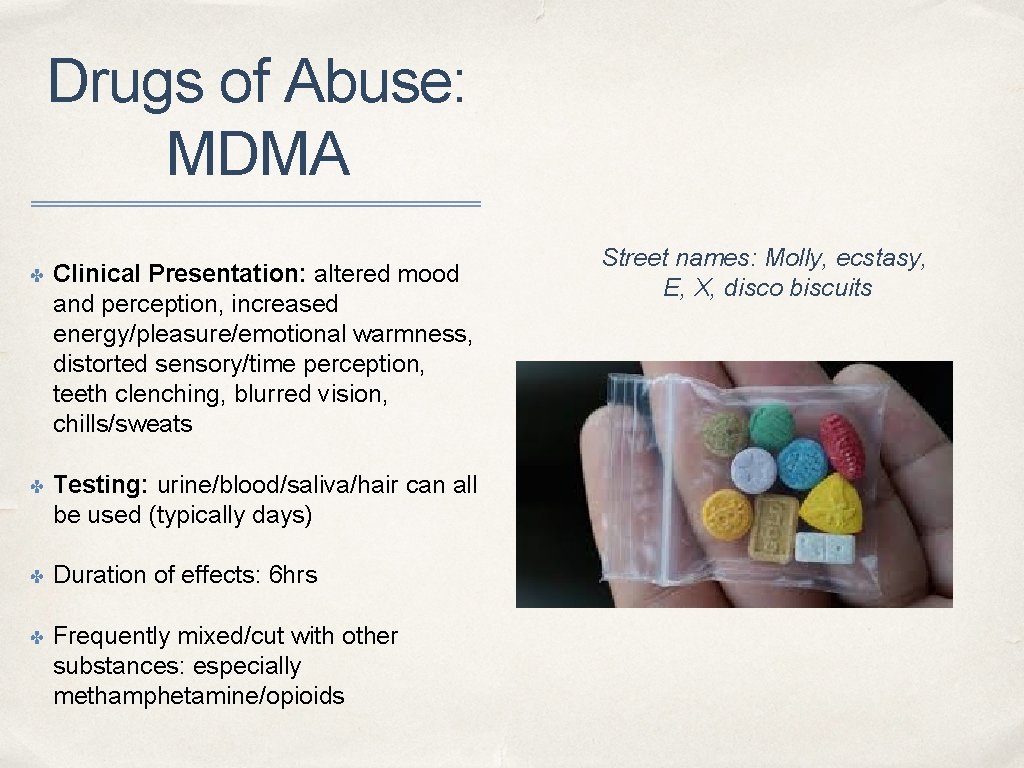
Drugs of Abuse: MDMA ✤ Clinical Presentation: altered mood and perception, increased energy/pleasure/emotional warmness, distorted sensory/time perception, teeth clenching, blurred vision, chills/sweats ✤ Testing: urine/blood/saliva/hair can all be used (typically days) ✤ Duration of effects: 6 hrs ✤ Frequently mixed/cut with other substances: especially methamphetamine/opioids Street names: Molly, ecstasy, E, X, disco biscuits
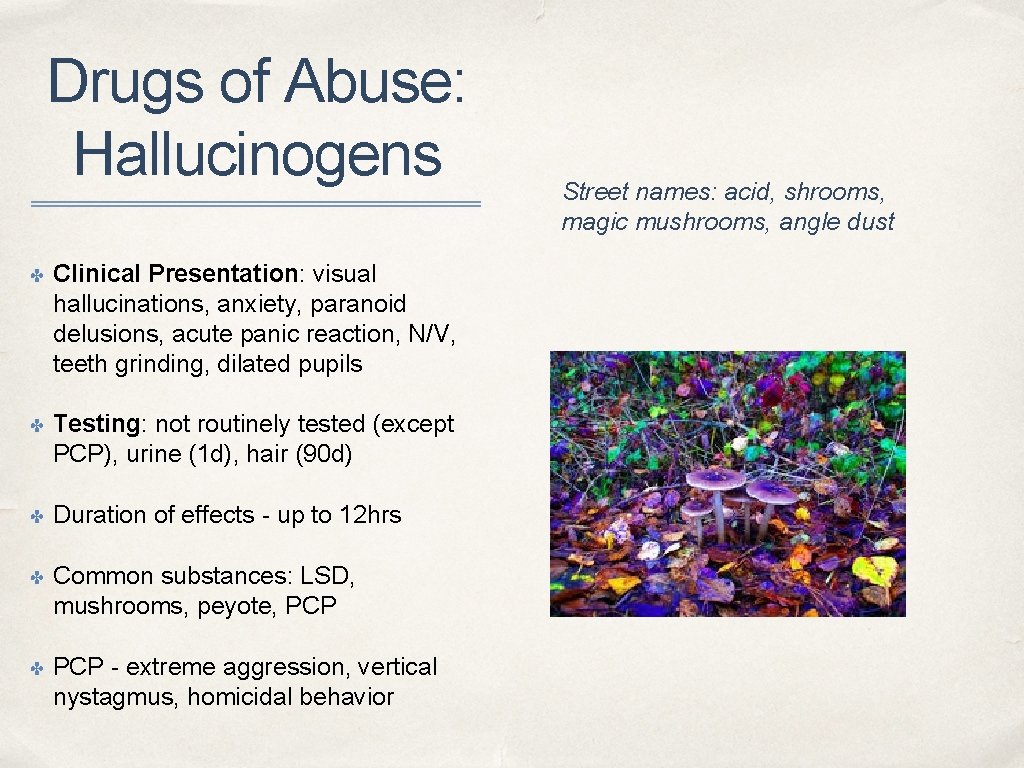
Drugs of Abuse: Hallucinogens ✤ Clinical Presentation: visual hallucinations, anxiety, paranoid delusions, acute panic reaction, N/V, teeth grinding, dilated pupils ✤ Testing: not routinely tested (except PCP), urine (1 d), hair (90 d) ✤ Duration of effects - up to 12 hrs ✤ Common substances: LSD, mushrooms, peyote, PCP ✤ PCP - extreme aggression, vertical nystagmus, homicidal behavior Street names: acid, shrooms, magic mushrooms, angle dust
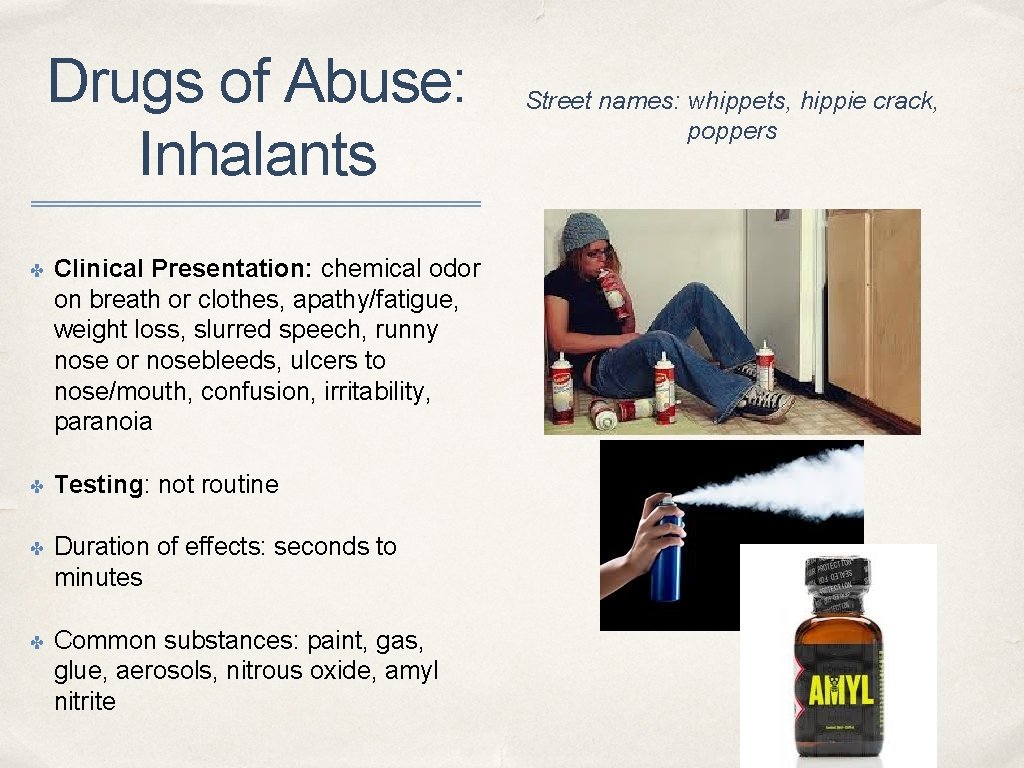
Drugs of Abuse: Inhalants ✤ Clinical Presentation: chemical odor on breath or clothes, apathy/fatigue, weight loss, slurred speech, runny nose or nosebleeds, ulcers to nose/mouth, confusion, irritability, paranoia ✤ Testing: not routine ✤ Duration of effects: seconds to minutes ✤ Common substances: paint, gas, glue, aerosols, nitrous oxide, amyl nitrite Street names: whippets, hippie crack, poppers
BEWARE Polypharmacy/ Coingestion!! *Alcohol+ Sedative/Opioid/Heroin = INCREASED SEDATION *Sedative/Benzo + Opioid = INCREASED SEDATION *Meth/Amphetamine + Sedative/Alcohol = AGGITATION + DISORIENTATION *PSYCHIATRIC DRUGS + Drugs of Abuse +/- Alcohol = VARIOUS COMPOUNDING EFFECTS (TYPICALLY INCREASED SEDATION)
Questions? Short Break
What are the real effects of drug and alcohol abuse on the ability to provide parental care? Safety Issues: Decision Making/Risk Taking and Judgment Neglect Issues: Attention and Protective Ability
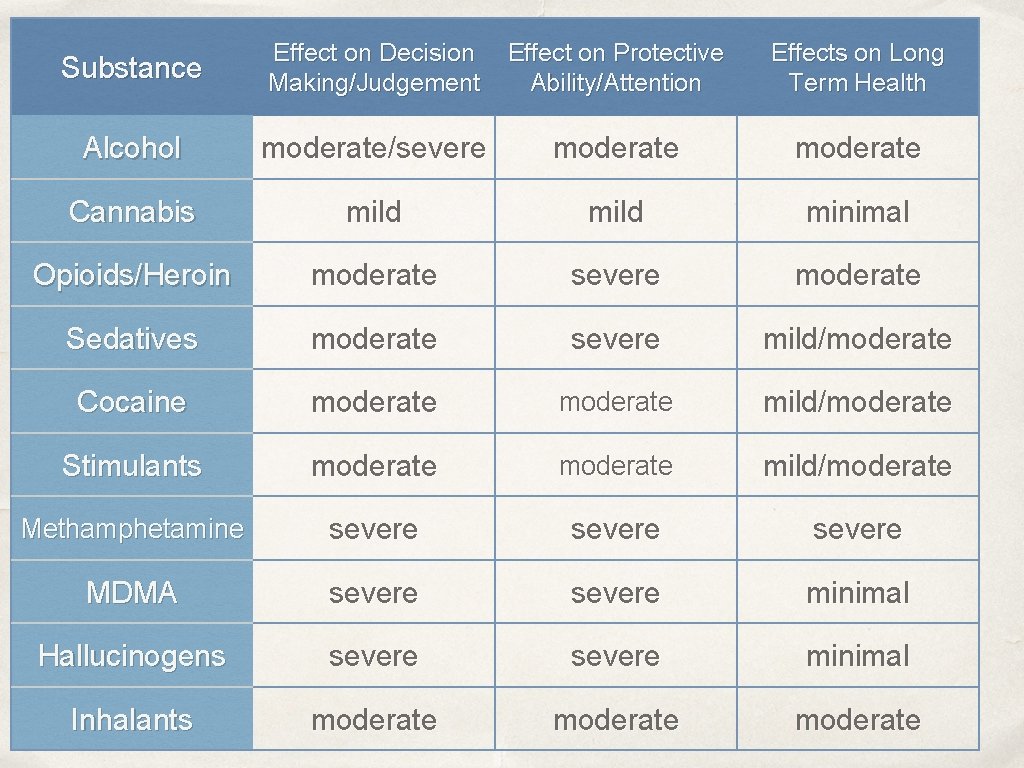
Substance Effect on Decision Making/Judgement Effect on Protective Ability/Attention Effects on Long Term Health Alcohol moderate/severe moderate Cannabis mild minimal Opioids/Heroin moderate severe moderate Sedatives moderate severe mild/moderate Cocaine moderate mild/moderate Stimulants moderate mild/moderate Methamphetamine severe MDMA severe minimal Hallucinogens severe minimal Inhalants moderate
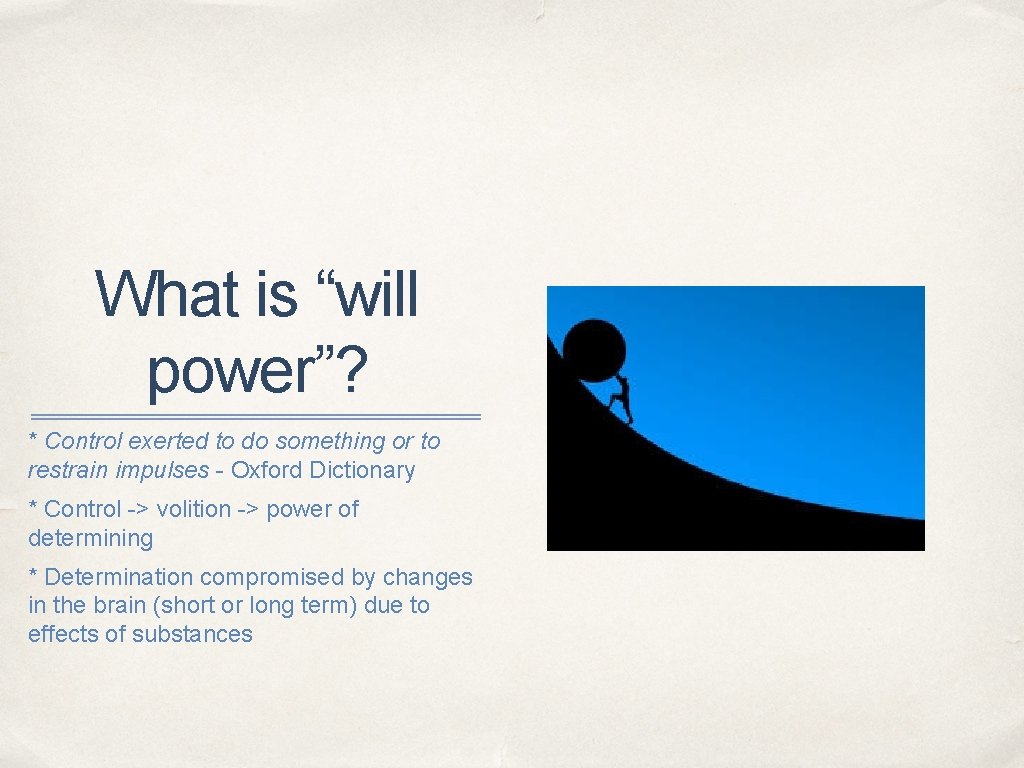
What is “will power”? * Control exerted to do something or to restrain impulses - Oxford Dictionary * Control -> volition -> power of determining * Determination compromised by changes in the brain (short or long term) due to effects of substances
“Will Power” and Recovery ✤ Addiction is a chronic brain disease ✤ Bias - addicts are “weak/immoral/flawed” ✤ Neither addiction nor recovery are issues of will power, rather of chronic disease ex: diabetes, high blood pressure, seizures
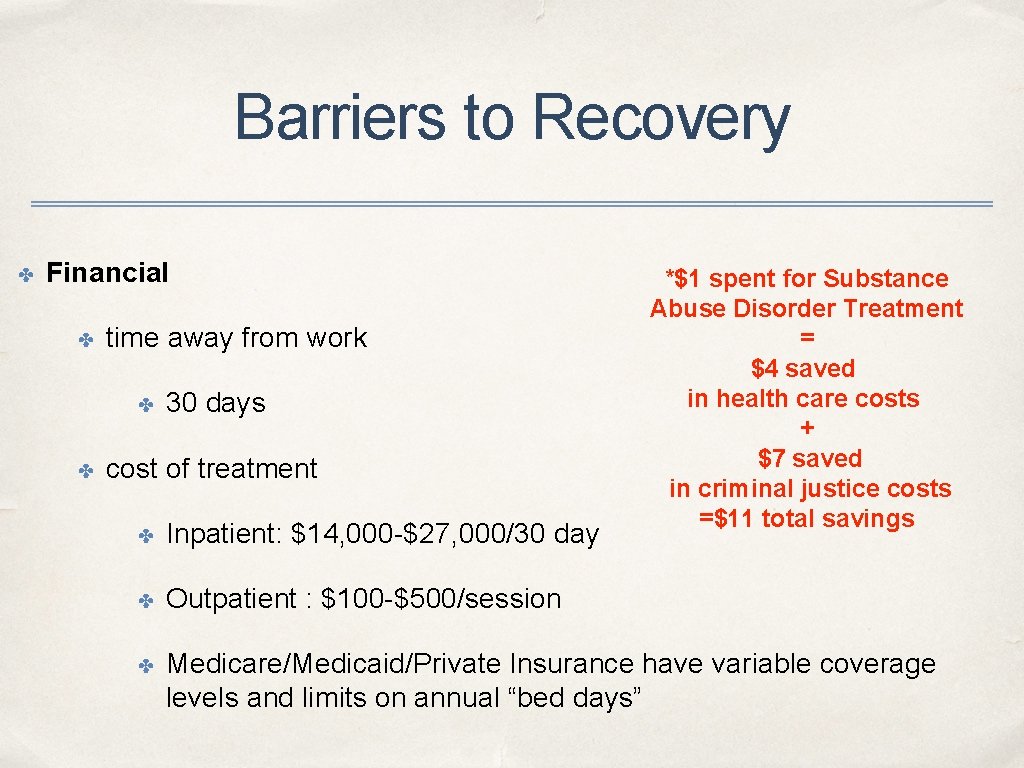
Barriers to Recovery ✤ Financial ✤ time away from work ✤ ✤ 30 days cost of treatment *$1 spent for Substance Abuse Disorder Treatment = $4 saved in health care costs + $7 saved in criminal justice costs =$11 total savings ✤ Inpatient: $14, 000 -$27, 000/30 day ✤ Outpatient : $100 -$500/session ✤ Medicare/Medicaid/Private Insurance have variable coverage levels and limits on annual “bed days”
Barriers to Recovery ✤ Social ✤ ✤ ✤ friends/family involved in abuse lifestyle damage to social standing/stigma privacy concerns
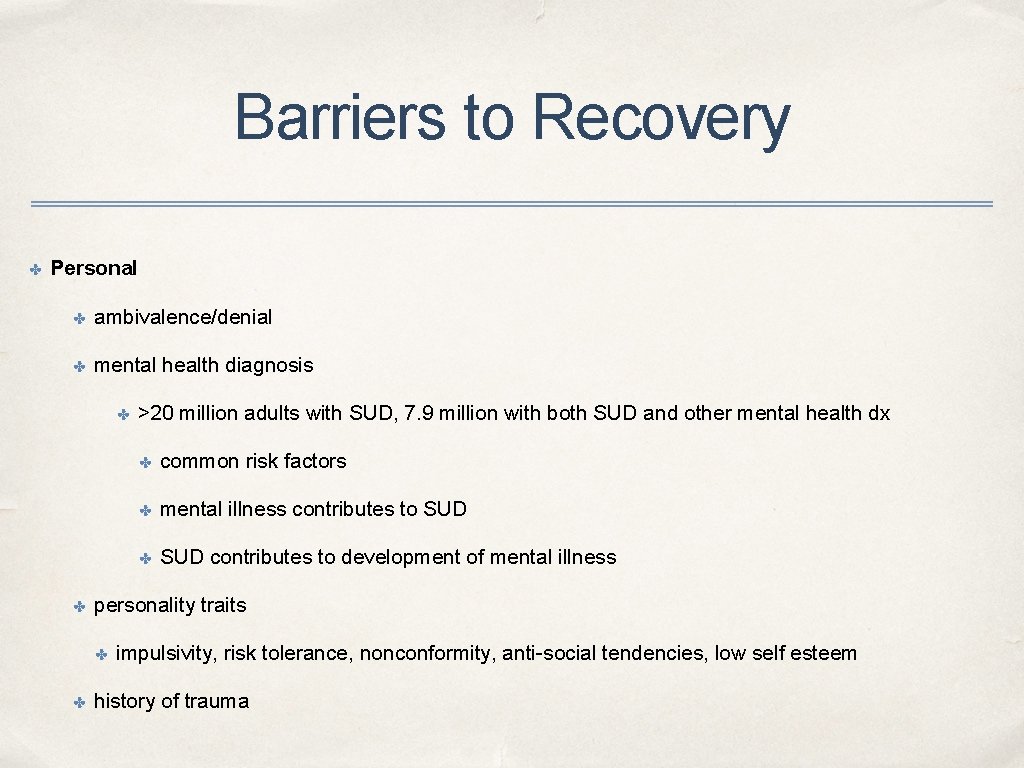
Barriers to Recovery ✤ Personal ✤ ambivalence/denial ✤ mental health diagnosis ✤ ✤ ✤ common risk factors ✤ mental illness contributes to SUD ✤ SUD contributes to development of mental illness personality traits ✤ ✤ >20 million adults with SUD, 7. 9 million with both SUD and other mental health dx impulsivity, risk tolerance, nonconformity, anti-social tendencies, low self esteem history of trauma
Barriers to Recovery ✤ Access to Care ✤ limited facilities/beds/providers ✤ socioeconomic, racial, cultural inequalities ✤ often requires multiple treatment cycles
Barriers to Recovery ✤ Fear ✤ withdrawal/detox ✤ loss of community ✤ failure/relapse

Recovery: Best Practices ✤ Alcohol Abuse - American Psychiatric Association 2017 ✤ fewer than 1 in 10 individuals/year receiving treatment ✤ Medically supervised detox for severe disease ✤ Medications: Naltrexone, acamprosate, disulfiram, topamax, gabapentin ✤ Evidence based psychotherapeutic treatments: Cognitive Behavioral Therapy, 12 -step programs, motivational enhancement therapy
Recovery: Best Practices ✤ Drugs of Abuse ✤ Integrated Care -> polysubstance abuse treatment + mental health care + recovery support ✤ Develop comprehensive (SUD + mental health) treatment plan ✤ Engage a team of providers (medical provider, case manager, counselor, psychiatrist) ✤ Determine if medications are needed (psychiatric, detox, side effect management etc. ) ✤ Determine appropriate psychosocial treatments (counseling, education, cognitive behavioral therapy, family therapy, motivational interviewing, contingency management) ✤ Evaluate recovery supports needed (housing, transportation, child care, educational/vocational assistance, accessing benefits)
Recovery: Special Considerations ✤ Crucial need for concurrent treatment of mental health conditions ✤ Life threatening detox: Alcohol, Benzodiazepines ✤ frequently require medically supervised detox ✤ Opioid Replacement Therapy (ORT): Methadone/Suboxone for heroin abuse ✤ High relapse rate (1 st year post treatment) ✤ 80% in ETOH ✤ 40 -60% in drugs of abuse
QUESTIONS? Thank you for your attention.
✤ addictioncenter. com ✤ apa. org ✤ Argoff, CE et al “A comparison of long- and short-acting opioids for the treatment of chronic non cancer pain: Tailoring therapy to meet patient needs” Mayo Clin Proc, July 2009; 84(7): 602 -612 ✤ community. pepperdine. edu ✤ drugabuse. gov ✤ Jewell, T “Everything you want to know about Sedatives” healthline. com ✤ Mattick, RP et al “Methadone maintenance therapy versus no opioid replacement therapy for opioid dependence” Cochrane Database Syst Rev 2003 ✤ medicalnewstoday. com ✤ medlineplus. gov ✤ my. clevelandclinic. org ✤ Potenza, MN “Biological Contributions to Addictions in Adolescents and Adults: Prevention, Treatment and Policy Implications” J Adolesc Health, 2013 Feb (52) ✤ Pechansky, F et al “Clinical Signs of Alcohol Intoxication as markers of refusal to provide blood alcohol readings in emergency rooms: an exploratory study” Clinics, 2010; 65(12): 1391 -1392 ✤ Sack, D “Does Willpower Play a Role in Addiction Recovery? ” psychologytoday. com ✤ Spiller, HA et al. “Overdose of Drugs for Attention-Deficit Hyperactivity Disorder: Clinical Presentation, Mechanisms of Toxicity, and Management” CNS Drugs, 12 June 2013 ✤ Villines, Z “How long can you detect marijuana in the body? ” medicdalnewstoday. com ✤ Wang, GS “Cannabis (marijuana): Acute Intoxication” uptodate. com ✤ wikipedia. org ✤ Mc. Cance-Katz, EF et al “Best Practices in Substance Use Disorders: The Importance of Integrated Care” samhsa. gov
- Slides: 39