
SUBSAHARAN AFRICA AFRICAS PHYSIOGRAPHY oil Atlas Mts Mt
SUBSAHARAN AFRICA
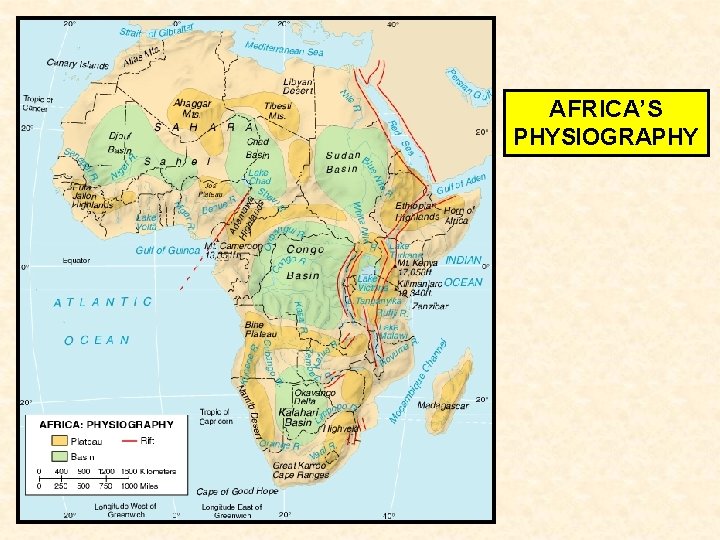
AFRICA’S PHYSIOGRAPHY
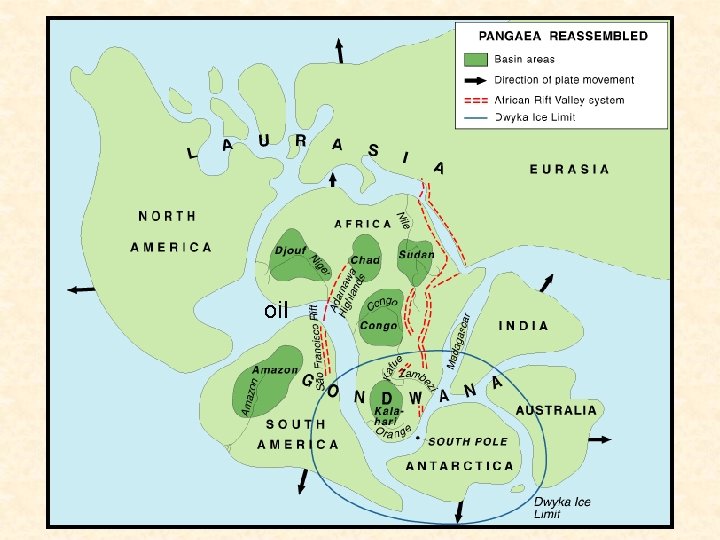
oil
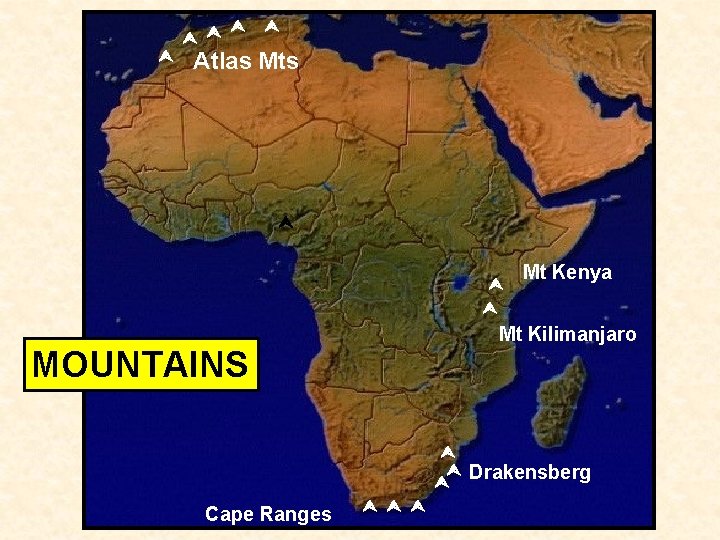
Atlas Mts Mt Kenya Mt Kilimanjaro MOUNTAINS Drakensberg Cape Ranges
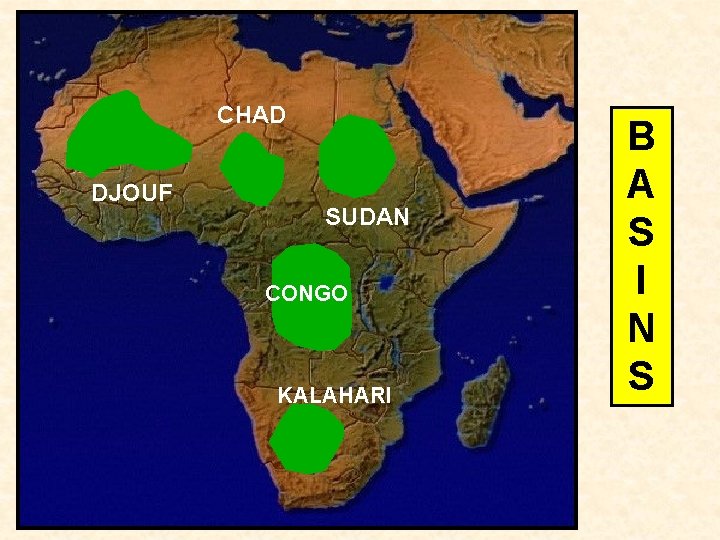
CHAD DJOUF SUDAN CONGO KALAHARI B A S I N S
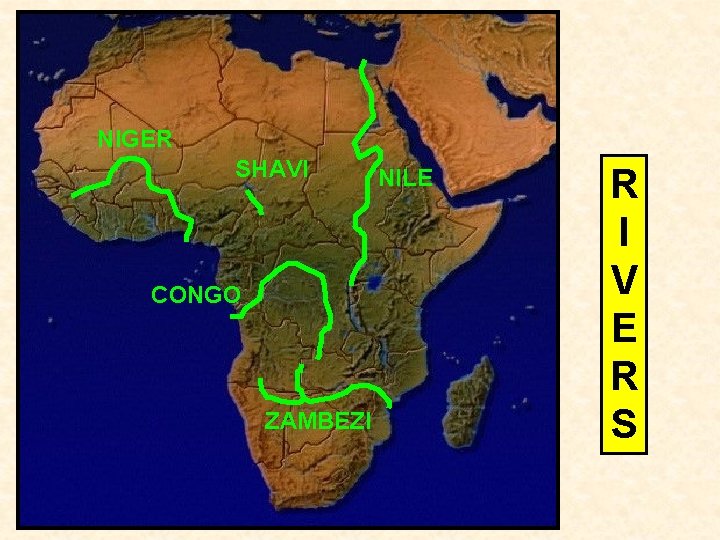
NIGER SHAVI CONGO ZAMBEZI NILE R I V E R S
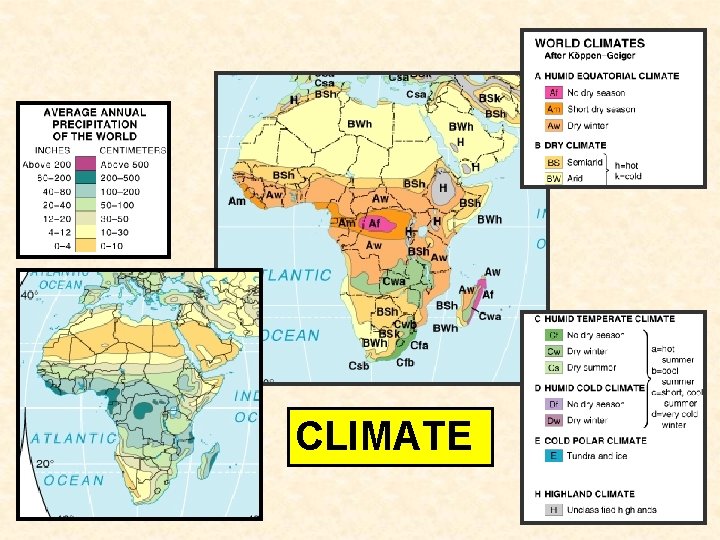
CLIMATE
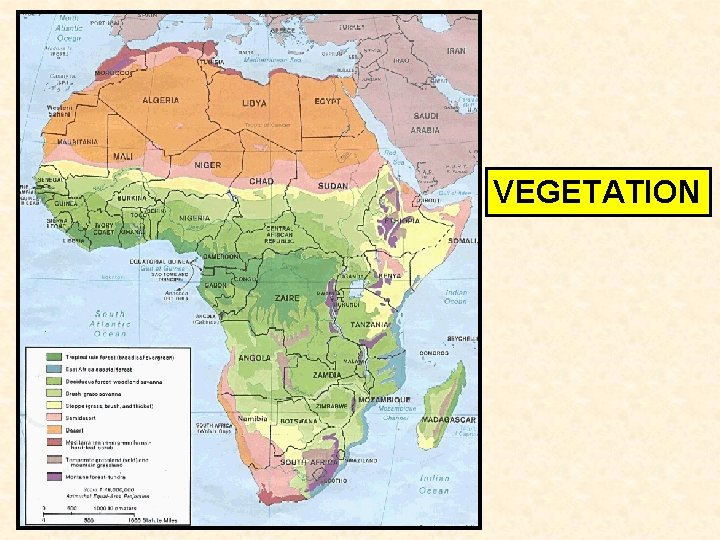
VEGETATION
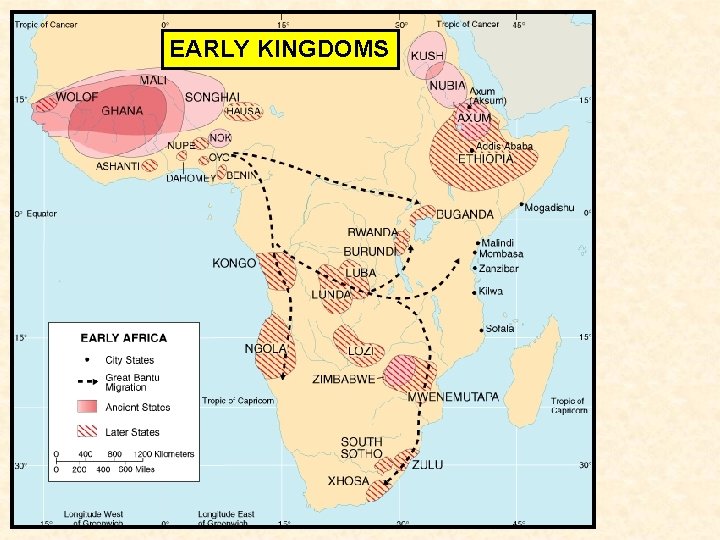
EARLY KINGDOMS
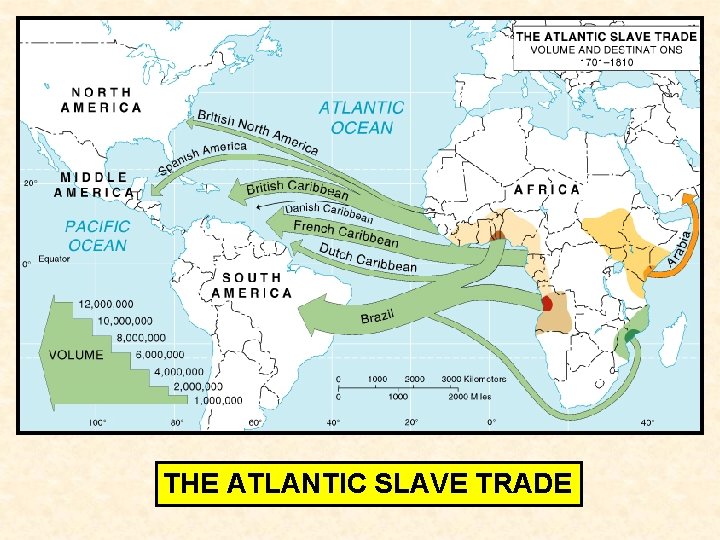
THE ATLANTIC SLAVE TRADE
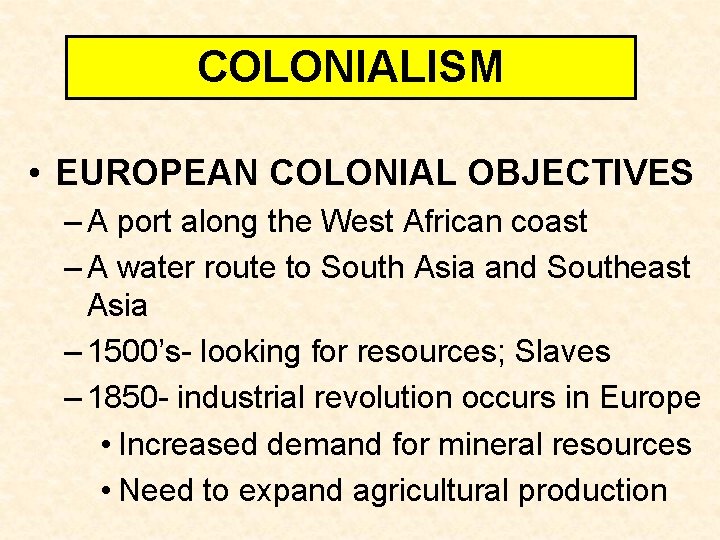
COLONIALISM • EUROPEAN COLONIAL OBJECTIVES – A port along the West African coast – A water route to South Asia and Southeast Asia – 1500’s- looking for resources; Slaves – 1850 - industrial revolution occurs in Europe • Increased demand for mineral resources • Need to expand agricultural production
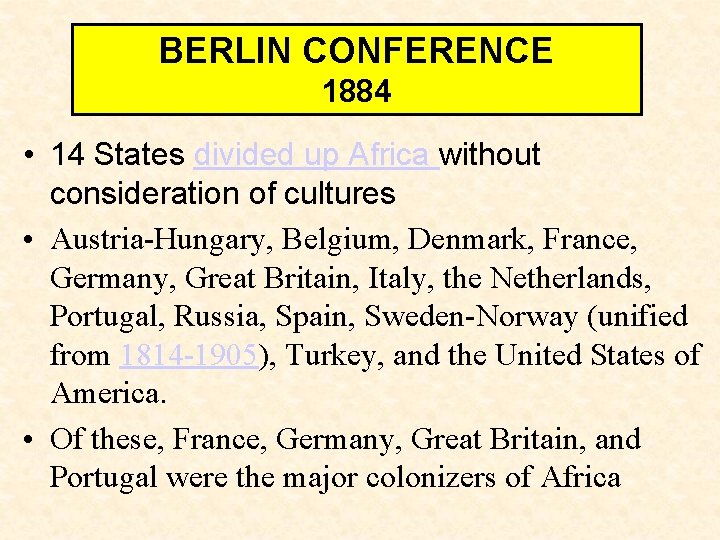
BERLIN CONFERENCE 1884 • 14 States divided up Africa without consideration of cultures • Austria-Hungary, Belgium, Denmark, France, Germany, Great Britain, Italy, the Netherlands, Portugal, Russia, Spain, Sweden-Norway (unified from 1814 -1905), Turkey, and the United States of America. • Of these, France, Germany, Great Britain, and Portugal were the major colonizers of Africa
BERLIN CONFERENCE 1884 • Resulting in superimposed boundaries ------ African peoples were divided. Unified regions were ripped apart. Hostile societies were thrown together. Hinterlands were disrupted. Migration routes were closed off. • When independence returned to Africa after 1950, the realm had already acquired a legacy of political fragmentation.
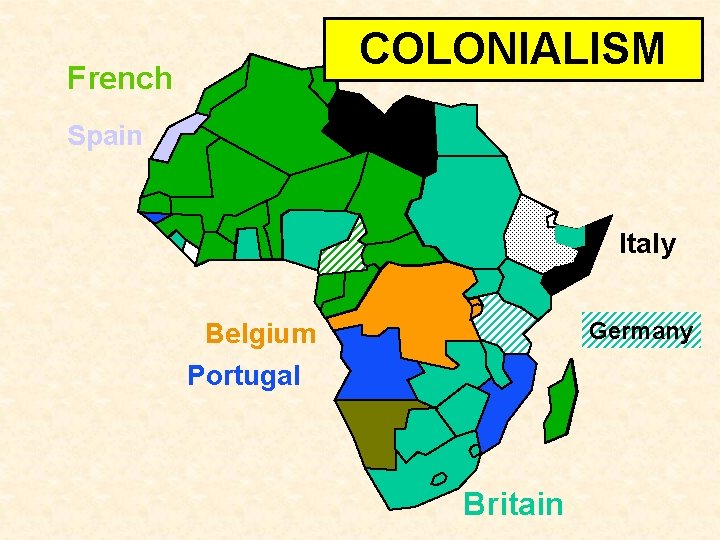
COLONIALISM French Spain Italy Germany Belgium Portugal Britain
COLONIAL POLICIES • Great Britain: “Indirect Rule” (Ghana, Nigeria, Kenya, Zimbabwe) – Indigenous power structures were left intact to some degree and local rulers were made representatives of the crown. • France: “Assimilationist” (Senegal, Mali, Ivory Coast, etc. ) – Enforced a direct rule which propagated the French culture through language, laws, education and dress (acculturation)
COLONIAL POLICIES • Portugal: “Exploitation” (Guinea-Bissau, Angola, Mozambique) – First to enslave and colonize and one of the last to grant independence – Maintained rigid control; raw resource oriented • Belgium: “Paternalistic” (Rwanda, Zaire, Burundi) – Treated Africans as though they where children who needed to be tutored in western ways; did not try to make them Belgium – Raw resource oriented; ignored the development of natives
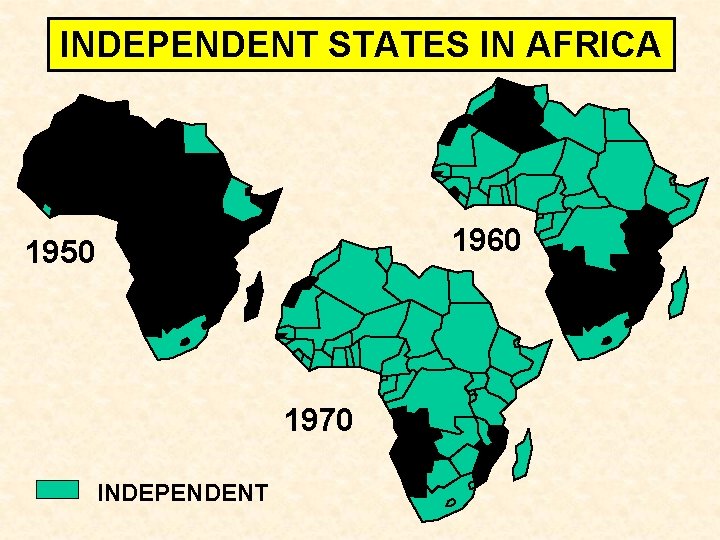
INDEPENDENT STATES IN AFRICA 1960 1950 1970 INDEPENDENT
THE LEGACY • Several hundred languages are spoken. • Antagonism between tribes (e. g. , Rwanda) and religions • Low level of development is linked to colonization – Transportation facilities - Movement of goods is from the interior to coastal outlets. – Communication within Africa is impeded by desert, dense forest, and lack of navigable rivers in certain regions. – Dual economy remains intact; most states rely on a single crop or mineral and are vulnerable to world markets.
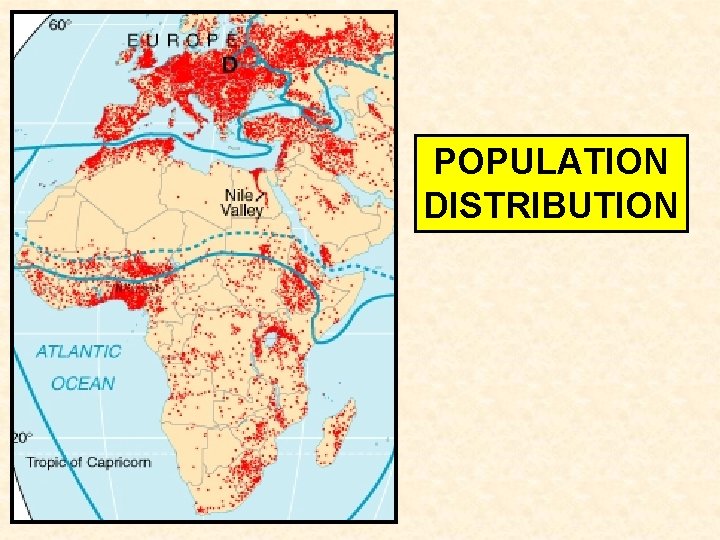
POPULATION DISTRIBUTION
SUB-SAHARAN AFRICA’S ECONOMIC CHALLENGE • Economic growth rate- 1. 5% - world’s lowest • The region’s 646 million people have a combined GNP of less than $150 billion, roughly the same as Belgium and its 10 million people. • Population - growing at a rate of 2. 6% annually, vs 1. 7% for South America and 1. 9% for South Asia
MEDICAL GEOGRAPHY • Studies spatial aspects of disease and health • Africa is an extraordinary laboratory. -- Disease incidence and diffusion -- Widespread nutritional deficiencies • Millions suffer from: – malaria - river blindness – yellow fever - sleeping sickness – AIDS - bilharzia
MEDICAL GEOGRAPHY • Endemic -- Exists in equilibrium with the population -- Many develop an immunity of sorts -- Saps energy, lowers resistance, shortens lives • Epidemic -- Sudden outbreak at local, regional scale • Pandemic -- Worldwide spread
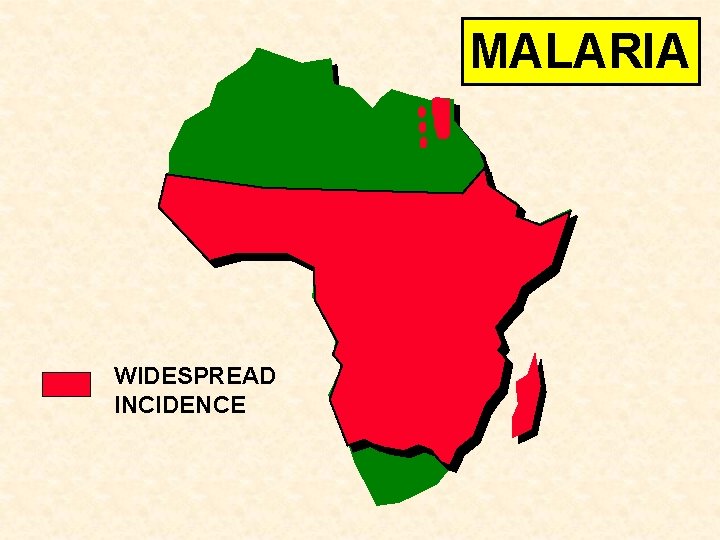
MALARIA WIDESPREAD INCIDENCE
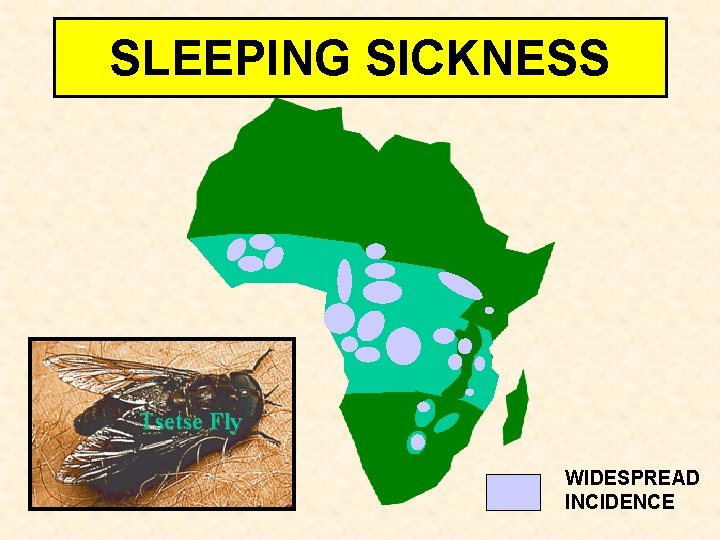
SLEEPING SICKNESS Tsetse Fly WIDESPREAD INCIDENCE
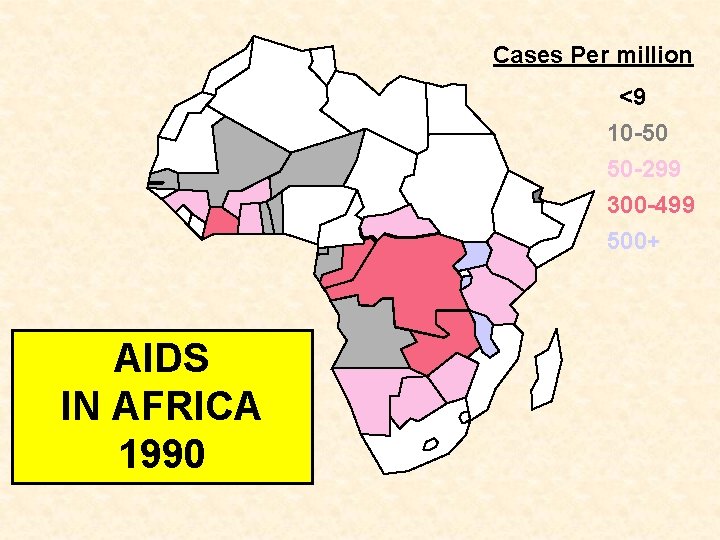
Cases Per million <9 10 -50 50 -299 300 -499 500+ AIDS IN AFRICA 1990
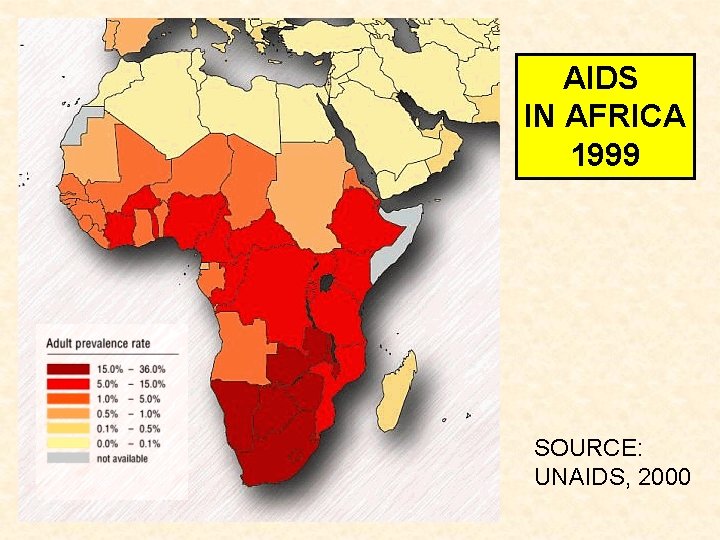
AIDS IN AFRICA 1999 SOURCE: UNAIDS, 2000
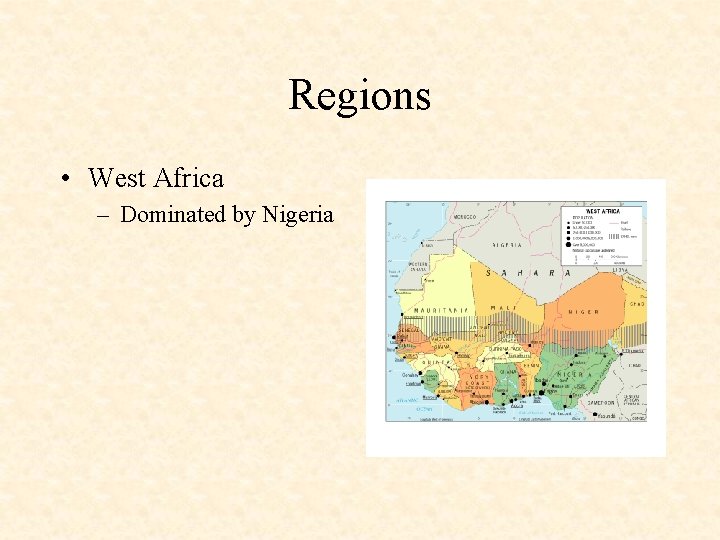
Regions • West Africa – Dominated by Nigeria
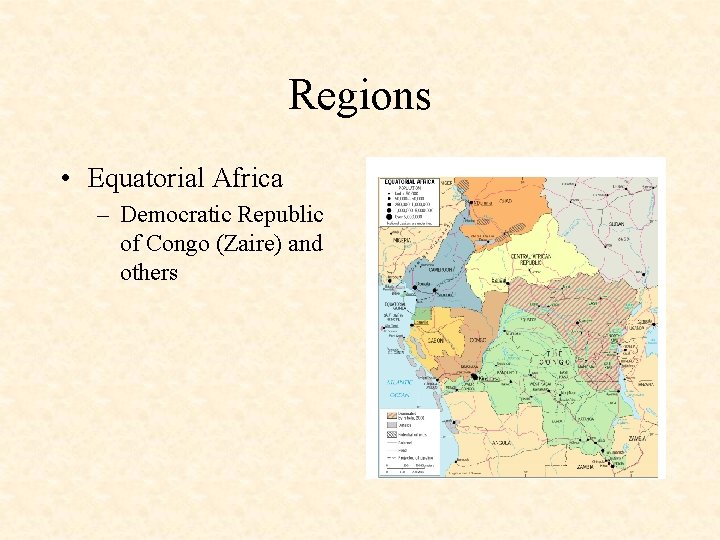
Regions • Equatorial Africa – Democratic Republic of Congo (Zaire) and others
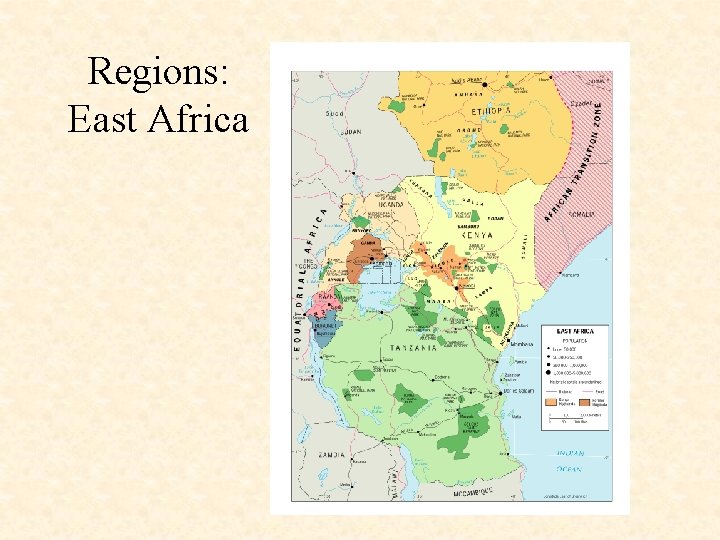
Regions: East Africa
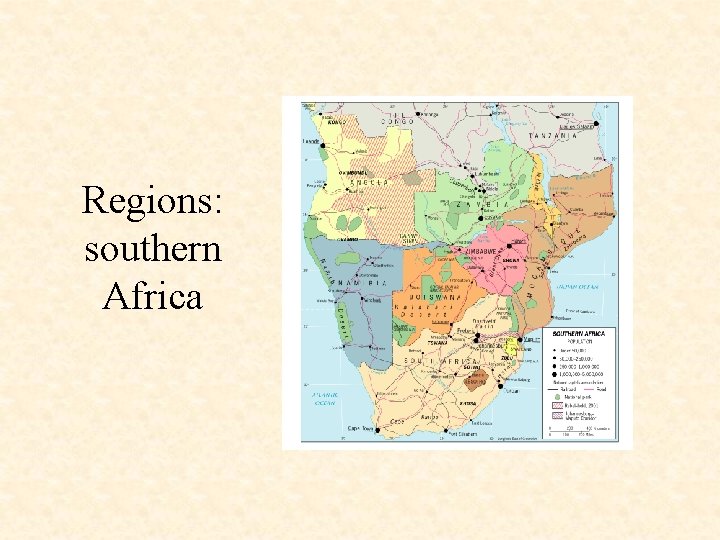
Regions: southern Africa
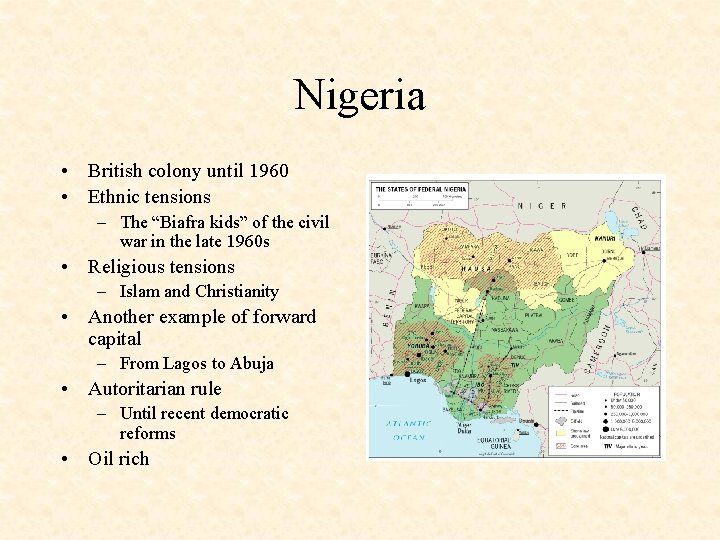
Nigeria • British colony until 1960 • Ethnic tensions – The “Biafra kids” of the civil war in the late 1960 s • Religious tensions – Islam and Christianity • Another example of forward capital – From Lagos to Abuja • Autoritarian rule – Until recent democratic reforms • Oil rich
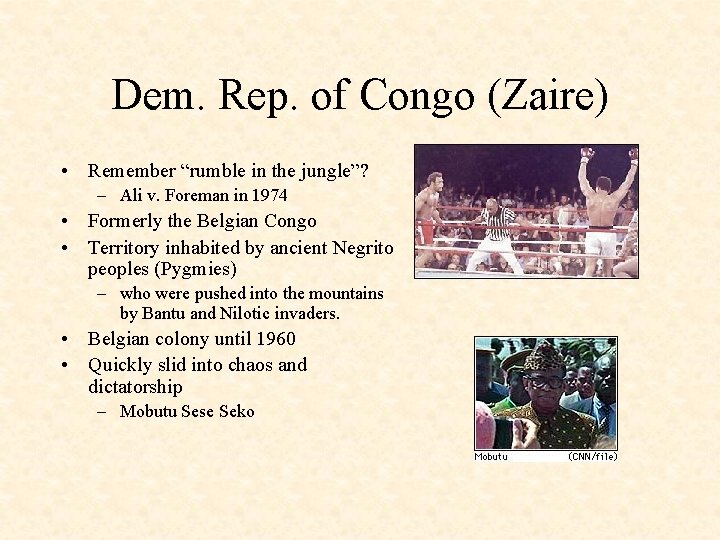
Dem. Rep. of Congo (Zaire) • Remember “rumble in the jungle”? – Ali v. Foreman in 1974 • Formerly the Belgian Congo • Territory inhabited by ancient Negrito peoples (Pygmies) – who were pushed into the mountains by Bantu and Nilotic invaders. • Belgian colony until 1960 • Quickly slid into chaos and dictatorship – Mobutu Sese Seko
- Slides: 32