
Subphylum Crustacea Arthropoda Classification Phylum Arthropoda Subphylum Uniramia
Subphylum Crustacea
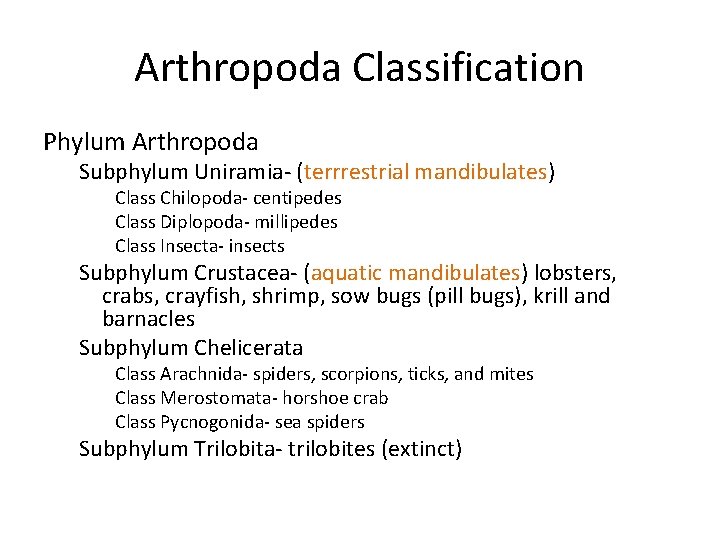
Arthropoda Classification Phylum Arthropoda Subphylum Uniramia- (terrrestrial mandibulates) Class Chilopoda- centipedes Class Diplopoda- millipedes Class Insecta- insects Subphylum Crustacea- (aquatic mandibulates) lobsters, crabs, crayfish, shrimp, sow bugs (pill bugs), krill and barnacles Subphylum Chelicerata Class Arachnida- spiders, scorpions, ticks, and mites Class Merostomata- horshoe crab Class Pycnogonida- sea spiders Subphylum Trilobita- trilobites (extinct)

• Ex. lobsters, crabs, crayfish, pill bugs, barnacles. • Most are free-living & aquatic; however, some terrestrial & parasitic species exist.
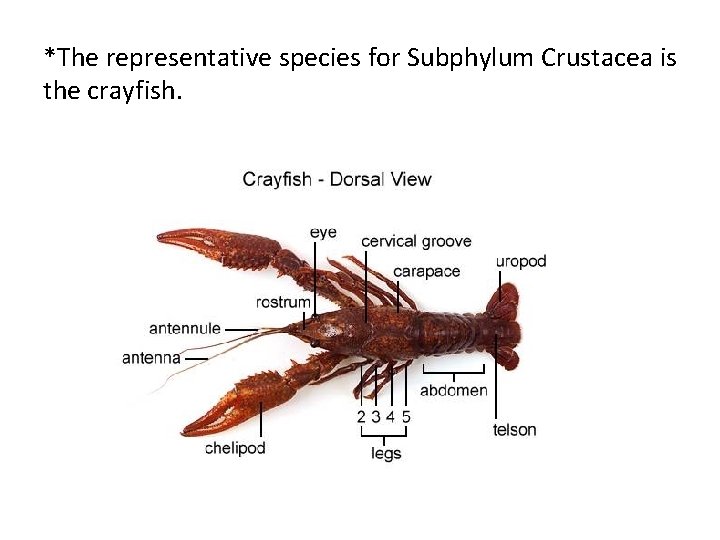
*The representative species for Subphylum Crustacea is the crayfish.
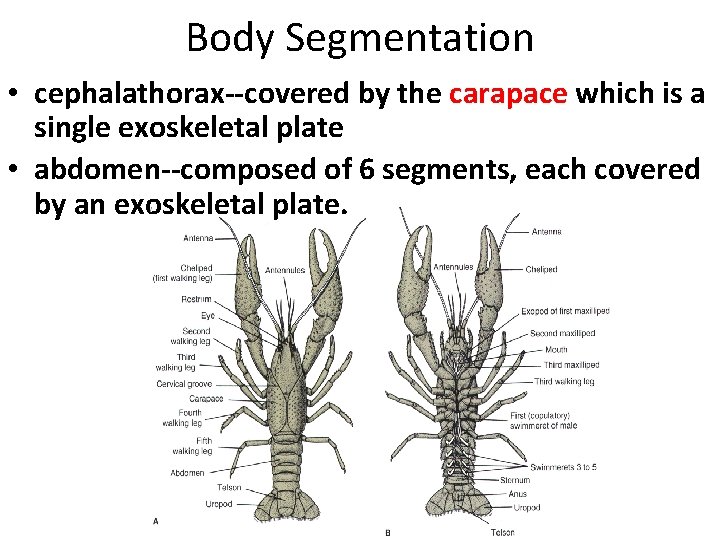
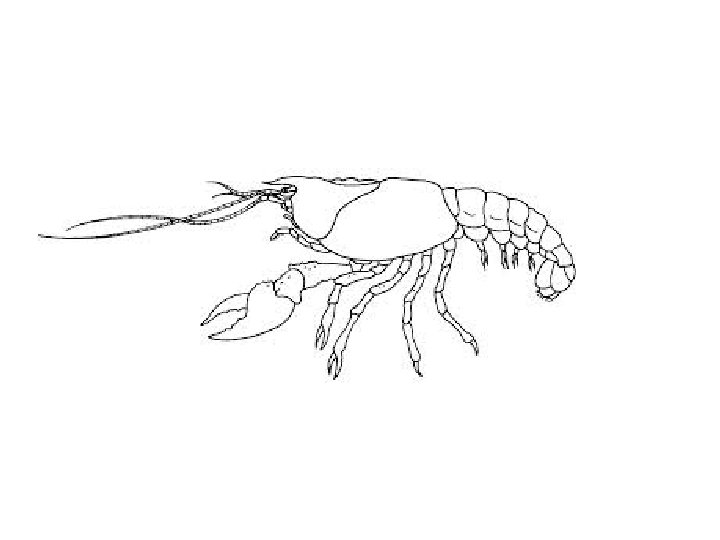
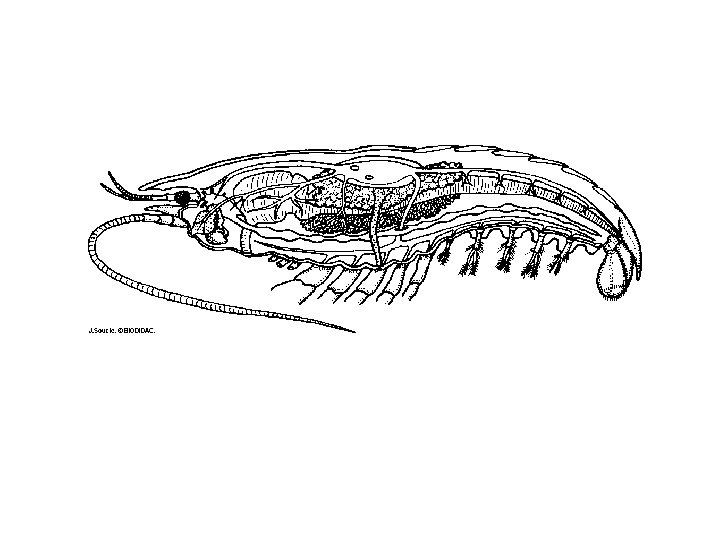
Body Segmentation • cephalathorax--covered by the carapace which is a single exoskeletal plate • abdomen--composed of 6 segments, each covered by an exoskeletal plate.
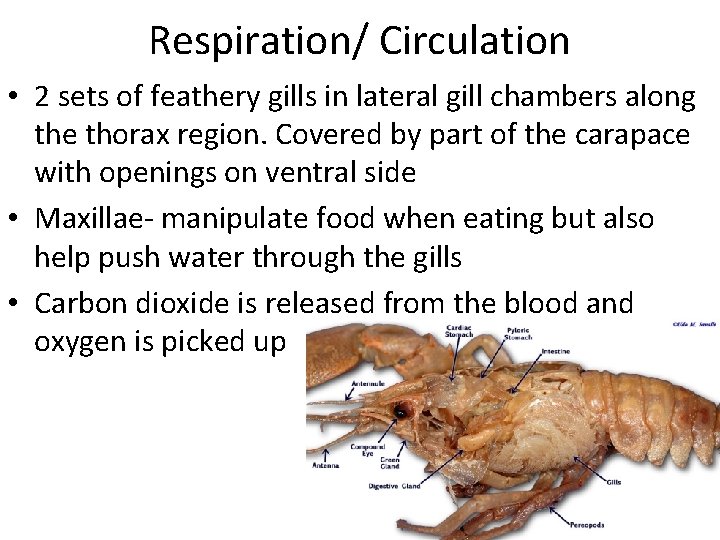
Respiration/ Circulation • 2 sets of feathery gills in lateral gill chambers along the thorax region. Covered by part of the carapace with openings on ventral side • Maxillae- manipulate food when eating but also help push water through the gills • Carbon dioxide is released from the blood and oxygen is picked up
*Crayfish can hold water in their gill chamber and extract oxygen from the water while they’re on land, much like we would hold our breath under water.
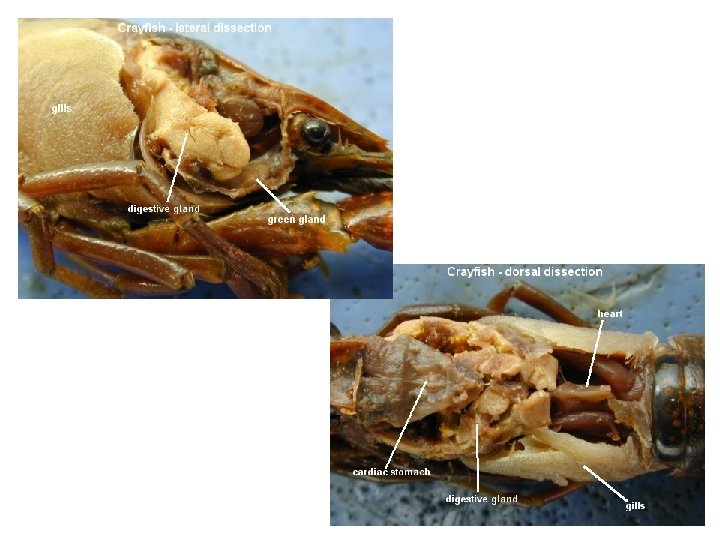
Respiration/ Circulation • Oxygenated blood is moved to the pericardial sinus which surrounds the heart • The blood enters the heart through tiny openings • The blood is forced through a series of arteries that empty into spaces within the body cavity. • Body cells pick up oxygen from the blood and release carbon dioxide to the blood. • The deoxygenated blood collects in the sternal sinus • The deoxygenated blood is passed through gills where it becomes oxygenated and then back to the pericardial sinus *Green glands- near the base of the antennae, filters out waste material which exits through a pore anterior to the mouth
Nervous System • • • Ventral nervous system Compound eyes sit on top of movable stalks Antennae- appendages for taste and touch Antennules- short antennae, also aid in balance Statocyst- at the base of each antennules, sacs contain several grains of sand lined with tiny sensory hairs, this organ helps with balance
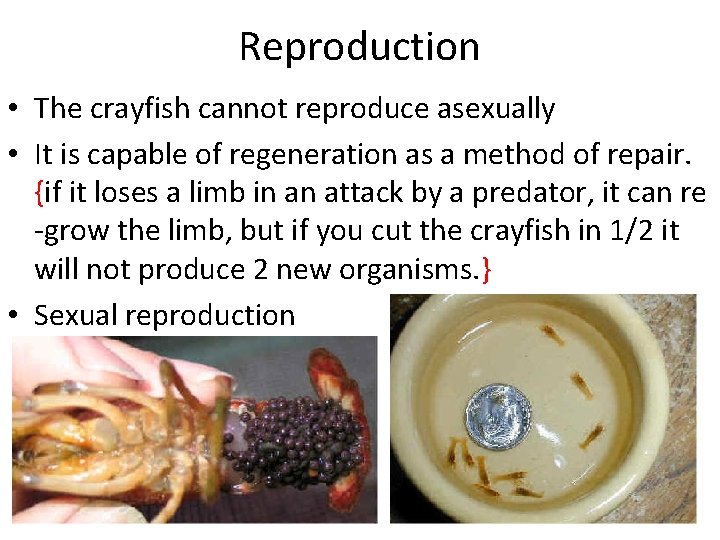
Reproduction • The crayfish cannot reproduce asexually • It is capable of regeneration as a method of repair. {if it loses a limb in an attack by a predator, it can re -grow the limb, but if you cut the crayfish in 1/2 it will not produce 2 new organisms. } • Sexual reproduction
After its 1 st year, a crayfish will molt about twice a year. (seven x in its 1 st year. )
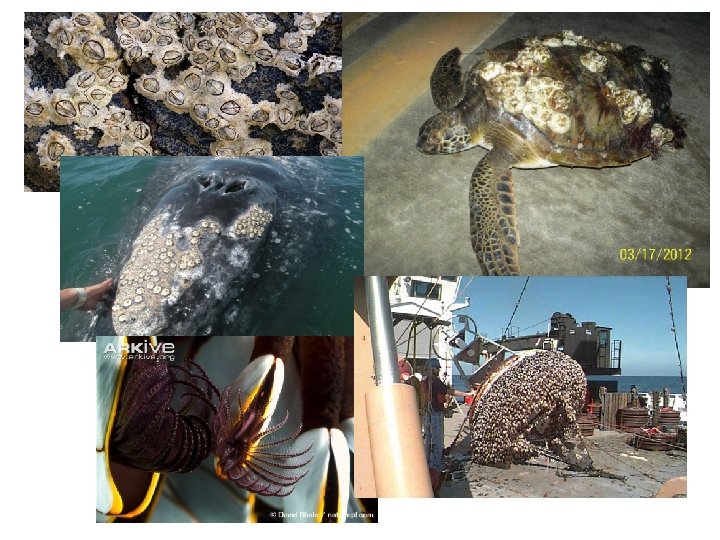
Other Crustaceans Sow bug (pill bug)-"roly-poly" is a terrestrial crustacean must live in moist environments to keep its gills moist Barnacle--sessile animals that live in calcium containing shell-like exoskeletons, attach to virtually any underwater object. Daphnia--the water flea--is a tiny fresh water crustacean.
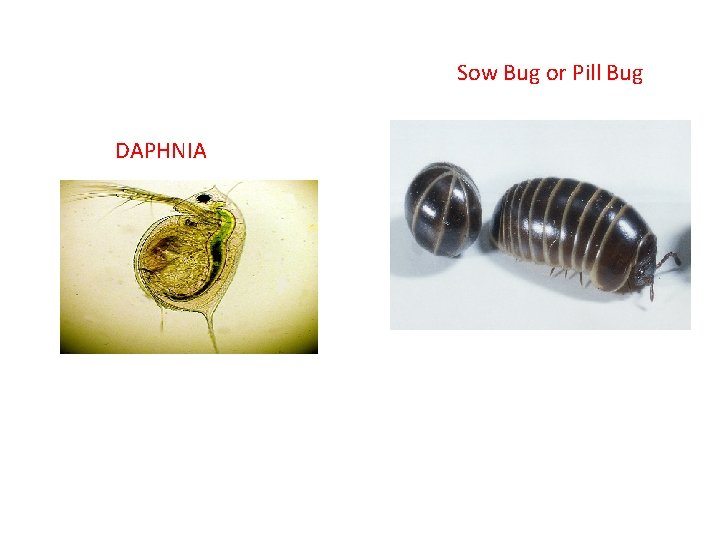
Sow Bug or Pill Bug DAPHNIA

http: //www. youtube. com/watch? v=49 Aev-HA 9 R 4
- Slides: 18