
Submesoscale Currents in the Atlantic Jeroen Molemaker Jim
Submesoscale Currents in the Atlantic Jeroen Molemaker, Jim Mc. Williams, Jonathan Gula, Florian Lemarie, Alexander Shchepetkin UCLA
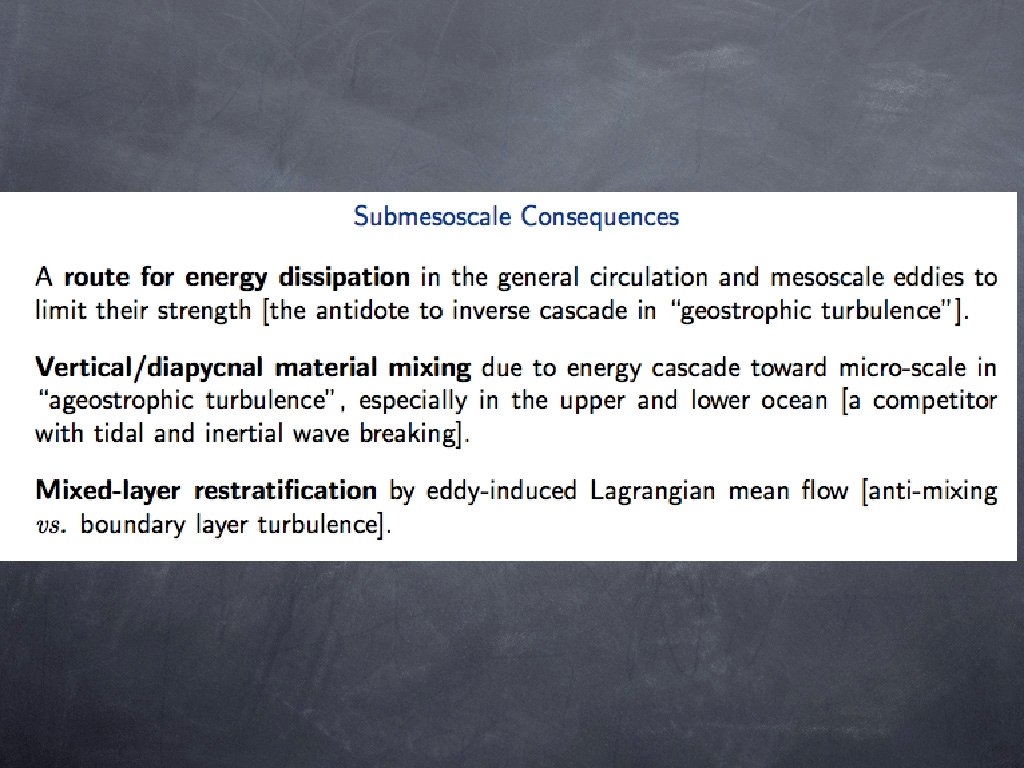
Characteristics of submesoscale Middle sized: L = 10 m-10 s km, t = hrs - days. Rotating, stratified dynamics, mostly not waves. Geostrophic dynamics are relaxed. Arising out of mesoscale currents. Disappearing into micro-scale mixing and dissipation
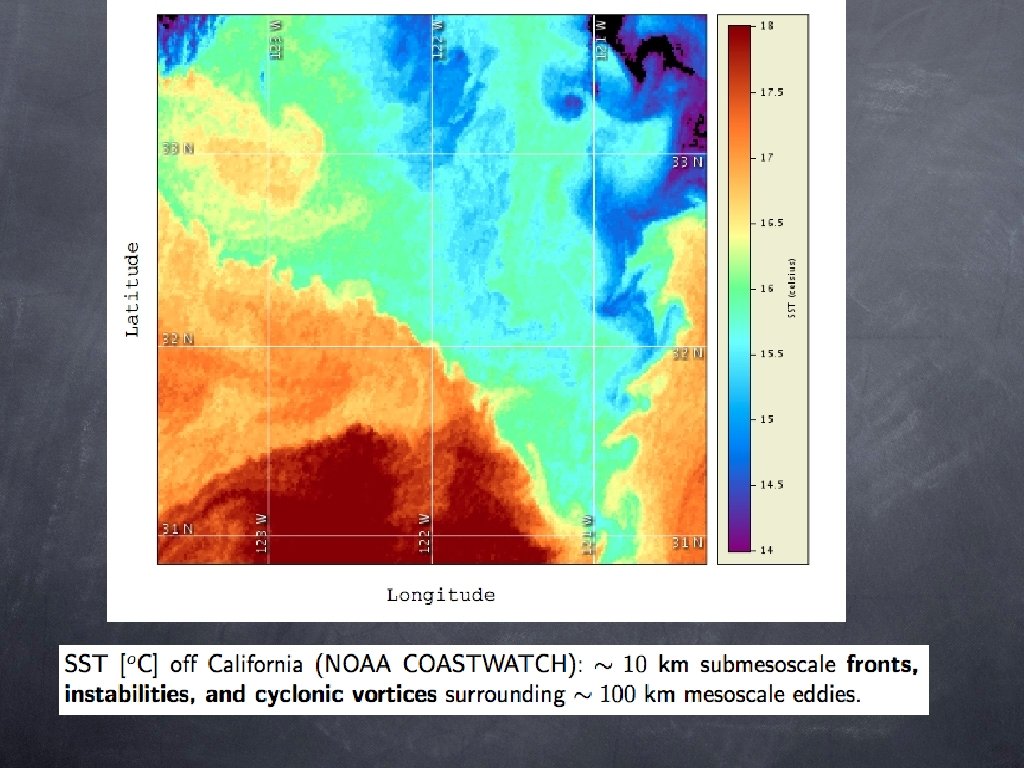
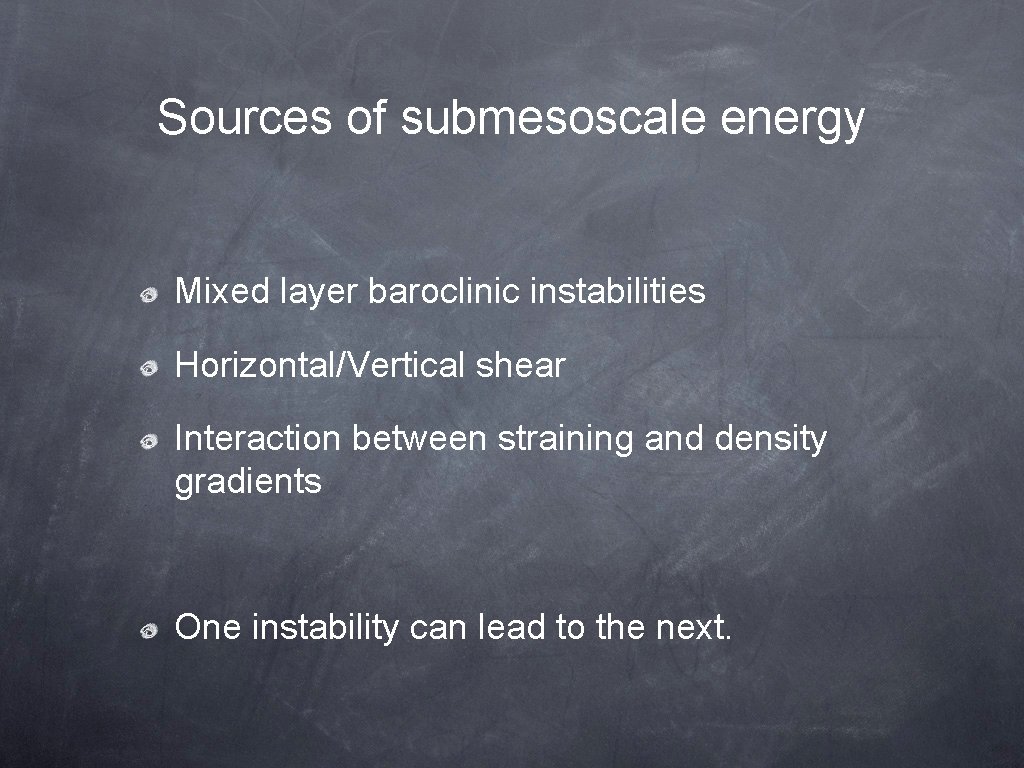
Sources of submesoscale energy Mixed layer baroclinic instabilities Horizontal/Vertical shear Interaction between straining and density gradients One instability can lead to the next.



Intermezzo: An example of how we use ROMS
Gulf Stream (dx = 5 -7 km) Many subsequent nested solutions Improved through reduced diapycnal mixing Marchesiello (2010), Lemarie etal. (2012) Rio
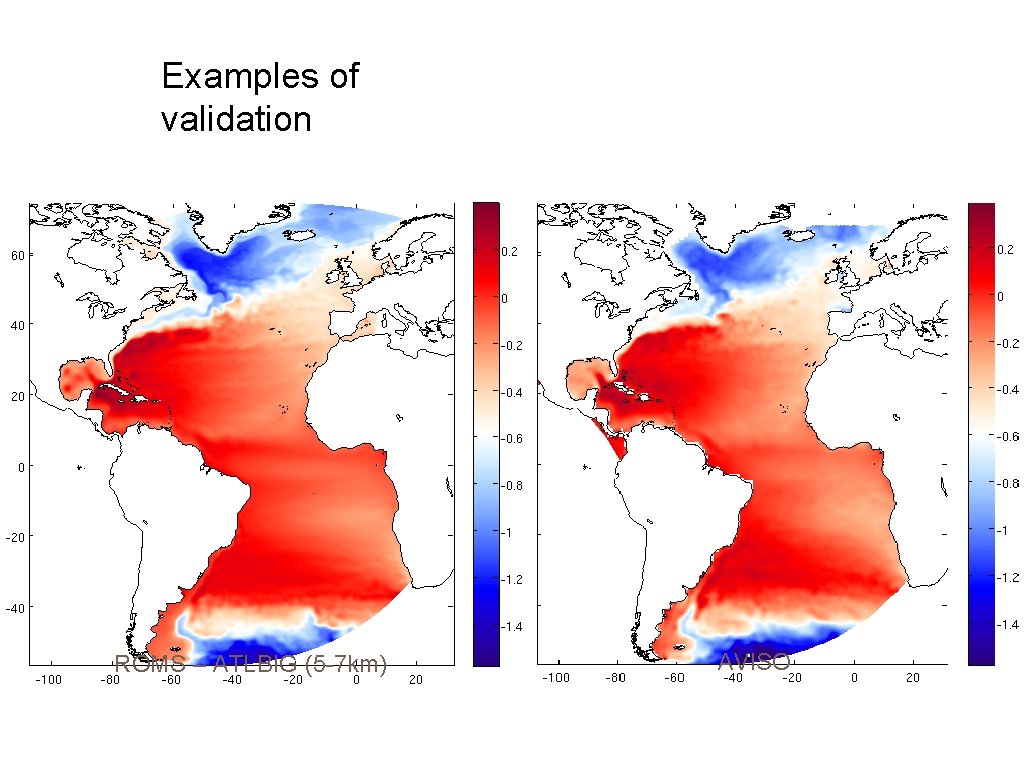
Examples of validation ROMS – ATLBIG (5 -7 km) AVISO
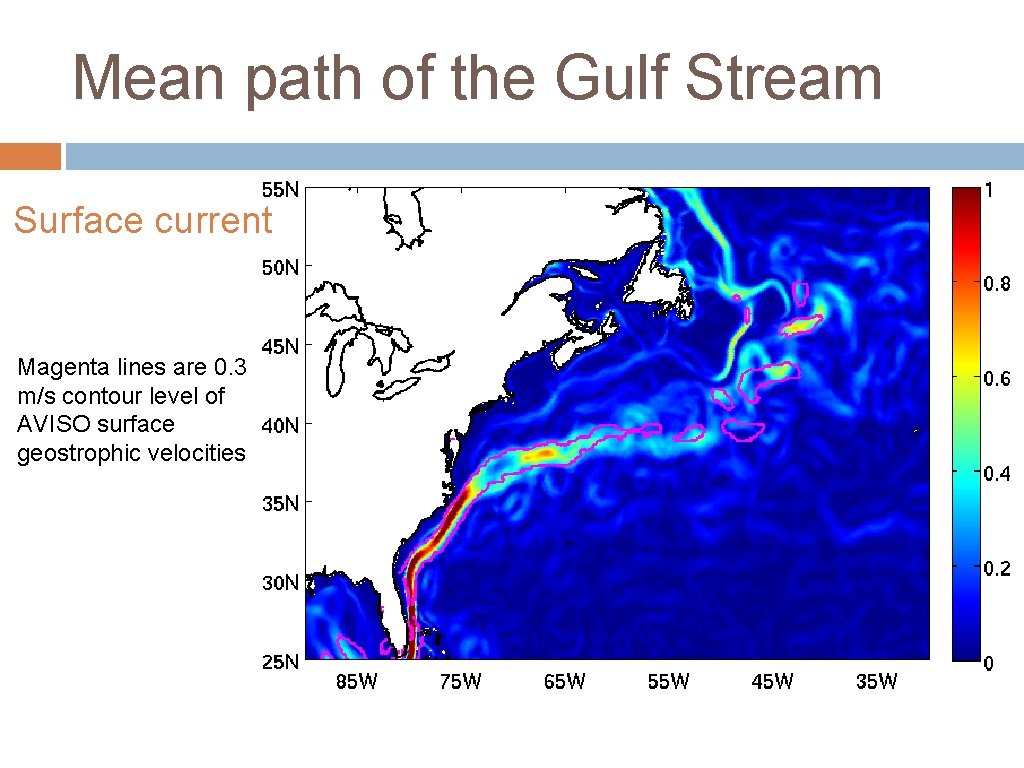
Mean path of the Gulf Stream Surface current Magenta lines are 0. 3 m/s contour level of AVISO surface geostrophic velocities
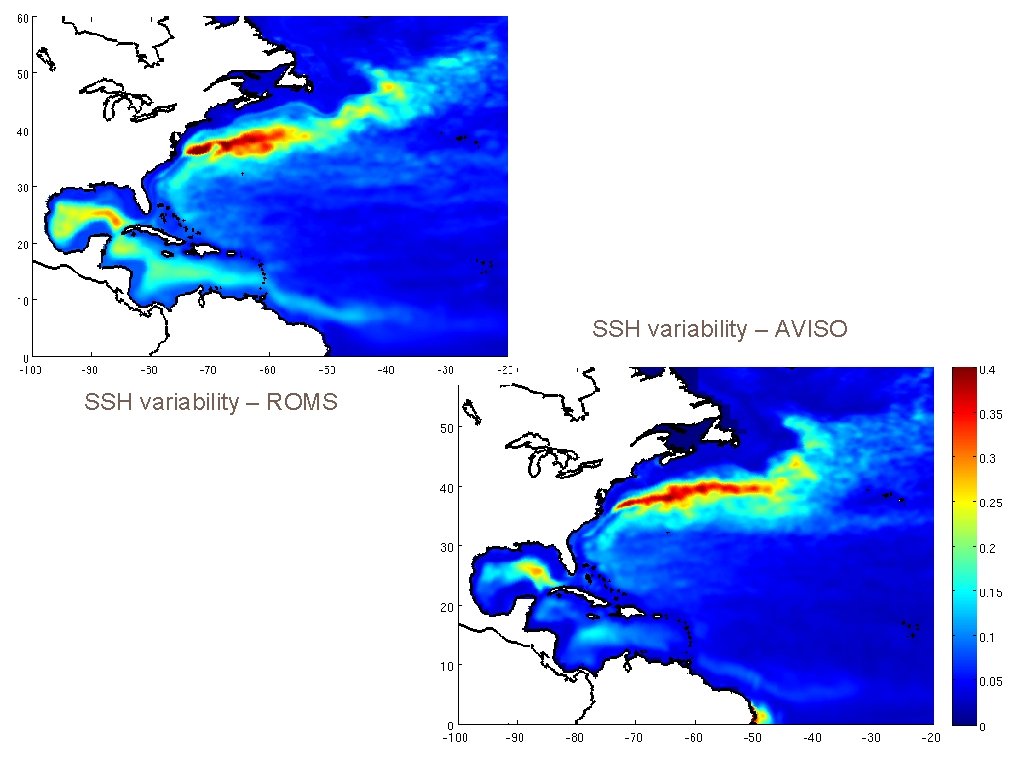
SSH variability – AVISO SSH variability – ROMS
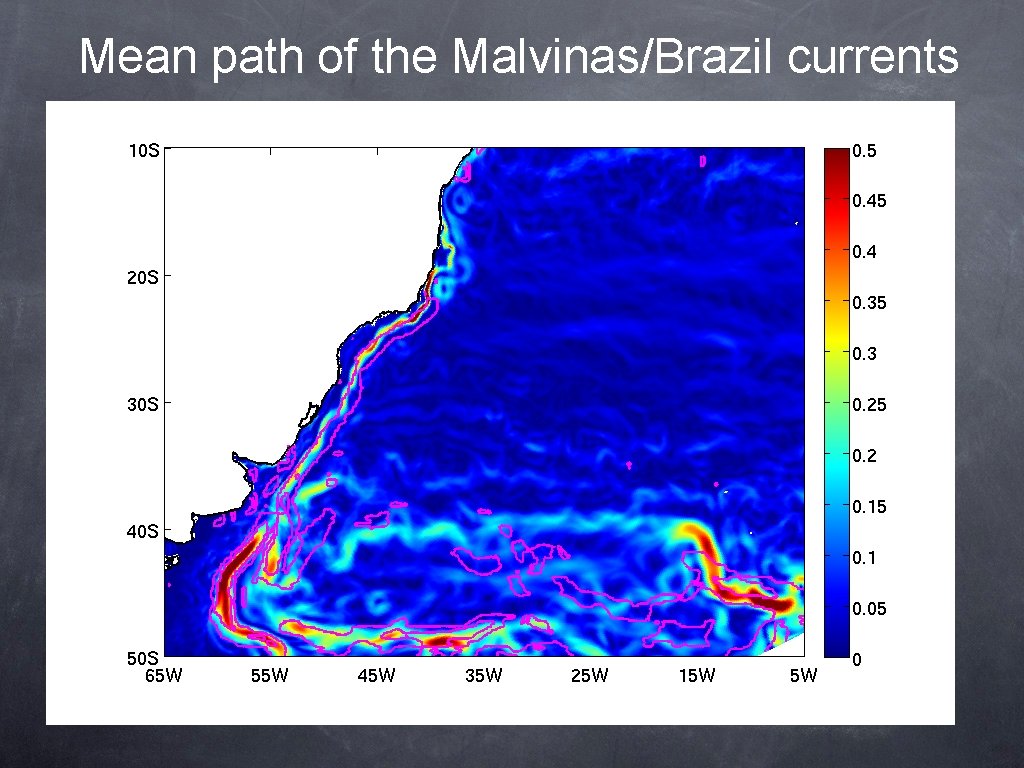
Mean path of the Malvinas/Brazil currents
Nest level 1 South West Atlantic (dx = 1. 5 km, 1500 km x 2000 km) Submesoscale on top of mesoscale
Nest level 2 (dx = 500 m, 600 km x 400 km ) Rio
Back to submesoscale dynamics Submesoscale range often start with mixed layer instability Source is potential energy. Deep mixed layer or strong horizontal density gradients
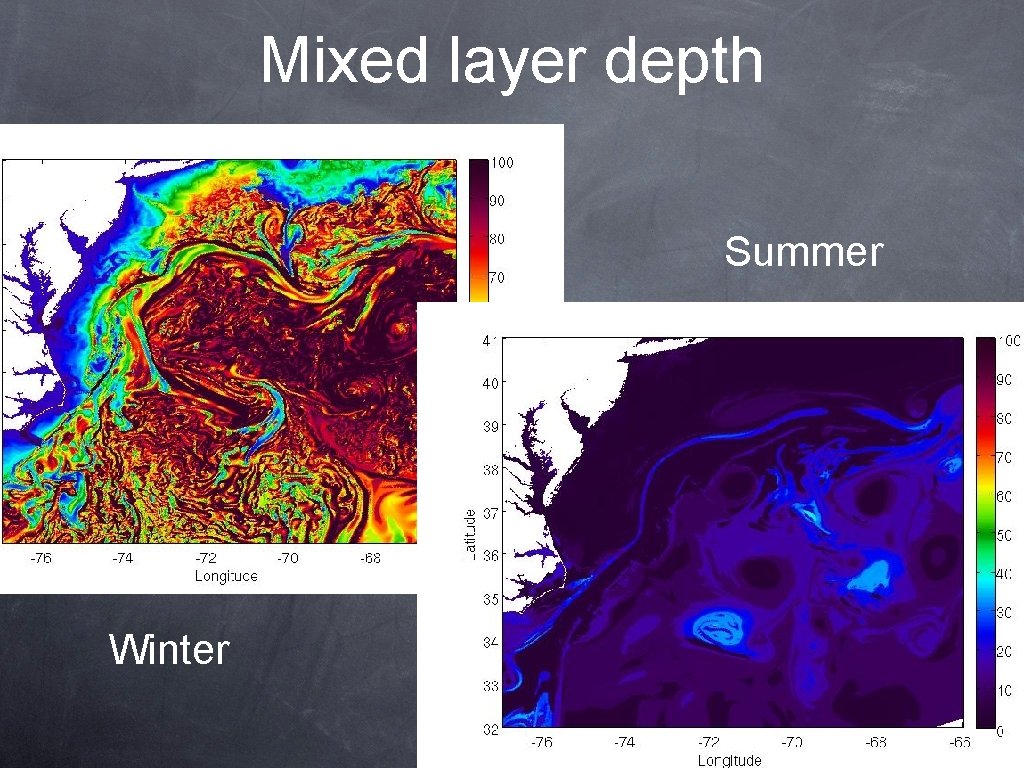
Mixed layer depth Summer Winter
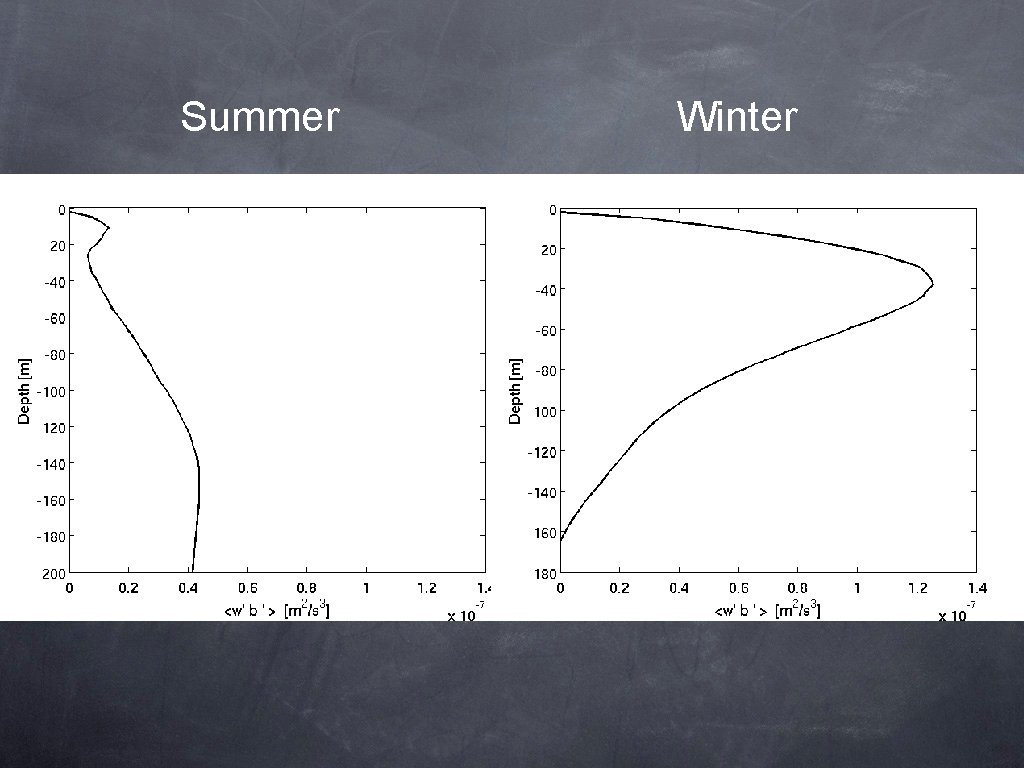
Summer Winter
Surface Relative Vorticity (dx = 1. 5 km)
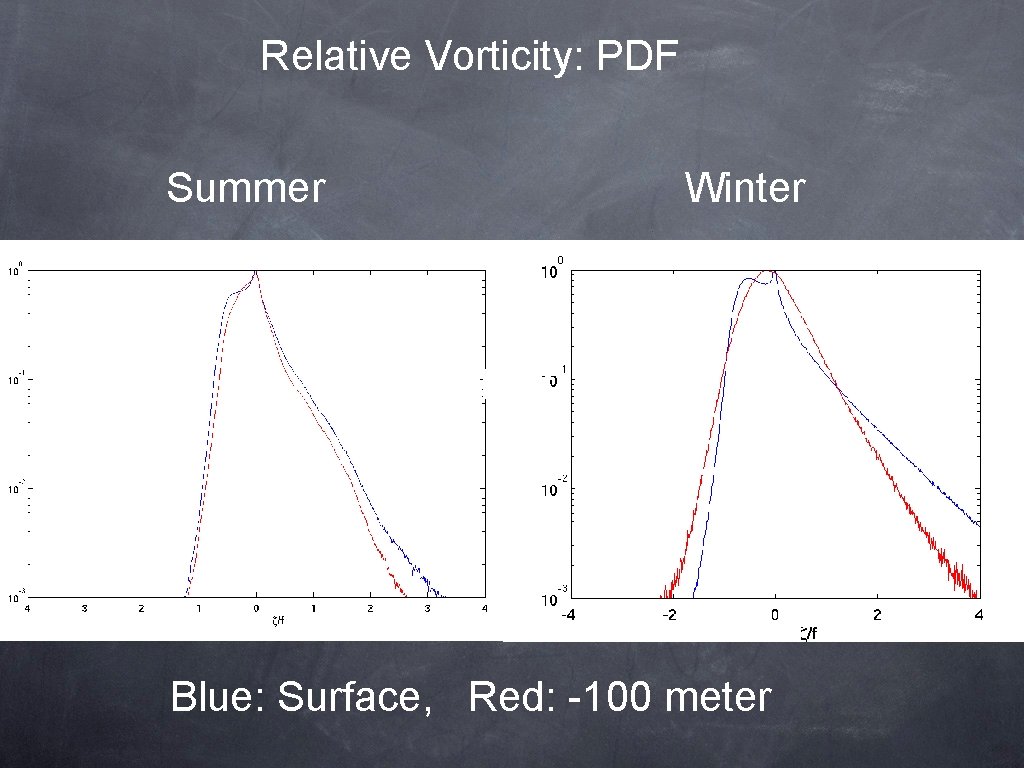
Relative Vorticity: PDF Summer Winter Text Blue: Surface, Red: -100 meter
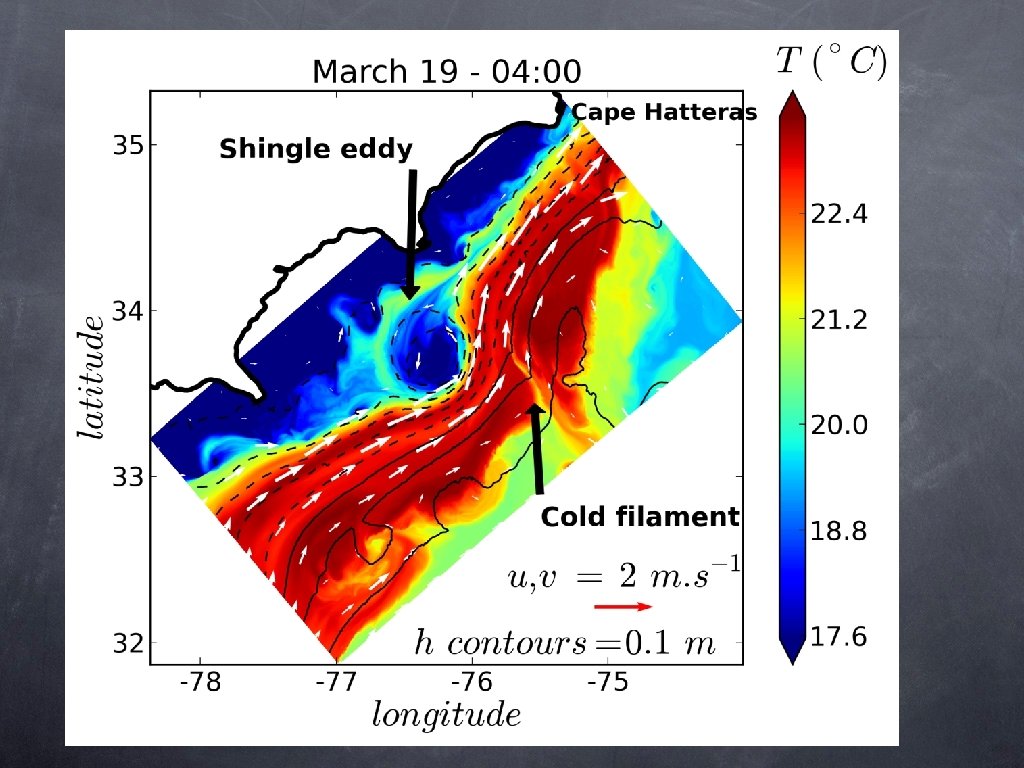
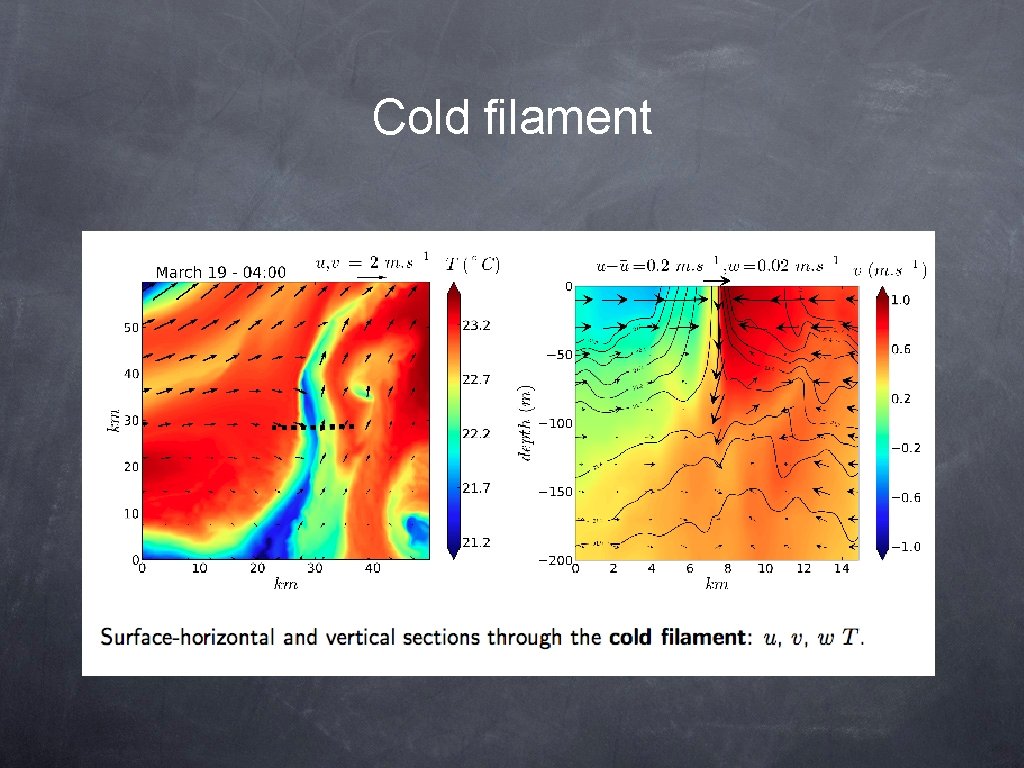
Cold filament
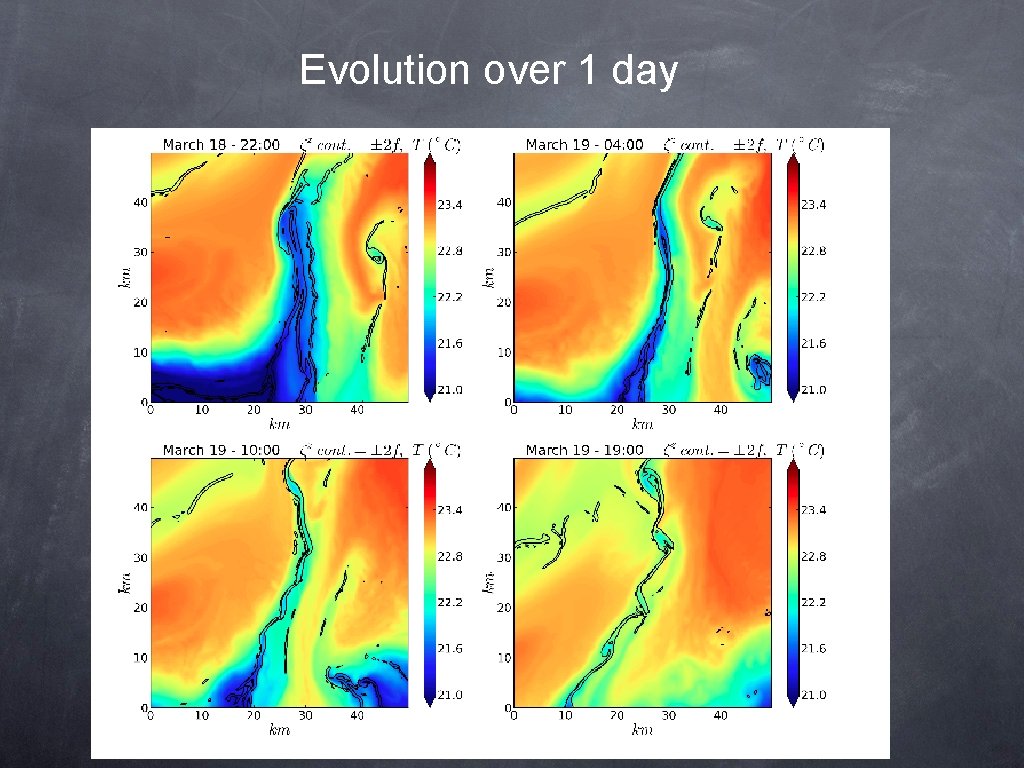
Evolution over 1 day
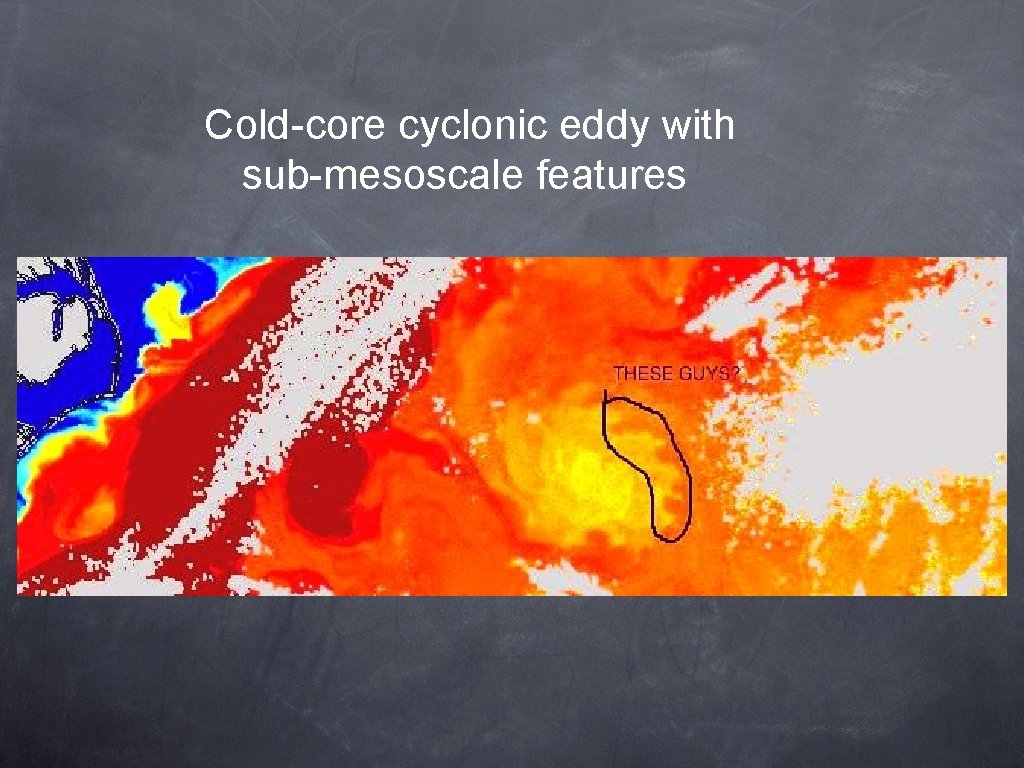
Cold-core cyclonic eddy with sub-mesoscale features

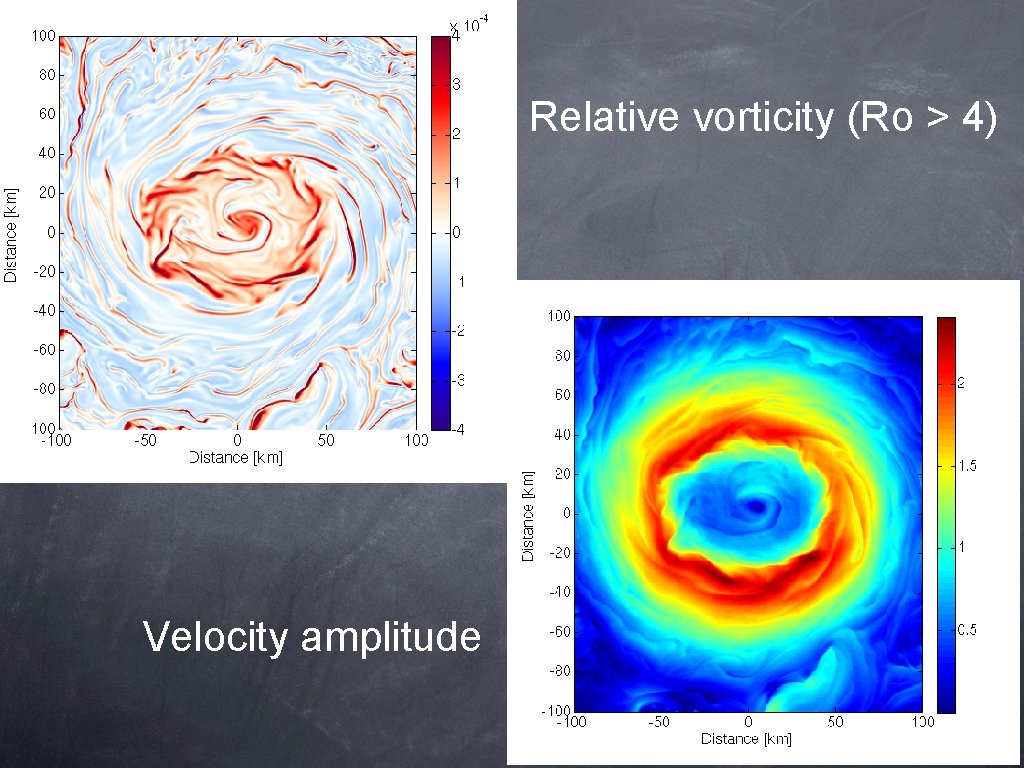
Relative vorticity (Ro > 4) Velocity amplitude
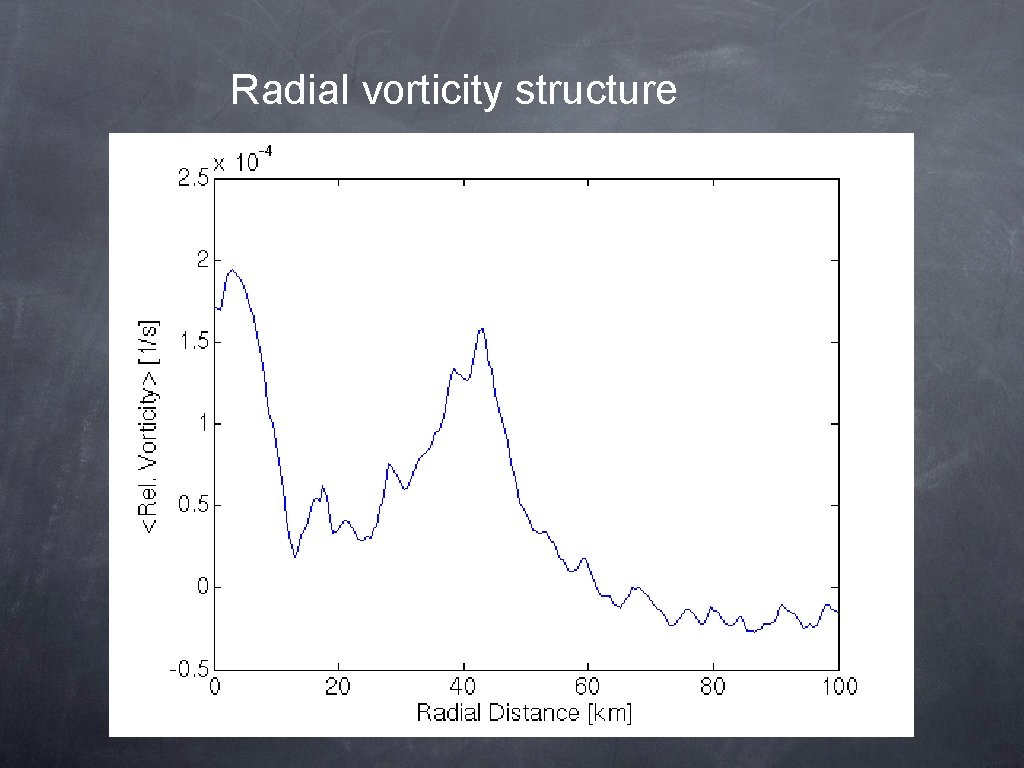
Radial vorticity structure
Surface relative vorticity [-3 f, 3 f] Rio, dx = 500 m)
Surface horizontal divergence [-3 f, 3 f] (Rio, dx = 500 m)

50 km x 40 km dx = 180 m 29
30
31
Thank You
- Slides: 33