
SUBMANDIBULAR SALIVARY GLAND Type mixed gland contains both
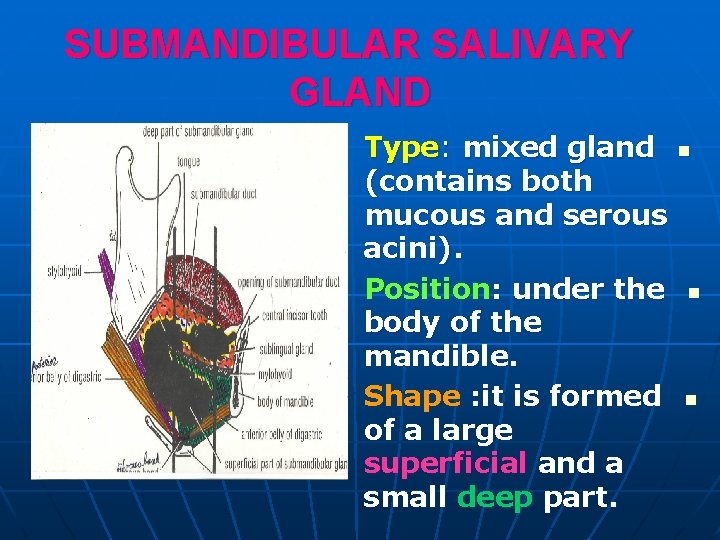
SUBMANDIBULAR SALIVARY GLAND Type: mixed gland (contains both mucous and serous acini). Position: under the body of the mandible. Shape : it is formed of a large superficial and a small deep part. n n n
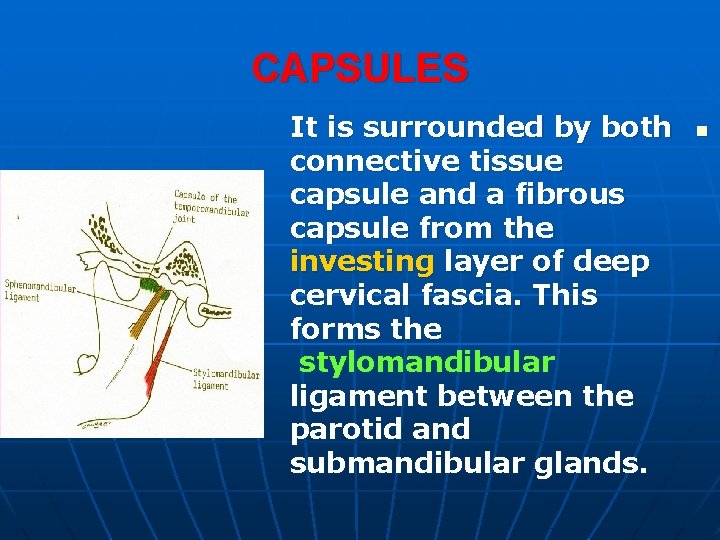
CAPSULES It is surrounded by both connective tissue capsule and a fibrous capsule from the investing layer of deep cervical fascia. This forms the stylomandibular ligament between the parotid and submandibular glands. n
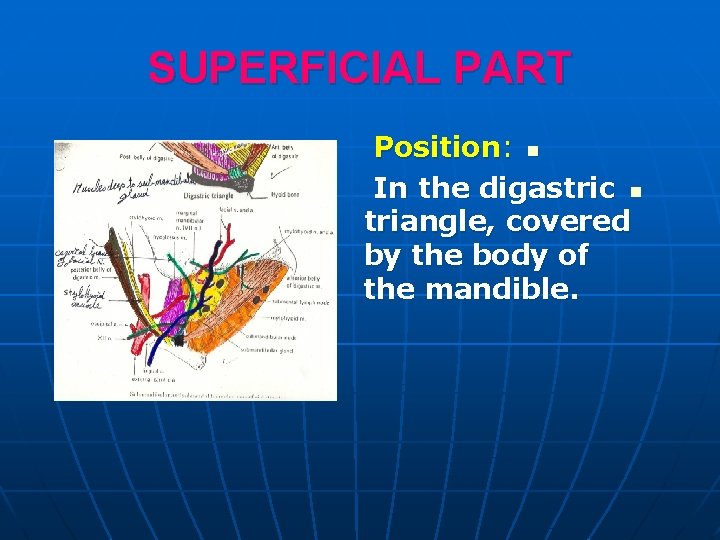
SUPERFICIAL PART Position: n In the digastric n triangle, covered by the body of the mandible.
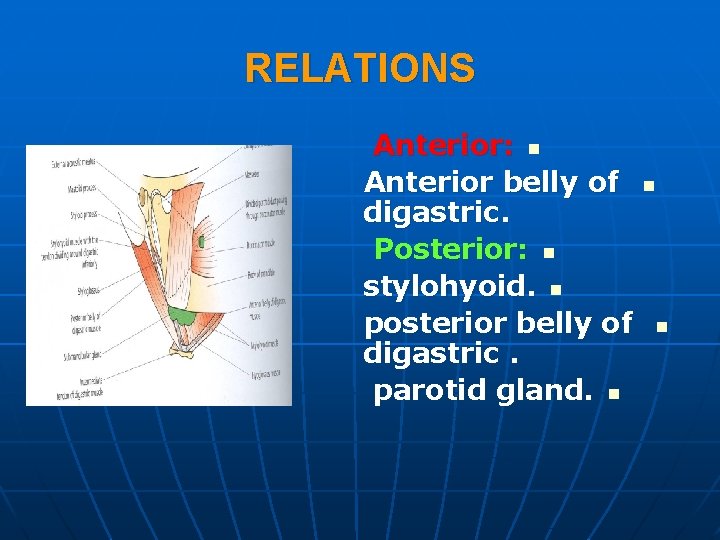
RELATIONS Anterior: n Anterior belly of digastric. Posterior: n stylohyoid. n posterior belly of digastric. parotid gland. n n n
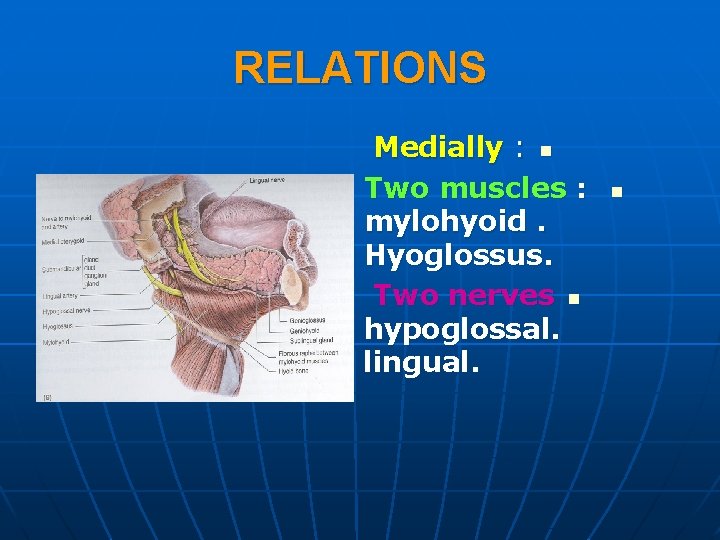
RELATIONS Medially : n Two muscles : mylohyoid. Hyoglossus. Two nerves n hypoglossal. lingual. n
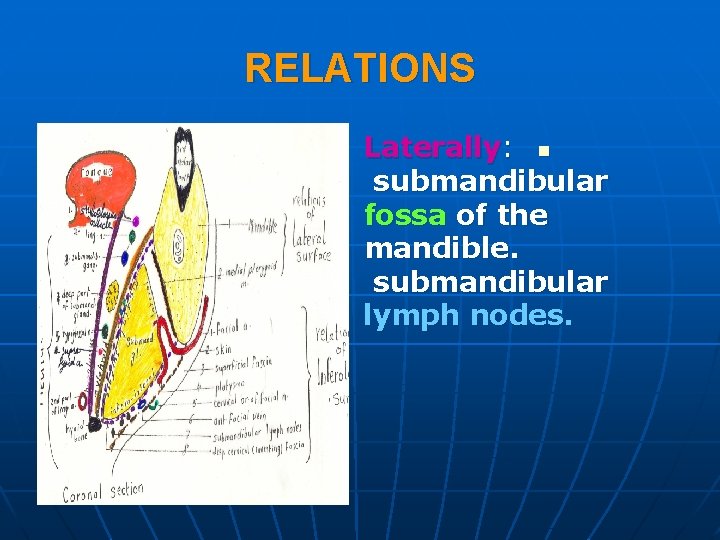
RELATIONS Laterally: n submandibular fossa of the mandible. submandibular lymph nodes.
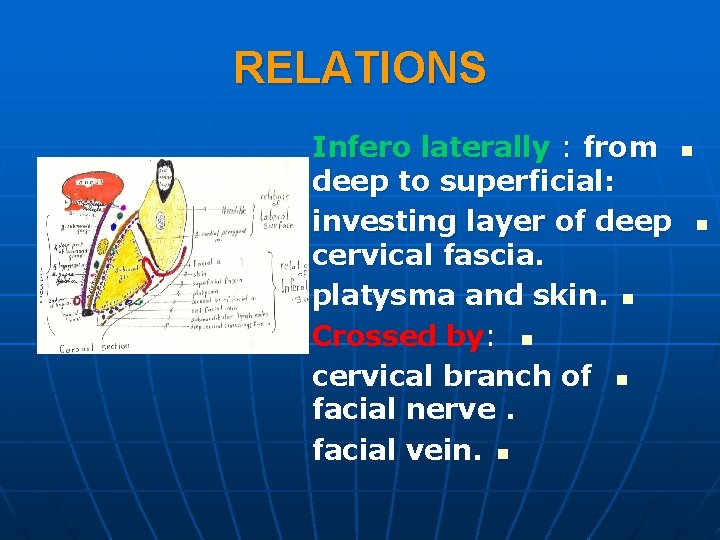
RELATIONS Infero laterally : from n deep to superficial: investing layer of deep n cervical fascia. platysma and skin. n Crossed by: n cervical branch of n facial nerve. facial vein. n
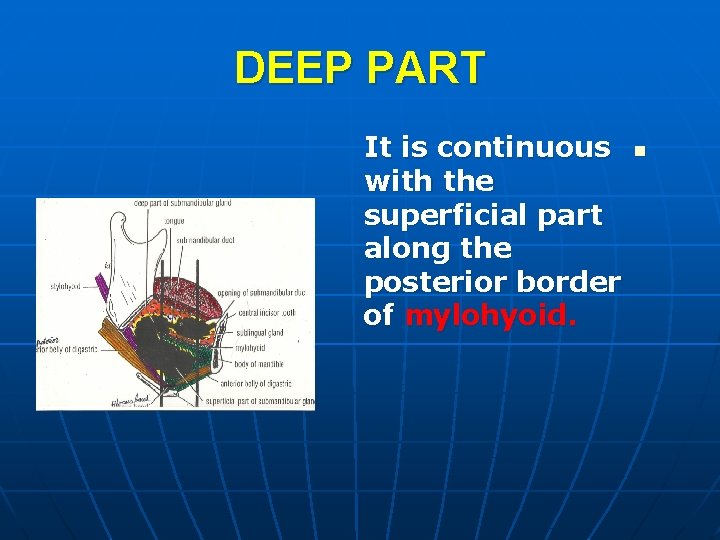
DEEP PART It is continuous with the superficial part along the posterior border of mylohyoid. n
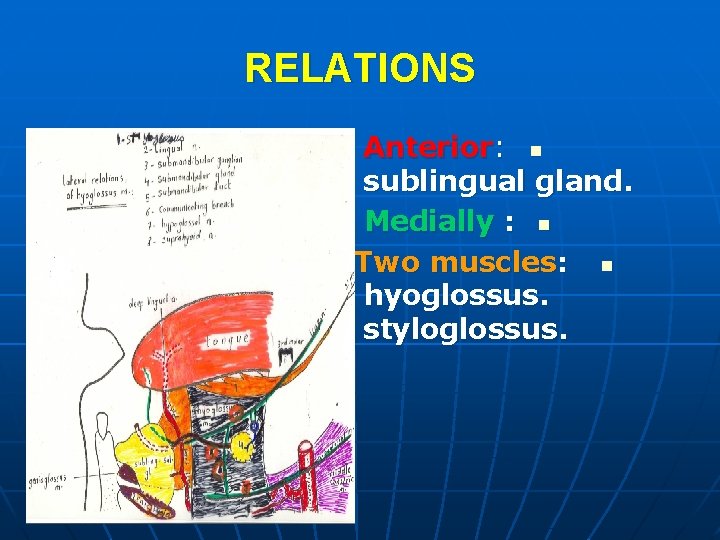
RELATIONS Anterior: n sublingual gland. Medially : n Two muscles: n hyoglossus. styloglossus.
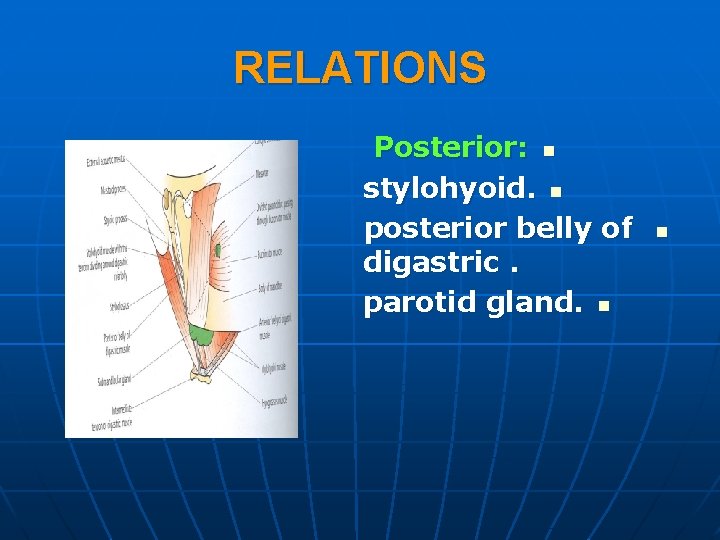
RELATIONS Posterior: n stylohyoid. n posterior belly of digastric. parotid gland. n n
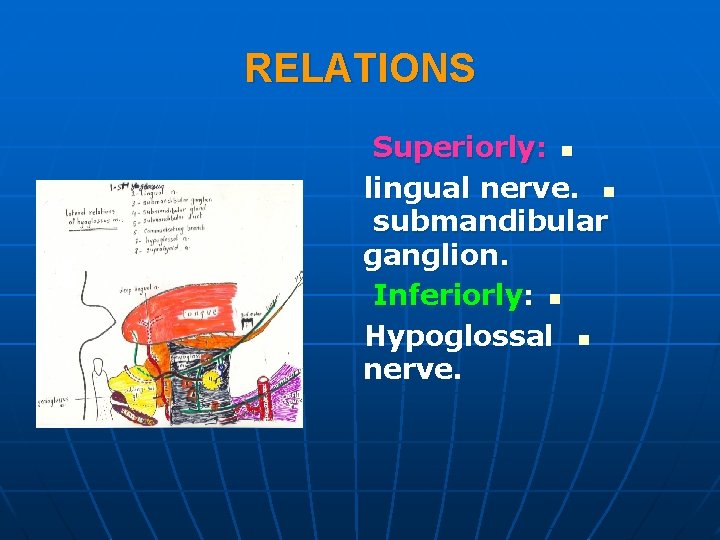
RELATIONS Superiorly: n lingual nerve. n submandibular ganglion. Inferiorly: n Hypoglossal n nerve.
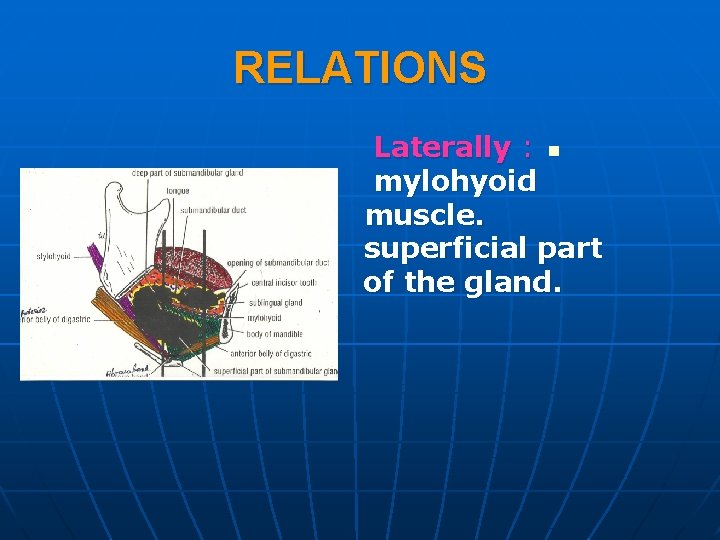
RELATIONS Laterally : n mylohyoid muscle. superficial part of the gland.
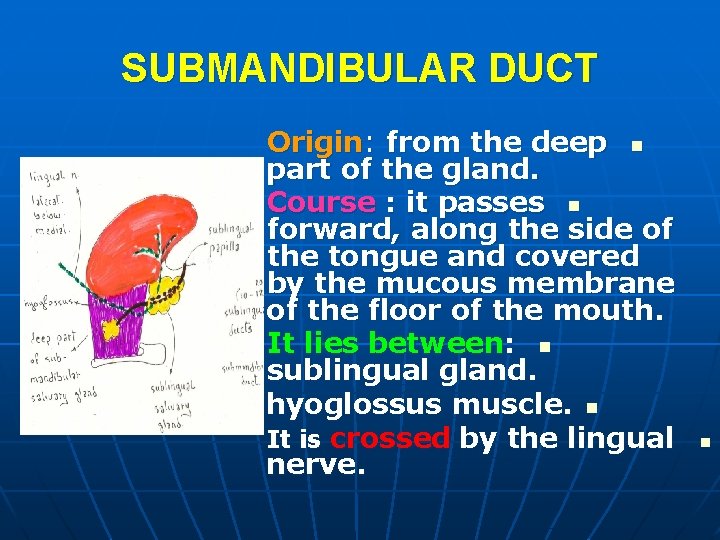
SUBMANDIBULAR DUCT Origin: from the deep n part of the gland. Course : it passes n forward, along the side of the tongue and covered by the mucous membrane of the floor of the mouth. It lies between: n sublingual gland. hyoglossus muscle. n It is crossed by the lingual nerve. n
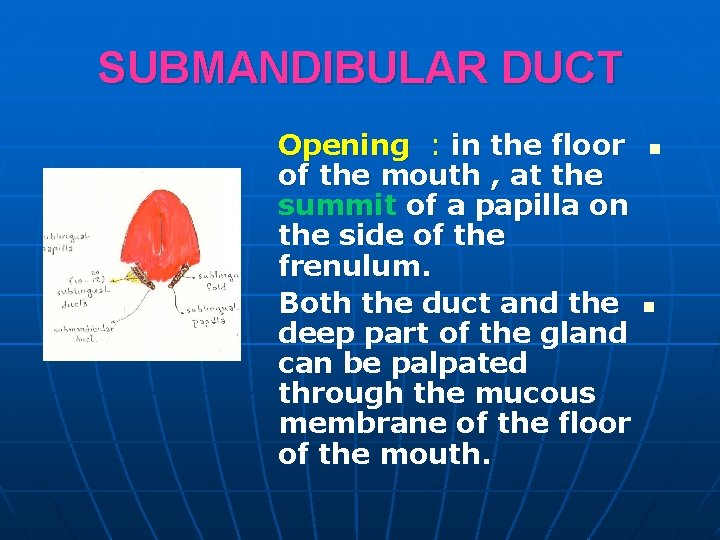
SUBMANDIBULAR DUCT Opening : in the floor of the mouth , at the summit of a papilla on the side of the frenulum. Both the duct and the deep part of the gland can be palpated through the mucous membrane of the floor of the mouth. n n
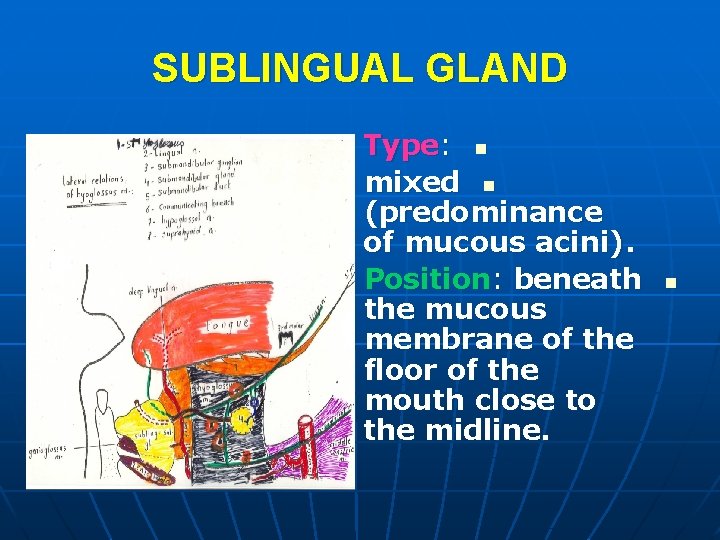
SUBLINGUAL GLAND Type: n mixed n (predominance of mucous acini). Position: beneath the mucous membrane of the floor of the mouth close to the midline. n
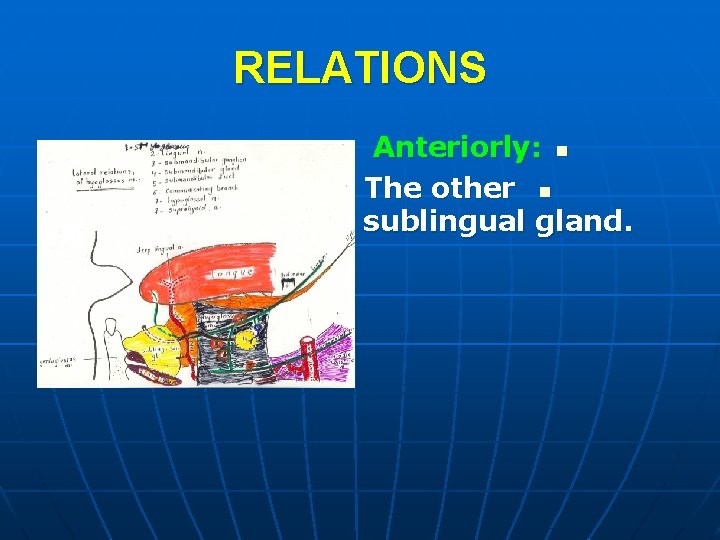
RELATIONS Anteriorly: n The other n sublingual gland.
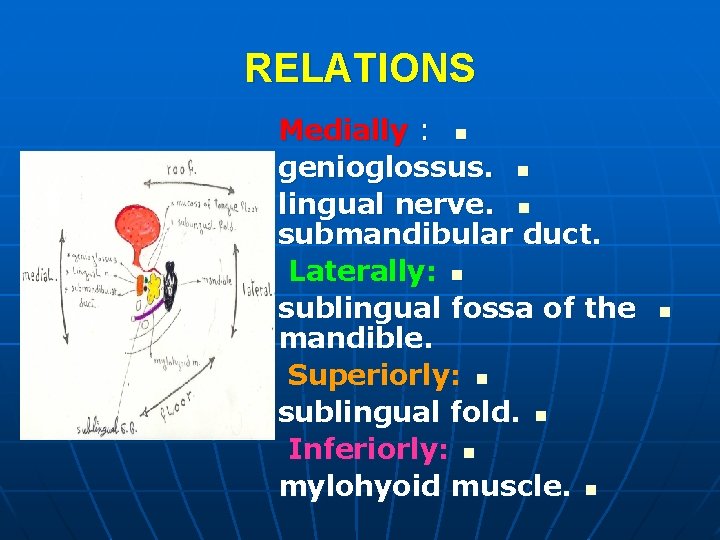
RELATIONS Medially : n genioglossus. n lingual nerve. n submandibular duct. Laterally: n sublingual fossa of the mandible. Superiorly: n sublingual fold. n Inferiorly: n mylohyoid muscle. n n
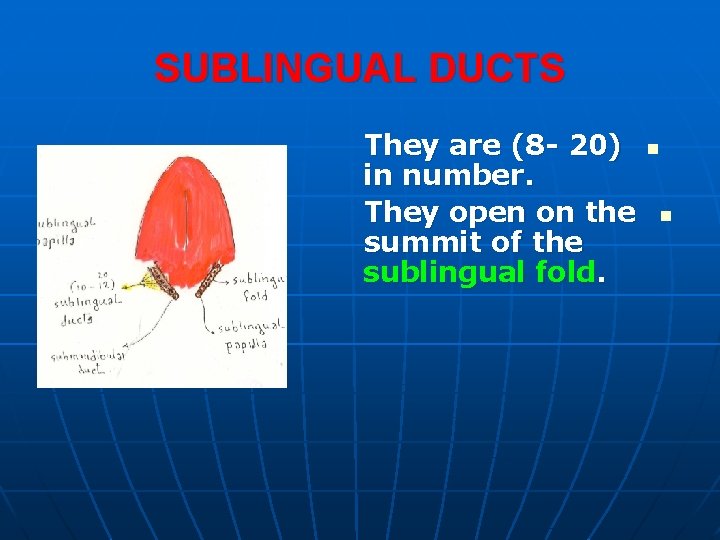
SUBLINGUAL DUCTS They are (8 - 20) in number. They open on the summit of the sublingual fold. n n
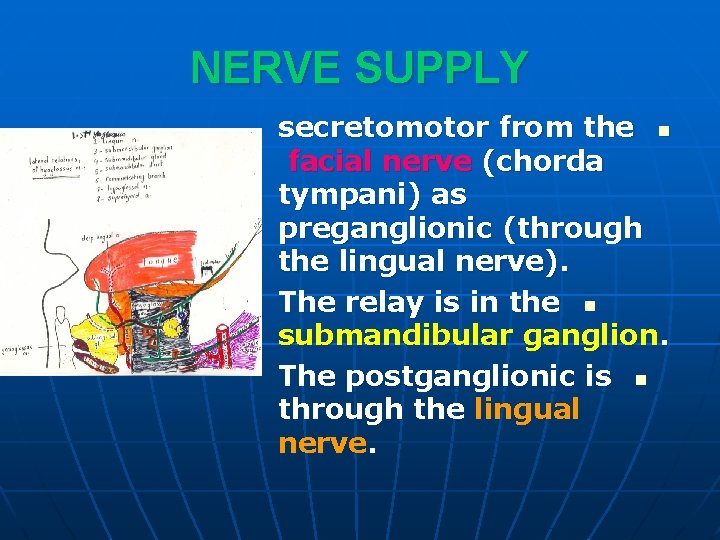
NERVE SUPPLY secretomotor from the n facial nerve (chorda tympani) as preganglionic (through the lingual nerve). The relay is in the n submandibular ganglion. The postganglionic is n through the lingual nerve.
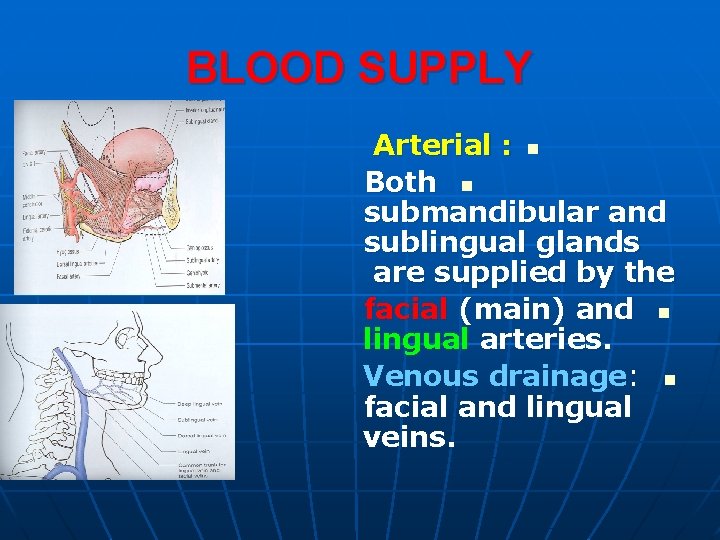
BLOOD SUPPLY Arterial : n Both n submandibular and sublingual glands are supplied by the facial (main) and n lingual arteries. Venous drainage: n facial and lingual veins.
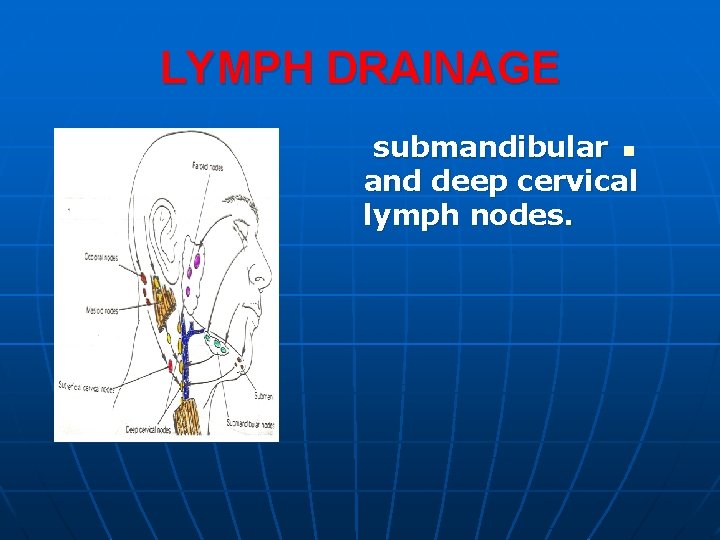
LYMPH DRAINAGE submandibular n and deep cervical lymph nodes.
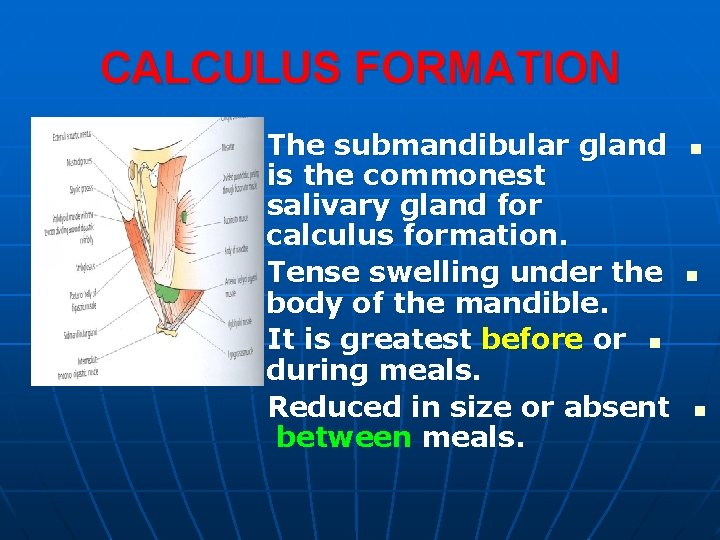
CALCULUS FORMATION The submandibular gland is the commonest salivary gland for calculus formation. Tense swelling under the body of the mandible. It is greatest before or n during meals. Reduced in size or absent between meals. n n n
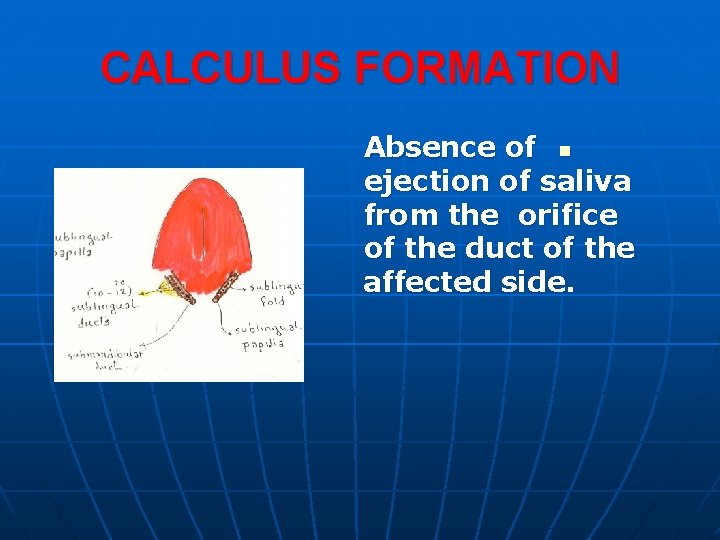
CALCULUS FORMATION Absence of n ejection of saliva from the orifice of the duct of the affected side.
- Slides: 23