
Sublaminar Wires in Growing Constructs for EOS with
Sublaminar Wires in Growing Constructs for EOS with Severe Deformity Effective in Diminishing Proximal Anchor Pullout Anna Mc. Clung BSN, RN, Charles E Johnston MD, Brandon A Ramo MD, Daniel J Sucato MD, MS
Disclosures • Anna Mc. Clung None • Charles E Johnston A: SRS, OREF; F: Medtronic • Brandon A Ramo None • Daniel J Sucato None
Introduction • Implant failure anticipated complication with growth friendly surgery • Kyphoscoliotic deformity more challenging to maintain proximal anchors (Schoerlucke et al 2012) • Limited literature comparing common anchor choices of hooks or screws (Skaggs et al 2010) • No literature comparing use of sublaminar wires as adjunct or most proximal anchor
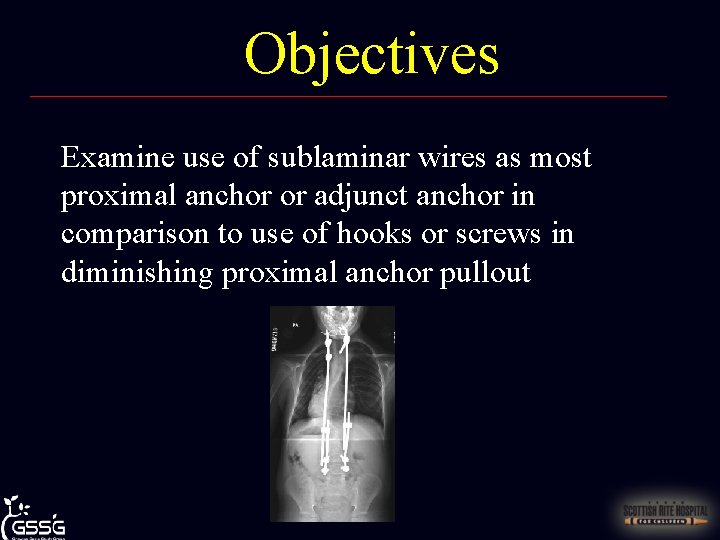
Objectives Examine use of sublaminar wires as most proximal anchor or adjunct anchor in comparison to use of hooks or screws in diminishing proximal anchor pullout
Methods • Single Institution IRB approved retrospective review prospective consecutive series in comparison to a multi-center study group database • Any patient treated with a spine based growth friendly construct where the proximal anchor could be a hook, screw (H&S) and/or sublaminar wire (SW) and 2 years of follow-up • Medical record review – Number of lengthenings – Length of follow-up – Incidence of Proximal inplant pullout (PIP) • Radiographic review – Major Cobb – Major Kyphosis – Thoracic Height
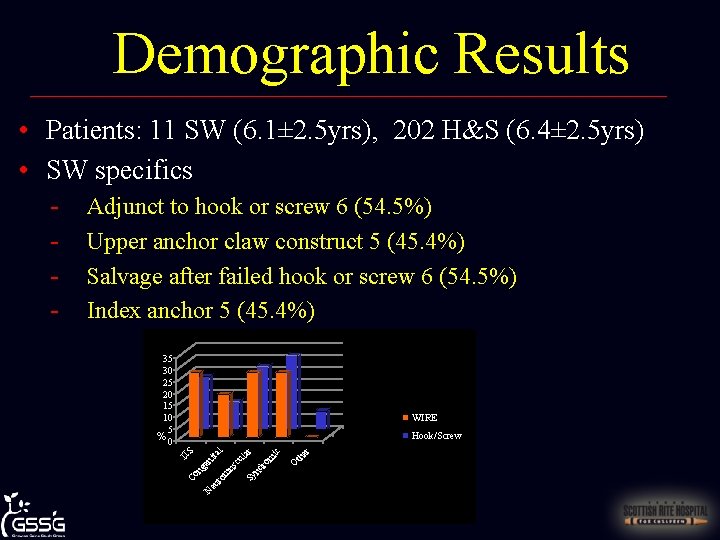
Demographic Results • Patients: 11 SW (6. 1± 2. 5 yrs), 202 H&S (6. 4± 2. 5 yrs) • SW specifics Adjunct to hook or screw 6 (54. 5%) Upper anchor claw construct 5 (45. 4%) Salvage after failed hook or screw 6 (54. 5%) Index anchor 5 (45. 4%) 35 30 25 20 15 10 5 %0 N er th m ro O ic r la nd cu Sy us eu ro m ng en ita l IIS WIRE Co - Hook/Screw WIRE Hook/Screw
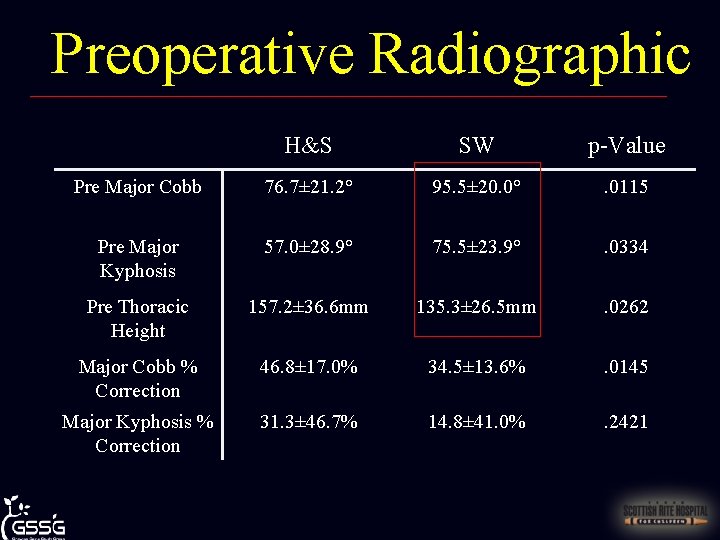
Preoperative Radiographic H&S SW p-Value Pre Major Cobb 76. 7± 21. 2° 95. 5± 20. 0° . 0115 Pre Major Kyphosis 57. 0± 28. 9° 75. 5± 23. 9° . 0334 Pre Thoracic Height 157. 2± 36. 6 mm 135. 3± 26. 5 mm . 0262 Major Cobb % Correction 46. 8± 17. 0% 34. 5± 13. 6% . 0145 Major Kyphosis % Correction 31. 3± 46. 7% 14. 8± 41. 0% . 2421
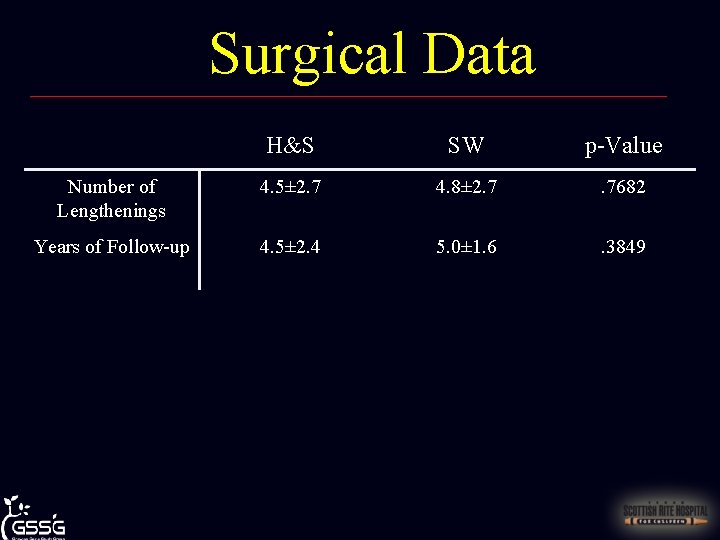
Surgical Data H&S SW p-Value Number of Lengthenings 4. 5± 2. 7 4. 8± 2. 7 . 7682 Years of Follow-up 4. 5± 2. 4 5. 0± 1. 6 . 3849
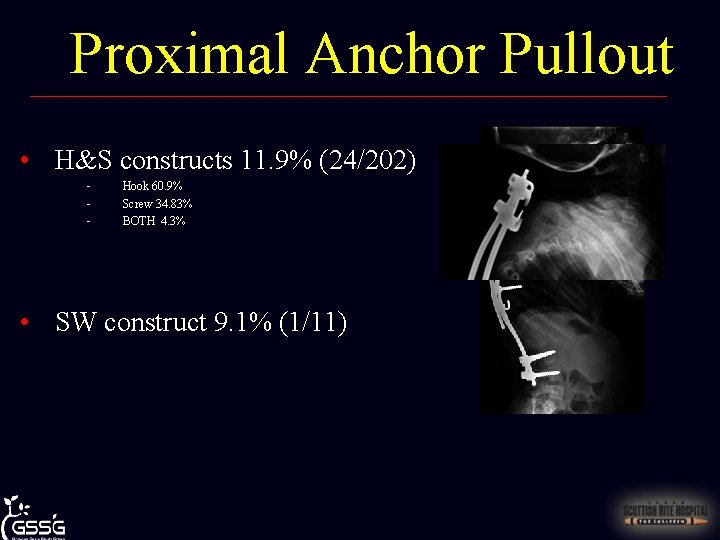
Proximal Anchor Pullout • H&S constructs 11. 9% (24/202) - Hook 60. 9% Screw 34. 83% BOTH 4. 3% • SW construct 9. 1% (1/11)
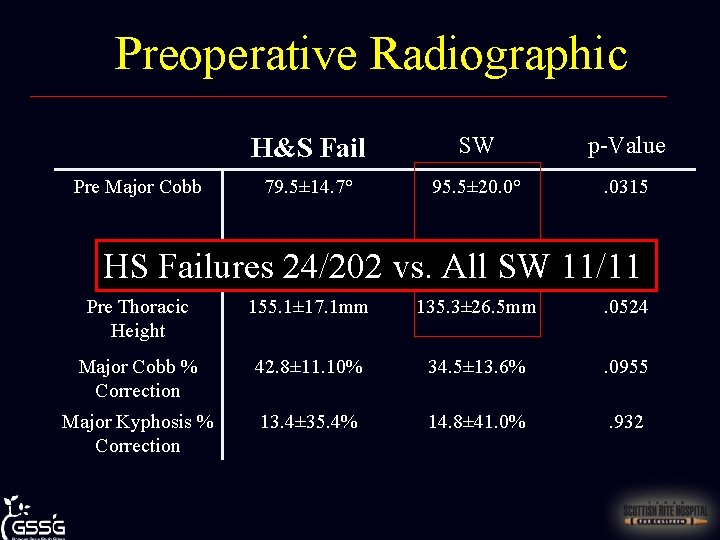
Preoperative Radiographic H&S Fail SW p-Value Pre Major Cobb 79. 5± 14. 7° 95. 5± 20. 0° . 0315 Pre Major Kyphosis 56. 9± 18. 8° 75. 5± 23. 9° . 0561 Pre Thoracic Height 155. 1± 17. 1 mm 135. 3± 26. 5 mm . 0524 Major Cobb % Correction 42. 8± 11. 10% 34. 5± 13. 6% . 0955 Major Kyphosis % Correction 13. 4± 35. 4% 14. 8± 41. 0% . 932 HS Failures 24/202 vs. All SW 11/11
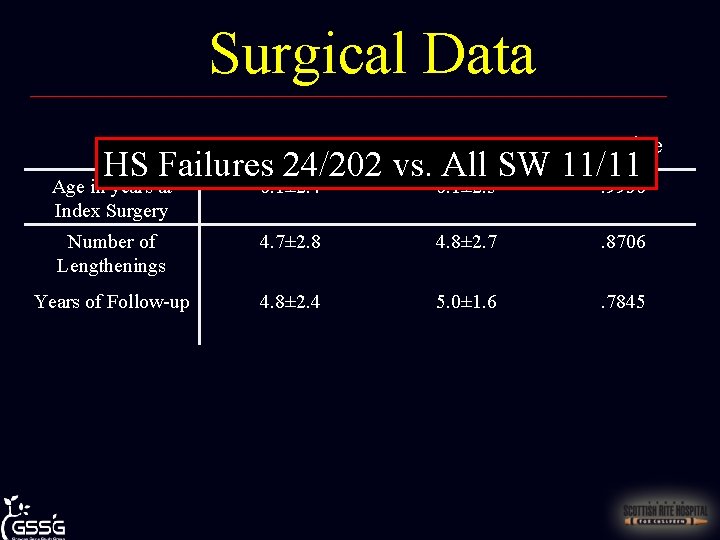
Surgical Data H&S SW p-Value Number of Lengthenings 4. 7± 2. 8 4. 8± 2. 7 . 8706 Years of Follow-up 4. 8± 2. 4 5. 0± 1. 6 . 7845 HS Failures 24/202 vs. All SW 11/11 Age in years at 6. 1± 2. 4 6. 1± 2. 5. 9936 Index Surgery
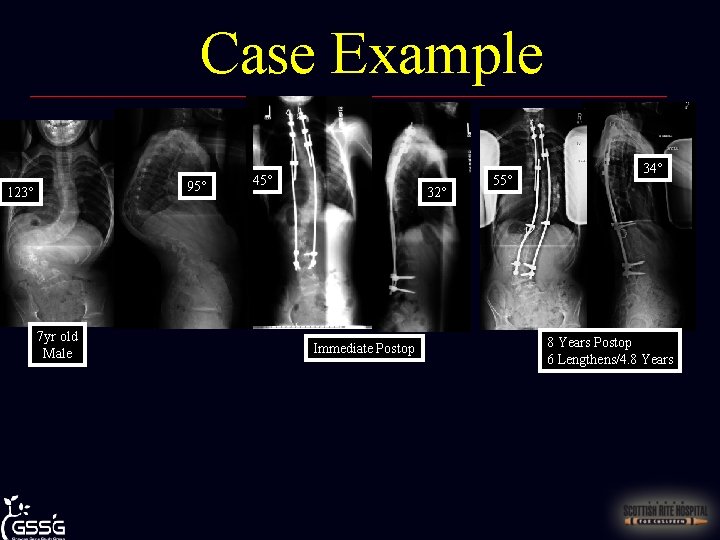
Case Example 95° 123° 7 yr old Male 45° 32° Immediate Postop 55° 34° 8 Years Postop 6 Lengthens/4. 8 Years
Limitations • Small series • Retrospective nature
Conclusions • Sublaminar wires had a similar rate of proximal implant failure compared to hooks or screws alone, despite greater kyphoscoliotic deformity • In patients with severe kyphoscolitic deformity surgeons should consider use of wires as an adjunct or most proximal implant
Thank You
- Slides: 15