
Subjunctive verb forms The chart on the following
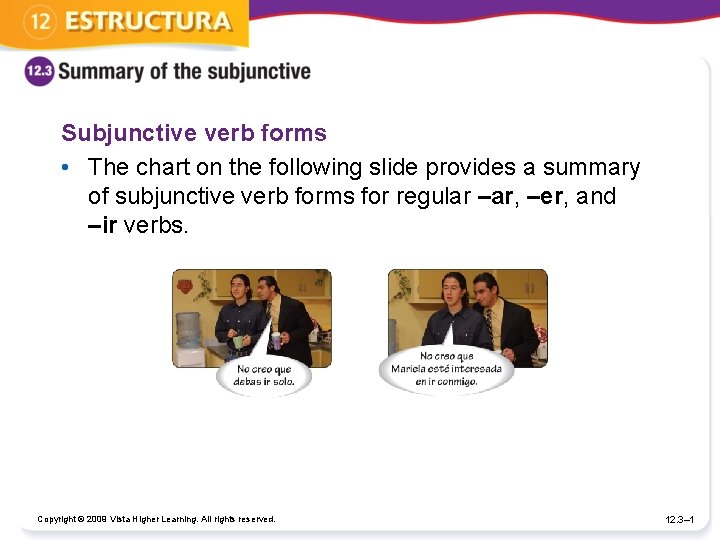
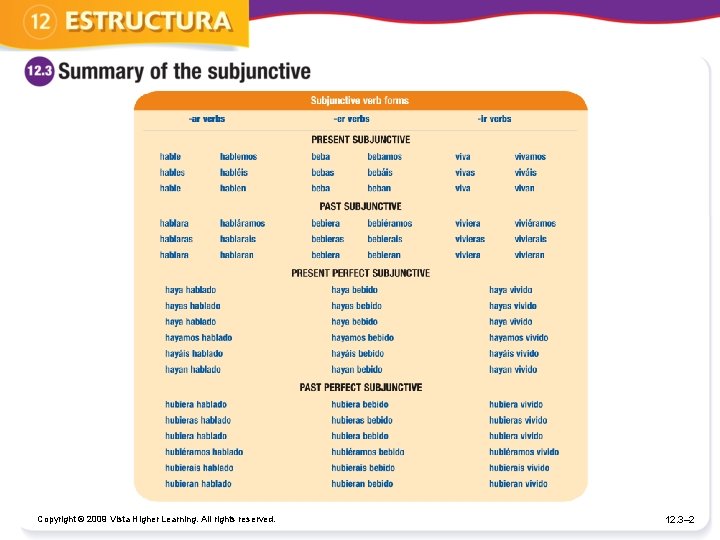
Subjunctive verb forms • The chart on the following slide provides a summary of subjunctive verb forms for regular –ar, –er, and –ir verbs. Copyright © 2009 Vista Higher Learning. All rights reserved. 12. 3– 1
Copyright © 2009 Vista Higher Learning. All rights reserved. 12. 3– 2
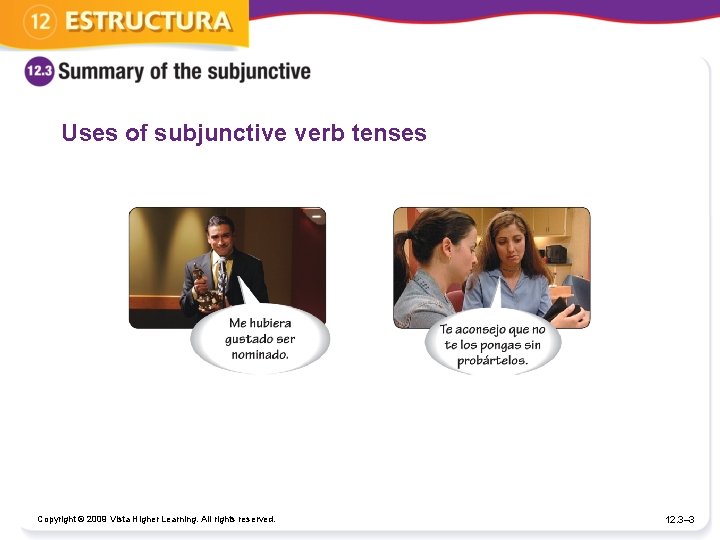
Uses of subjunctive verb tenses Copyright © 2009 Vista Higher Learning. All rights reserved. 12. 3– 3
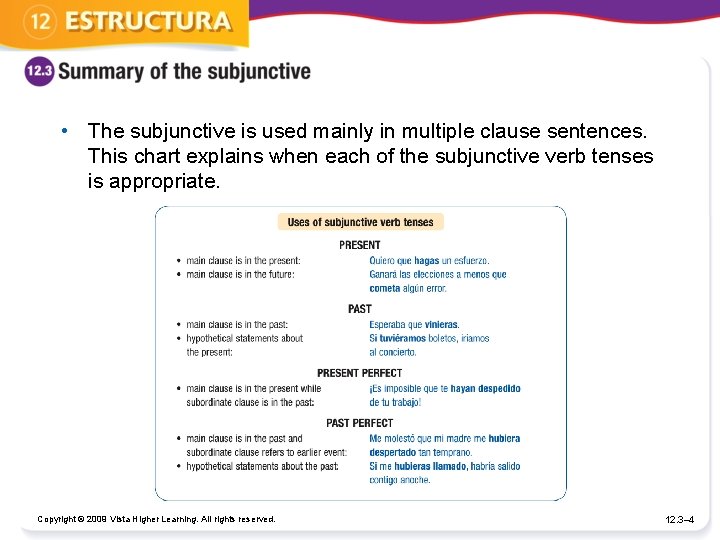
• The subjunctive is used mainly in multiple clause sentences. This chart explains when each of the subjunctive verb tenses is appropriate. Copyright © 2009 Vista Higher Learning. All rights reserved. 12. 3– 4
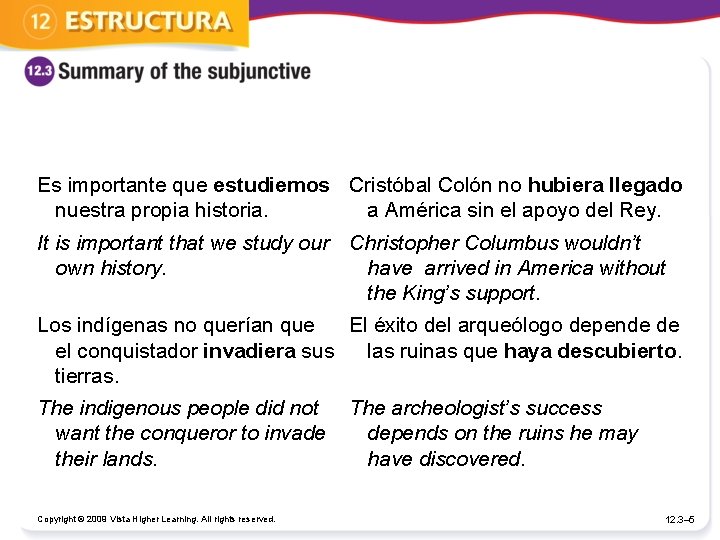
Es importante que estudiemos Cristóbal Colón no hubiera llegado nuestra propia historia. a América sin el apoyo del Rey. It is important that we study our Christopher Columbus wouldn’t own history. have arrived in America without the King’s support. Los indígenas no querían que El éxito del arqueólogo depende de el conquistador invadiera sus las ruinas que haya descubierto. tierras. The indigenous people did not want the conqueror to invade their lands. Copyright © 2009 Vista Higher Learning. All rights reserved. The archeologist’s success depends on the ruins he may have discovered. 12. 3– 5
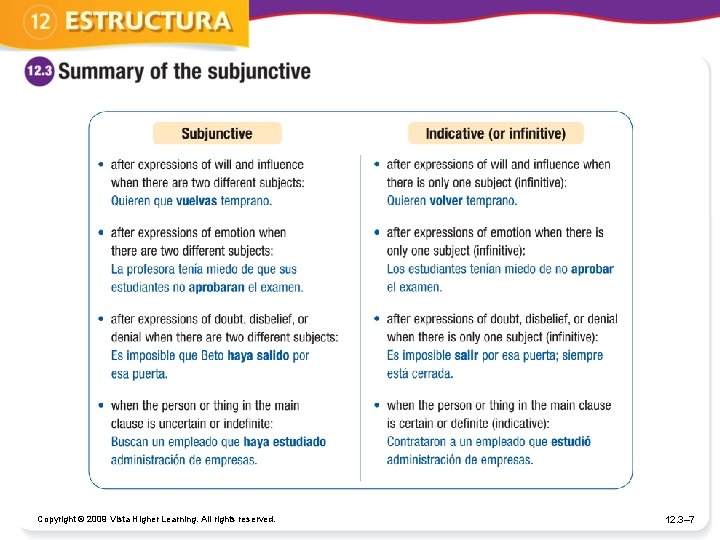
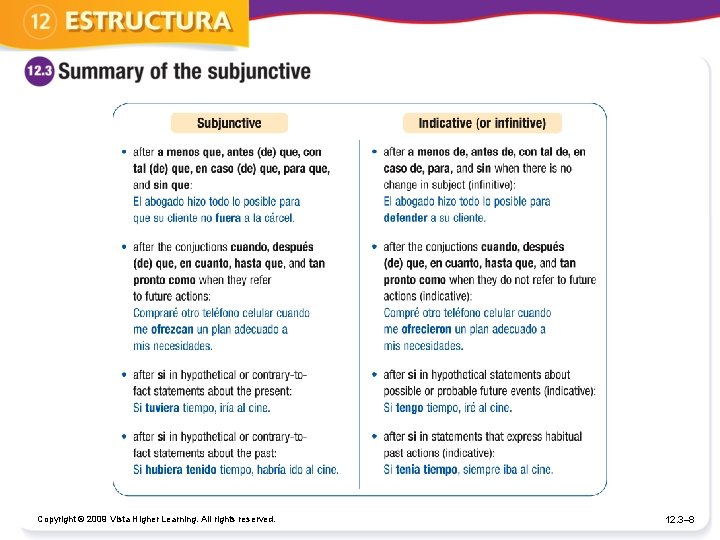
The subjunctive vs. the indicative • This chart on the following slides contrasts the uses of the subjunctive with those of the indicative (or infinitive). Copyright © 2009 Vista Higher Learning. All rights reserved. 12. 3– 6
Copyright © 2009 Vista Higher Learning. All rights reserved. 12. 3– 7
Copyright © 2009 Vista Higher Learning. All rights reserved. 12. 3– 8
Ojalá (que) is always followed by the subjunctive. Ojalá (que) se mejore pronto. Impersonal expressions of will, emotion, or uncertainty are followed by the subjunctive unless there is no change of subject. Es terrible que tú fumes. Es terrible fumar. Copyright © 2009 Vista Higher Learning. All rights reserved. 12. 3– 9
- Slides: 9