
Subjunctive Mood Verbs 2015 What Is the Subjunctive
Subjunctive Mood Verbs 2015
What Is the Subjunctive Mood? • You’ve already learned 2 moods of Latin verbs: – 1. the indicative mood, used for statements of fact and asking questions – 2. the imperative mood, used for commands
Subjunctive Mood • The subjunctive mood gives more of the speaker’s or writer’s opinion or attitude toward the truth of a statement. • It can be used independently, as a main verb. • It’s often used in dependent clauses, too.
Subjunctive Tenses • • We’ve learned 6 tenses of Latin verbs. The subjunctive only has 4 tenses! It also has active/passive voice. Tenses: There is no such – Present – Imperfect – Pluperfect thing as the future or future perfect subjunctive.

Present Tense Subjunctive • The present tense subjunctive uses the same personal endings as regular verbs (swap out “m” for “o” in 1 st person singular): • ACTIVE VOICE: PASSIVE VOICE: –M –S –T -MUS -TIS -NT -R -MUR -RIS -MINI -TUR -NTUR
Present Tense Subjunctive • Since present tense subjunctive uses the same personal endings, something else has to change to make it different from regular present tense. • It’s all in the VOWELS!
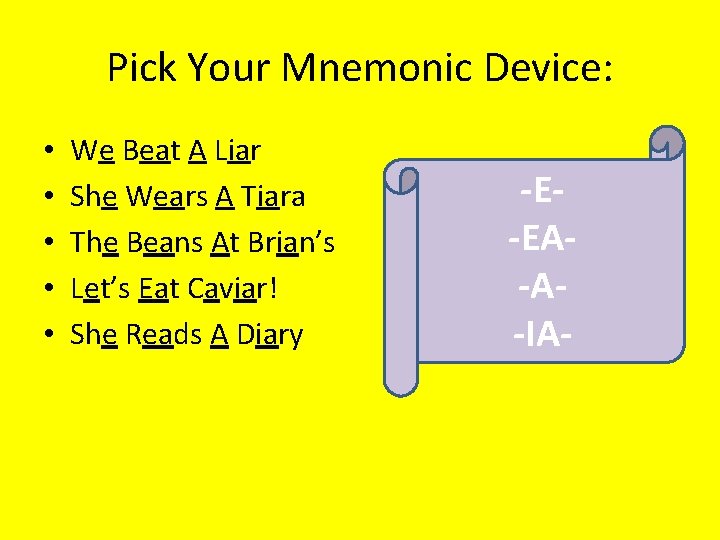
Pick Your Mnemonic Device: • • • We Beat A Liar She Wears A Tiara The Beans At Brian’s Let’s Eat Caviar! She Reads A Diary -E-EA-A-IA-
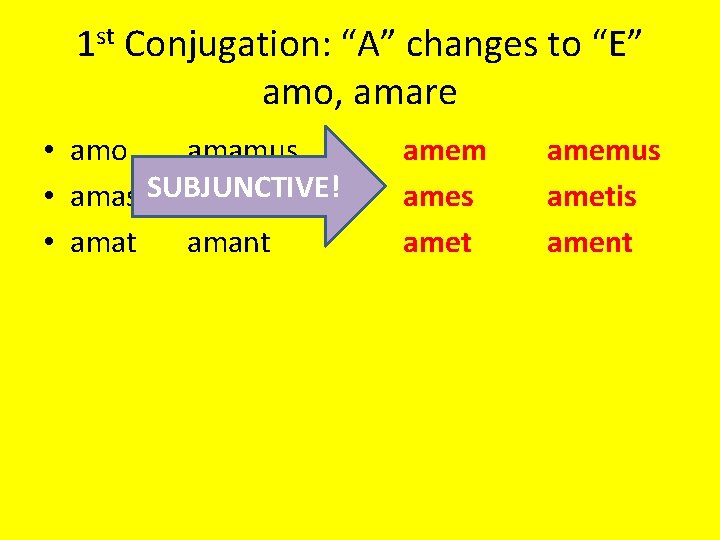
1 st Conjugation: “A” changes to “E” amo, amare • amo amamus • amas SUBJUNCTIVE! amatis • amat amant amem ames amet amemus ametis ament
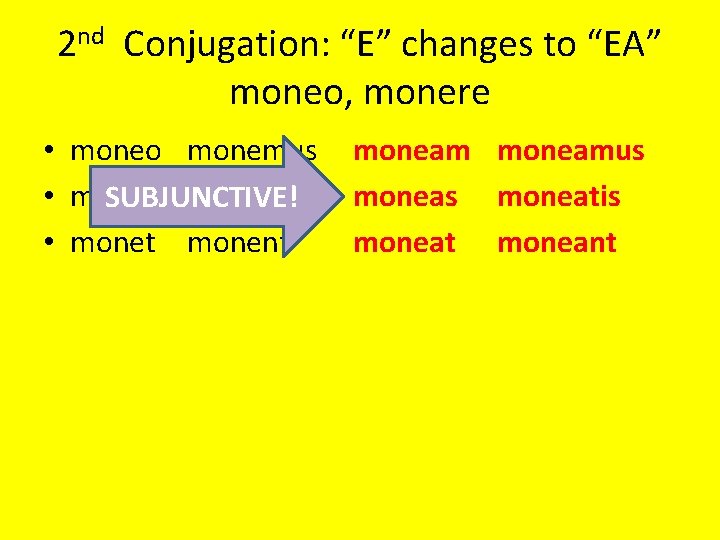
2 nd Conjugation: “E” changes to “EA” moneo, monere • moneo monemus • mones monetis SUBJUNCTIVE! • monet monent moneamus moneatis moneat moneant
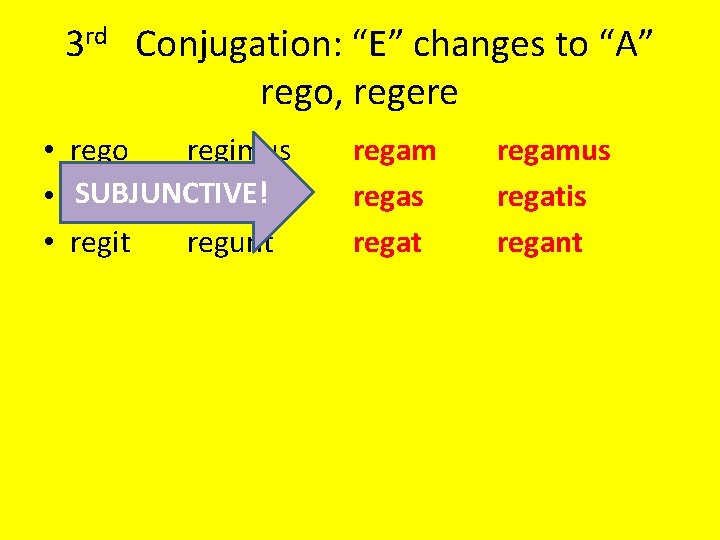
3 rd Conjugation: “E” changes to “A” rego, regere • • • rego regimus SUBJUNCTIVE! regis regit regunt regam regas regat regamus regatis regant
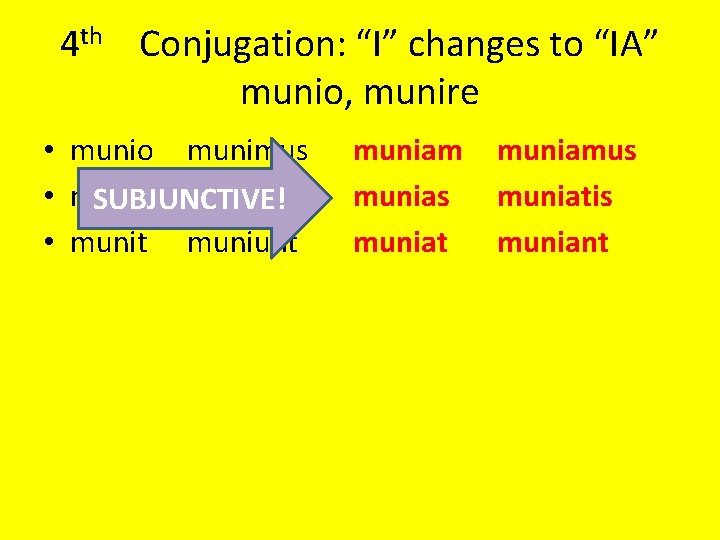
4 th Conjugation: “I” changes to “IA” munio, munire • munio munimus • munis munitis SUBJUNCTIVE! • munit muniunt muniam munias muniat muniamus muniatis muniant
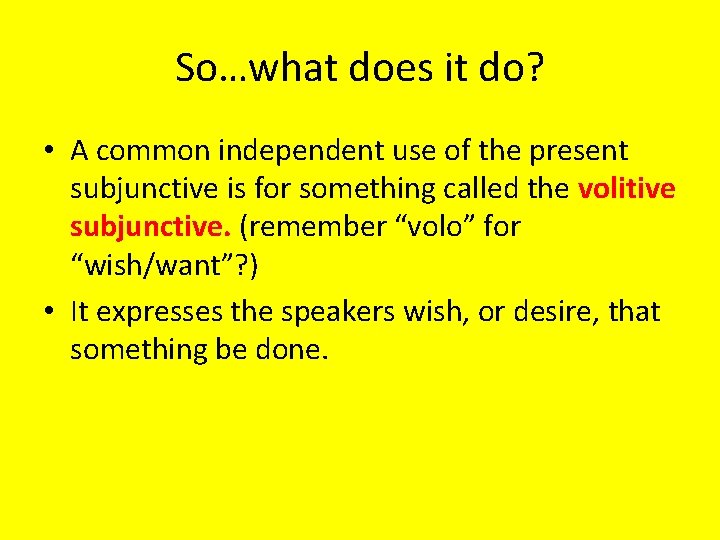
So…what does it do? • A common independent use of the present subjunctive is for something called the volitive subjunctive. (remember “volo” for “wish/want”? ) • It expresses the speakers wish, or desire, that something be done.

Volitive Subjunctive • Let them prepare dinner. OR They should prepare dinner. Cenam parent. (paro, parare: prepare) • Let’s/let us explore the forest. Silvam exploremus. (exploro, explorare) • Ne silvam exploremus. Let’s not explore the forest.
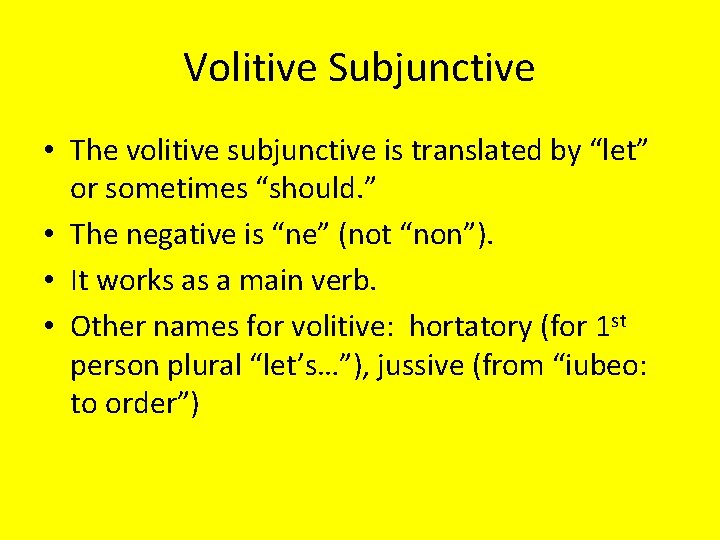
Volitive Subjunctive • The volitive subjunctive is translated by “let” or sometimes “should. ” • The negative is “ne” (not “non”). • It works as a main verb. • Other names for volitive: hortatory (for 1 st person plural “let’s…”), jussive (from “iubeo: to order”)
Practice! • Write the present tense subjunctive charts for the following verbs: – porto, portare (use ‘e’) – doceo, docere (use ‘ea’) – pono, ponere (use ‘a’) – audio, audire (use ‘ia’)
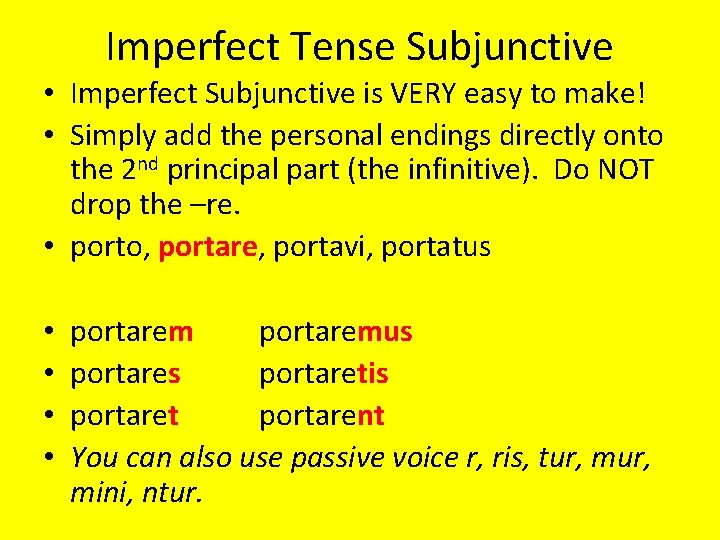
Imperfect Tense Subjunctive • Imperfect Subjunctive is VERY easy to make! • Simply add the personal endings directly onto the 2 nd principal part (the infinitive). Do NOT drop the –re. • porto, portare, portavi, portatus • • portaremus portaretis portaret portarent You can also use passive voice r, ris, tur, mini, ntur.
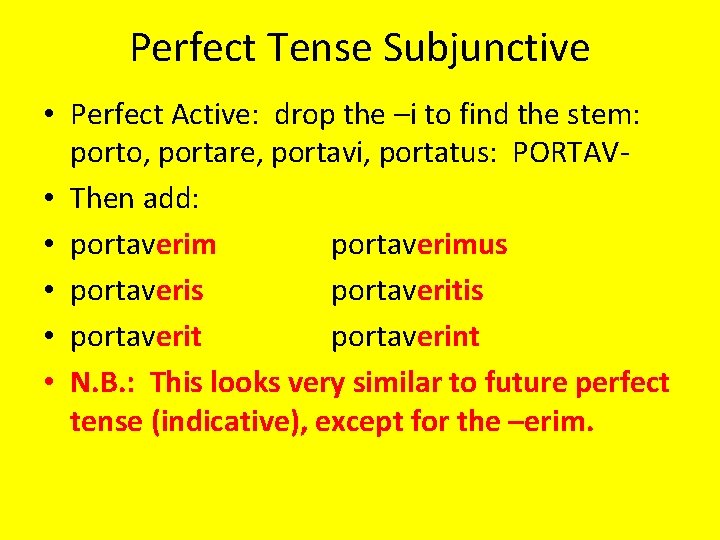
Perfect Tense Subjunctive • Perfect Active: drop the –i to find the stem: porto, portare, portavi, portatus: PORTAV • Then add: • portaverimus • portaveris portaveritis • portaverit portaverint • N. B. : This looks very similar to future perfect tense (indicative), except for the –erim.
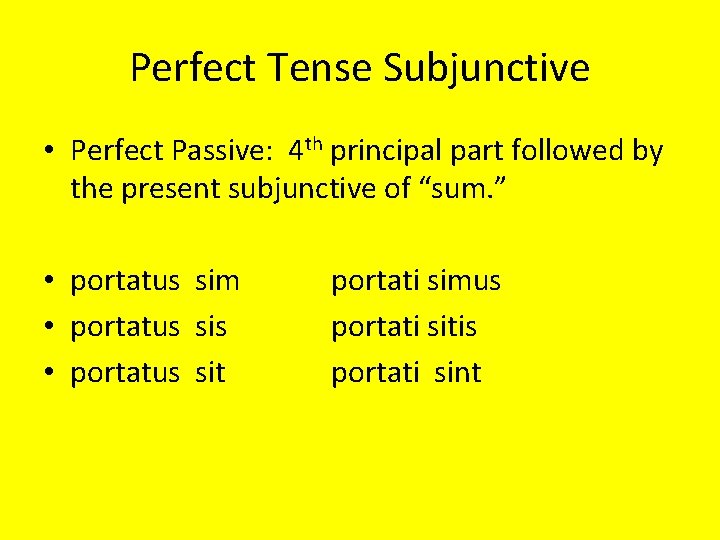
Perfect Tense Subjunctive • Perfect Passive: 4 th principal part followed by the present subjunctive of “sum. ” • portatus sim • portatus sis • portatus sit portati simus portati sitis portati sint
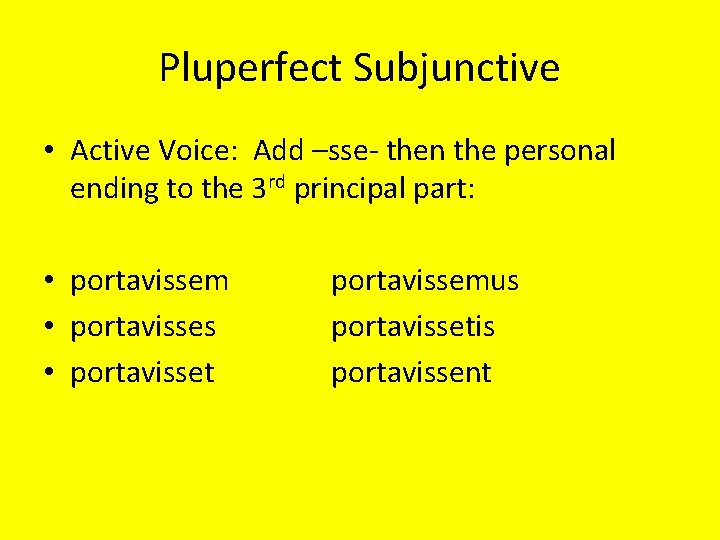
Pluperfect Subjunctive • Active Voice: Add –sse- then the personal ending to the 3 rd principal part: • portavissem • portavisses • portavisset portavissemus portavissetis portavissent
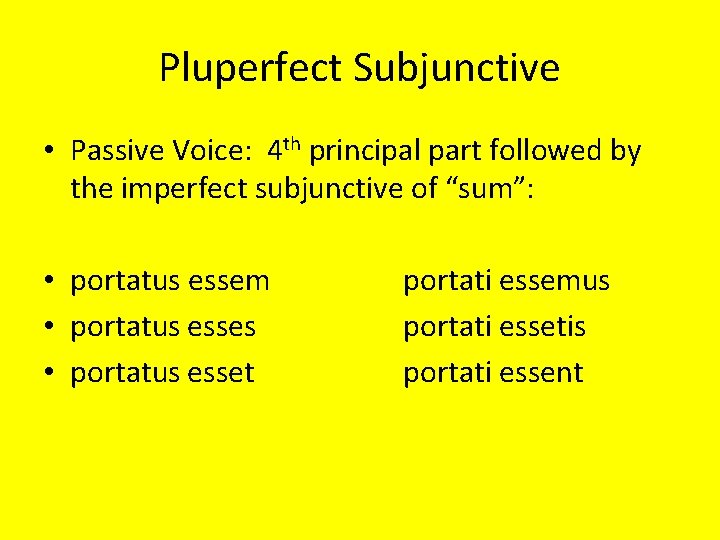
Pluperfect Subjunctive • Passive Voice: 4 th principal part followed by the imperfect subjunctive of “sum”: • portatus essem • portatus esses • portatus esset portati essemus portati essetis portati essent
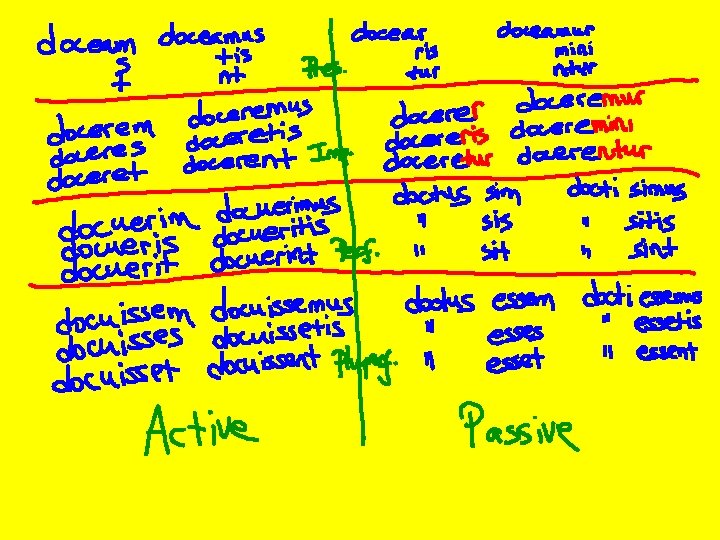
Practice! • Conjugate doceo, docere, docui, doctus in all 4 subjunctive tenses, active and passive.
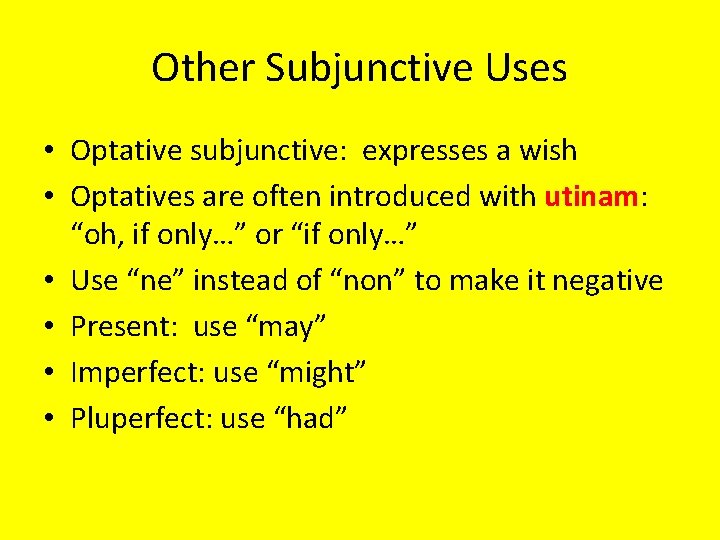
Other Subjunctive Uses • Optative subjunctive: expresses a wish • Optatives are often introduced with utinam: “oh, if only…” or “if only…” • Use “ne” instead of “non” to make it negative • Present: use “may” • Imperfect: use “might” • Pluperfect: use “had”
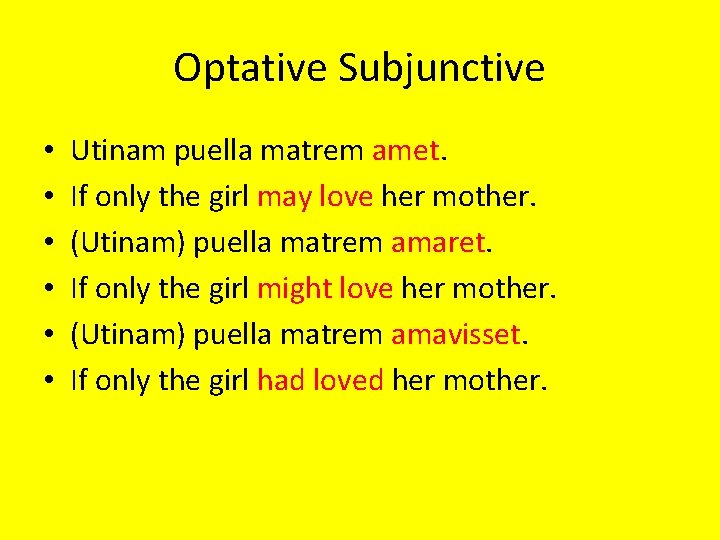
Optative Subjunctive • • • Utinam puella matrem amet. If only the girl may love her mother. (Utinam) puella matrem amaret. If only the girl might love her mother. (Utinam) puella matrem amavisset. If only the girl had loved her mother.
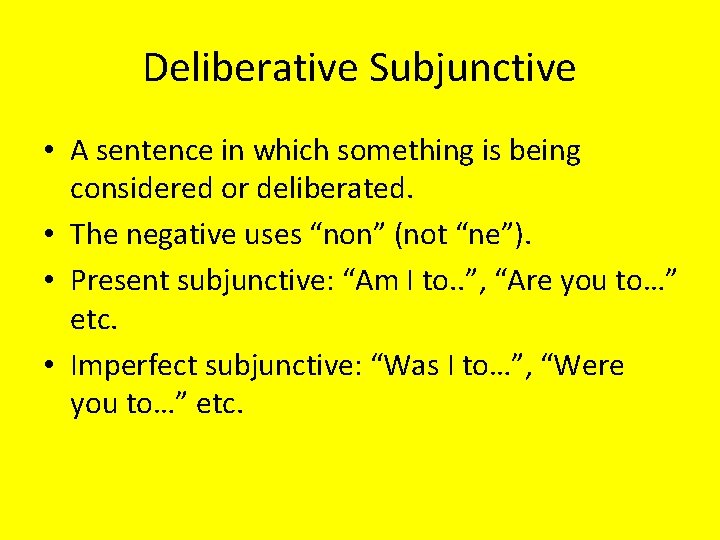
Deliberative Subjunctive • A sentence in which something is being considered or deliberated. • The negative uses “non” (not “ne”). • Present subjunctive: “Am I to. . ”, “Are you to…” etc. • Imperfect subjunctive: “Was I to…”, “Were you to…” etc.
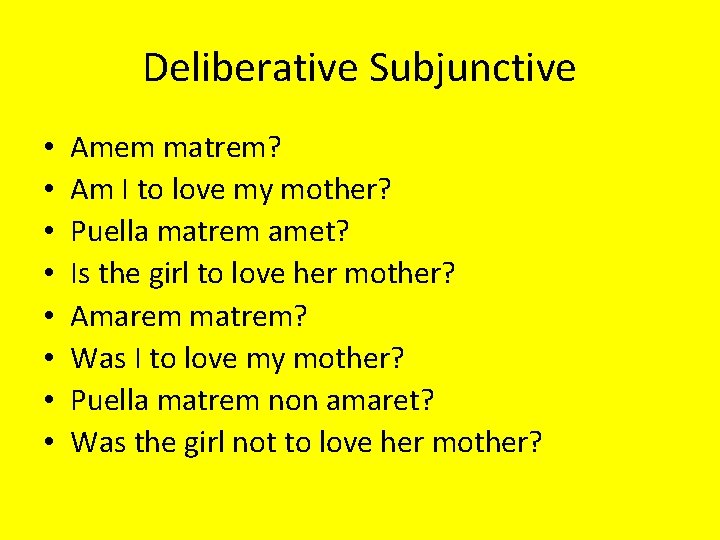
Deliberative Subjunctive • • Amem matrem? Am I to love my mother? Puella matrem amet? Is the girl to love her mother? Amarem matrem? Was I to love my mother? Puella matrem non amaret? Was the girl not to love her mother?
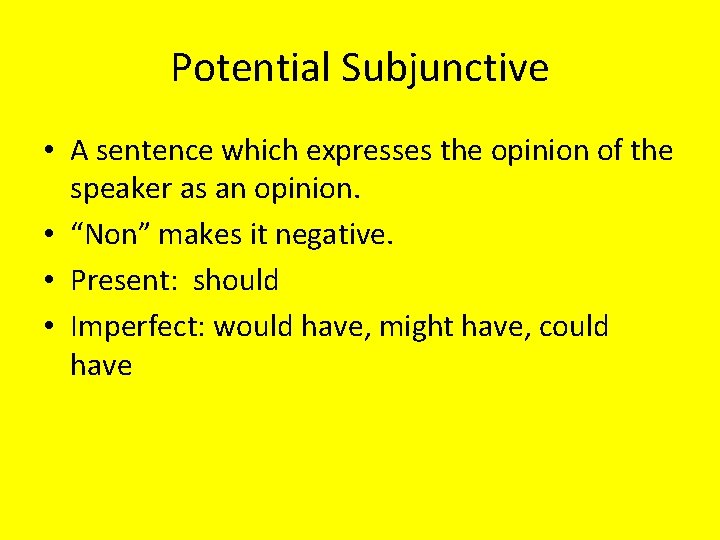
Potential Subjunctive • A sentence which expresses the opinion of the speaker as an opinion. • “Non” makes it negative. • Present: should • Imperfect: would have, might have, could have
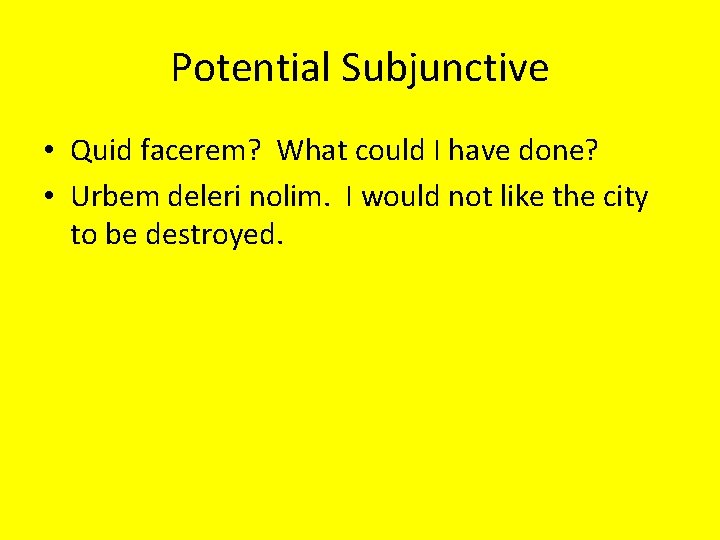
Potential Subjunctive • Quid facerem? What could I have done? • Urbem deleri nolim. I would not like the city to be destroyed.
- Slides: 28