
SubjectVerb Agreement Quick Rules 1 Some indefinite pronouns

Subject-Verb Agreement Quick Rules
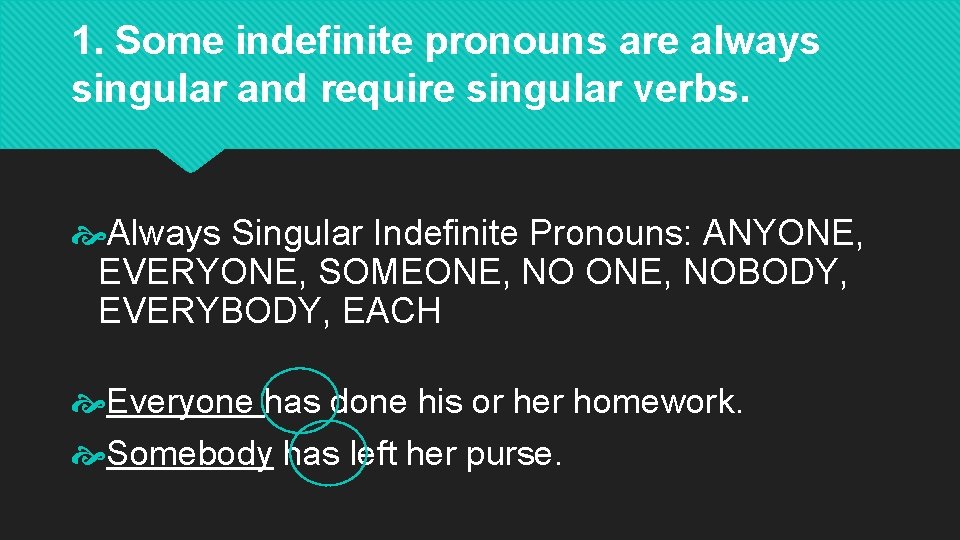
1. Some indefinite pronouns are always singular and require singular verbs. Always Singular Indefinite Pronouns: ANYONE, EVERYONE, SOMEONE, NOBODY, EVERYBODY, EACH Everyone has done his or her homework. Somebody has left her purse.
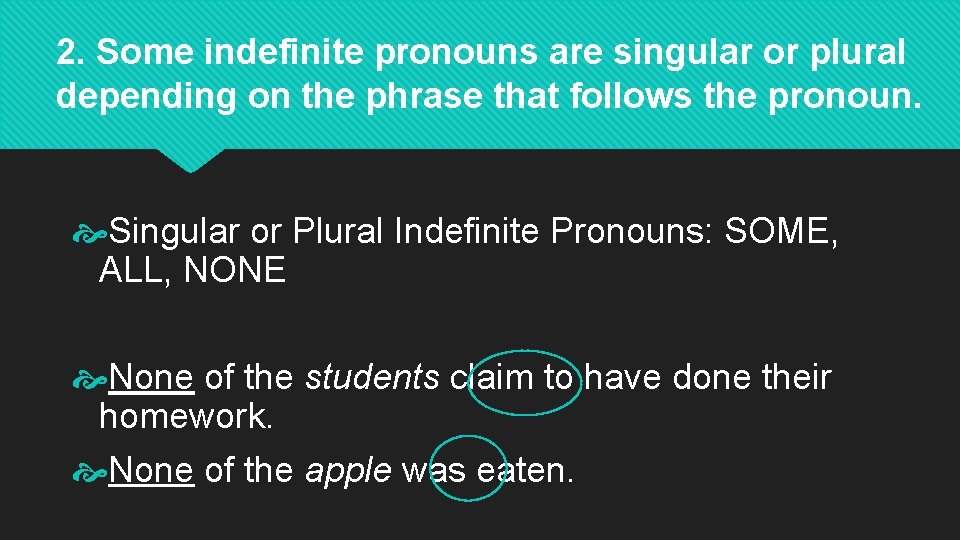
2. Some indefinite pronouns are singular or plural depending on the phrase that follows the pronoun. Singular or Plural Indefinite Pronouns: SOME, ALL, NONE None of the students claim to have done their homework. None of the apple was eaten.
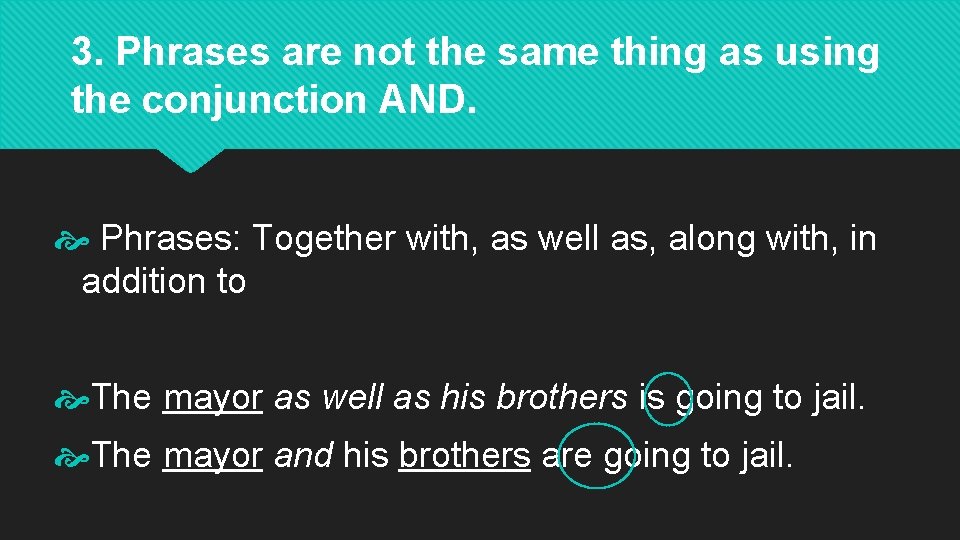
3. Phrases are not the same thing as using the conjunction AND. Phrases: Together with, as well as, along with, in addition to The mayor as well as his brothers is going to jail. The mayor and his brothers are going to jail.

4. The pronouns neither and either require singular verbs. Neither of the two traffic lights is working. Either of the shirts is fine with me.
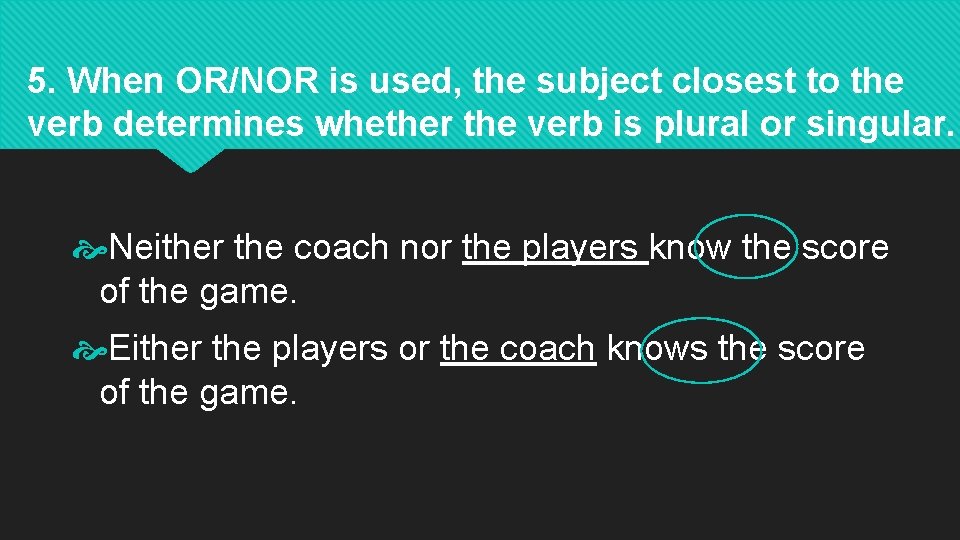
5. When OR/NOR is used, the subject closest to the verb determines whether the verb is plural or singular. Neither the coach nor the players know the score of the game. Either the players or the coach knows the score of the game.
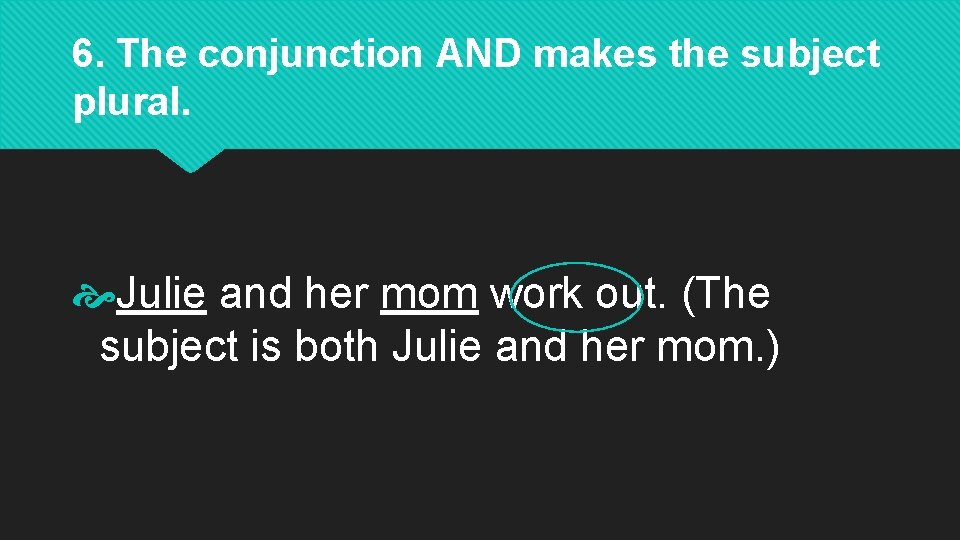
6. The conjunction AND makes the subject plural. Julie and her mom work out. (The subject is both Julie and her mom. )
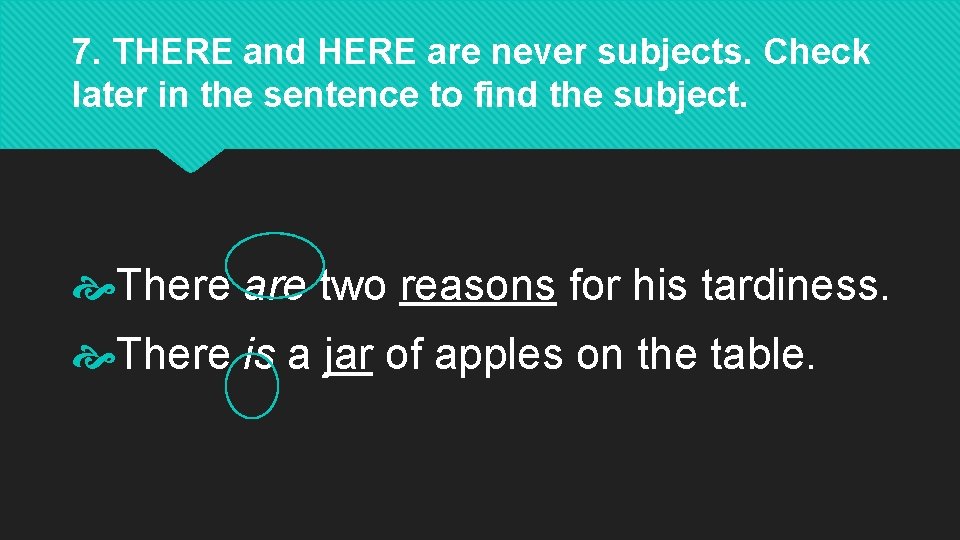
7. THERE and HERE are never subjects. Check later in the sentence to find the subject. There are two reasons for his tardiness. There is a jar of apples on the table.

8. SINGULAR present tense verbs have sendings. Sam loves to eat chocolate cake. The dog runs across the backyard.

9. Sometimes nouns take weird forms and can fool us into thinking their plural or singular when they’re not. Words such as glasses, pants, pliers, and scissors are all technically singular but are regarded as plural and require plural verbs unless preceded by the phrase “pair of. ” My pants are on my night stand. My pair of khaki pants is in the floor.
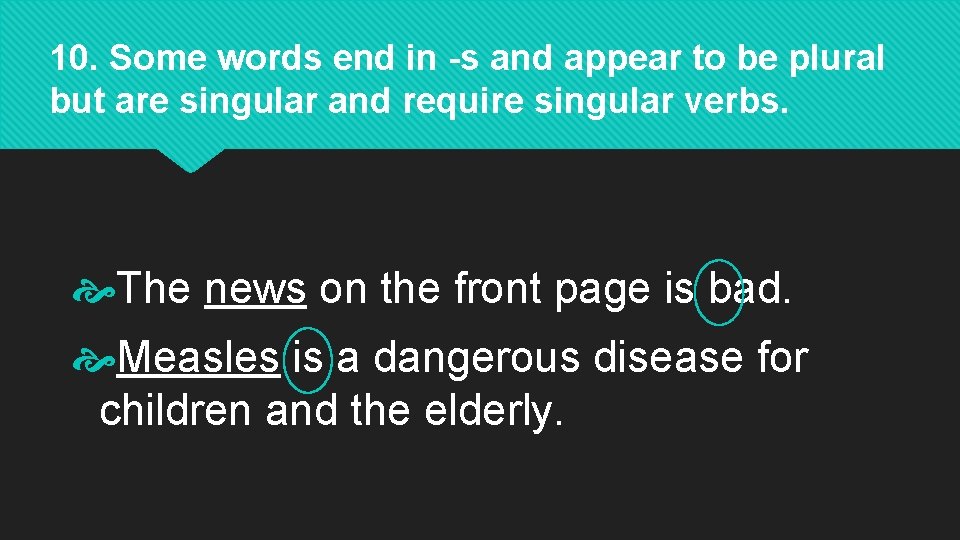
10. Some words end in -s and appear to be plural but are singular and require singular verbs. The news on the front page is bad. Measles is a dangerous disease for children and the elderly.
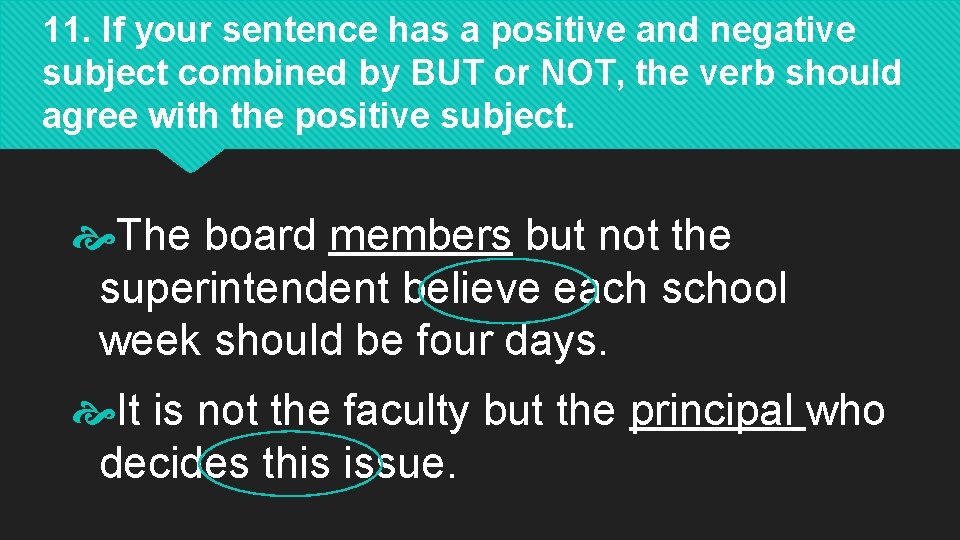
11. If your sentence has a positive and negative subject combined by BUT or NOT, the verb should agree with the positive subject. The board members but not the superintendent believe each school week should be four days. It is not the faculty but the principal who decides this issue.
- Slides: 12