
Subjects Main components of general history taking Main


Subjects • Main components of general history taking

Main components of history taking 1. Personal history 2. Chief complaint and its duration 3. History of the present illness HOPI 4. Review of systems 5. Past medical history 6. Past surgical history 7. Family history 8. Personal and social history 9. Occupational history 10. Drug and allergy history
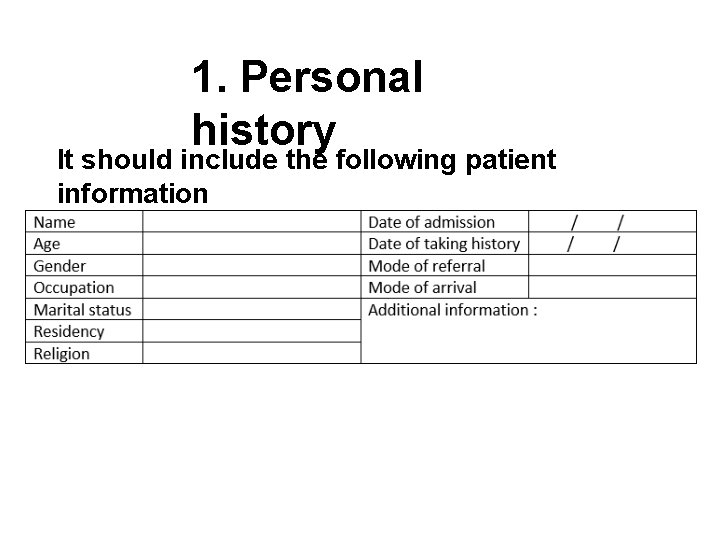
1. Personal history It should include the following patient information
2. Chief complaint and its duration Remember, it is the chief complaint, what brings the patient to seeking medical care and its duration, do not forget duration!!

2. Chief complaint and its duration • The chief complaint is preferable to be one single complaint but could be more than one. • Usually it is the nearer to the present time. For example, if someone developed cough he will not see his doctor, but if the cough is complicated later by seeing blood then he will visit his doctor. Then what brings the patient is the blood not the cough.
2. Chief complaint and its duration • The chief complaint is usually said the patient own words in • Don’t use diarrhea, instead write frequent bowel motion ….
3. History of the present illness It includes 1. Analysis of the chief complaint. 2. Analysis of the associated symptoms. 3. Analysis of other symptoms of involved system. 4. Basic investigations done. 5. Progression since the day of admission (if he already had been admitted) 6. Post operative fluid intake, medications, passing of flatus and movement of patient.
Our goal in this series is to Write Complete & Highly organized history of present illness following the rules.

3. History of present illness If the patient has already known disease, you should start your HOPI as The patient is a known case of -------Who presented with. . . (HTN, DM, Asthma, TB, …. etc)
3. History of present illness Analyzing of a symptom means talking about all the clinical clues regarding the symptoms that will help us to reach a diagnosis. Like, Diarrhea Onset? – Characterestics? – Amount? – Color? …. Etc. We will learn how to analyze exactly each symptoms in next lectures ….
4. Review of systems (ROS) Why review of systems ? To know how is the patients overall wellbeing, what systems are involved, possibly involved, may be involved or not involved at all. In ROS, we ask the patient about specific symptoms of each body systems.
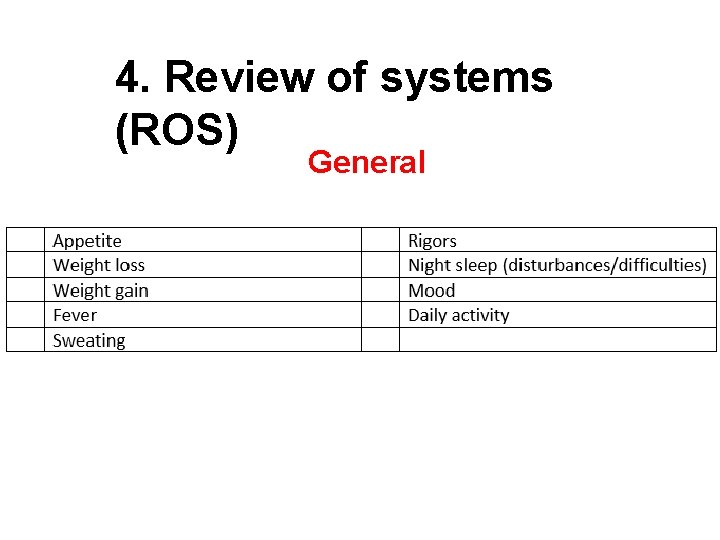
4. Review of systems (ROS) General

4. Review of systems (ROS) Cardiovascular system

4. Review of systems (ROS) Respiratory system
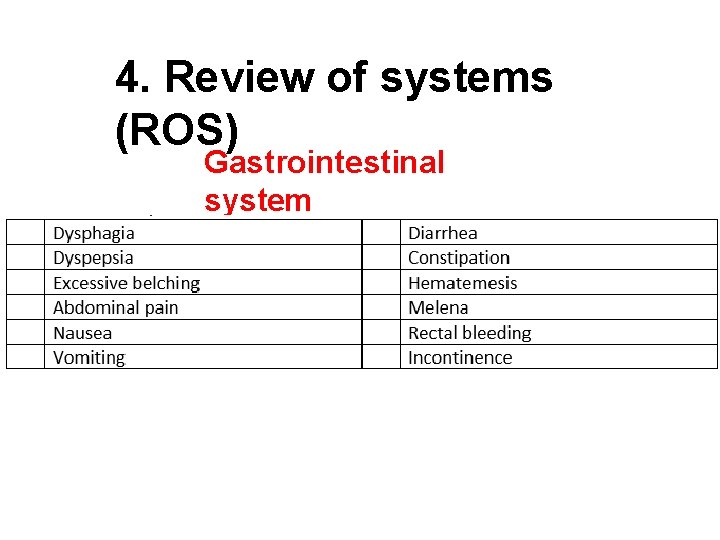
4. Review of systems (ROS) Gastrointestinal system

4. Review of systems (ROS) Genitourinary tract

4. Review of systems (ROS) Nervous system

4. Review of systems (ROS) Musculoskeletal system

4. Review of systems (ROS) Menstrual & obestetric history

4. Review of systems (ROS) Endocrine system
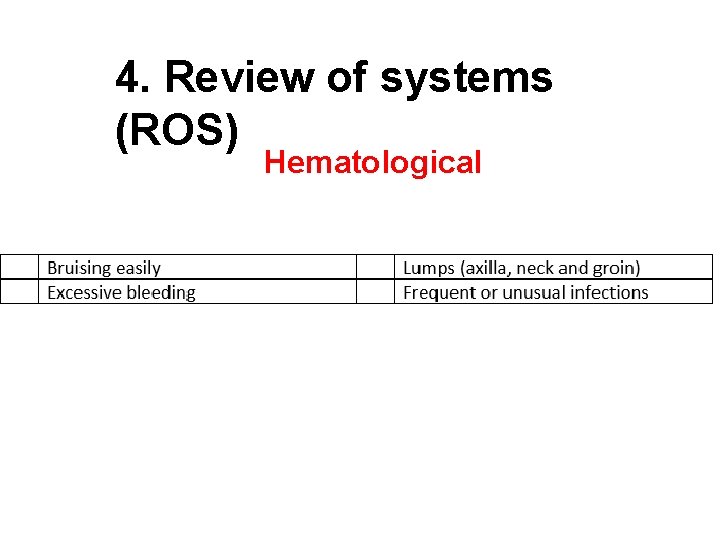
4. Review of systems (ROS) Hematological
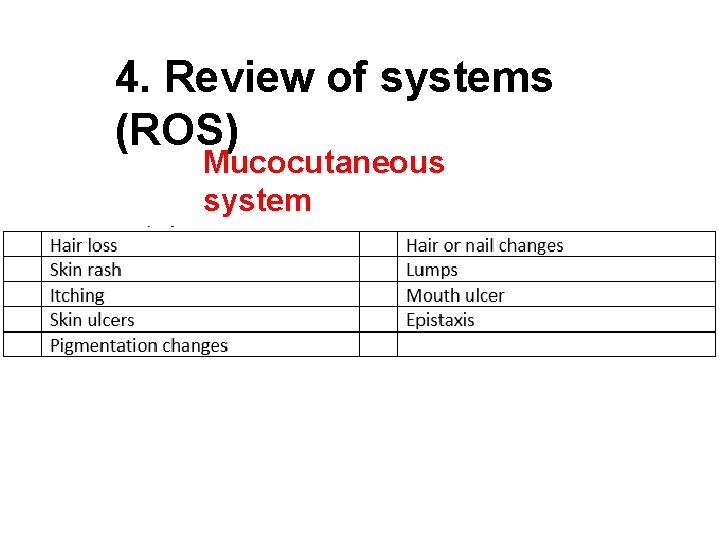
4. Review of systems (ROS) Mucocutaneous system
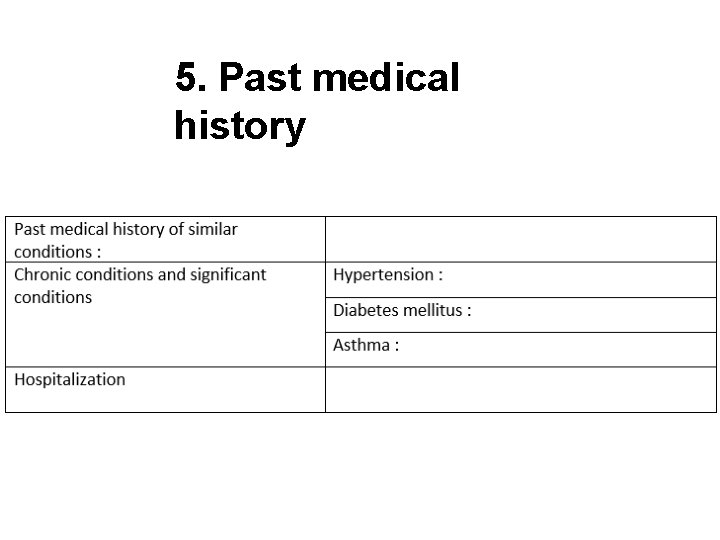
5. Past medical history
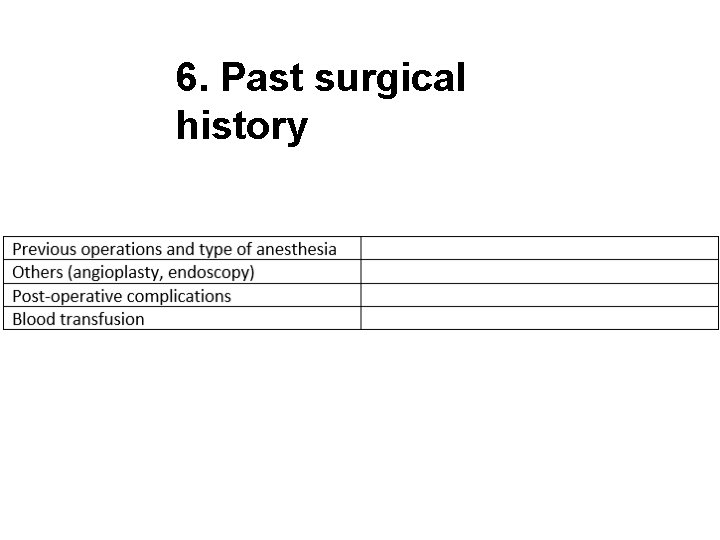
6. Past surgical history
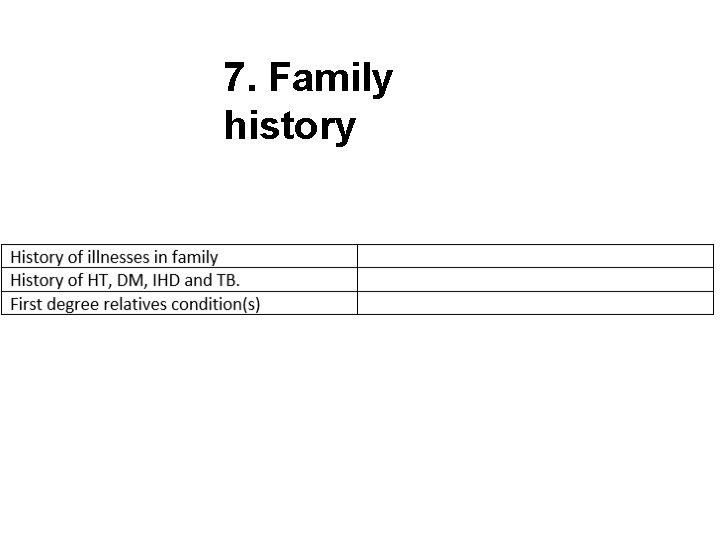
7. Family history
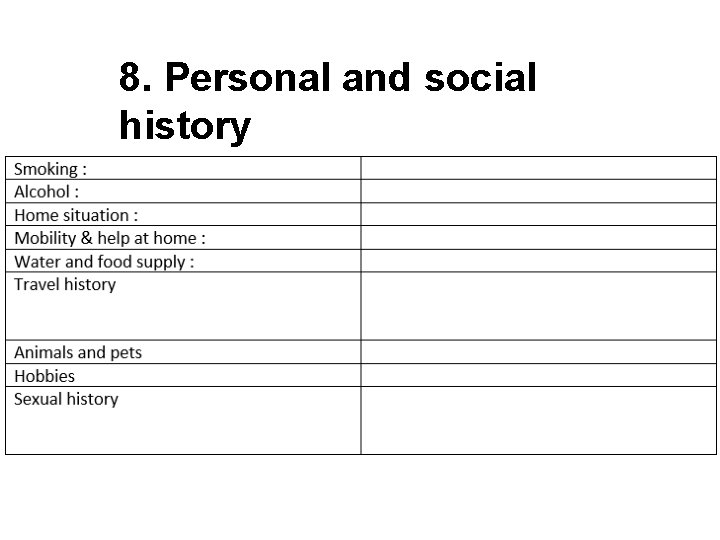
8. Personal and social history
9. occupational history What did the patient working now? OR What he did used to work in the past?
10. Drugs and allergy history
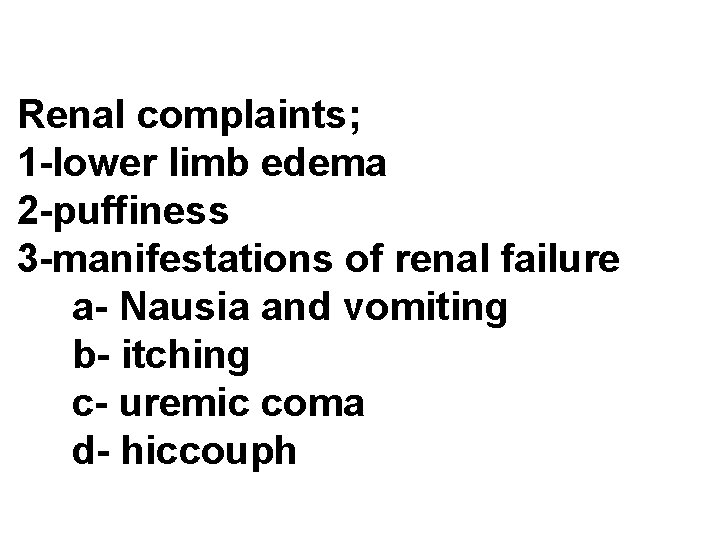
Renal complaints; 1 -lower limb edema 2 -puffiness 3 -manifestations of renal failure a- Nausia and vomiting b- itching c- uremic coma d- hiccouph
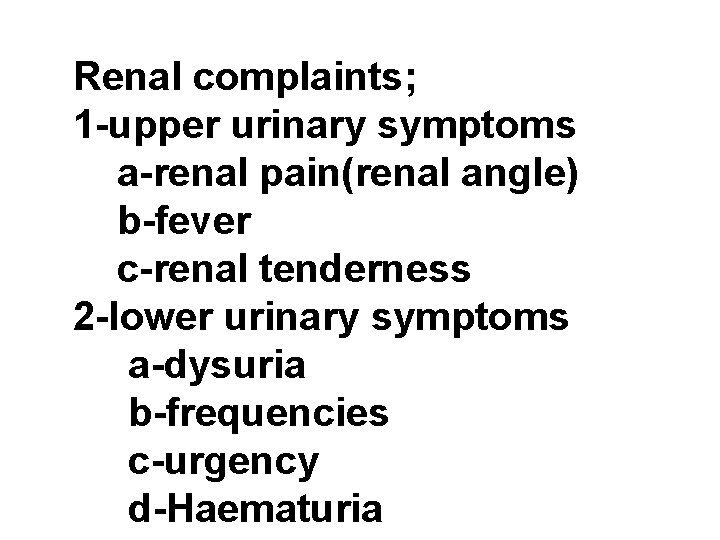
Renal complaints; 1 -upper urinary symptoms a-renal pain(renal angle) b-fever c-renal tenderness 2 -lower urinary symptoms a-dysuria b-frequencies c-urgency d-Haematuria


Thank You

- Slides: 34