
Subject choices Learning outcomes To consider why many
Subject choices Learning outcomes: • To consider why many subject areas show gender differences in subject choices • To enable pupils to choose the subjects they want and avoid gender stereotyping
Are free to choose the subject we want? • Do you think some school subjects are more for boys and some more for girls? • Make a list of the subjects you get to study at school. • Against each subject indicate whether it is more for boys (B), girls (G) or anyone (A). • Discuss the results.
What about later on? • Make a list of other subjects you may get to study in later stages of your education. • Do the same exercise as before to indicate whether some are more for boys and others more for girls or anyone. • Discuss the results. Why is the case? What can / should be done about it?
‘Gender stereotyping’ • What does this phrase mean? • Can you give me some examples? • Does it matter? • What does the next slide show?
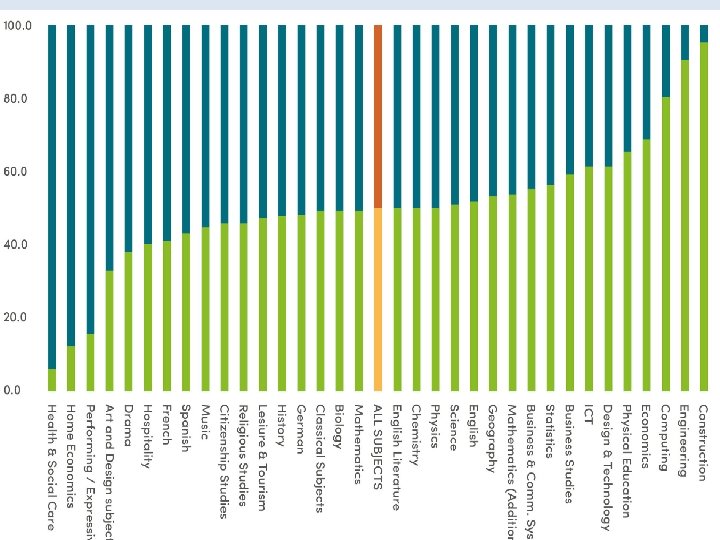
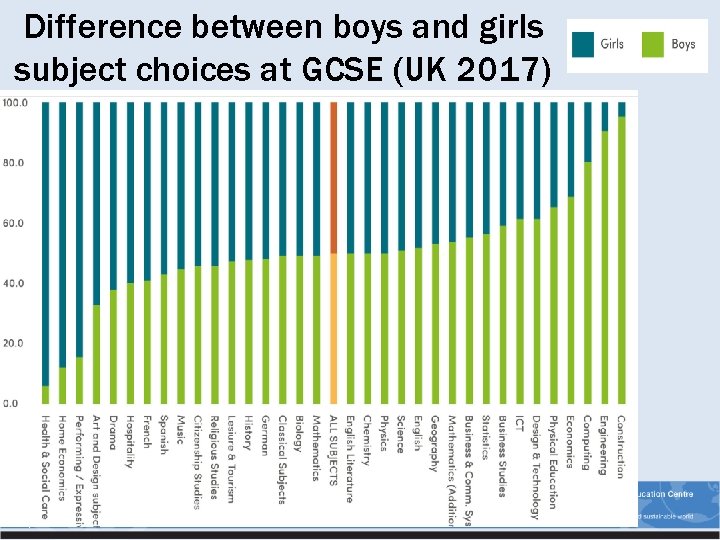
Difference between boys and girls subject choices at GCSE (UK 2017)
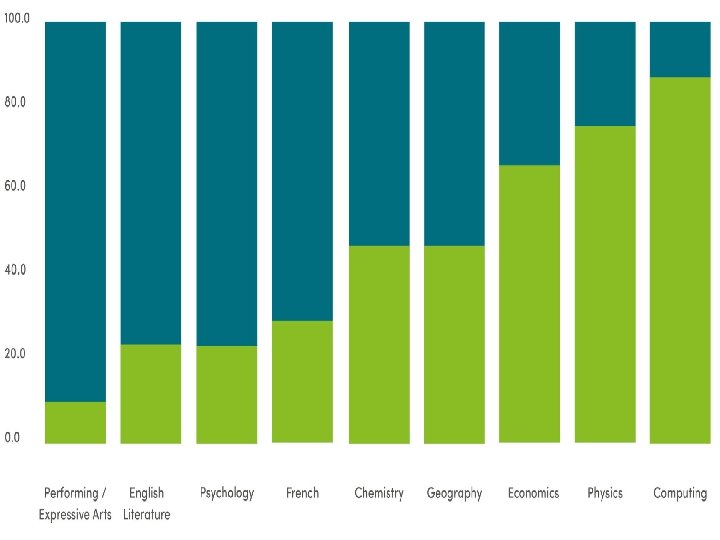
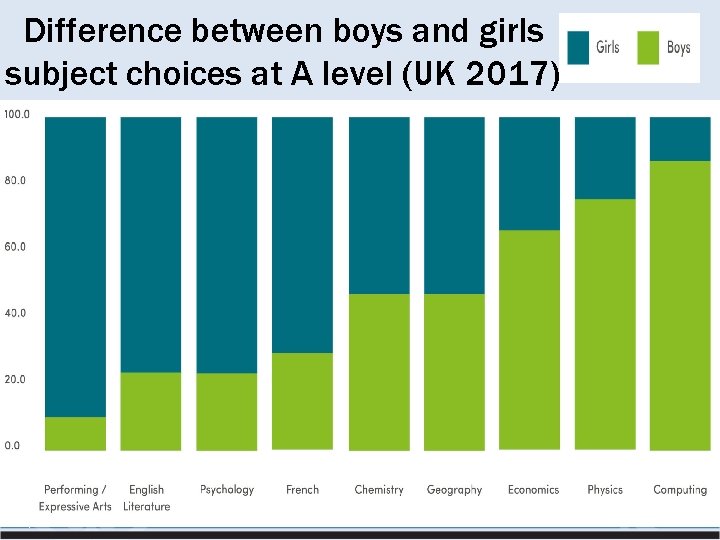
Difference between boys and girls subject choices at A level (UK 2017)
Why does gender stereotyping matter? Gender stereotyping is a widely held belief or generalisation about the behaviours, characteristics and roles performed by men and women. • These beliefs can place limits on the acceptable choices and actions of children and young people and can affect selfperception, mental health and wellbeing, attitudes and participation in a wide range of settings. • From an early age, young people absorb societal stereotypes about suitable jobs for men and women which can limit their career choices. • Research shows that being reminded of a negative stereotype about a group you belong to can lead to underperformance, which in the long run can limit life chances. (Gender Action)
How does gender stereotyping happen? • Societal / cultural norms “I can only be what I can see. ” • Gender stereotyping / making assumptions • Treating everyone the same when some people have more barriers to overcome than others (difference between gender equality and gender equity) • Unconscious bias
What can be done to ensure pupils have equal subject choices? • Research / Bring into school different role models of non-stereotypical career choices • Ensure that teachers have training about unconscious bias and understand the difference between gender equality and gender equity • Discuss these issues with parents and the school community / local employers
- Slides: 11