
Subcutaneous Immunoglobulin Therapy A New Way of Permanent
Subcutaneous Immunoglobulin. Therapy A New Way of Permanent Treatment in Primary Immunodeficiencies Gaby Strotmann Immunodeficiency Department University Children‘s Hospital Dr. von Haunersches Kinderspital Ludwig-Maximilians-University Munich

Indications for Immunoglobulin Primary Immunodeficiencies • • X-linked Agammaglobulinemia Bruton Autosomal-recessive Agammaglobulinemia Other Agammaglobulinemias Severe combined immunodeficiency (SCID) Common variable immunodeficiency (CVID) Hyper-Ig. M-Syndrome Ig. G-Subclass-Deficiencies
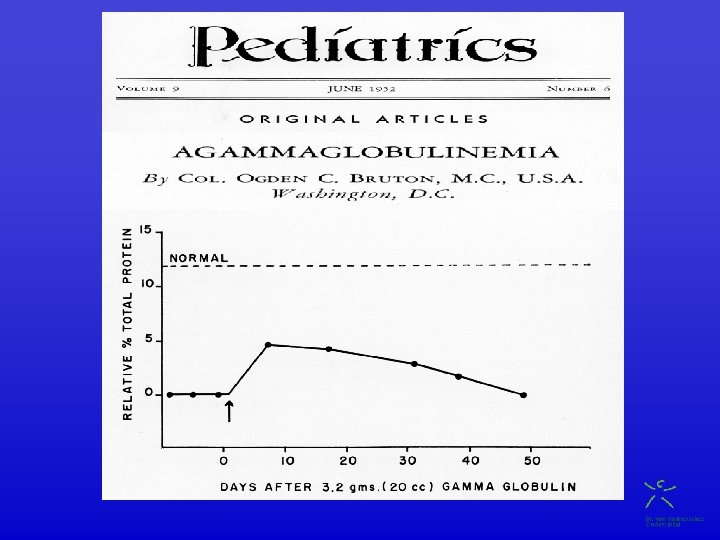
History • 1952 First report of a boy with agammaglobulinemia (Bruton) Treatment with subcutaneus Ig. G (SCIG)

History • till 1980: intramuscular Ig. G Substitution (IMIG) • since 1980: intravenous Ig. G Substitution ( IVIG)
Disadvantages of IVIG • Hypersensitivity reactions: - mild fever, rash, anaphylactic reactions • Difficult venous access in children • Administration in hospital or doctor`s surgery • Costs
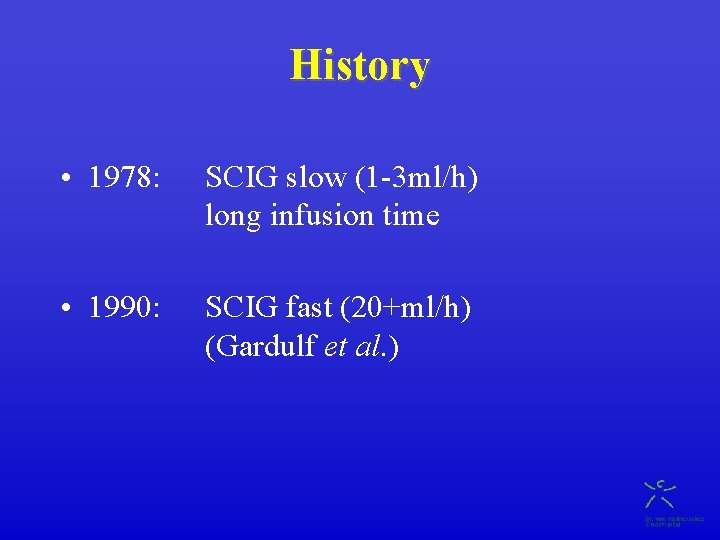
History • 1978: SCIG slow (1 -3 ml/h) long infusion time • 1990: SCIG fast (20+ml/h) (Gardulf et al. )
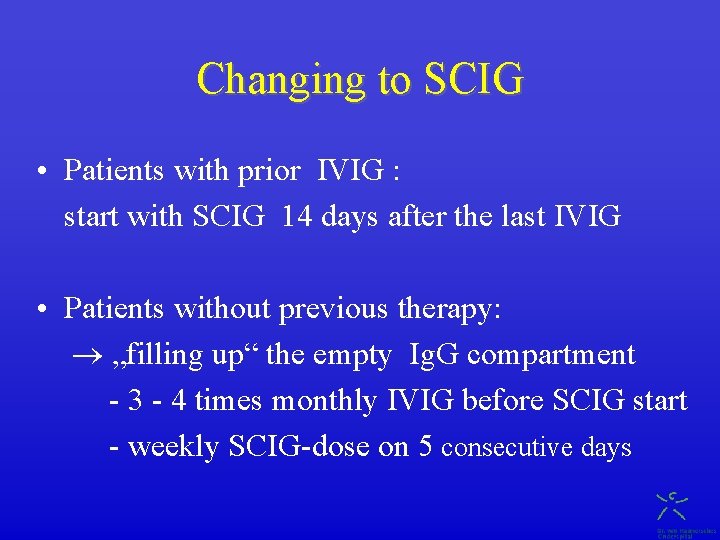
Changing to SCIG • Patients with prior IVIG : start with SCIG 14 days after the last IVIG • Patients without previous therapy: „filling up“ the empty Ig. G compartment - 3 - 4 times monthly IVIG before SCIG start - weekly SCIG-dose on 5 consecutive days
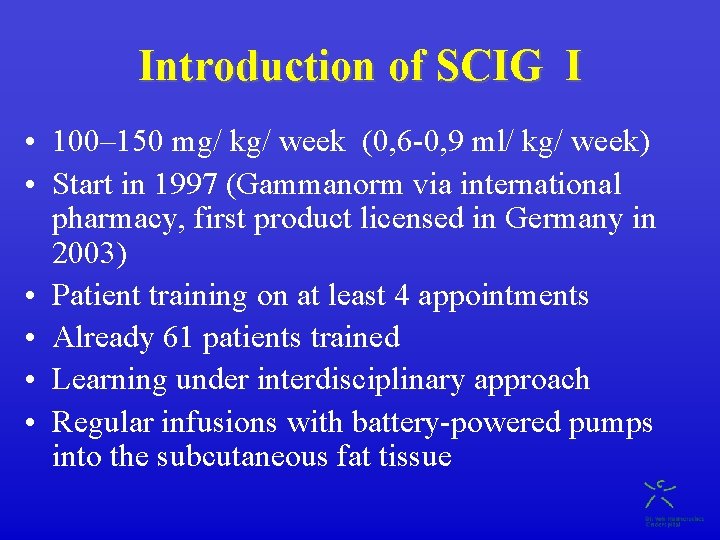
Introduction of SCIG I • 100– 150 mg/ kg/ week (0, 6 -0, 9 ml/ kg/ week) • Start in 1997 (Gammanorm via international pharmacy, first product licensed in Germany in 2003) • Patient training on at least 4 appointments • Already 61 patients trained • Learning under interdisciplinary approach • Regular infusions with battery-powered pumps into the subcutaneous fat tissue
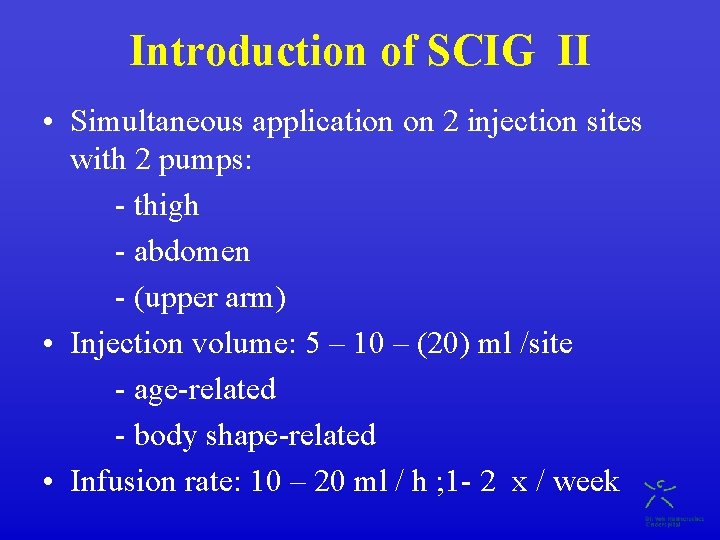
Introduction of SCIG II • Simultaneous application on 2 injection sites with 2 pumps: - thigh - abdomen - (upper arm) • Injection volume: 5 – 10 – (20) ml /site - age-related - body shape-related • Infusion rate: 10 – 20 ml / h ; 1 - 2 x / week
Introduction of SCIG III • After they have successfully finished the training programme, the patients and/or parents are allowed to do their infusions at home and to take on the responsibility for therapy. • Clinical status and Ig. G levels are controlled every 3 -6 months. • Parents are requested to write down SCIG batch numbers and bring them to the appointments for documentation in the patient chart.
Ig. G-Biologics • Already licensed in Germany for SCIG are: – Vivaglobin® (ZLB Behring) – Subcuvia® (Baxter) – Gammanorm® (Octapharma) – 16% / 16. 5% solution • Virus inactivation and elimination procedure
Experiences with SCIG in the first 30 patients with Primary B-Cell eficiencies • Observation period: • Diagnosis: 6. 5 years 11. 751 infusions ( 392 / patient ) 9 x XLA 2 x Hypogammaglobulinemia 14 x CVID 5 x others • Median age: 18. 5 years (at introduction of SCIG) ( range 5 ys – 50 ys ) • Pretreatment with IVIG in 27 / 30 patients median duration 4 years
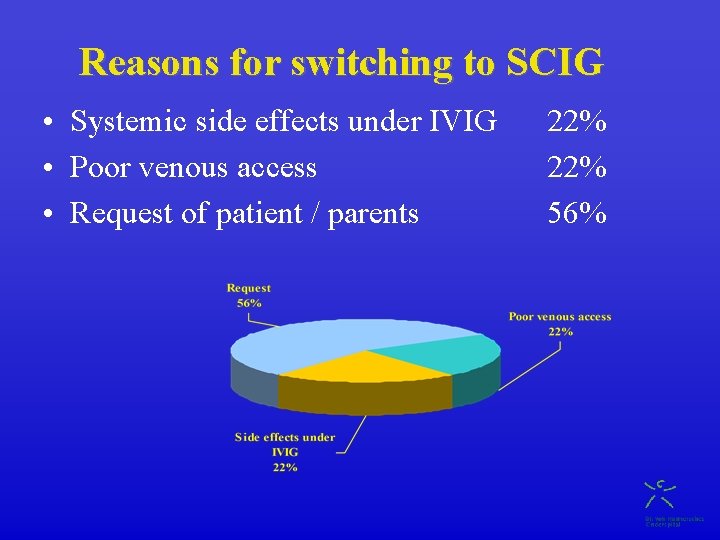
Reasons for switching to SCIG • Systemic side effects under IVIG • Poor venous access • Request of patient / parents 22% 56%
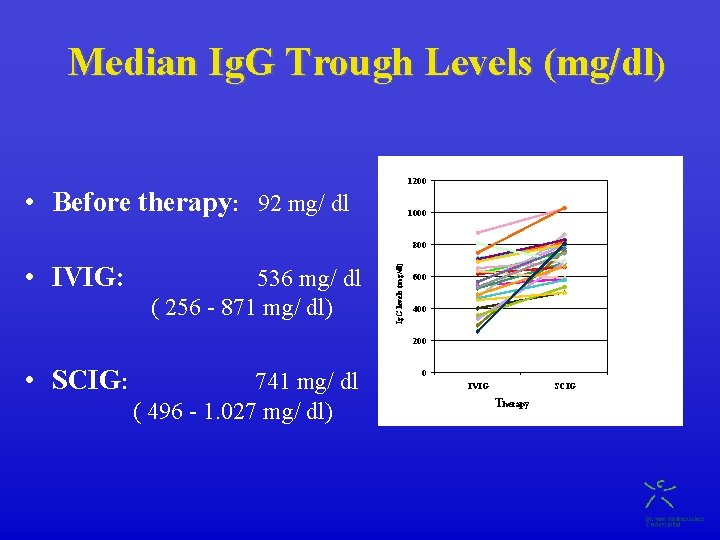
Median Ig. G Trough Levels (mg/dl) 1200 • Before therapy: 92 mg/ dl 1000 • IVIG: 536 mg/ dl ( 256 - 871 mg/ dl) Ig. G levels (mg/dl) 800 600 400 200 • SCIG: 741 mg/ dl ( 496 - 1. 027 mg/ dl) 0 IVIG SCIG Therapy
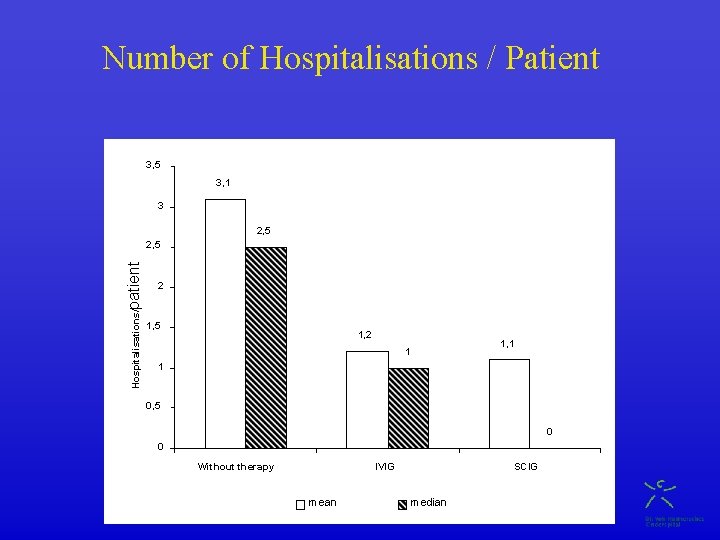
Number of Hospitalisations / Patient 3, 5 3, 1 3 2, 5 Hospitalisations/ patient 2, 5 2 1, 5 1, 2 1, 1 1 1 0, 5 0 0 Without therapy IVIG mean SCIG median
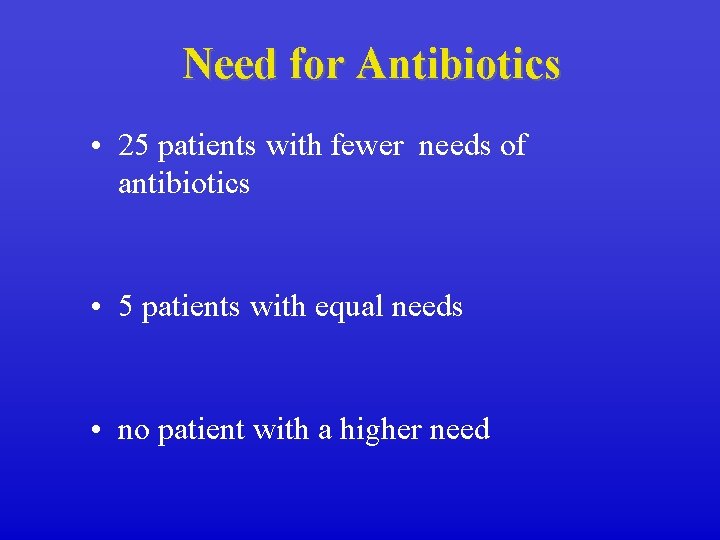
Need for Antibiotics • 25 patients with fewer needs of antibiotics • 5 patients with equal needs • no patient with a higher need
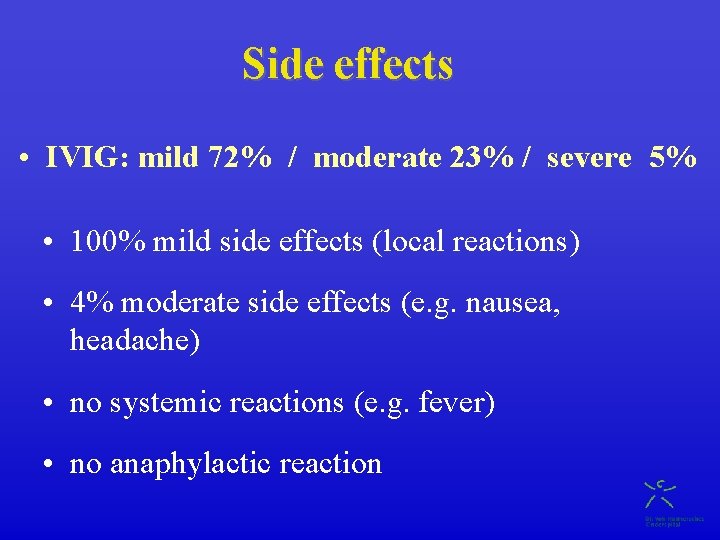
Side effects • IVIG: mild 72% / moderate 23% / severe 5% • 100% mild side effects (local reactions) • 4% moderate side effects (e. g. nausea, headache) • no systemic reactions (e. g. fever) • no anaphylactic reaction
Patient Preferences 27 patients with IVIG-pretreatment: n=26 satisfied with SCIG n=1 no preference n=0 more satisfied with IVIG

Advantages of SCIG • • prepared solution excellent safety constant Ig. G trough levels highest possible virus safety reduced costs independance/personal responsibility time saving quality of life improved
Disadvantages of SCIG • More frequent injections with shorter intervals • More persistent confrontation with chronic illness • Local reactions • More involvement of the family • Exigence of self-infusion
- Slides: 21