
SubAtomic Particles the Earliest Forms of Matter From
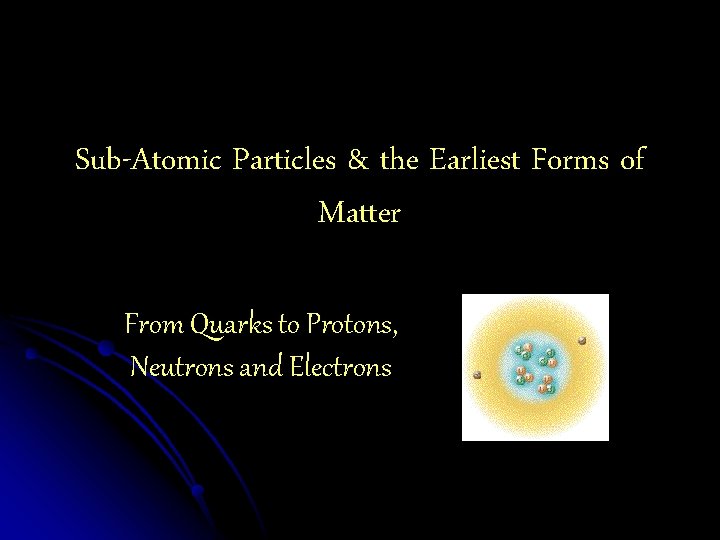
Sub-Atomic Particles & the Earliest Forms of Matter From Quarks to Protons, Neutrons and Electrons
Sub-Atomic Particles & the Earliest Forms of Matter 1) Reviewing Basic Atomic Structure
All matter is made up of atoms. Atoms in turn are made up of 3 general types of particles: 1) protons 2) neutrons 3) electrons
Protons l Have a positive ( +1 ) electrical charge l Have a mass defined as 1 atomic mass unit ( a m u ) l Atomic symbol = or ( 1 P 1 ) l A single proton is the same as a hydrogen ( 1 H 1 ) nucleus.
NEUTRONS l Have a neutral ( 0 ) electrical charge l Also have a mass defined as 1 atomic mass unit ( a m u ) l Atomic symbol = or ( 0 n 1 )

Protons vs. NEUTRONS l In other words, protons and neutrons have the same mass, but different charges. l Protons and neutrons are both found in the nucleus, so protons and neutrons both belong to a group of particles called nucleons.
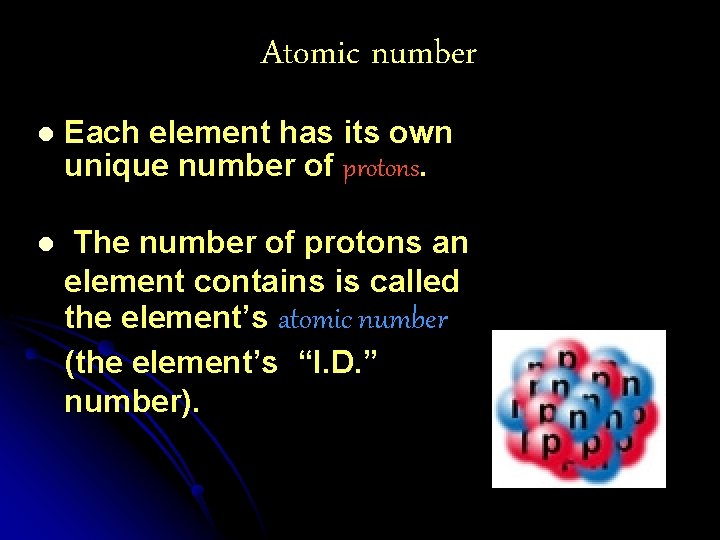
Atomic number l Each element has its own unique number of protons. l The number of protons an element contains is called the element’s atomic number (the element’s “I. D. ” number).
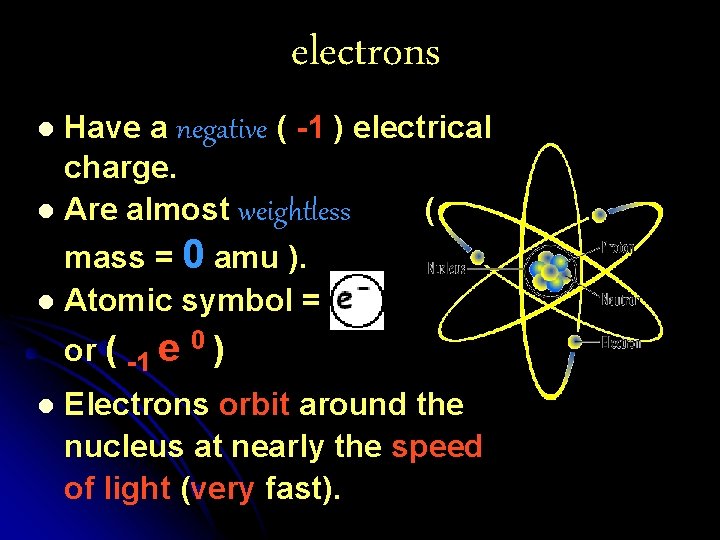
electrons Have a negative ( -1 ) electrical charge. l Are almost weightless ( mass = 0 amu ). l Atomic symbol = l or ( -1 e 0 ) l Electrons orbit around the nucleus at nearly the speed of light (very fast).
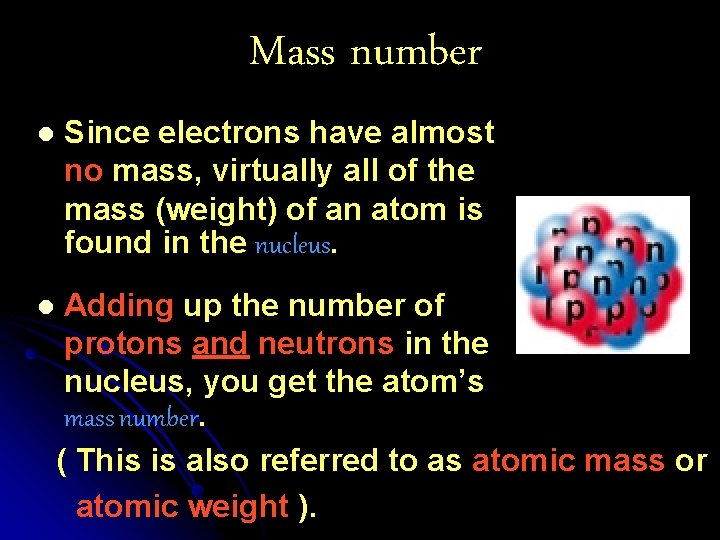
Mass number l l Since electrons have almost no mass, virtually all of the mass (weight) of an atom is found in the nucleus. Adding up the number of protons and neutrons in the nucleus, you get the atom’s mass number. ( This is also referred to as atomic mass or atomic weight ).
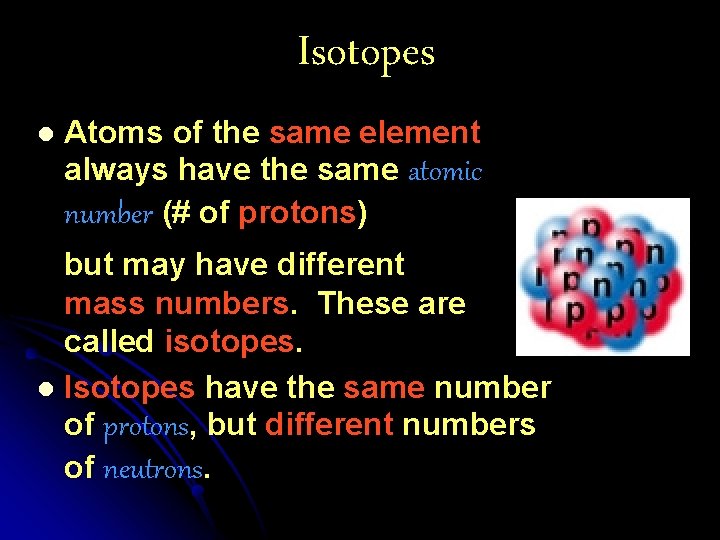
Isotopes l Atoms of the same element always have the same atomic number (# of protons) but may have different mass numbers. These are called isotopes. l Isotopes have the same number of protons, but different numbers of neutrons.
Sub-Atomic Particles & the Earliest Forms of Matter 2) Even Smaller Sub-Atomic Particles - The Earliest Forms of Matter
Matter is also made up of two other types of particles: l 1) Quarks l 2) Leptons • PROPOSED BY MURRAY GELL-MANN IN 1965
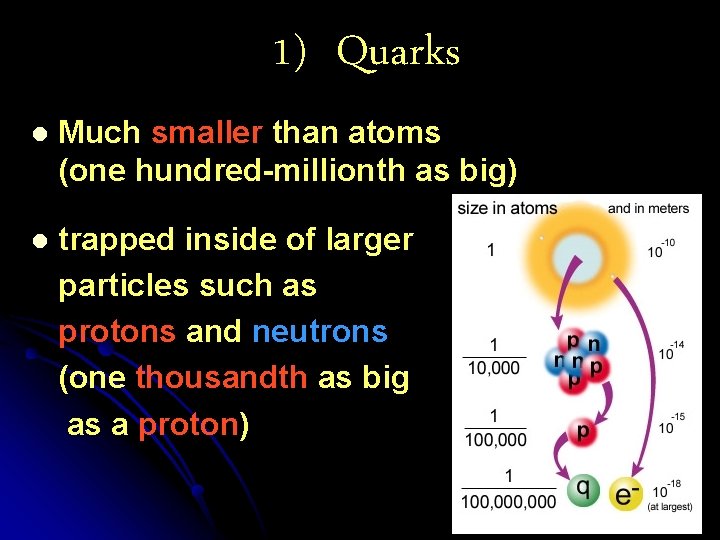
1) Quarks l Much smaller than atoms (one hundred-millionth as big) l trapped inside of larger particles such as protons and neutrons (one thousandth as big as a proton)
Quarks l trapped inside of larger particles such as protons and neutrons (inside the nucleus) l never seen by themselves l Usually found in groups of 3
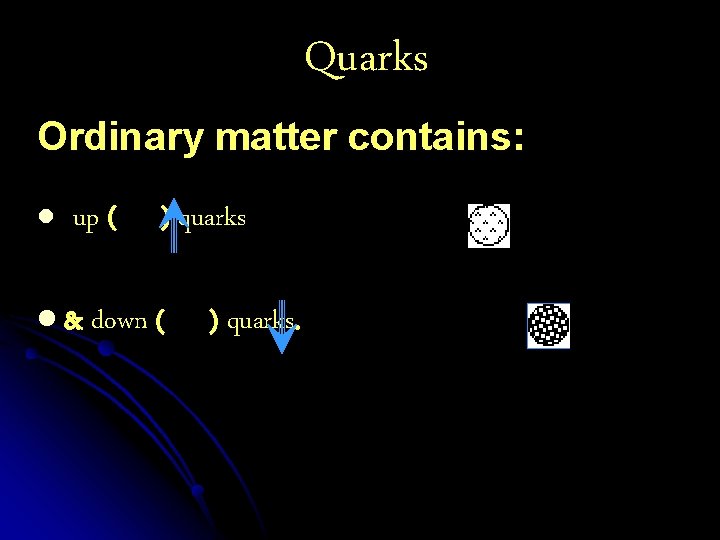
Quarks Ordinary matter contains: l up ( l& ) quarks down ( ) quarks.
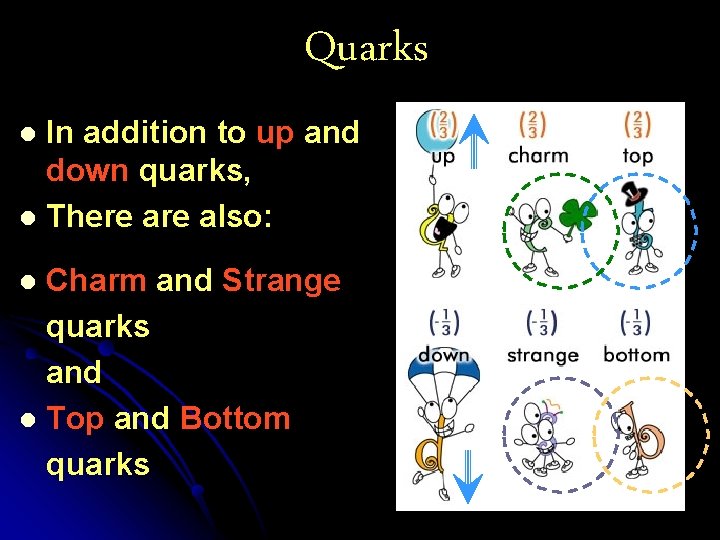
Quarks In addition to up and down quarks, l There also: l Charm and Strange quarks and l Top and Bottom quarks l
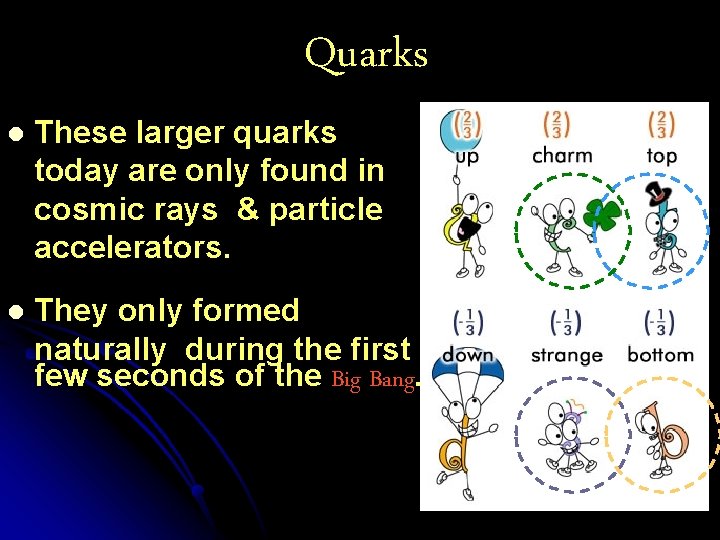
Quarks l These larger quarks today are only found in cosmic rays & particle accelerators. l They only formed naturally during the first few seconds of the Big Bang.
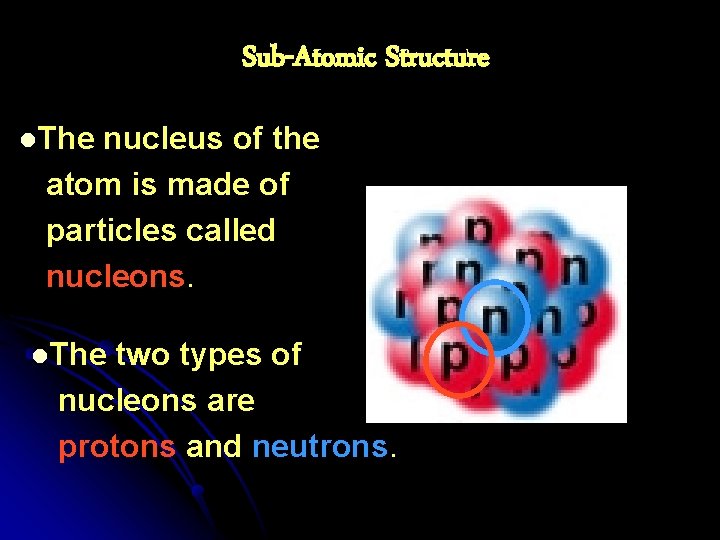
Sub-Atomic Structure l. The nucleus of the atom is made of particles called nucleons. l. The two types of nucleons are protons and neutrons.
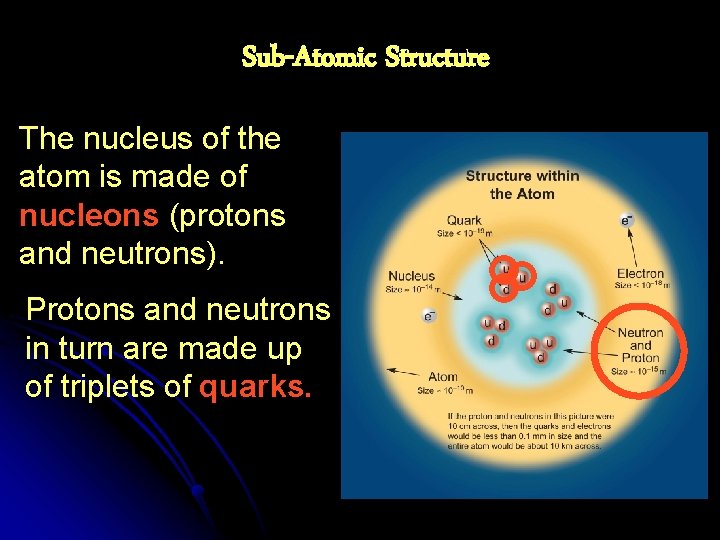
Sub-Atomic Structure The nucleus of the atom is made of nucleons (protons and neutrons). Protons and neutrons in turn are made up of triplets of quarks.
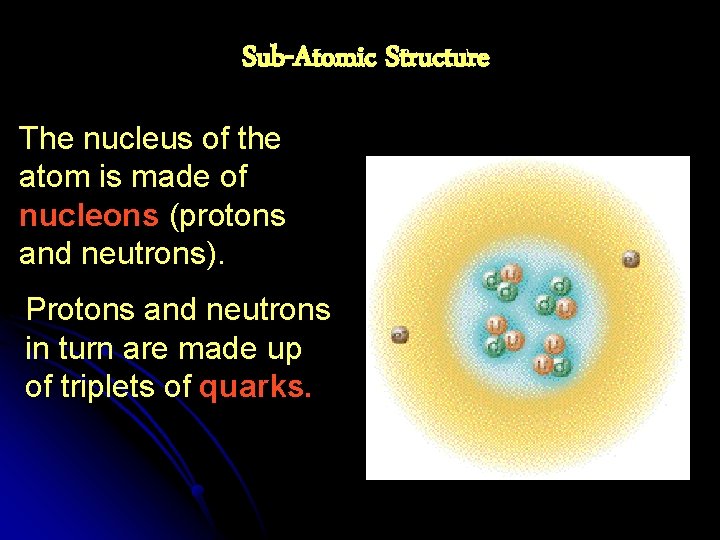
Sub-Atomic Structure The nucleus of the atom is made of nucleons (protons and neutrons). Protons and neutrons in turn are made up of triplets of quarks.
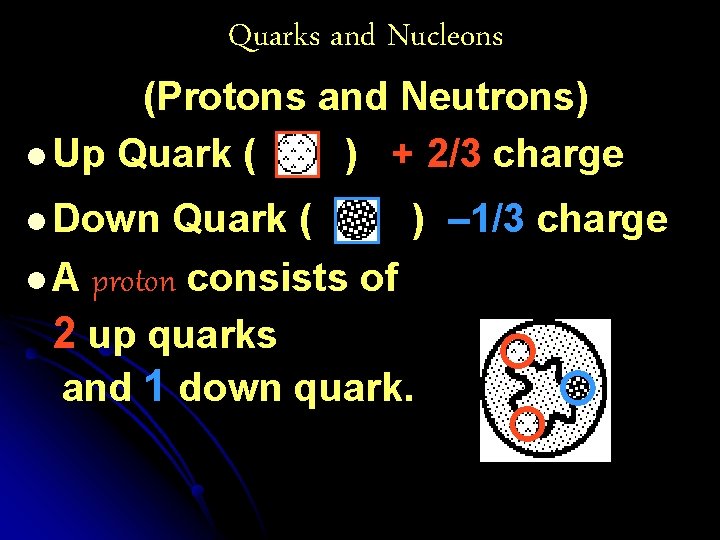
Quarks and Nucleons (Protons and Neutrons) l Up Quark ( ) + 2/3 charge l Down Quark ( ) – 1/3 charge l A proton consists of 2 up quarks and 1 down quark.
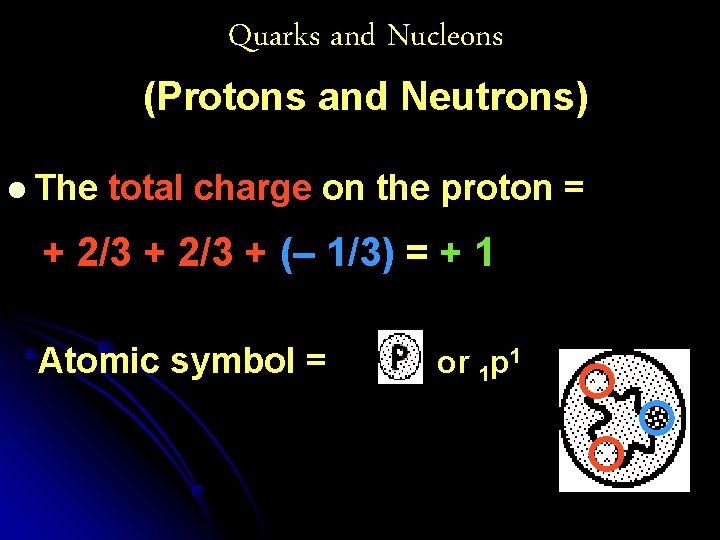
Quarks and Nucleons (Protons and Neutrons) l The total charge on the proton = + 2/3 + (– 1/3) = + 1 Atomic symbol = or 1 p 1
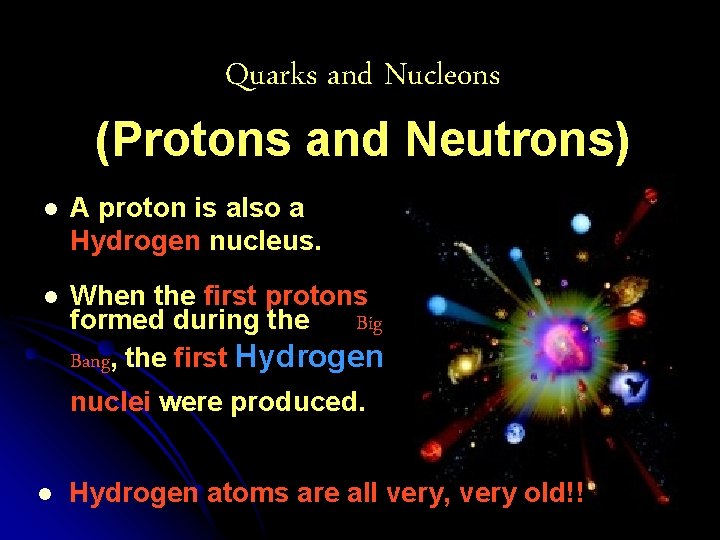
Quarks and Nucleons (Protons and Neutrons) l A proton is also a Hydrogen nucleus. l When the first protons formed during the Big Bang, the first Hydrogen nuclei were produced. l Hydrogen atoms are all very, very old!!
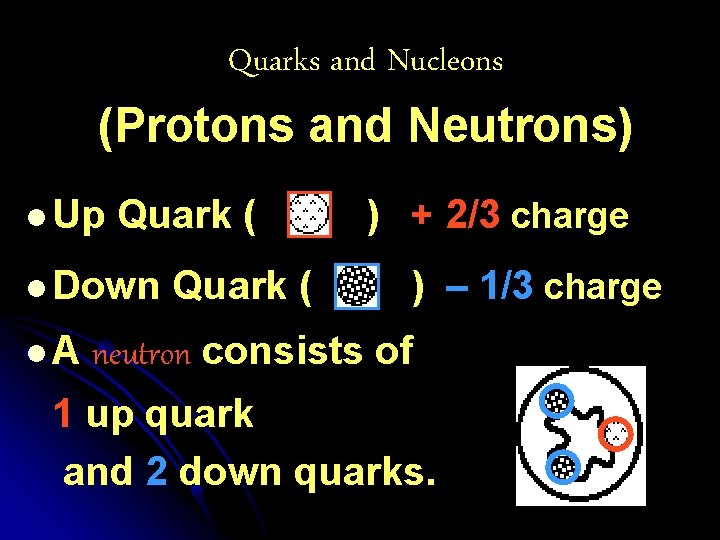
Quarks and Nucleons (Protons and Neutrons) l Up Quark ( l Down l. A Quark ( ) + 2/3 charge ) – 1/3 charge neutron consists of 1 up quark and 2 down quarks.
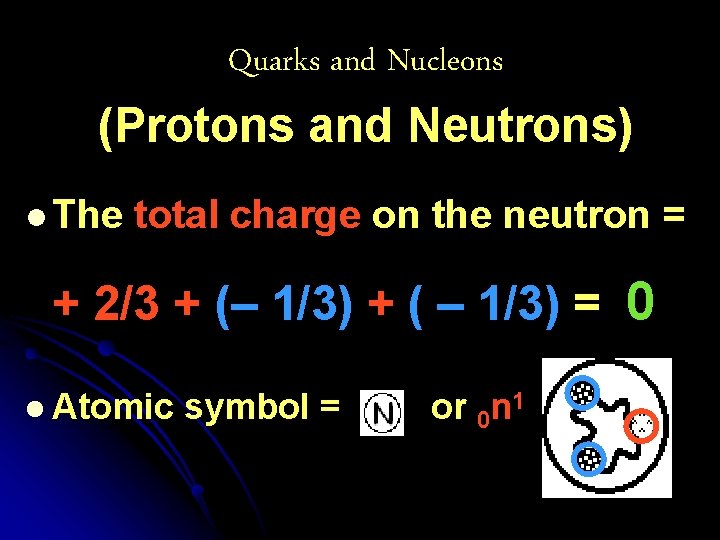
Quarks and Nucleons (Protons and Neutrons) l The total charge on the neutron = + 2/3 + (– 1/3) + ( – 1/3) = 0 l Atomic symbol = or 0 n 1
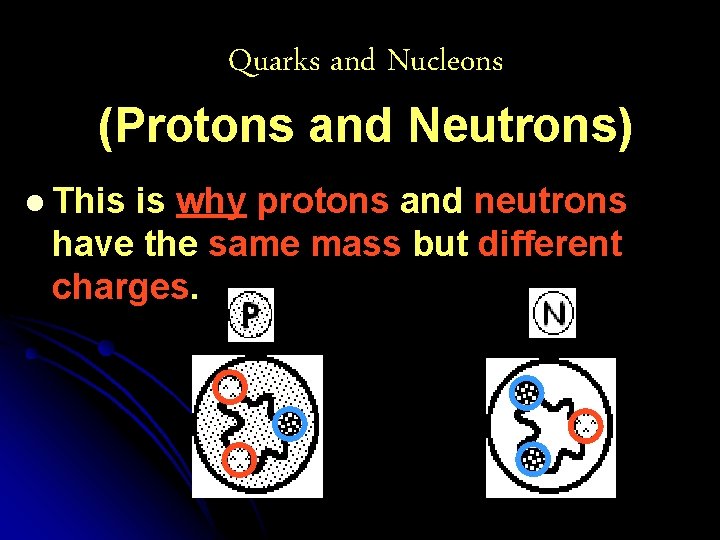
Quarks and Nucleons (Protons and Neutrons) l This is why protons and neutrons have the same mass but different charges.
2) Leptons l are tiny and virtually weightless particles l often travel on their own at very high speeds (approaching the speed of light):
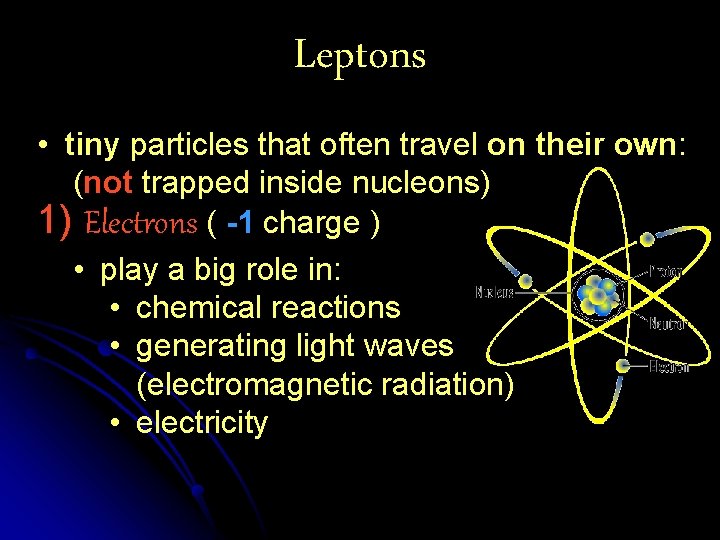
Leptons • tiny particles that often travel on their own: (not trapped inside nucleons) 1) Electrons ( -1 charge ) • play a big role in: • chemical reactions • generating light waves (electromagnetic radiation) • electricity
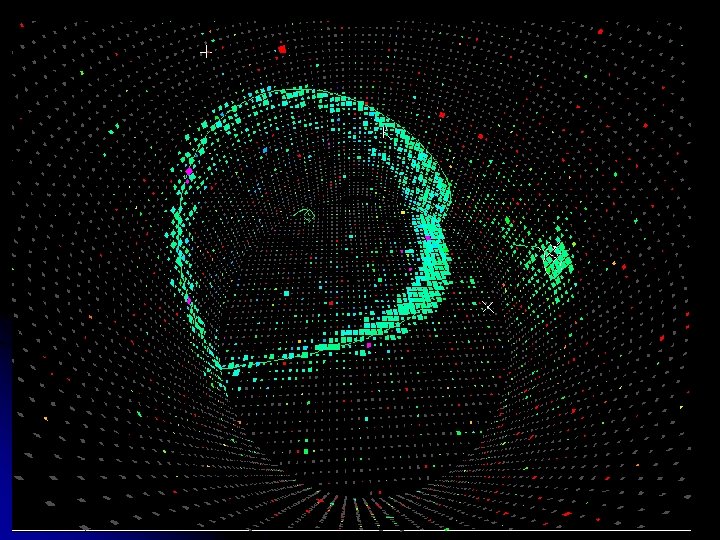
Leptons 2) Electron Neutrinos • (no electrical charge) • don’t interact with other forms of matter very often. • They come streaming in from space all the time. • Billions of neutrinos have flown through your body while you have been reading this page!
Atomic structure of the second and third elements l Hydrogen, Helium and Lithium are the 3 smallest (lightest) elements and are therefore much easier to put together than the larger (heavier) elements. l For example, all it takes to make a Hydrogen nucleus is a single proton!
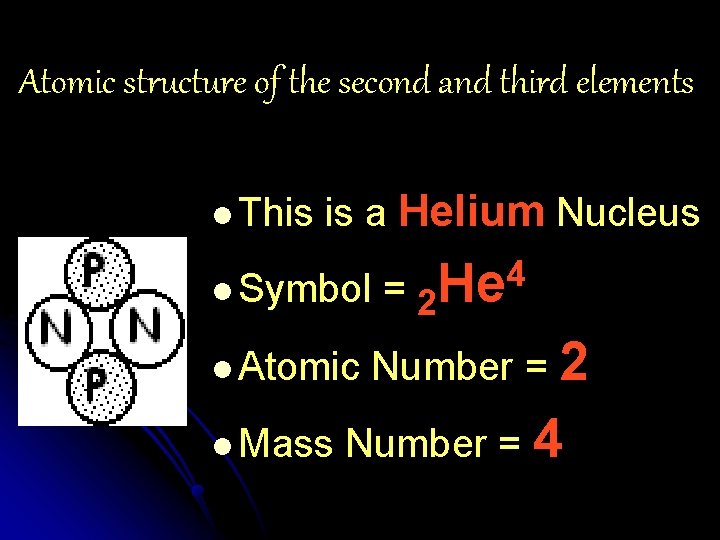
Atomic structure of the second and third elements l This is a Helium Nucleus 4 l Symbol = 2 He l Atomic l Mass Number = 2 Number = 4
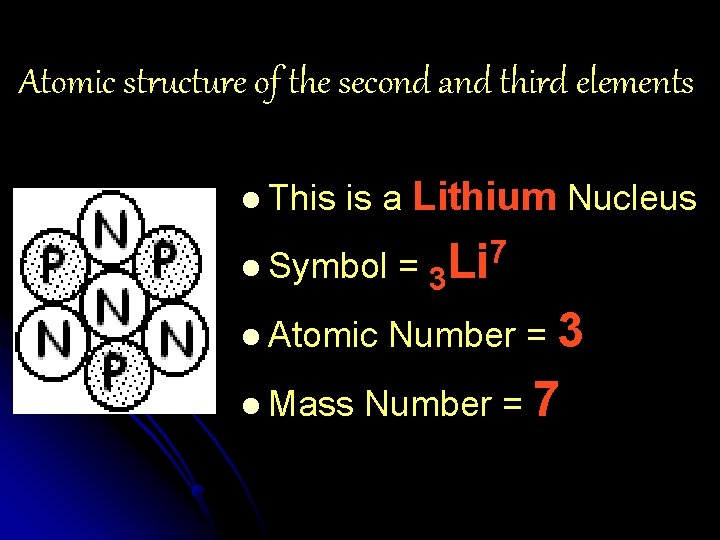
Atomic structure of the second and third elements l This is a Lithium Nucleus 7 l Symbol = 3 Li l Atomic l Mass Number = 3 Number = 7
- Slides: 32