
Sub fertility 27112019 Definition Involuntary failure of a
Sub fertility 27/11/2019
Definition Involuntary failure of a couple to conceive after 12 � months of unprotected regular intercourse.

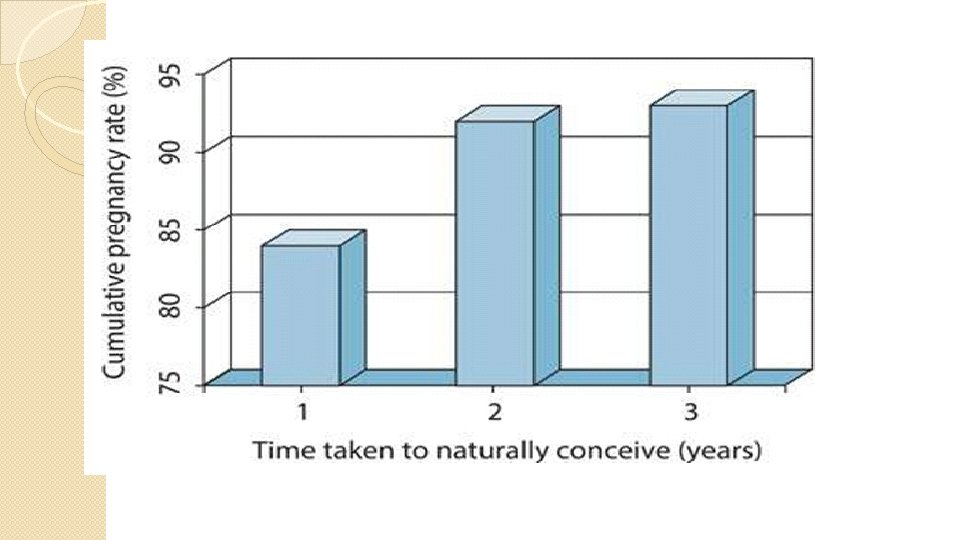
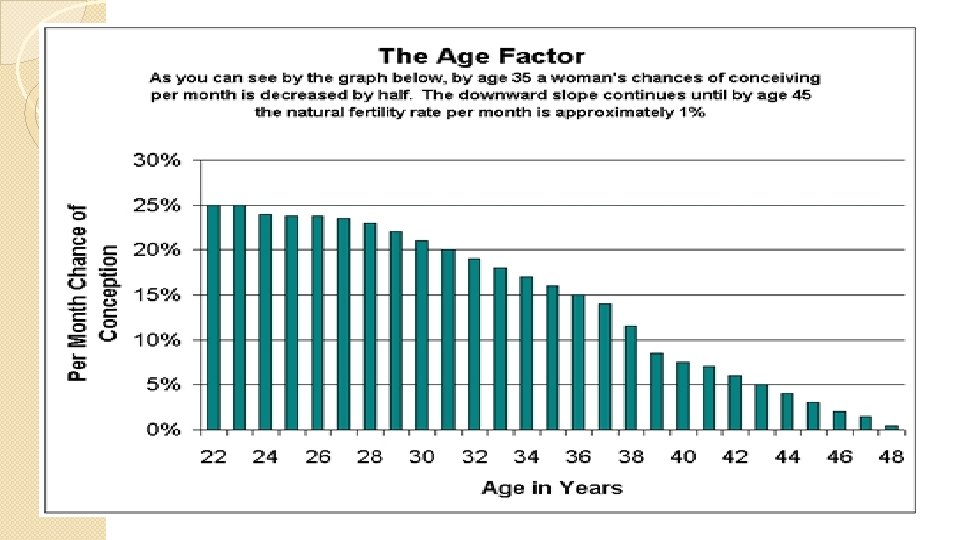
Incidence 1 in 7 couples suffer from subfertility Increase in prevalence? Fecundability. This is the likelihood of conception occurring with one cycle of appropriately timed midcycle intercourse. With the female partner age of 20 years, the fecundity rate is 20%. By age 35 years, the rate drops to 10% But There is of course a cumulative increase in pregnancy rates over time as couples try for conception. Within 6 months 70% of couples will have conceived, after 12 months 80% and after 24 months 90% of couples will achieve a pregnancy � �
subfertility Primary Secondary in couples that have never conceived together In couples that have previously conceived together
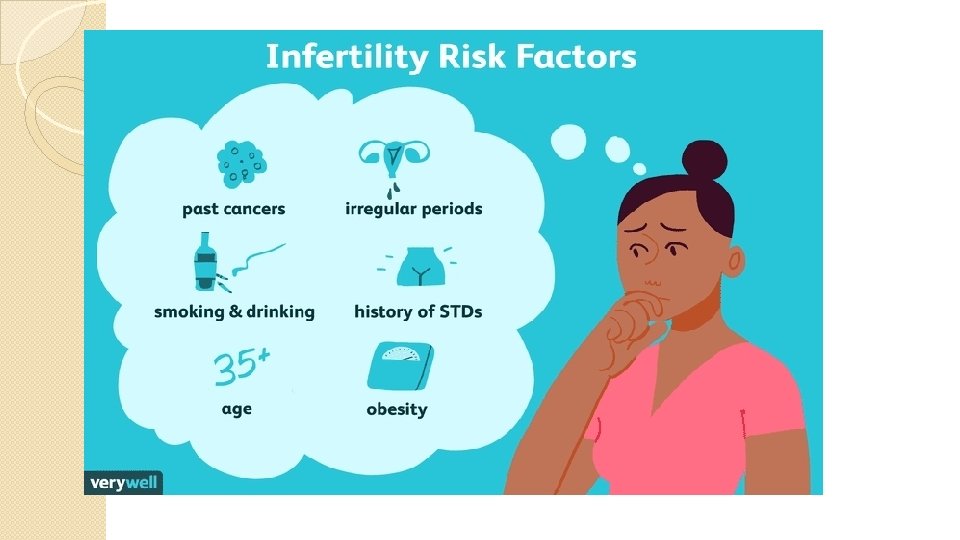
Factors affecting fertility Age…. . Both female and male The most important factor is the female age… As female age the quantity (ovarian reserve) and quality of the eggs decline. In males semen quality decreases After the age of 50 and frequency of intercourse decreases after the age of 40. � �
Frequency � Timing � Eggs are thought to be fertilizable for about 12– 24 hours postovulation Smoking � If both are smoking, , there's 50% reduction in chance of pregnancy BMI � Extremes BMI for both male and female Stress � can have a direct influence on the hypothalamic–pituitary–ovarian (HPO) axis, interfering with regular ovulation and reducing libido and frequency of intercourse Systemic illness � ( diabetes, epilepsy, thyroid disorders and bowel disease)
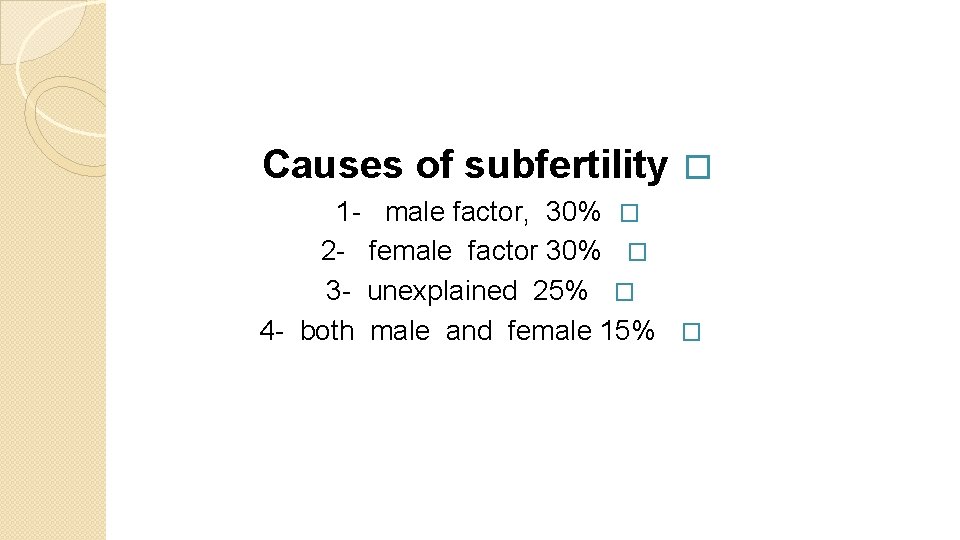
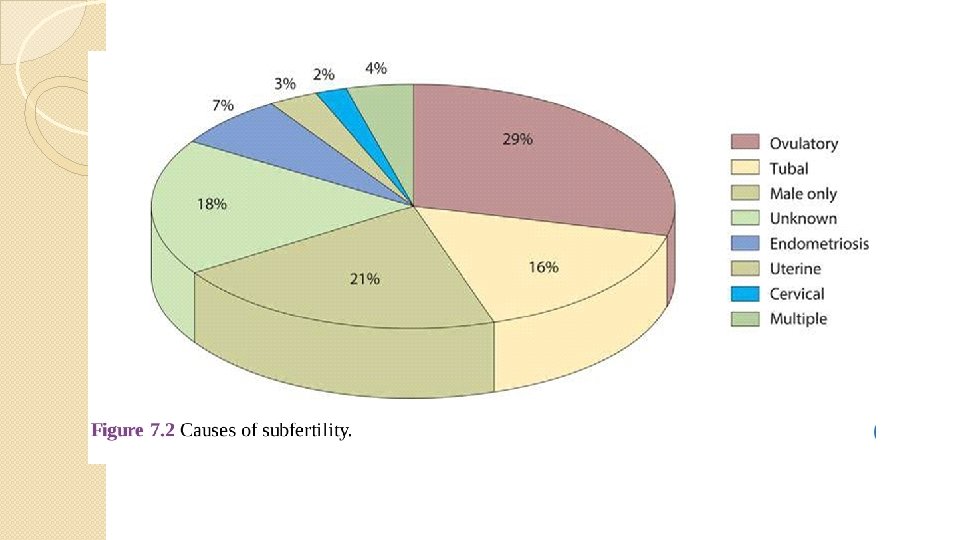
Causes of subfertility � 1 - male factor, 30% � 2 - female factor 30% � 3 - unexplained 25% � 4 - both male and female 15% �
Female causes Etiology • Ovulatory disorders Any disorder that causes anovulation most commonly PCOS (85%), AMA, POF , hypothalamic pituitary failure, Hyperprolactenemia, liver or thyroid disorders. • Tubal disorders Any disorder that causes blockage and damage to the fallopian tubes ( PID, Endometriosis <it can interfere with tubal mobility, cause tubal obstruction or trap the released oocyte >, STD’s (chlamydial infection causes hydrosalpinx), pelvic or abdominal surgery • Uterine disorders Fibroids(depending on size /site and number, Subserosal fibroids have very little impact if present in isolation) , polyps, Asherman’s Syndrome. • Cervical disorders Mucus quality and quantity (chronic cervicitis), cervical stenosis, CA.
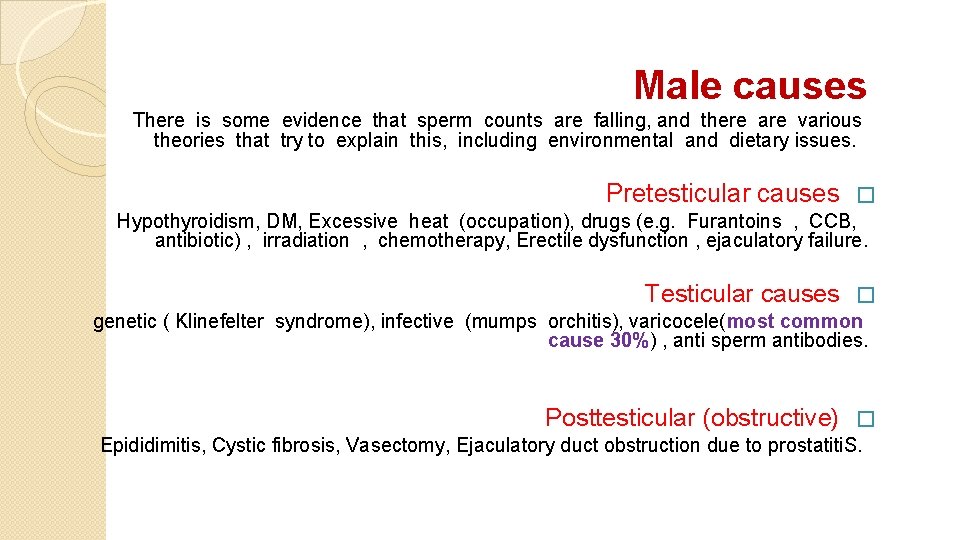
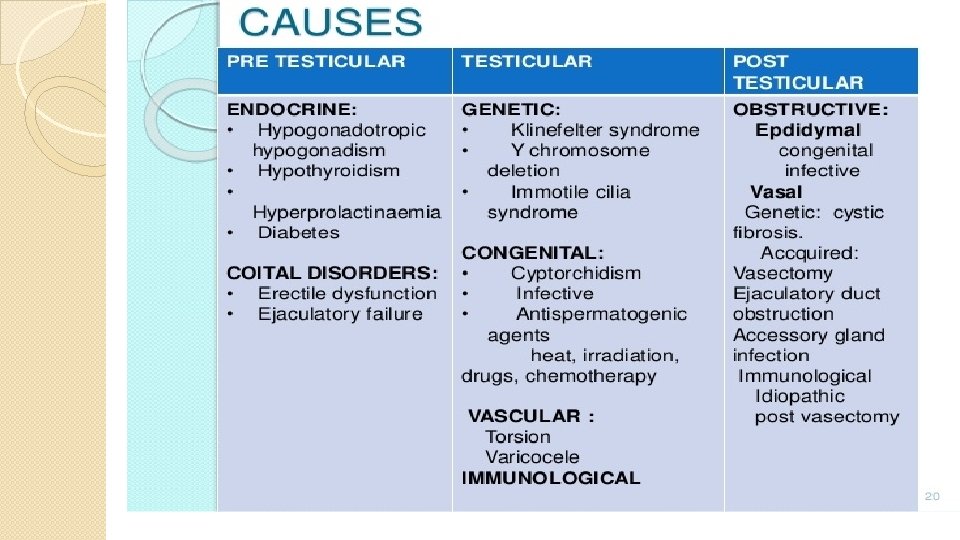
Male causes There is some evidence that sperm counts are falling, and there are various theories that try to explain this, including environmental and dietary issues. Pretesticular causes � Hypothyroidism, DM, Excessive heat (occupation), drugs (e. g. Furantoins , CCB, antibiotic) , irradiation , chemotherapy, Erectile dysfunction , ejaculatory failure. Testicular causes � genetic ( Klinefelter syndrome), infective (mumps orchitis), varicocele(most common cause 30%) , anti sperm antibodies. Posttesticular (obstructive) � Epididimitis, Cystic fibrosis, Vasectomy, Ejaculatory duct obstruction due to prostatiti. S.
Unexplained subfertility � Infertility is considered unexplained if : normal semen analysis , confirmed ovulation & patent ovi-ducts.
Approach to infertile couple As this is a couple-centered issue it is advisable for both partners to be present at the consultation
History – Female Patient profile : age, occupation, married since � HPI : � Duration of infertility and results of any previous evaluation and treatment ◦ Coital frequency, timing , and knowledge of the ovulatory cycle ◦ Obstetric history : gravidity, parity, outcomes, � complications Gynecological history � Menstrual history (age of menarche, regular or not, frequency, duration, dysmenorrhea). Contraception use Previous abnormal pap smears Any previous sexually transmitted diseases ◦ ◦
Medical history � Thyroid disease symptoms , galactorrhea, , increase weight Surgical history � Previous abdominal surgery, and gynecological operations >> adhesion formation >> tubal dysfunction Medication and allergies � Sex steroids may cause temporary damage to the ovulatory function ◦ Cytotoxic agents, abdominal irradiation may cause permanent damage to the ovulatory function ◦ Neuroleptic, antidepressant, and hypotensive drugs can cause hyperprolactinemia. ◦ Family history: birth defects, developmental delay, early � menopause or reproductive problems Social history : exposure to known environmental hazards, � smoking, alcohol intake
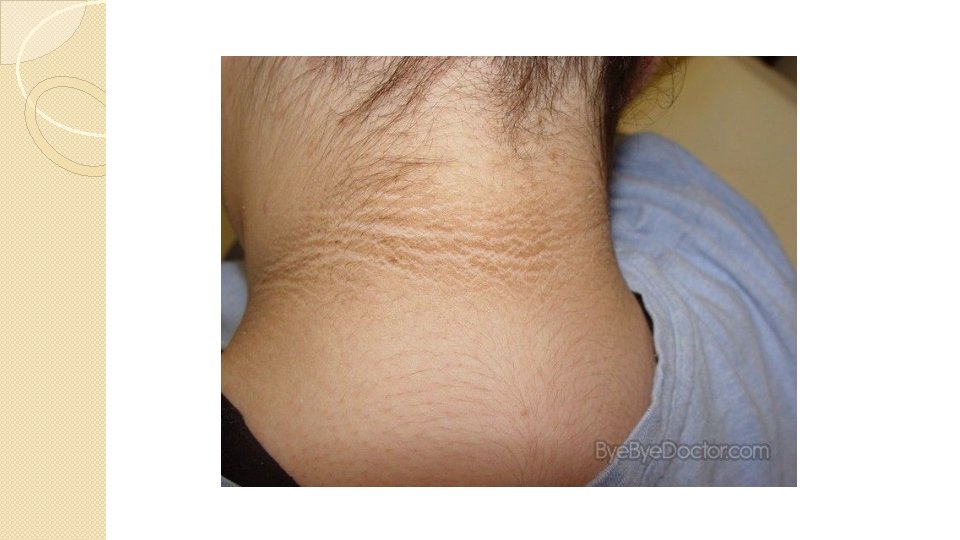
Physical examination – female General examination : vital signs and BMI � Head and neck � Exophthalmos can be associated with hyperthyroidism ◦ epicanthus, lower implantation of ears and hairline, and webbed neck can be associated ◦ with chromosomal abnormalities exclude thyroid gland enlargement/nodules ◦ Breast examination � any abnormal masses or secretions, especially galactorrhea ◦
Abdominal and pelvic examination � Any uterine pathology such as fibroid and adnexal masses or tenderness ◦ Gynecologic examination � evaluation of hair distribution, clitoris size, , labia majora and minora ◦ Bimanual examination � the size and position of the uterus to exclude the presence of uterine fibroids, adnexalmasses, ◦ tenderness, or pelvic nodules indicative of infection or endometriosis
History – Male Patient profile : age, occupation, married since � HPI : � Length of time spent trying for pregnancy ◦ Fathered any previous pregnancies ◦ Medical history DM Obesity Sickle cell disease or thalassemia Liver disease a history of childhood illnesses such as testicular torsion, postpubertal mumps History of prostatitis, orchitis, seminal vesiculitis, and urethritis, Sexually transmitted diseases and tuberculosis History of urinary tract infections � � � � �
Surgical history � Previous pelvic surgery or hernia repair may lead to damage to vas deferens or testicular ◦ ischemia Drug history: � Sulphasalazine >> impairs spermatogenesis’ ◦ Metoclopramide >> increase prolactin levels’ ◦ Immunosuppresants, radiotherapy or chemotherapy ◦ Calcium channel blockers ◦ Family history: congenital diseases, cystic fibrosis � Social history: � Smoking and Alcohol intake ◦ Emotional stress ◦ Excessive heat exposure from saunas, hot tubs! ◦ Horse back riding , bicycle riding ◦
Physical examination – Male General examination: vital signs and BMI � Local examination: � Testicular volume, consistency, masses Absence of vas deferens Varicocele Evidence of surgical scar Hypospadias Gynaecomastia ◦ ◦ ◦

Investigations in a couple that have not conceived after 1 year of regular unprotected � intercourse. Investigations can be justifiably commenced earlier � history of predisposing factors such as amenorrhoea, ◦ oligomenorrhoea, PID women with low ovarian reserve ◦ known male factor subfertility ◦
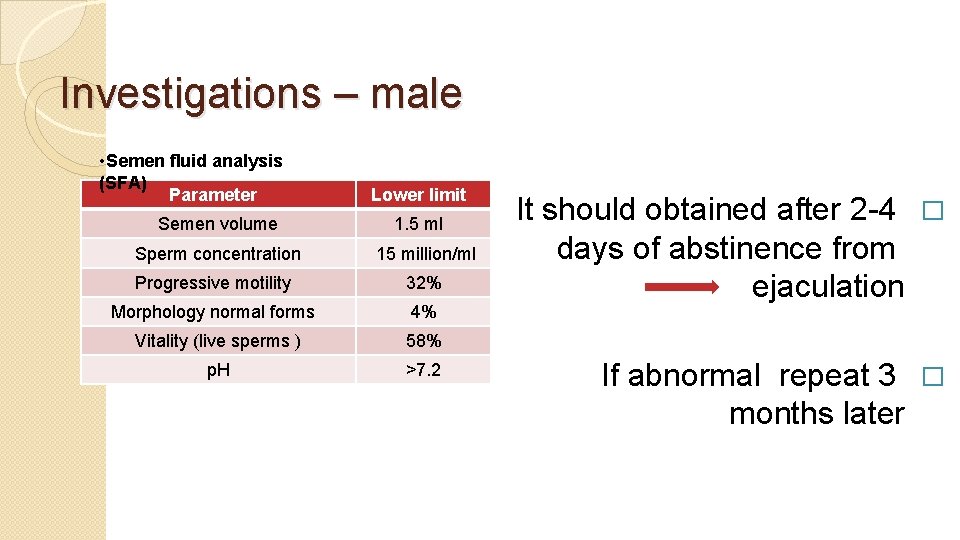
Investigations – male • Semen fluid analysis (SFA) Parameter Semen volume Lower limit 1. 5 ml Sperm concentration 15 million/ml Progressive motility 32% Morphology normal forms 4% Vitality (live sperms ) 58% p. H >7. 2 It should obtained after 2 -4 � days of abstinence from ejaculation If abnormal repeat 3 � months later
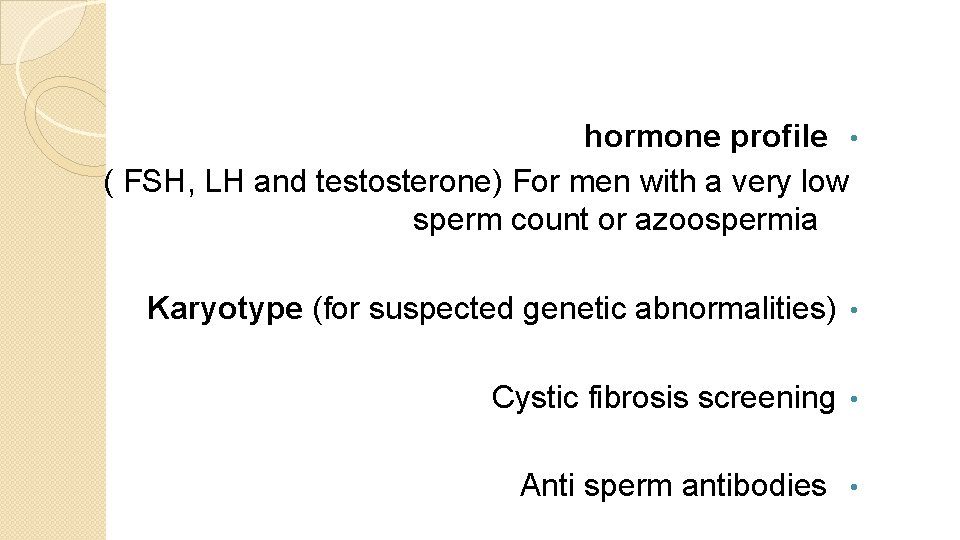
hormone profile • ( FSH, LH and testosterone) For men with a very low sperm count or azoospermia Karyotype (for suspected genetic abnormalities) • Cystic fibrosis screening • Anti sperm antibodies •
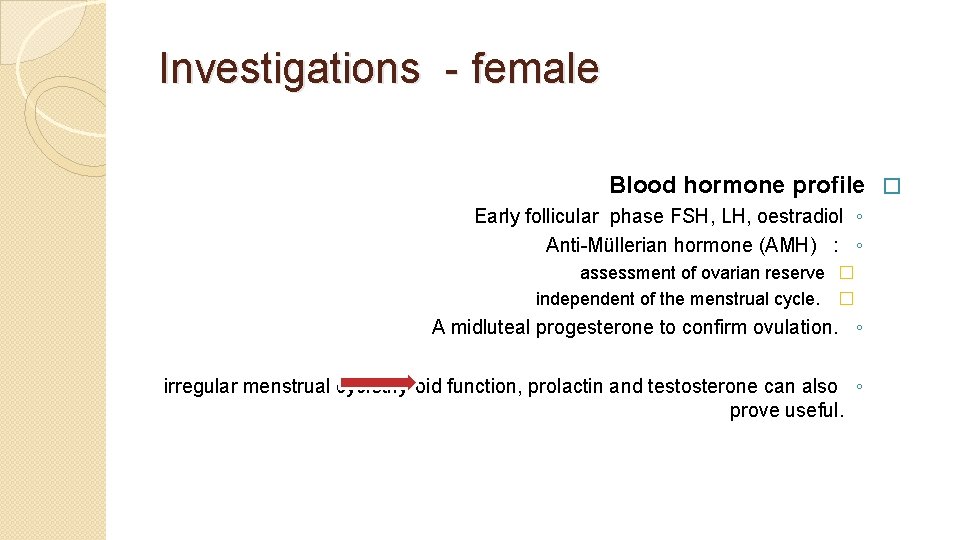
Investigations - female Blood hormone profile � Early follicular phase FSH, LH, oestradiol ◦ Anti-Müllerian hormone (AMH) : ◦ assessment of ovarian reserve � independent of the menstrual cycle. � A midluteal progesterone to confirm ovulation. ◦ irregular menstrual cyclethyroid function, prolactin and testosterone can also ◦ prove useful.
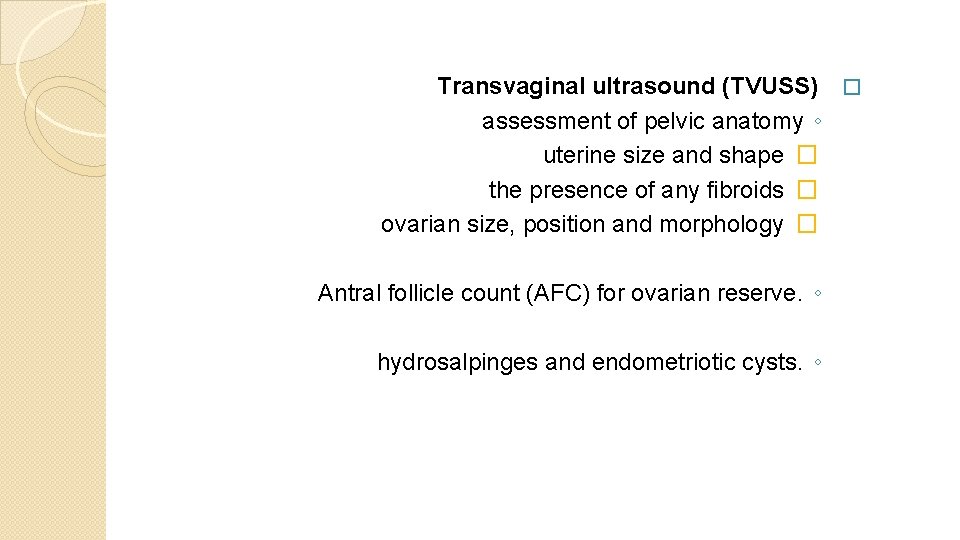
Transvaginal ultrasound (TVUSS) � assessment of pelvic anatomy ◦ uterine size and shape � the presence of any fibroids � ovarian size, position and morphology � Antral follicle count (AFC) for ovarian reserve. ◦ hydrosalpinges and endometriotic cysts. ◦
Measurement of ovarian reserve � (to predict the response to ovarian stimulation in ART) ovarian reserve : the remaining number of oocytes in the ovaries it declines after the age of 35 in an average healthy woman or at an earlier age due to genetic predisposition, surgery or following exposure to toxins, such as chemotherapy. AFC on TVUSS <4 predicting low response ◦ >16 high response ◦ AMH independent of the menstrual cycle. � Neither AMH nor AFC are perfect indicators and most clinics utilize both to assess ovarian reserve. � � �
Tubal assessment (Tubal patency and an assessment of the uterine � cavity ) hysterosalpingography (HSG) using X-ray ◦ hysterocontrast synography (Hy. Co. Sy) ◦ 3 D hysterocontrast synography ◦
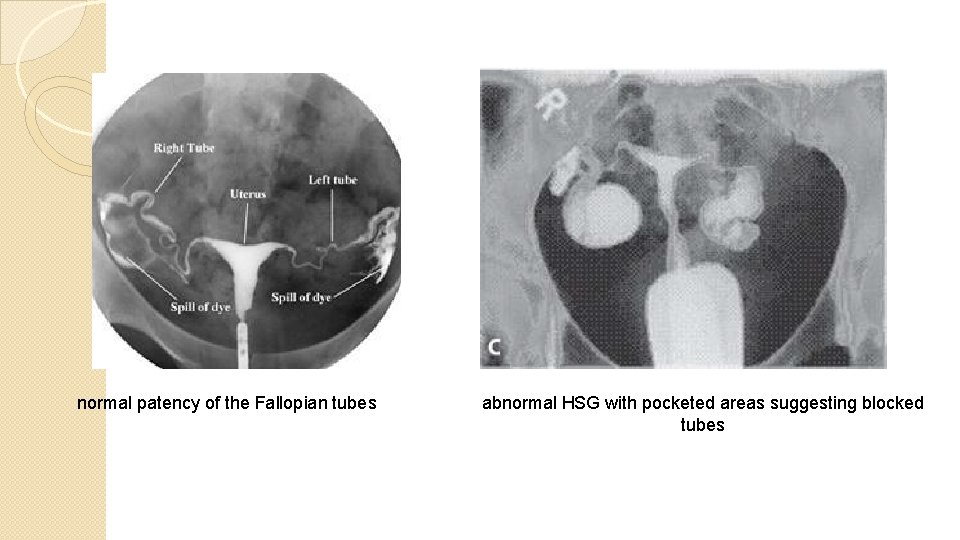
normal patency of the Fallopian tubes abnormal HSG with pocketed areas suggesting blocked tubes
laparoscopy and hysteroscopy � patients deemed at high risk of pelvic pathology ◦ Cervical mucus assessment � For amount, clarity, Ph, spinnbarket culture ◦
Subfertility management
The management of the couple’s subfertility should � be evidence based and relies on an accurate diagnostic evaluation of the history, clinical examination and investigations. Management may be expectant, medical, surgical or a combination of these.
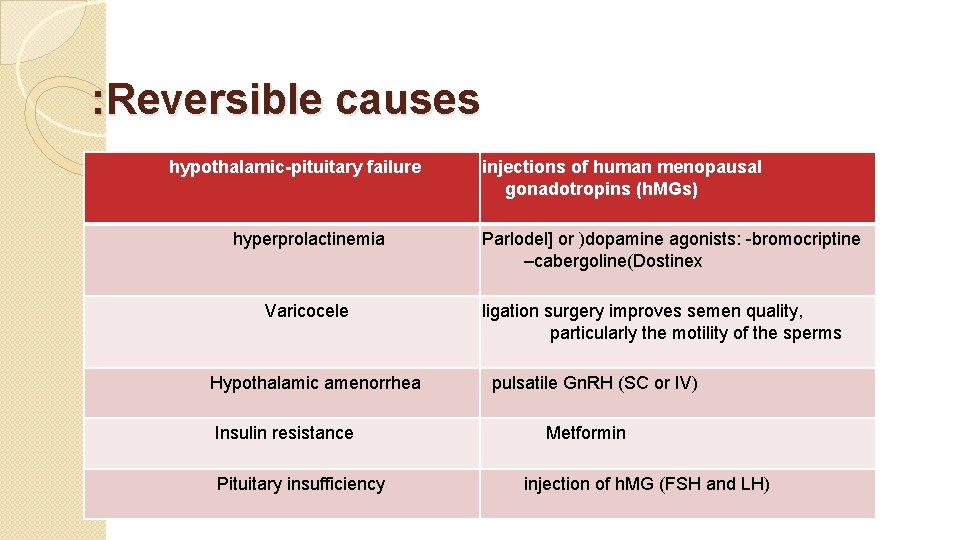
: Reversible causes hypothalamic-pituitary failure hyperprolactinemia Varicocele Hypothalamic amenorrhea Insulin resistance Pituitary insufficiency injections of human menopausal gonadotropins (h. MGs) Parlodel] or )dopamine agonists: -bromocriptine –cabergoline(Dostinex ligation surgery improves semen quality, particularly the motility of the sperms pulsatile Gn. RH (SC or IV) Metformin injection of h. MG (FSH and LH)
Even weight reduction can help. in overweight � women , weight reduction by 5 -10% leads to more than 50% chance to resume ovulation in six months.
Ovulation induction For patients with PCOS ovulatory problems, ovulation � induction (OI) is usually the first line of management so long as there is tubal patency and normal semen analysis.
agents induction Ovulation
Clomiphene citrate (Clomid)
Drug class ? ? ? � mechanism of action ? ? ? �
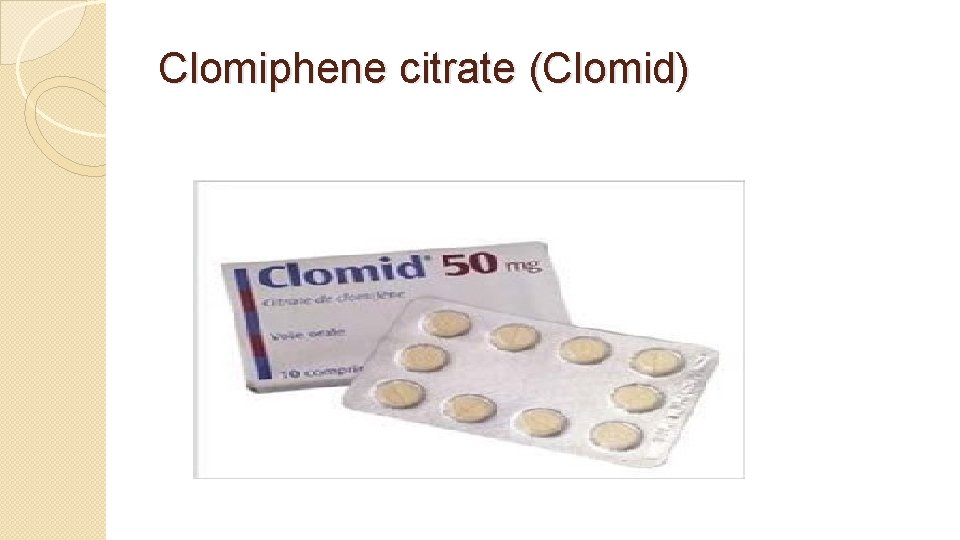
is a selective estrogen receptor modulator (SERM) � that competitively binds to estrogen receptors in the hypothalamus. in doing so, it blocks the negative feedback effect of endogenous estrogen. This results in increased pulsatile Gn. RH frequency. Subsequently, FSH and LH production is increased, leading to follicular growth and ovulation
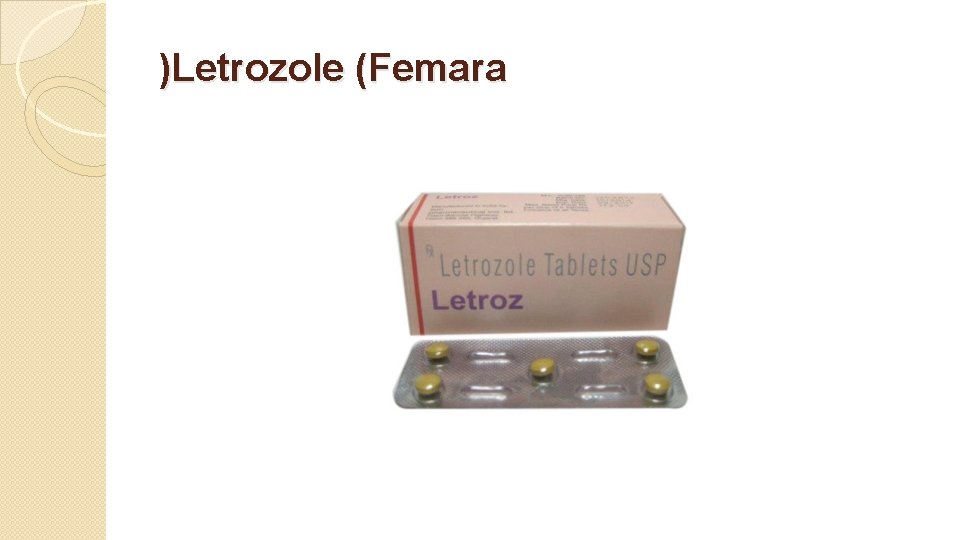
)Letrozole (Femara
an aromatase inhibitor that decreases the conversion of � androgens (testosterone androstenedione) to estrogens(estradiol and estrone). Lower estrogen levels reduce the negative feedback effect on the hypothalamus and pituitary, which leads to an increase of FSH and follicular development.
h. MG (human menopausal gonadotropins) is a mixture of gonadotropins � extracted from the urine of postmenopausal women. used when the pituitary gland fails to secrete sufficient FSH and LH � OR In clomiphene-resistant women
Compilcation of OI Multiple gestation pregnancy � Ovarian hyperstimulation syndrome � (OHSS).
Assisted REPRODUCTIVE TECHNOLOGIES Intrauterine insemination (IUI) � In-vitro fertilization (IVF) and intra- � cytoplasmic sperm injection (ICSI)
Intrauterine insemination is performed by introducing a small sample of prepared � sperm into the uterine cavity with a fine uterine catheter. IUI may be helpful in cases of mild endometriosis, mild male � factor subfertility
This process may be preceded by several days of mild stimulation with � subcutaneous injections daily of exogenous FSH, with the aim of stimulating the ovaries to produce 2– 3 mature follicles. Follicular tracking with ultrasound is essential to avoid over- or � understimulation. Triggering of ovulation (and therefore the timing of the insemination) � is achieved with a subcutaneous injection of human chorionic gonadotrophin (h. CG). This mimics the endogenous LH surge.
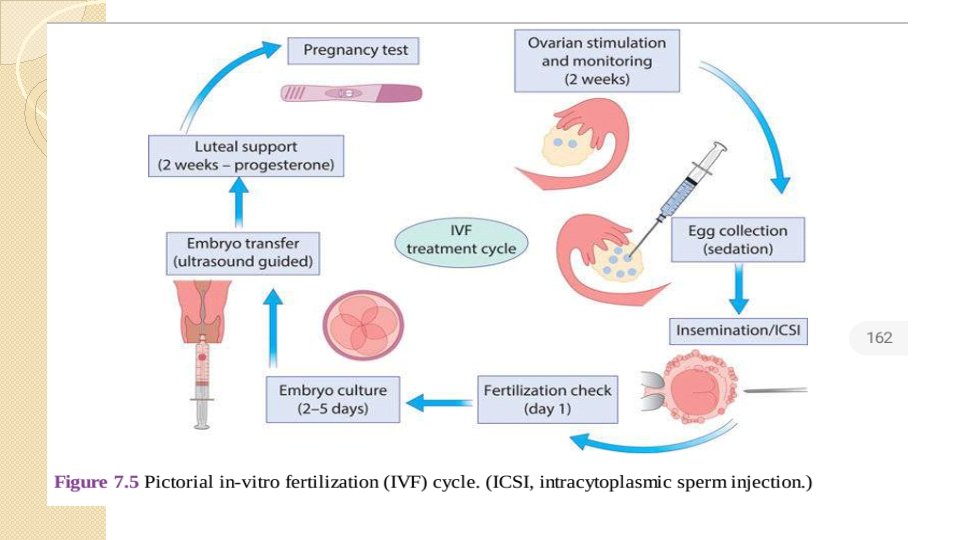
IVF refers to a technique of assisted reproduction where � the egg and sperm are fertilised outside of the body to form an embryo. this embryo is then transferred to the uterus. i. Vf allows the sperm to penetrate the egg of its own � accord whereas icsi directly inserts the sperm into the egg.
used for almost all cases of subfertility including tubal disease, endometriosis, failed ovulation induction failed IUI : � �
IVF can be performed with many different protocols and medications. � BUT we will discuss the principle steps of ivf.

- Slides: 56