
styles of argument Ethos Pathos and Logos What
- Slides: 17
styles of argument Ethos, Pathos, and Logos
What is rhetoric? It is a noun with many definitions In your notebook, take notes on the following 6 slides to build towards a definition of RHETORIC
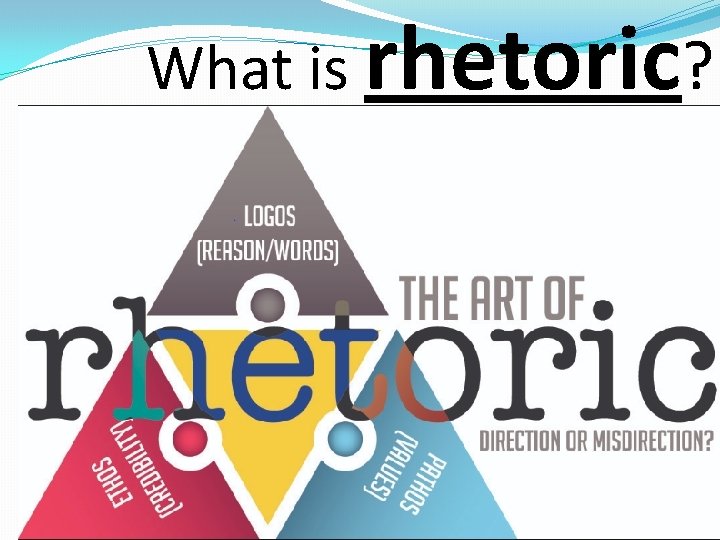
What is rhetoric?
What’s a sophist? �SOPHIST /ˈsäfəst/ noun �a paid teacher of philosophy and rhetoric in ancient Greece, associated in popular thought with moral skepticism and specious reasoning. �a person who reasons with clever but fallacious arguments.
What does FALLACIOUS mean? �FALLACIOUS /fəˈlāSHəs/ ADJ. – based on a mistaken synonyms: belief. false, untrue, faulty, wrong, misleading, fabricated, misguided, made up, trumped up
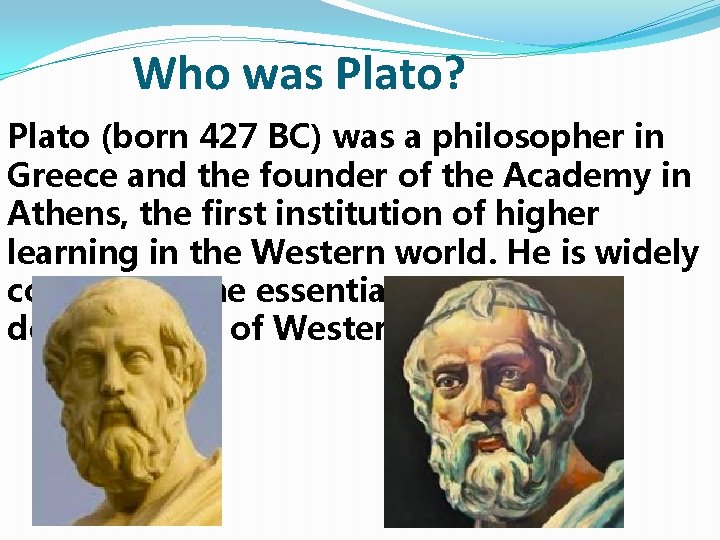
Who was Plato? Plato (born 427 BC) was a philosopher in Greece and the founder of the Academy in Athens, the first institution of higher learning in the Western world. He is widely considered the essential figure in the development of Western philosophy.
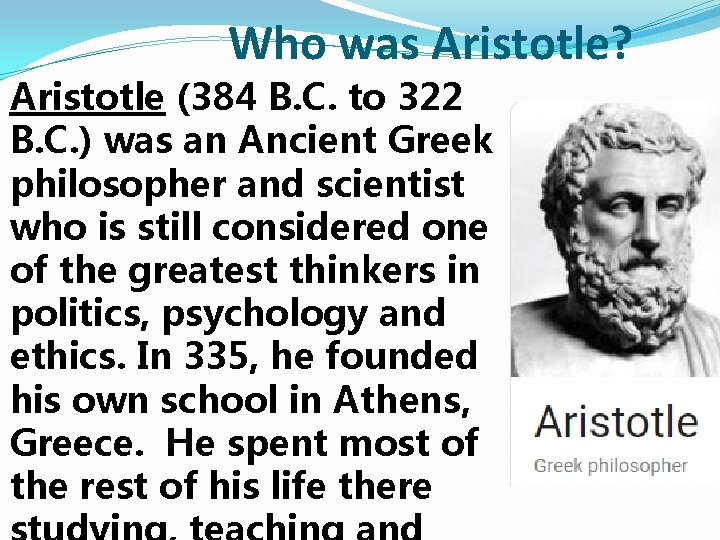
Who was Aristotle? Aristotle (384 B. C. to 322 B. C. ) was an Ancient Greek philosopher and scientist who is still considered one of the greatest thinkers in politics, psychology and ethics. In 335, he founded his own school in Athens, Greece. He spent most of the rest of his life there
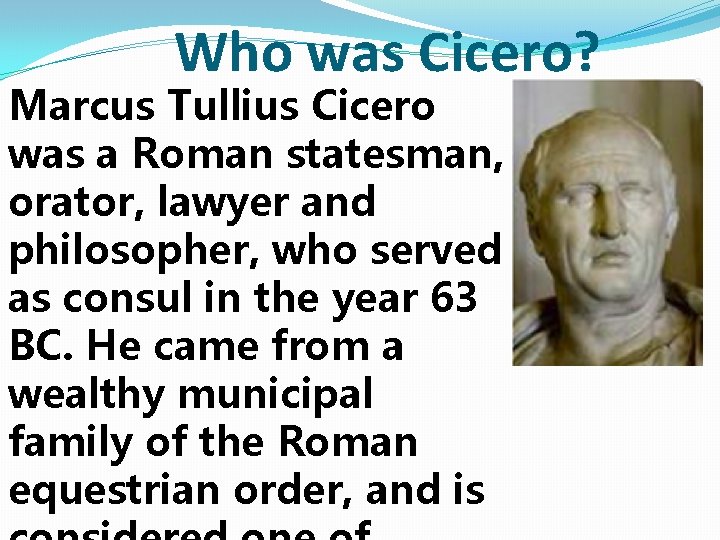
Who was Cicero? Marcus Tullius Cicero was a Roman statesman, orator, lawyer and philosopher, who served as consul in the year 63 BC. He came from a wealthy municipal family of the Roman equestrian order, and is
What is PROSE? PROSE /prōz/ noun - written or spoken language in its ordinary form, without metrical structure. PROSE is so-called "ordinary” writing or speaking — made up of sentences and paragraphs, without any metrical (or rhyming) structure. If you write/say, "I walked about all alone over the hillsides, "
What is rhetoric? It is a noun with many definitions:
What is rhetoric? It is a noun with many definitions: � 1. the ability to use language effectively. � 2. the art of making persuasive speeches. � 3. the art of influencing the
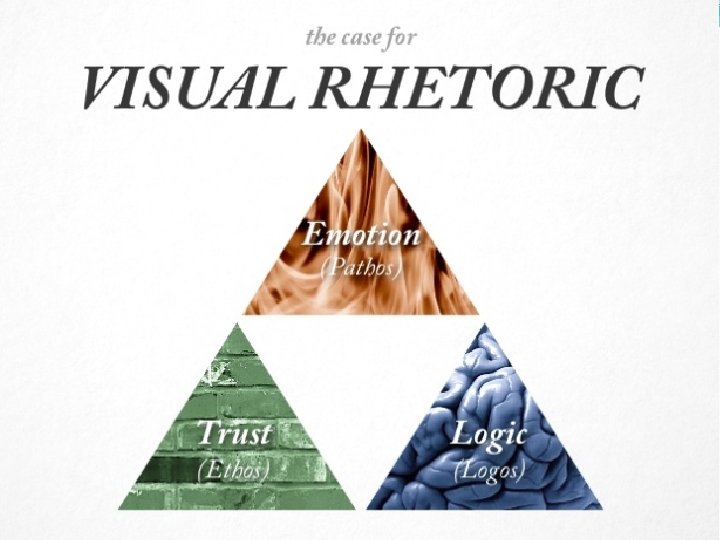
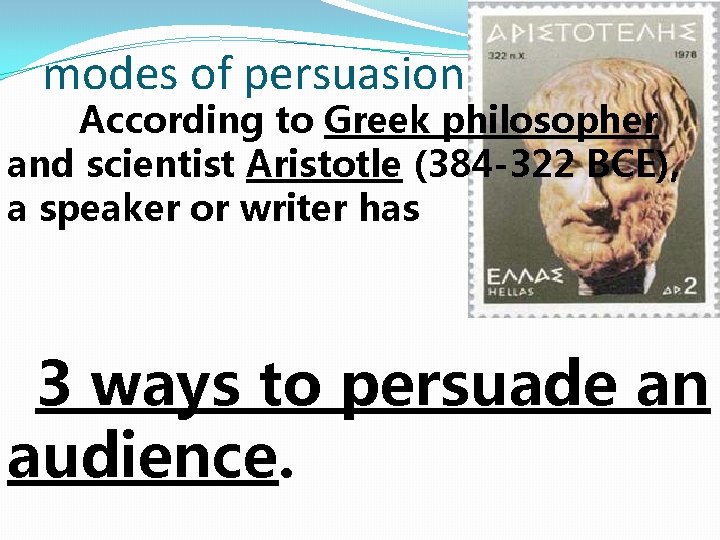
modes of persuasion According to Greek philosopher and scientist Aristotle (384 -322 BCE), a speaker or writer has 3 ways to persuade an audience.
Aristotle in The Art of Rhetoric: “Of the modes of persuasion furnished by the spoken word there are three kinds. The first kind depends on the personal character of the speaker; the second on putting the audience into a
Ethos: Appealing to the speaker or writer’s character or reputation. Ethos (Greek for character) refers to credibility: �Convincing by the character of the TE writer/speaker & STIM T RA ON NS IA FE L R �We tend to believe people whom we respect/trust �Is the writer/speaker:
Pathos: GLITTE NAME RING CALLIN G BANDW AGON Appealing to the reader’s or listener’s emotions. �Pathos (Greek for suffering) refers to emotions: �Pathos appeals to the audience's sympathies. �An appeal to pathos causes an audience to respond emotionally. �It is initially successful as it causes the audience to identify with the writer's point of view (to feel what the writer/speaker wants you to feel). Pathos thus refers to both the emotional
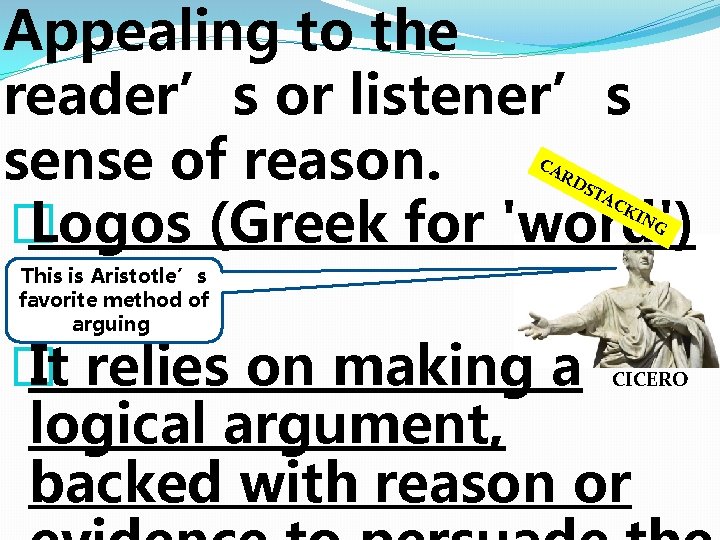
Appealing to the reader’s or listener’s sense of reason. � Logos (Greek for 'word') CA RD ST AC KI NG This is Aristotle’s favorite method of arguing. � It relies on making a logical argument, backed with reason or CICERO