
Studying spoken language OBJ to begin to understand
Studying spoken language OBJ: to begin to understand the features of spontaneous speech Unit 4: Studying spoken language
1. How spoken language is used in different contexts • Exploring how language is used in a variety of situations e. g: • In the workplace • On television/radio • In the classroom Unit 4: Studying spoken language
Spontaneous speech • ‘Spontaneous’ means it hasn’t been rehearsed or is unprepared. Talk is usually spontaneous. • What happens to people’s language when they haven’t prepared what they’re going to say? Unit 4: Studying spoken language
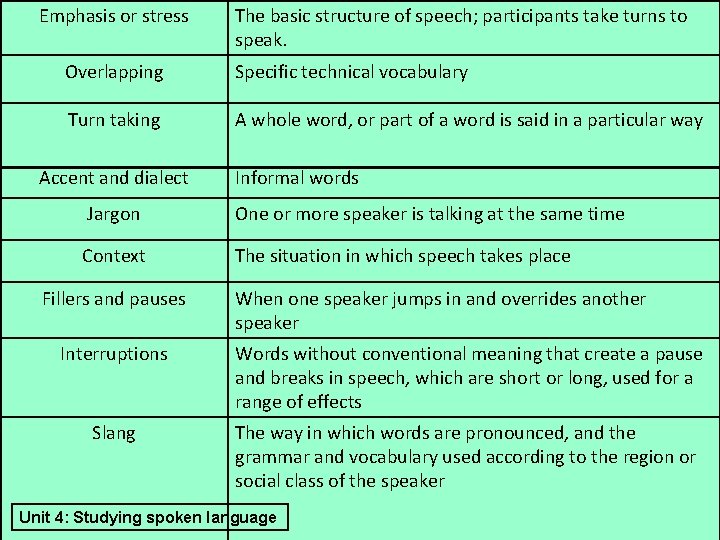
Emphasis or stress The basic structure of speech; participants take turns to speak. Overlapping Specific technical vocabulary Turn taking A whole word, or part of a word is said in a particular way Accent and dialect Informal words Jargon One or more speaker is talking at the same time Context The situation in which speech takes place Fillers and pauses When one speaker jumps in and overrides another speaker Interruptions Words without conventional meaning that create a pause and breaks in speech, which are short or long, used for a range of effects Slang The way in which words are pronounced, and the grammar and vocabulary used according to the region or social class of the speaker Unit 4: Studying spoken language

Emphasis or stress A whole word, or part of a word is said in a particular way Overlapping One or more speaker is talking at the same time Turn taking The basic structure of speech; participants take turns to speak. Accent and dialect The way in which words are pronounced, and the grammar and vocabulary used according to the region or social class of the speaker Jargon Specific technical vocabulary Context The situation in which speech takes place Fillers and pauses Interruptions Slang Words without conventional meaning that create a pause and breaks in speech, which are short or long, used for a range of effects When one speaker jumps in and overrides another speaker Informal words Unit 4: Studying spoken language
Spontaneous speech • • • Football School Parents Siblings Your weekend A TV programme Unit 4: Studying spoken language
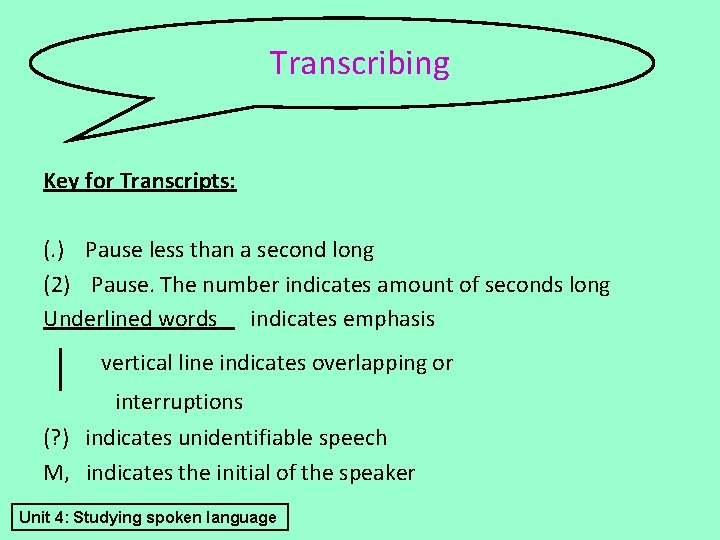
Transcribing Key for Transcripts: (. ) Pause less than a second long (2) Pause. The number indicates amount of seconds long Underlined words indicates emphasis vertical line indicates overlapping or interruptions (? ) indicates unidentifiable speech M, indicates the initial of the speaker Unit 4: Studying spoken language
- Slides: 7