
Studying Leadership Trait Theory of Leadership Great leaders
- Slides: 11
Studying Leadership
Trait Theory of Leadership • Great leaders are born, not made • A summary of the personality traits of leaders vs. non-leaders: • • • Drive and ambition The desire to lead and influence Honesty and integrity Self-confidence Intelligence In-depth technical knowledge • Possessing certain personality traits only makes it more likely that an individual can become an effective leader
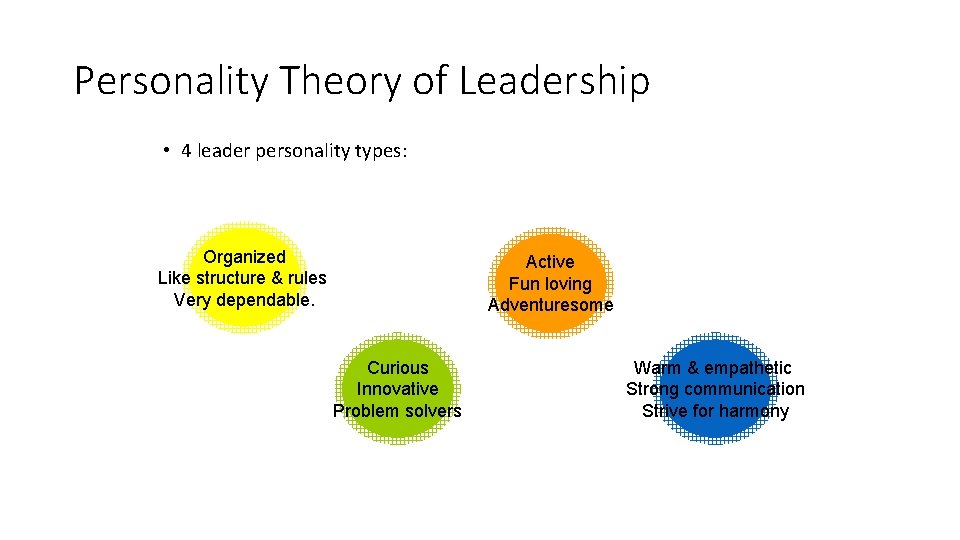
Personality Theory of Leadership • 4 leader personality types: Organized Like structure & rules Very dependable. Active Fun loving Adventuresome Curious Innovative Problem solvers Warm & empathetic Strong communication Strive for harmony
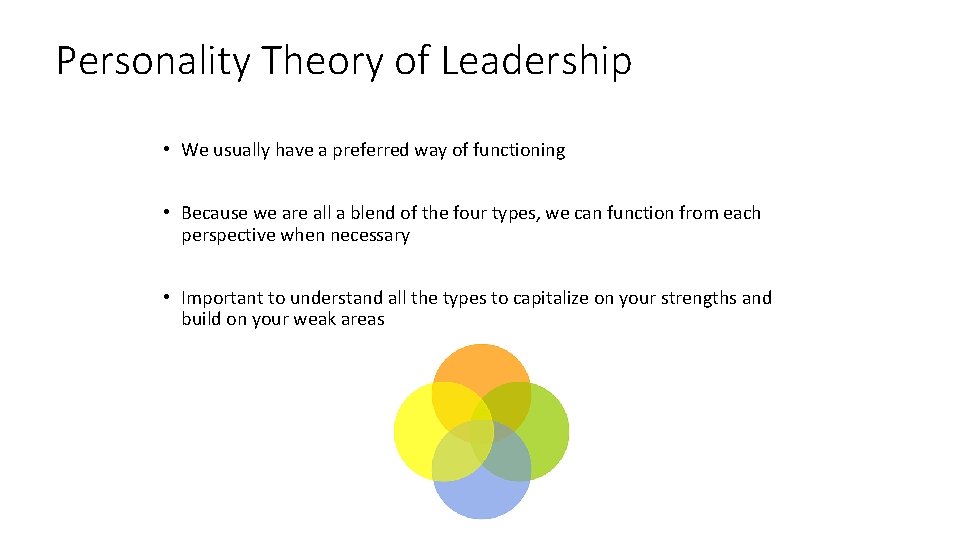
Personality Theory of Leadership • We usually have a preferred way of functioning • Because we are all a blend of the four types, we can function from each perspective when necessary • Important to understand all the types to capitalize on your strengths and build on your weak areas
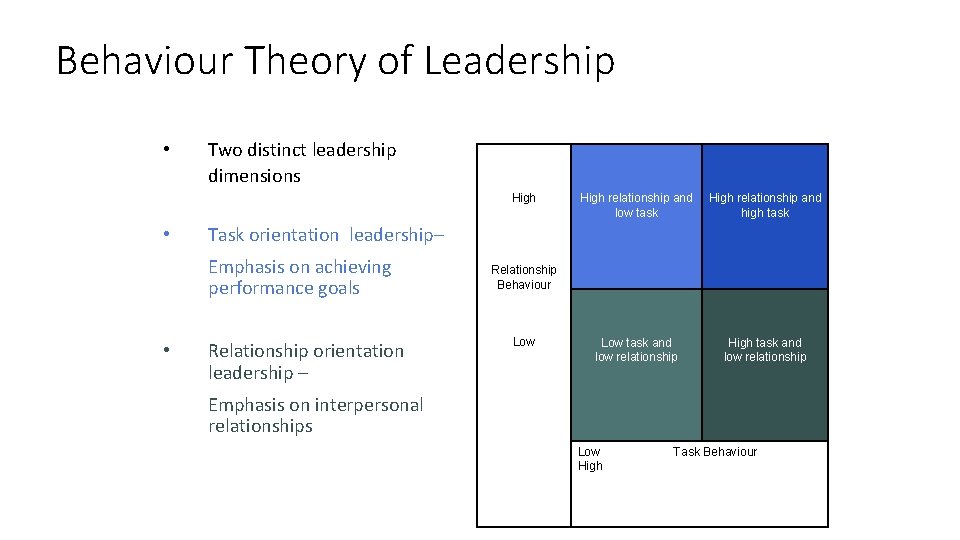
Behaviour Theory of Leadership • Two distinct leadership dimensions High • High relationship and high task Low task and low relationship High task and low relationship Task orientation leadership– Emphasis on achieving performance goals • High relationship and low task Relationship orientation leadership – Relationship Behaviour Low Emphasis on interpersonal relationships Low High Task Behaviour
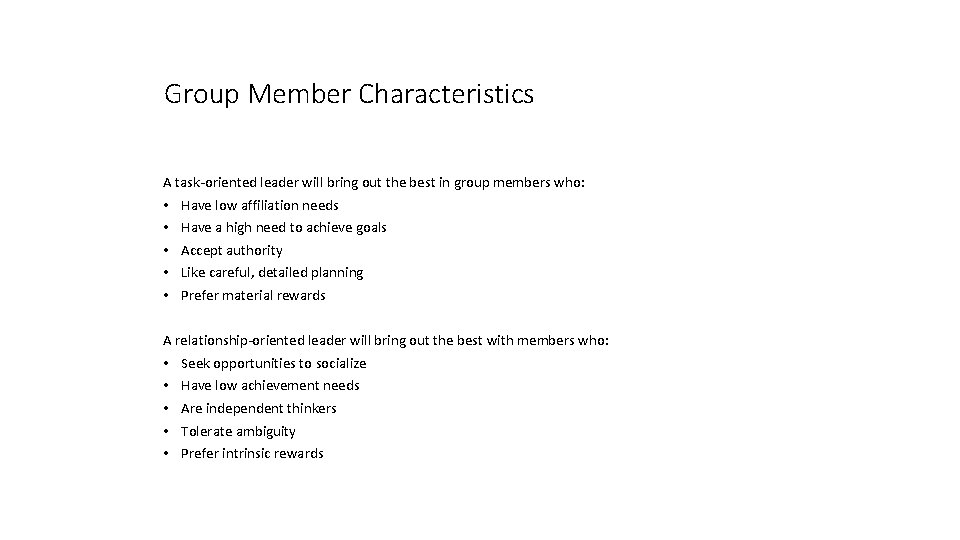
Group Member Characteristics A task-oriented leader will bring out the best in group members who: • • • Have low affiliation needs Have a high need to achieve goals Accept authority Like careful, detailed planning Prefer material rewards A relationship-oriented leader will bring out the best with members who: • • • Seek opportunities to socialize Have low achievement needs Are independent thinkers Tolerate ambiguity Prefer intrinsic rewards
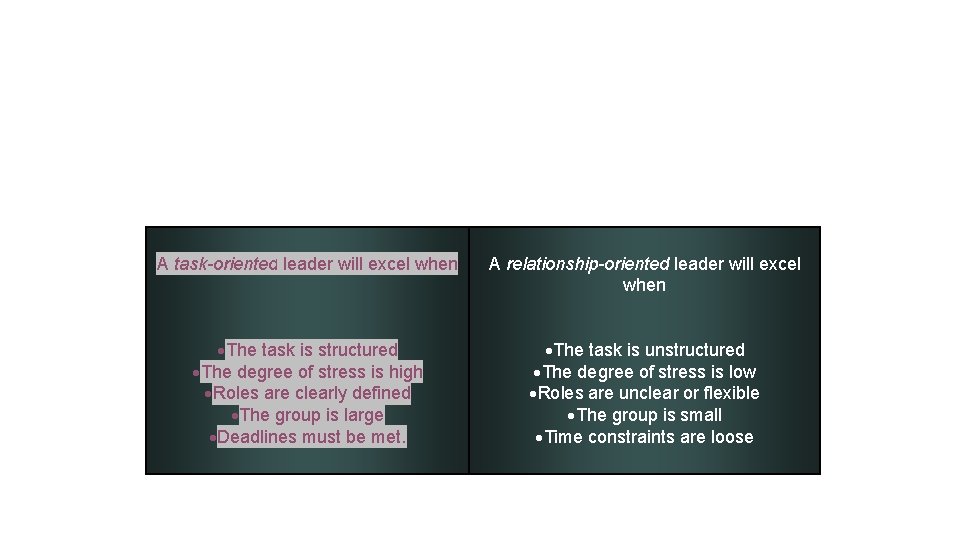
A task-oriented leader will excel when A relationship-oriented leader will excel when The task is structured The degree of stress is high Roles are clearly defined The group is large Deadlines must be met. The task is unstructured The degree of stress is low Roles are unclear or flexible The group is small Time constraints are loose
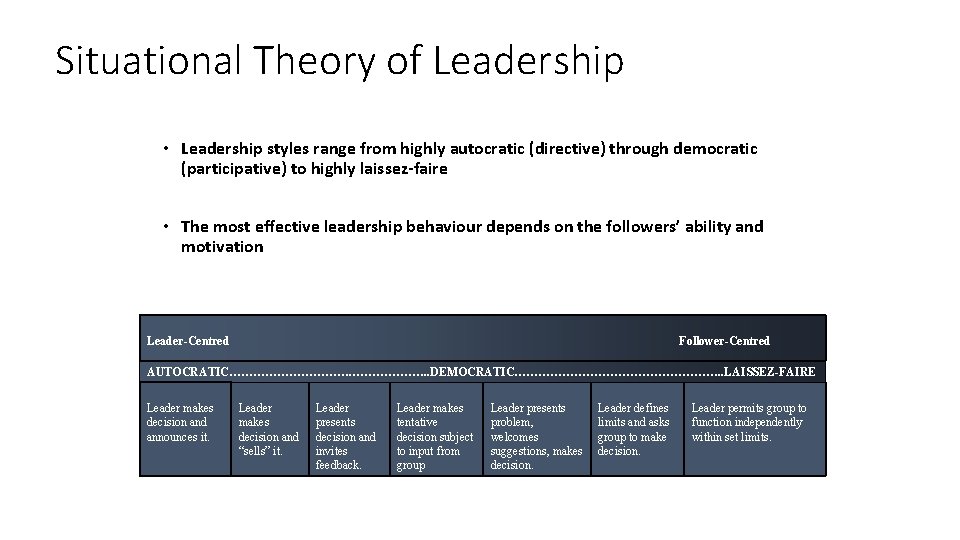
Situational Theory of Leadership • Leadership styles range from highly autocratic (directive) through democratic (participative) to highly laissez-faire • The most effective leadership behaviour depends on the followers’ ability and motivation Leader-Centred Follower-Centred AUTOCRATIC………………. . DEMOCRATIC………………………. . LAISSEZ-FAIRE Leader makes decision and announces it. Leader makes decision and “sells” it. Leader presents decision and invites feedback. Leader makes tentative decision subject to input from group Leader presents problem, welcomes suggestions, makes decision. Leader defines limits and asks group to make decision. Leader permits group to function independently within set limits.
Autocratic (Directive) Leadership Style • Task-oriented leader who makes all decisions • Directs the group by command or request • Effective when: • the group needs complete direction, (members are novices and respect the leader’s superiority) • the group is unable to work through a group decision-making process • there is a crisis (well-suited to medical or military situations)
Democratic (Participative) Leadership Style • Group members contribute to the overall organizational goals • Key attributes: • • Group goal setting = team management Open negotiation Delegation of control over own performance Sharing of the team’s successes and failures • Value placed on achieving consensus • Leader retains right to make final decision if disagreement persists
Laissez-Faire Leadership Style • Leader is informed but steps back from decision making and acts as a resource • Effective when the group has become competent and is functioning well • Leader does not abandon the group but instead retains responsibility for seeing that it continues to function