
Study Skills Topic 5 Critical Thinking Power Point

- Slides: 18
Study Skills Topic 5 Critical Thinking Power. Point by Jo. Ann Yaworski © 2003 Pearson Education, Inc. , publishing as Longman Publishers.
Making Decisions & Solving Problems § § § How can you make good decisions? How do you analyze a problem? Why should you identify a wide range of solutions? How can you evaluate possible solutions? What factors should be considered in selecting a solution? © 2003 Pearson Education, Inc. , publishing as Longman Publishers.
Problem Solving Requires. . . Critical Thinking § careful analysis of the situation § ways to resolve it © 2003 Pearson Education, Inc. , publishing as Longman Publishers.
Decision Making § § Decision making is a process of thinking critically about choices. A decision means you will take a specific course of action. ü Action oriented ü Points to an outcome © 2003 Pearson Education, Inc. , publishing as Longman Publishers.
Types of Decisions Routine decisions § Impulsive decisions § Reasoned decisions § © 2003 Pearson Education, Inc. , publishing as Longman Publishers.
Routine Decisions § Routine decisions are safe, habitual choices that make your life run smoothly and eliminate the need to make choices constantly. § Example: You always order a pizza with cheese, pepperoni, and mushrooms. © 2003 Pearson Education, Inc. , publishing as Longman Publishers.
Impulsive Decisions § Impulsive decisions are instant choices that are not well thought out or planned. § Example: At the last minute, you decide to cut class and take a ride to the lake with your friends. © 2003 Pearson Education, Inc. , publishing as Longman Publishers.
Reasoned Decisions § Reasoned decisions are choices in which alternatives are identified and weighed in light of predicted outcomes. § Example: You decided to take child psychology next semester because it is required in your major and you have taken the prerequisites. © 2003 Pearson Education, Inc. , publishing as Longman Publishers.
Reasoned Decisions § § § Consider risks. Predict short-term outcomes. Predict long-term outcomes. Evaluate the consequences in terms of your life’s goals. Make a conscious choice based on your predictions. © 2003 Pearson Education, Inc. , publishing as Longman Publishers.
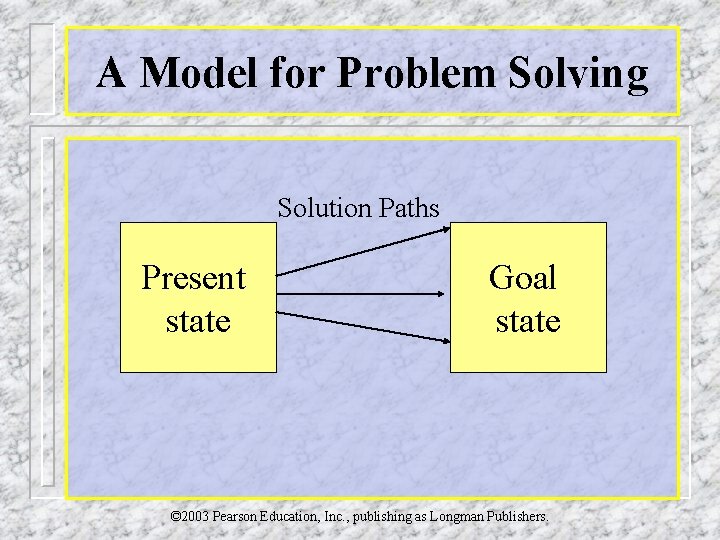
A Model for Problem Solving Solution Paths Present state Goal state © 2003 Pearson Education, Inc. , publishing as Longman Publishers.
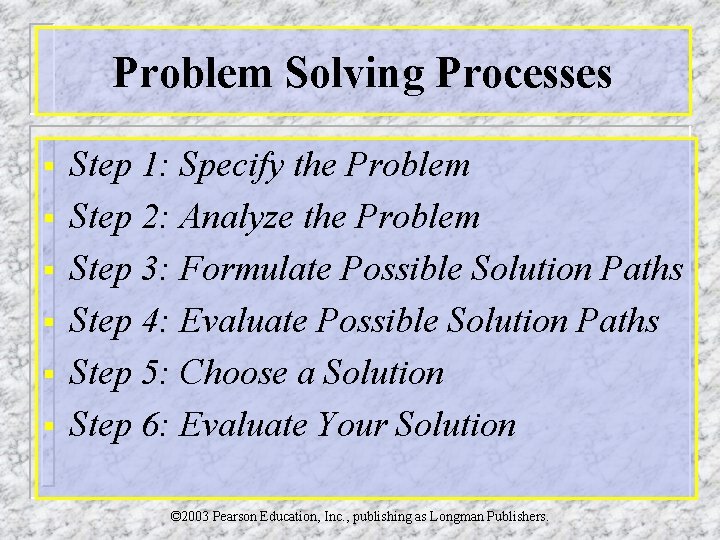
Problem Solving Processes § § § Step 1: Specify the Problem Step 2: Analyze the Problem Step 3: Formulate Possible Solution Paths Step 4: Evaluate Possible Solution Paths Step 5: Choose a Solution Step 6: Evaluate Your Solution © 2003 Pearson Education, Inc. , publishing as Longman Publishers.
Step 1: Specify the Problem § § State the problem Specify the problem in a way that allows you to solve it. Express the problem verbally or in writing. Focus on specifics. © 2003 Pearson Education, Inc. , publishing as Longman Publishers.
Step 2: Analyze the Problem § § § Seek other perspectives. Be flexible in your analysis. Consider various strands of impact. Brainstorm all possibilities. Research for more information. © 2003 Pearson Education, Inc. , publishing as Longman Publishers.
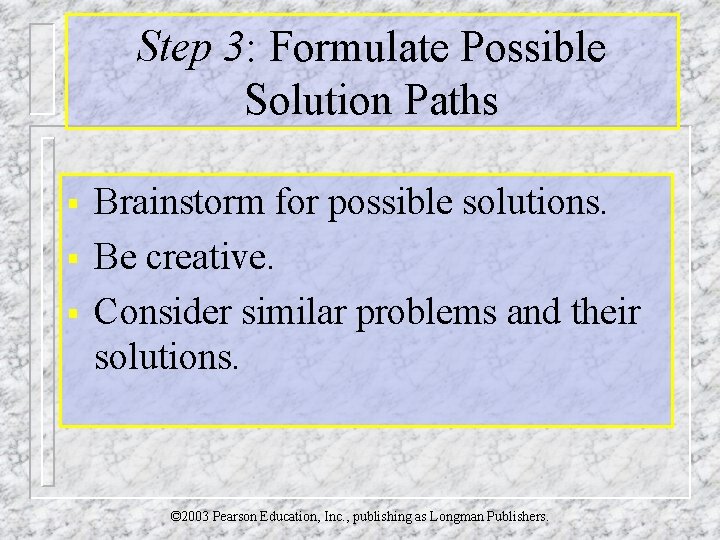
Step 3: Formulate Possible Solution Paths § § § Brainstorm for possible solutions. Be creative. Consider similar problems and their solutions. © 2003 Pearson Education, Inc. , publishing as Longman Publishers.
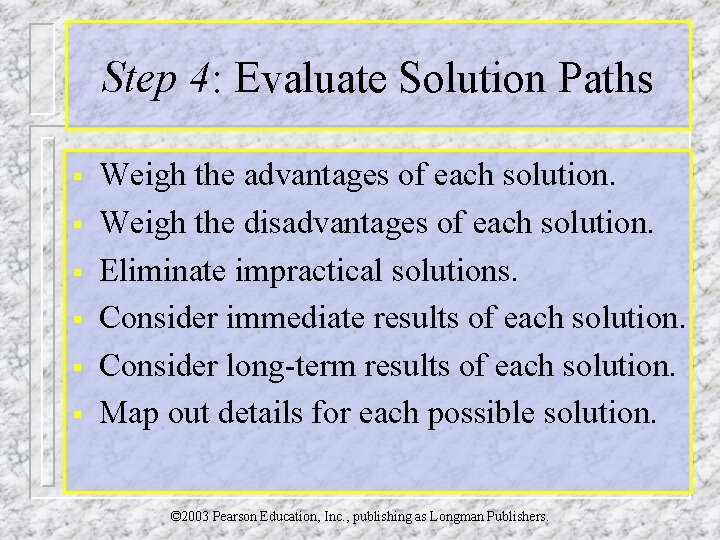
Step 4: Evaluate Solution Paths § § § Weigh the advantages of each solution. Weigh the disadvantages of each solution. Eliminate impractical solutions. Consider immediate results of each solution. Consider long-term results of each solution. Map out details for each possible solution. © 2003 Pearson Education, Inc. , publishing as Longman Publishers.
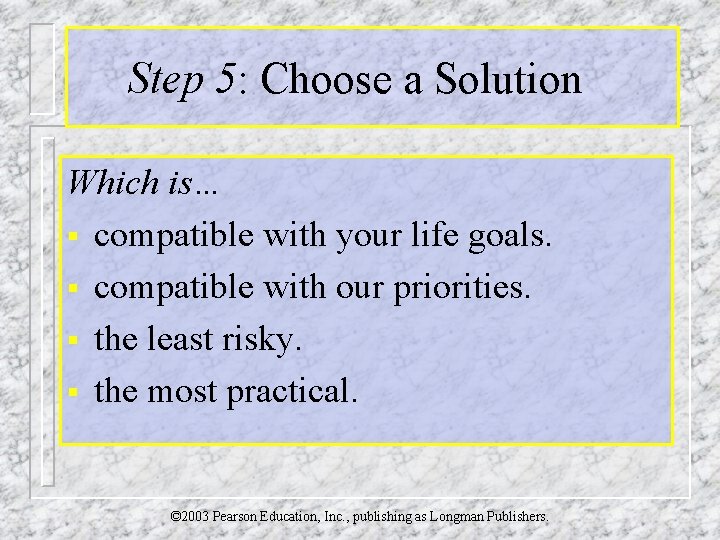
Step 5: Choose a Solution Which is… § compatible with your life goals. § compatible with our priorities. § the least risky. § the most practical. © 2003 Pearson Education, Inc. , publishing as Longman Publishers.
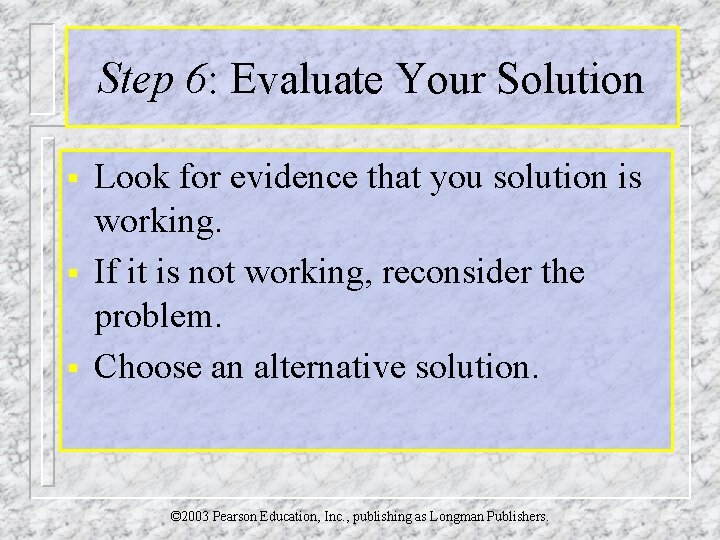
Step 6: Evaluate Your Solution § § § Look for evidence that you solution is working. If it is not working, reconsider the problem. Choose an alternative solution. © 2003 Pearson Education, Inc. , publishing as Longman Publishers.
Visit the Longman Study Skills Web Site http: //www. ablongman. com/studyskills © 2003 Pearson Education, Inc. , publishing as Longman Publishers.