
Study of the Optimum Momentum Resolution of CMS


- Slides: 22
Study of the Optimum Momentum Resolution of CMS Experiment Presented by: Timothy Mc. Donald Faculty Mentor: Darin Acosta
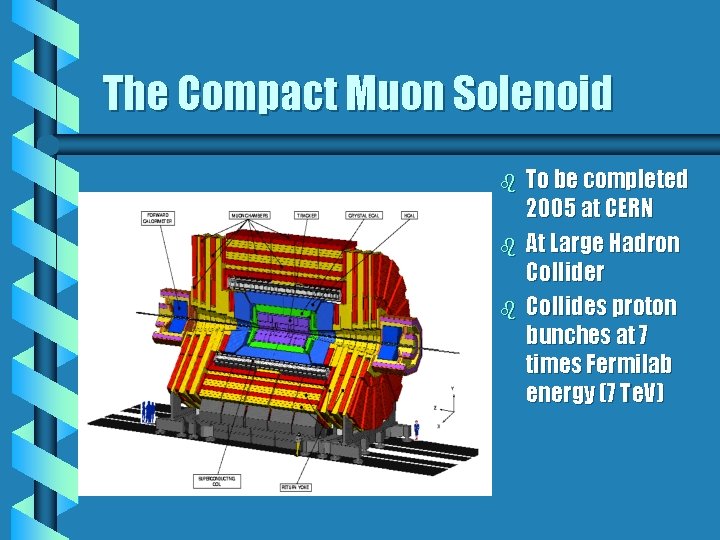
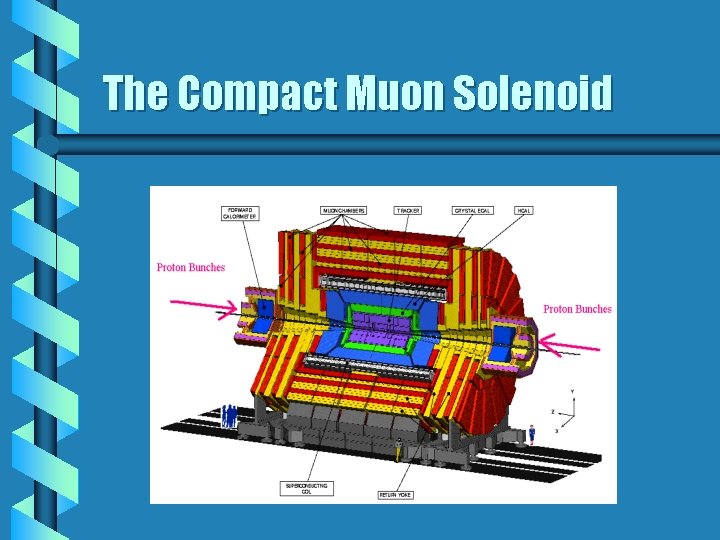
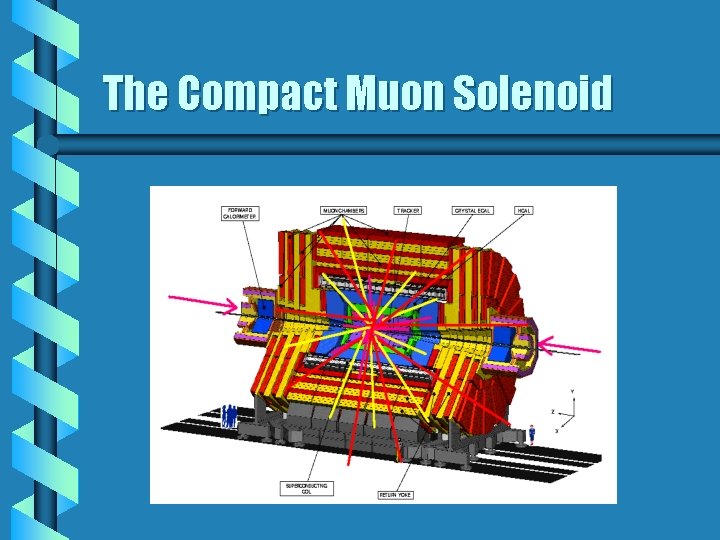
The Compact Muon Solenoid b b b To be completed 2005 at CERN At Large Hadron Collider Collides proton bunches at 7 times Fermilab energy (7 Te. V)
The Compact Muon Solenoid
The Compact Muon Solenoid
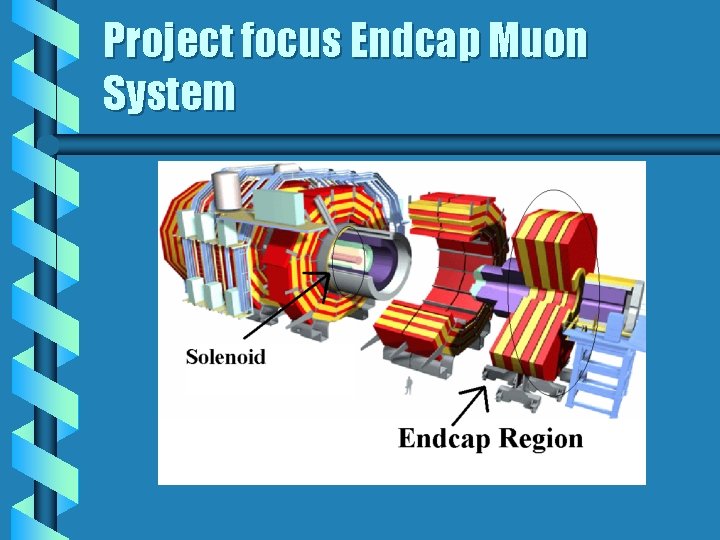
Project focus Endcap Muon System
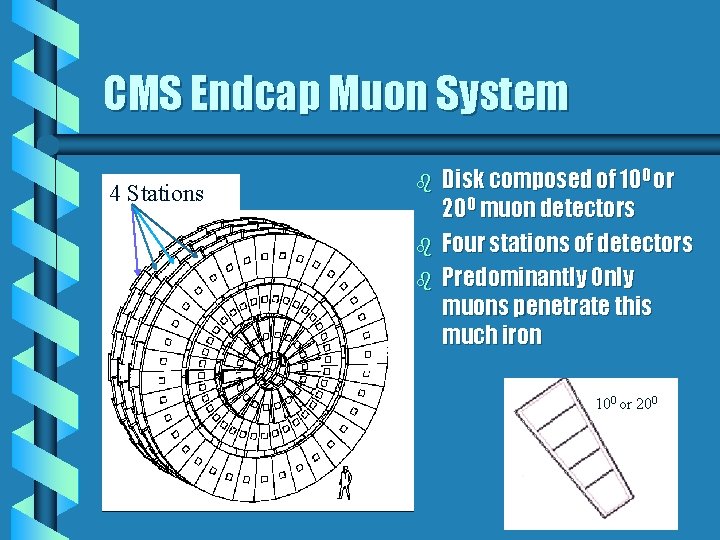
CMS Endcap Muon System 4 Stations b b b Disk composed of 100 or 200 muon detectors Four stations of detectors Predominantly Only muons penetrate this much iron 100 or 200
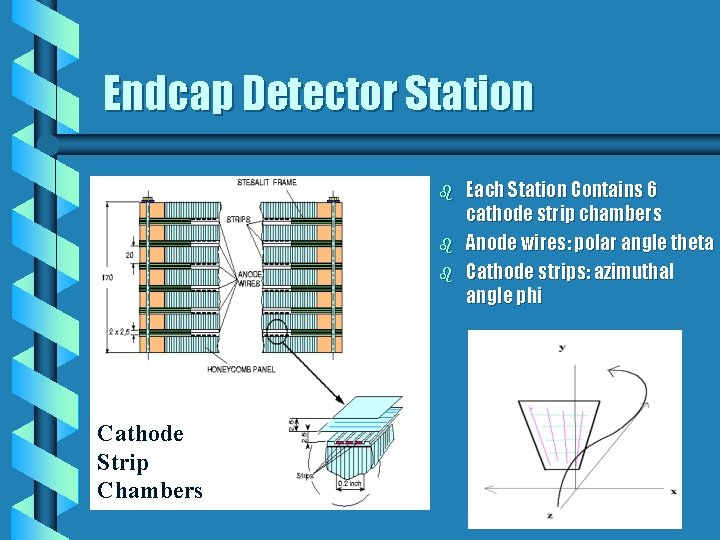
Endcap Detector Station b b b Cathode Strip Chambers Each Station Contains 6 cathode strip chambers Anode wires: polar angle theta Cathode strips: azimuthal angle phi
More data is produced than can be easily handled b 40, 000 collisions per second b 1 megabyte of data per collision bunch b 40 terabytes of data per second
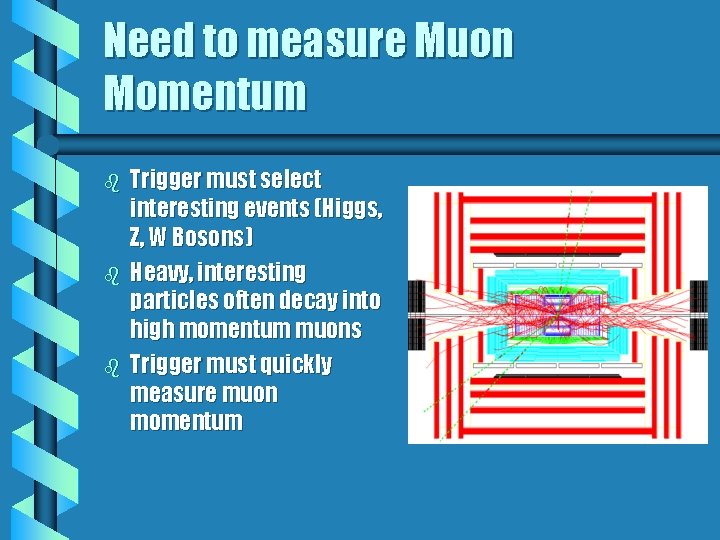
Need to measure Muon Momentum b b b Trigger must select interesting events (Higgs, Z, W Bosons) Heavy, interesting particles often decay into high momentum muons Trigger must quickly measure muon momentum
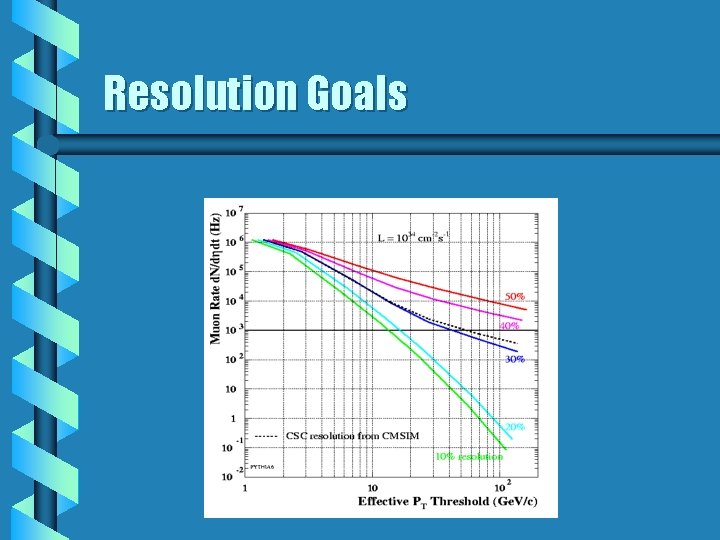
Resolution Goals
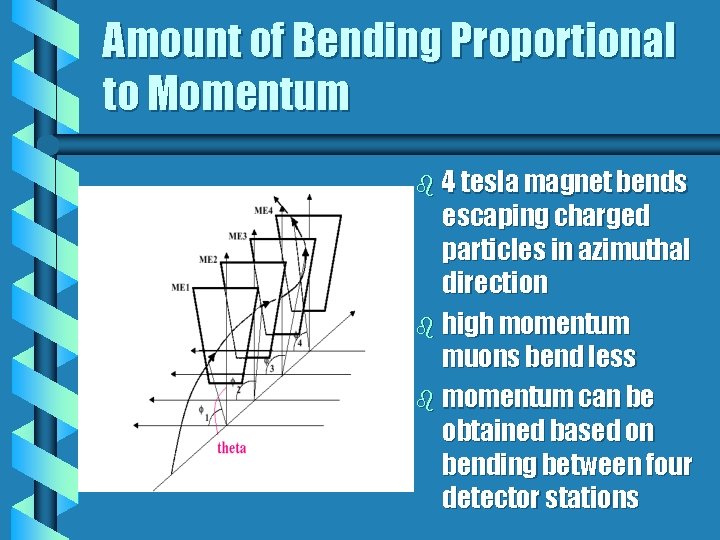
Amount of Bending Proportional to Momentum b 4 tesla magnet bends escaping charged particles in azimuthal direction b high momentum muons bend less b momentum can be obtained based on bending between four detector stations
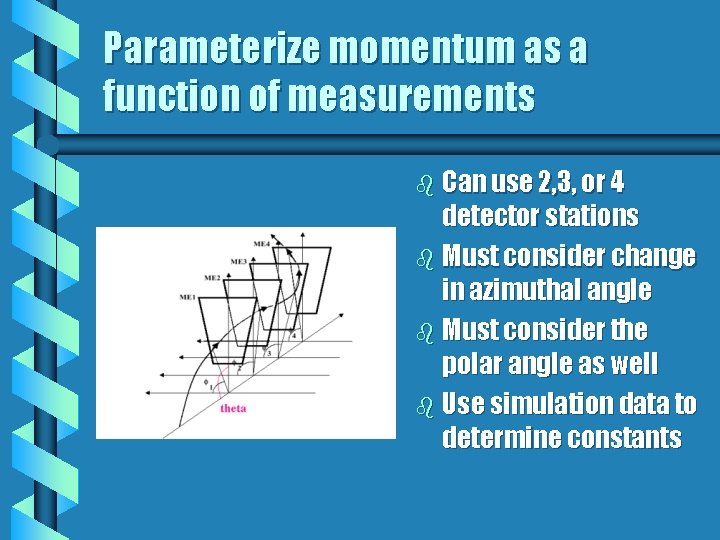
Parameterize momentum as a function of measurements b Can use 2, 3, or 4 detector stations b Must consider change in azimuthal angle b Must consider the polar angle as well b Use simulation data to determine constants
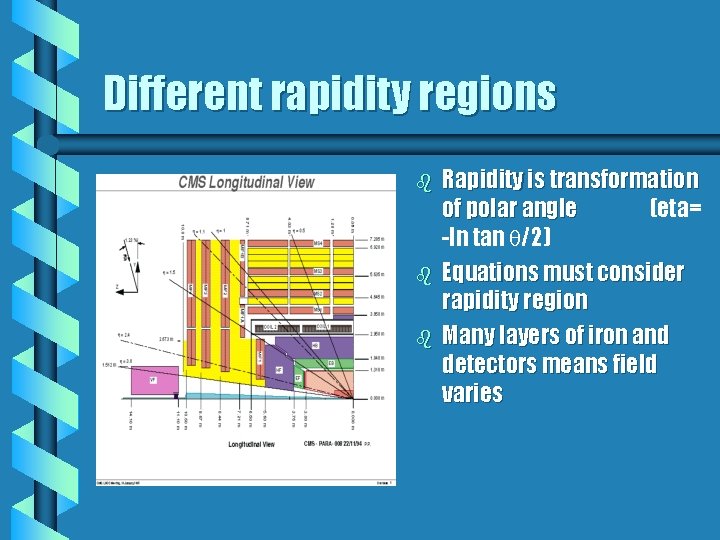
Different rapidity regions b b b Rapidity is transformation of polar angle (eta= -ln tan /2) Equations must consider rapidity region Many layers of iron and detectors means field varies
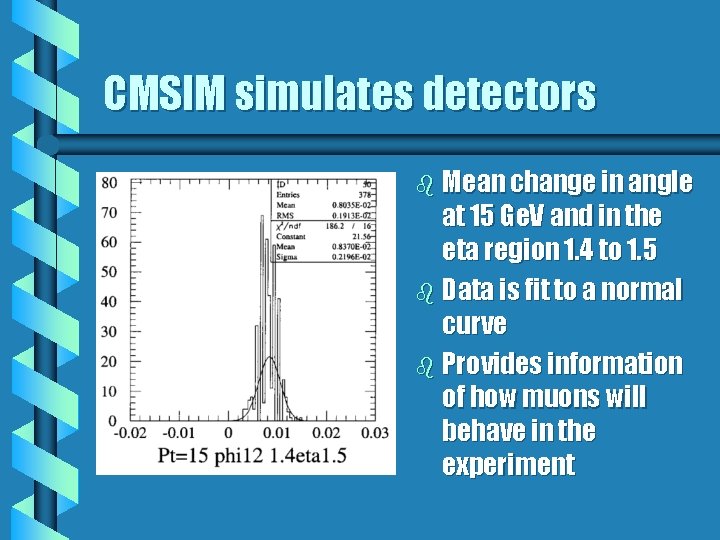
CMSIM simulates detectors b Mean change in angle at 15 Ge. V and in the eta region 1. 4 to 1. 5 b Data is fit to a normal curve b Provides information of how muons will behave in the experiment
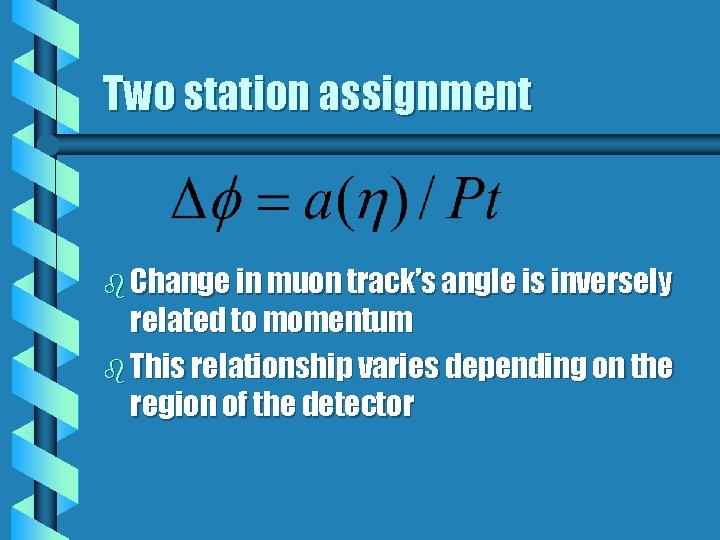
Two station assignment b Change in muon track’s angle is inversely related to momentum b This relationship varies depending on the region of the detector
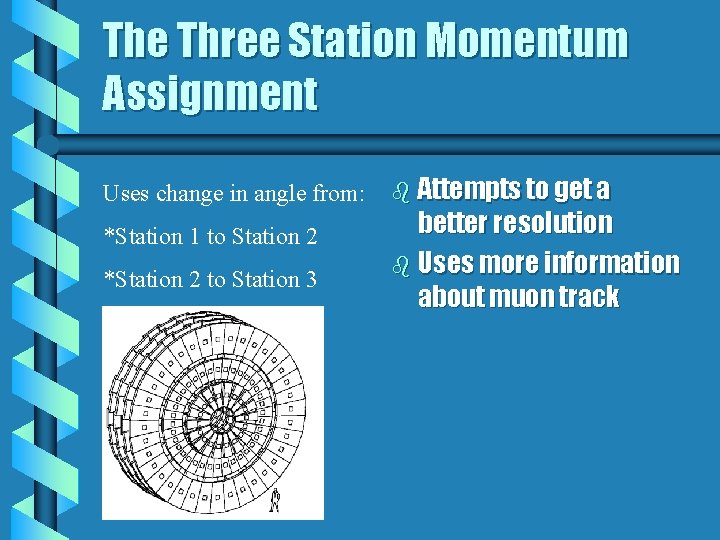
The Three Station Momentum Assignment Uses change in angle from: *Station 1 to Station 2 *Station 2 to Station 3 b Attempts to get a better resolution b Uses more information about muon track
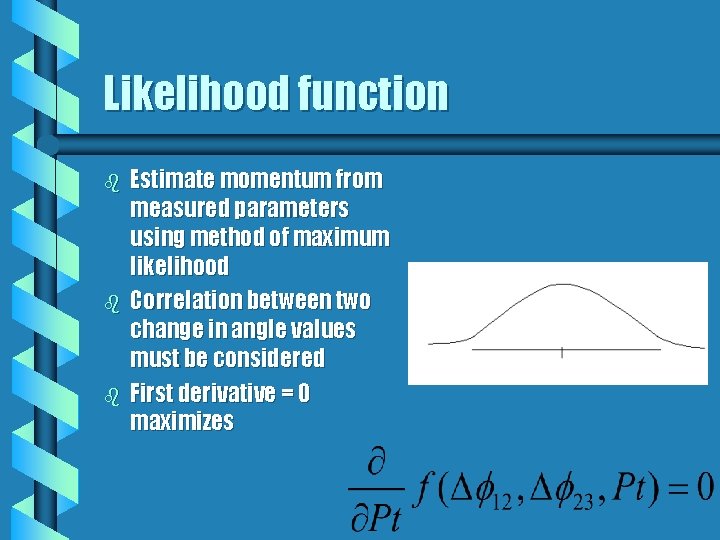
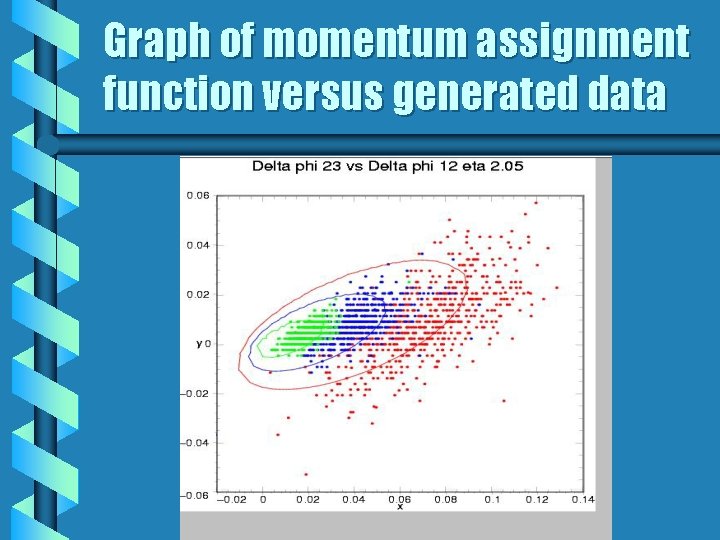
Likelihood function b b b Estimate momentum from measured parameters using method of maximum likelihood Correlation between two change in angle values must be considered First derivative = 0 maximizes
Solve for momentum b Solve the likelihood function for 1/momentum b The mean and RMS spread parameterized from simulation data b results in function that depends on rapidity and change in phi angles
Graph of momentum assignment function versus generated data
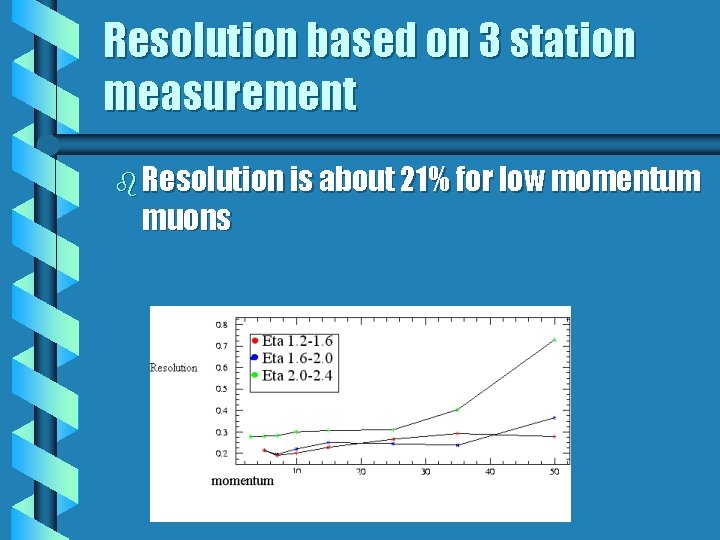
Resolution based on 3 station measurement b Resolution is about 21% for low momentum muons
Four Station Momentum Assignment b Attempts to bring resolution to lowest possible: 15% b Uses three change in angle values from the four stations b Not as much bending between third and fourth b Resolution same as three station assignment
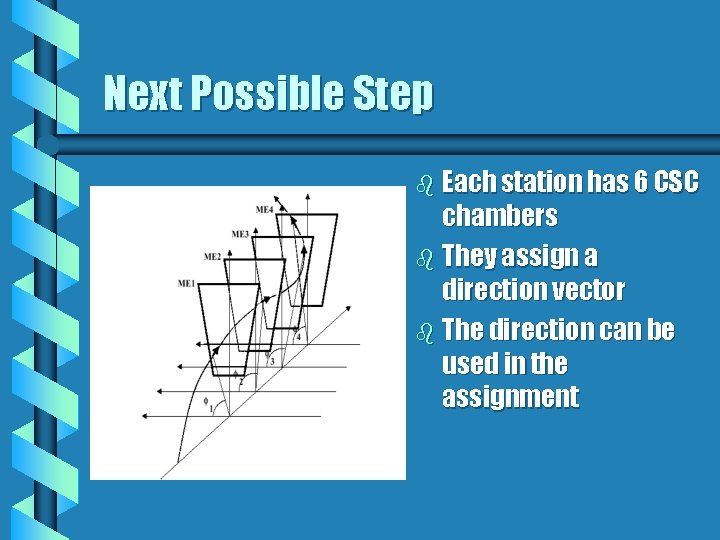
Next Possible Step b Each station has 6 CSC chambers b They assign a direction vector b The direction can be used in the assignment