
STUDY OF THE ADVANCED BASELINE IMAGER ABI ON
STUDY OF THE ADVANCED BASELINE IMAGER (ABI) ON THE GOES-R AND BEYOND Timothy J. Schmit NOAA/NESDIS/STAR -- Sa. Tellite Applications and Research (STAR) Advanced Satellite Products Team (ASPT) W. P. Menzel, James Gurka (NOAA/NESDIS) Jun Li, Mathew M. Gunshor, Christopher C. Schmidt, Justin Sieglaff Cooperative Institute for Meteorological Satellite Studies (CIMSS) Madison, WI IIPS, January 14, 2004 Seattle, Washington UW-Madison
Outline • What is the Advanced Baseline Imager (ABI)? • Summary of the Spectral Bands – Visible/near infrared – Infrared – Recent changes • Relationships between bands and select products • Summary • More information
The ABI (Advanced Baseline Imager) is the next generation operational geostationary imager. The GOES-R/ABI era will begin in 2012. Limitations of Current GOES Imagers – – Regional/Hemispheric scan conflicts Low spatial resolution Missing spectral bands Eclipse and related outages
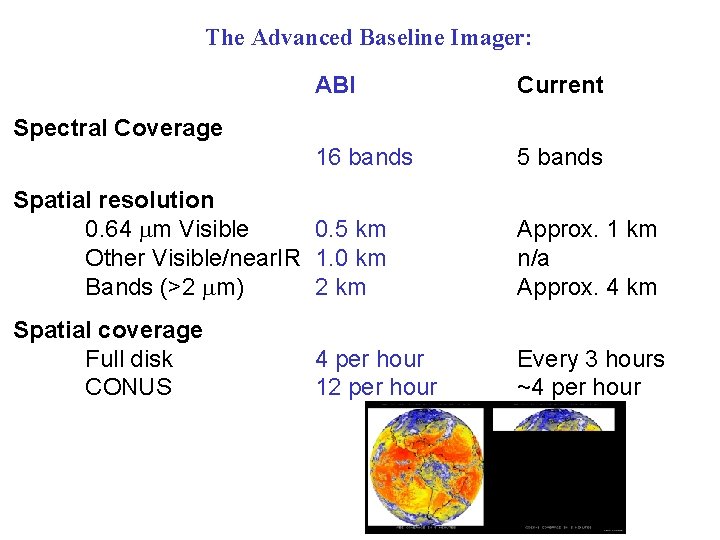
The Advanced Baseline Imager: ABI Current 16 bands 5 bands Spectral Coverage Spatial resolution 0. 64 mm Visible 0. 5 km Other Visible/near. IR 1. 0 km Bands (>2 mm) 2 km Approx. 1 km n/a Approx. 4 km Spatial coverage Full disk CONUS Every 3 hours ~4 per hour 12 per hour
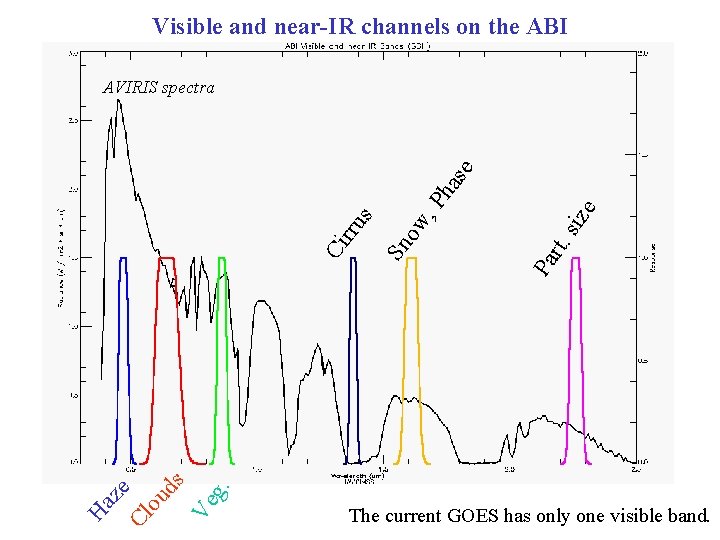
Visible and near-IR channels on the ABI ou ds Ve g. Cl Ha ze e siz rt. Pa w, Sn o Ci rru s Ph as e AVIRIS spectra The current GOES has only one visible band.
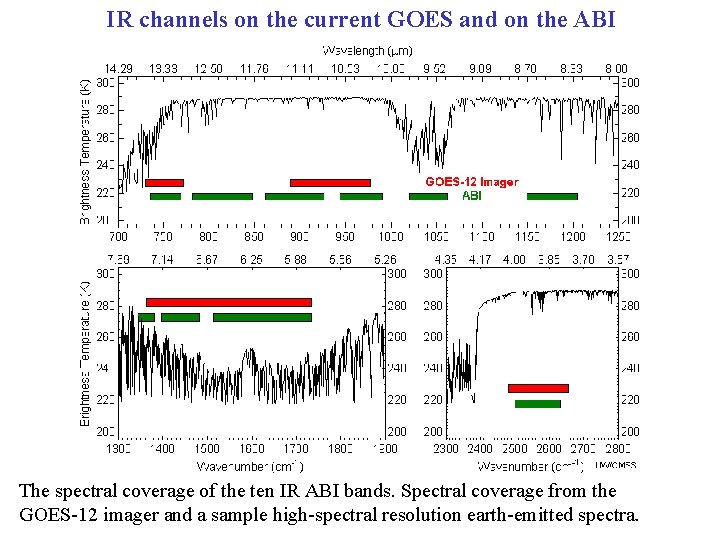
IR channels on the current GOES and on the ABI The spectral coverage of the ten IR ABI bands. Spectral coverage from the GOES-12 imager and a sample high-spectral resolution earth-emitted spectra.
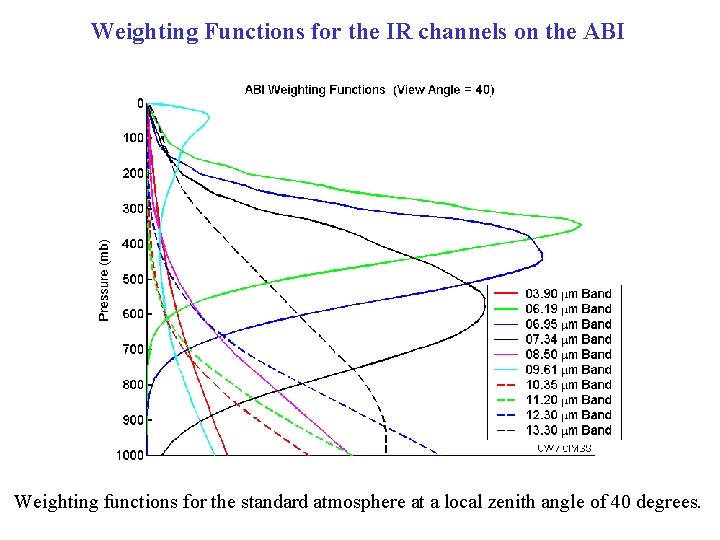
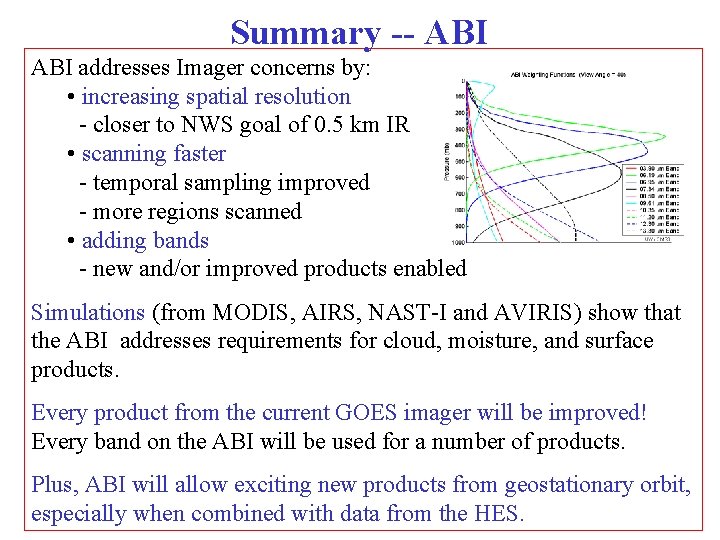
Weighting Functions for the IR channels on the ABI Weighting functions for the standard atmosphere at a local zenith angle of 40 degrees.
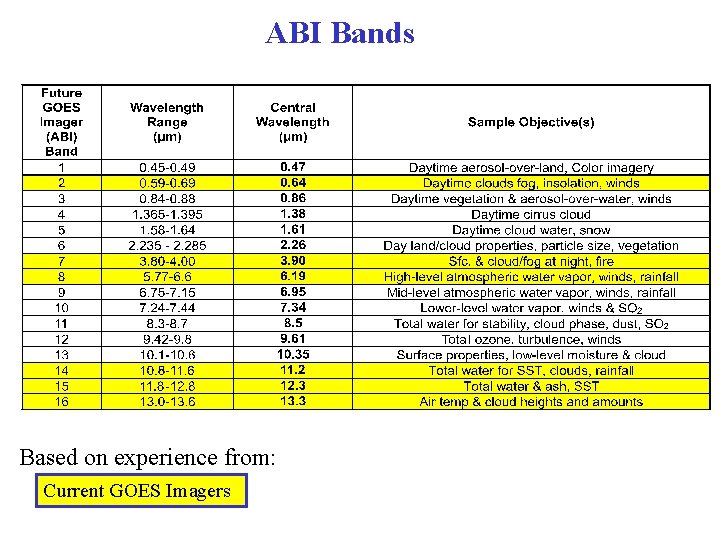
ABI Bands Based on experience from: Current GOES Imagers
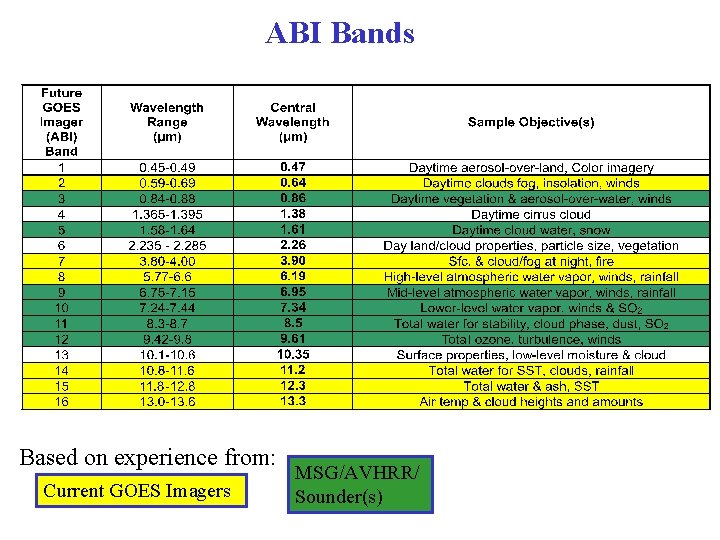
ABI Bands Based on experience from: Current GOES Imagers MSG/AVHRR/ Sounder(s)
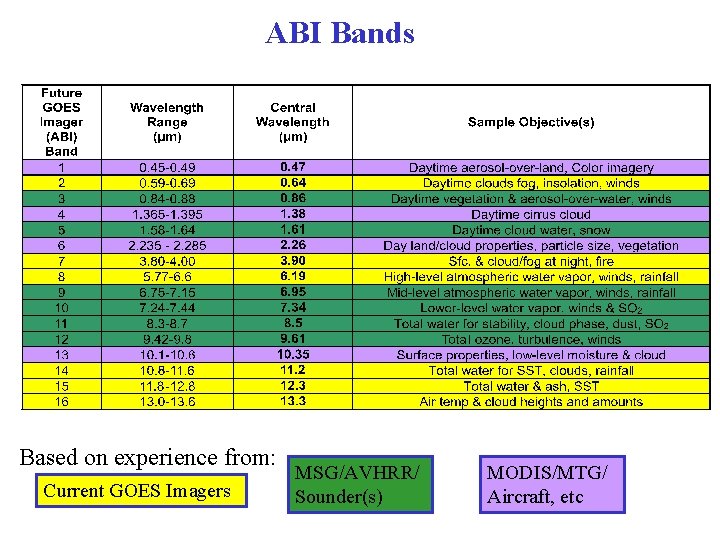
ABI Bands Based on experience from: Current GOES Imagers MSG/AVHRR/ Sounder(s) MODIS/MTG/ Aircraft, etc
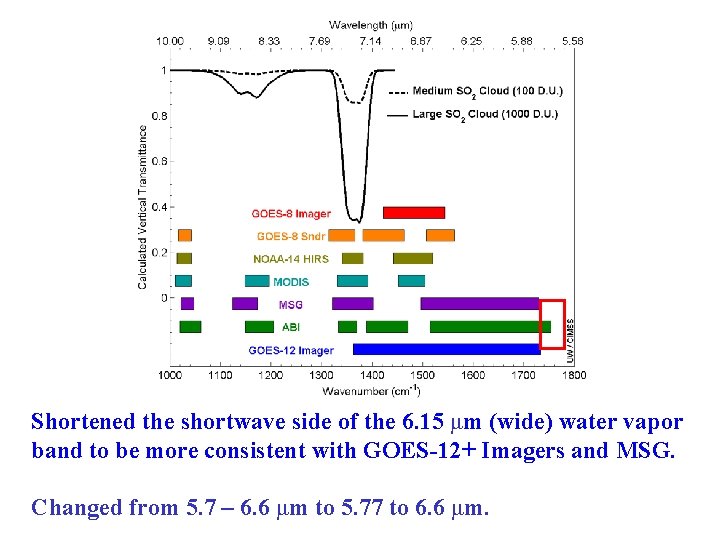
Shortened the shortwave side of the 6. 15 μm (wide) water vapor band to be more consistent with GOES-12+ Imagers and MSG. Changed from 5. 7 – 6. 6 μm to 5. 77 to 6. 6 μm.
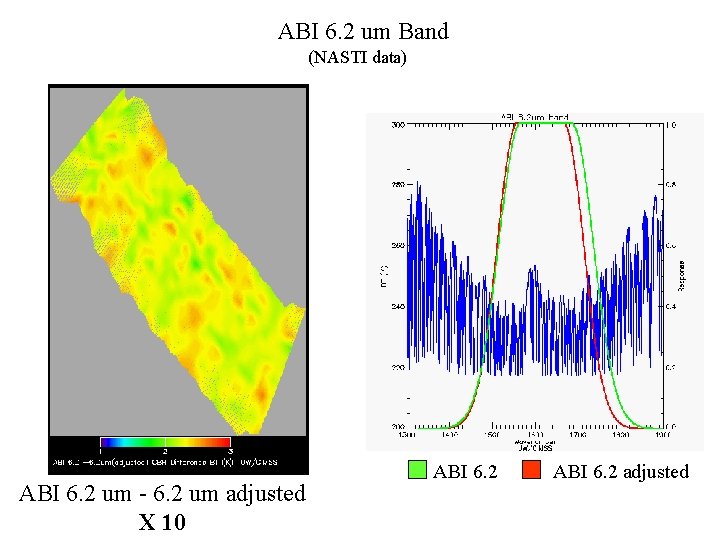
ABI 6. 2 um Band (NASTI data) ABI 6. 2 um - 6. 2 um adjusted X 10 ABI 6. 2 adjusted
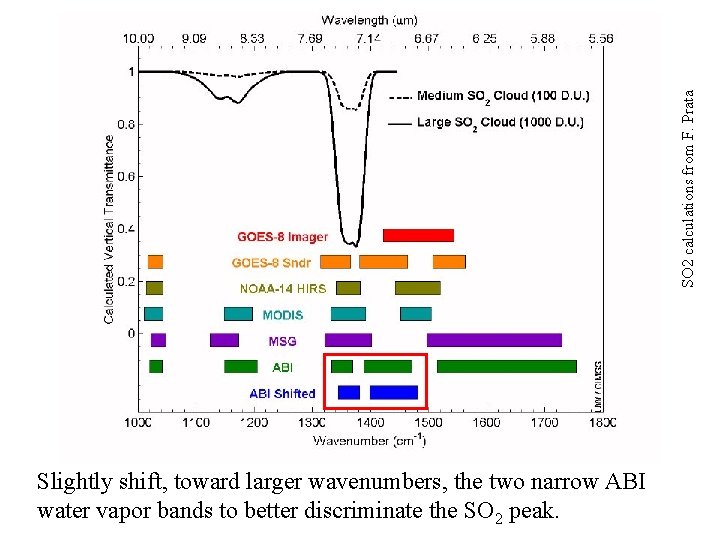
SO 2 calculations from F. Prata Slightly shift, toward larger wavenumbers, the two narrow ABI water vapor bands to better discriminate the SO 2 peak.
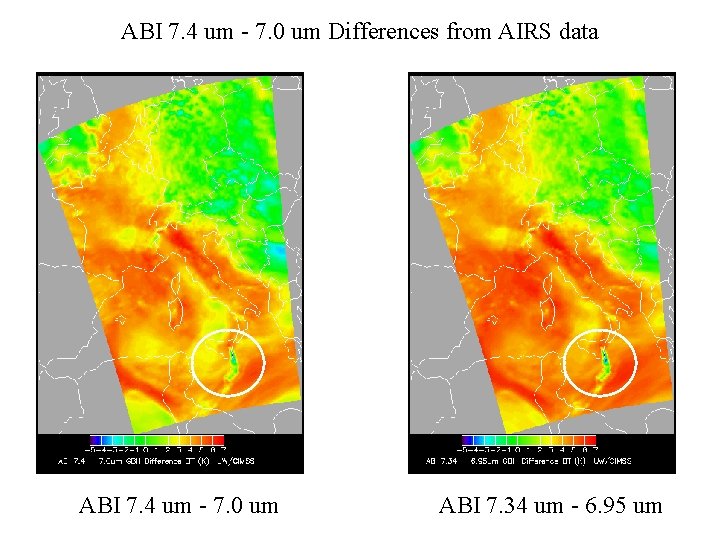
ABI 7. 4 um - 7. 0 um Differences from AIRS data ABI 7. 4 um - 7. 0 um ABI 7. 34 um - 6. 95 um
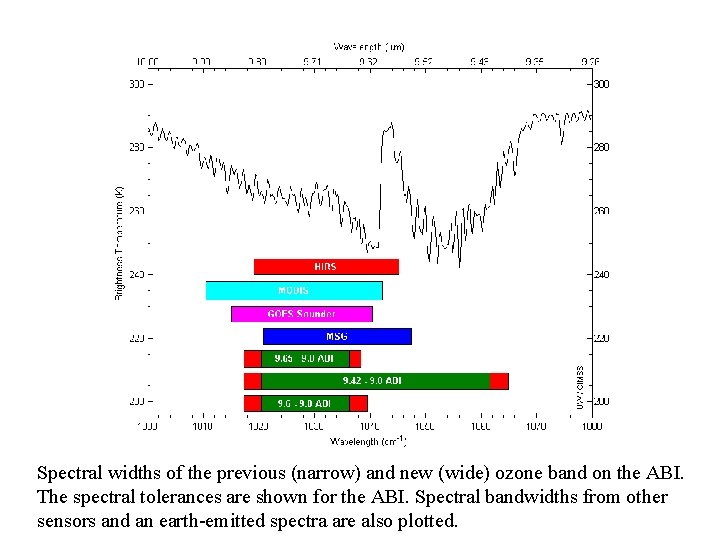
Spectral widths of the previous (narrow) and new (wide) ozone band on the ABI. The spectral tolerances are shown for the ABI. Spectral bandwidths from other sensors and an earth-emitted spectra are also plotted.
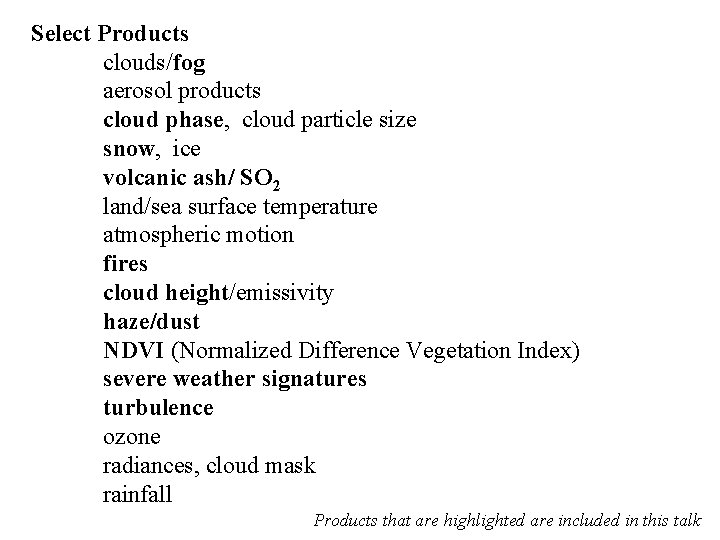
Select Products clouds/fog aerosol products cloud phase, cloud particle size snow, ice volcanic ash/ SO 2 land/sea surface temperature atmospheric motion fires cloud height/emissivity haze/dust NDVI (Normalized Difference Vegetation Index) severe weather signatures turbulence ozone radiances, cloud mask rainfall Products that are highlighted are included in this talk
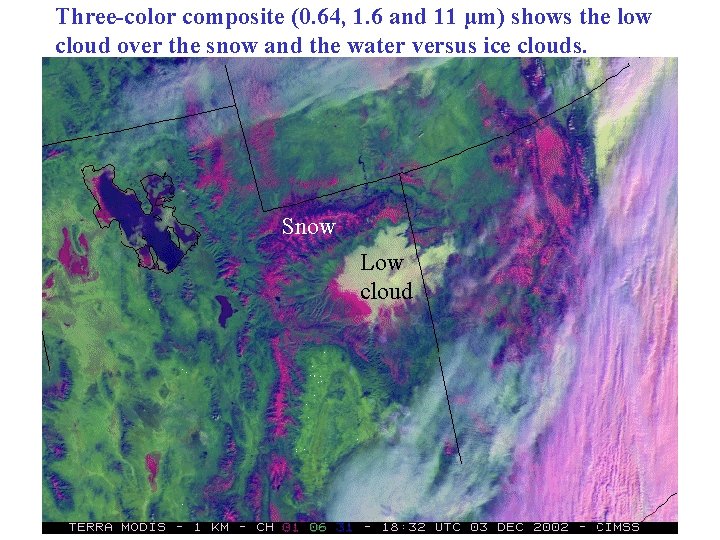
Three-color composite (0. 64, 1. 6 and 11 µm) shows the low cloud over the snow and the water versus ice clouds. Snow Low cloud
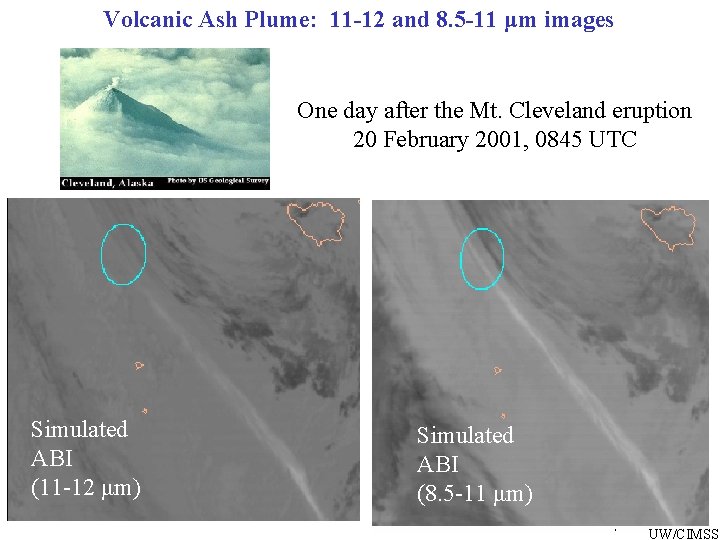
Volcanic Ash Plume: 11 -12 and 8. 5 -11 μm images One day after the Mt. Cleveland eruption 20 February 2001, 0845 UTC Simulated ABI (11 -12 μm) Simulated ABI (8. 5 -11 μm) UW/CIMSS
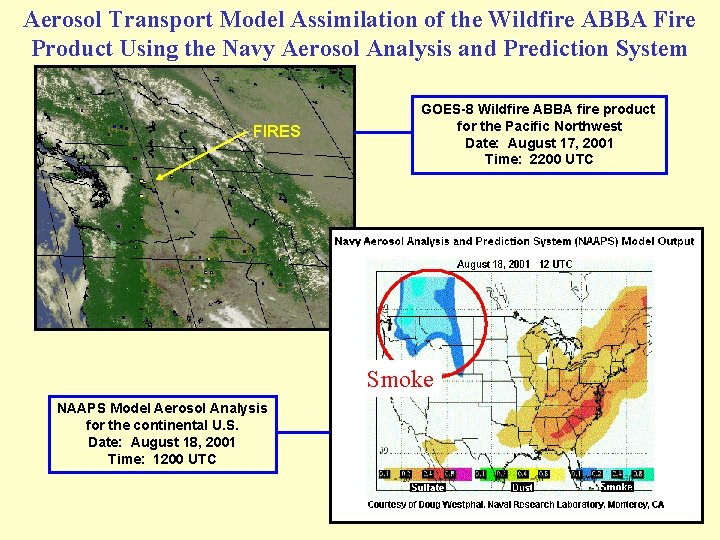
Aerosol Transport Model Assimilation of the Wildfire ABBA Fire Product Using the Navy Aerosol Analysis and Prediction System FIRES GOES-8 Wildfire ABBA fire product for the Pacific Northwest Date: August 17, 2001 Time: 2200 UTC Smoke NAAPS Model Aerosol Analysis for the continental U. S. Date: August 18, 2001 Time: 1200 UTC
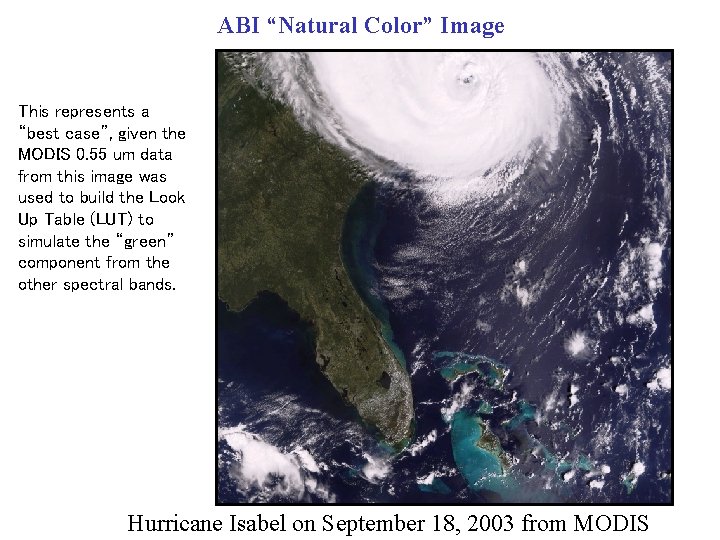
ABI “Natural Color” Image This represents a “best case”, given the MODIS 0. 55 um data from this image was used to build the Look Up Table (LUT) to simulate the “green” component from the other spectral bands. Hurricane Isabel on September 18, 2003 from MODIS
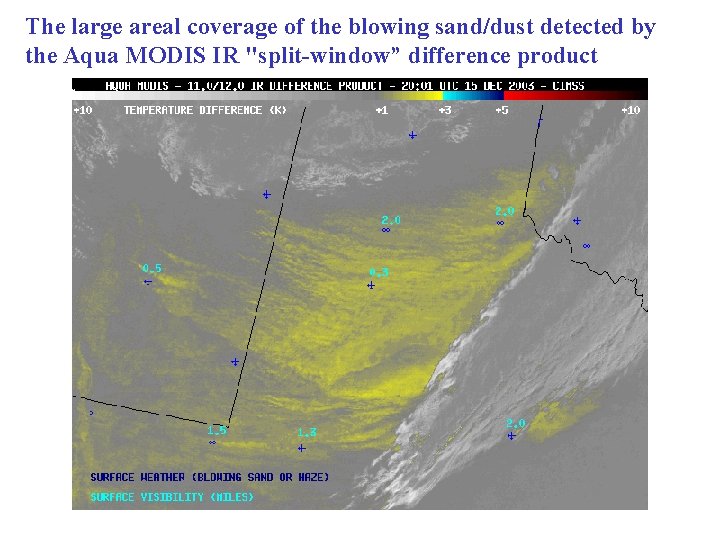
The large areal coverage of the blowing sand/dust detected by the Aqua MODIS IR "split-window” difference product
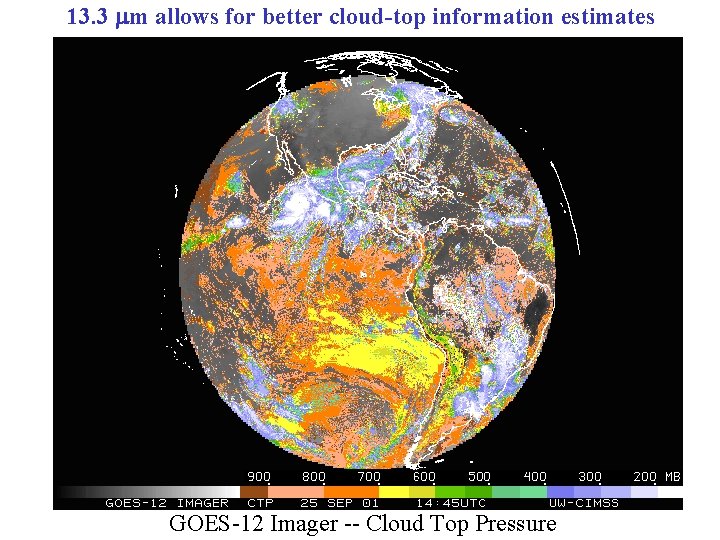
13. 3 m allows for better cloud-top information estimates GOES-12 Imager -- Cloud Top Pressure
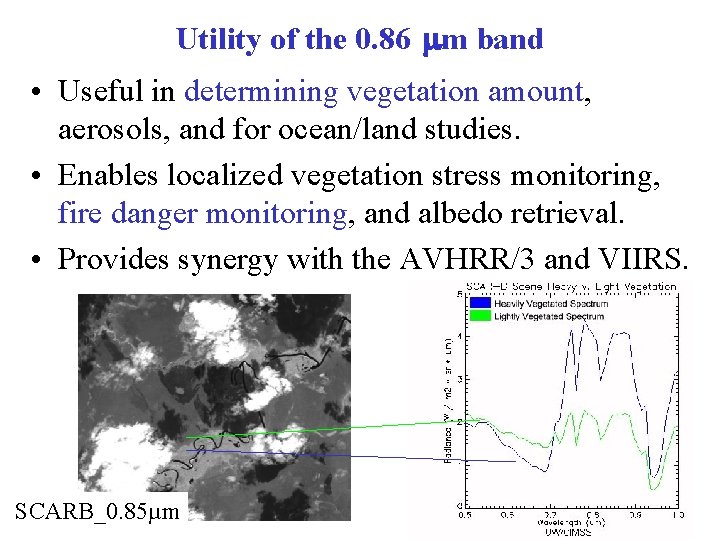
Utility of the 0. 86 m band • Useful in determining vegetation amount, aerosols, and for ocean/land studies. • Enables localized vegetation stress monitoring, fire danger monitoring, and albedo retrieval. • Provides synergy with the AVHRR/3 and VIIRS. SCARB_0. 85µm
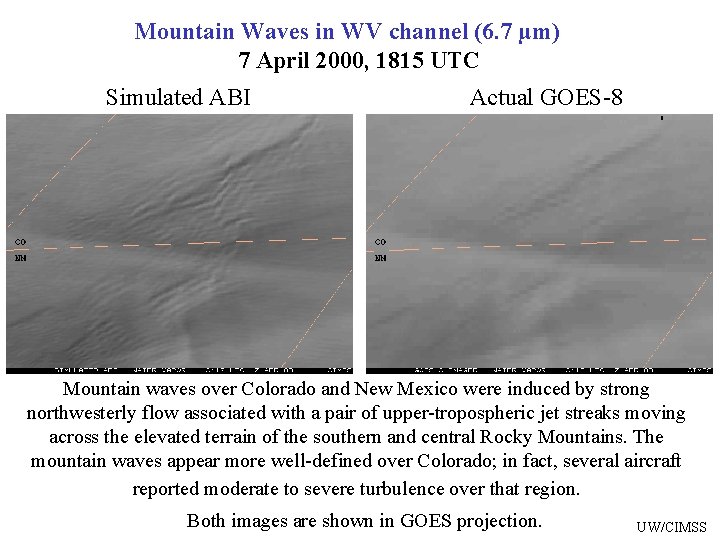
Mountain Waves in WV channel (6. 7 µm) 7 April 2000, 1815 UTC Simulated ABI Actual GOES-8 Mountain waves over Colorado and New Mexico were induced by strong northwesterly flow associated with a pair of upper-tropospheric jet streaks moving across the elevated terrain of the southern and central Rocky Mountains. The mountain waves appear more well-defined over Colorado; in fact, several aircraft reported moderate to severe turbulence over that region. Both images are shown in GOES projection. UW/CIMSS
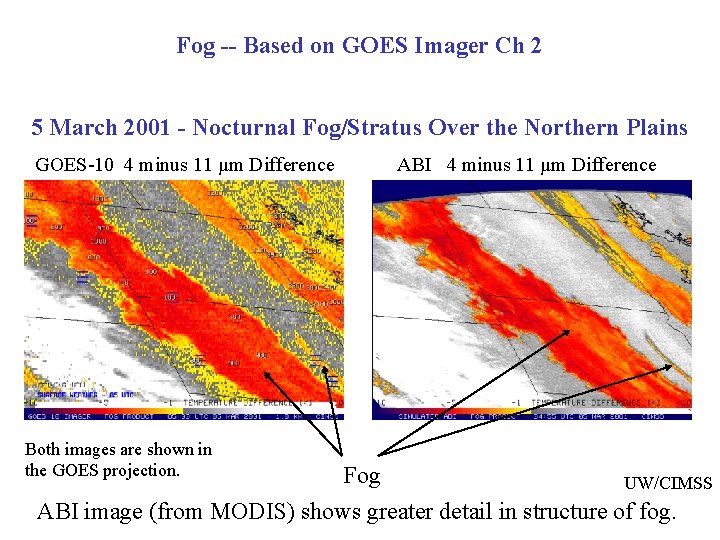
Fog -- Based on GOES Imager Ch 2 5 March 2001 - Nocturnal Fog/Stratus Over the Northern Plains GOES-10 4 minus 11 μm Difference Both images are shown in the GOES projection. ABI 4 minus 11 μm Difference Fog UW/CIMSS ABI image (from MODIS) shows greater detail in structure of fog.
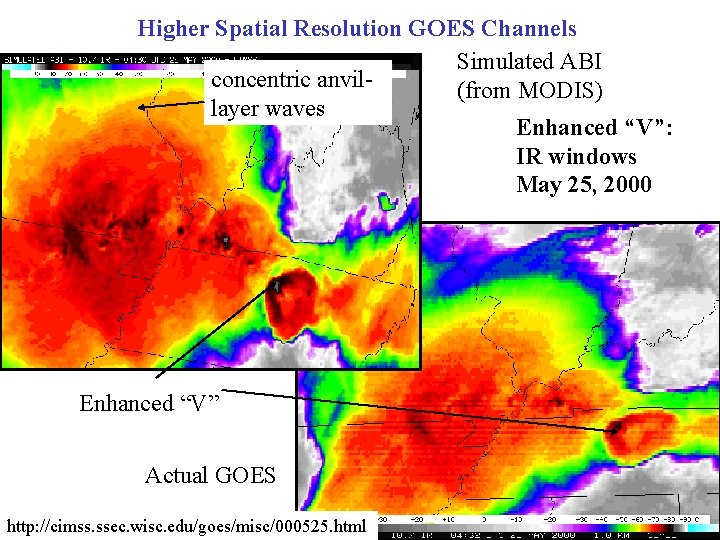
Higher Spatial Resolution GOES Channels Simulated ABI concentric anvil(from MODIS) layer waves Enhanced “V”: IR windows May 25, 2000 Enhanced “V” Actual GOES http: //cimss. ssec. wisc. edu/goes/misc/000525. html
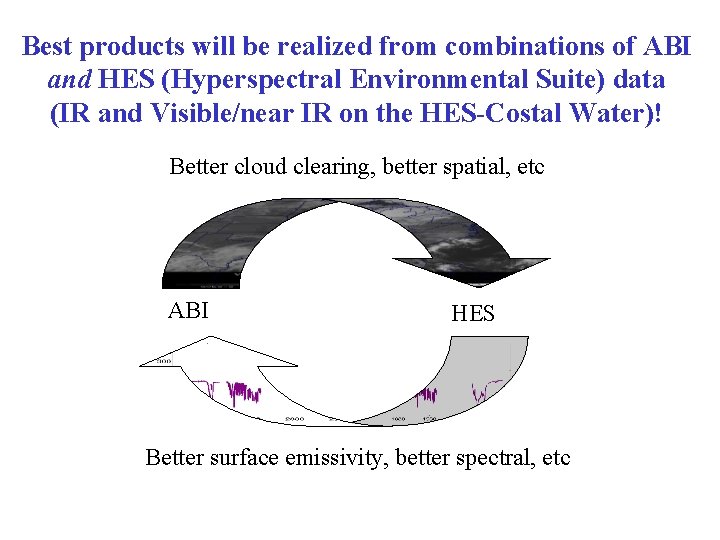
Best products will be realized from combinations of ABI and HES (Hyperspectral Environmental Suite) data (IR and Visible/near IR on the HES-Costal Water)! Better cloud clearing, better spatial, etc ABI HES Better surface emissivity, better spectral, etc
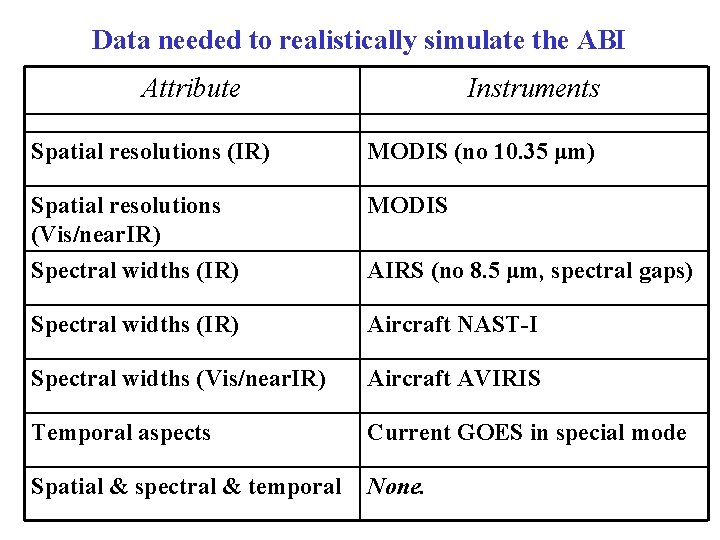
Data needed to realistically simulate the ABI Attribute Instruments Spatial resolutions (IR) MODIS (no 10. 35 μm) Spatial resolutions (Vis/near. IR) MODIS Spectral widths (IR) AIRS (no 8. 5 μm, spectral gaps) Spectral widths (IR) Aircraft NAST-I Spectral widths (Vis/near. IR) Aircraft AVIRIS Temporal aspects Current GOES in special mode Spatial & spectral & temporal None.
Summary -- ABI addresses Imager concerns by: • increasing spatial resolution - closer to NWS goal of 0. 5 km IR • scanning faster - temporal sampling improved - more regions scanned • adding bands - new and/or improved products enabled Simulations (from MODIS, AIRS, NAST-I and AVIRIS) show that the ABI addresses requirements for cloud, moisture, and surface products. Every product from the current GOES imager will be improved! Every band on the ABI will be used for a number of products. Plus, ABI will allow exciting new products from geostationary orbit, especially when combined with data from the HES.
More information -- ABI Documentation from NASA: • http: //goes 2. gsfc. nasa. gov/abihome. htm ABI Research Home page: • http: //cimss. ssec. wisc. edu/goes/abi/ ABI Simulated images from NASA AIRS Direct Broadcast: • http: //cimss. ssec. wisc. edu/goes/abi/airs_broadcast/aniairs. html GOES(-R) User Conferences (Third one will be May 10 -13, 2004): • http: //www. osd. noaa. gov/announcement/index. htm GOES and MODIS Galleries: • http: //cimss. ssec. wisc. edu/goes/misc/interesting_images. html • http: //terra. ssec. wisc. edu/~gumley/images. html ABI Mock Spectral Response functions: • ftp: //ftp. ssec. wisc. edu/ABI/SRF
This slide is (mostly) blank.
- Slides: 31