
Study of spin structure of nucleon in COMPASS

- Slides: 31
Study of spin structure of nucleon in COMPASS - measurements for transversity with a transversely polarized target – T. Matsuda – Uni. of Miyazaki, Japan on behalf of the COMPASS collaboration 1. The COMPASS experiment at CERN 2. Transversity measurements (1) 1 -hadron asymmetries (2) (Collins & Sivers asymmetries) (2) 2 -hadron correlation asymmetry (3) L polarimetry 3. Summary and outlook Joint Meeting of Pacific Region Particle Physics Communities (DPF 2006+JPS 2006 ) Oct. 29 -Nov. 03, 2006 Honolulu, Hawaii, 1 USA
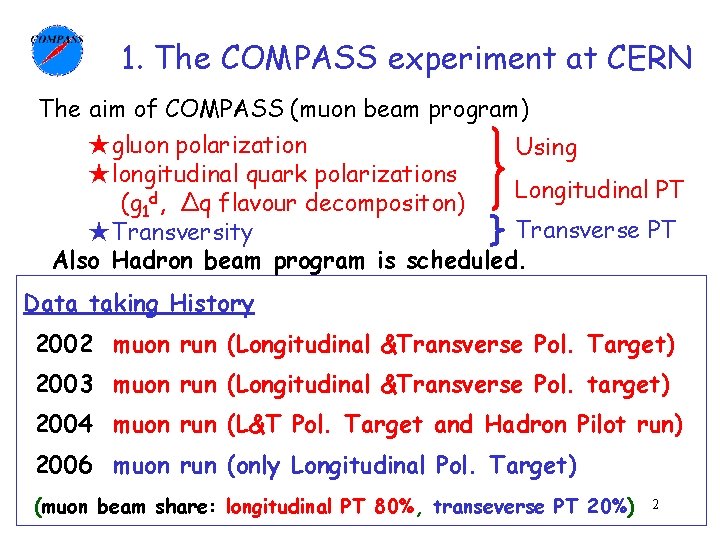
1. The COMPASS experiment at CERN The aim of COMPASS (muon beam program) ★gluon polarization Using ★longitudinal quark polarizations Longitudinal PT (g 1 d, Δq flavour decompositon) Transverse PT ★Transversity Also Hadron beam program is scheduled. Data taking History 2002 muon run (Longitudinal &Transverse Pol. Target) 2003 muon run (Longitudinal &Transverse Pol. target) 2004 muon run (L&T Pol. Target and Hadron Pilot run) 2006 muon run (only Longitudinal Pol. Target) (muon beam share: longitudinal PT 80%, transeverse PT 20%) 2
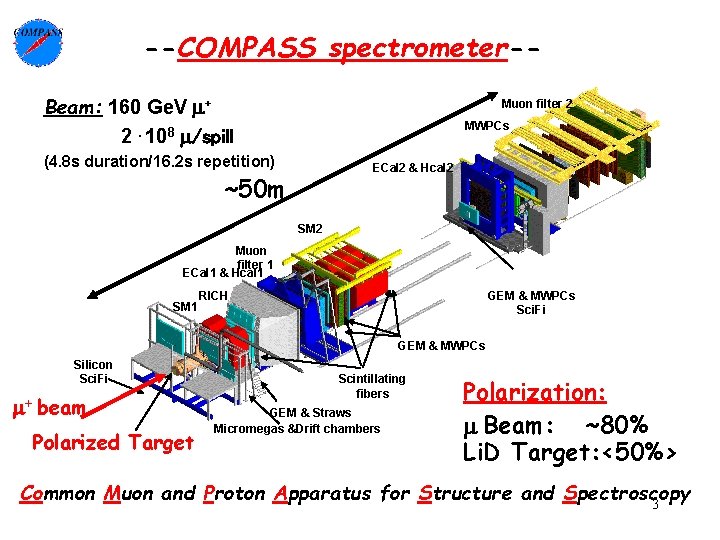
--COMPASS spectrometer-Beam: 160 Ge. V m+ 2. 108 m/spill Muon filter 2 MWPCs (4. 8 s duration/16. 2 s repetition) ECal 2 & Hcal 2 ~50 m SM 2 Muon filter 1 ECal 1 & Hcal 1 SM 1 RICH GEM & MWPCs Sci. Fi GEM & MWPCs Silicon Sci. Fi m+ beam Polarized Target Scintillating fibers GEM & Straws Micromegas &Drift chambers Polarization: m Beam: ~80% Li. D Target: <50%> Common Muon and Proton Apparatus for Structure and Spectroscopy 3
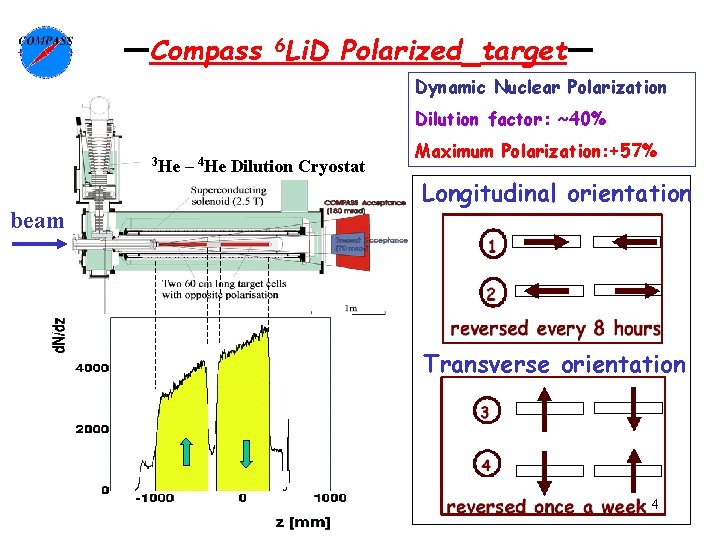
ーCompass 6 Li. D Polarized targetー Dynamic Nuclear Polarization Dilution factor: ~40% 3 He beam – 4 He Dilution Cryostat Maximum Polarization: +57% Longitudinal orientation Transverse orientation 4
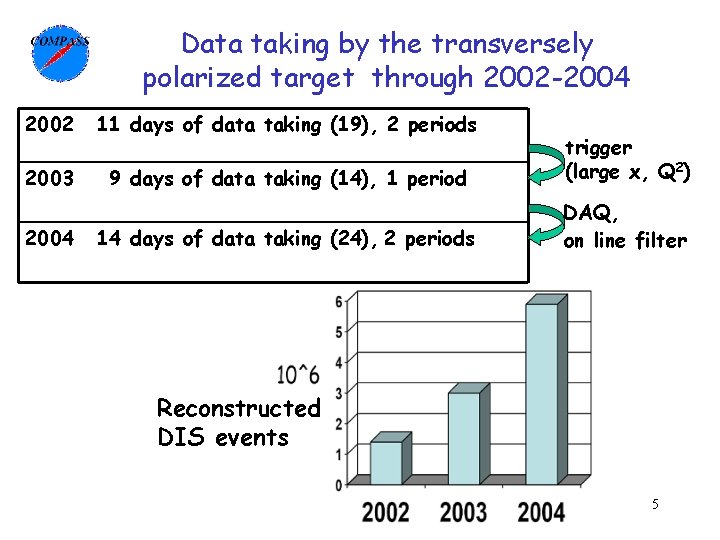
Data taking by the transversely polarized target through 2002 -2004 2002 11 days of data taking (19), 2 periods 2003 9 days of data taking (14), 1 period trigger (large x, Q 2) 14 days of data taking (24), 2 periods DAQ, on line filter 2004 Reconstructed DIS events 5
2. Transversity measurement (0) Transversity –introduction (1) Transversity – 1 -hadron asymmetries ( Collins & Sivers asymmetries) (2) Transversity – 2 -hadron correlation asymmetry (3) Transversity –L polarimetry 6
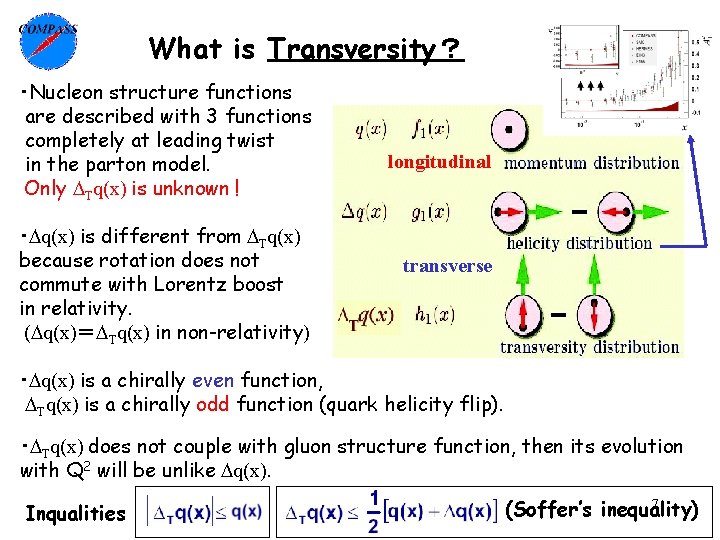
What is Transversity? ・Nucleon structure functions are described with 3 functions completely at leading twist in the parton model. Only DTq(x) is unknown ! ・Dq(x) is different from DTq(x) because rotation does not commute with Lorentz boost in relativity. (Dq(x)=DTq(x) in non-relativity) longitudinal transverse ・Dq(x) is a chirally even function, DTq(x) is a chirally odd function (quark helicity flip). ・DTq(x) does not couple with gluon structure function, then its evolution with Q 2 will be unlike Dq(x). Inqualities 7 (Soffer’s inequality)
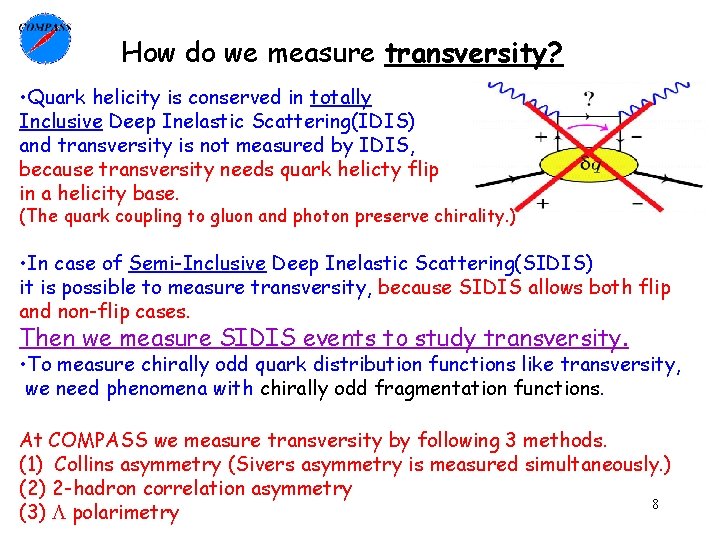
How do we measure transversity? • Quark helicity is conserved in totally Inclusive Deep Inelastic Scattering(IDIS) and transversity is not measured by IDIS, because transversity needs quark helicty flip in a helicity base. (The quark coupling to gluon and photon preserve chirality. ) • In case of Semi-Inclusive Deep Inelastic Scattering(SIDIS) it is possible to measure transversity, because SIDIS allows both flip and non-flip cases. Then we measure SIDIS events to study transversity. • To measure chirally odd quark distribution functions like transversity, we need phenomena with chirally odd fragmentation functions. At COMPASS we measure transversity by following 3 methods. (1) Collins asymmetry (Sivers asymmetry is measured simultaneously. ) (2) 2 -hadron correlation asymmetry 8 (3) L polarimetry
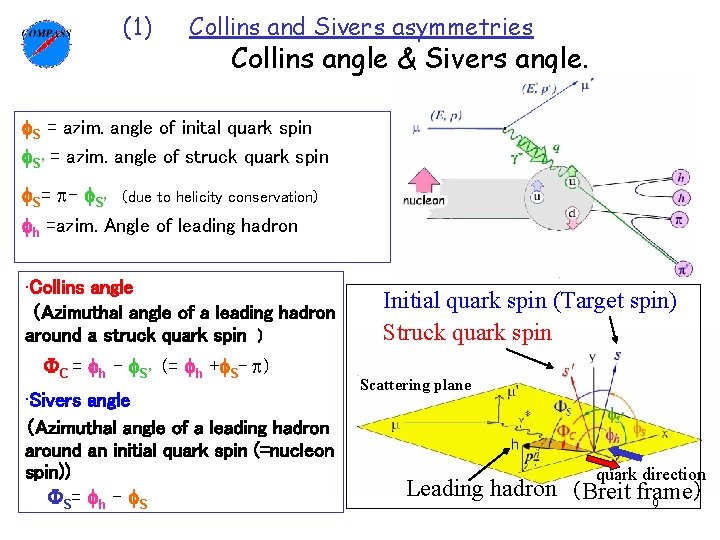
(1) Collins and Sivers asymmetries Collins angle & Sivers angle. f. S = azim. angle of inital quark spin f. S’ = azim. angle of struck quark spin f. S= p- f. S’ (due to helicity conservation) fh =azim. Angle of leading hadron Leading hadron • Collins angle (Azimuthal angle of a leading hadron around a struck quark spin ) FC = fh - f. S’ (= fh +f. S- p) • Sivers angle (Azimuthal angle of a leading hadron around an initial quark spin (=nucleon spin)) FS= fh - f. S Initial quark spin (Target spin) Struck quark spin Scattering plane quark direction Leading hadron (Breit frame) 9
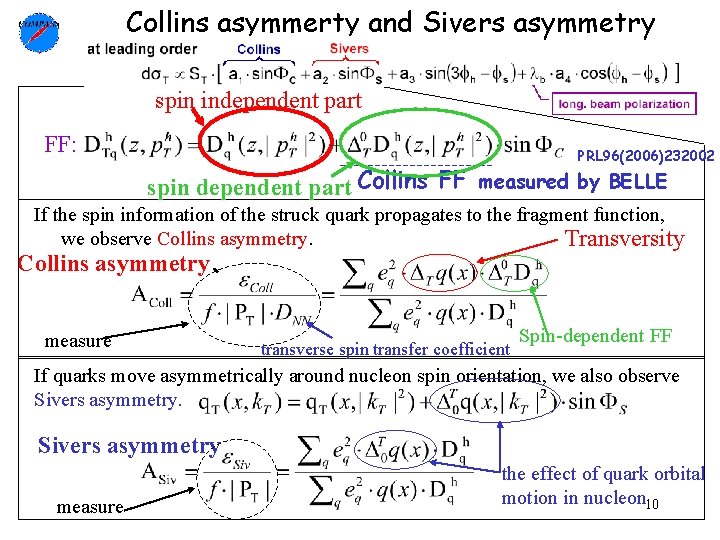
Collins asymmerty and Sivers asymmetry spin independent part FF: PRL 96(2006)232002 spin dependent part Collins FF measured by BELLE If the spin information of the struck quark propagates to the fragment function, we observe Collins asymmetry. Transversity Collins asymmetry、 measure transverse spin transfer coefficient Spin-dependent FF If quarks move asymmetrically around nucleon spin orientation, we also observe Sivers asymmetry. Sivers asymmetry measure the effect of quark orbital motion in nucleon 10
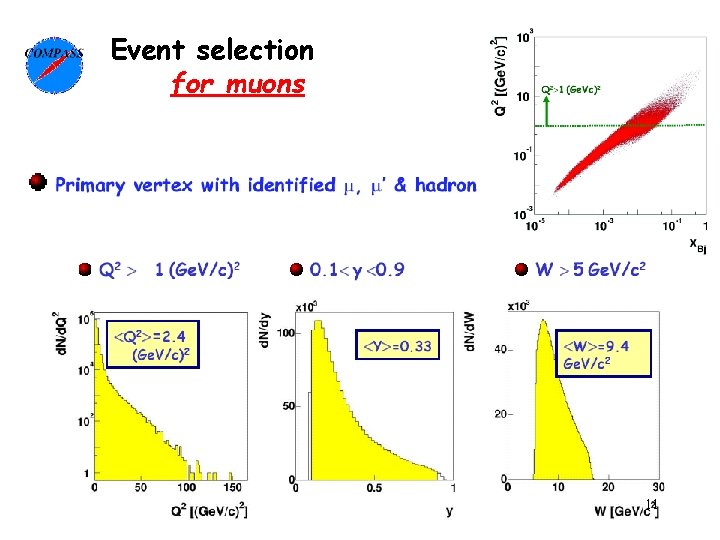
Event selection for muons 11
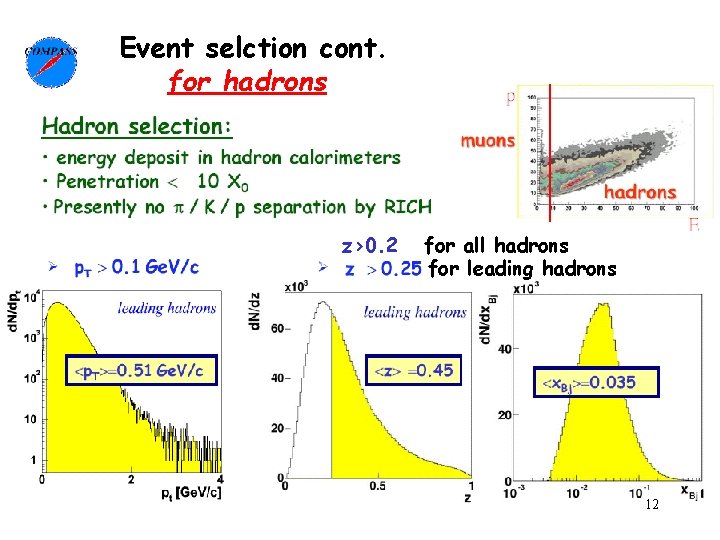
Event selction cont. for hadrons z>0. 2 for all hadrons for leading hadrons 12
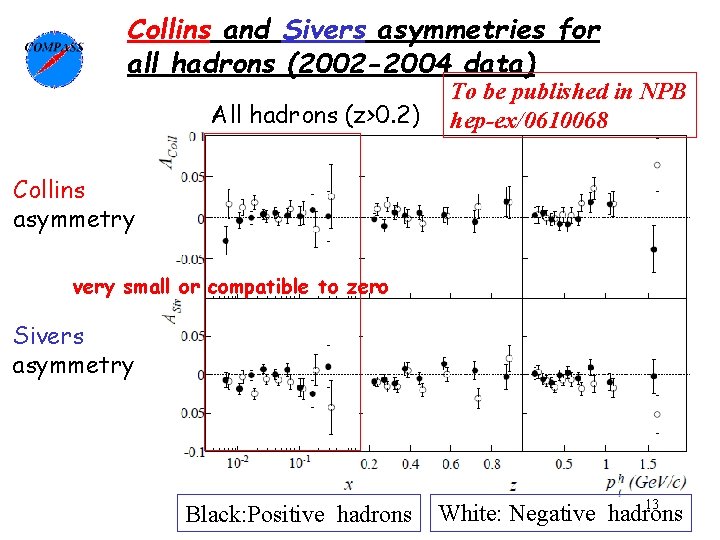
Collins and Sivers asymmetries for all hadrons (2002 -2004 data) All hadrons (z>0. 2) To be published in NPB hep-ex/0610068 Collins asymmetry very small or compatible to zero Sivers asymmetry Black: Positive hadrons 13 White: Negative hadrons
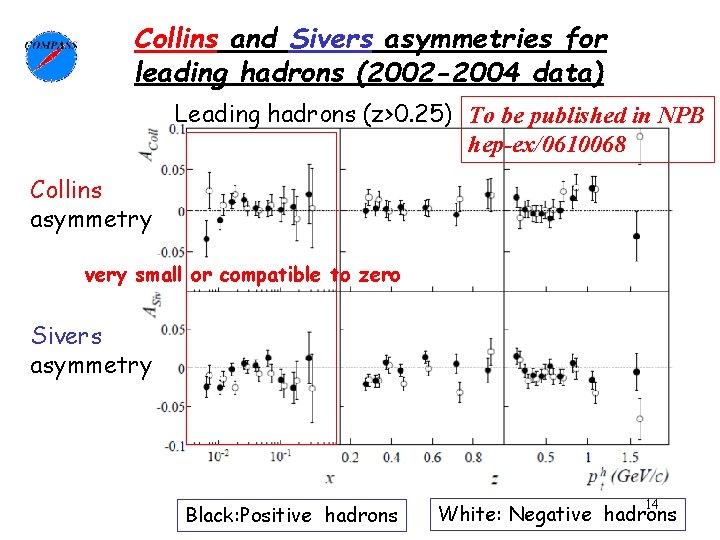
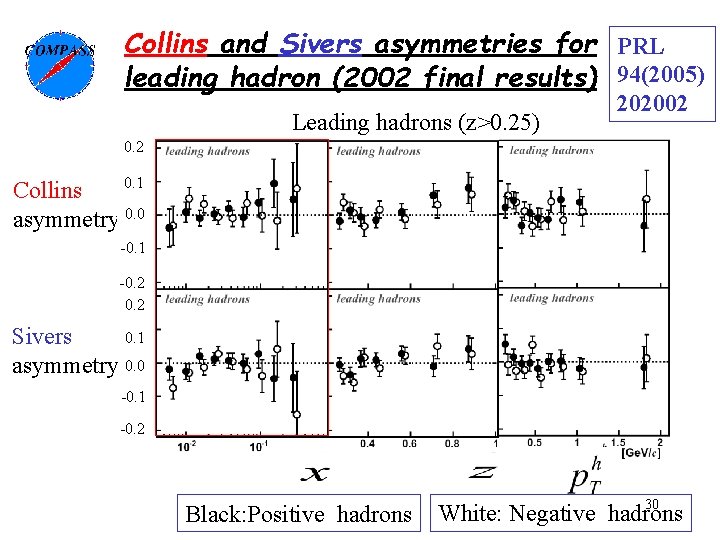
Collins and Sivers asymmetries for leading hadrons (2002 -2004 data) Leading hadrons (z>0. 25) To be published in NPB hep-ex/0610068 Collins asymmetry very small or compatible to zero Sivers asymmetry Black: Positive hadrons 14 White: Negative hadrons
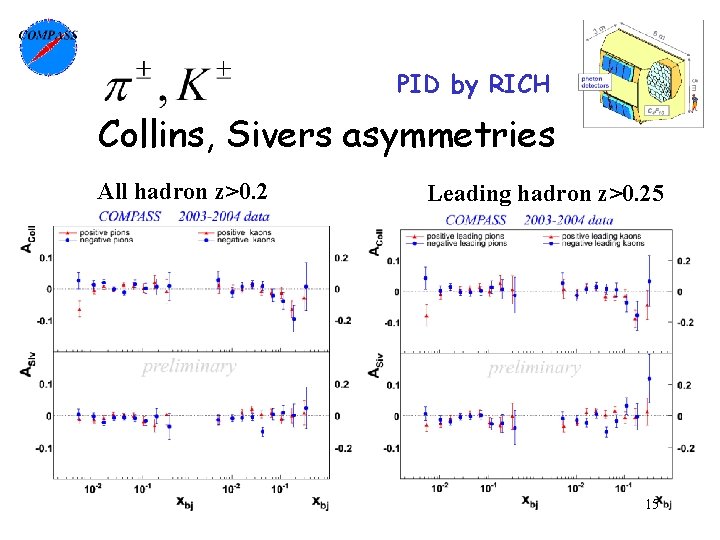
PID by RICH Collins, Sivers asymmetries All hadron z>0. 2 Leading hadron z>0. 25 15
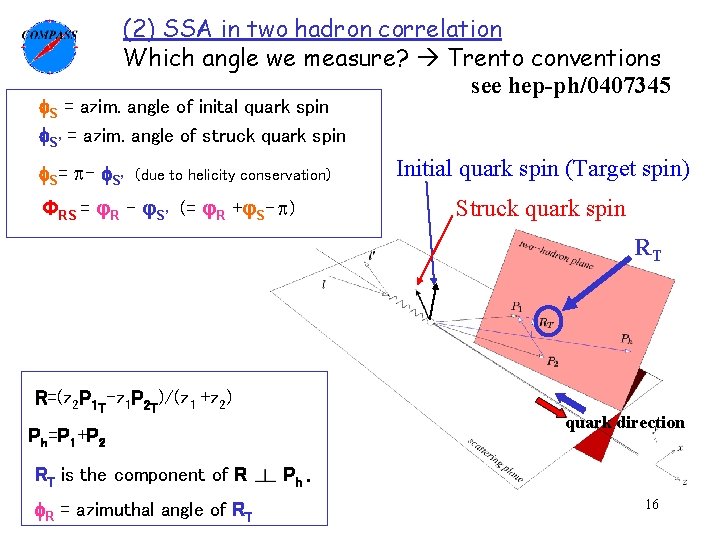
(2) SSA in two hadron correlation Which angle we measure? Trento conventions see hep-ph/0407345 f. S = azim. angle of inital quark spin f. S’ = azim. angle of struck quark spin f. S= p- f. S’ (due to helicity conservation) ΦRS = φR - φS’ (= φR +φS- p) Initial quark spin (Target spin) Struck quark spin RT R=(z 2 P 1 T-z 1 P 2 T)/(z 1 +z 2) quark direction Ph=P 1+P 2 RT is the component of R f. R = azimuthal angle of RT Ph. 16
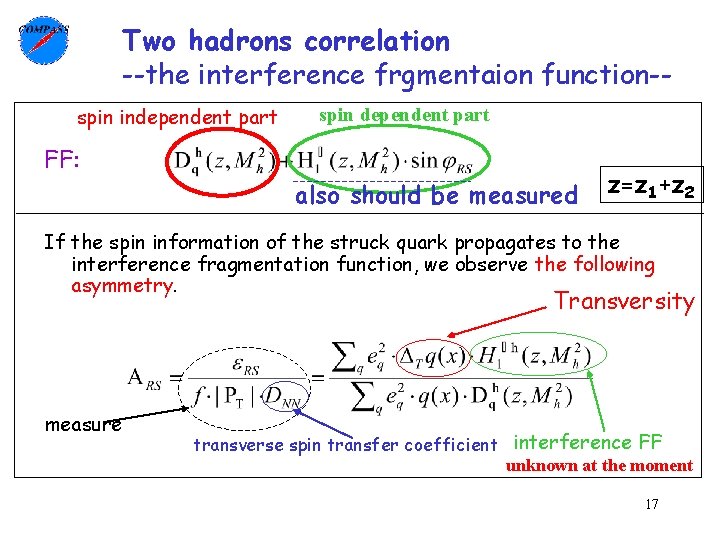
Two hadrons correlation --the interference frgmentaion function-spin independent part spin dependent part FF: also should be measured z=z 1+z 2 If the spin information of the struck quark propagates to the interference fragmentation function, we observe the following asymmetry. Transversity measure transverse spin transfer coefficient interference FF unknown at the moment 17
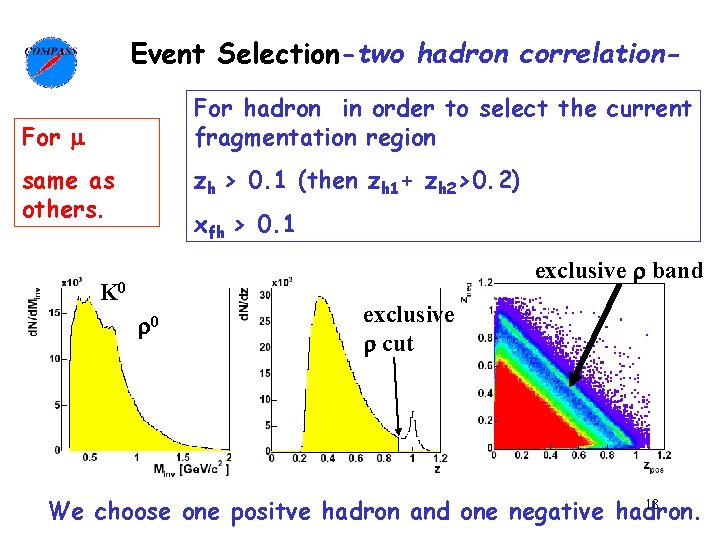
Event Selection-two hadron correlation. For hadron in order to select the current fragmentation region For m same as others. zh > 0. 1 (then zh 1+ zh 2>0. 2) xfh > 0. 1 exclusive r band K 0 r 0 exclusive r cut 18 We choose one positve hadron and one negative hadron.
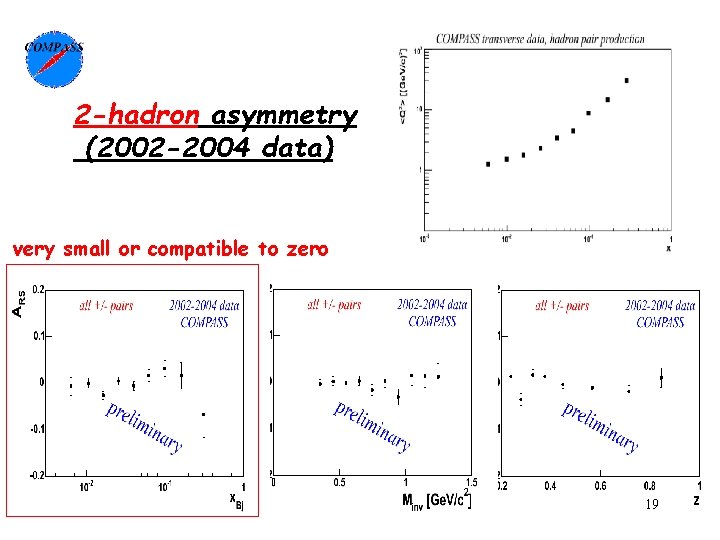
2 -hadron asymmetry (2002 -2004 data) very small or compatible to zero 19
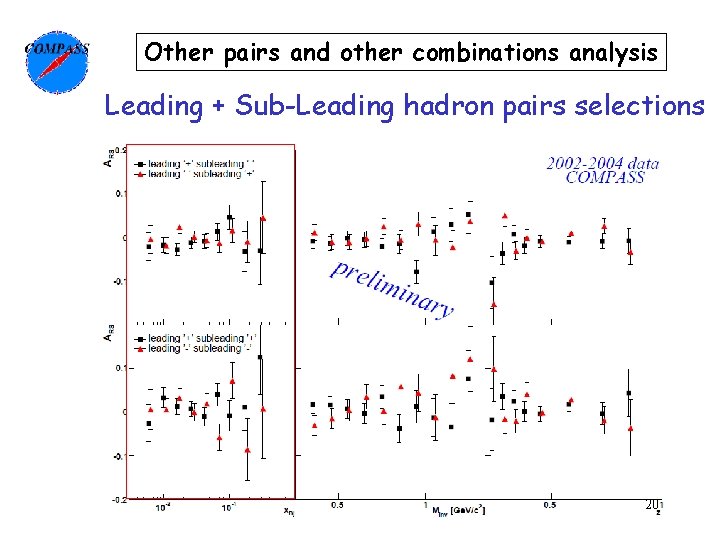
Other pairs and other combinations analysis Leading + Sub-Leading hadron pairs selections 20
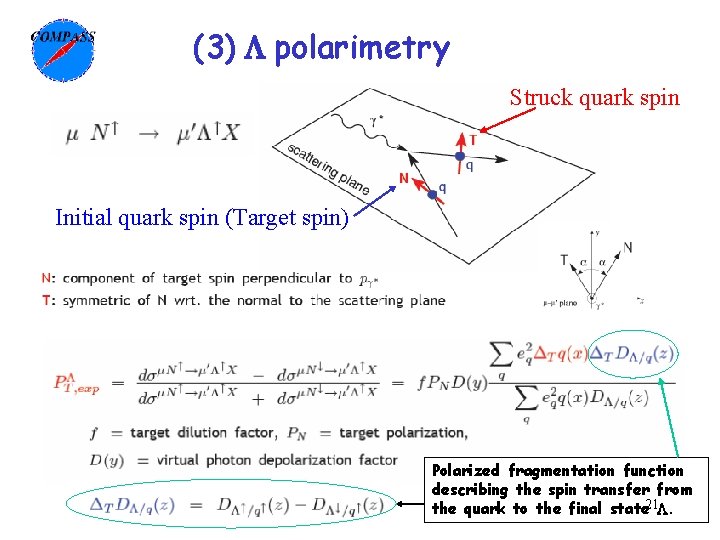
(3) L polarimetry Struck quark spin Initial quark spin (Target spin) Polarized fragmentation function describing the spin transfer from the quark to the final state 21 L.
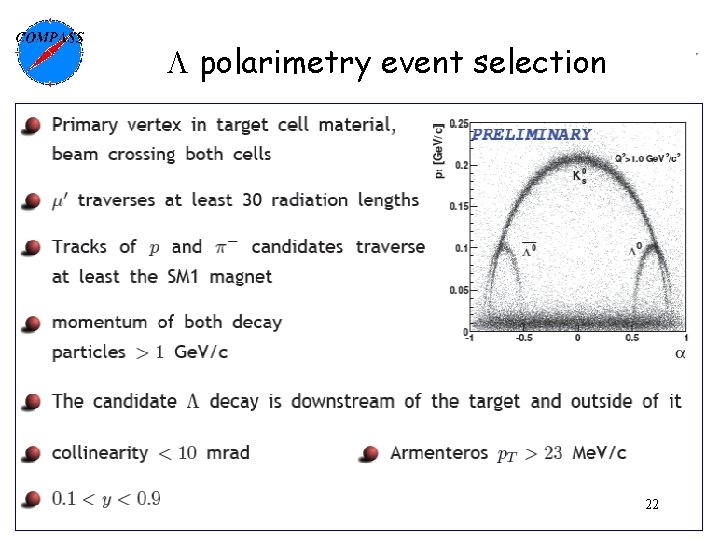
L polarimetry event selection 22
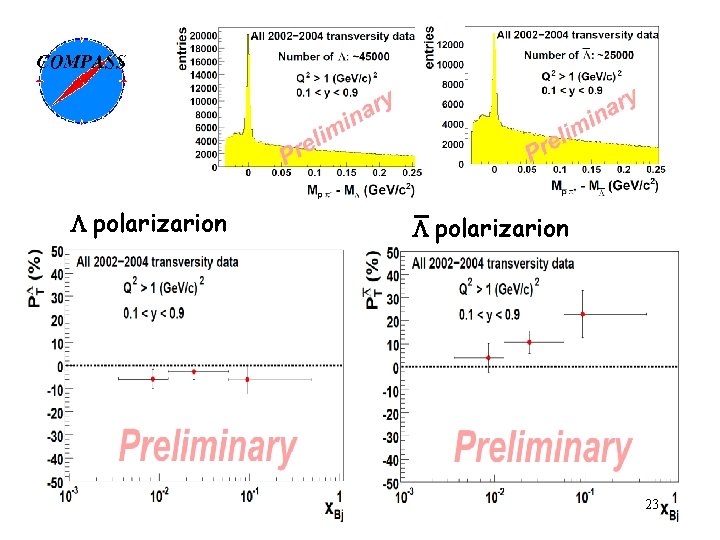
L polarizarion 23
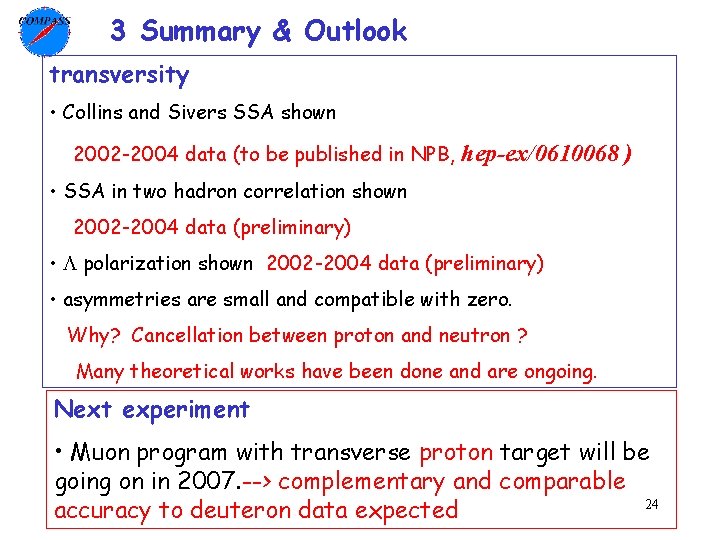
3 Summary & Outlook transversity • Collins and Sivers SSA shown 2002 -2004 data (to be published in NPB, hep-ex/0610068 ) • SSA in two hadron correlation shown 2002 -2004 data (preliminary) • L polarization shown 2002 -2004 data (preliminary) • asymmetries are small and compatible with zero. Why? Cancellation between proton and neutron ? Many theoretical works have been done and are ongoing. Next experiment • Muon program with transverse proton target will be going on in 2007. --> complementary and comparable 24 accuracy to deuteron data expected
25
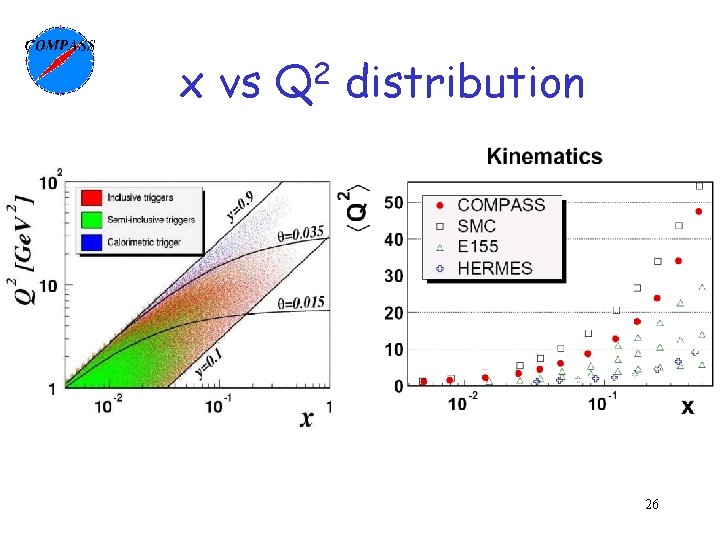
x vs 2 Q distribution 26
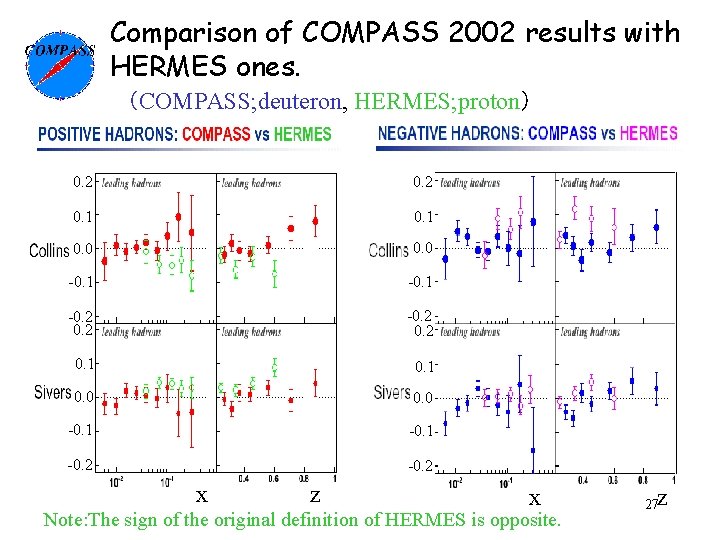
Comparison of COMPASS 2002 results with HERMES ones. (COMPASS; deuteron, HERMES; proton) 0. 2 0. 1 0. 0 -0. 1 -0. 2 x z x Note: The sign of the original definition of HERMES is opposite. z 27
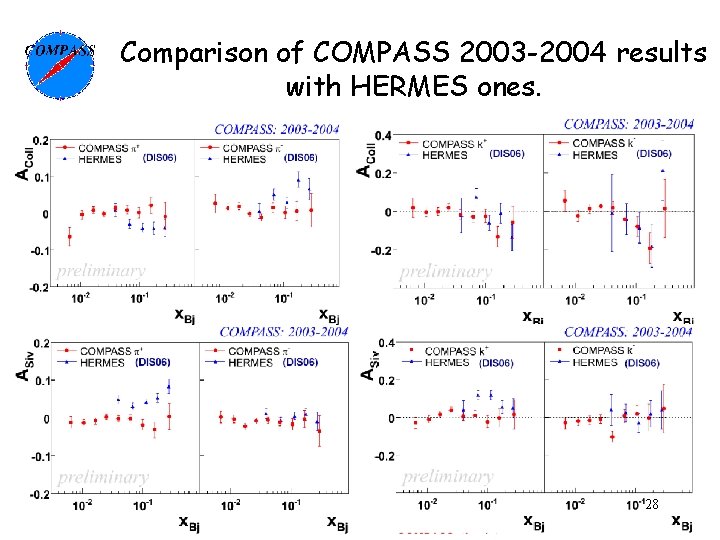
Comparison of COMPASS 2003 -2004 results with HERMES ones. 28
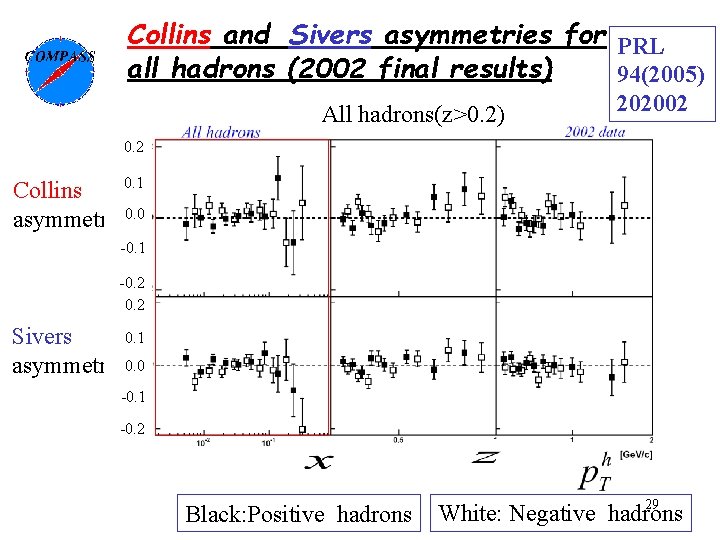
Collins and Sivers asymmetries for PRL all hadrons (2002 final results) 94(2005) All hadrons(z>0. 2) 202002 0. 1 Collins 0. 0 asymmetry 0. 0 -0. 1 -0. 2 0. 1 Sivers asymmetry 0. 0 -0. 1 -0. 2 Black: Positive hadrons 29 White: Negative hadrons
Collins and Sivers asymmetries for PRL leading hadron (2002 final results) 94(2005) Leading hadrons (z>0. 25) 202002 0. 1 Collins asymmetry 0. 0 -0. 1 -0. 2 0. 1 Sivers asymmetry 0. 0 -0. 1 -0. 2 Black: Positive hadrons 30 White: Negative hadrons
COMPASS Collaboration More than 220 physicists from 30 Institutes Дубна (LPP and LNP), Москва (INR, LPI, State University), . Протвино CERN Bielefeld, Bochum, Bonn (ISKP & PI), Erlangen, Freiburg, Heidelberg, Mainz, München (LMU & TU) Helsinki Warsawa (SINS), Warsawa (TU) Nagoya/Chubu/Yamagata Miyazaki/KEK Saclay Praha Burdwan, Calcutta Lisboa Tel Aviv Torino (University, INFN), Trieste (University, INFN) 31