
Study of Scanning Electron Microscope images The relationship

- Slides: 17
Study of Scanning Electron Microscope images The relationship between the structure of insects and their mode of living Group A
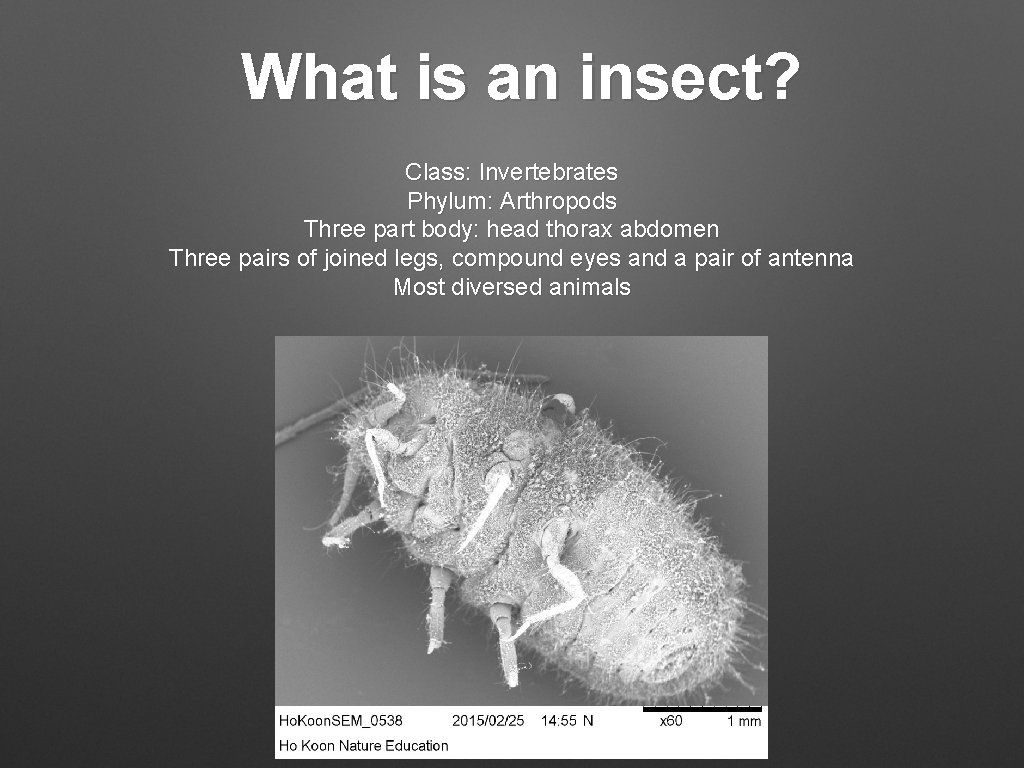
What is an insect? Class: Invertebrates Phylum: Arthropods Three part body: head thorax abdomen Three pairs of joined legs, compound eyes and a pair of antenna Most diversed animals
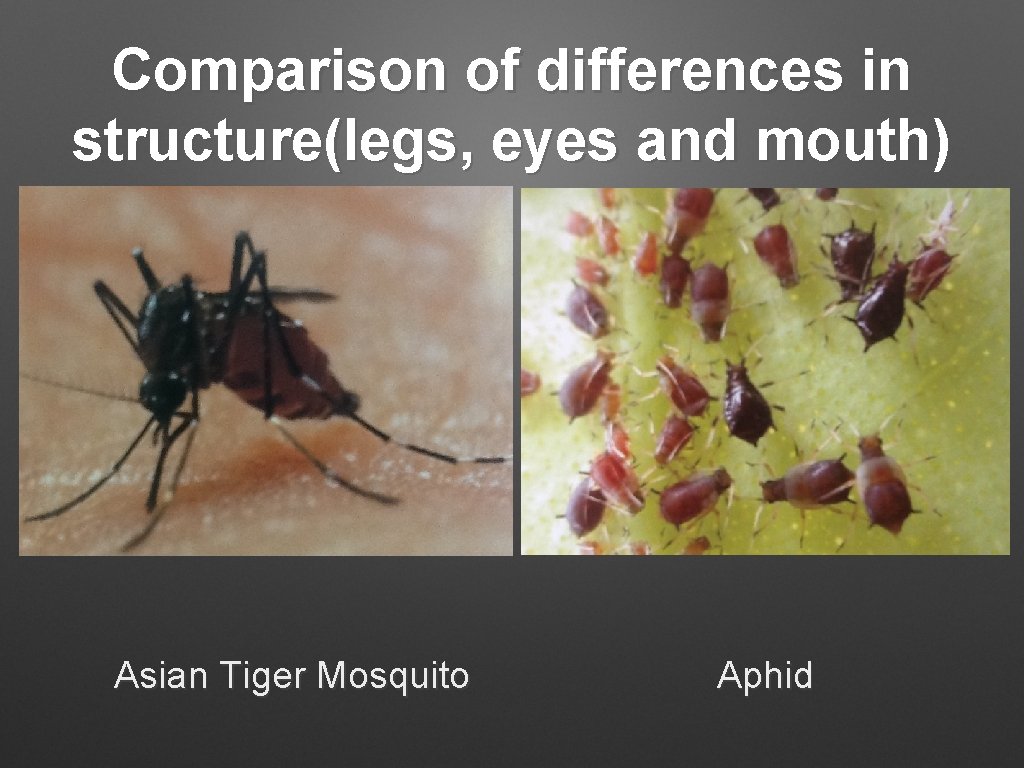
Comparison of differences in structure(legs, eyes and mouth) Asian Tiger Mosquito Aphid
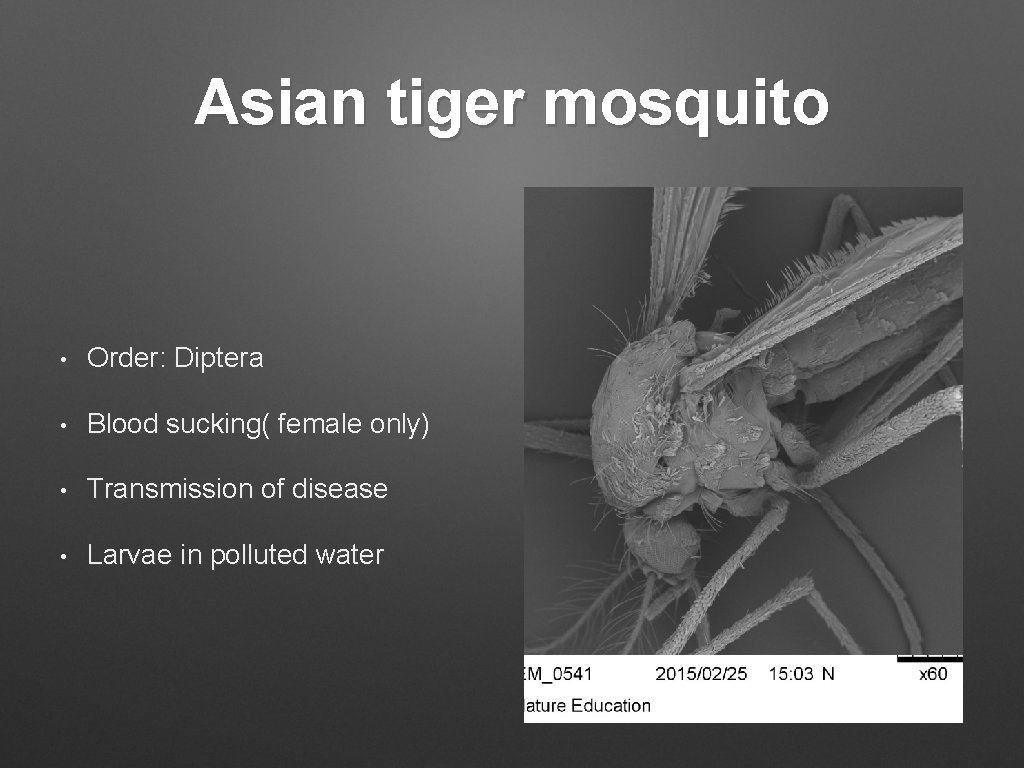
Asian tiger mosquito • Order: Diptera • Blood sucking( female only) • Transmission of disease • Larvae in polluted water
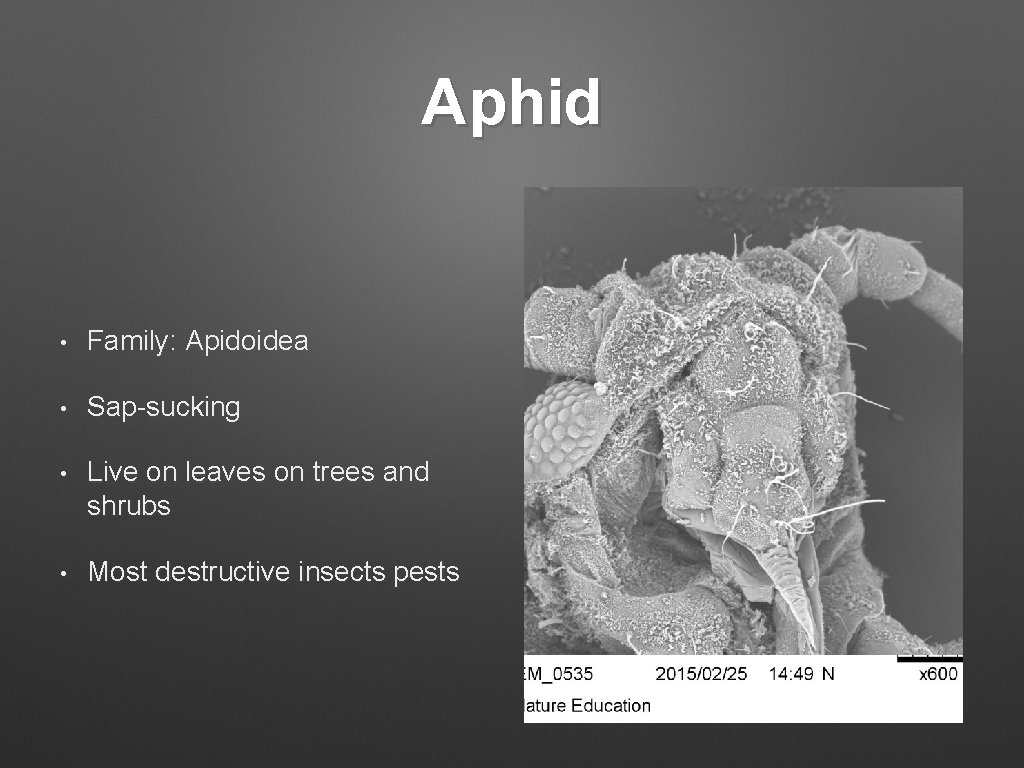
Aphid • Family: Apidoidea • Sap-sucking • Live on leaves on trees and shrubs • Most destructive insects pests
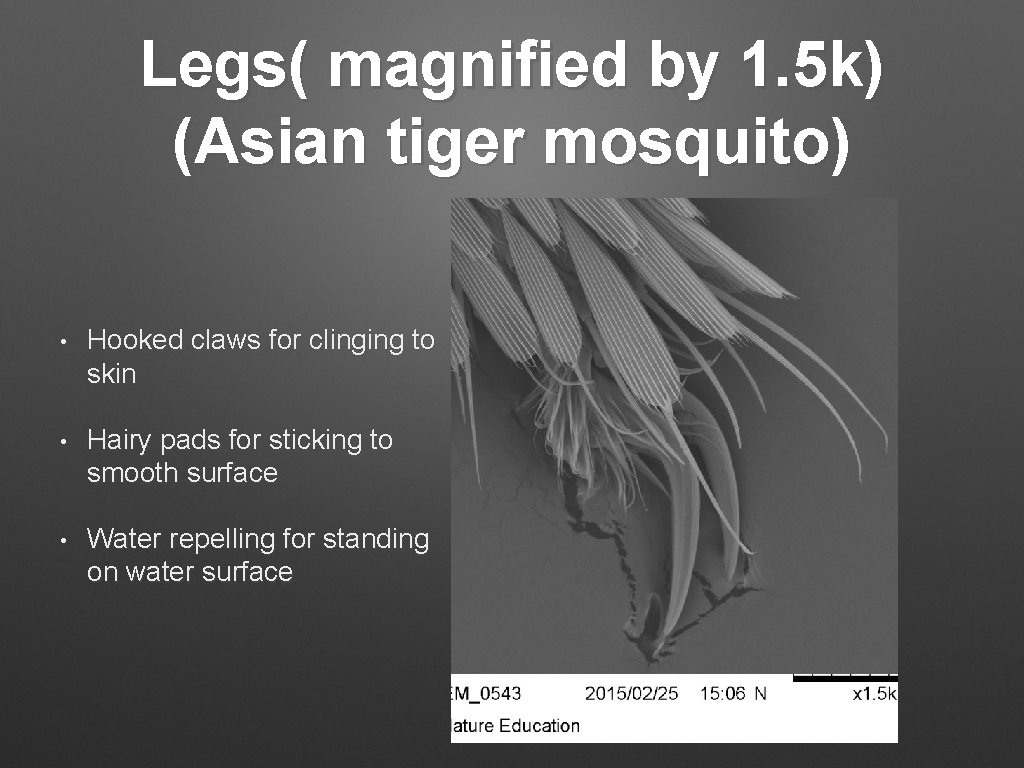
Legs( magnified by 1. 5 k) (Asian tiger mosquito) • Hooked claws for clinging to skin • Hairy pads for sticking to smooth surface • Water repelling for standing on water surface
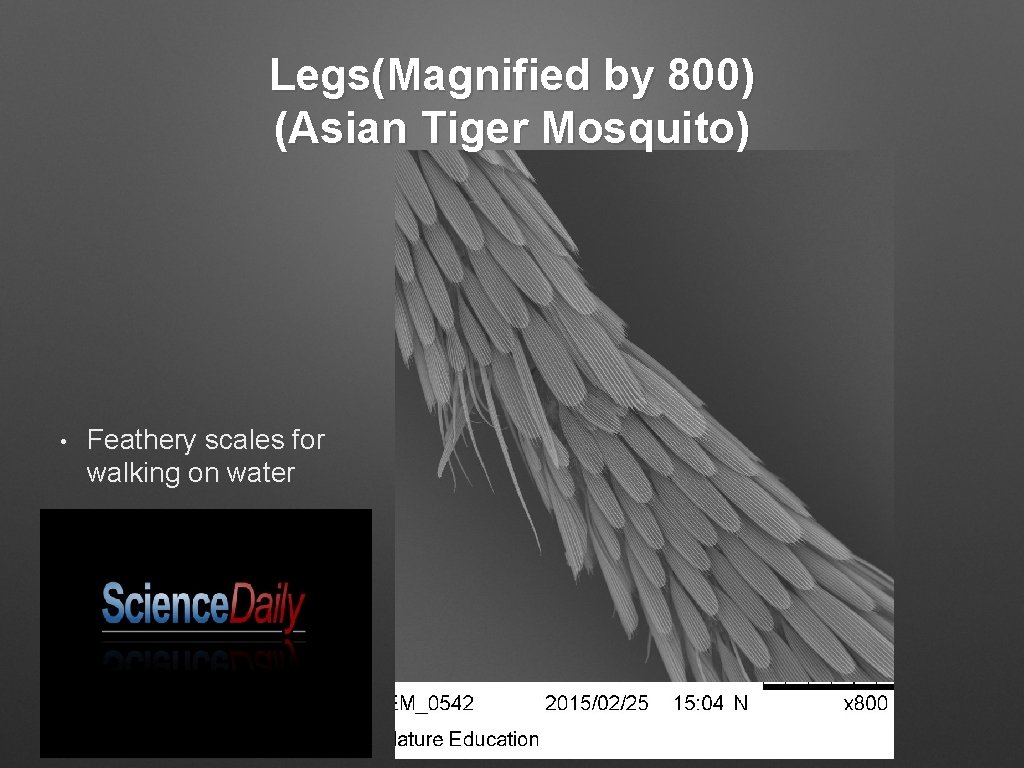
Legs(Magnified by 800) (Asian Tiger Mosquito) • Feathery scales for walking on water
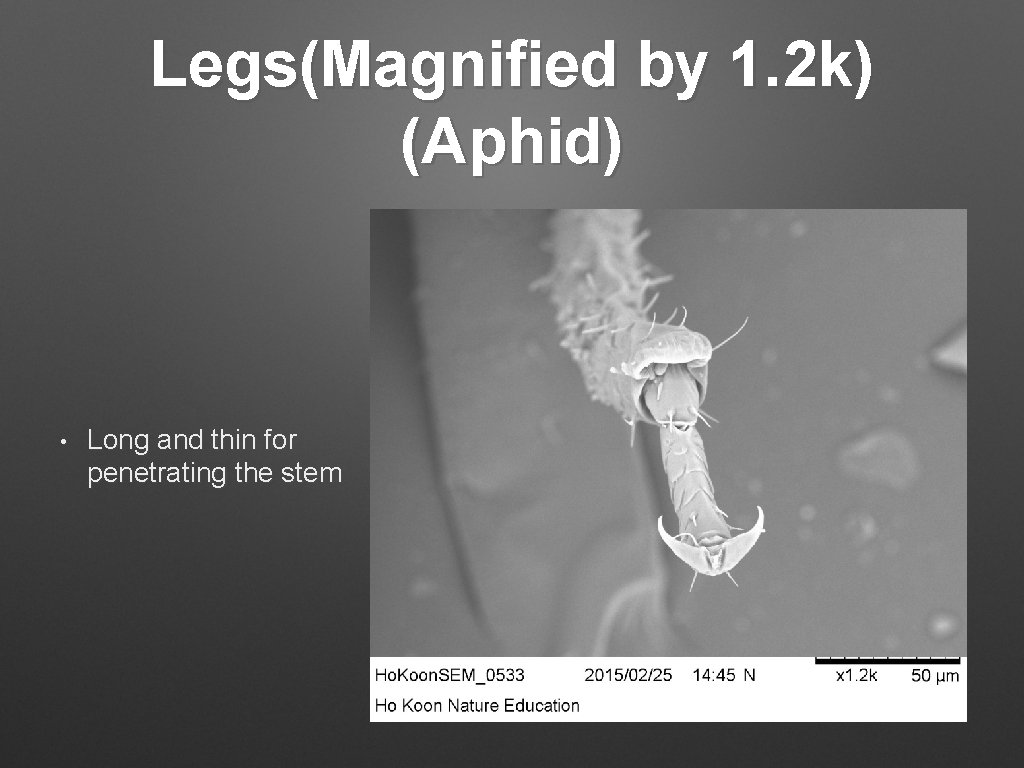
Legs(Magnified by 1. 2 k) (Aphid) • Long and thin for penetrating the stem
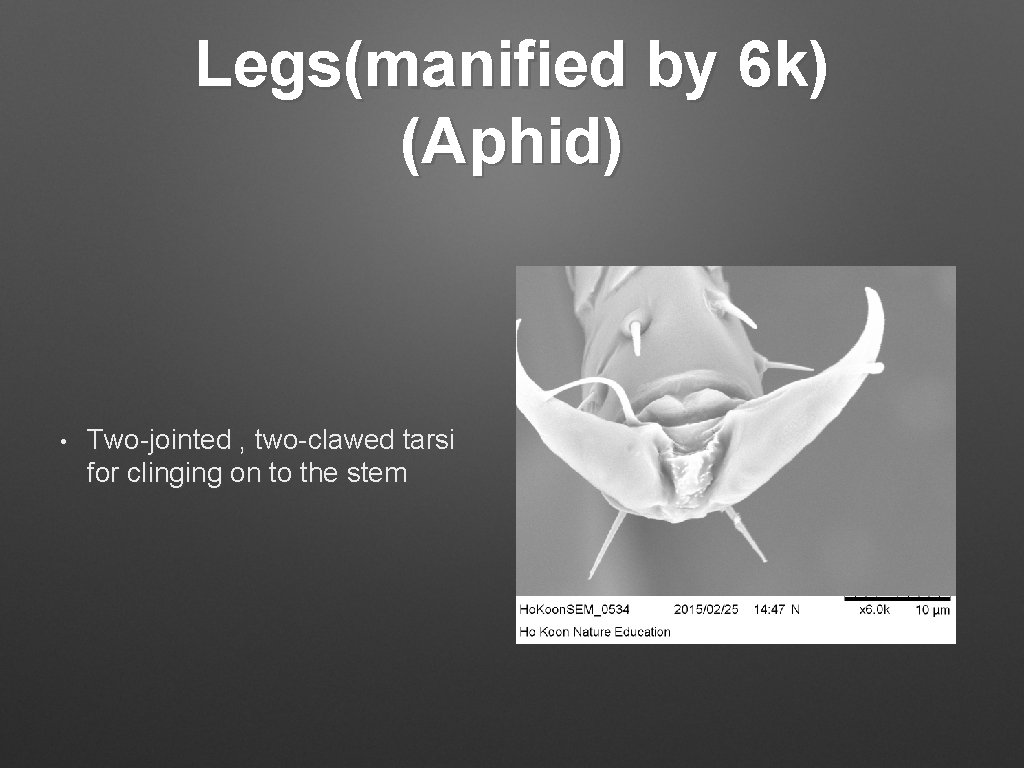
Legs(manified by 6 k) (Aphid) • Two-jointed , two-clawed tarsi for clinging on to the stem
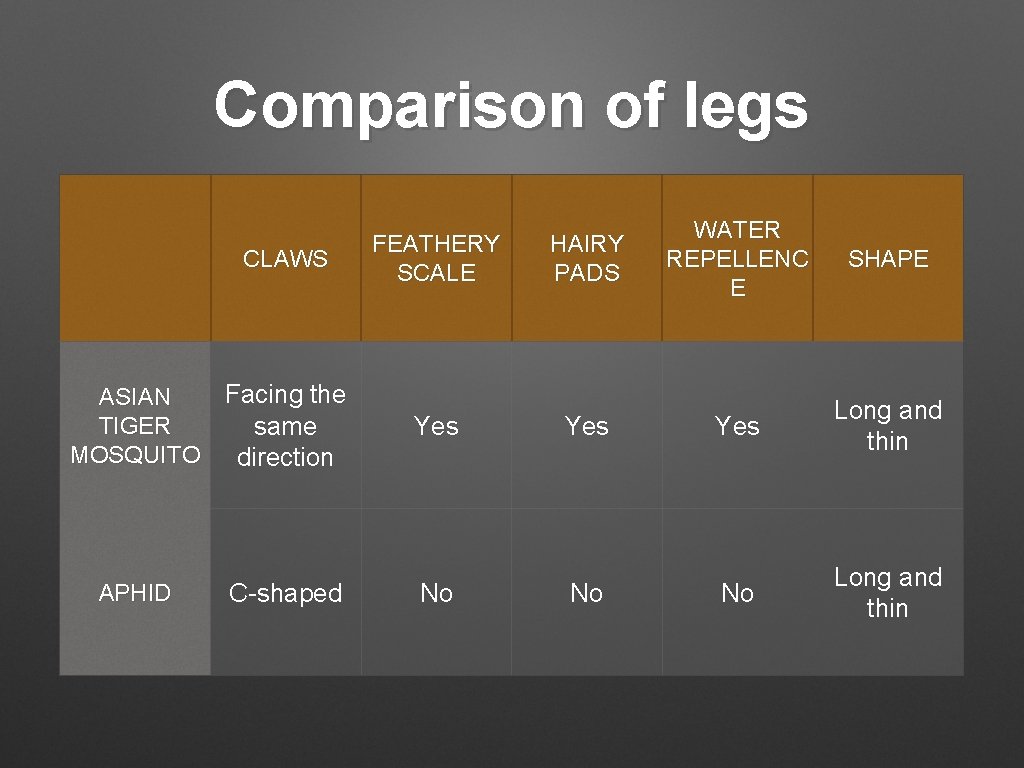
Comparison of legs CLAWS Facing the ASIAN TIGER same MOSQUITO direction APHID C-shaped FEATHERY SCALE Yes No HAIRY PADS Yes No WATER REPELLENC E SHAPE Yes Long and thin No Long and thin
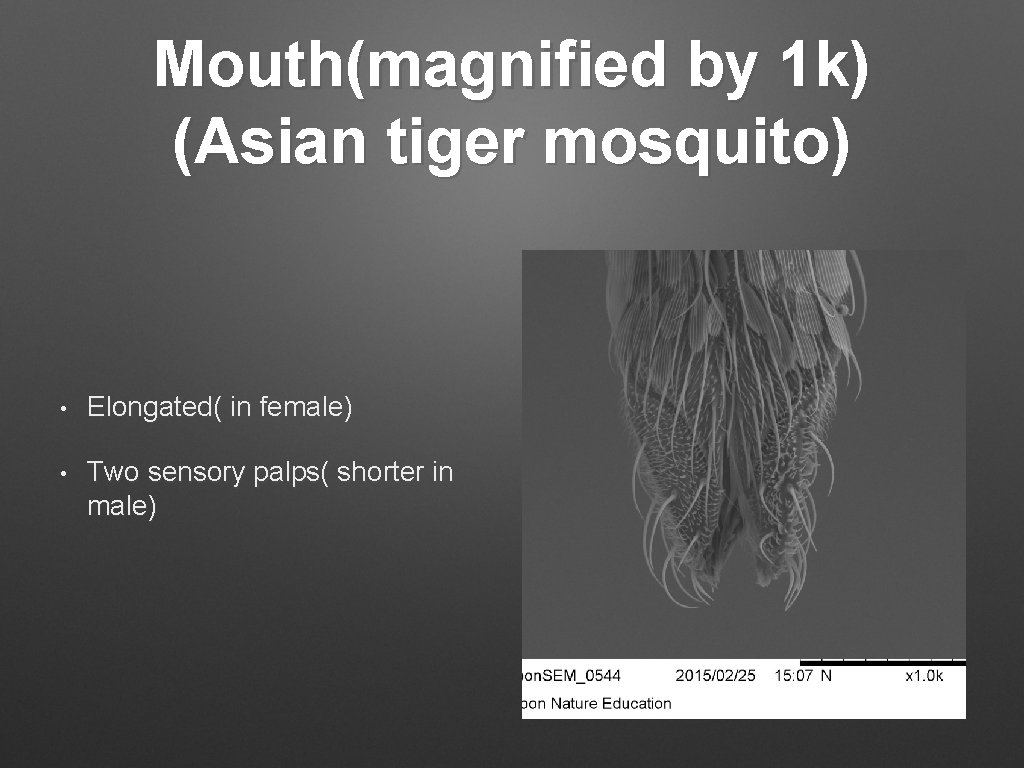
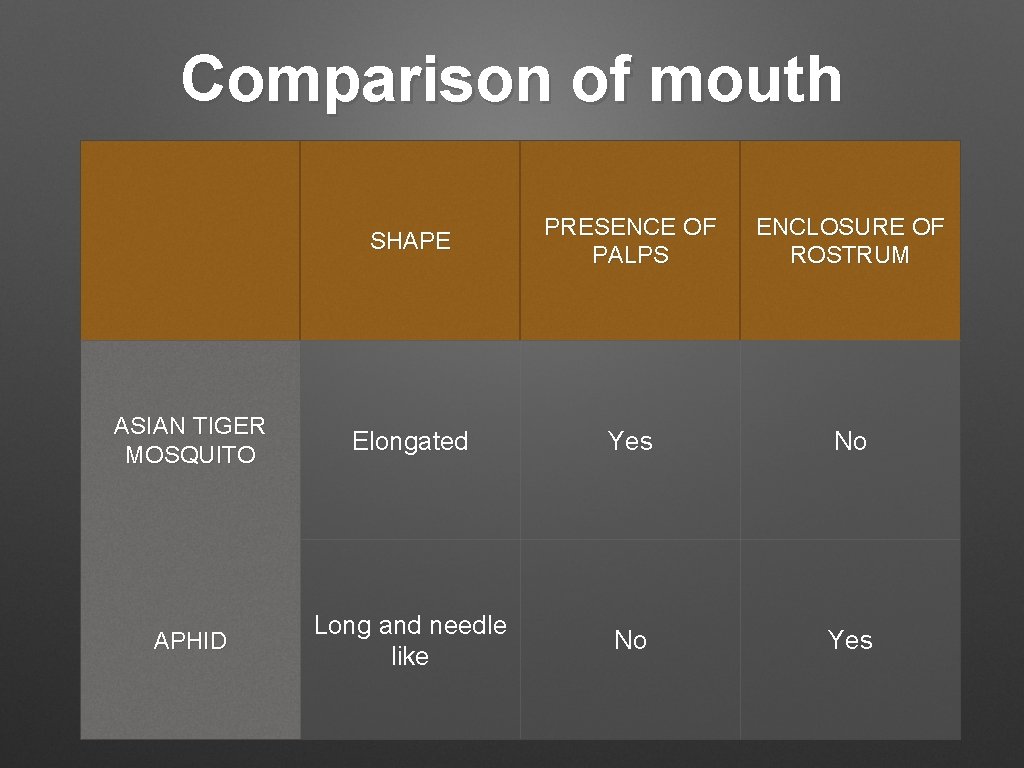
Mouth(magnified by 1 k) (Asian tiger mosquito) • Elongated( in female) • Two sensory palps( shorter in male)
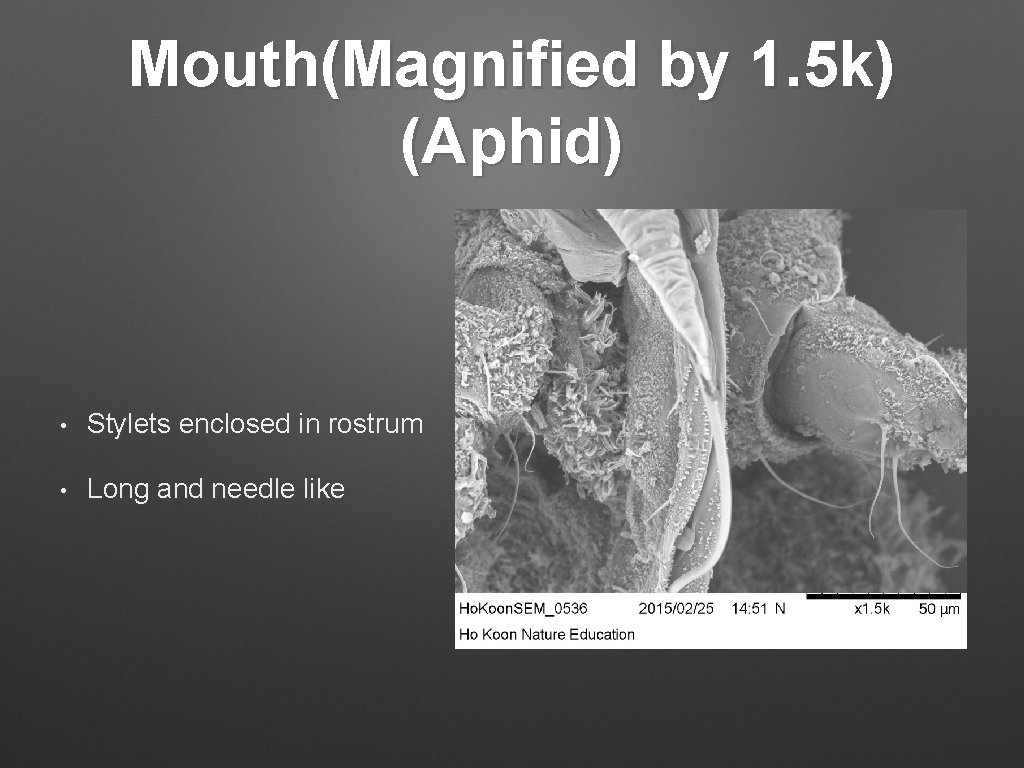
Mouth(Magnified by 1. 5 k) (Aphid) • Stylets enclosed in rostrum • Long and needle like
Comparison of mouth SHAPE PRESENCE OF PALPS ENCLOSURE OF ROSTRUM ASIAN TIGER MOSQUITO Elongated Yes No APHID Long and needle like No Yes
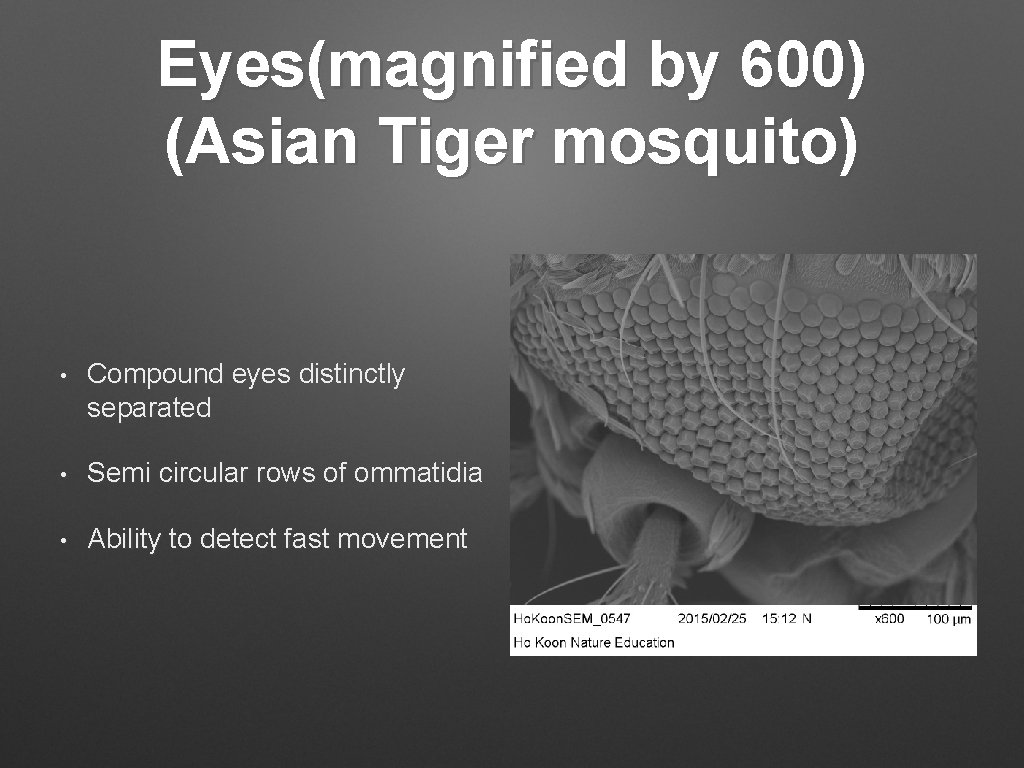
Eyes(magnified by 600) (Asian Tiger mosquito) • Compound eyes distinctly separated • Semi circular rows of ommatidia • Ability to detect fast movement
Eyes(magnified by 8 k) (Asian tiger mosquito) • Hexagonal
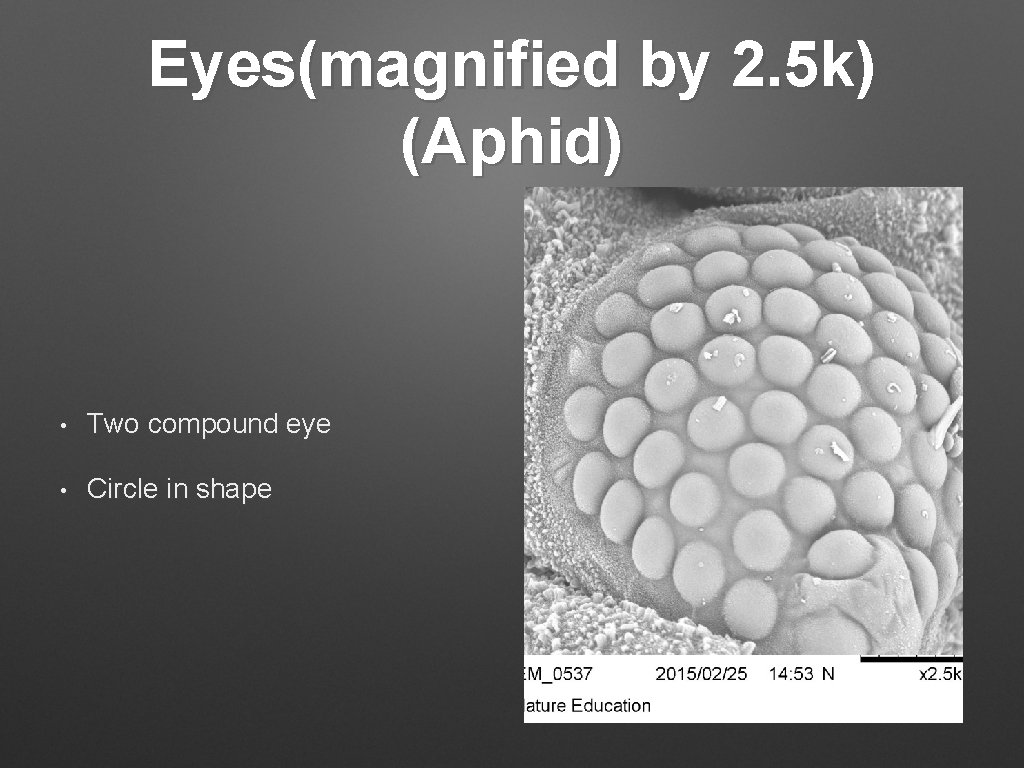
Eyes(magnified by 2. 5 k) (Aphid) • Two compound eye • Circle in shape
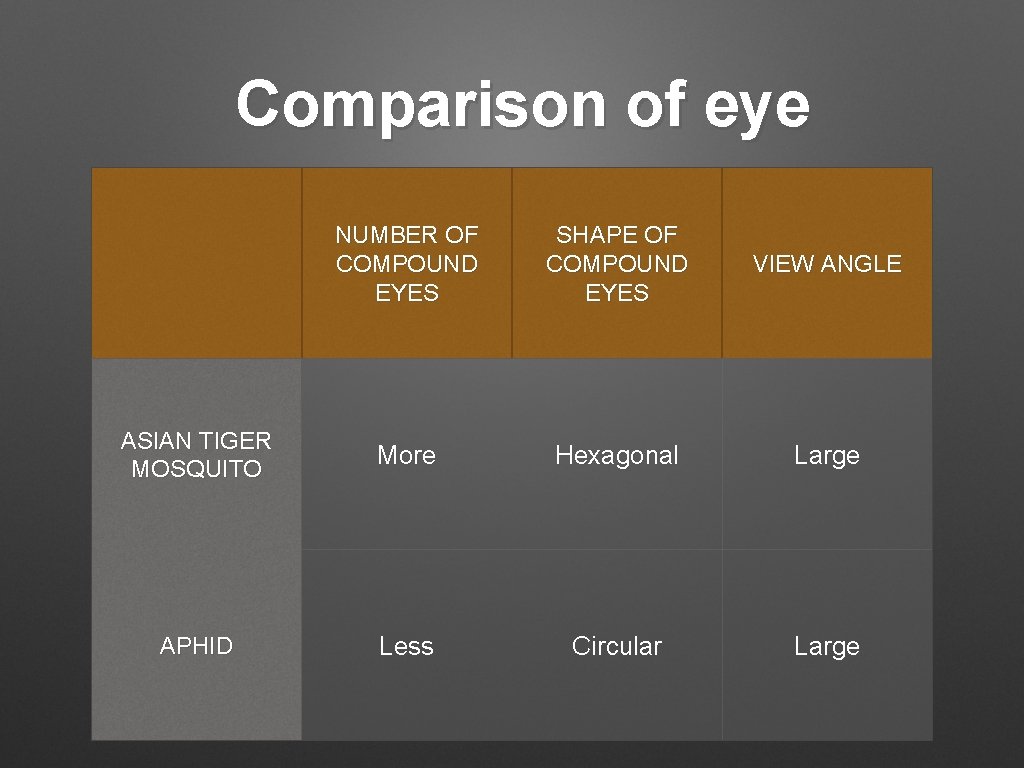
Comparison of eye NUMBER OF COMPOUND EYES SHAPE OF COMPOUND EYES VIEW ANGLE ASIAN TIGER MOSQUITO More Hexagonal Large APHID Less Circular Large