
Study of Multi Stage Steam Turbines P M
Study of Multi Stage Steam Turbines P M V Subbarao Professor Mechanical Engineering Department Techno-economical Viable Solution for. Low Capacity Mechanical Power ……
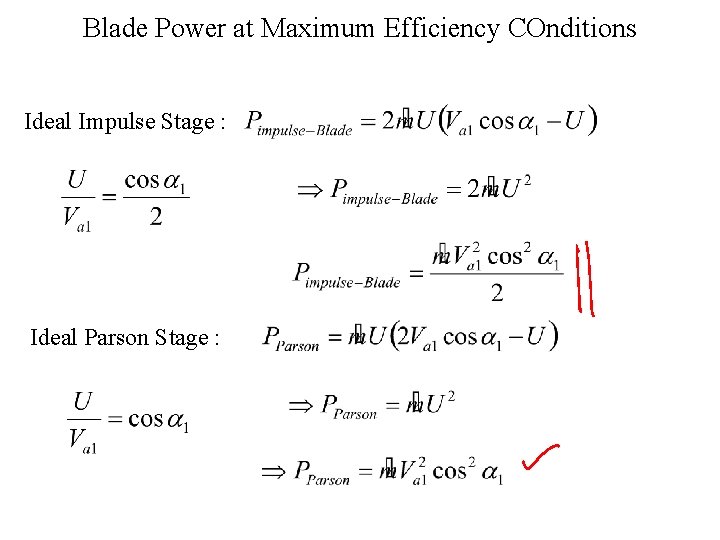
Blade Power at Maximum Efficiency COnditions Ideal Impulse Stage : Ideal Parson Stage :
Moderate Capacity of Parson : Same Blade Velocity At optimum U/Va 1, an impulse stage produces TWICE the power of a 50% reaction stage for same blade speed! This means that an impulse turbine requires only half the number of stages as a 50% reaction turbine for a given application! This fact has a major impact on the construction of the turbine It is also responsible for some of the greatest miss understandings, since people assume that this means that impulse blading is cheaper overall - this is NOT true! Impulse turbines have fewer stages, but they must use a different form of construction which is expensive
Capacity of Parson : Same Inlet Steam Velocity So at optimum U/Va 1, a 50% reaction stage produces TWICE the power of an impulse stage for same value of Highest Steam jet velocity. This means that a 50% reaction turbine requires only half the number of stages as an impulse turbine for a given application! This fact has a major impact on achieving lower fluid dynamic losses with improved capital cost. Reaction turbines with fewer stages and less expensive cost are highly preferred in large power plants.
Mechanical Arrangements of Steam Turbines • Solutions to Turbo-machinery Issues. • Tandem Reheat Steam Turbine • Cross Compound Steam Turbine

Tandem Reheat Steam Turbine
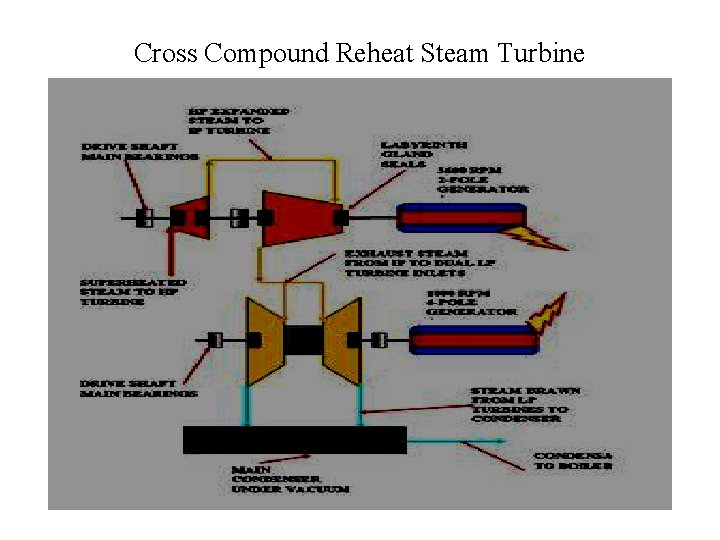
Cross Compound Reheat Steam Turbine
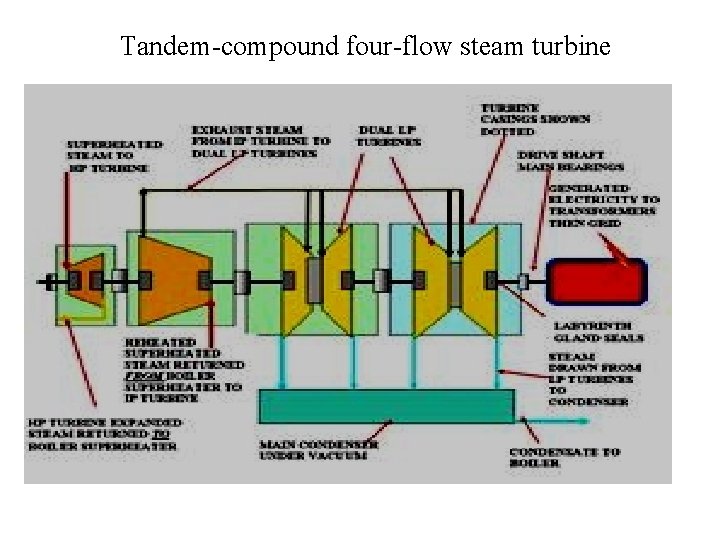
Tandem-compound four-flow steam turbine
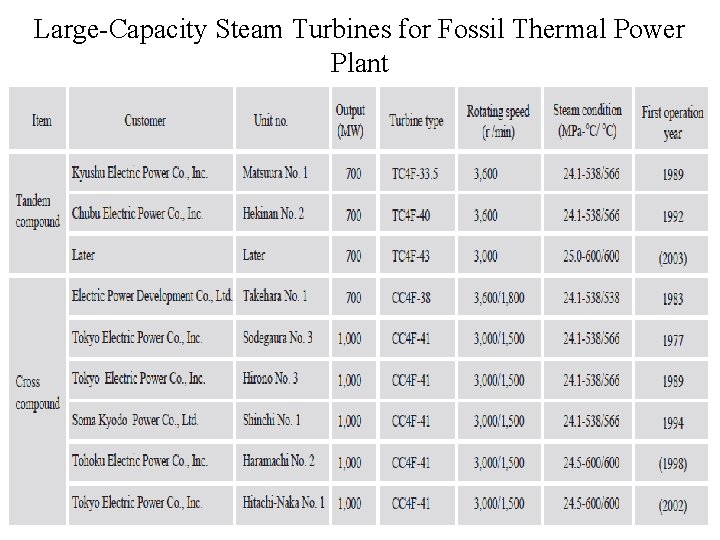
Large-Capacity Steam Turbines for Fossil Thermal Power Plant
Parson’s concept of multi-stage had produced an additional but marginal thermodynamic advantage.
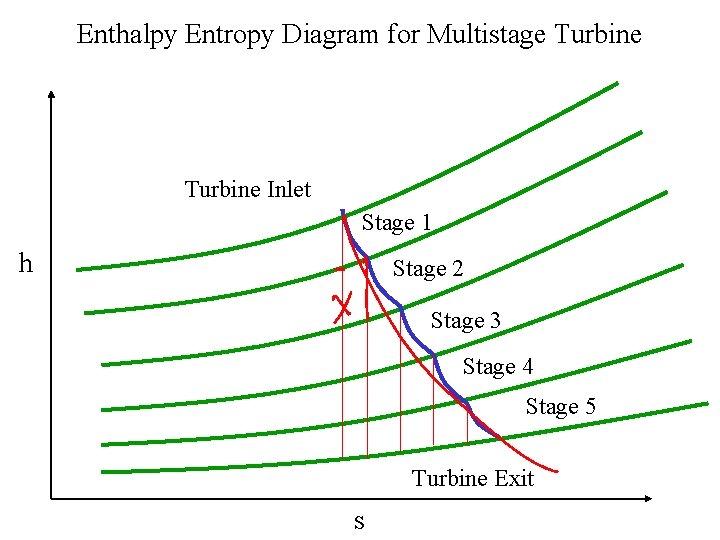
Enthalpy Entropy Diagram for Multistage Turbine Inlet Stage 1 h Stage 2 Stage 3 Stage 4 Stage 5 Turbine Exit s
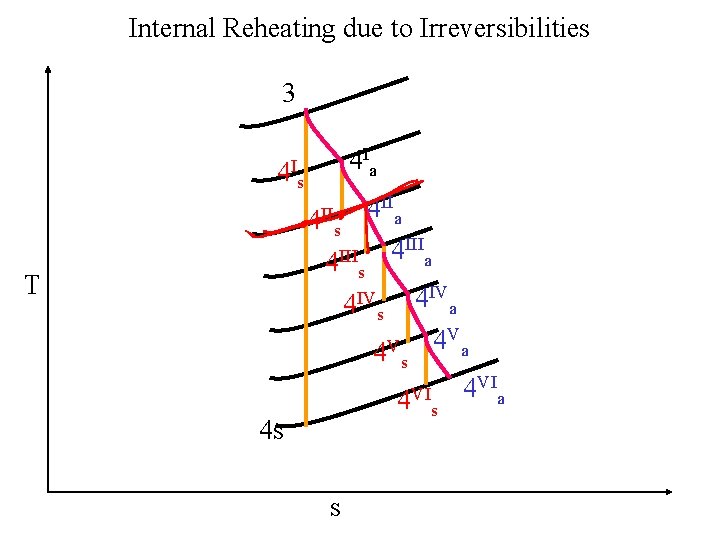
Internal Reheating due to Irreversibilities 3 4 I 4 Ia s 4 IIa s III 4 III a 4 s IV IV 4 4 s a V 4 V a 4 4 II T s 4 VI 4 s s s 4 VIa
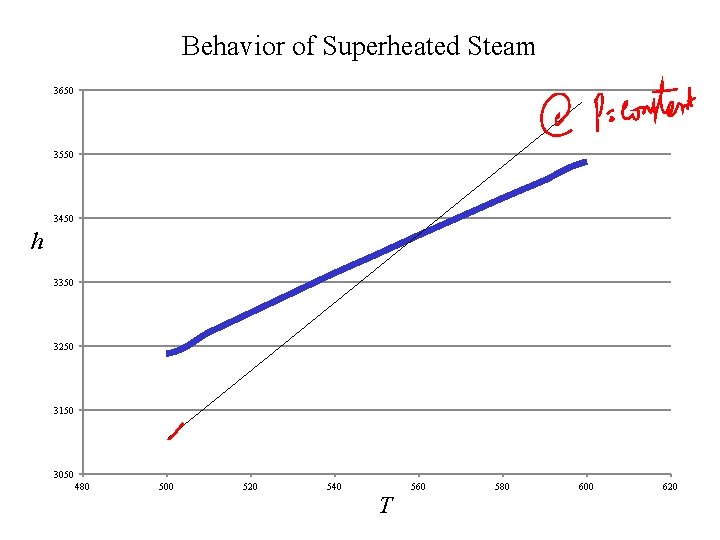
Behavior of Superheated Steam 3650 3550 3450 h 3350 3250 3150 3050 480 500 520 540 T 560 580 600 620
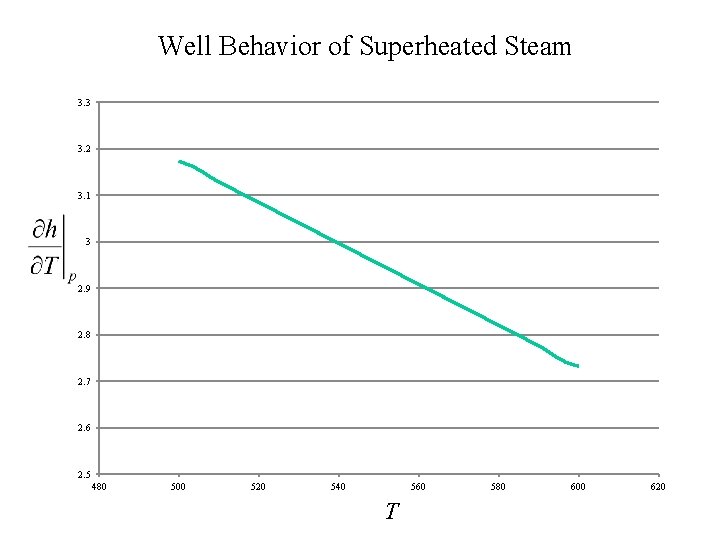
Well Behavior of Superheated Steam 3. 3 3. 2 3. 1 3 2. 9 2. 8 2. 7 2. 6 2. 5 480 500 520 540 560 T 580 600 620
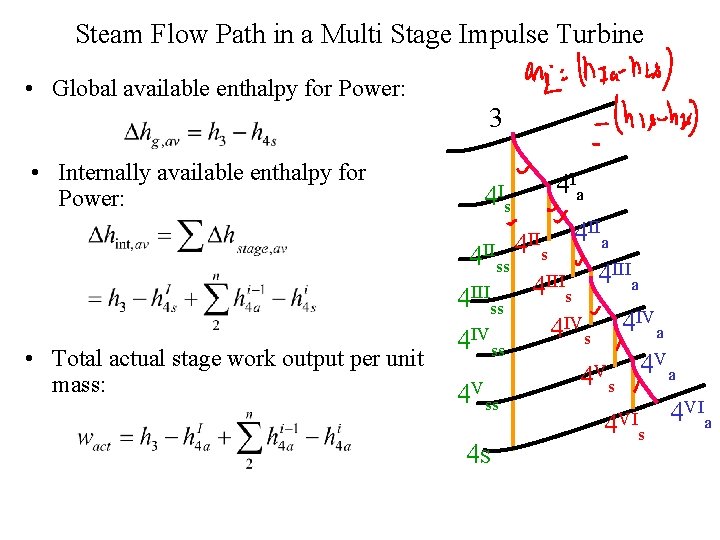
Steam Flow Path in a Multi Stage Impulse Turbine • Global available enthalpy for Power: • Internally available enthalpy for Power: 3 4 I s 4 IIss • Total actual stage work output per unit mass: 4 IIIss 4 IVss 4 s 4 Ia 4 II s 4 III 4 IIa 4 IIIa s 4 IV s 4 Vs 4 IVa 4 VI s 4 VIa
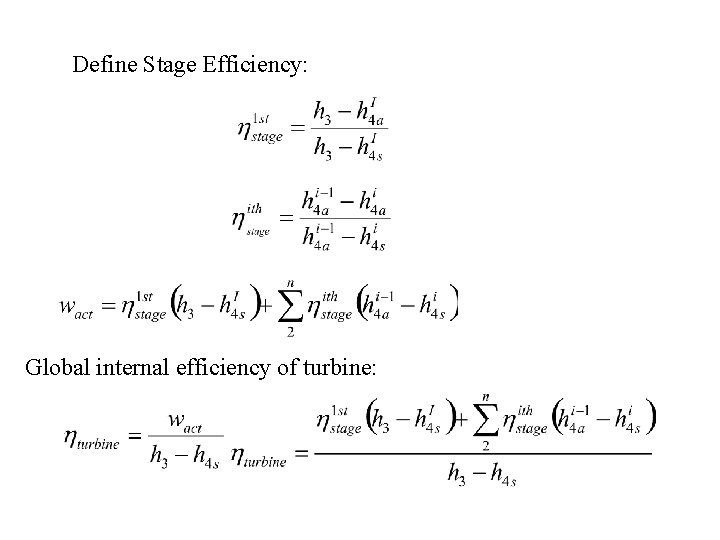
Define Stage Efficiency: Global internal efficiency of turbine:
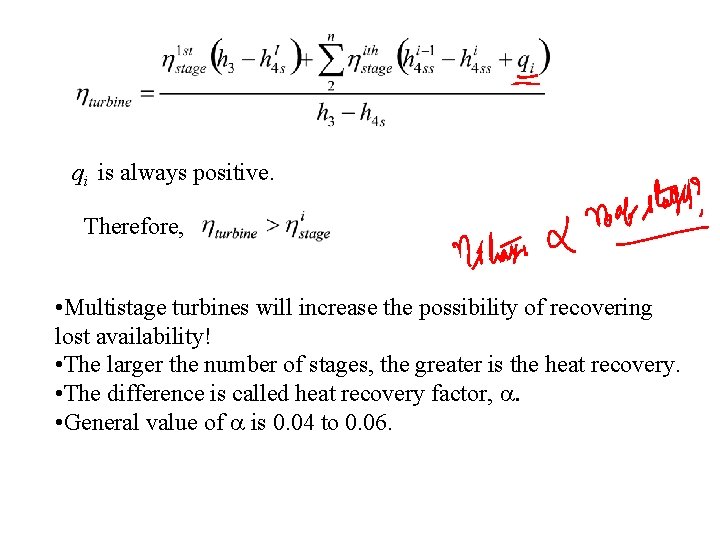
qi is always positive. Therefore, • Multistage turbines will increase the possibility of recovering lost availability! • The larger the number of stages, the greater is the heat recovery. • The difference is called heat recovery factor, a. • General value of a is 0. 04 to 0. 06.
Compounding of impulse turbine • Compounding is done to reduce the rotational speed of the impulse turbine to practical limits. • Compounding is achieved by using more than one set of nozzles, blades, rotors, in a series, keyed to a common shaft; so that either the steam pressure or the jet velocity is absorbed by the turbine in stages. • Three main types of compounded impulse turbines are: • a) Pressure compounded Steam Turbine : The Rateau Design • b) velocity compounded Steam Turbine : The Curtis Design • c) pressure and velocity compounded Impulse turbines : The Rateau-curtis Design.
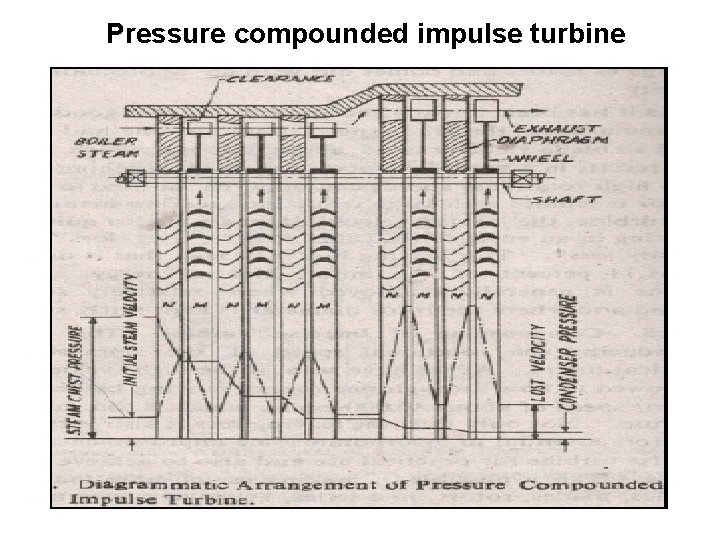
Pressure compounded impulse turbine
- Slides: 19