
Study of Biology copyright cmassengale 1 What is
Study of Biology copyright cmassengale 1
What is Biology? Biology is the study of all living things Living things are called organisms Organisms include bacteria, protists, fungi, plants, & animals copyright cmassengale 2
All Living Things Share Common Characteristics 1. Basic Unit is the Cell 2. They Reproduce 3. All Based On Universal Genetic Code (DNA) 4. Grow & Develop copyright cmassengale 3
Common Characteristics 5. Obtain & Use Materials & 6. 7. 8. Energy Respond To Their Environment Maintain A Stable Internal Environment AS A GROUP, Living Things Evolve, That Is They Change Over Time copyright cmassengale 4
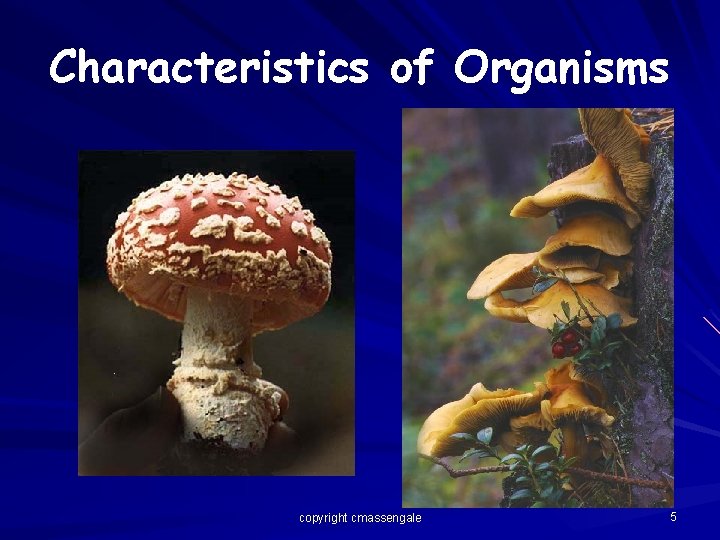
Characteristics of Organisms copyright cmassengale 5
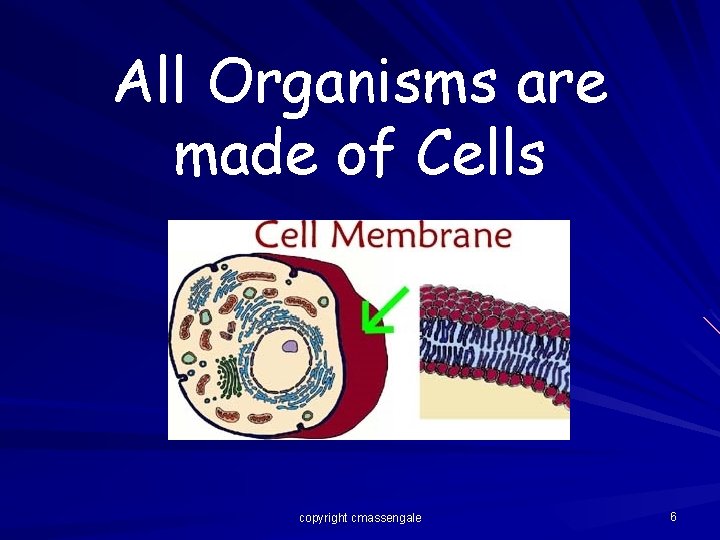
All Organisms are made of Cells copyright cmassengale 6
Facts About Cells are the smallest living unit of an organism All cells contain living material called cytoplasm All cells are surrounded by a cell membrane that controls what enters & leaves the cell copyright cmassengale 7
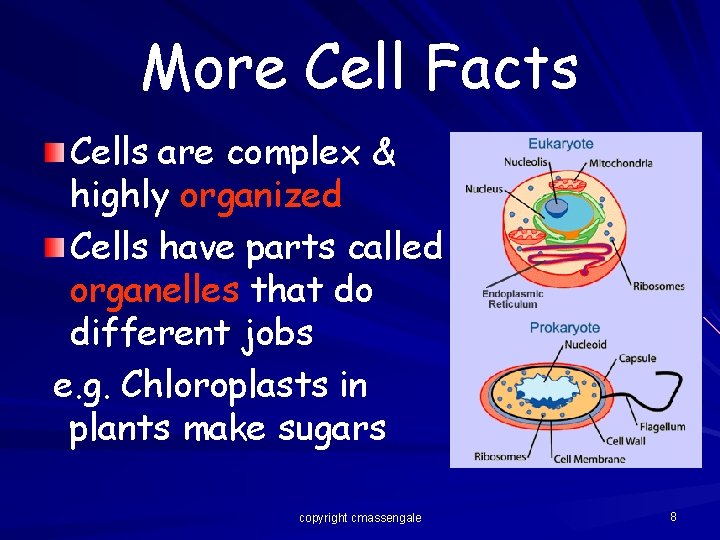
More Cell Facts Cells are complex & highly organized Cells have parts called organelles that do different jobs e. g. Chloroplasts in plants make sugars copyright cmassengale 8
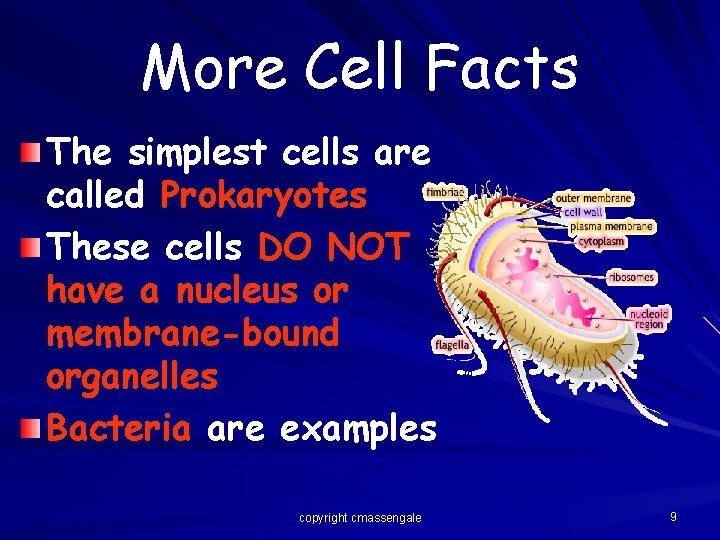
More Cell Facts The simplest cells are called Prokaryotes These cells DO NOT have a nucleus or membrane-bound organelles Bacteria are examples copyright cmassengale 9
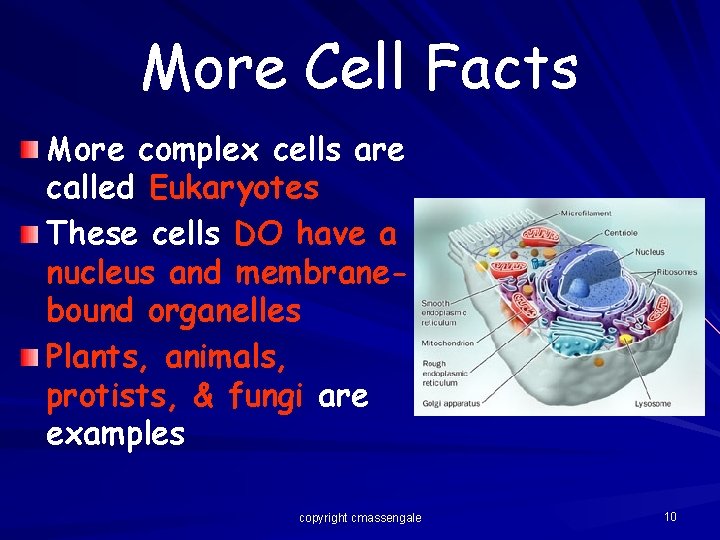
More Cell Facts More complex cells are called Eukaryotes These cells DO have a nucleus and membranebound organelles Plants, animals, protists, & fungi are examples copyright cmassengale 10
Organisms are Grouped by their Number of Cells Unicellular Organisms – Living Organism Made Up Of One Cell Multicellular Organisms – Living Organism Made Up Of Many, Specialized Cells copyright cmassengale 11
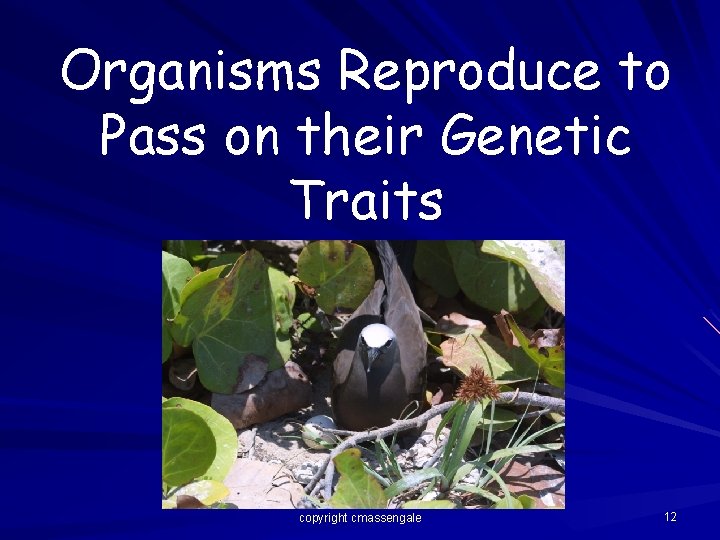
Organisms Reproduce to Pass on their Genetic Traits copyright cmassengale 12
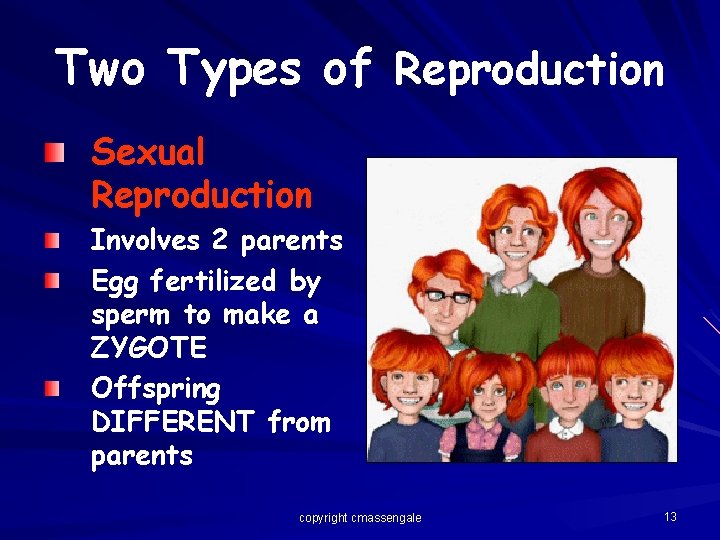
Two Types of Reproduction Sexual Reproduction Involves 2 parents Egg fertilized by sperm to make a ZYGOTE Offspring DIFFERENT from parents copyright cmassengale 13
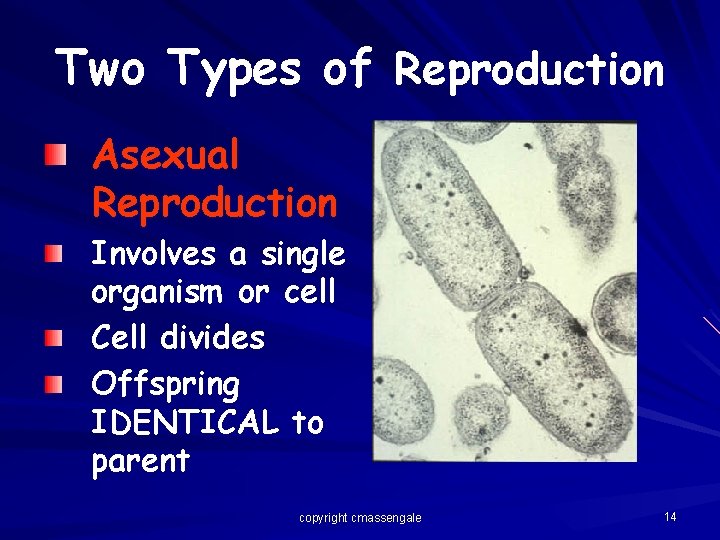
Two Types of Reproduction Asexual Reproduction Involves a single organism or cell Cell divides Offspring IDENTICAL to parent copyright cmassengale 14
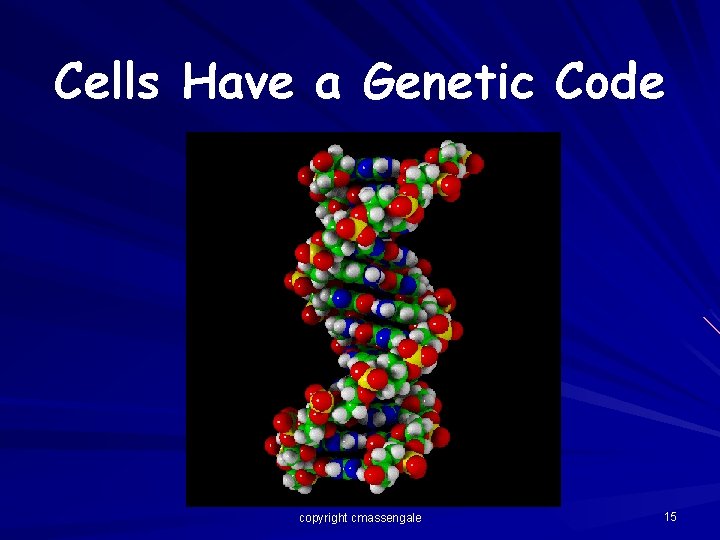
Cells Have a Genetic Code copyright cmassengale 15
Genetic Code DNA (deoxyribose nucleic acid) carries the genetic code for all organisms All organisms contain DNA codes for the proteins that make up cells & do all the work copyright cmassengale 16
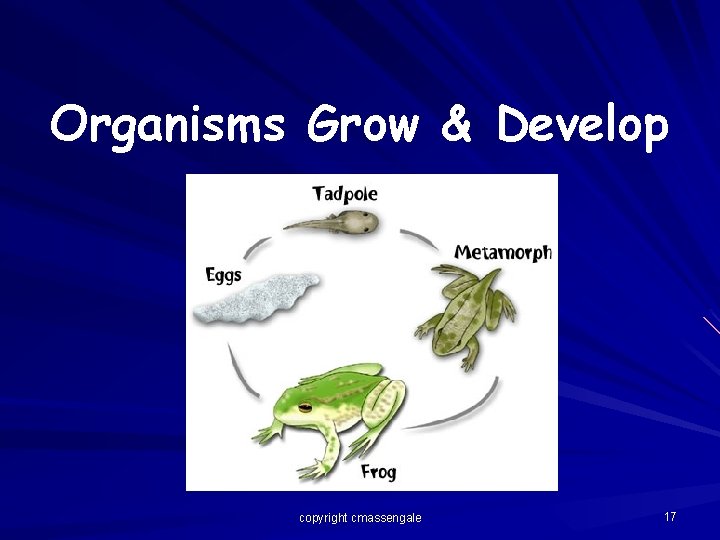
Organisms Grow & Develop copyright cmassengale 17
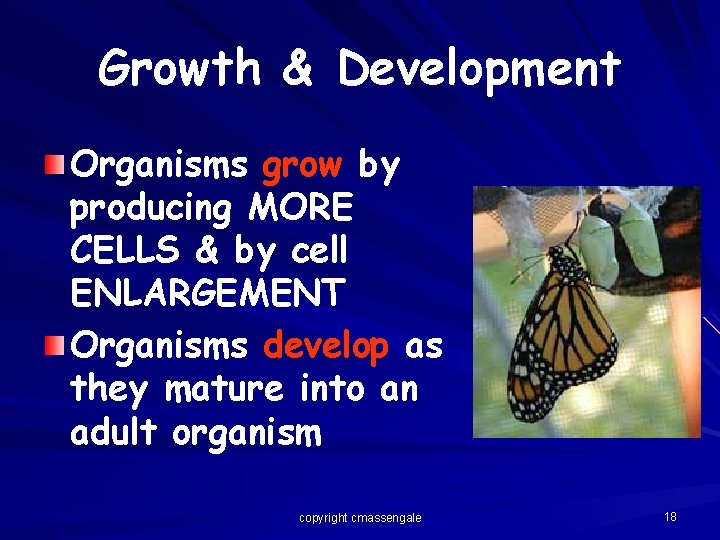
Growth & Development Organisms grow by producing MORE CELLS & by cell ENLARGEMENT Organisms develop as they mature into an adult organism copyright cmassengale 18
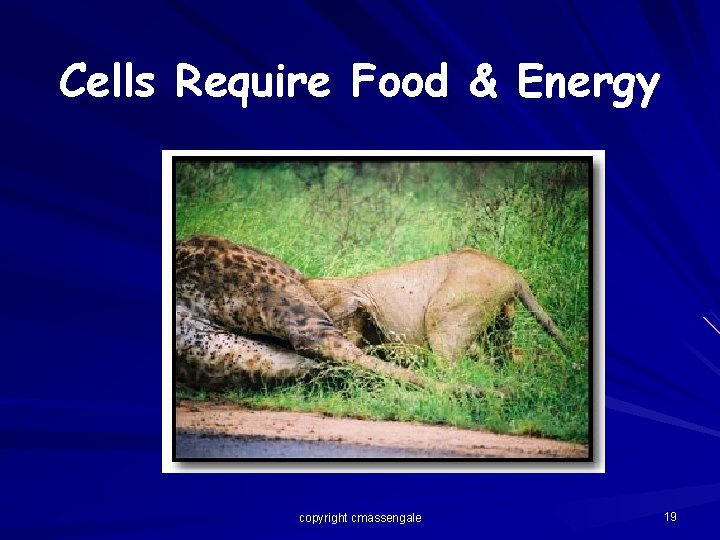
Cells Require Food & Energy copyright cmassengale 19
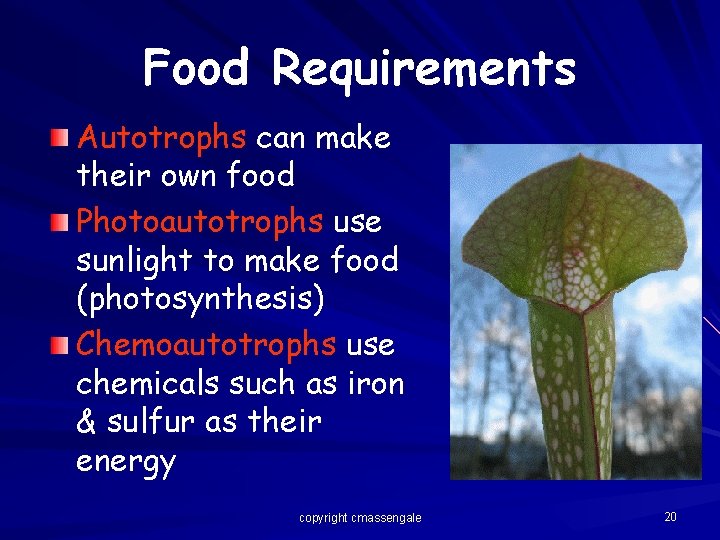
Food Requirements Autotrophs can make their own food Photoautotrophs use sunlight to make food (photosynthesis) Chemoautotrophs use chemicals such as iron & sulfur as their energy copyright cmassengale 20
Food Requirements Heterotrophs can NOT make their own food They must consume other organisms Herbivores eat plants Carnivores eat meat Omnivores eat plants & animals copyright cmassengale 21
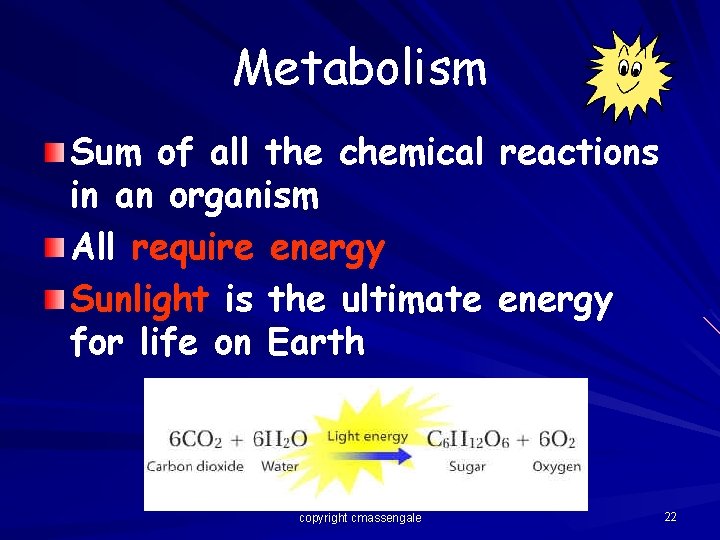
Metabolism Sum of all the chemical in an organism All require energy Sunlight is the ultimate for life on Earth copyright cmassengale reactions energy 22
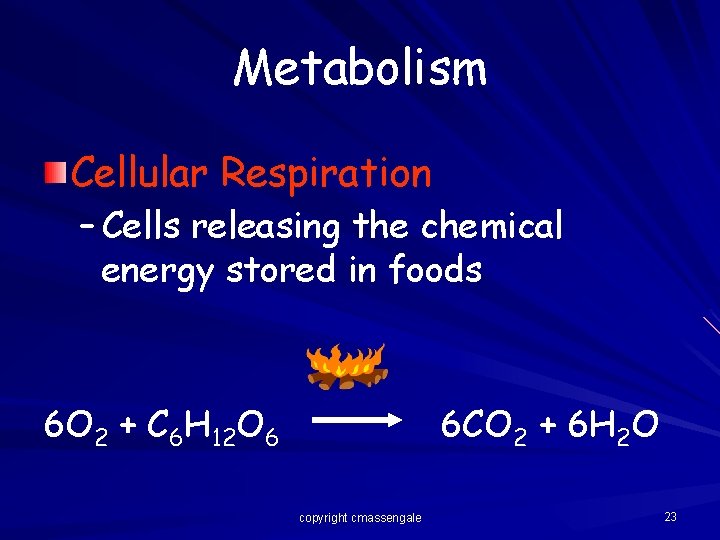
Metabolism Cellular Respiration – Cells releasing the chemical energy stored in foods 6 O 2 + C 6 H 12 O 6 6 CO 2 + 6 H 2 O copyright cmassengale 23
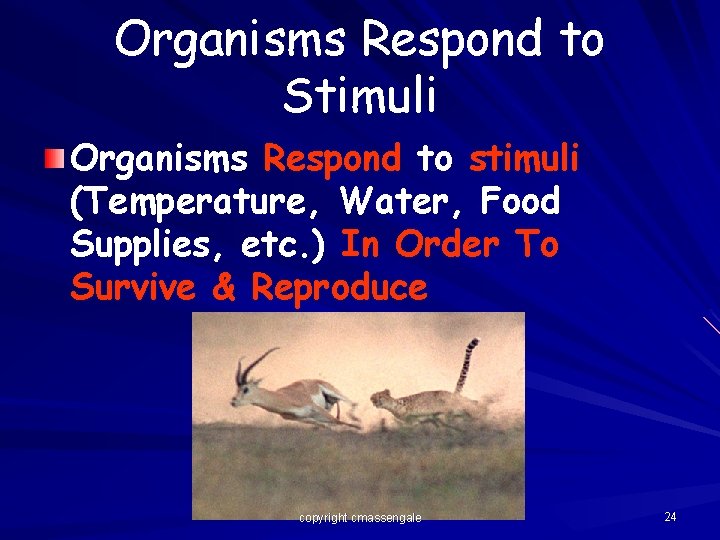
Organisms Respond to Stimuli Organisms Respond to stimuli (Temperature, Water, Food Supplies, etc. ) In Order To Survive & Reproduce copyright cmassengale 24
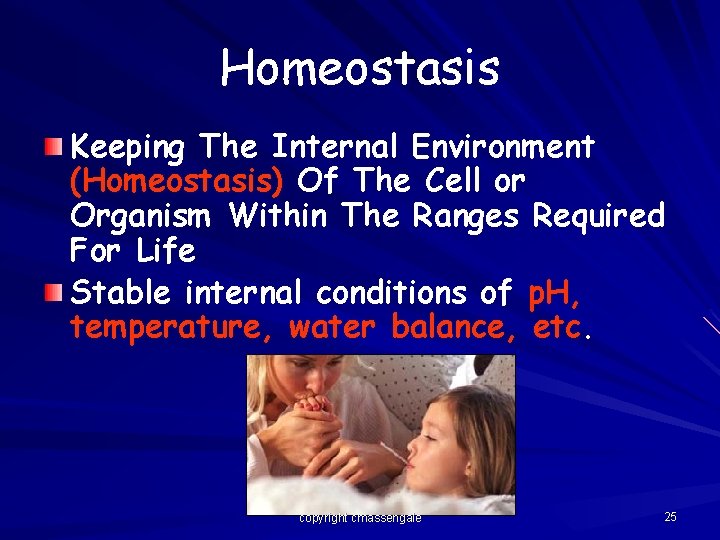
Homeostasis Keeping The Internal Environment (Homeostasis) Of The Cell or Organism Within The Ranges Required For Life Stable internal conditions of p. H, temperature, water balance, etc. copyright cmassengale 25
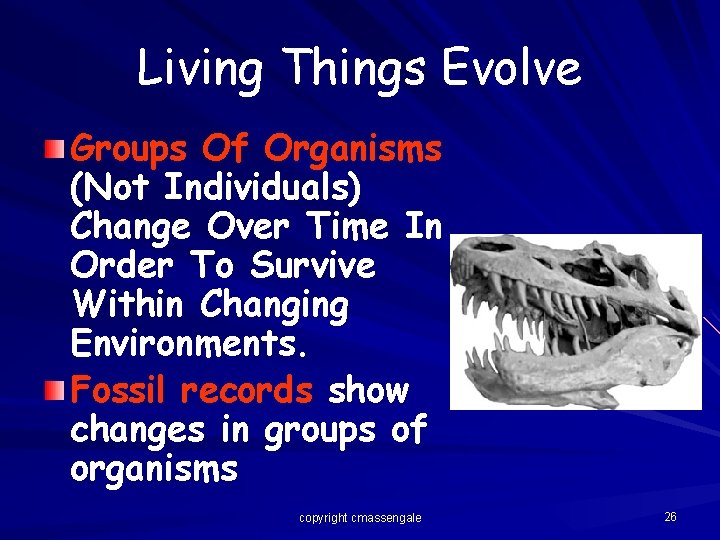
Living Things Evolve Groups Of Organisms (Not Individuals) Change Over Time In Order To Survive Within Changing Environments. Fossil records show changes in groups of organisms copyright cmassengale 26
Life is Organized on Several Levels copyright cmassengale 27
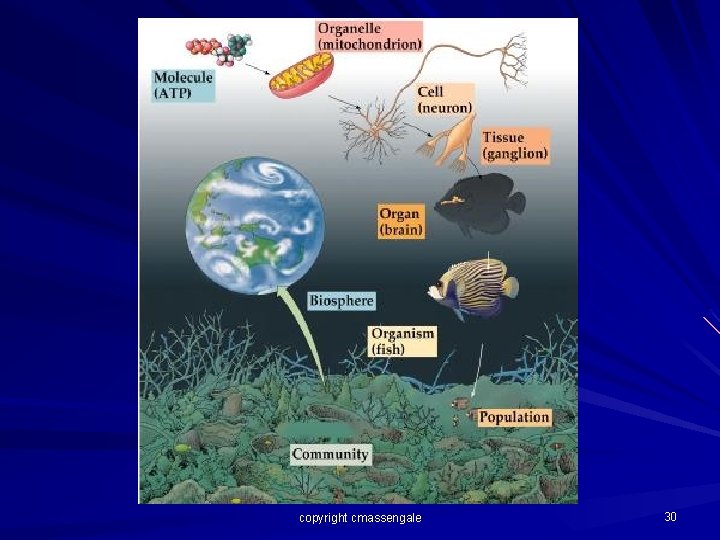
Levels Atoms Molecules Organelles Cells – life starts here Tissues Organs System Organism copyright cmassengale 28
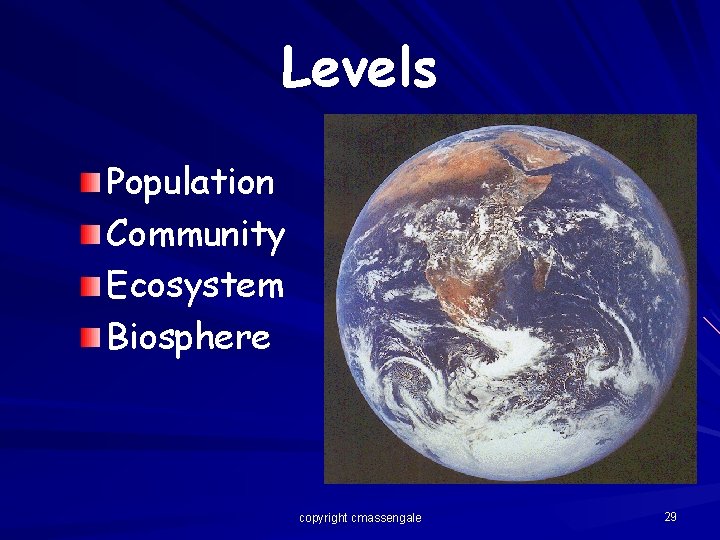
Levels Population Community Ecosystem Biosphere copyright cmassengale 29
copyright cmassengale 30
- Slides: 30