
Studies of immune responses to Prion Protein Pr

- Slides: 18
Studies of immune responses to Prion Protein (Pr. P) during prion infection: role of regulatory T cells Martine Bruley Rosset UMR S 938 INSERM Hôpital St Antoine Paris France
Creutzfeldt Jakob Disease • • • Sporadic Genetic Infectious: Iatrogenic, new variant CJD Triggering event can be established a posteriori when disease emerges Long period of incubation where disease is asymptomatic before clinical signs develop in the CNS Early detection is essential for – presence of infectivity for transmission – application of therapy
In conventional infectious diseases, infection is usually detected by: Identification of the pathogen presence of an immune response specific to the pathogen In the case of infectious CJD: Infectious agent is normal protein (Pr. P), which acquires a pathological conformation (Pr. PSc) : • no antibodies can discriminate the normal form from the pathological form • PMCA is a new method for the detection of the Pr. PSc in body fluids No evidence of specific immune response to Pr. PSc : no antibodies to Pr. P are spontaneously produced in the blood of CJD patients precluding early detection of infection
Evidences that immune responses to Pr. P control prion diseases 1. Antibodies to Pr. P control efficiently the disease when given early after infection but not late Importance of early detection 2. Implication of T cells specific for Pr. P: Identification of peptide 158 -187 (P 9) as the main CD 4+ T cell epitope of murine Pr. P Experimental model of murine scrapie
Questions Can prion infection be detected and/or interfere with the host immune system during the asymptomatic period ? And if so, what is the contribution of innate or adaptive arms of the immune system?
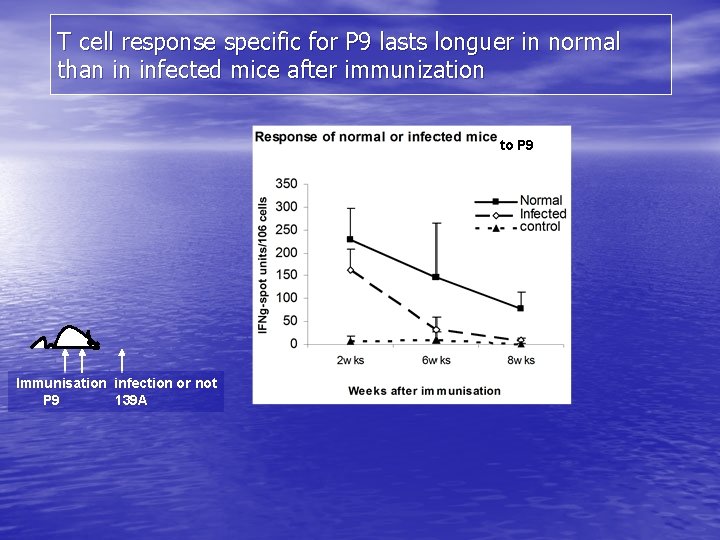
T cell response specific for P 9 lasts longuer in normal than in infected mice after immunization to P 9 Immunisation infection or not P 9 139 A
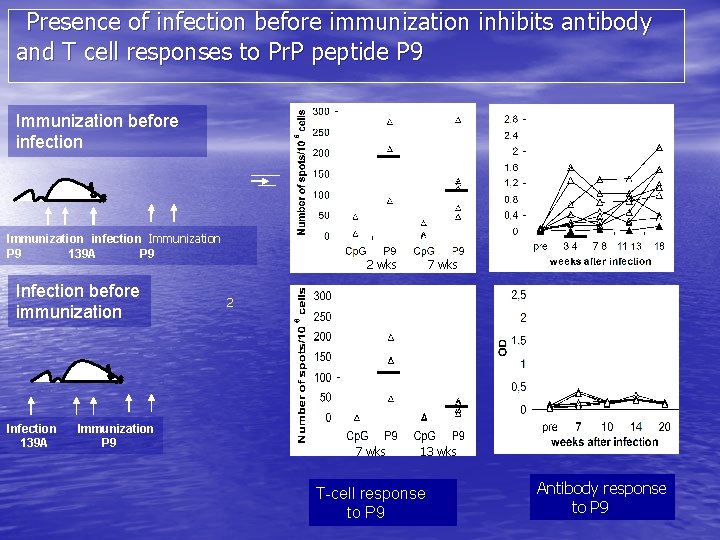
Presence of infection before immunization inhibits antibody and T cell responses to Pr. P peptide P 9 Immunization before infection Immunization P 9 139 A P 9 Infection before immunization Infection 139 A Immunization P 9 2 wks 7 wks 2 7 wks 13 wks T-cell response to P 9 Antibody response to P 9
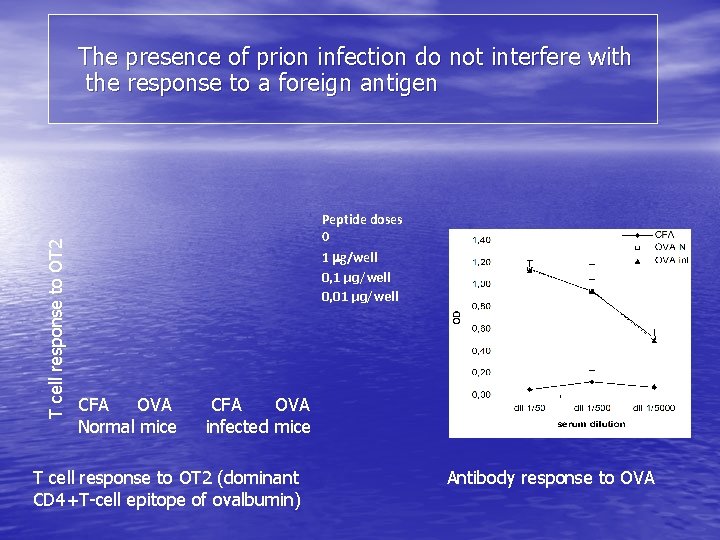
T cell response to OT 2 The presence of prion infection do not interfere with the response to a foreign antigen Peptide doses 0 1 mg/well 0, 1 µg/well 0, 01 µg/well CFA OVA Normal mice CFA OVA infected mice T cell response to OT 2 (dominant CD 4+T-cell epitope of ovalbumin) Antibody response to OVA
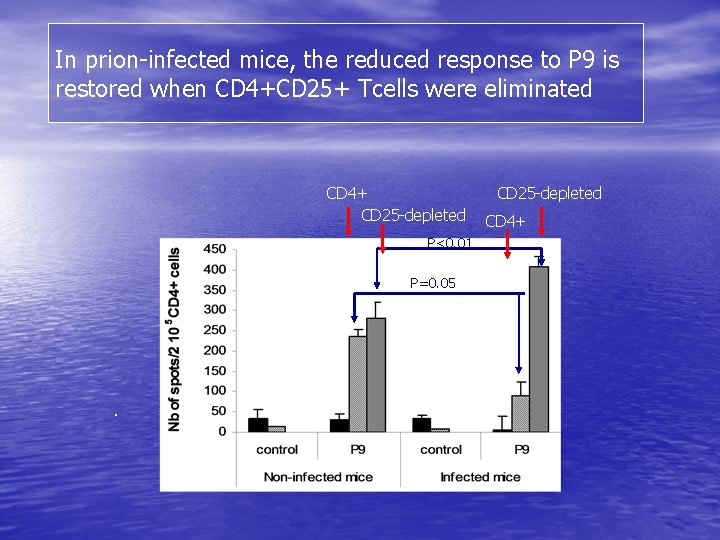
In prion-infected mice, the reduced response to P 9 is restored when CD 4+CD 25+ Tcells were eliminated CD 4+ CD 25 -depleted P<0. 01 P=0. 05 . CD 25 -depleted CD 4+
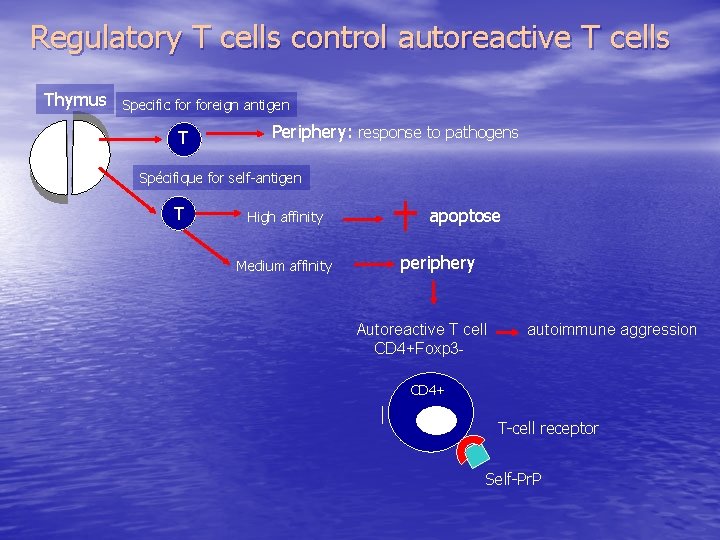
Regulatory T cells control autoreactive T cells Thymus Specific foreign antigen T Periphery: response to pathogens Spécifique for self-antigen T High affinity Medium affinity apoptose periphery Autoreactive T cell CD 4+Foxp 3 - autoimmune aggression CD 4+ T-cell receptor Self-Pr. P
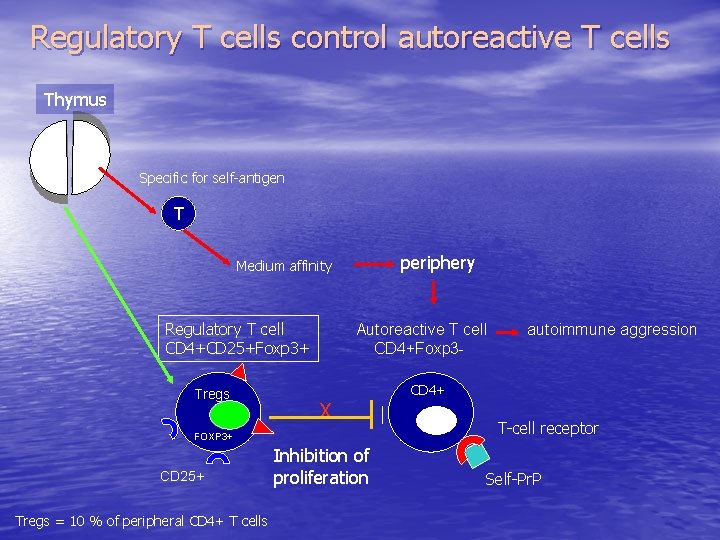
Regulatory T cells control autoreactive T cells Thymus Specific for self-antigen T periphery Medium affinity Regulatory T cell CD 4+CD 25+Foxp 3+ Tregs Autoreactive T cell CD 4+Foxp 3 CD 4+ X FOXP 3+ CD 25+ Tregs = 10 % of peripheral CD 4+ T cells autoimmune aggression Inhibition of proliferation T-cell receptor Self-Pr. P
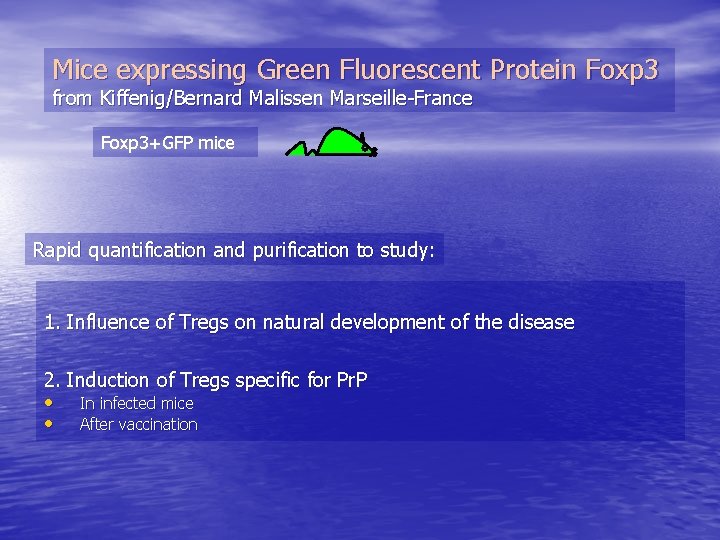
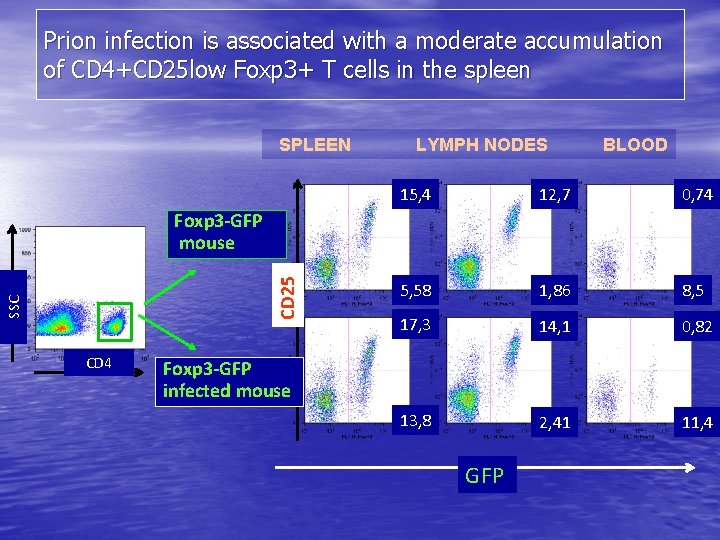
Mice expressing Green Fluorescent Protein Foxp 3 from Kiffenig/Bernard Malissen Marseille-France Foxp 3+GFP mice Rapid quantification and purification to study: 1. Influence of Tregs on natural development of the disease 2. Induction of Tregs specific for Pr. P • In infected mice • After vaccination
Prion infection is associated with a moderate accumulation of CD 4+CD 25 low Foxp 3+ T cells in the spleen SPLEEN LYMPH NODES BLOOD 15, 4 12, 7 0, 74 5, 58 1, 86 8, 5 17, 3 14, 1 0, 82 13, 8 2, 41 11, 4 SSC CD 25 Foxp 3 -GFP mouse CD 4 Foxp 3 -GFP infected mouse GFP
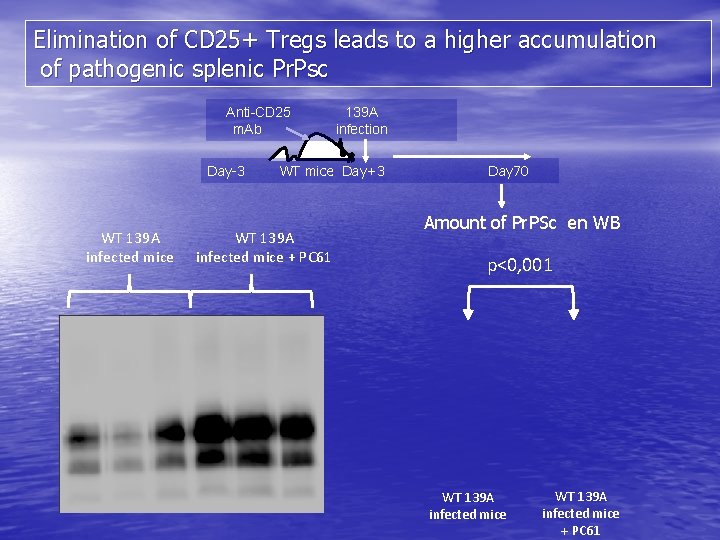
Elimination of CD 25+ Tregs leads to a higher accumulation of pathogenic splenic Pr. Psc Anti-CD 25 m. Ab Day-3 WT 139 A infected mice 139 A infection WT mice Day+3 WT 139 A infected mice + PC 61 Day 70 Amount of Pr. PSc en WB p<0, 001 WT 139 A infected mice + PC 61
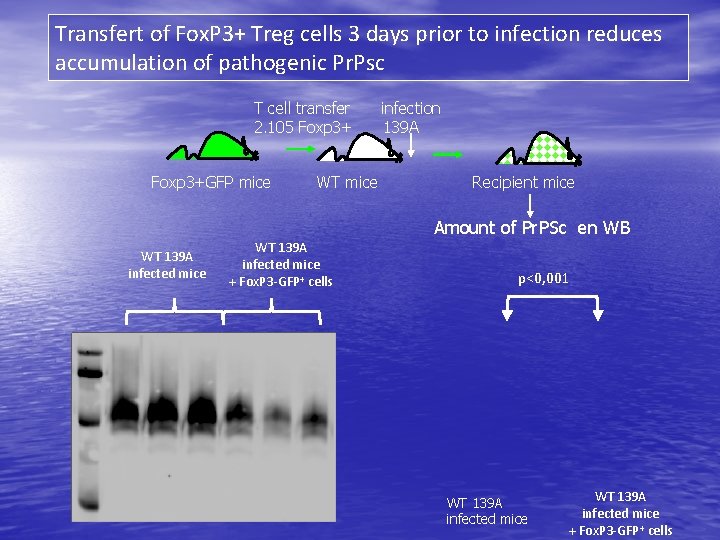
Transfert of Fox. P 3+ Treg cells 3 days prior to infection reduces accumulation of pathogenic Pr. Psc T cell transfer 2. 105 Foxp 3+GFP mice WT mice infection 139 A Recipient mice Amount of Pr. PSc en WB WT 139 A infected mice + Fox. P 3 -GFP+ cells p<0, 001 WT 139 A infected mice + Fox. P 3 -GFP+ cells
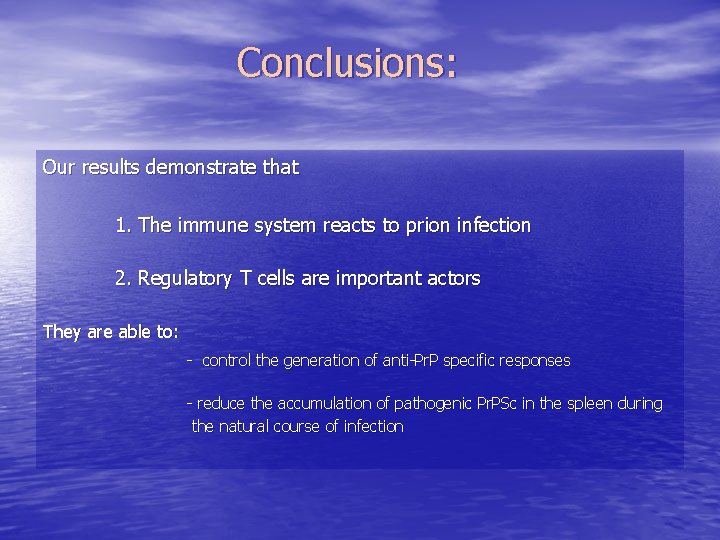
Conclusions: Our results demonstrate that 1. The immune system reacts to prion infection 2. Regulatory T cells are important actors They are able to: - control the generation of anti-Pr. P specific responses - reduce the accumulation of pathogenic Pr. PSc in the spleen during the natural course of infection
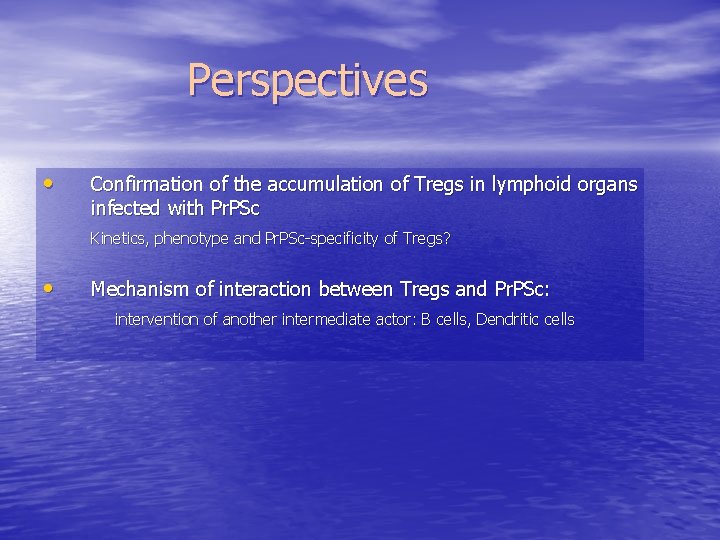
Perspectives • Confirmation of the accumulation of Tregs in lymphoid organs infected with Pr. PSc Kinetics, phenotype and Pr. PSc-specificity of Tregs? • Mechanism of interaction between Tregs and Pr. PSc: intervention of another intermediate actor: B cells, Dendritic cells
Acknowledgements UMRS 938 INSERM 580 Hôpital St Antoine Paris Hôpital Necker Paris Antoine Sacquin David A. Gross Ph. D student Jean Davoust