
Studies of Advanced Baseline Sounder ABS for Future
Studies of Advanced Baseline Sounder (ABS) for Future GOES Jun Li+ Timothy J. Schmit@ Allen Huang+ W. Paul Menzel@ @NOAA/NESDIS/ORA +CIMSS, UW-Madison ITSC-XII, Feb. 27 - Mar. 05, 2002, Lorne, Victoria, Australia UW-Madison
ABS is scheduled to be on GOES-R in 2012 More than 5 years of high spectral measurements from polar orbits: - AIRS (Atmospheric Infra. Red Sounder) - IASI (Infrared Atmospheric Sounding Interferometer) - Cr. IS (Crosstrack Infrared Sounder) Approximately 5 years of high spectral, spatial and temporal measurements from geostationary orbit: - GIFTS (Geostationary Imaging Fourier Transform Spectrometer) 30 years of filter wheel technology in geostationary orbit: - VAS and GOES Sounder 40 years since the first interferometer flown in space to study the weather: IRIS (Infrared Radiation Interferometer Spectrometer) The time is right to update the GOES sounder! The technology is mature. The need is documented.
Limitations of Current GOES Sounders – scan conflicts between oceans vs CONUS (regional vs hemispheric) – low vertical resolution for moisture, temperature – eclipse and related outages
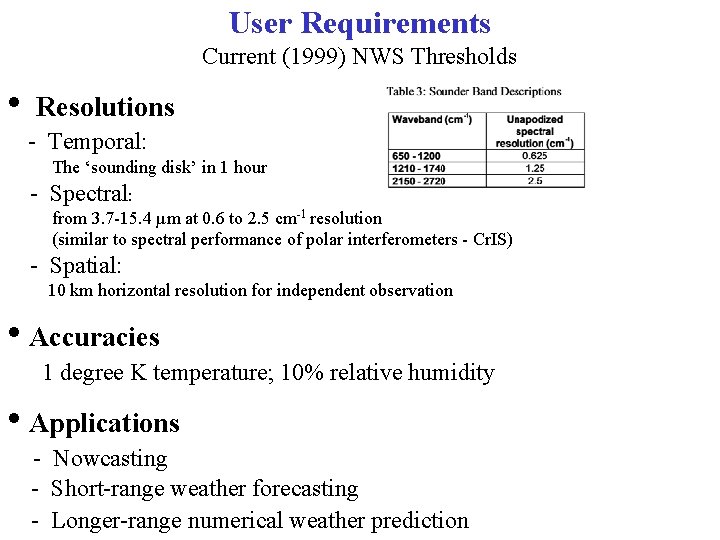
User Requirements Current (1999) NWS Thresholds • Resolutions - Temporal: The ‘sounding disk’ in 1 hour - Spectral: from 3. 7 -15. 4 µm at 0. 6 to 2. 5 cm-1 resolution (similar to spectral performance of polar interferometers - Cr. IS) - Spatial: 10 km horizontal resolution for independent observation • Accuracies 1 degree K temperature; 10% relative humidity • Applications - Nowcasting - Short-range weather forecasting - Longer-range numerical weather prediction

Sounder Comparison Current Requirement CONUS/hr Sounding Disk/hr - Sampling Distance 10 km Vertical resolution ~3 km 1 km Temperature 2 deg. K 1 deg. K Humidity 20% 10% Coverage Rate Horizontal Resolution Accuracy
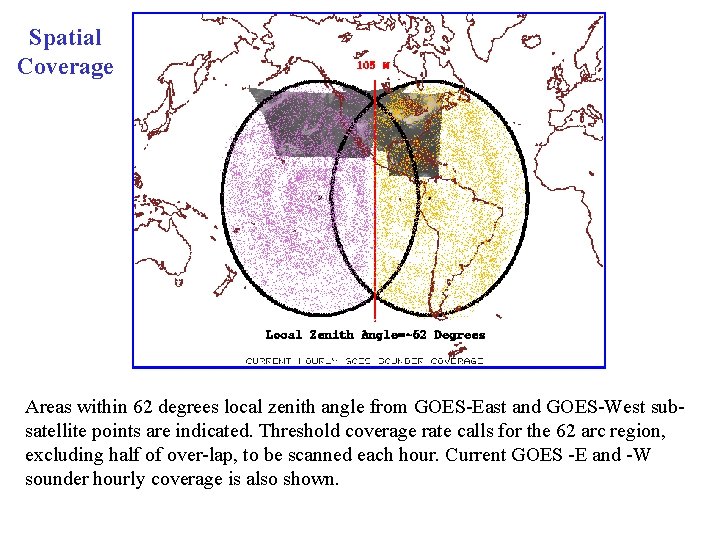
Spatial Coverage Areas within 62 degrees local zenith angle from GOES-East and GOES-West subsatellite points are indicated. Threshold coverage rate calls for the 62 arc region, excluding half of over-lap, to be scanned each hour. Current GOES -E and -W sounder hourly coverage is also shown.
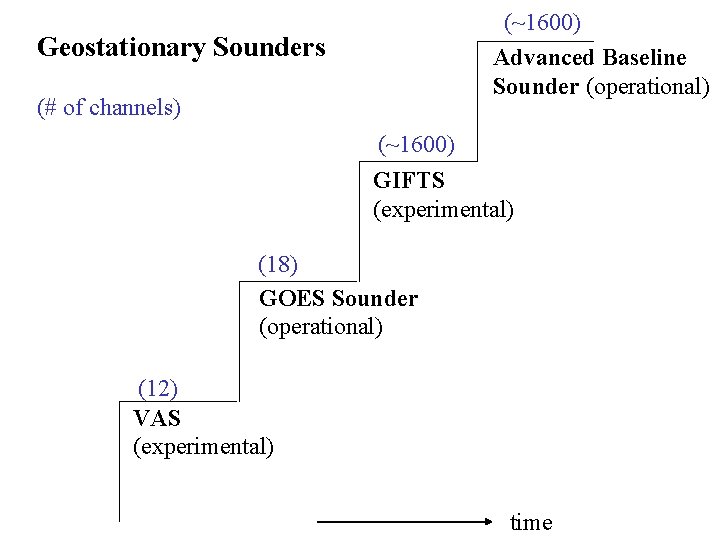
(~1600) Advanced Baseline Sounder (operational) Geostationary Sounders (# of channels) (~1600) GIFTS (experimental) (18) GOES Sounder (operational) (12) VAS (experimental) time
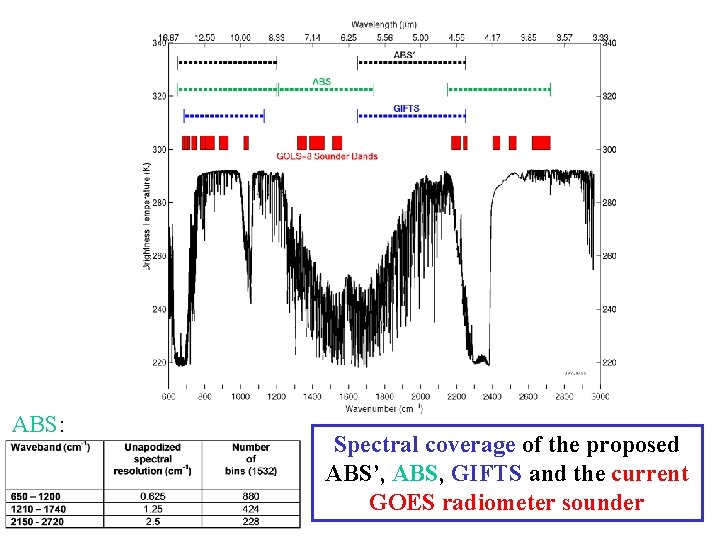
ABS: Spectral coverage of the proposed ABS’, ABS, GIFTS and the current GOES radiometer sounder
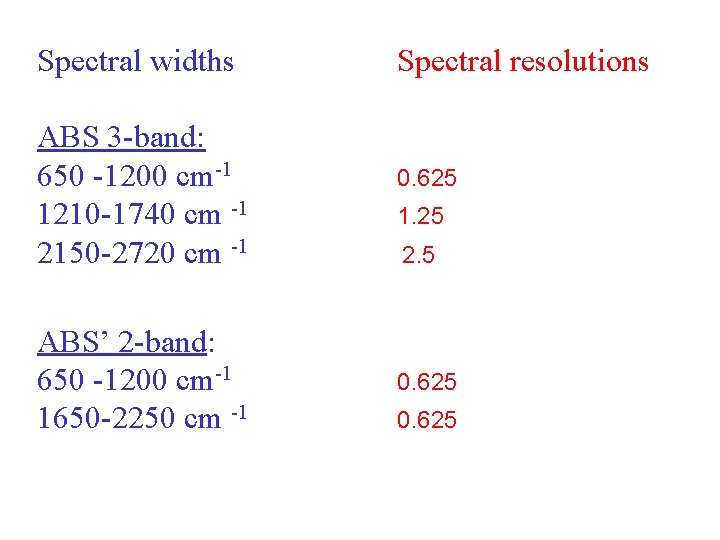
Spectral widths ABS 3 -band: 650 -1200 cm-1 1210 -1740 cm -1 2150 -2720 cm -1 ABS’ 2 -band: 650 -1200 cm-1 1650 -2250 cm -1 Spectral resolutions 0. 625 1. 25 2. 5 0. 625
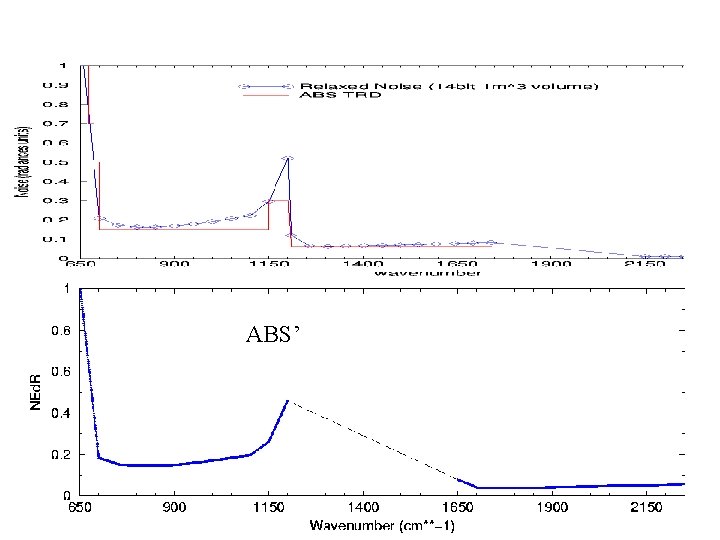
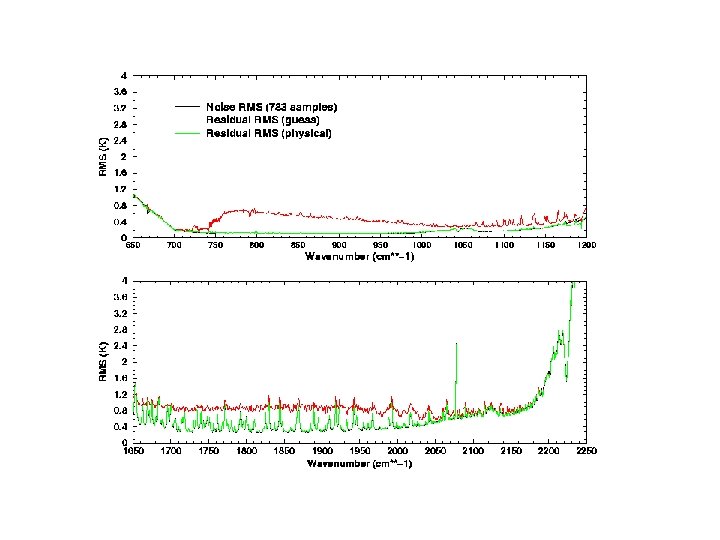
ABS’ Noise vectors used for the ABS simulations
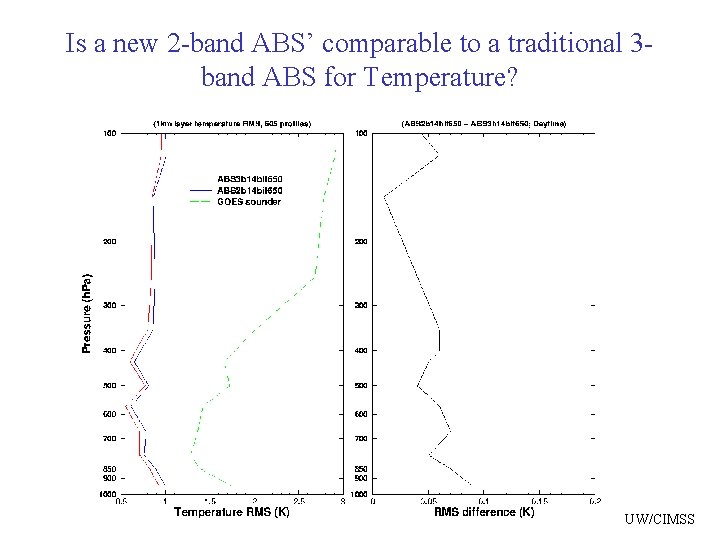
Is a new 2 -band ABS’ comparable to a traditional 3 band ABS for Temperature? UW/CIMSS
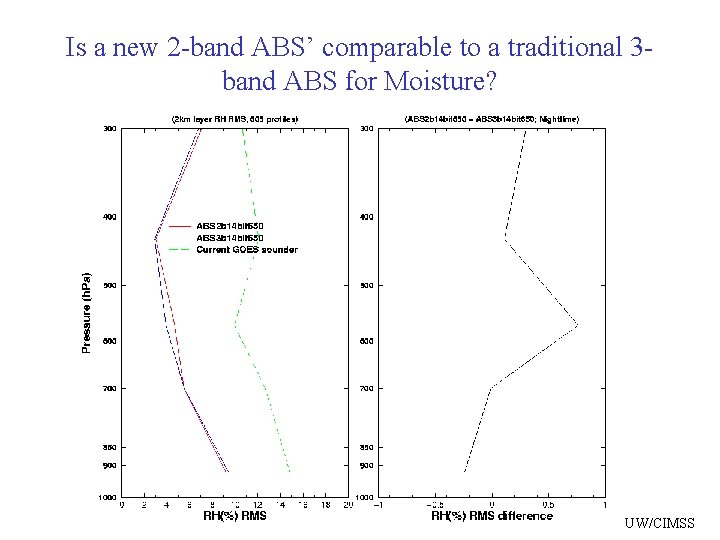
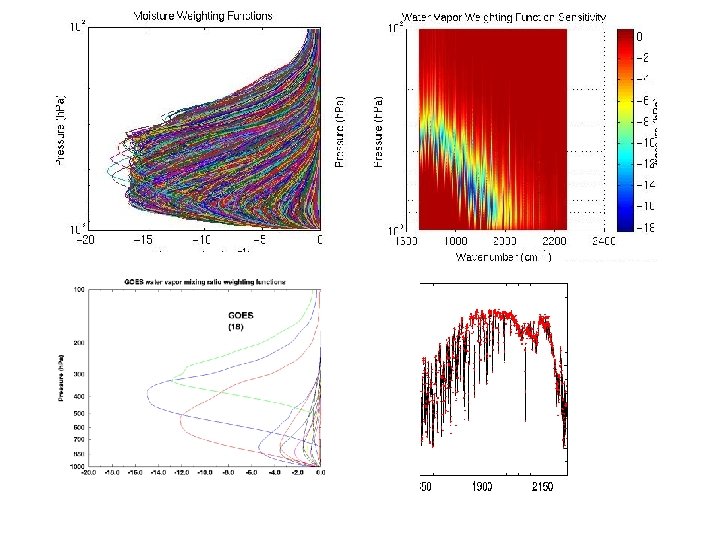
Is a new 2 -band ABS’ comparable to a traditional 3 band ABS for Moisture? UW/CIMSS
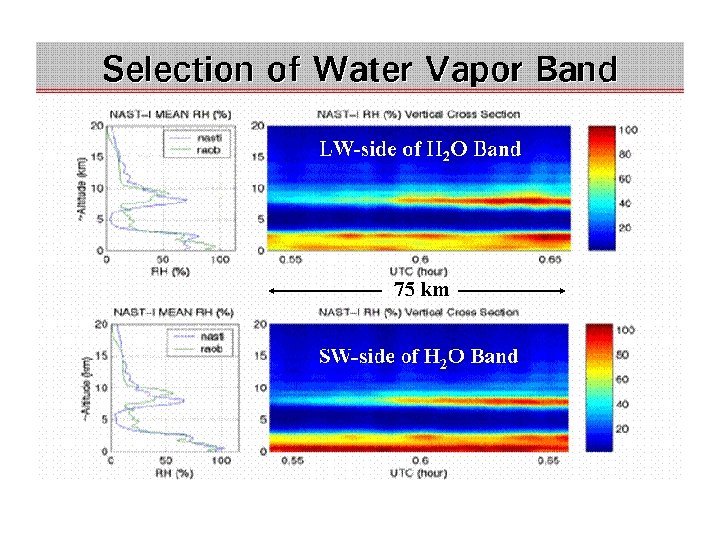
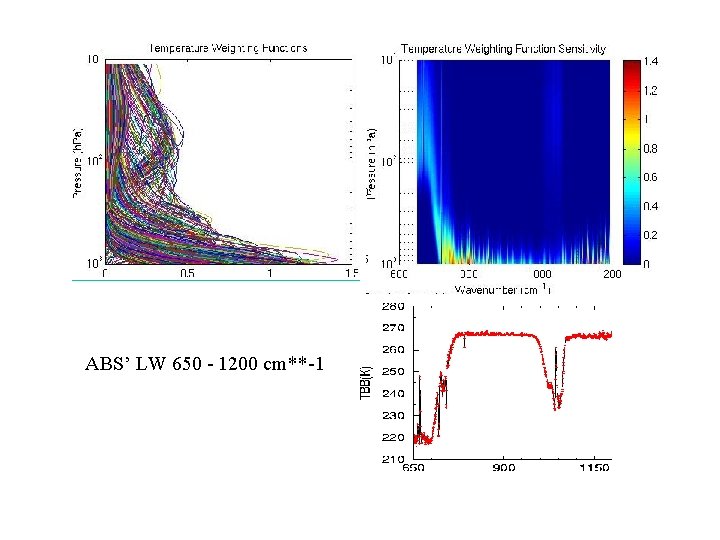
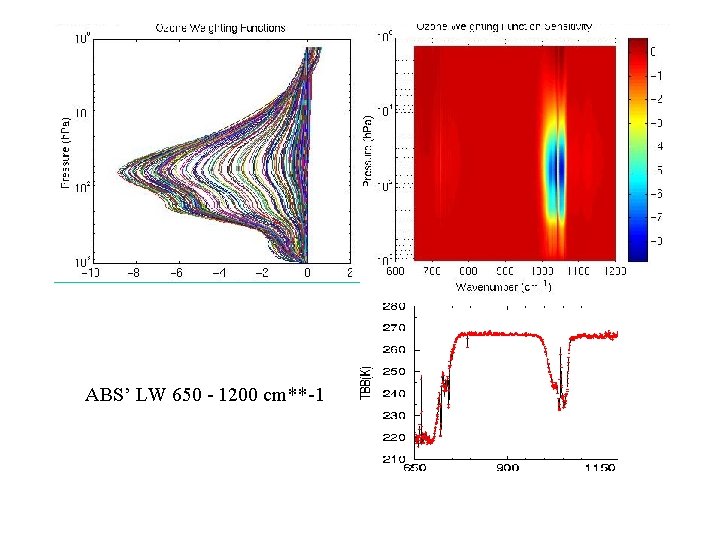
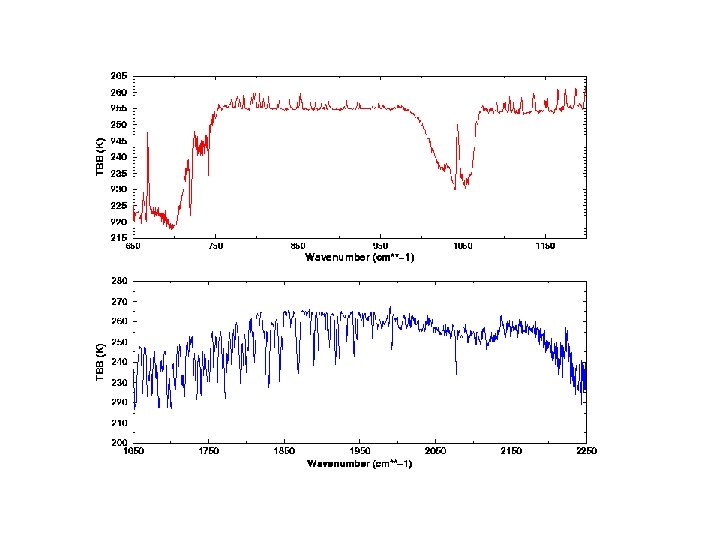
ABS’ LW 650 - 1200 cm**-1
ABS’ LW 650 - 1200 cm**-1
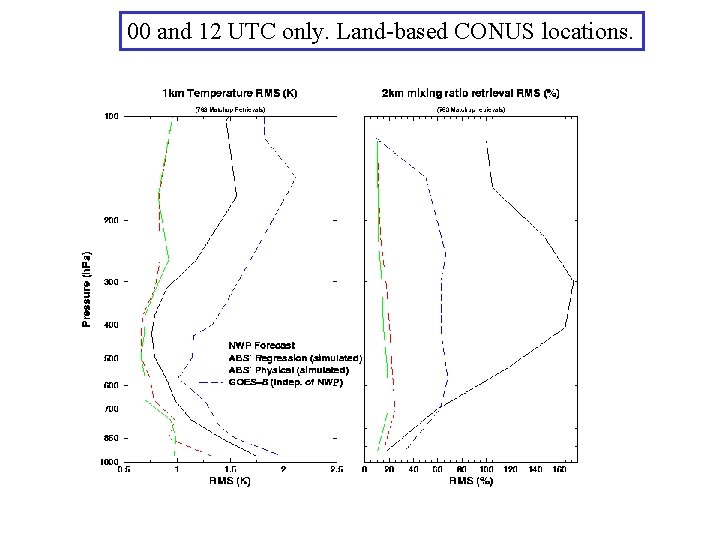
00 and 12 UTC only. Land-based CONUS locations.
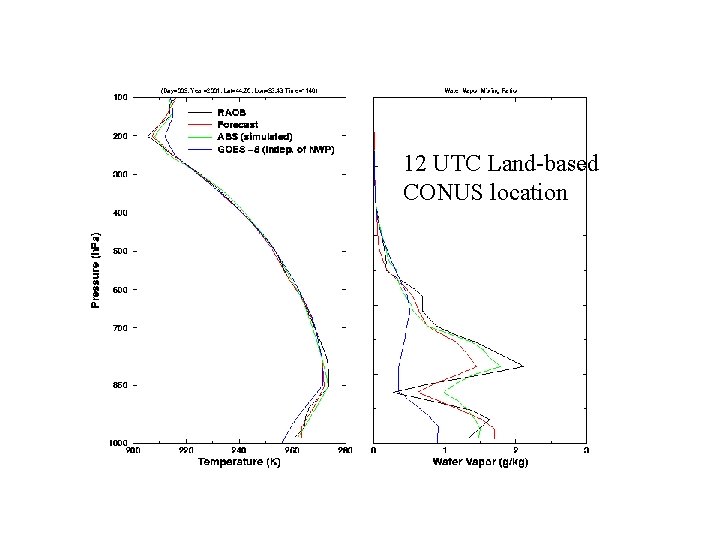
UTC. Land-based 1212 UTC CONUSlocation. CONUS
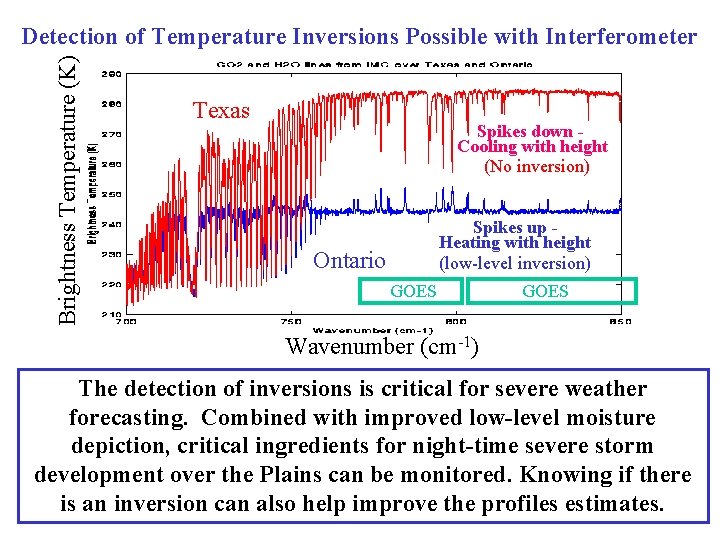
Brightness Temperature (K) Detection of Temperature Inversions Possible with Interferometer Texas Spikes down Cooling with height (No inversion) Spikes up Heating with height (low-level inversion) Ontario GOES Wavenumber (cm-1) The detection of inversions is critical for severe weather forecasting. Combined with improved low-level moisture depiction, critical ingredients for night-time severe storm development over the Plains can be monitored. Knowing if there is an inversion can also help improve the profiles estimates.
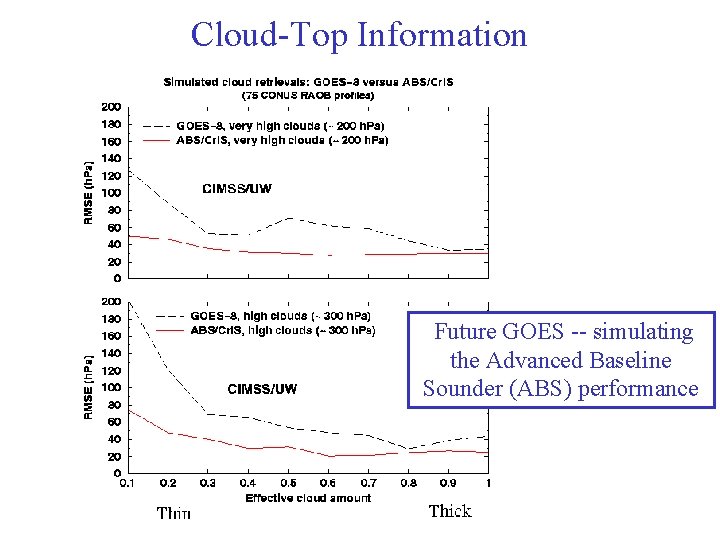
Cloud-Top Information Future GOES -- simulating the Advanced Baseline Sounder (ABS) performance
Summary The information from Cr. IS-like three spectral bands is close to that from GIFTSlike two spectral bands. The Advanced Baseline Sounder overcomes existing instrument limitations. Geostationary interferometer will resolve high temporal and vertical fluctuations of moisture that are not resolved by current in-situ or satellite measurements. Only geostationary interferometer observes critical meteorological parameters (temperature, moisture, clouds, winds) with necessary temporal, spatial and vertical resolutions to support future • Nowcasting, • Short-range weather forecasting, and • Longer-range numerical weather prediction. Technology is mature and meteorological need is documented. Time is right to update geostationary sounding instruments. Advanced Sounder will provide required high spectral resolution measurements.
- Slides: 23