
Studies in prejudice Karl Steffens Prejudice prejudice Prejudice
- Slides: 11
Studies in prejudice Karl Steffens
Prejudice prejudice ?
Prejudice as categories which are used to interpret the world 1. relate to social groups 2. are emotional and negative 3. are resistent to change
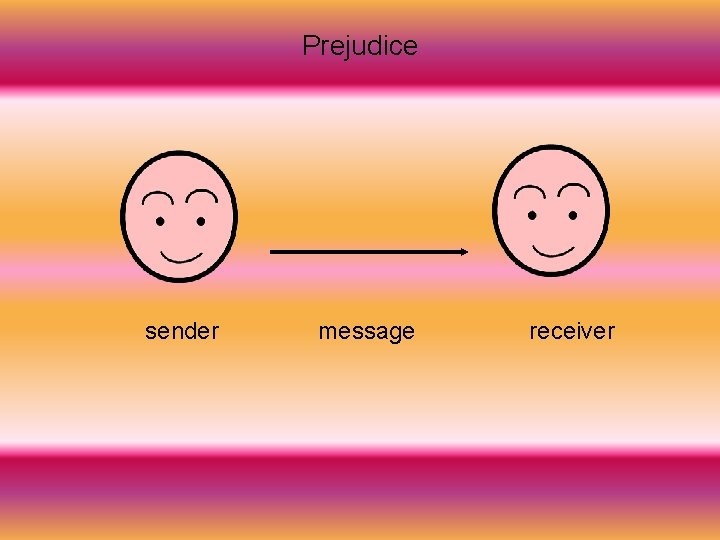
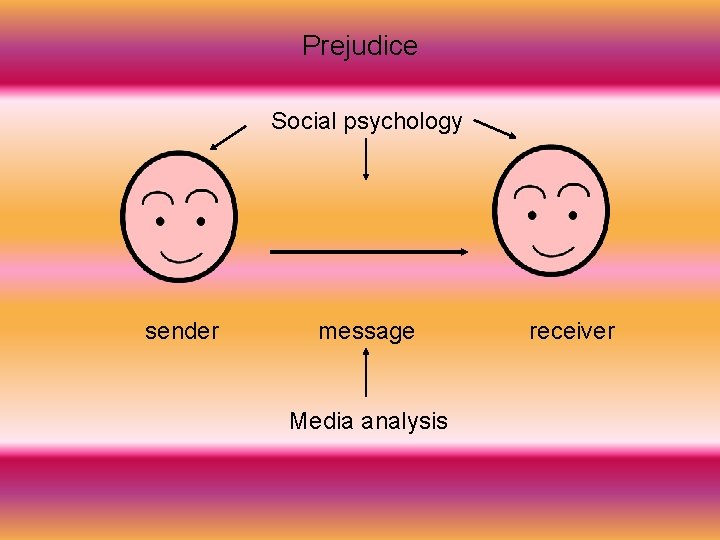
Prejudice sender message receiver
Prejudice Social psychology sender message Media analysis receiver
Prejudice Theoretical approaches 1. Adorno (1952): The authoritarian personality 2. Rokeach (1960): The open and closed mind 3. Sherif et al. (1961): Intergroup conflict and cooperation 4. Tajfel (1957): Group conflict and prejudice
Prejudice 1. Adorno (1952): The authoritarian personality 2. Character structure that makes an individual susceptible to fascist propaganda 3. Character structure of an indiviual with a weak ego 4. Freud: Id – Ego – Super-Ego
Prejudice 2. Rokeach (1960). The open and closed mind A. belief-disbelief dimension B. Central-peripheral dimension C. (1) central region primitive beliefs / physical world + social world D. (2) intermediate region beliefs about the nature of authority; source for information E. (3) peripheral region beliefs derived from authority. C. Time-Perspective Dimension
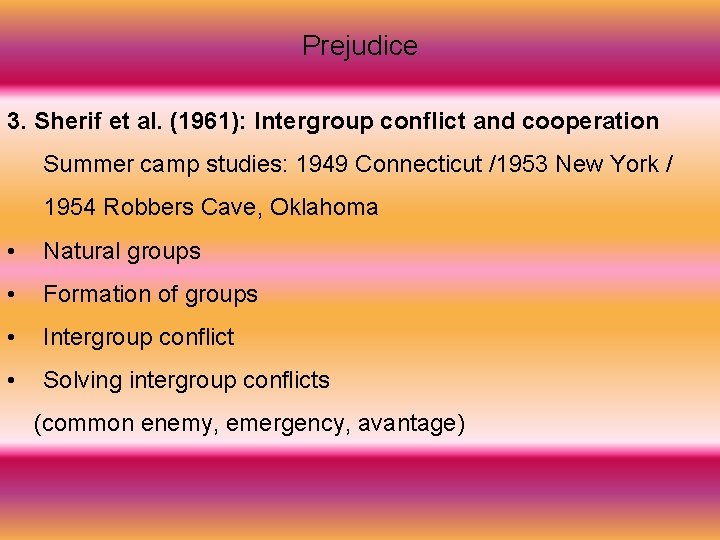
Prejudice 3. Sherif et al. (1961): Intergroup conflict and cooperation Summer camp studies: 1949 Connecticut /1953 New York / 1954 Robbers Cave, Oklahoma • Natural groups • Formation of groups • Intergroup conflict • Solving intergroup conflicts (common enemy, emergency, avantage)
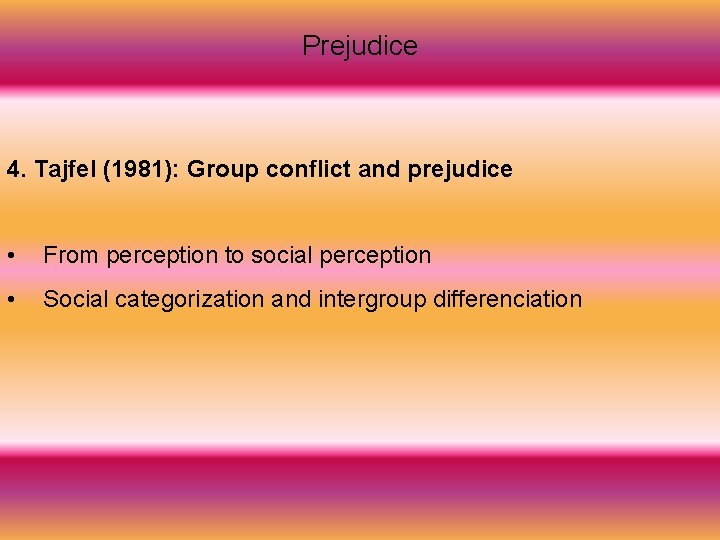
Prejudice 4. Tajfel (1981): Group conflict and prejudice • From perception to social perception • Social categorization and intergroup differenciation
Prejudice Can prejudice be reduced?