
STUDENTS PRESENTATION ON IDENTIFICATION OF PLANTS WEB QUEST
STUDENTS PRESENTATION ON IDENTIFICATION OF PLANTS WEB QUEST The following work was done by four groups. The groups were required to study the classification of division spermatophyta and then use a dichotomous key to identify some members of subdivision agiospermaphyta

GYMNOSPERMAPHYTA What is Gymnospermaphyta?
WHAT ARE GYMNOSPERMS? • Comprises of the large trees which bears cones. • Some of the plants make the male cones and female cones. • They are found mostly in warm and cool climate. • Examples include cycad, cypress, coniferous tree and maidenhair tree etc.
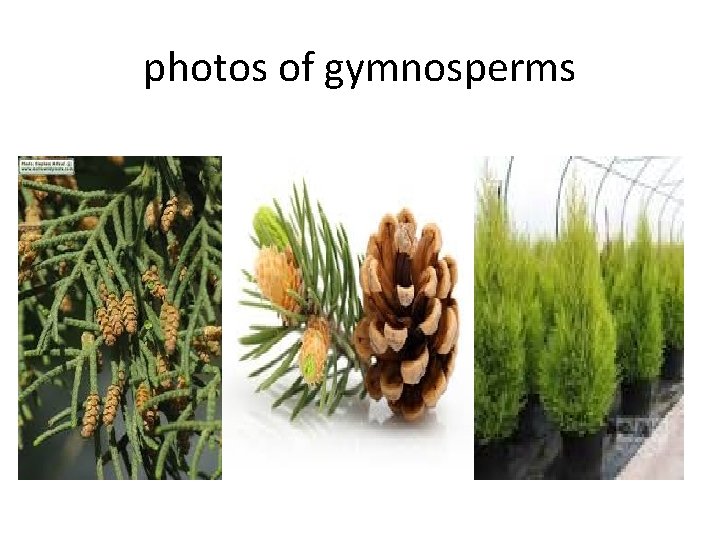
photos of gymnosperms
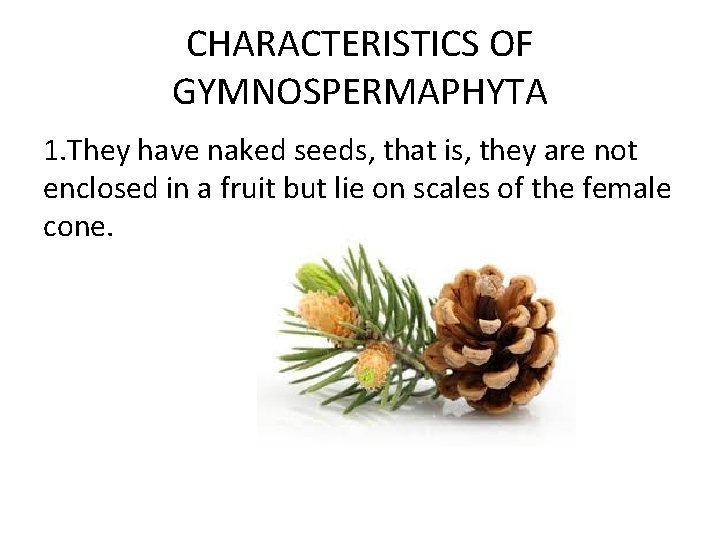
CHARACTERISTICS OF GYMNOSPERMAPHYTA 1. They have naked seeds, that is, they are not enclosed in a fruit but lie on scales of the female cone.
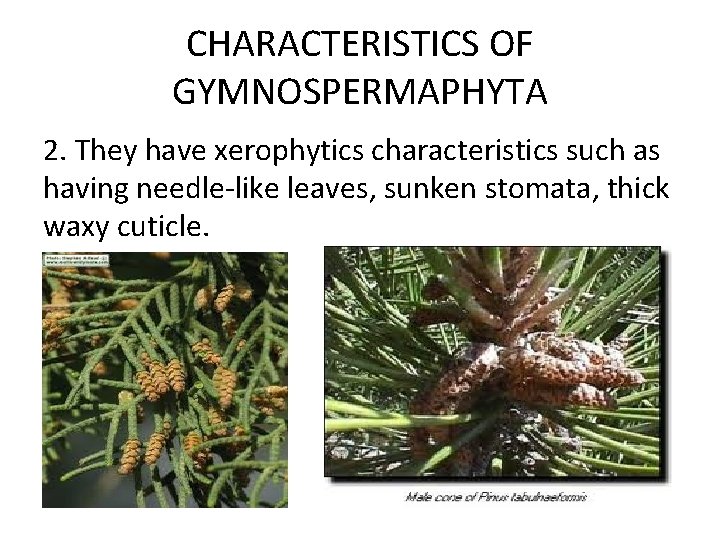
CHARACTERISTICS OF GYMNOSPERMAPHYTA 2. They have xerophytics characteristics such as having needle-like leaves, sunken stomata, thick waxy cuticle.
CHARACTERISTICS OF GYMNOSPERMAPHYTA 3. The xylem tissues consist of tracheids only, the phloem tissues has no companion cells.
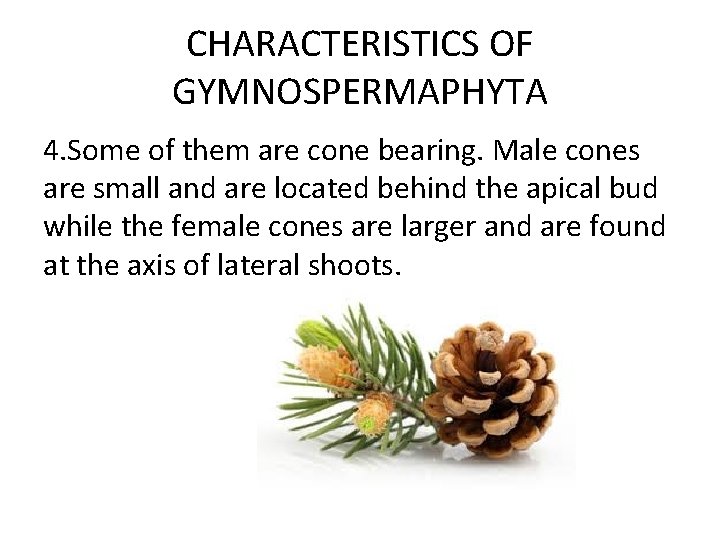
CHARACTERISTICS OF GYMNOSPERMAPHYTA 4. Some of them are cone bearing. Male cones are small and are located behind the apical bud while the female cones are larger and are found at the axis of lateral shoots.
Subdivision of gymnospermaphyta Gymnospermaphyta is divided into classes namely ; coniferales, cycadales and ginkgoaes.
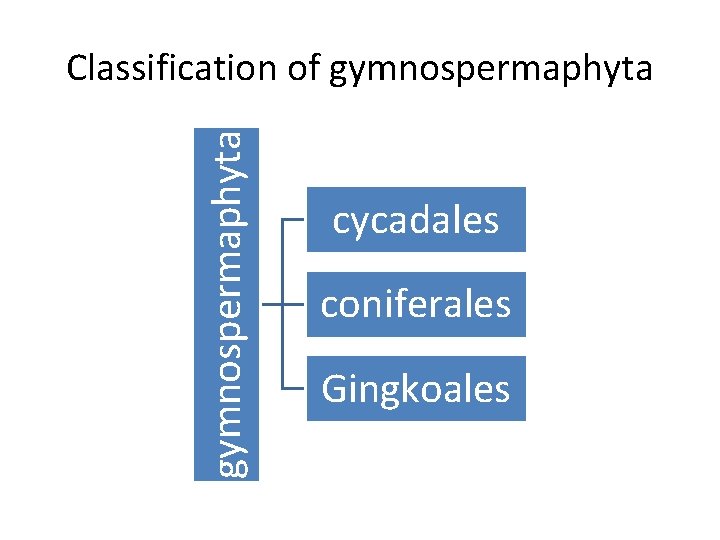
gymnospermaphyta Classification of gymnospermaphyta cycadales coniferales Gingkoales
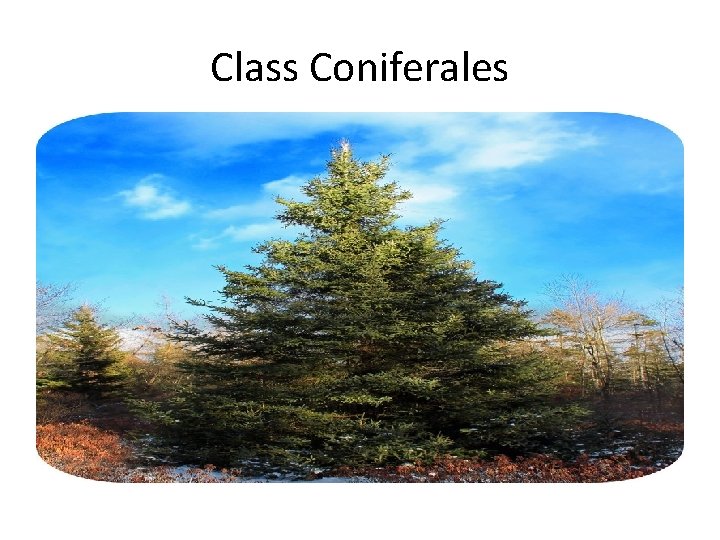
Class Coniferales
CLASS CONIFERALES. 1. They include all the common gymnosperms such as cypress, pine trees etc. 2. They are found in areas with little water. 3. Have small needle-shaped leaves with a thick waxy cuticle. (display of the real specimen)
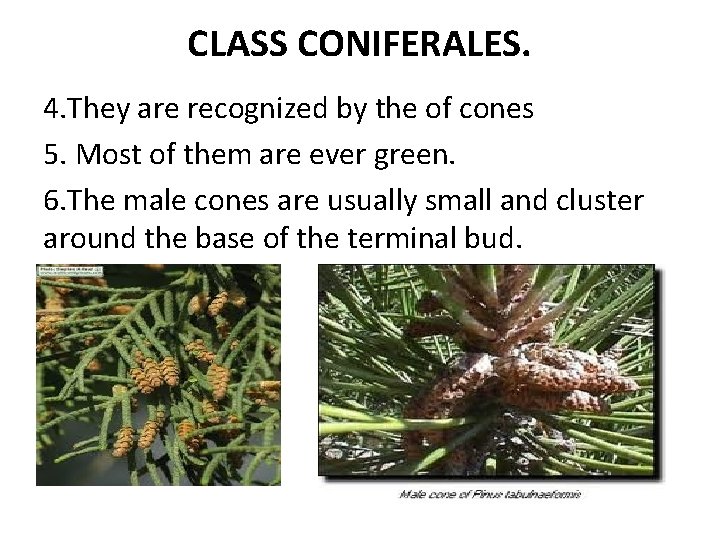
CLASS CONIFERALES. 4. They are recognized by the of cones 5. Most of them are ever green. 6. The male cones are usually small and cluster around the base of the terminal bud.
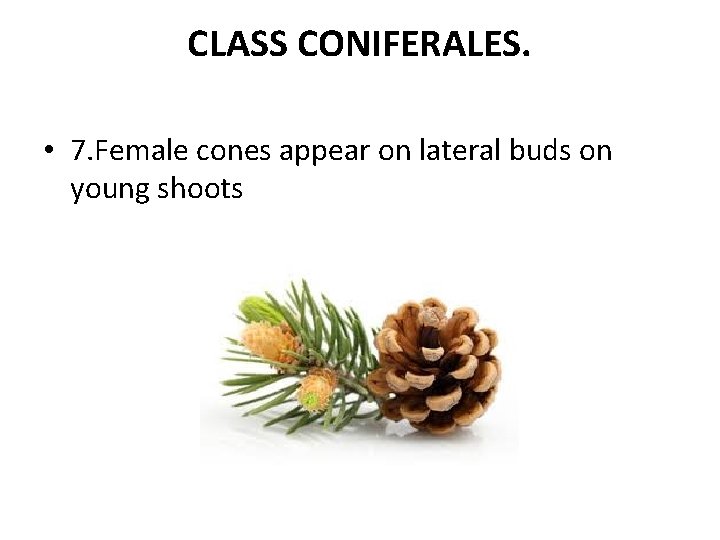
CLASS CONIFERALES. • 7. Female cones appear on lateral buds on young shoots
Class cycadales
cycadales
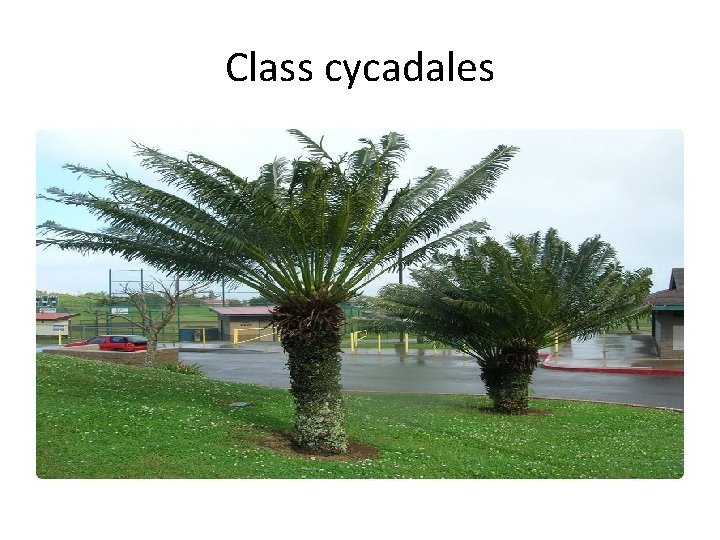
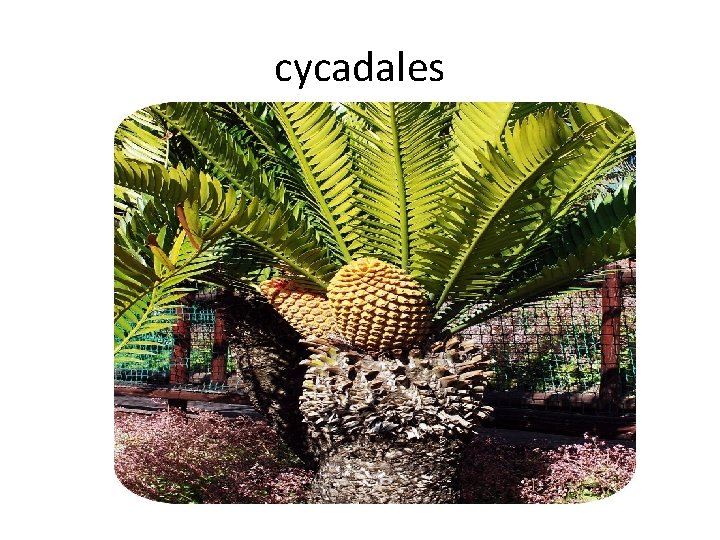
CLASS CYCADALES 1. Have long compound leaves which are clustered at the apex of a thick usually short and un-branched stems. 2. They have cones which are born at the apex of the trunk among the leaves.
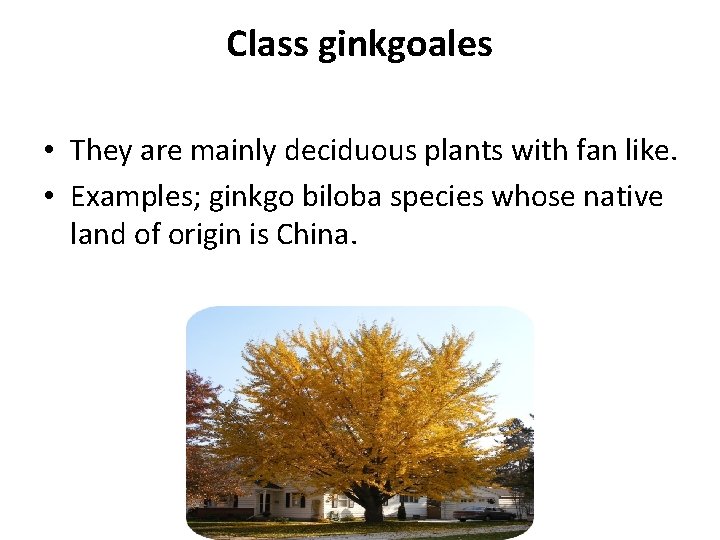
Class ginkgoales • They are mainly deciduous plants with fan like. • Examples; ginkgo biloba species whose native land of origin is China.
AGIOSPERMAPHYTA
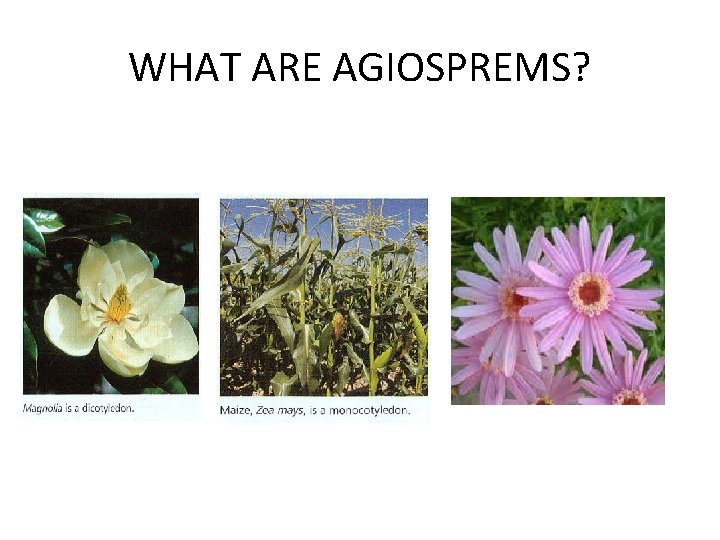
WHAT ARE AGIOSPREMS?
What are angiosperms? • These are flowering plants that bear seed that are enclosed in a fruit. • Examples are : sunflower, beans, wheat, maize and coriander
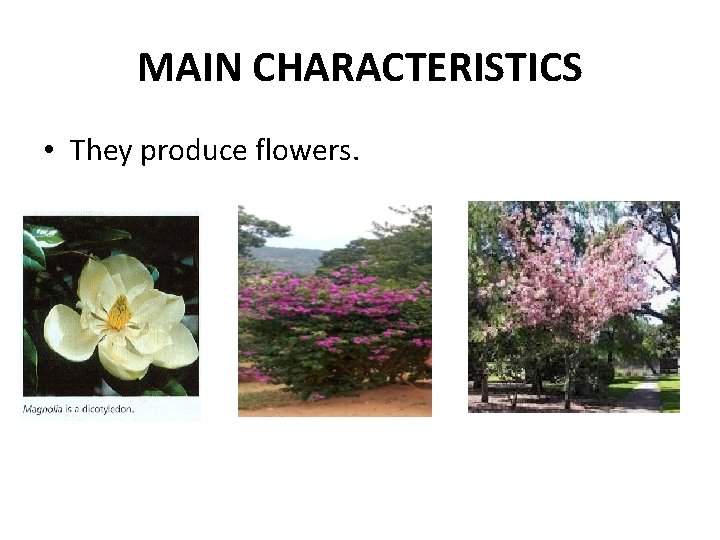
MAIN CHARACTERISTICS • They produce flowers.
Continuation of the characteristics • After fertilisation seeds are formed and enclosed in an ovary which develops into a fruit hence they are fruit bearing plants. • The seeds are enclosed in an ovary. • The ovary becomes a fruit after fertilisation. Some fruit may develop without fertilisation
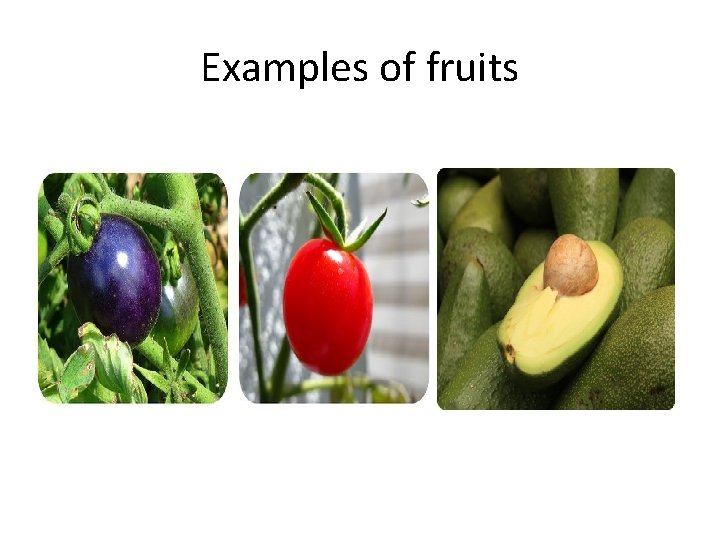
Examples of fruits
ECOLOGICAL CONDITIONS • They are found in medium temperature, rainfall and altitude. • Too much of rainfall is destructive at the flowering stage, there should be no rain at all during harvesting time because it would cause rotting and sprouting of beans.
ECONOMIC IMPORTANCE • Some are source of food e. g beans , maize and wheat. • Some are used as source of timber and paper • Some produce oil e. g sunflower seeds. • Some are used as medicine e. g coriander and sage.
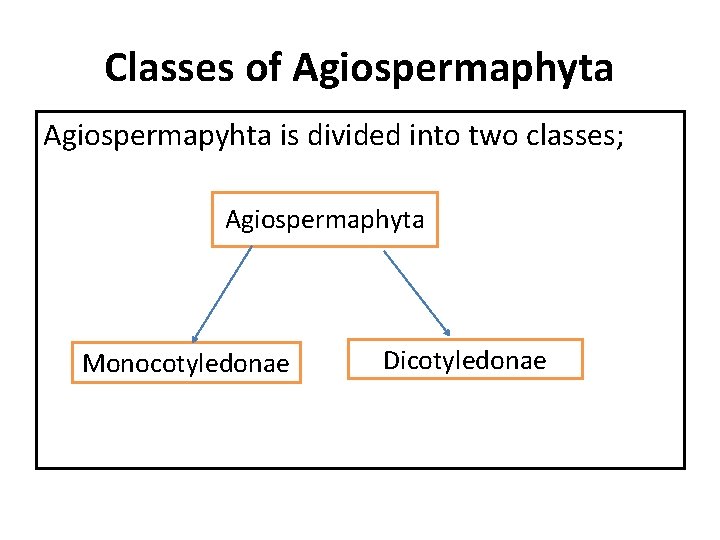
Classes of Agiospermaphyta Agiospermapyhta is divided into two classes; Agiospermaphyta Monocotyledonae Dicotyledonae
MONOCOTYLEDONAE
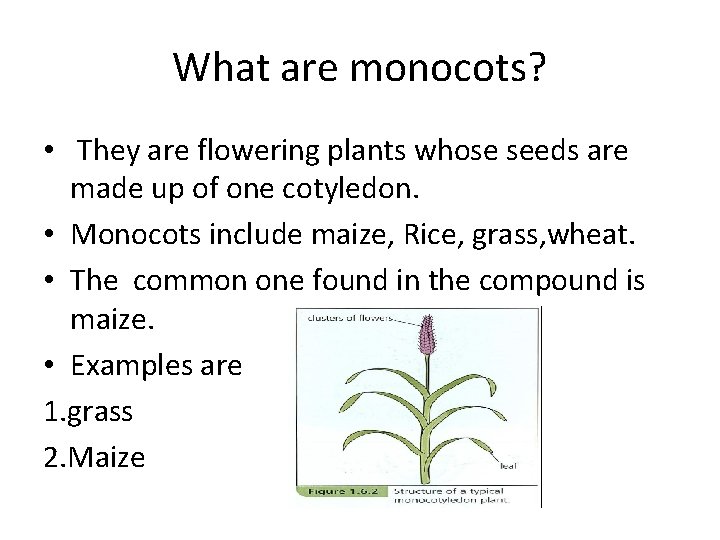
What are monocots? • They are flowering plants whose seeds are made up of one cotyledon. • Monocots include maize, Rice, grass, wheat. • The common one found in the compound is maize. • Examples are 1. grass 2. Maize
CHARACTERISTICS OF MONOCOTLYDONAE 1. Their seeds have one cotyledons. 2. Roots are fibrous and lack root nodules. 3. They have parallel venation 4. They have a modified petiole. The leaf is joined to stem by a sheath
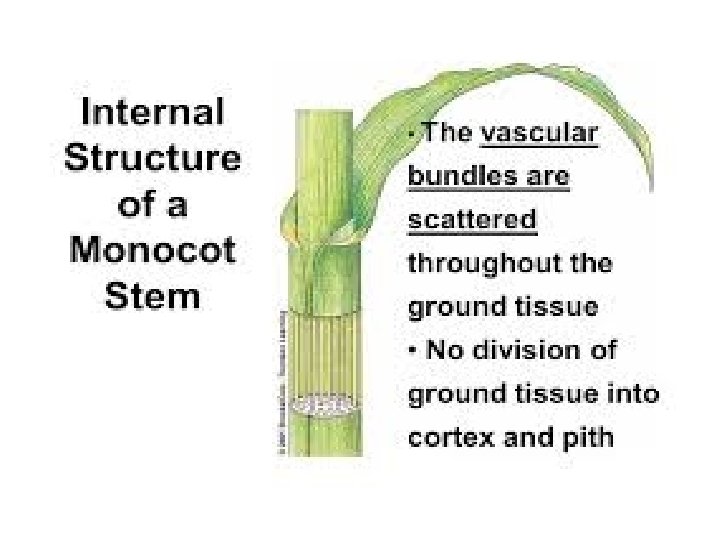
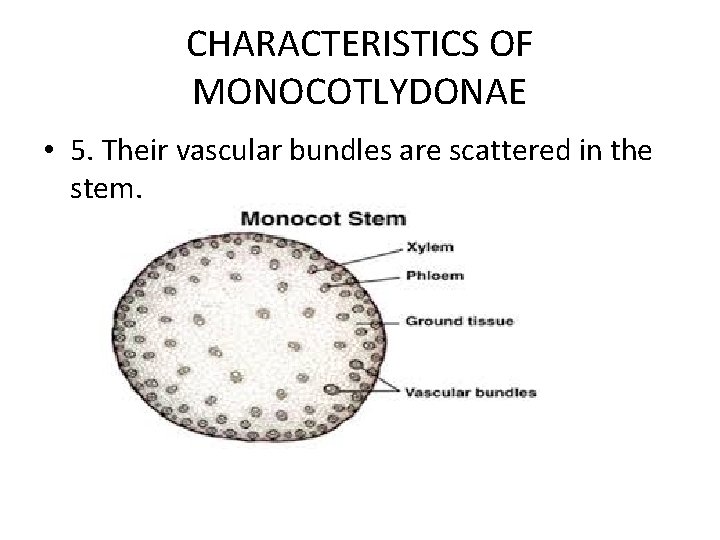
CHARACTERISTICS OF MONOCOTLYDONAE • 5. Their vascular bundles are scattered in the stem.
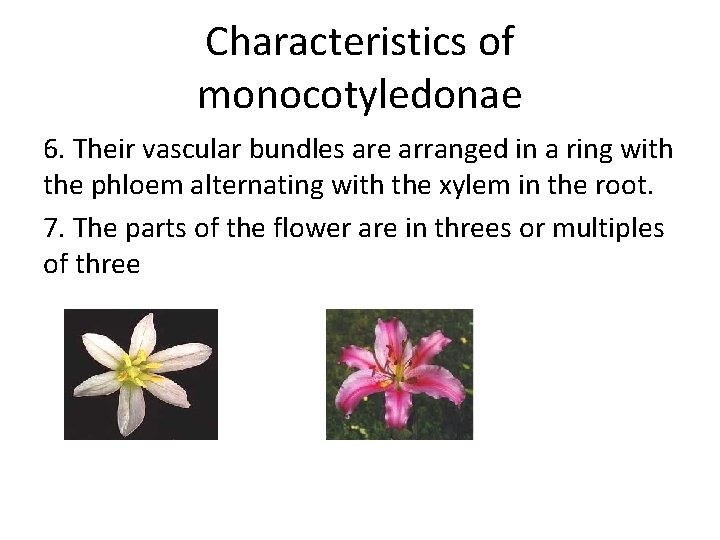
Characteristics of monocotyledonae 6. Their vascular bundles are arranged in a ring with the phloem alternating with the xylem in the root. 7. The parts of the flower are in threes or multiples of three
ECONOMIC IMPORTANCE 1. They are source of food. 2. Some produce oil. e. g. coconuts
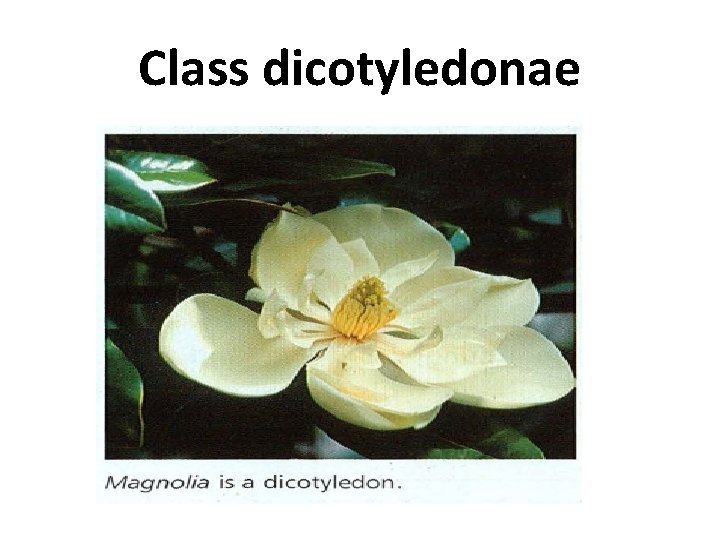
Class dicotyledonae
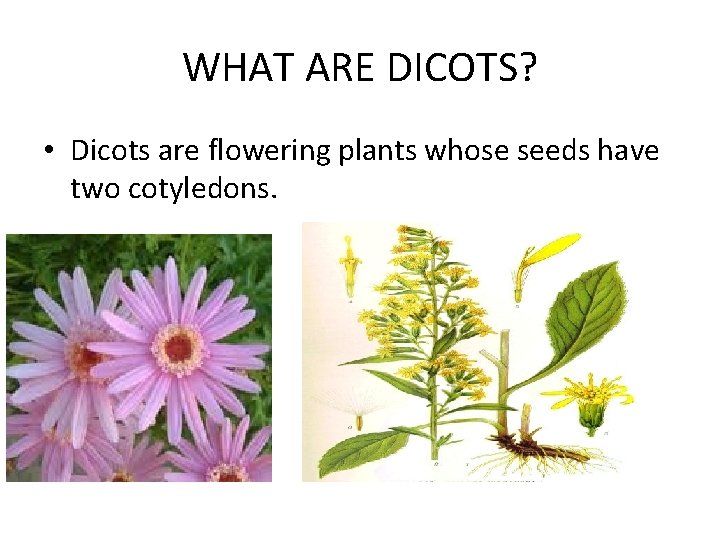
WHAT ARE DICOTS? • Dicots are flowering plants whose seeds have two cotyledons.
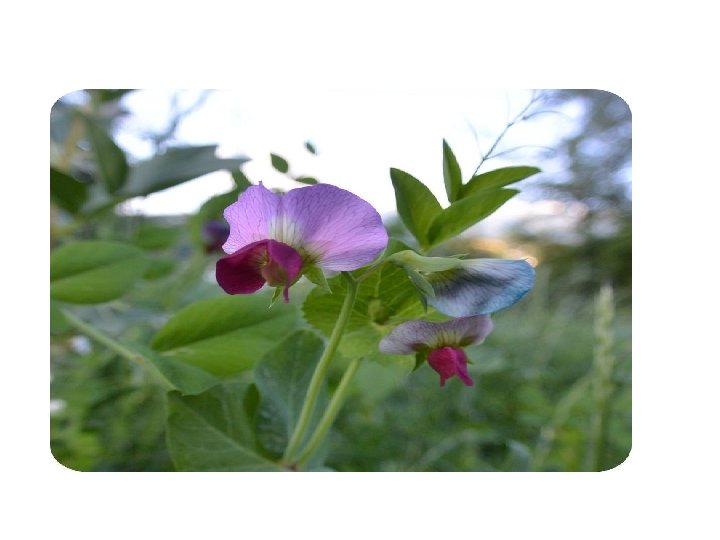
Examples; • Are mango trees, beans, tomatoes, cabbages and black jack.
CONDITIONS WHERE THEY ARE FOUND 1. Grow in areas with fertile and well drained soils. 2. Grown in moderate rainfall which is distributed throughout growing period. 3. They grow in a high altitude areas. 4. Irrigations are done during dry season.
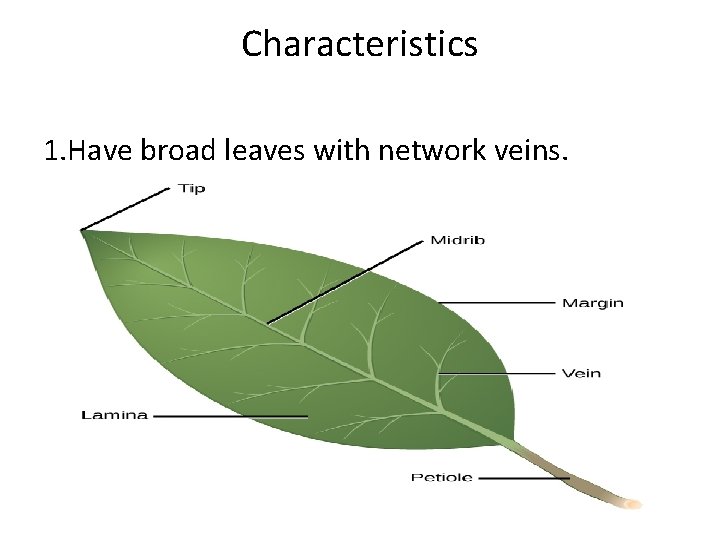
Characteristics 1. Have broad leaves with network veins.
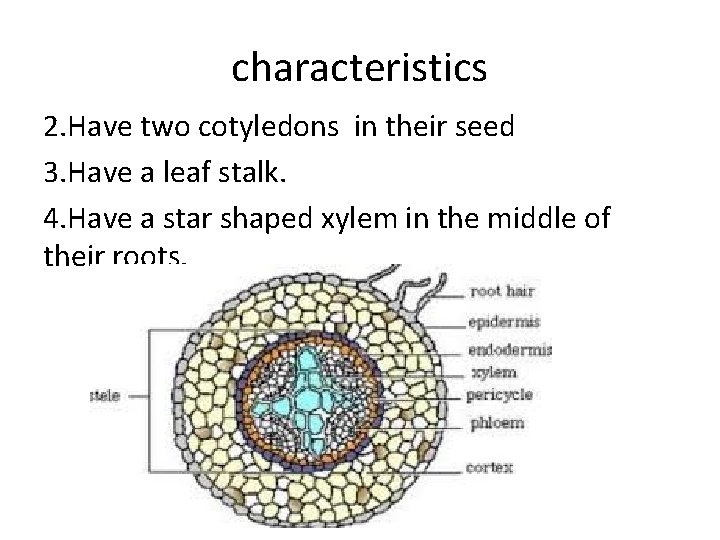
characteristics 2. Have two cotyledons in their seed 3. Have a leaf stalk. 4. Have a star shaped xylem in the middle of their roots.
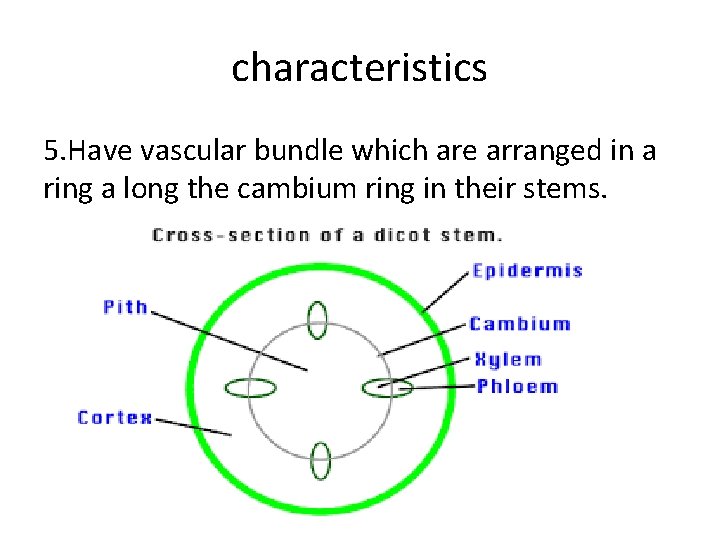
characteristics 5. Have vascular bundle which are arranged in a ring a long the cambium ring in their stems.
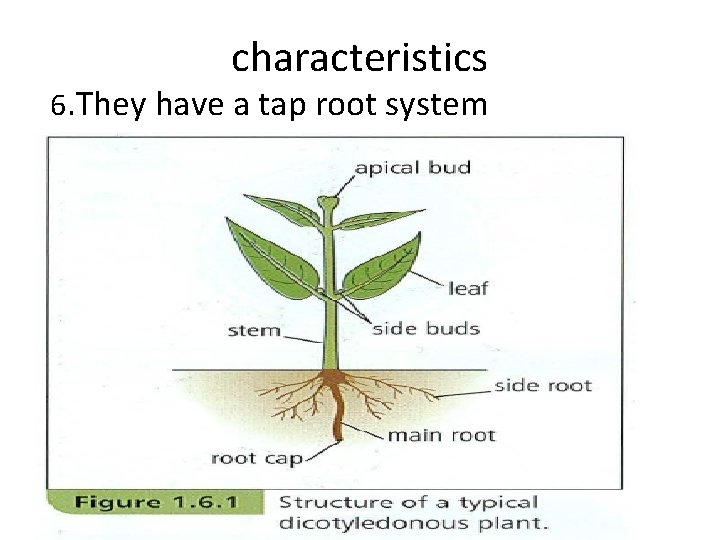
characteristics 6. They have a tap root system
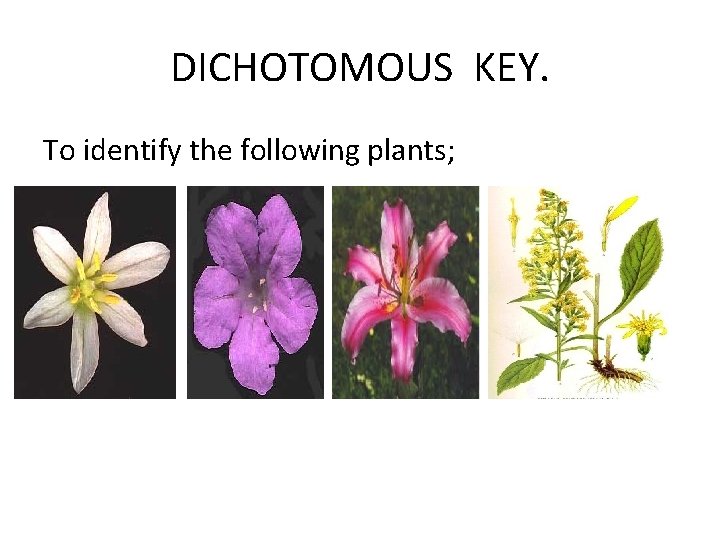
DICHOTOMOUS KEY. To identify the following plants;
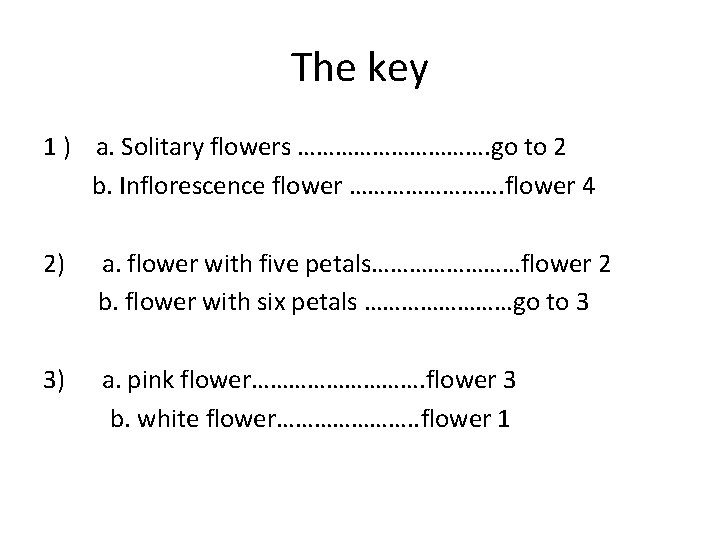
The key 1 ) a. Solitary flowers ……………. go to 2 b. Inflorescence flower …………. flower 4 2) a. flower with five petals…………flower 2 b. flower with six petals …………go to 3 3) a. pink flower……………. flower 3 b. white flower…………………. . flower 1

ABOUT THE RESEARCH • The research was completed by the help of Md. Mwambere. • In terms of resources we used the • -KLB book 3 • -Test and Fix it. • Spotlight • -ICT resources
- Slides: 46