
Students perception of informal learning spaces in an
![Learning activities Productivity [PERCENTAGE] • 79% studying with books, notes, computer and laptops •](https://slidetodoc.com/presentation_image_h2/be860ce4b81fcd80291efd240ede069a/image-8.jpg "Learning activities Productivity [PERCENTAGE] • 79% studying with books, notes, computer and laptops •")
- Slides: 23
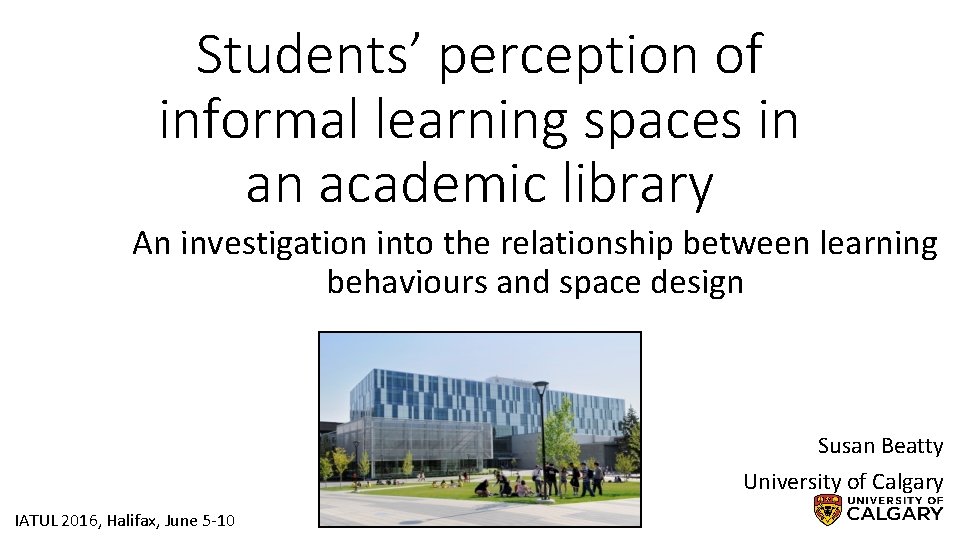
Students’ perception of informal learning spaces in an academic library An investigation into the relationship between learning behaviours and space design Susan Beatty University of Calgary IATUL 2016, Halifax, June 5 -10
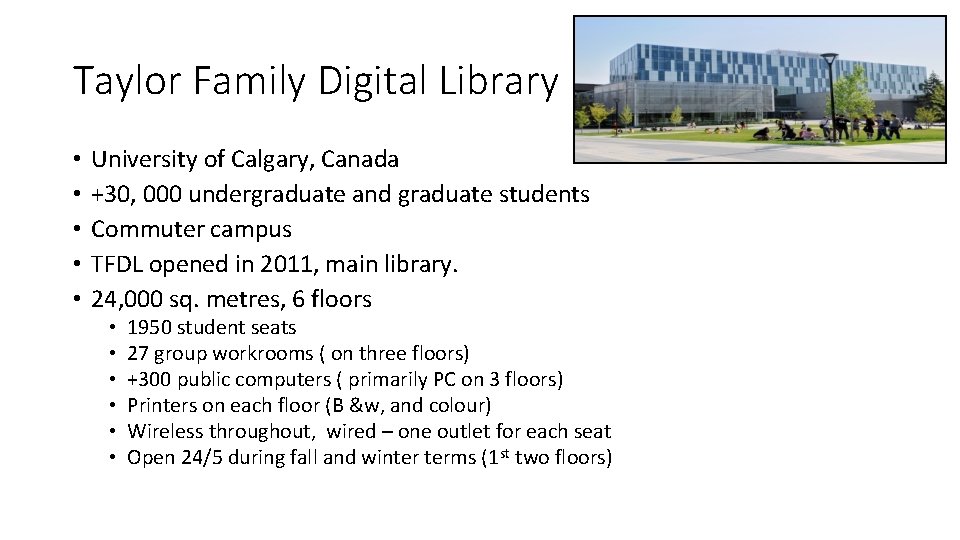
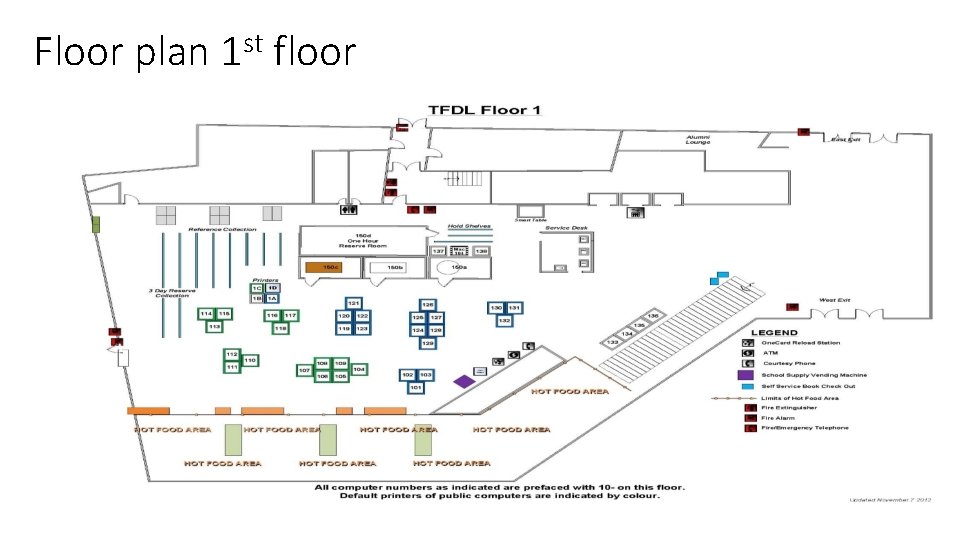
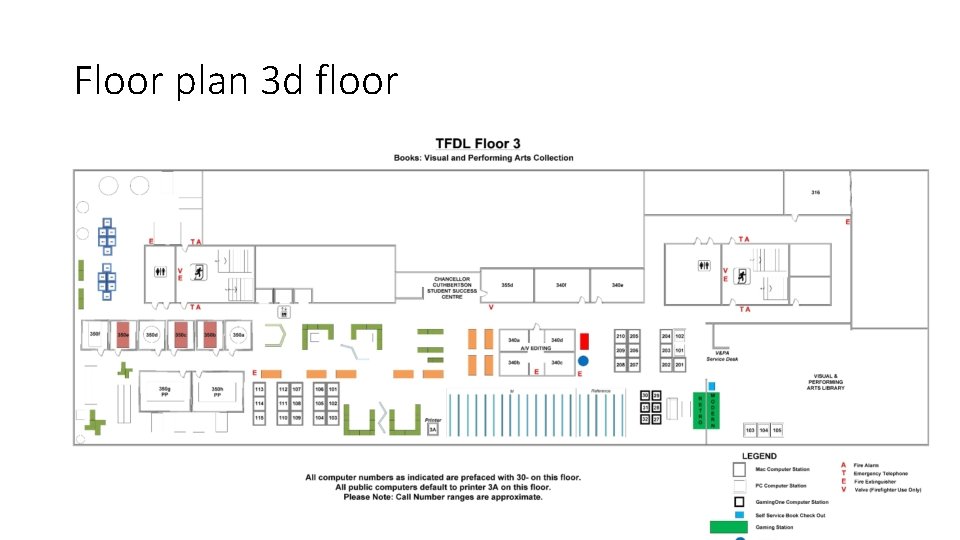
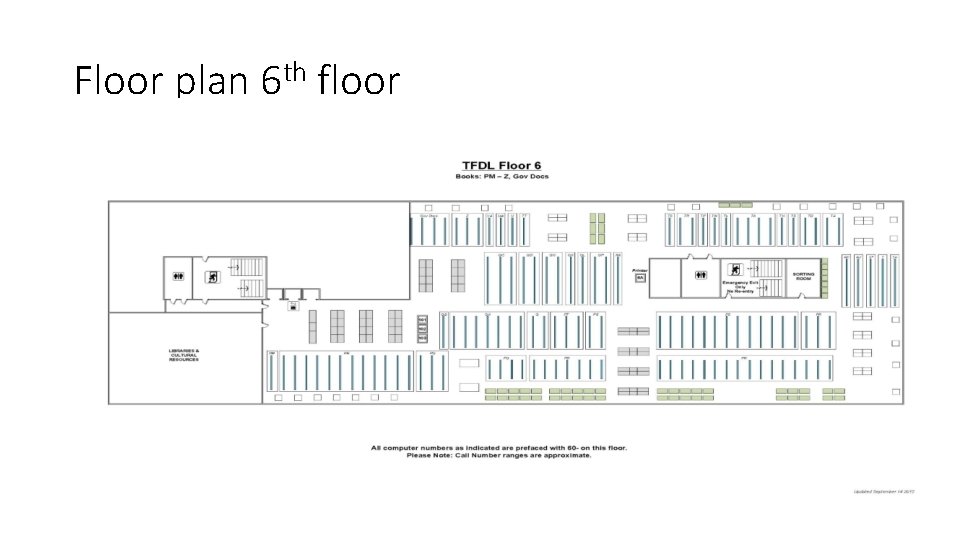
Taylor Family Digital Library • • • University of Calgary, Canada +30, 000 undergraduate and graduate students Commuter campus TFDL opened in 2011, main library. 24, 000 sq. metres, 6 floors • • • 1950 student seats 27 group workrooms ( on three floors) +300 public computers ( primarily PC on 3 floors) Printers on each floor (B &w, and colour) Wireless throughout, wired – one outlet for each seat Open 24/5 during fall and winter terms (1 st two floors)
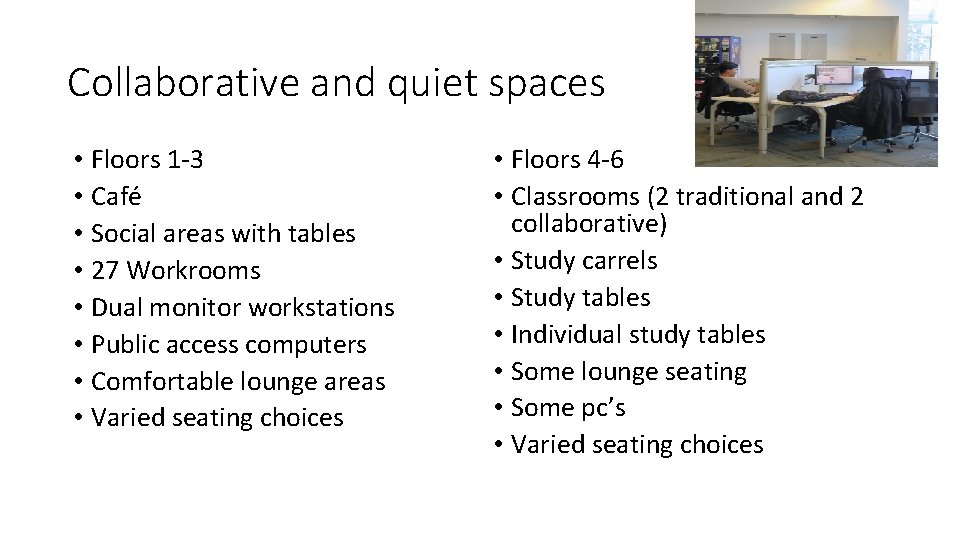
Collaborative and quiet spaces • Floors 1 -3 • Café • Social areas with tables • 27 Workrooms • Dual monitor workstations • Public access computers • Comfortable lounge areas • Varied seating choices • Floors 4 -6 • Classrooms (2 traditional and 2 collaborative) • Study carrels • Study tables • Individual study tables • Some lounge seating • Some pc’s • Varied seating choices
Floor plan 1 st floor
Floor plan 3 d floor
Floor plan 6 th floor
Learning activities Productivity [PERCENTAGE] • 79% studying with books, notes, computer and laptops • 45% completing assignments • 26% conducting research Library Databases D 2 L or Blackboard 3% Chat (IM) 11% 1% Other 2% Email 6% Video / Audio 2% Internet Generally 8% Studying with books 9% Using mp 3 player / i. Pod 3% Using Cell / Smartphone 6% Using Laptop / Tablet 12% Studying with notes 9% Studying w/computer 8% Using desktop PC 6%
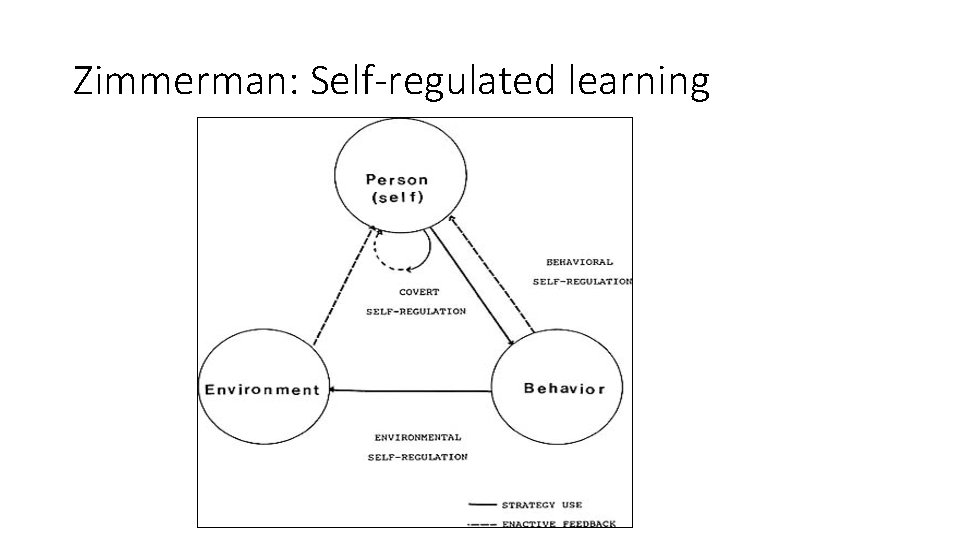
Intentional learning • Students choose to do what they do in the library • They choose where and when and how • Question: Why do they choose specific spaces as their learning space?
Zimmerman: Self-regulated learning
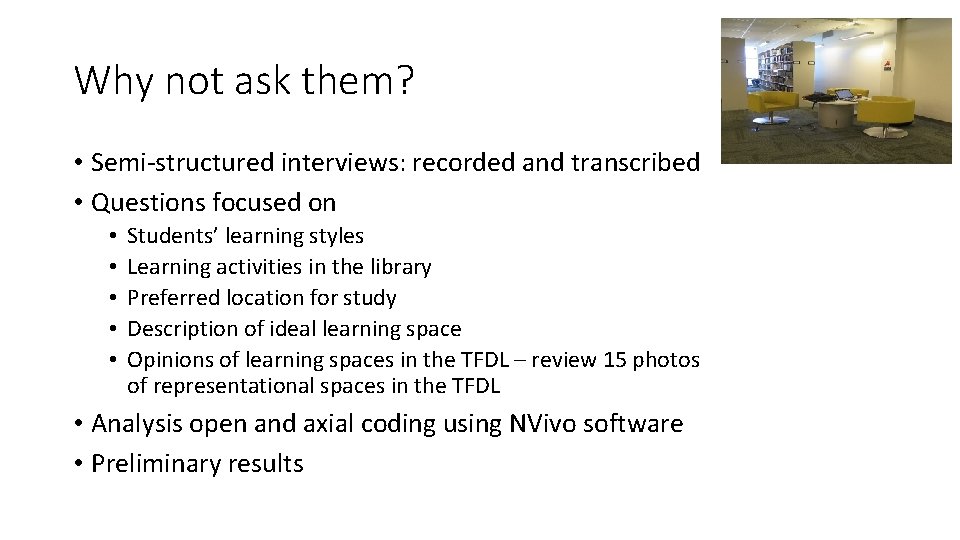
Why not ask them? • Semi-structured interviews: recorded and transcribed • Questions focused on • • • Students’ learning styles Learning activities in the library Preferred location for study Description of ideal learning space Opinions of learning spaces in the TFDL – review 15 photos of representational spaces in the TFDL • Analysis open and axial coding using NVivo software • Preliminary results
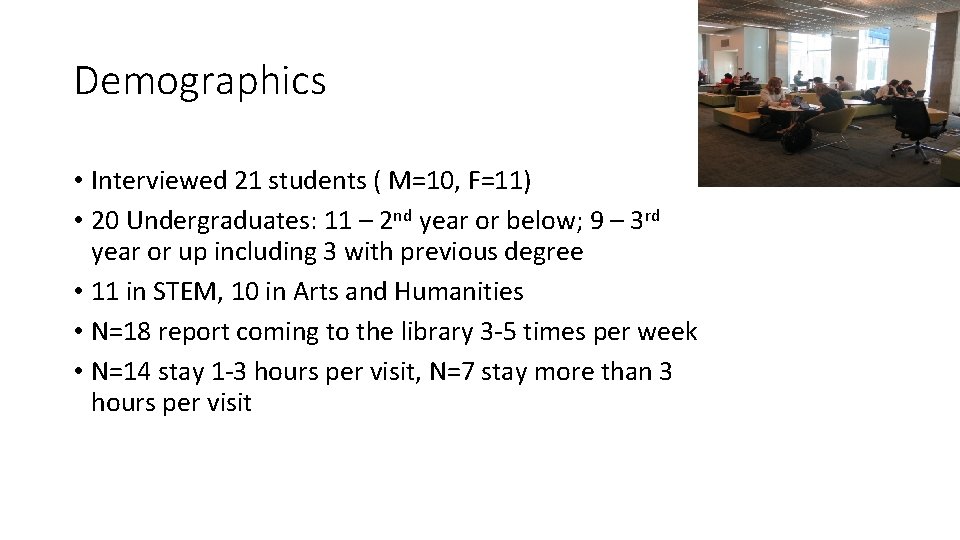
Demographics • Interviewed 21 students ( M=10, F=11) • 20 Undergraduates: 11 – 2 nd year or below; 9 – 3 rd year or up including 3 with previous degree • 11 in STEM, 10 in Arts and Humanities • N=18 report coming to the library 3 -5 times per week • N=14 stay 1 -3 hours per visit, N=7 stay more than 3 hours per visit
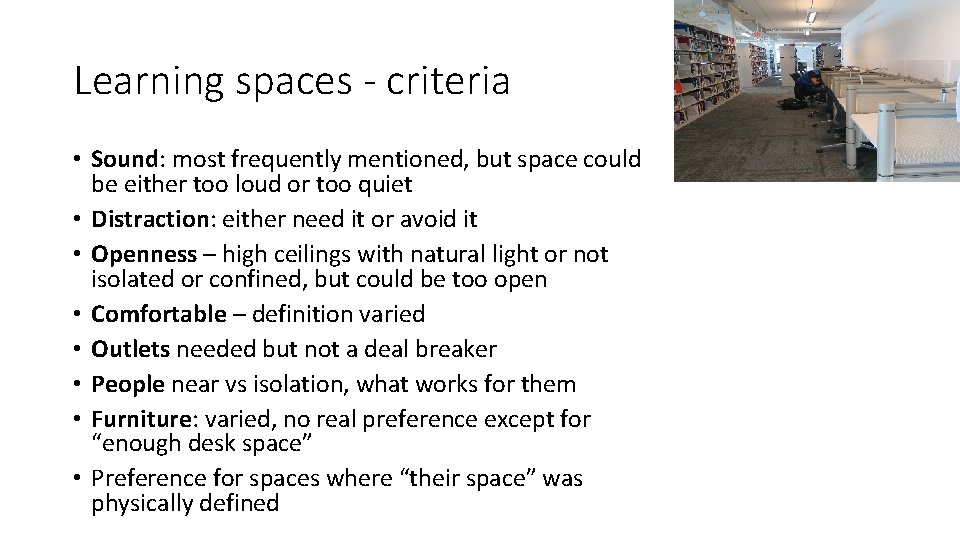
Learning spaces - criteria • Sound: most frequently mentioned, but space could be either too loud or too quiet • Distraction: either need it or avoid it • Openness – high ceilings with natural light or not isolated or confined, but could be too open • Comfortable – definition varied • Outlets needed but not a deal breaker • People near vs isolation, what works for them • Furniture: varied, no real preference except for “enough desk space” • Preference for spaces where “their space” was physically defined
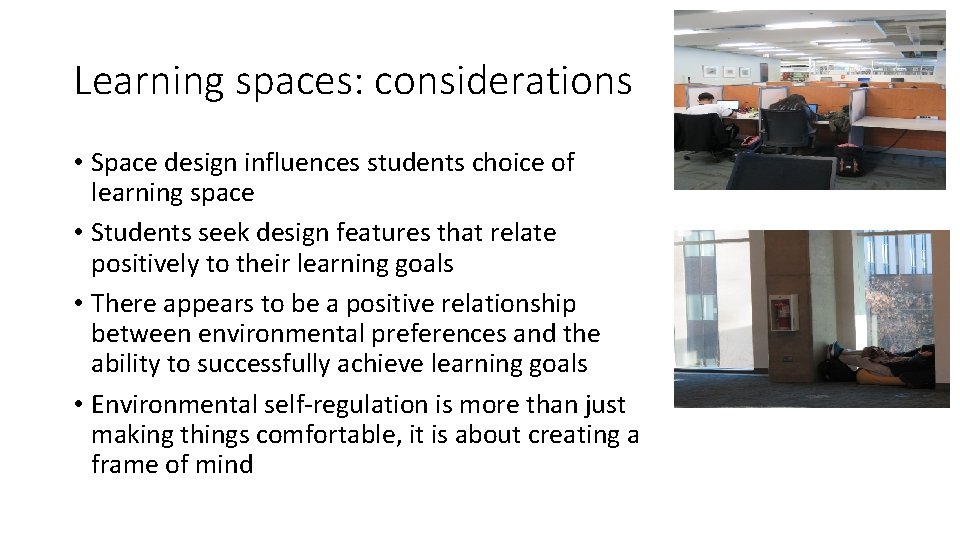
Learning spaces: considerations • Space design influences students choice of learning space • Students seek design features that relate positively to their learning goals • There appears to be a positive relationship between environmental preferences and the ability to successfully achieve learning goals • Environmental self-regulation is more than just making things comfortable, it is about creating a frame of mind
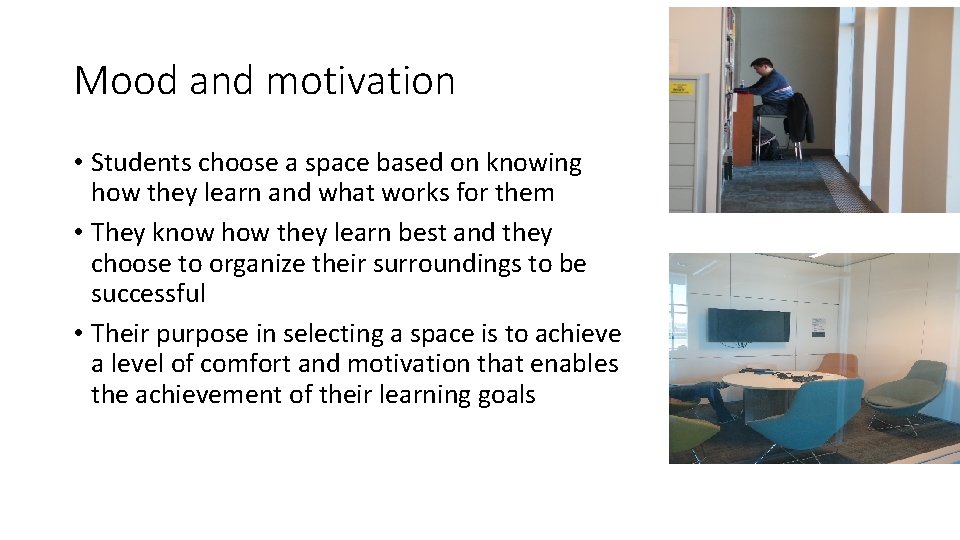
Mood and motivation • Students choose a space based on knowing how they learn and what works for them • They know how they learn best and they choose to organize their surroundings to be successful • Their purpose in selecting a space is to achieve a level of comfort and motivation that enables the achievement of their learning goals
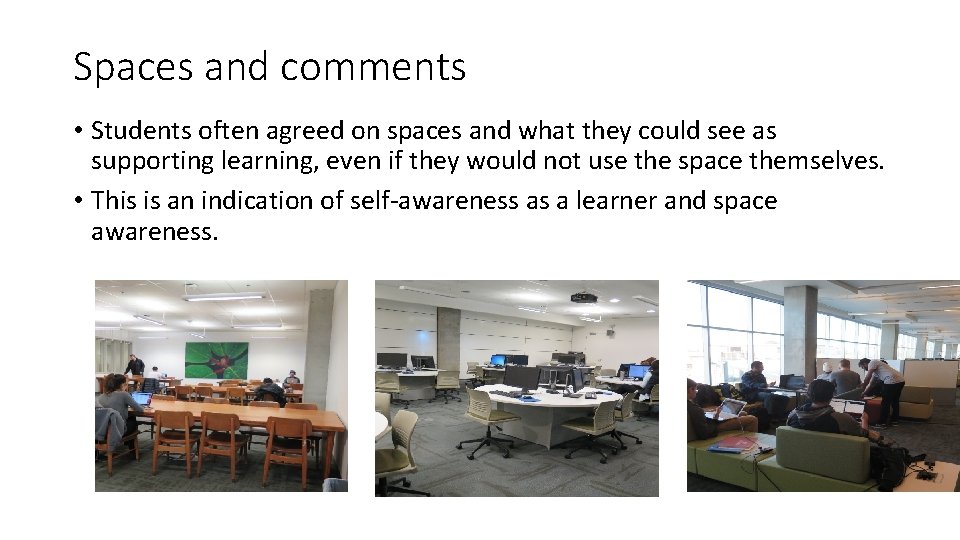
Spaces and comments • Students often agreed on spaces and what they could see as supporting learning, even if they would not use the space themselves. • This is an indication of self-awareness as a learner and space awareness.
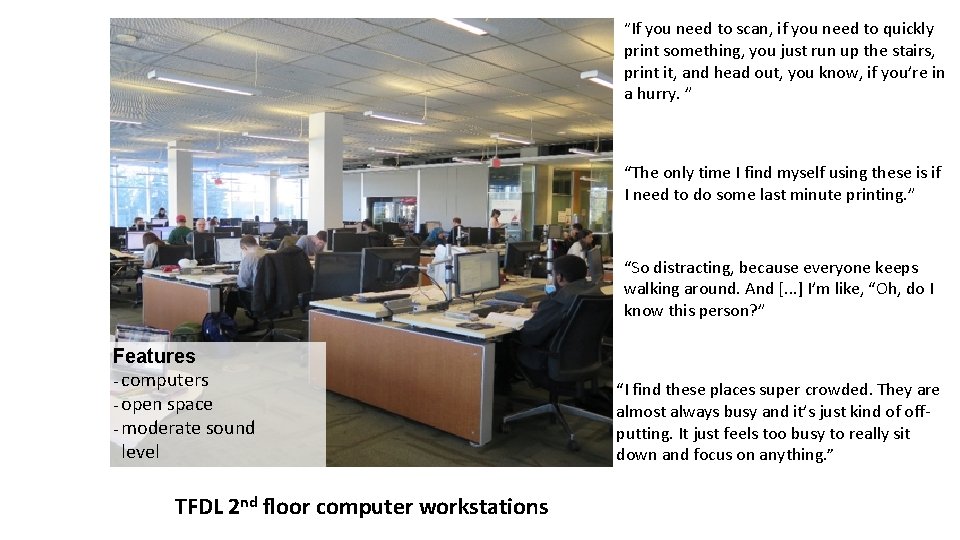
“If you need to scan, if you need to quickly print something, you just run up the stairs, print it, and head out, you know, if you’re in a hurry. ” “The only time I find myself using these is if I need to do some last minute printing. ” “So distracting, because everyone keeps walking around. And [. . . ] I’m like, “Oh, do I know this person? ” Features - computers - open space - moderate sound level TFDL 2 nd floor computer workstations “I find these places super crowded. They are almost always busy and it’s just kind of offputting. It just feels too busy to really sit down and focus on anything. ”
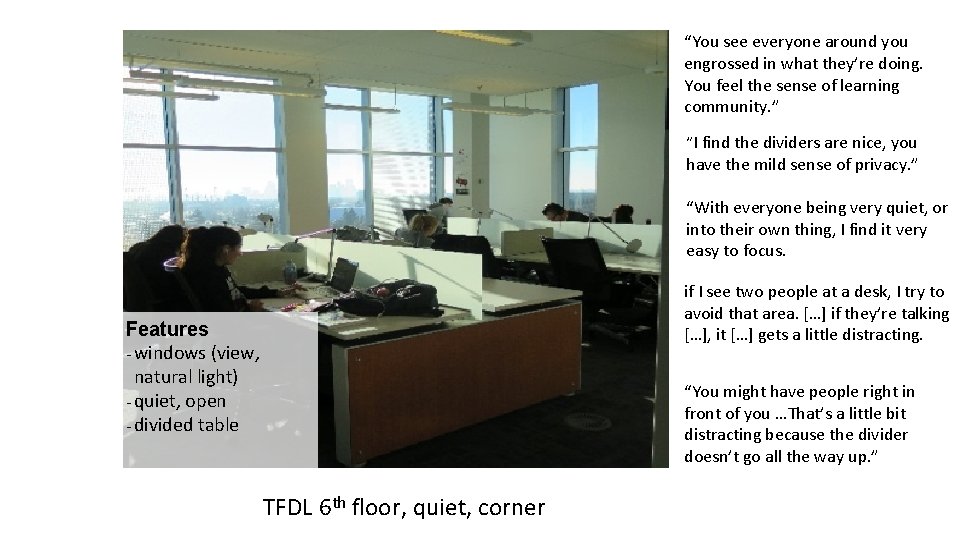
“You see everyone around you engrossed in what they’re doing. You feel the sense of learning community. ” “I find the dividers are nice, you have the mild sense of privacy. ” “With everyone being very quiet, or into their own thing, I find it very easy to focus. if I see two people at a desk, I try to avoid that area. […] if they’re talking […], it […] gets a little distracting. Features - windows (view, natural light) - quiet, open - divided table “You might have people right in front of you …That’s a little bit distracting because the divider doesn’t go all the way up. ” TFDL 6 th floor, quiet, corner
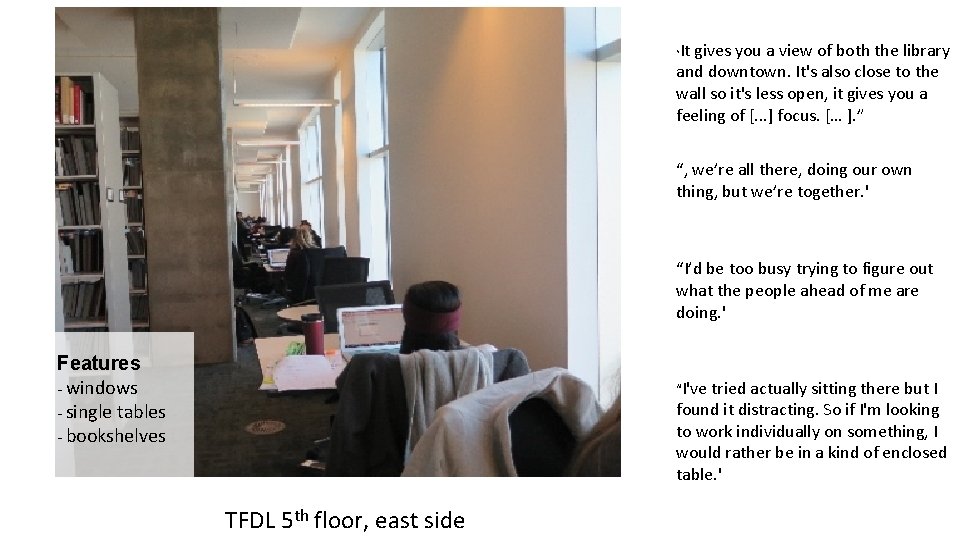
It gives you a view of both the library and downtown. It's also close to the wall so it's less open, it gives you a feeling of [. . . ] focus. [… ]. ” “ “, we’re all there, doing our own thing, but we’re together. ' “I’d be too busy trying to figure out what the people ahead of me are doing. ' Features - windows - single tables - bookshelves “I've tried actually sitting there but I found it distracting. So if I'm looking to work individually on something, I would rather be in a kind of enclosed table. ' TFDL 5 th floor, east side
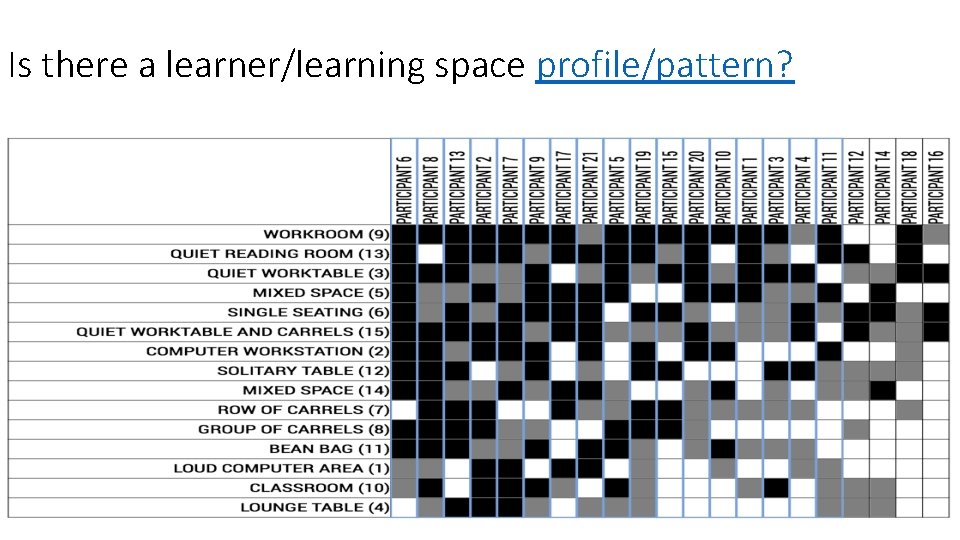
Is there a learner/learning space profile/pattern?
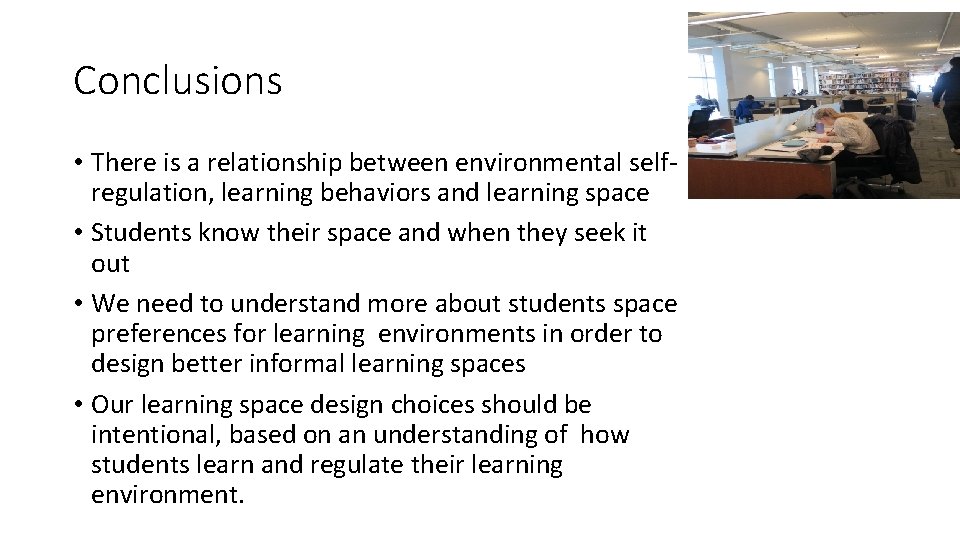
Conclusions • There is a relationship between environmental selfregulation, learning behaviors and learning space • Students know their space and when they seek it out • We need to understand more about students space preferences for learning environments in order to design better informal learning spaces • Our learning space design choices should be intentional, based on an understanding of how students learn and regulate their learning environment.
Further reading • Bennett, S. (2015). Putting learning into library planning. Portal: Libraries and the Academy, 15 (2), 215 -231. • Beatty, S. (2015) New spaces, new learning behaviors: Results of an unobtrusive study (poster). ALA 2015 Annual conference, San Francisco. • Boys, J. (2011). Towards creative learning spaces: Re-thinking the architecture of postcompulsory education. Abingdon, England: Routledge. • Entwistle, N. J. & Peterson, E. R. (2004). Conceptions of learning and knowledge in higher education: Relationships with study behavior and influences of learning environments. International Journal of Educational Research, 41 (6) , 407 -428. • Keppell, M. & Riddle, M. (2013). Principles for design and evaluation of learning spaces. In R. Luckin et al (Eds. ), Handbook of design in educational technology, Abingdon, England: Routledge. • Zimmerman, B. J. (1989). A social cognitive view of self-regulated academic learning. Journal of Educational Psychology, 81 (3) 329 -339.
Thanks • To all the students who participated – each story was unique and fascinating • To my research assistant Jennifer Payne for her enthusiasm, positive energy and creative approach to analysis • To University of Calgary Teaching and Learning Grant for supporting this research • Contact: Susan Beatty, sdbeatty@ucalgary. ca