
Students Owning Their Learning Unpacking the Progression of
- Slides: 29
Students Owning Their Learning Unpacking the Progression of Learning
Session Learning Targets Participants will learn how to facilitate student understanding and ownership of learning by teaching students to: Ø Identify what they need to KNOW and DO to master standards Ø Explain the progression of learning on their learning plan Ø Identify and articulate where they are in the learning progression and their next steps Ø Keep track of their own data
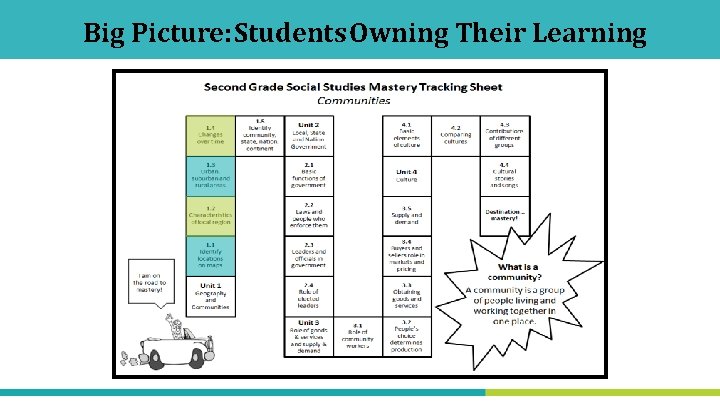
Big Picture: Students Owning Their Learning
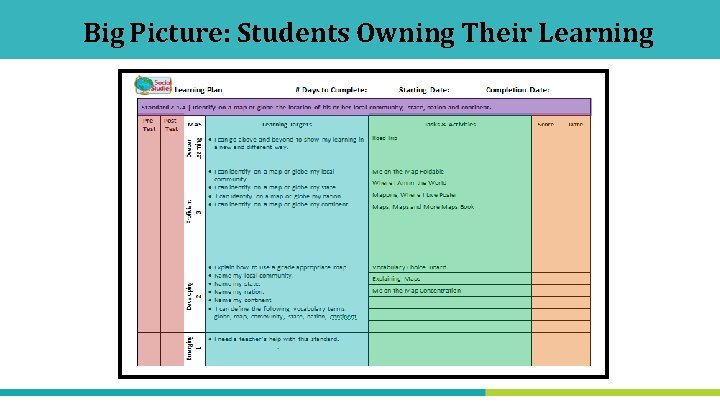
Big Picture: Students Owning Their Learning
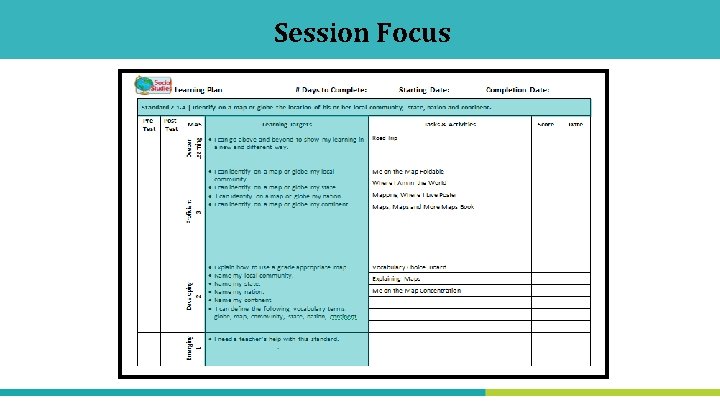
Session Focus
Essential Question What will students have to KNOW and be able to DO to show proficiency of the standard?
Unpacking Standards Why should you unpack standards? • Foundation for understanding the cognitive demands • Clarifies the learning targets • Builds transparency of learning
Steps to Unpack Standards 1. Identify the standard to be taught and cognitive demands 2. Identify what students need to KNOW and DO 3. Write standard in kid-friendly language
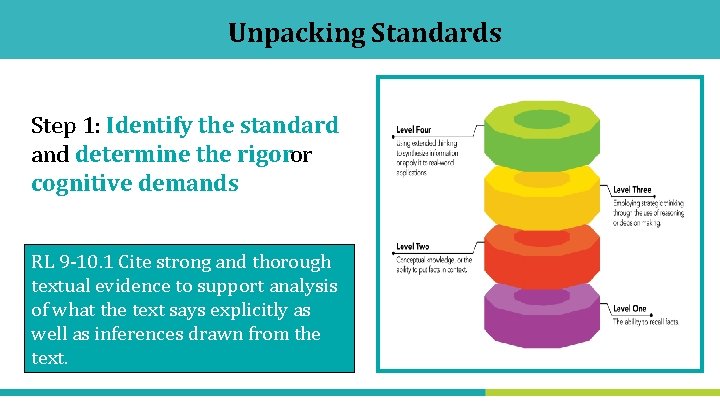
Scale of Cognitive Demand Webb’s Depth of Knowledge (DOK) is a conceptual framework and a vocabulary reference developed to help with analyzing the cognitive demands and expectations students are to meet when engaged in learning.
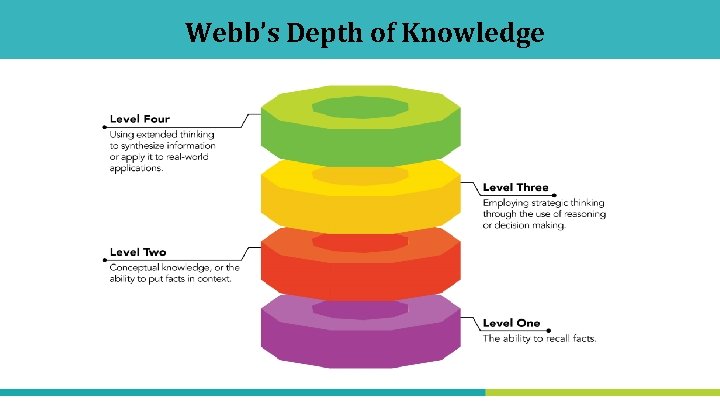
Webb’s Depth of Knowledge
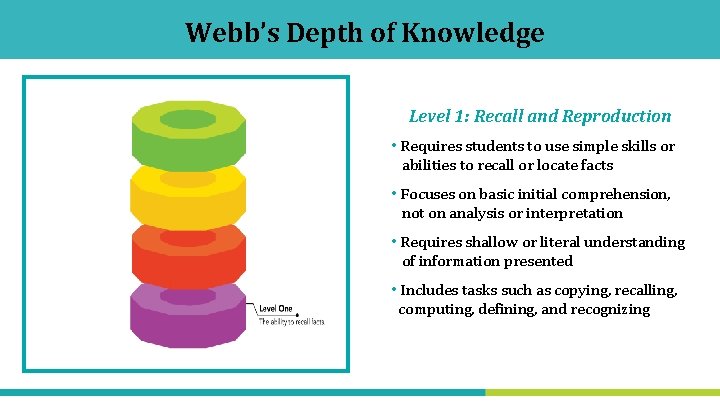
Webb’s Depth of Knowledge Level 1: Recall and Reproduction • Requires students to use simple skills or abilities to recall or locate facts • Focuses on basic initial comprehension, not on analysis or interpretation • Requires shallow or literal understanding of information presented • Includes tasks such as copying, recalling, computing, defining, and recognizing
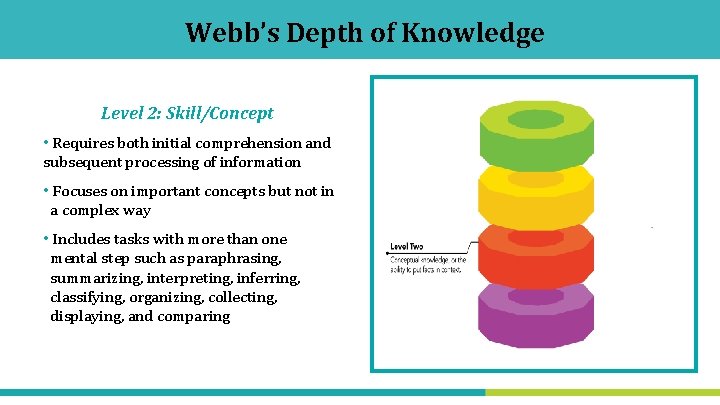
Webb’s Depth of Knowledge Level 2: Skill/Concept • Requires both initial comprehension and subsequent processing of information • Focuses on important concepts but not in a complex way • Includes tasks with more than one mental step such as paraphrasing, summarizing, interpreting, inferring, classifying, organizing, collecting, displaying, and comparing
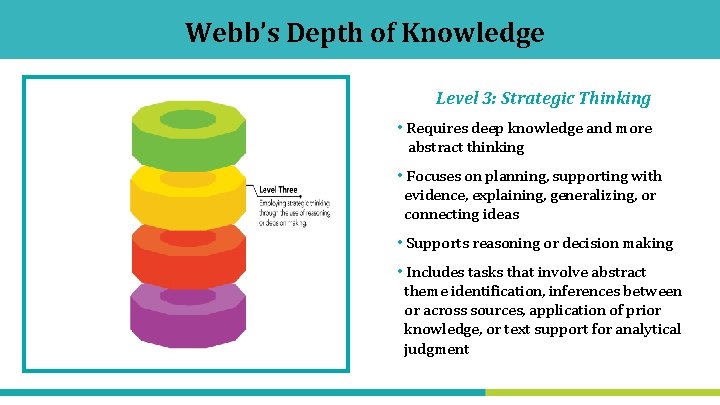
Webb’s Depth of Knowledge Level 3: Strategic Thinking • Requires deep knowledge and more abstract thinking • Focuses on planning, supporting with evidence, explaining, generalizing, or connecting ideas • Supports reasoning or decision making • Includes tasks that involve abstract theme identification, inferences between or across sources, application of prior knowledge, or text support for analytical judgment
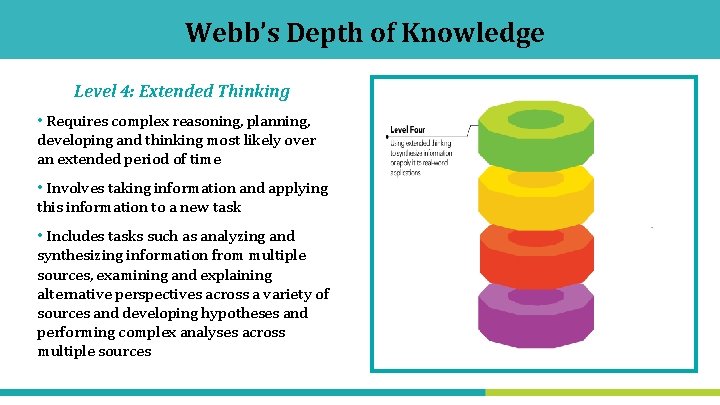
Webb’s Depth of Knowledge Level 4: Extended Thinking • Requires complex reasoning, planning, developing and thinking most likely over an extended period of time • Involves taking information and applying this information to a new task • Includes tasks such as analyzing and synthesizing information from multiple sources, examining and explaining alternative perspectives across a variety of sources and developing hypotheses and performing complex analyses across multiple sources
Unpacking Standards Step 1: Identify the standard and determine the rigoror cognitive demands RL 9 -10. 1 Cite strong and thorough textual evidence to support analysis of what the text says explicitly as well as inferences drawn from the text.
Unpacking Standards Step 2: Identify what students need to be able to KNOW and DO KNOW • Explicitly [clearly] state • Textual evidence • Logical inferences • Conclusions DO RL 9 -10. 1 Cite strong and thorough textual evidence to support analysis of what the text says explicitly as well as inferences drawn from the text. • Cite strong and thorough (complete) evidence • Analyze what the text says • Drawing inferences from the text
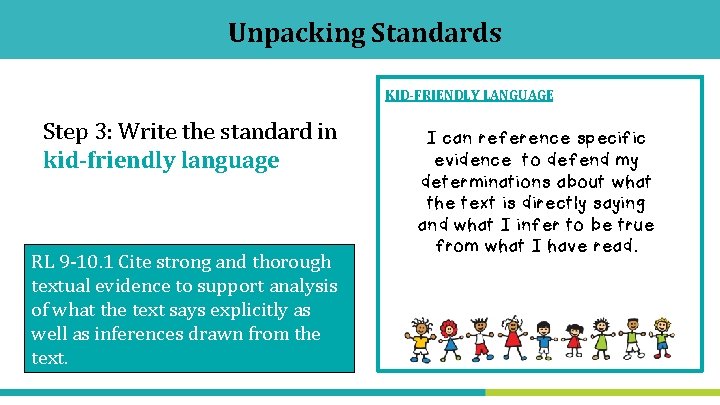
Unpacking Standards KID-FRIENDLY LANGUAGE Step 3: Write the standard in kid-friendly language RL 9 -10. 1 Cite strong and thorough textual evidence to support analysis of what the text says explicitly as well as inferences drawn from the text. I can reference specific evidence to defend my determinations about what the text is directly saying and what I infer to be true from what I have read.
Essential Question What is a progression of learning and what do students have to KNOW and be able to DO at each level?
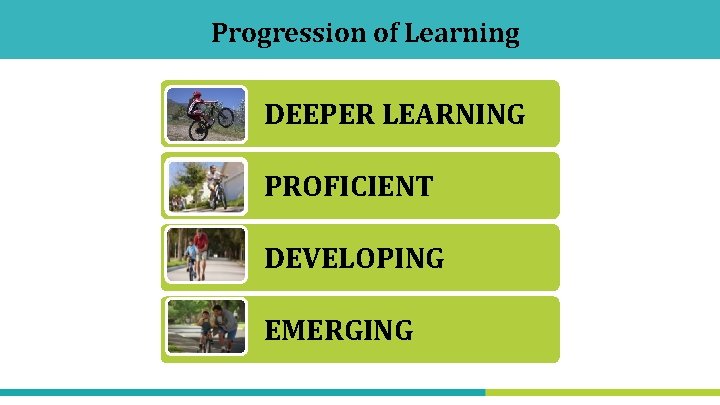
Creating the Proficiency Scale Progression of Learning The term progression of learningrefers to the purposeful sequencing of learning targets that build on one another for a standard, unit, course or school career. Students follow the progression of learning toward mastery of the knowledge and skills needed for careerand college-readiness.
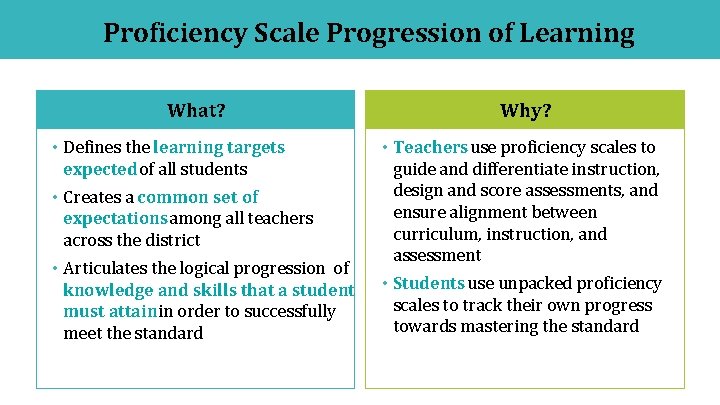
Proficiency Scale Progression of Learning What? • Defines the learning targets expected of all students • Creates a common set of expectationsamong all teachers across the district • Articulates the logical progression of knowledge and skills that a student must attain in order to successfully meet the standard Why? • Teachers use proficiency scales to guide and differentiate instruction, design and score assessments, and ensure alignment between curriculum, instruction, and assessment • Students use unpacked proficiency scales to track their own progress towards mastering the standard
Progression of Learning DEEPER LEARNING PROFICIENT DEVELOPING EMERGING
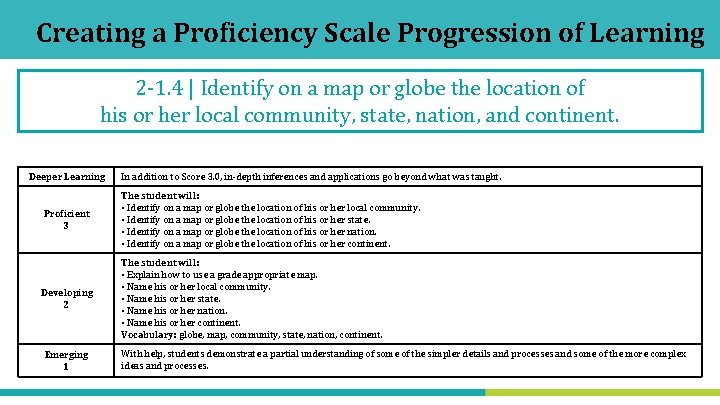
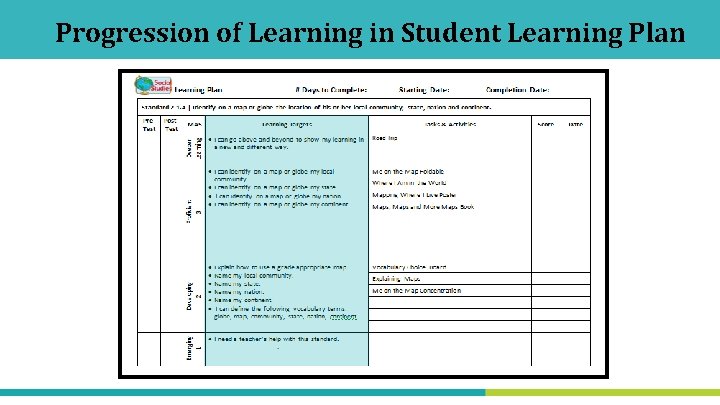
Creating a Proficiency Scale Progression of Learning 2 -1. 4 | Identify on a map or globe the location of his or her local community, state, nation, and continent. Deeper Learning Proficient 3 Developing 2 Emerging 1 In addition to Score 3. 0, in-depth inferences and applications go beyond what was taught. The student will: • Identify on a map or globe the location of his or her local community. • Identify on a map or globe the location of his or her state. • Identify on a map or globe the location of his or her nation. • Identify on a map or globe the location of his or her continent. The student will: • Explain how to use a grade appropriate map. • Name his or her local community. • Name his or her state. • Name his or her nation. • Name his or her continent. Vocabulary: globe, map, community, state, nation, continent. With help, students demonstrate a partial understanding of some of the simpler details and processes and some of the more complex ideas and processes.
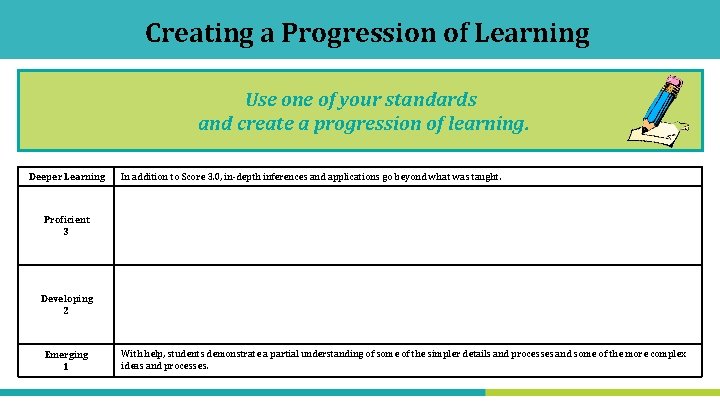
Creating a Progression of Learning Use one of your standards and create a progression of learning. Deeper Learning In addition to Score 3. 0, in-depth inferences and applications go beyond what was taught. Proficient 3 Developing 2 Emerging 1 With help, students demonstrate a partial understanding of some of the simpler details and processes and some of the more complex ideas and processes.
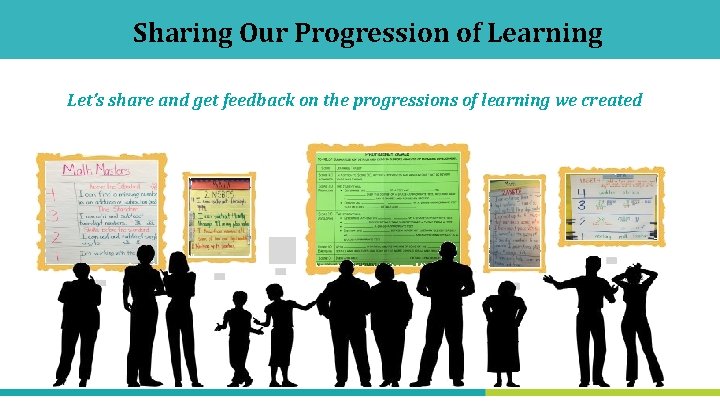
Sharing Our Progression of Learning Let’s share and get feedback on the progressions of learning we created.
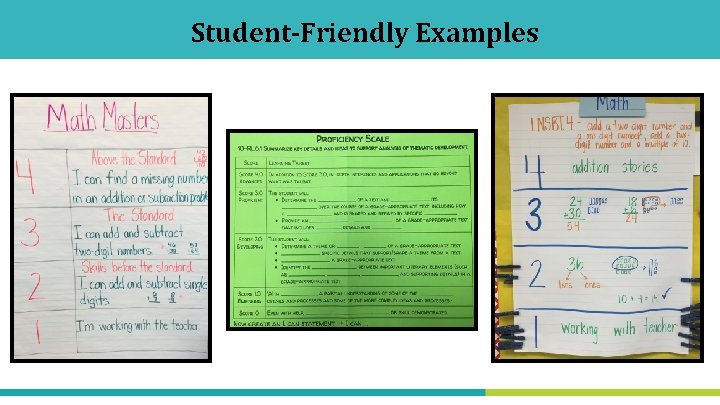
Student-Friendly Examples
Unpacking Proficiency Scale Progression of Learning
Progression of Learning in Student Learning Plan
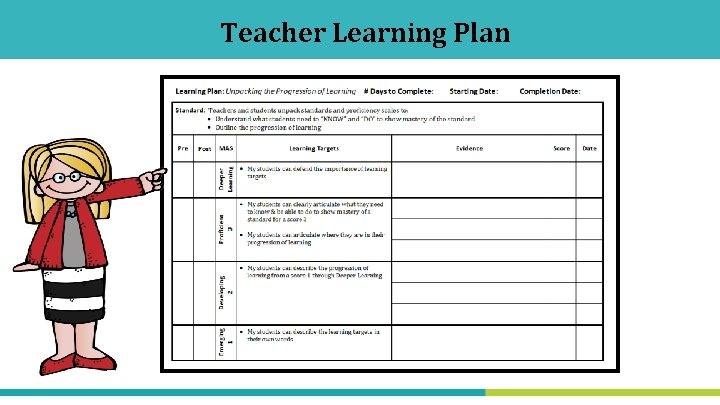
Teacher Learning Plan
Launch Use the progression of learning you created and unpack it for students in your classroom. Make sure the progression of learning is visible and students can explain what it is and why it is important.