
STUDENT TEACHING RESUME AND COVER LETTER WORKSHOP Fall




- Slides: 35
STUDENT TEACHING RESUME AND COVER LETTER WORKSHOP Fall 2020 Office of School and Community Experiences
AGENDA • Introductions/Activity • Overview of the placement process (Cara) • Student teaching vs. employment resumes/cover letters (Cara) • Resumes (Sue) • Cover letters (Cara) • How to submit (Sue) • Wrap-up/Questions
INTRODUCTIONS • Cara Gutzmer, Director of School and Community Experiences (MG, SEC) • Sue Talbott, Clinical Experiences Specialist (ECE, ELED) While we talk, please type into the chat the one word that sums up your feelings about spring student teaching.
THE PROCESS • Timeline • Purpose of resumes and cover letters for student teaching • Northern placements • Local placements • Considerations
THE DIFFERENCE BETWEEN STUDENT TEACHING AND EMPLOYMENT DOCUMENTS Student teaching documents: • are general • do not mention specific districts or schools Employment documents: • are highly specific wish • are tailored to certain schools and administrators for whom you to work
RESUMES • A chronological (most recent comes first!) list of educational credentials and employment experiences that are applicable to the job you are seeking. • Education resumes can be two pages. • Objective is optional. • GPA is optional. • Sample Resume
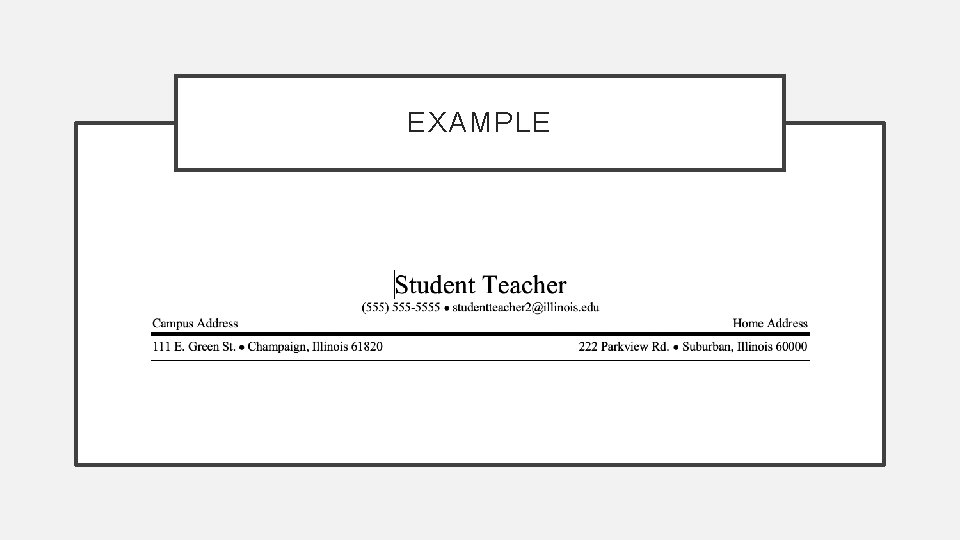
HEADING 1: PERSONAL INFORMATION • Name, address, contact information • List campus and permanent address • Make sure your email is appropriate • Voice message on your phone should be professional
EXAMPLE
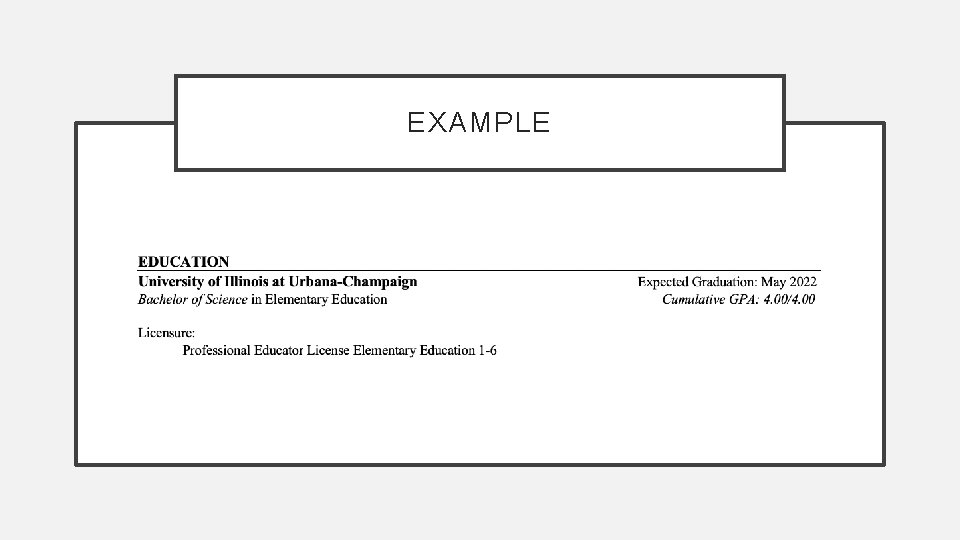
HEADING 2: EDUCATION • No need to list high school • Graduation can be called “expected graduation date” • Expected licensure is “Professional Educator License” • List expected endorsements as well
EXAMPLE
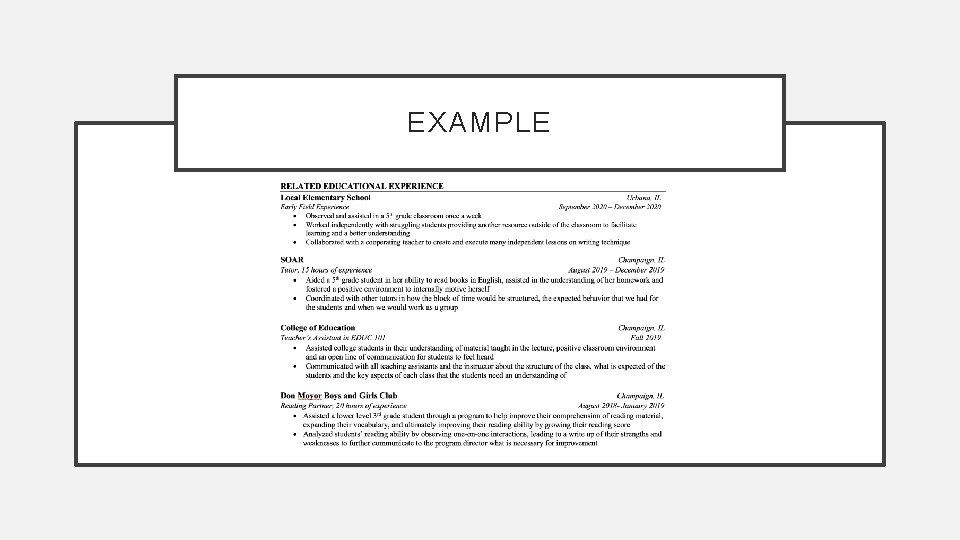
HEADING 3: EDUCATIONAL EXPERIENCE • Starting with the most recent, you will highlight your teaching/schoolrelated experiences • Have 2 -3 bullet points under each experience to describe your responsibilities • Fall placement (if applicable) should be at the top. Call yourself a “practicum student”
EXAMPLE
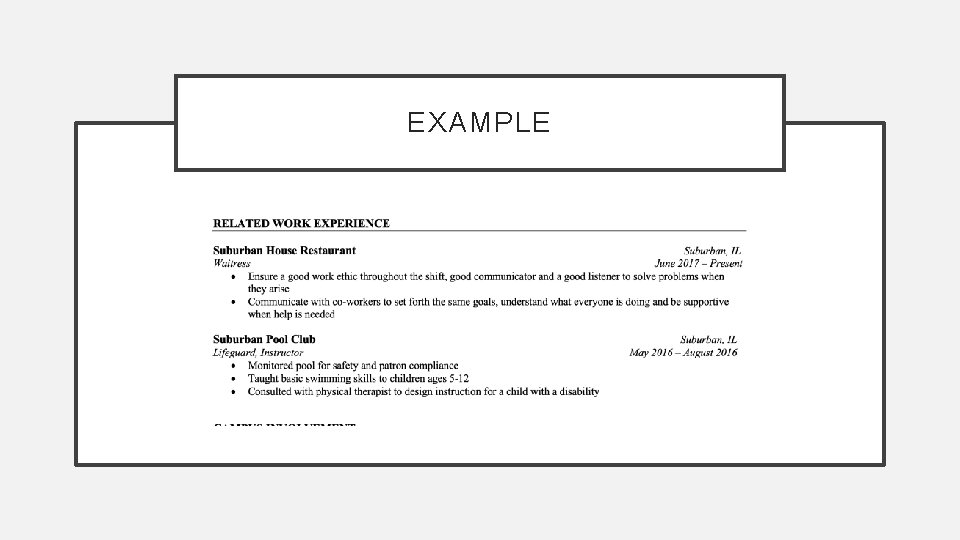
HEADING 4: WORK EXPERIENCE • Non-teaching related employment • Keep this section short, relevant, and professional • No need to go back to your very first job. The past couple of years is fine.
EXAMPLE
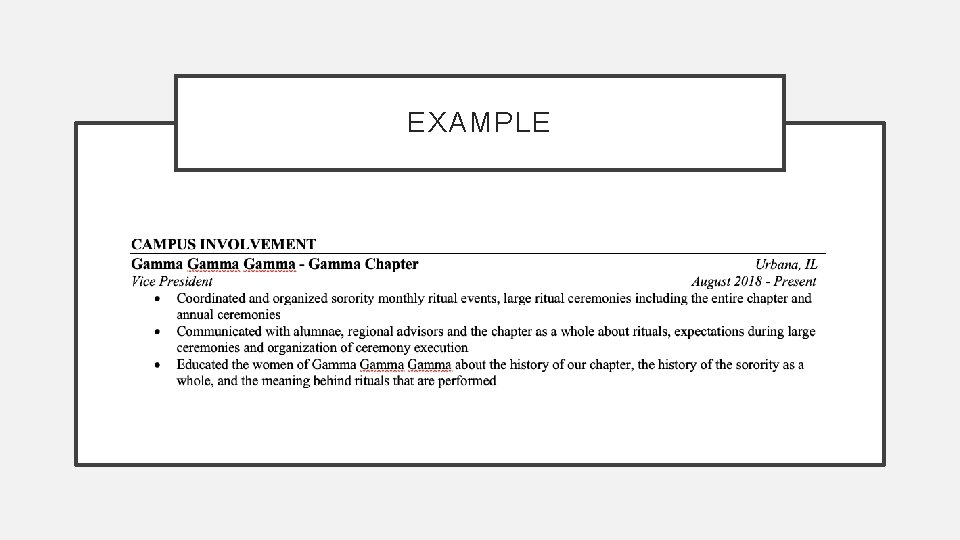
HEADING 5: CAMPUS INVOLVEMENT • Optional • List clubs, organizations, teams, student government, etc.
EXAMPLE
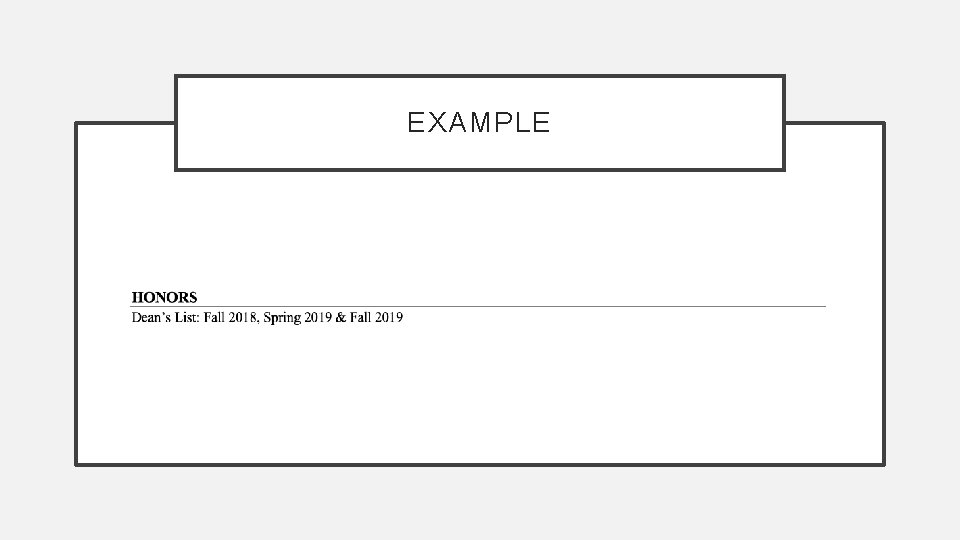
HEADING 6: HONORS • Optional • Dean’s list, awards, scholarships, etc.
EXAMPLE
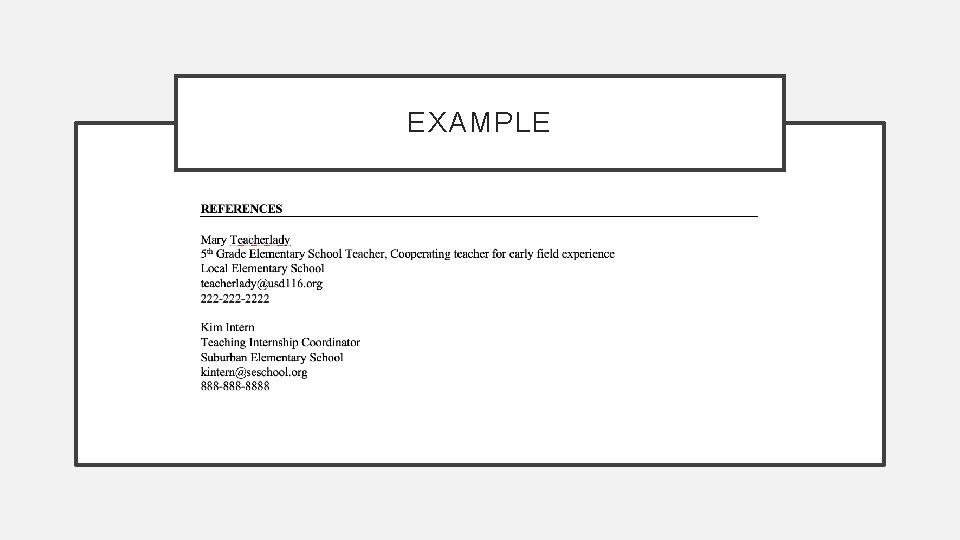
HEADING 7: REFERENCES • List 2 -3 professional references • Include name, title, school/company/organization, email, and phone • Ask these people if you can use them as reference!
EXAMPLE
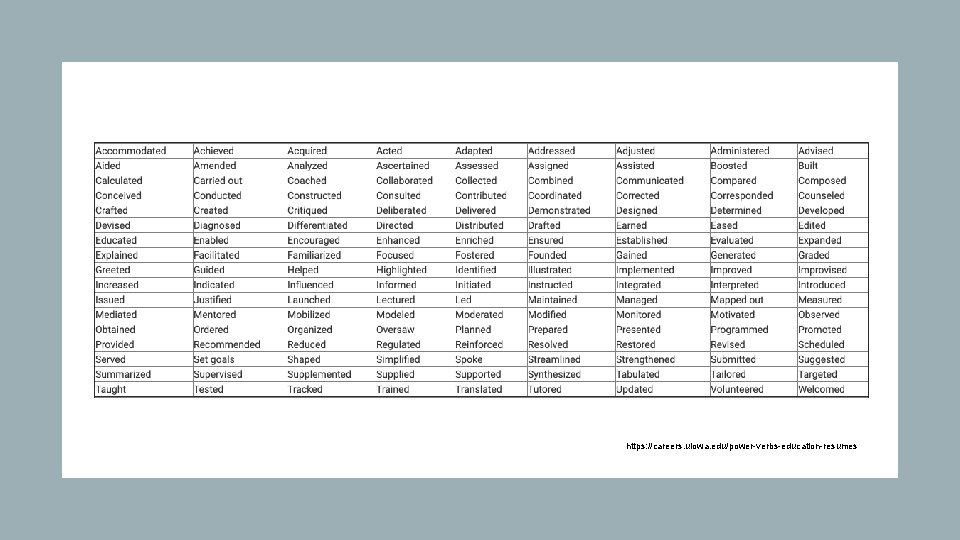
GENERAL GUIDELINES • Use clean design – lots of white space, one font, no clip art • Have SEVERAL people proofread your resume! You are representing not only yourself, but also the College of Education with this document • Use action verbs to start your bullet points (see list) • There are lots of templates and other online resources to inspire you
https: //careers. uiowa. edu/power-verbs-education-resumes
QUESTIONS ABOUT RESUMES?
COVER LETTERS • Sets you apart from other candidates • Serves as a writing sample • Highlights your strengths and passions
HEADING/GREETING • Letter should have same design elements as resume • Include your identifying information at the top (name, address, etc) • “Dear School Administrator, “ is an appropriate start
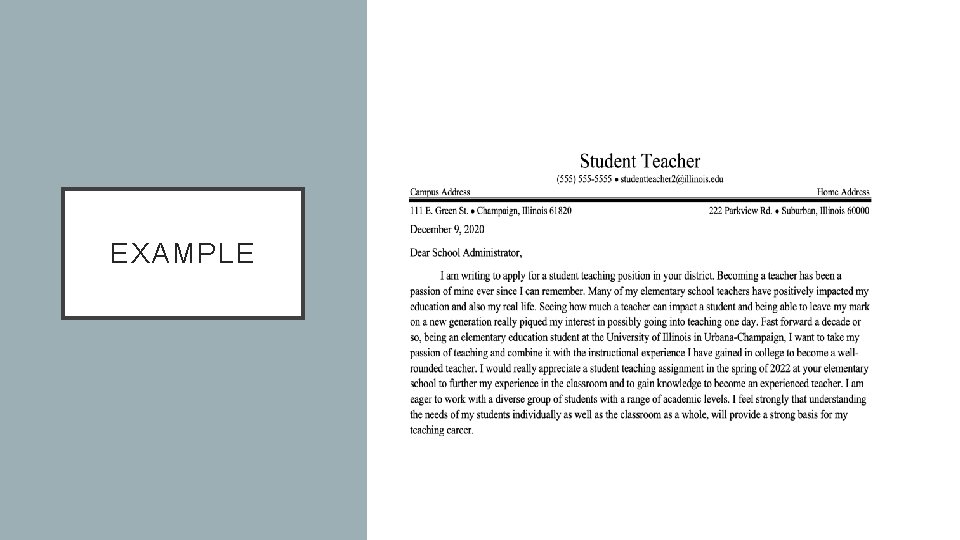
PARAGRAPH 1 • Say why you are writing this letter (“I am writing to apply for a student teaching placement in your district…”) • Hook the reader with a statement of purpose/passion • Tell why you feel you would be a good match for the district
EXAMPLE
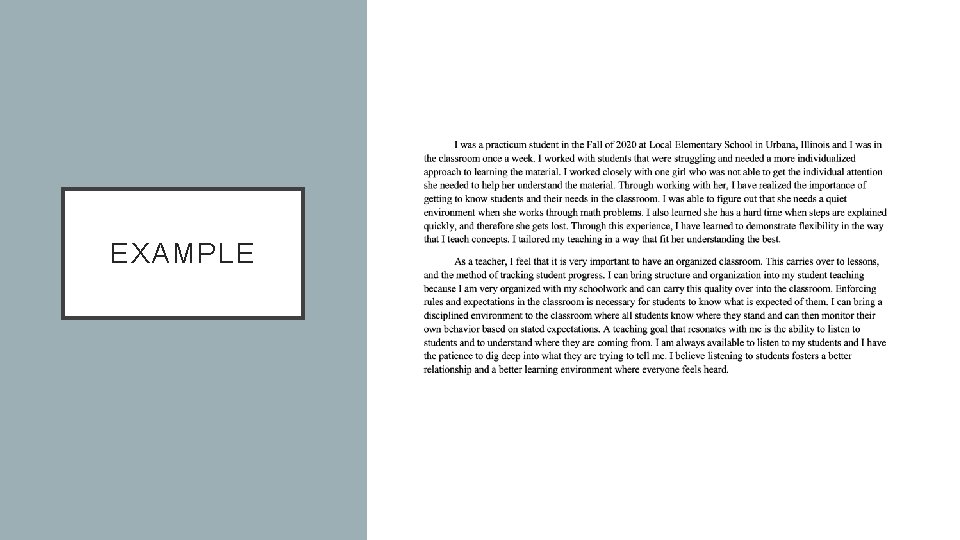
PARAGRAPH 2 • Highlight your strengths and tell what you would bring to the position • If you speak a language other than English, MENTION IT! • Share personal examples of success in teaching
EXAMPLE
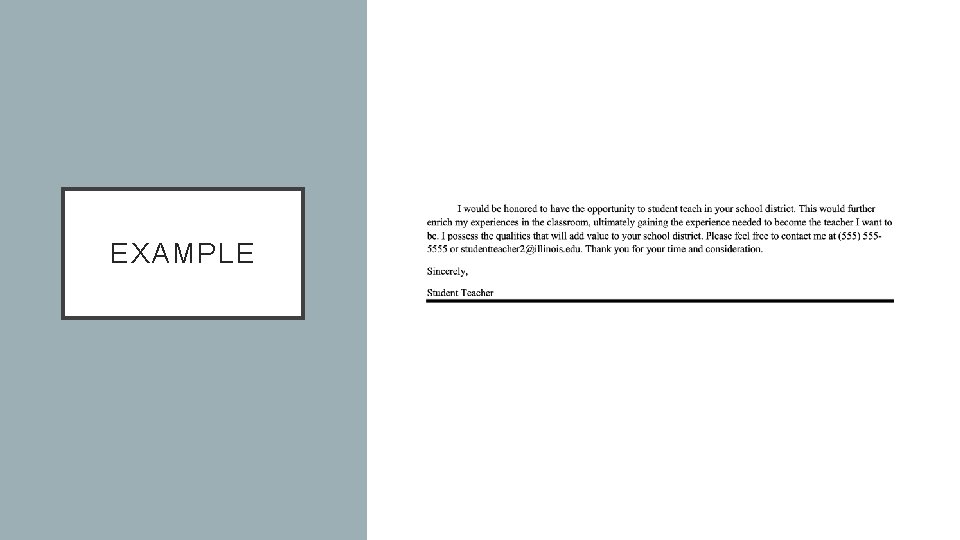
PARAGRAPH 3 • Close with a sincere thank you to the reader for their time and consideration • Include your contact information again (optional) and a statement of your availability • End with a professional closing and your name
EXAMPLE
COVER LETTER ACTIVITY https: //docs. google. com/document/d/1 mi 1 Jvr 41 x 6 u 1 Dd. Qm. T_TL 2 p. K 13 Dd. YT 1 if 6 q 23 LVPUD 0/edit? usp=sharing In a group of 3, discuss problems with this cover letter.
QUESTIONS ABOUT COVER LETTERS?
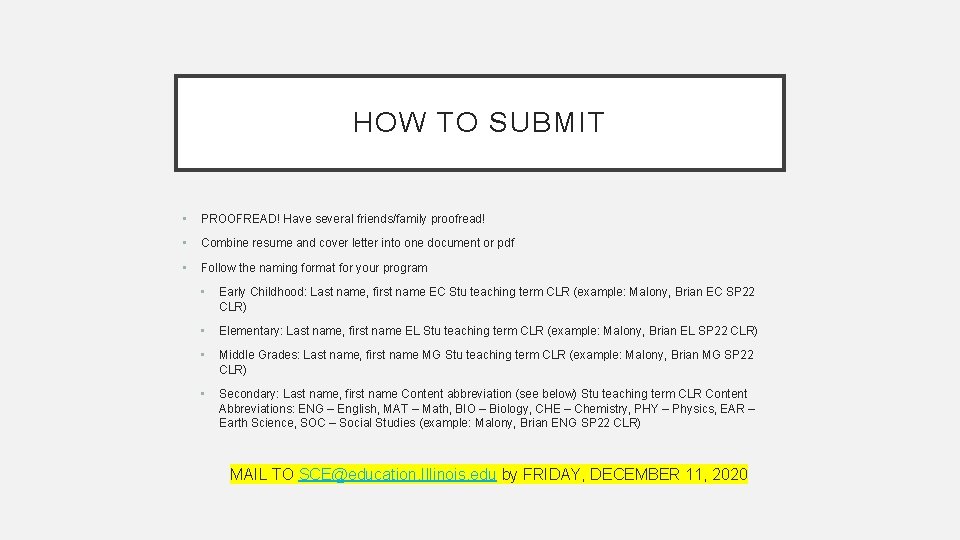
HOW TO SUBMIT • PROOFREAD! Have several friends/family proofread! • Combine resume and cover letter into one document or pdf • Follow the naming format for your program • Early Childhood: Last name, first name EC Stu teaching term CLR (example: Malony, Brian EC SP 22 CLR) • Elementary: Last name, first name EL Stu teaching term CLR (example: Malony, Brian EL SP 22 CLR) • Middle Grades: Last name, first name MG Stu teaching term CLR (example: Malony, Brian MG SP 22 CLR) • Secondary: Last name, first name Content abbreviation (see below) Stu teaching term CLR Content Abbreviations: ENG – English, MAT – Math, BIO – Biology, CHE – Chemistry, PHY – Physics, EAR – Earth Science, SOC – Social Studies (example: Malony, Brian ENG SP 22 CLR) MAIL TO SCE@education. Illinois. edu by FRIDAY, DECEMBER 11, 2020
WRAP UP! • Questions • Comments THANK YOU, EVERYONE!