
Student Support Teams in High School ICE CONFERENCE

- Slides: 24
Student Support Teams in High School ICE CONFERENCE PORTLAND, OREGON MAY 21, 2019 DOREEN ENGEL, ADJUNCT FACULTY MEMBER THE ANDREW M. GREELEY CENTER, LOYOLA UNIVERSITY CHICAGO DENGEL@LUC. EDU TWEETING AS @ENGELWORKS
African Proverb… If you want to go fast, go alone. If you want to go far, go together.
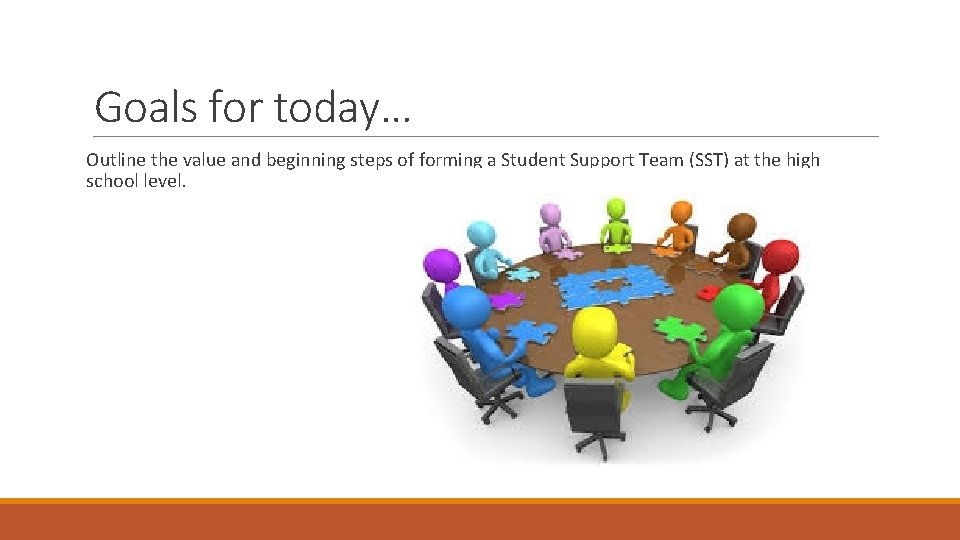
Goals for today… Outline the value and beginning steps of forming a Student Support Team (SST) at the high school level.
Catholic high schools are facing many challenges today. Here are just a few: Enrollment: Student Needs: A need to maintain enrollment numbers, or increase them. A more diverse student body. A desire to respond to parental requests for a Catholic education. A denser curriculum. Increase in the number of students with anxiety disorders, depression, and those who are on the autism spectrum.
A High School Student Support Team can help with all of these challenges.
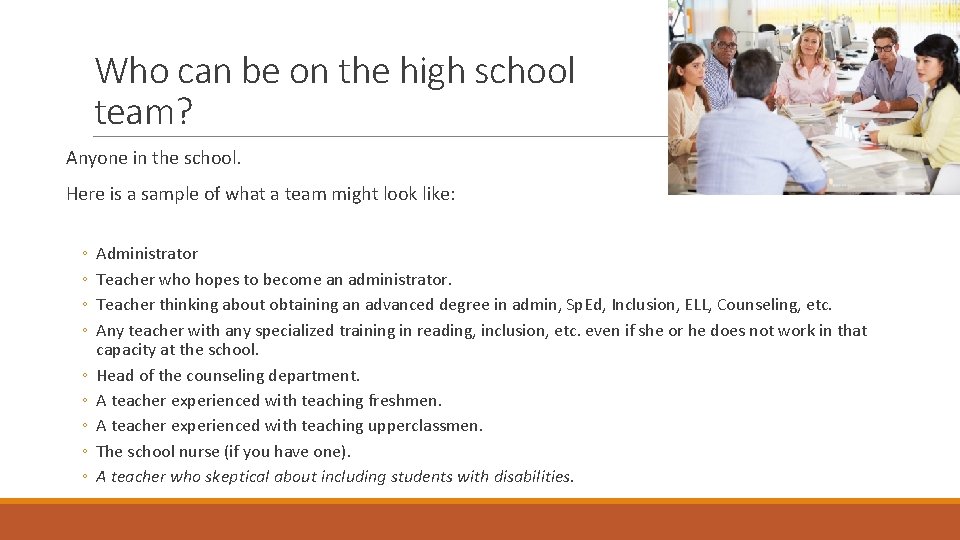
Who can be on the high school team? Anyone in the school. Here is a sample of what a team might look like: ◦ ◦ ◦ ◦ ◦ Administrator Teacher who hopes to become an administrator. Teacher thinking about obtaining an advanced degree in admin, Sp. Ed, Inclusion, ELL, Counseling, etc. Any teacher with any specialized training in reading, inclusion, etc. even if she or he does not work in that capacity at the school. Head of the counseling department. A teacher experienced with teaching freshmen. A teacher experienced with teaching upperclassmen. The school nurse (if you have one). A teacher who skeptical about including students with disabilities.
Your SST can be a training ground for… Future Administrator Teacher going back to grad school. (Offer to pay some of the grad school cost in exchange for serving on the team. ) A teacher who needs help understanding inclusion or academic support.
Balance the team. SEASONED TEACHERS: NEWER TEACHERS/ YOUNGER TEACHERS: Have seen fads come and go. May be trained in the latest methods. May have exceptional observation skills. May have experienced inclusion while attending school. May know a great deal about adolescent development. Have credibility with the faculty and the community. May find the opportunity to serve on the team exciting.
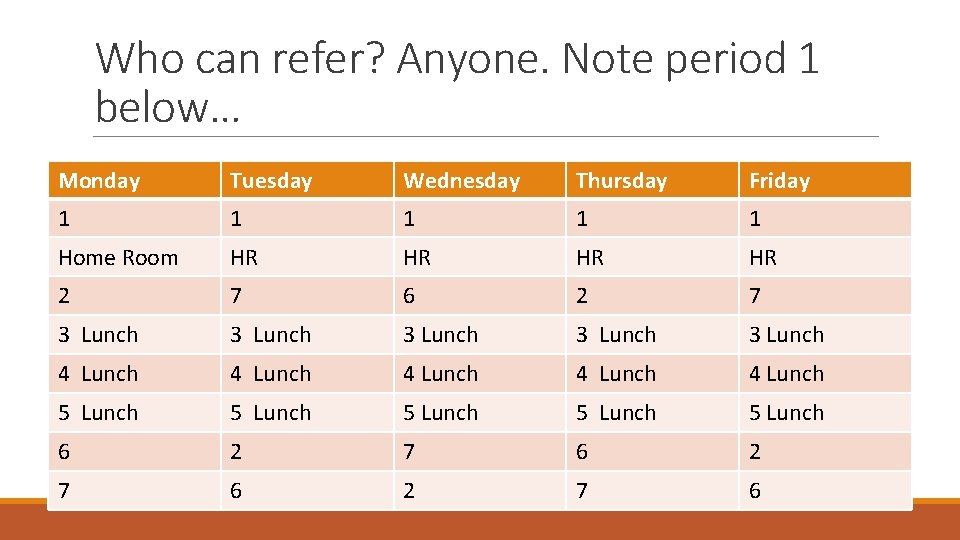
Who can refer? Anyone. Note period 1 below… Monday Tuesday Wednesday Thursday Friday 1 1 1 Home Room HR HR 2 7 6 2 7 3 Lunch 3 Lunch 4 Lunch 4 Lunch 5 Lunch 5 Lunch 6 2 7 6
How do referrals happen? Turn and talk: When you have a concern about a student at your school now, what do you do? Academic concern? Behavioral concern? Emotional concern?
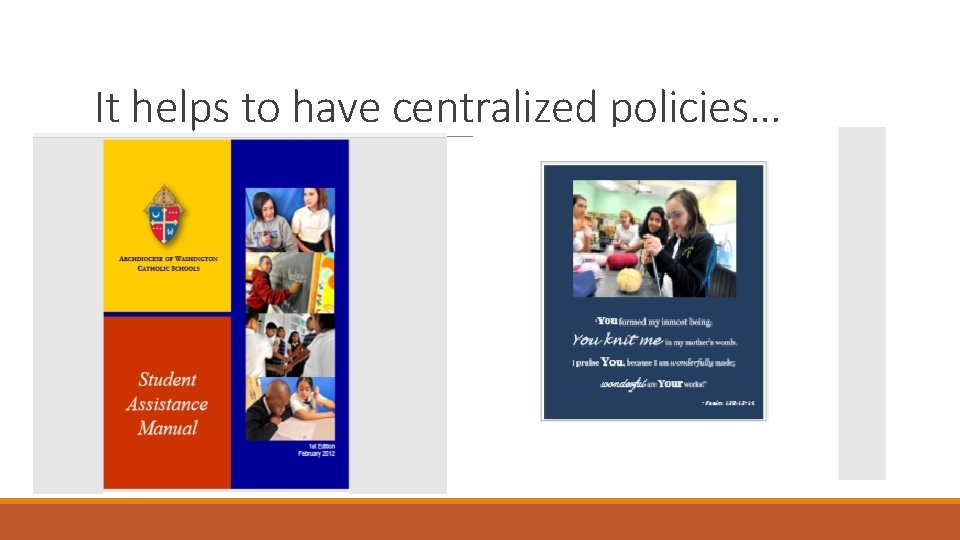
It helps to have centralized policies…
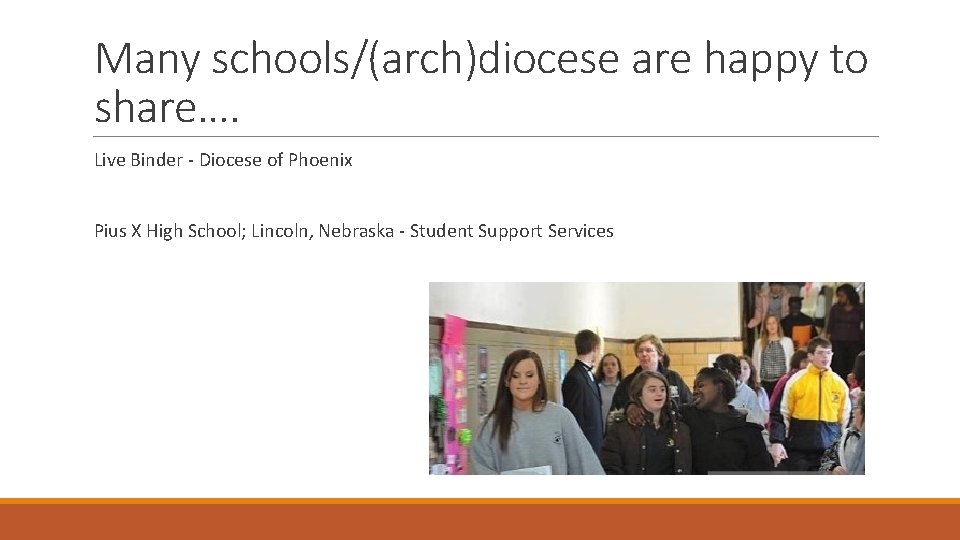
Many schools/(arch)diocese are happy to share…. Live Binder - Diocese of Phoenix Pius X High School; Lincoln, Nebraska - Student Support Services
Considerations: Scheduling Meetings Times Efficiency Confidentiality Follow-up
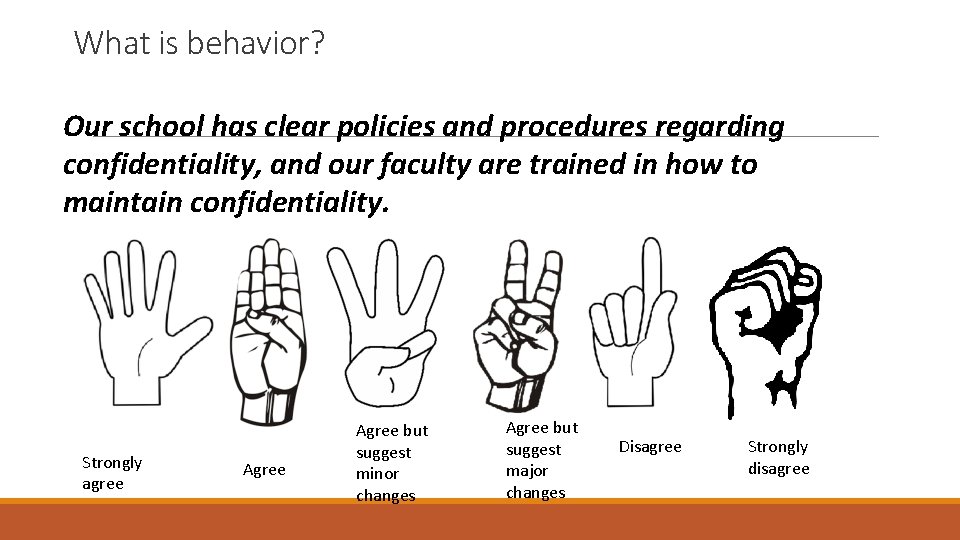
What is behavior? Our school has clear policies and procedures regarding confidentiality, and our faculty are trained in how to maintain confidentiality. Strongly agree Agree but suggest minor changes Agree but suggest major changes Disagree Strongly disagree
What can the team actually do? Refer a student for evaluation Analyze data to plan staff PD. Request a parent meeting Make recommendations to individual teachers or departments. Approve accommodations that are atypical. Develop behavior support plans. Assign a case manager.
Case Manager Can be anyone on the team. This person will be the single point of contact for the parent, regardless of the concern.
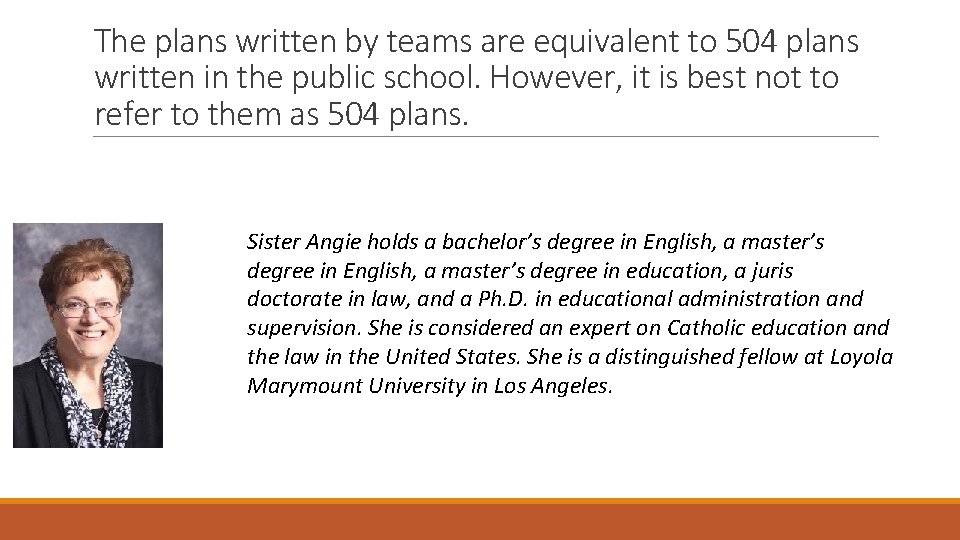
The plans written by teams are equivalent to 504 plans written in the public school. However, it is best not to refer to them as 504 plans. Sister Angie holds a bachelor’s degree in English, a master’s degree in education, a juris doctorate in law, and a Ph. D. in educational administration and supervision. She is considered an expert on Catholic education and the law in the United States. She is a distinguished fellow at Loyola Marymount University in Los Angeles.
Sample scenario: Gary is a 10 th grader who has attended your school since the start of his freshmen year. Recently, his grades have dropped significantly and he is frequently late to school. Discuss: What would happen at your school current, in this scenario? Who would respond? How would they respond? When? Would there be a record of this response? Do you need more information? Who would be responsible for getting this information. ?
With a Student Support Team… Gary is a 10 th grader who has attended your school since the start of his freshmen year. Recently, his grades have dropped significantly and he is frequently late to school. A referral to the team could be made by: Office staff responsible for attendance. Any of Gary’s teachers. Gary’s Guidance Counselor. Gary’s parent.
With a Student Support Team… Gary is a 10 th grader who has attended your school since the start of his freshmen year. Recently, his grades have dropped significantly and he is frequently late to school. You are a member of the team at the first meeting regarding Gary. What information would you like to have, other than what is given above?
With a Student Support Team… Gary is a 10 th grader who has attended your school since the start of his freshmen year. Recently, his grades have dropped significantly and he is frequently late to school. What is the quickest way to get the information you need? How can you rule out: Depression? Drug use? Sleep deprivation from talking to his girlfriend on his cell phone all night?
With a Student Support Team… Gary is a 10 th grader who has attended your school since the start of his freshmen year. Recently, his grades have dropped significantly and he is frequently late to school. What are some other conditions that could be causing Gary’s drop in grades? Medical condition Problems at home Bullying Bad break-up
Gary is a 10 th grader who has attended your school since the start of his freshmen year. Recently, his grades have dropped significantly and he is frequently late to school. What would be considered a good outcome for Gary?
For further information on teams: Critical Elements of Student Assistance Programs: A Qualitative Study Tips for Making Teams Successful Maximizing Team Effectiveness