
Student success analysis and prediction using the US
- Slides: 18
Student success analysis and prediction using the US community college microsimulation model Micro. CC IMA 2011 Martin Spielauer Ron Anderson This project was funded by the US National Science Foundation's Advanced Technological Education (ATE) Program with a grant to Colorado University's DECA Project
Organization • Context & Goals • Why Microsimulation • Micro. CC – General – Data – Behaviours • Simulations results & Illustrations – Overall fit & trends – Compositional analysis: outline – Compositional analysis: examples • Discussion & Outlook Spielauer & Anderson 2
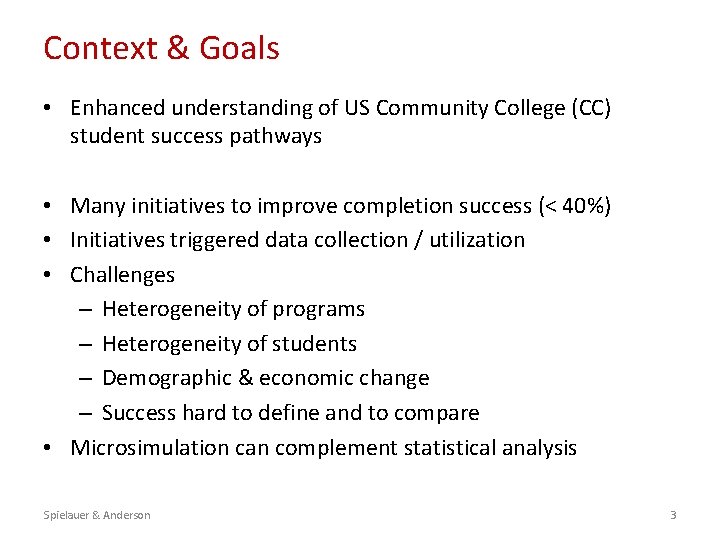
Context & Goals • Enhanced understanding of US Community College (CC) student success pathways • Many initiatives to improve completion success (< 40%) • Initiatives triggered data collection / utilization • Challenges – Heterogeneity of programs – Heterogeneity of students – Demographic & economic change – Success hard to define and to compare • Microsimulation can complement statistical analysis Spielauer & Anderson 3
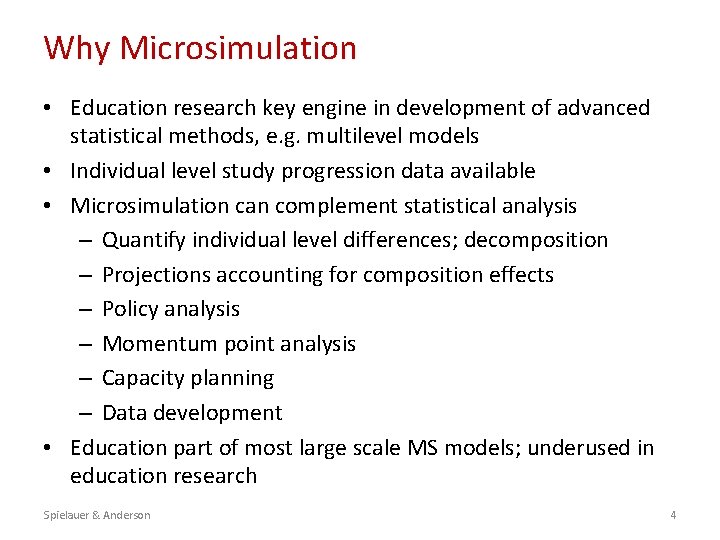
Why Microsimulation • Education research key engine in development of advanced statistical methods, e. g. multilevel models • Individual level study progression data available • Microsimulation can complement statistical analysis – Quantify individual level differences; decomposition – Projections accounting for composition effects – Policy analysis – Momentum point analysis – Capacity planning – Data development • Education part of most large scale MS models; underused in education research Spielauer & Anderson 4
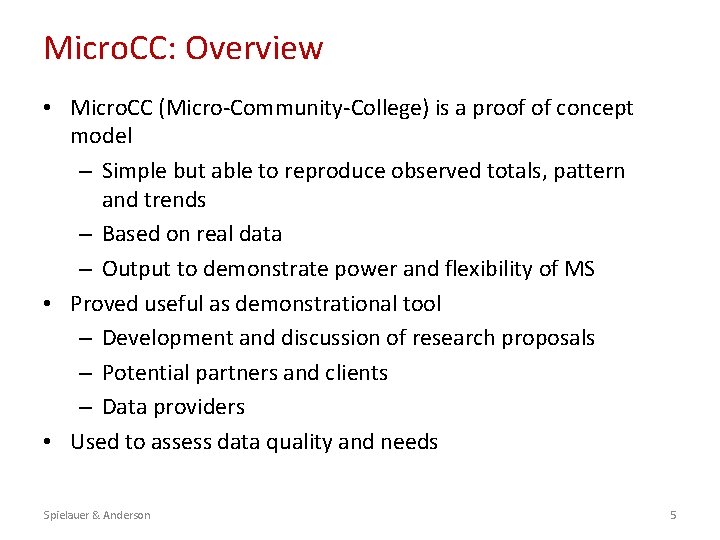
Micro. CC: Overview • Micro. CC (Micro-Community-College) is a proof of concept model – Simple but able to reproduce observed totals, pattern and trends – Based on real data – Output to demonstrate power and flexibility of MS • Proved useful as demonstrational tool – Development and discussion of research proposals – Potential partners and clients – Data providers • Used to assess data quality and needs Spielauer & Anderson 5
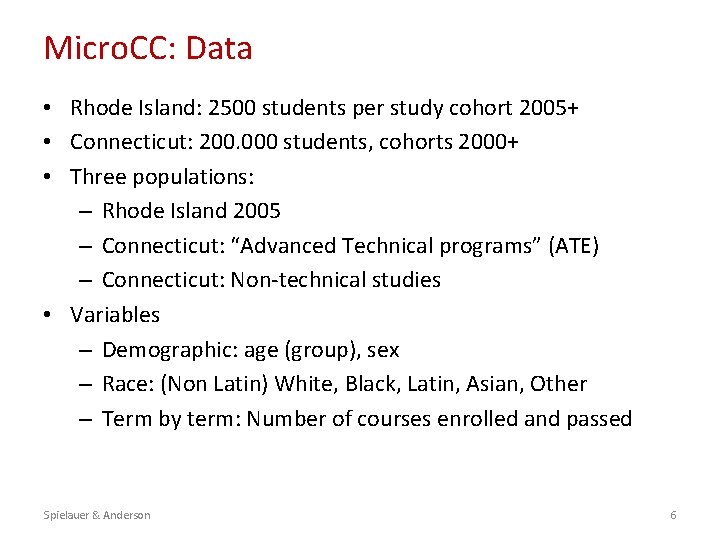
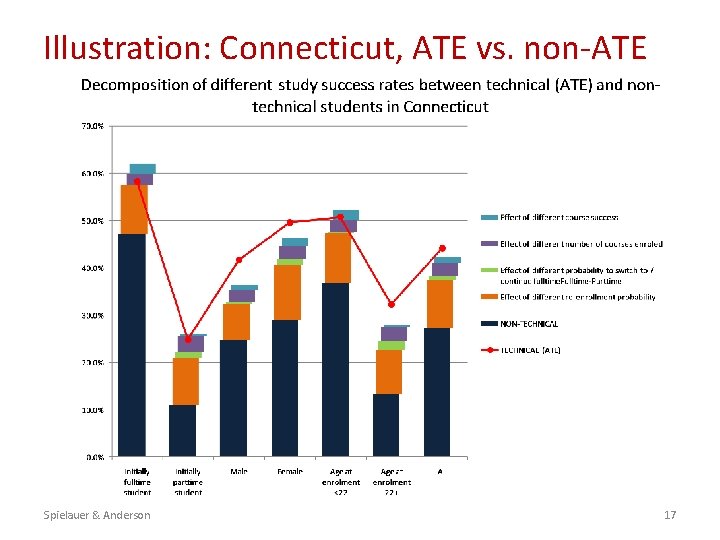
Micro. CC: Data • Rhode Island: 2500 students per study cohort 2005+ • Connecticut: 200. 000 students, cohorts 2000+ • Three populations: – Rhode Island 2005 – Connecticut: “Advanced Technical programs” (ATE) – Connecticut: Non-technical studies • Variables – Demographic: age (group), sex – Race: (Non Latin) White, Black, Latin, Asian, Other – Term by term: Number of courses enrolled and passed Spielauer & Anderson 6
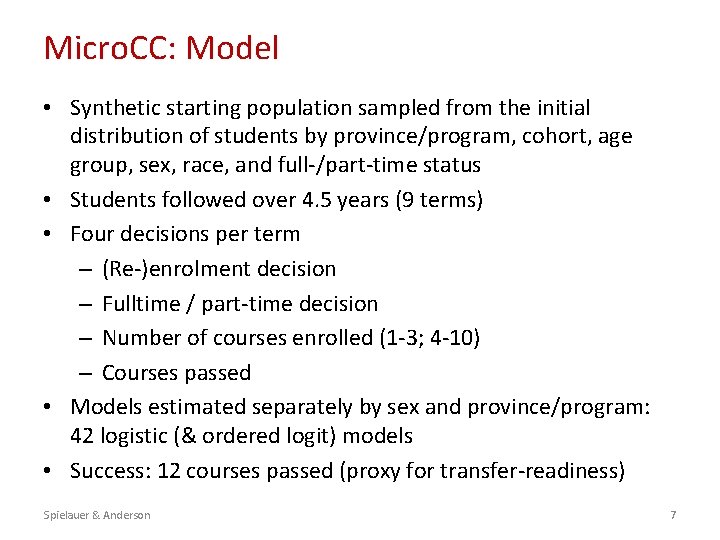
Micro. CC: Model • Synthetic starting population sampled from the initial distribution of students by province/program, cohort, age group, sex, race, and full-/part-time status • Students followed over 4. 5 years (9 terms) • Four decisions per term – (Re-)enrolment decision – Fulltime / part-time decision – Number of courses enrolled (1 -3; 4 -10) – Courses passed • Models estimated separately by sex and province/program: 42 logistic (& ordered logit) models • Success: 12 courses passed (proxy for transfer-readiness) Spielauer & Anderson 7
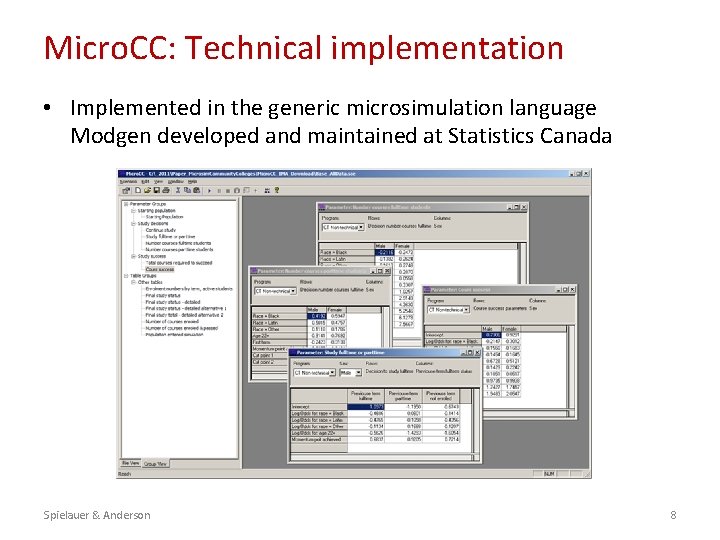
Micro. CC: Technical implementation • Implemented in the generic microsimulation language Modgen developed and maintained at Statistics Canada Spielauer & Anderson 8
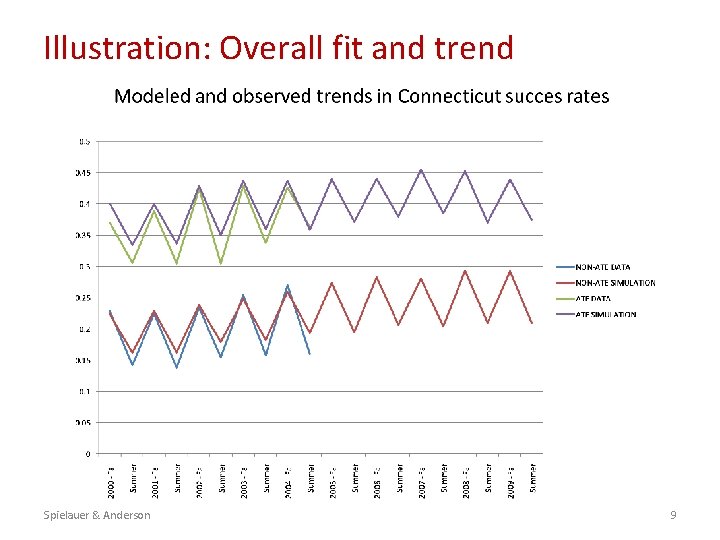
Illustration: Overall fit and trend Spielauer & Anderson 9
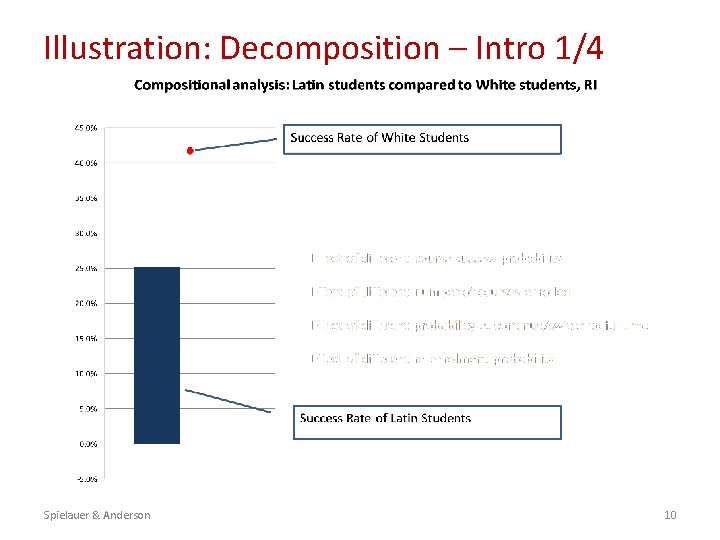
Illustration: Decomposition – Intro 1/4 Spielauer & Anderson 10
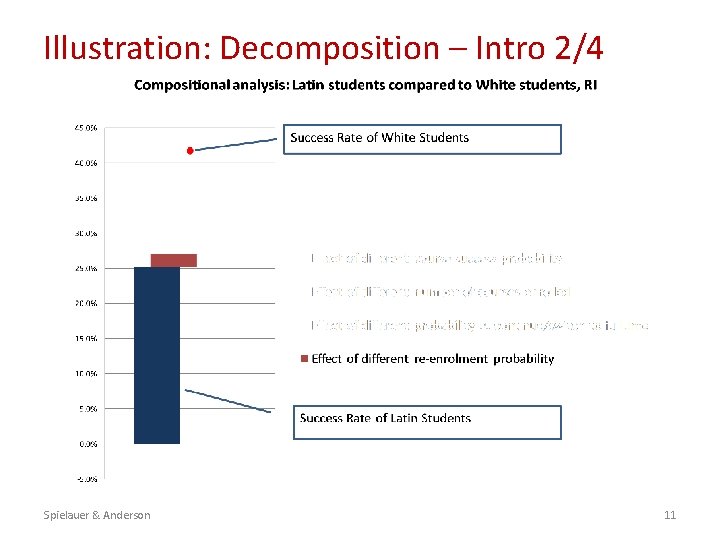
Illustration: Decomposition – Intro 2/4 Spielauer & Anderson 11
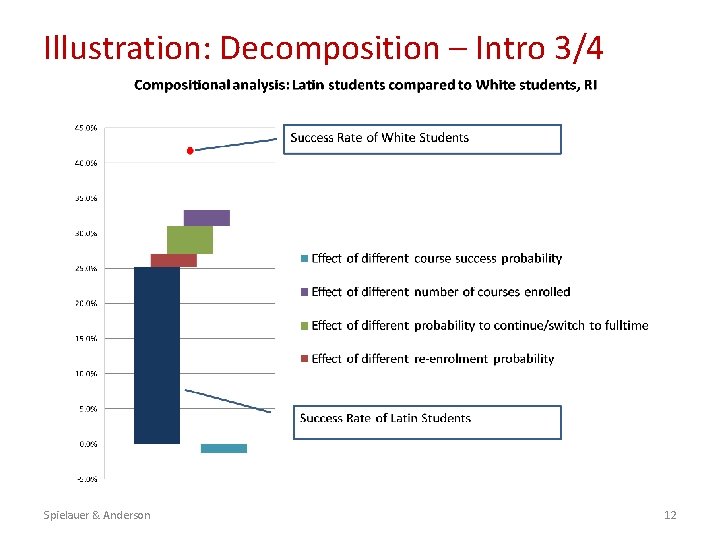
Illustration: Decomposition – Intro 3/4 Spielauer & Anderson 12
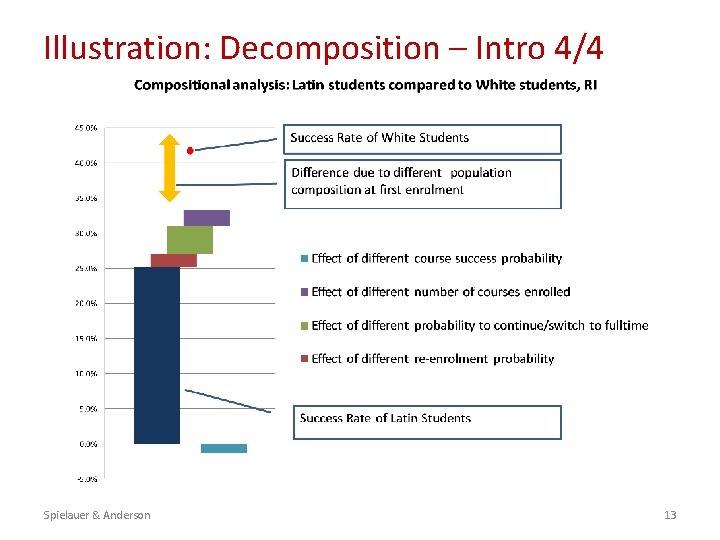
Illustration: Decomposition – Intro 4/4 Spielauer & Anderson 13
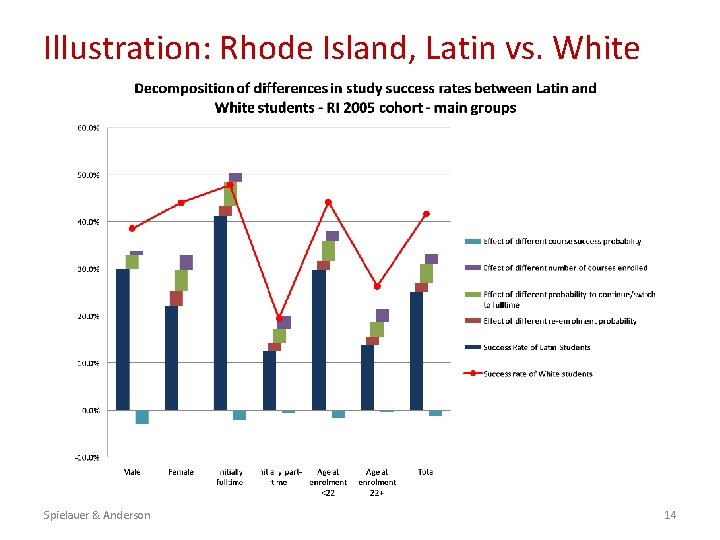
Illustration: Rhode Island, Latin vs. White Spielauer & Anderson 14
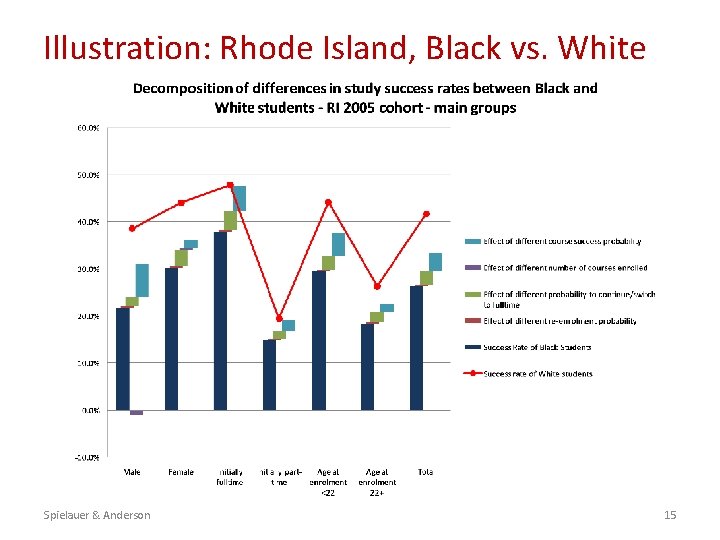
Illustration: Rhode Island, Black vs. White Spielauer & Anderson 15
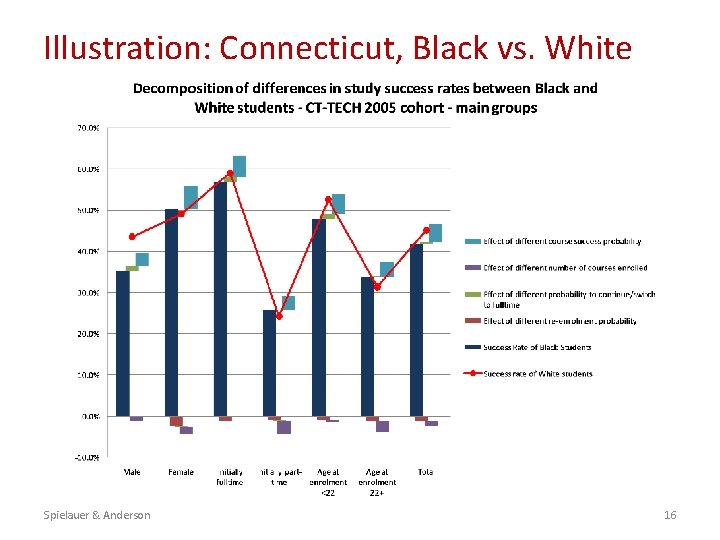
Illustration: Connecticut, Black vs. White Spielauer & Anderson 16
Illustration: Connecticut, ATE vs. non-ATE Spielauer & Anderson 17
Outlook • Organizational: New England Board of Higher Education – Coordinating center, project management, training – Development of projects & proposals / funding • Planned enhancements & projects for college institutions in New England – Job Market and Transfer Success. A college conducts an annual follow-up survey – Evaluation of a Campus-Wide Intervention – Enrollment forecasting and capacity planning on state level Spielauer & Anderson 18