
STUDENT SEMINAR R muthulakshmi I year B Ed
STUDENT SEMINAR. R. muthulakshmi. I year B. Ed Voc college of education.
OUTLINE: Ø Ø Ø Ø Introduction. Meaning. Definition. Objectives. Types of seminars. Role of different personnel. Procedure of seminar. Purposes of seminar. Benefits of seminar. Styles of speaking. Uses. Advantages of seminar. Disadvantages of seminar. Evaluation. Conclusion.
INTRODUCTION: Student seminars are simply a group of people coming together for the discussion and learning of specific techniques and topics. The seminar method is the most modern and advanced method of teachimg.
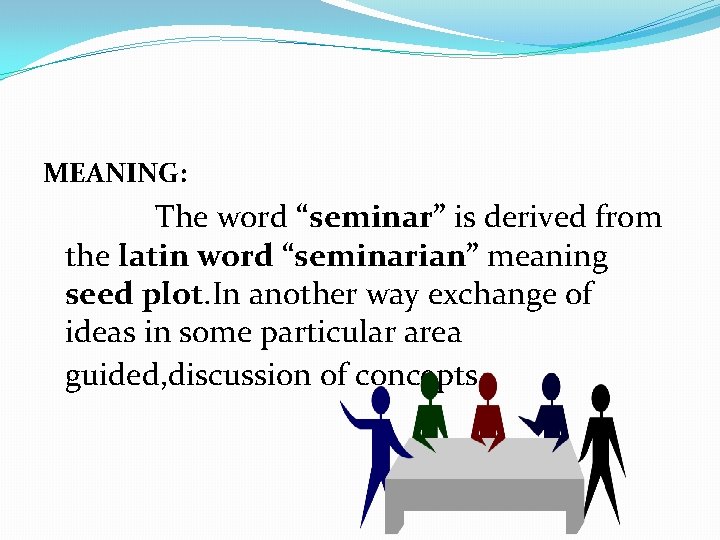
MEANING: The word “seminar” is derived from the latin word “seminarian” meaning seed plot. In another way exchange of ideas in some particular area guided, discussion of concepts.
DEFINITION: Seminar is a group of members come together exchange view of currrent problems to share with others their own experiences, discoveries. Seminar is a teaching techniques for higher learning.
OBJECTIVES: Objectives are mainly divided into two types, 1. Cognitive objectives. 2. Affective objectives. COGNITIVE OBJECTIVES: Ø To develop higher cognitive abilities. Ø To develop the ability of responding. Ø To develop the ability of keen observation of experiences, feeling and to present them effectively. Ø To develop the ability to seek clarification and defend their ideas of others effectively.
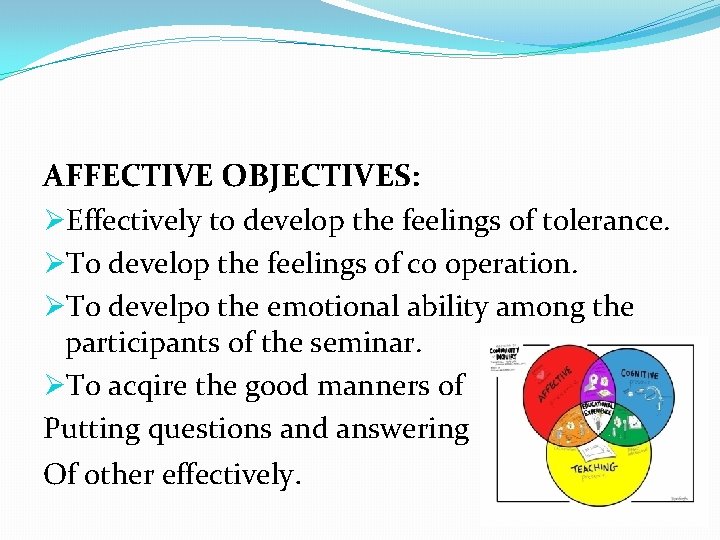
AFFECTIVE OBJECTIVES: ØEffectively to develop the feelings of tolerance. ØTo develop the feelings of co operation. ØTo develpo the emotional ability among the participants of the seminar. ØTo acqire the good manners of Putting questions and answering Of other effectively.
�TYPES OF SEMINAR: v v Mini seminar Major seminar National seminar International seminar
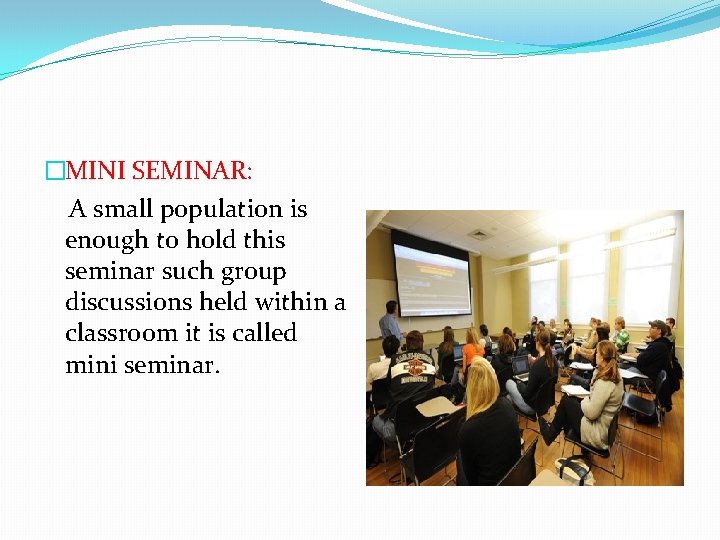
�MINI SEMINAR: A small population is enough to hold this seminar such group discussions held within a classroom it is called mini seminar.
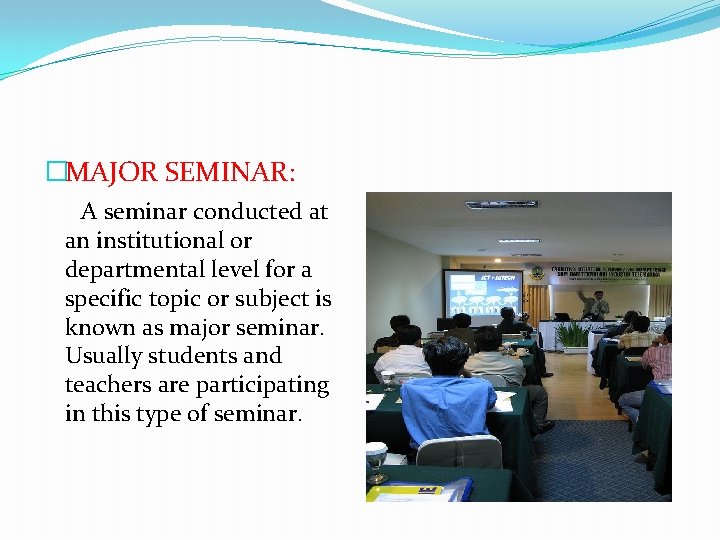
�MAJOR SEMINAR: A seminar conducted at an institutional or departmental level for a specific topic or subject is known as major seminar. Usually students and teachers are participating in this type of seminar.
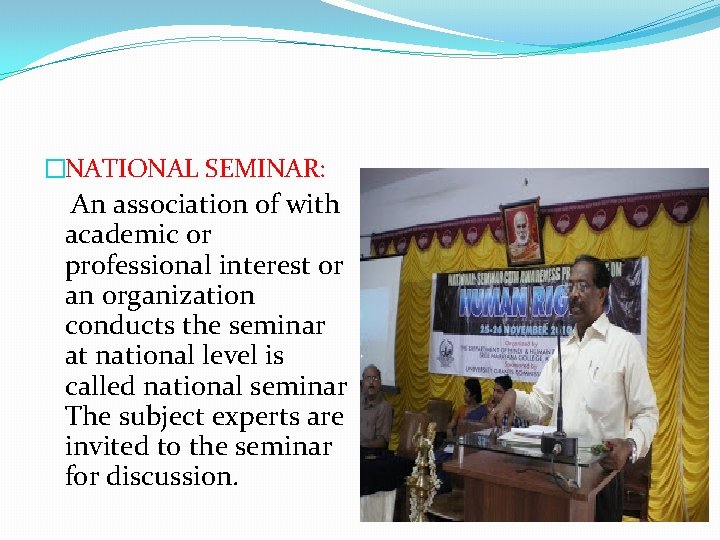
�NATIONAL SEMINAR: An association of with academic or professional interest or an organization conducts the seminar at national level is called national seminar The subject experts are invited to the seminar for discussion.
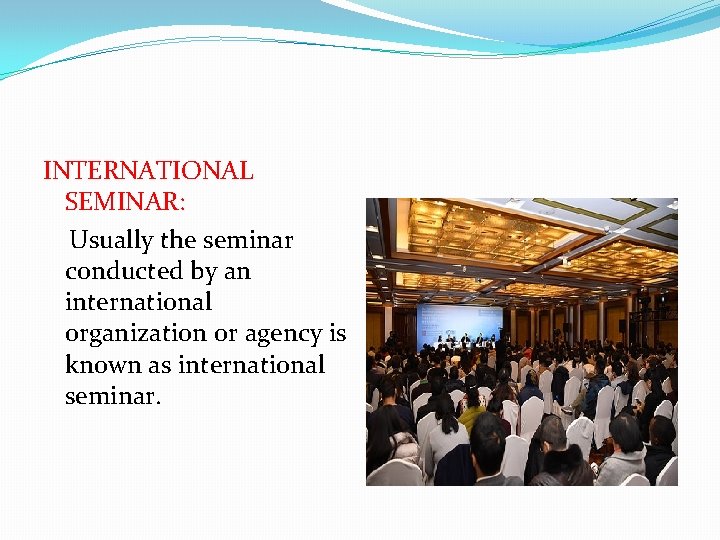
INTERNATIONAL SEMINAR: Usually the seminar conducted by an international organization or agency is known as international seminar.
�ROLES OF DIFFERENT PERSONNEL: v Organizer. v Chairmen. v Participant. v Observer. • ROLES OF ORGANIZER: v plan and prepare the whole program of the seminar.
�ROLE OF CHAIRMEN: v Direct the whole program and keeps the discusssion on theme of seminar. �ROLE OF OBSERVER: v Some guest arnd observes are also invited to observe the activity.
�ROLE OF SPEAKER: v They prepare the topic throughly and xerox copies of papers are prepared and distributed among the participants before the commencement of the topic so the participants should also prepare themselves for the topic. The speaker should be ready to define the questions. �ROLE OF PARTICIPANTS: v They should appreciate the performance of the speaker. v They should be able to put questions and seek clarification. v There are 25 -30 participants in seminar.
PROCEDURE OF SEMINAR: v. Organizer select theme and organize the seminar. v Group discusssion. v Participants seeks clarification and put questions v Observer observe the activity of seminar. PURPOSES OF SEMNAR: Help the student to study the subject matters. v It requires a background of knowledge skills in library work. v Helps in problem solving skills. v Helps in students to increase their responsibilities. v �

�BENEFITS OF SEMINAR: v Attending a seminar has numerous benefits including improving communication skills gaining expert knowledge and renewing motivation and confidence. v. STYLES OF SPEAKING: v Voice projection. v Make eye contact. v Speak with conviction.
�USES: v Teaching professional development. v Ethical and legal issues. v Meaning full interaction with audience. �ADVANTAGES OF SEMINAR: Stimulation of thinking. This seminar method gives good motivation and learning experiences. v Develop the self reliance and self confidence. v Developing questioning skills. v It promotes independent thinking. v v
�DISADVANTAGES OF SEMINAR: � Time consuming. � Timid students cannot improve. � If subject knowledge is poor unnecessary discussion arises. �EVALUATION OF SEMINAR: � The evaluation must be made to get the immediate feed back from the speaker. � Participants regarding the seminar paper and other seminar details. � The observation schedule questionnaire can be used as evaluation tools for seminar.
CONCLUSION: v Seminar is a method of teaching mostly used for higher education. It includes the group discussions to clarify the complex aspect of theme. The students learns to develop the ability of keen observation of experiences and feeling of tolerance to opposite ideas of others.
�REFERENCE: v Method of teaching physical science. Dr. T. V. Nagaraju. �Dr. M. Vanaja. v Teaching of science- M. S. Yadav. v Patterns for the teaching of science-Norman B. Massey. v Modern method of teaching chemistry. D. D. Aggarval v samyudha publications.

- Slides: 22