
STUDENT INITIATED PROJECTS Maddie Burke Sean Harriman Kevin

STUDENT INITIATED PROJECTS Maddie Burke Sean Harriman Kevin Ferraro Andrew Nauss Marie Rohrbaugh
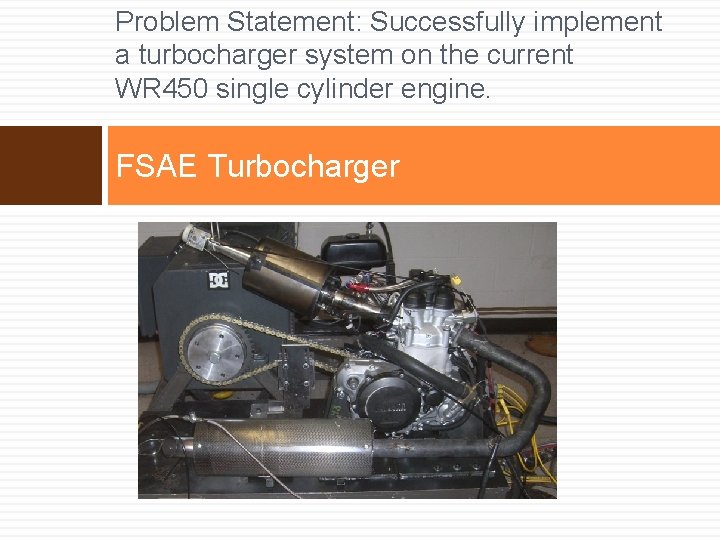
Problem Statement: Successfully implement a turbocharger system on the current WR 450 single cylinder engine. FSAE Turbocharger
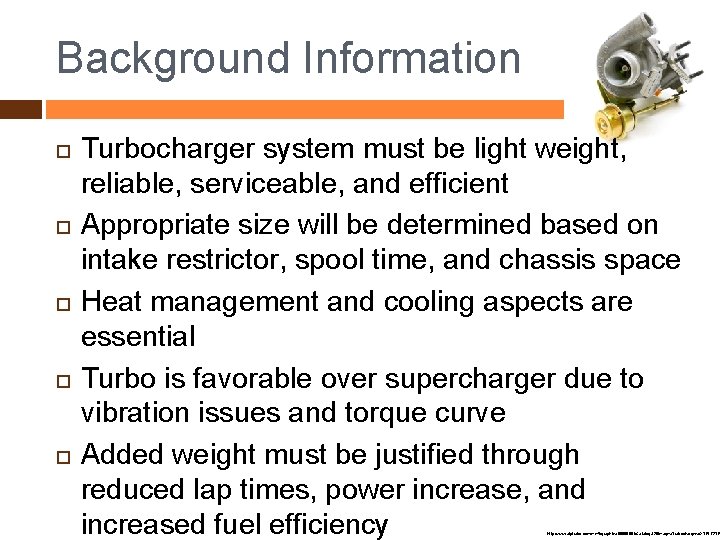
Background Information Turbocharger system must be light weight, reliable, serviceable, and efficient Appropriate size will be determined based on intake restrictor, spool time, and chassis space Heat management and cooling aspects are essential Turbo is favorable over supercharger due to vibration issues and torque curve Added weight must be justified through reduced lap times, power increase, and increased fuel efficiency http: //www. atpturbo. com/mm 5/graphics/00000001/Catalog%20 Images/Turbochargers/GT 15 -72 TR
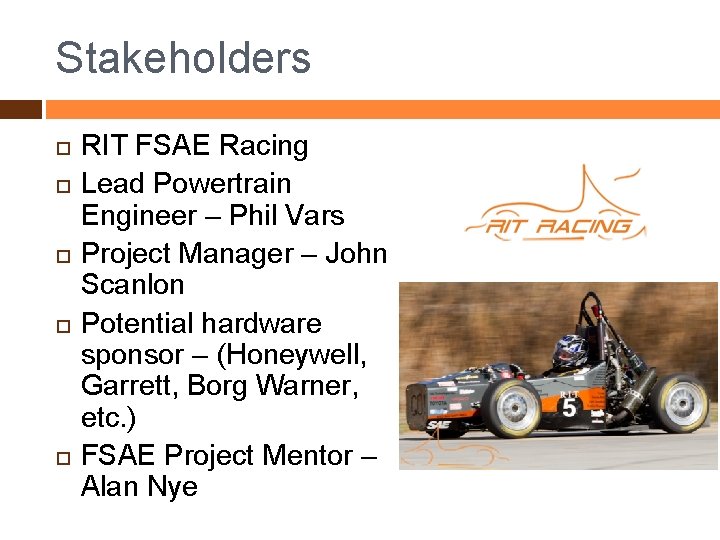
Stakeholders RIT FSAE Racing Lead Powertrain Engineer – Phil Vars Project Manager – John Scanlon Potential hardware sponsor – (Honeywell, Garrett, Borg Warner, etc. ) FSAE Project Mentor – Alan Nye
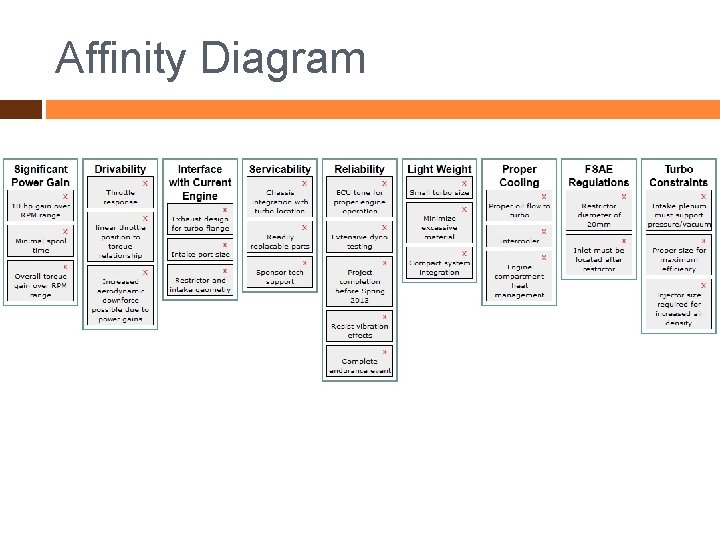
Affinity Diagram
Alternative Fuel Vehicle to Compete in the Green Grand Prix at Watkins Glen Problem Statement: If the Rochester Institute of Technology is focusing on a more sustainable and green future and Watkins Glen International is only an 1. 5 hours away WHY IS RIT NOT COMPETING IN THE GREEN GRAND PRIX?
Background Information Green Grand Prix: � � Time Speed Distance (TSD) Rally � � An educational and competitive event which showcases motoring technology that aims for a cleaner environment. Only Official SCCA road rally that promotes entry of all road- legal vehicle types and fuels in North America. Fri: 130 mile fuel economy event on WGI 2. 45 mile track Sat: 140 mile fuel economy event on public roads around Seneca Lake Current Teams � � Cornell 100+ mpg Car Redshift Edison 2 Alfred State Honda Insight Roo Pod
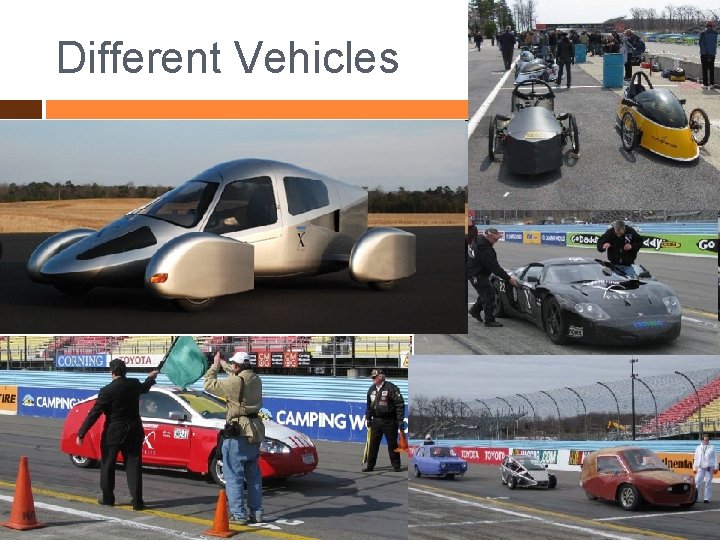
Different Vehicles
Background Information Continued Relevant RIT Courses Intro to Automotive Design and Manufacture Basic overview of vehicle design � Internal Combustion Engines Learn theory and faults/inefficiencies of IC engines � Vehicle Dynamics � Powertrain System and Design � Research Activities � RIT e. Bike Club � Center of Sustainable Mobility � Human Powered Vehicle
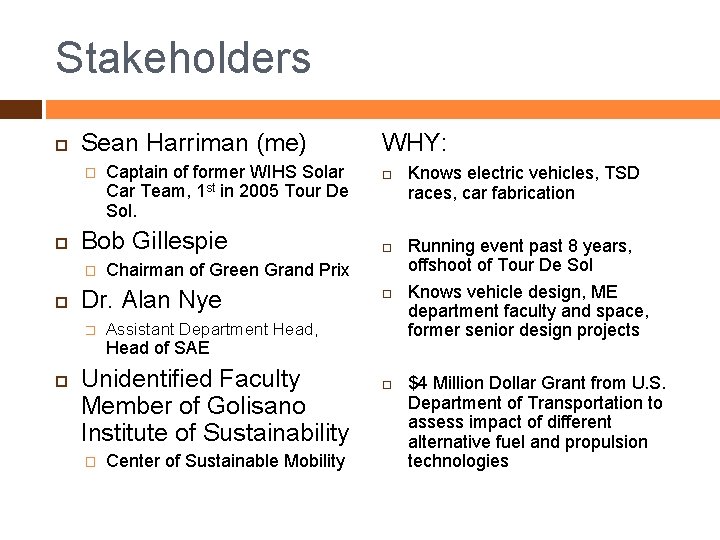
Stakeholders Sean Harriman (me) � Bob Gillespie � Captain of former WIHS Solar Car Team, 1 st in 2005 Tour De Sol. Chairman of Green Grand Prix Dr. Alan Nye � WHY: Assistant Department Head, Head of SAE Unidentified Faculty Member of Golisano Institute of Sustainability � Center of Sustainable Mobility Knows electric vehicles, TSD races, car fabrication Running event past 8 years, offshoot of Tour De Sol Knows vehicle design, ME department faculty and space, former senior design projects $4 Million Dollar Grant from U. S. Department of Transportation to assess impact of different alternative fuel and propulsion technologies
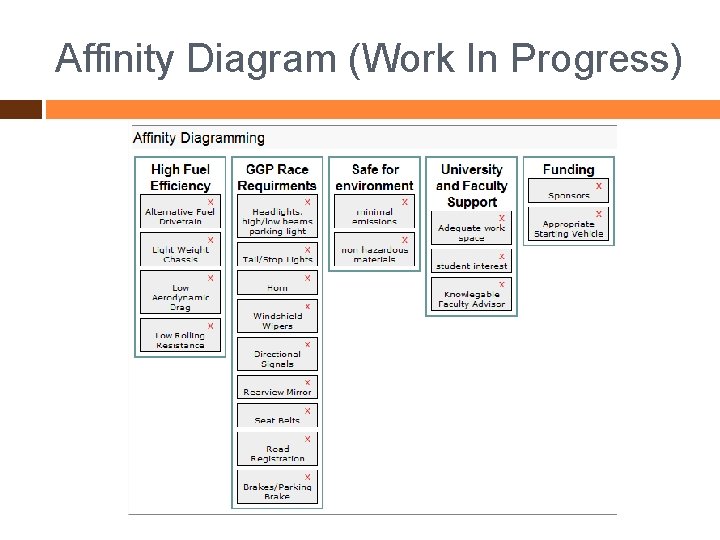
Affinity Diagram (Work In Progress)
Water Tunnel at RIT Problem Statement: Build a water tunnel for use within the Kate Gleason College of Engineering
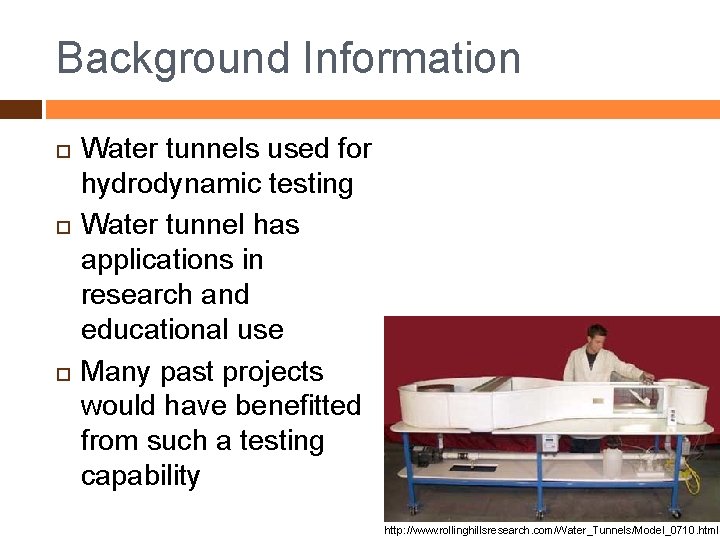
Background Information Water tunnels used for hydrodynamic testing Water tunnel has applications in research and educational use Many past projects would have benefitted from such a testing capability http: //www. rollinghillsresearch. com/Water_Tunnels/Model_0710. html
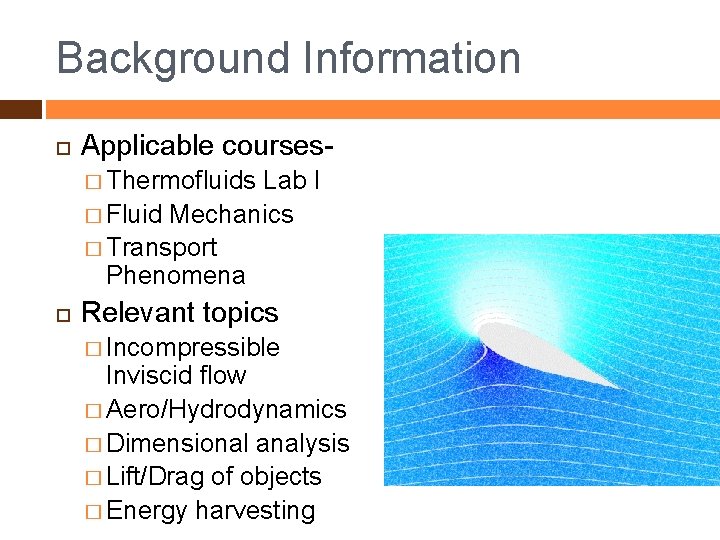
Background Information Applicable courses� Thermofluids Lab I � Fluid Mechanics � Transport Phenomena Relevant topics � Incompressible Inviscid flow � Aero/Hydrodynamics � Dimensional analysis � Lift/Drag of objects � Energy harvesting
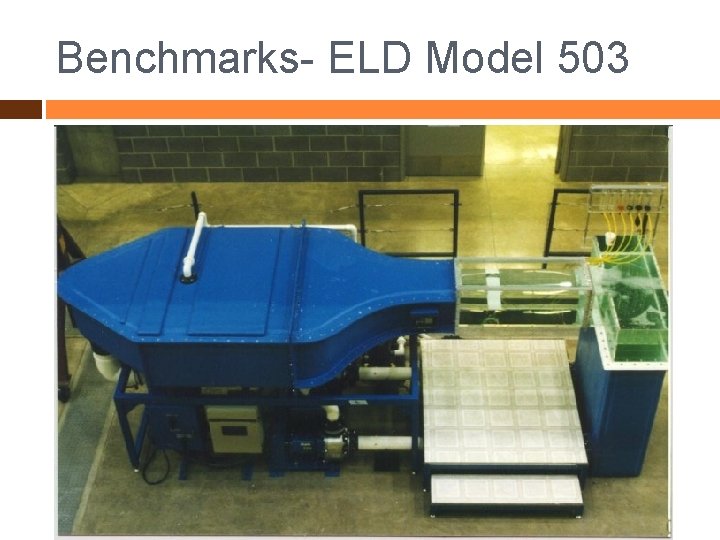
Benchmarks- ELD Model 503
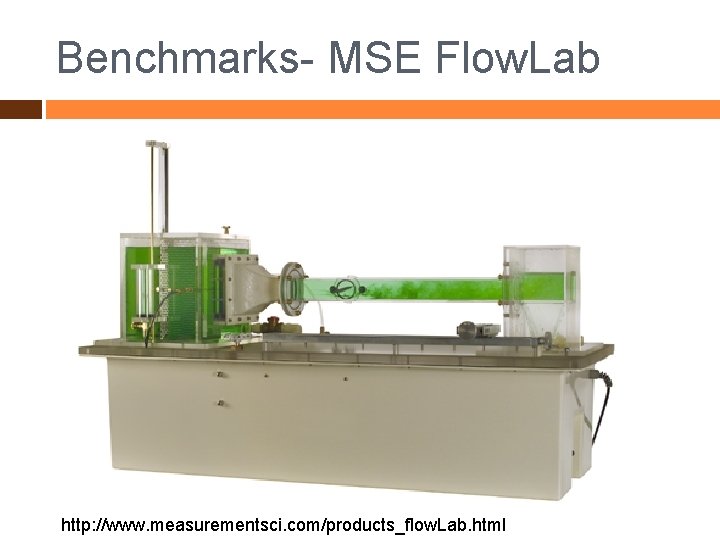
Benchmarks- MSE Flow. Lab http: //www. measurementsci. com/products_flow. Lab. html
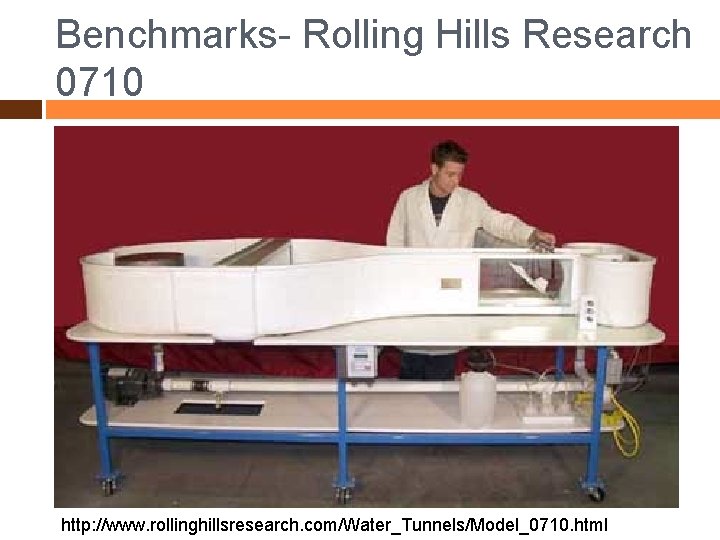
Benchmarks- Rolling Hills Research 0710 http: //www. rollinghillsresearch. com/Water_Tunnels/Model_0710. html
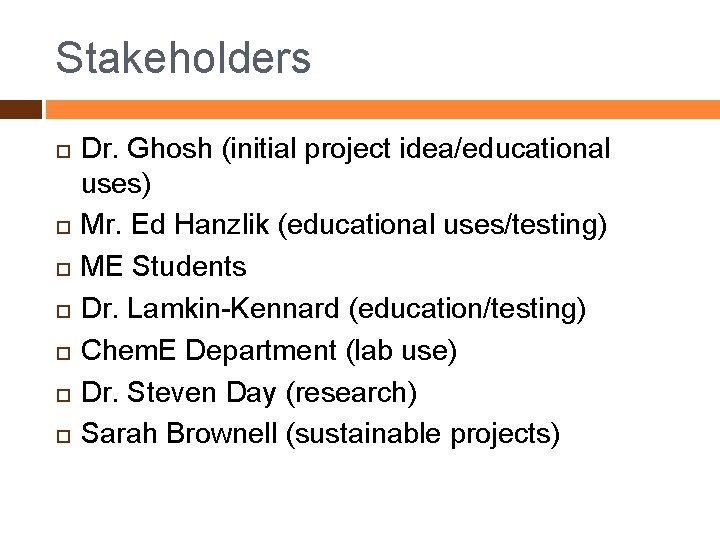
Stakeholders Dr. Ghosh (initial project idea/educational uses) Mr. Ed Hanzlik (educational uses/testing) ME Students Dr. Lamkin-Kennard (education/testing) Chem. E Department (lab use) Dr. Steven Day (research) Sarah Brownell (sustainable projects)
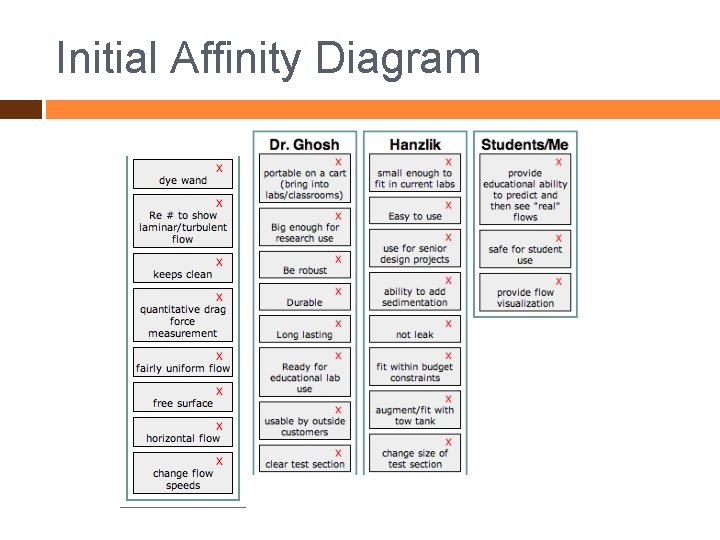
Initial Affinity Diagram
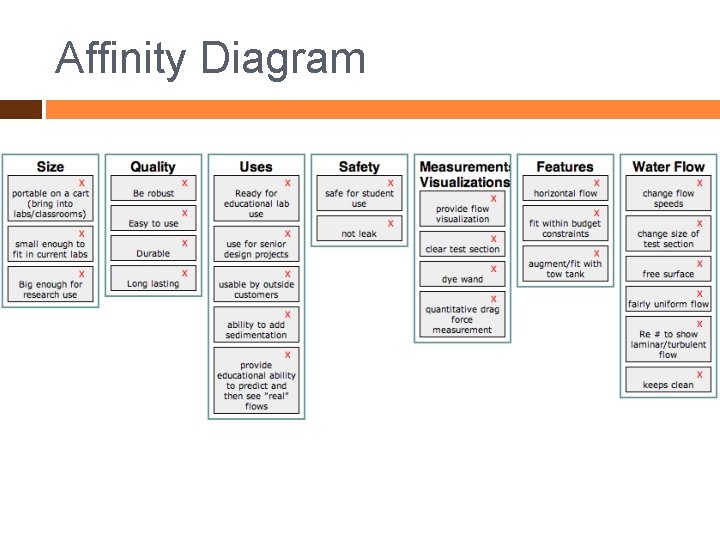
Affinity Diagram
MOOG External Leakage Test Improvement Problem Statement: Reduce the Effect of Ambient Helium in Can During External Leakage Testing
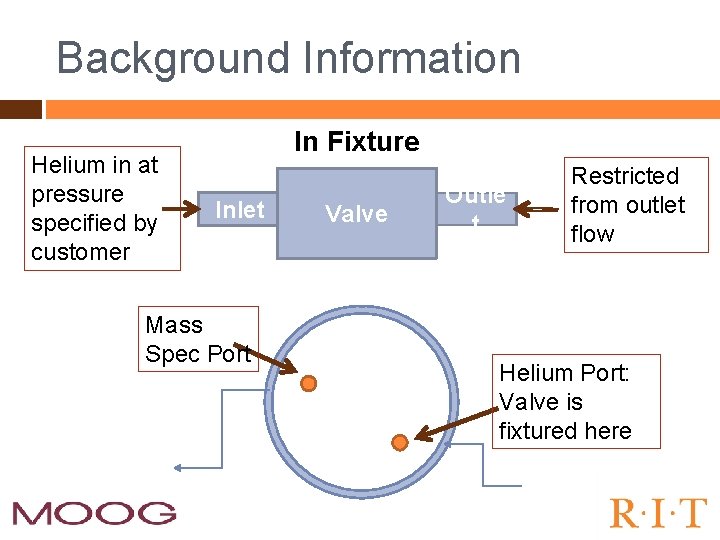
Background Information Helium in at pressure specified by customer In Fixture Inlet Mass Spec Port Valve Outle t Restricted from outlet flow Helium Port: Valve is fixtured here
Background Information Moog’s Customers require the valves meet specifications � Pressure into unit requirement � Maximum Flow out of unit � Vacuum requirement Always a constant leakage rate for each valve Air is. 0005% Helium Leakage rates present at 8 E-6 scc/sec Spec at 5 E-5 scc/sec
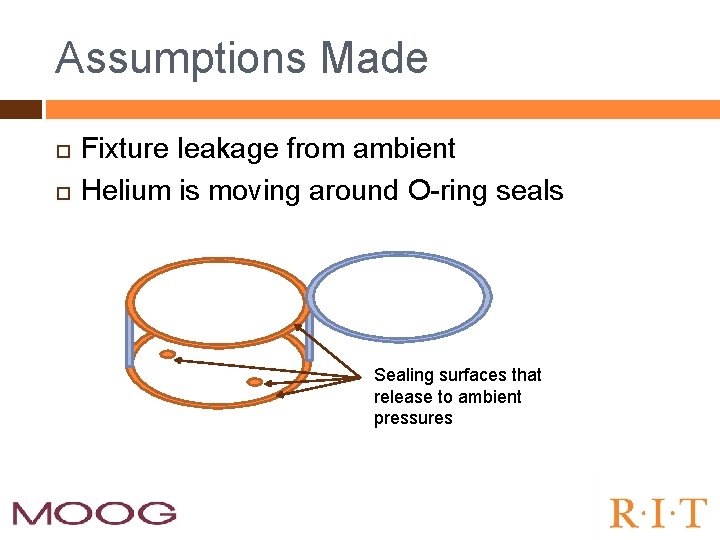
Assumptions Made Fixture leakage from ambient Helium is moving around O-ring seals Sealing surfaces that release to ambient pressures
Stakeholders AGT Product Engineer- Rob Bauer (Primary) Product Engineering Manager- Peter Kerl Contamination Control Engineer- Ray Gorecki Product Engineers Quality Engineers Clean Room Managers Operators Moog’s Customers
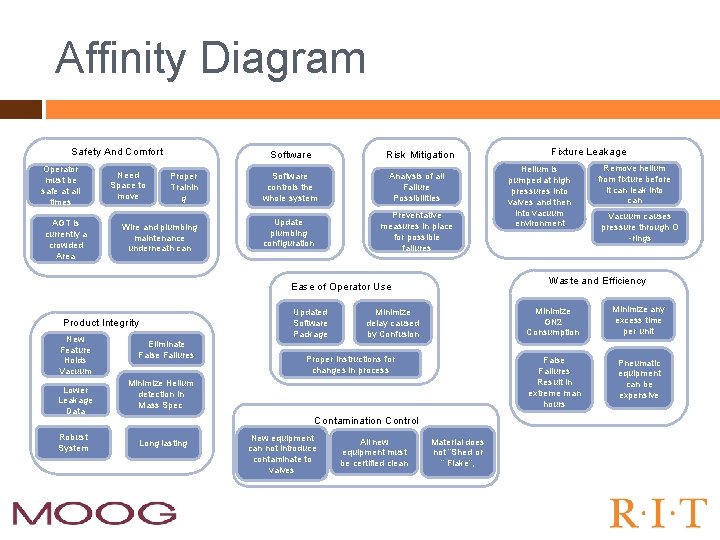
Affinity Diagram Safety And Comfort Operator must be safe at all times AGT is currently a crowded Area Need Space to move Software Proper Trainin g Wire and plumbing maintenance underneath can Risk Mitigation Software controls the whole system Analysis of all Failure Possibilities Update plumbing configuration Preventative measures in place for possible failures New Feature Holds Vacuum Lower Leakage Data Robust System Eliminate False Failures Updated Software Package Minimize delay caused by Confusion Proper Instructions for changes in process Minimize Helium detection in Mass Spec Contamination Control Long lasting New equipment can not introduce contaminate to valves All new equipment must be certified clean Helium is pumped at high pressures into valves and then into vacuum environment Remove helium from fixture before it can leak into can Vacuum causes pressure through O -rings Waste and Efficiency Ease of Operator Use Product Integrity Fixture Leakage Material does not “Shed or “ Flake”, Minimize GN 2 Consumption Minimize any excess time per unit False Failures Result in extreme man hours Pneumatic equipment can be expensive
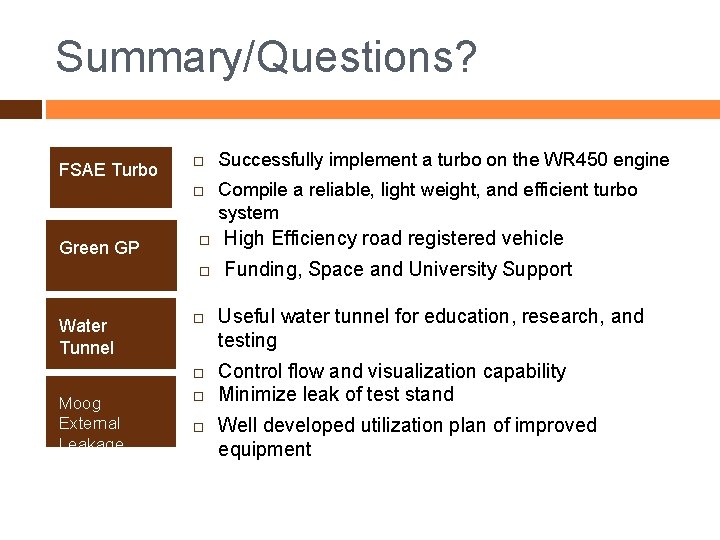
Summary/Questions? FSAE Turbo Green GP Water Tunnel Compile a reliable, light weight, and efficient turbo system High Efficiency road registered vehicle Funding, Space and University Support Moog External Leakage Successfully implement a turbo on the WR 450 engine Useful water tunnel for education, research, and testing Control flow and visualization capability Minimize leak of test stand Well developed utilization plan of improved equipment
- Slides: 27