
Student Centered Education Student Centered Education SCE Methods
- Slides: 23
Student Centered Education
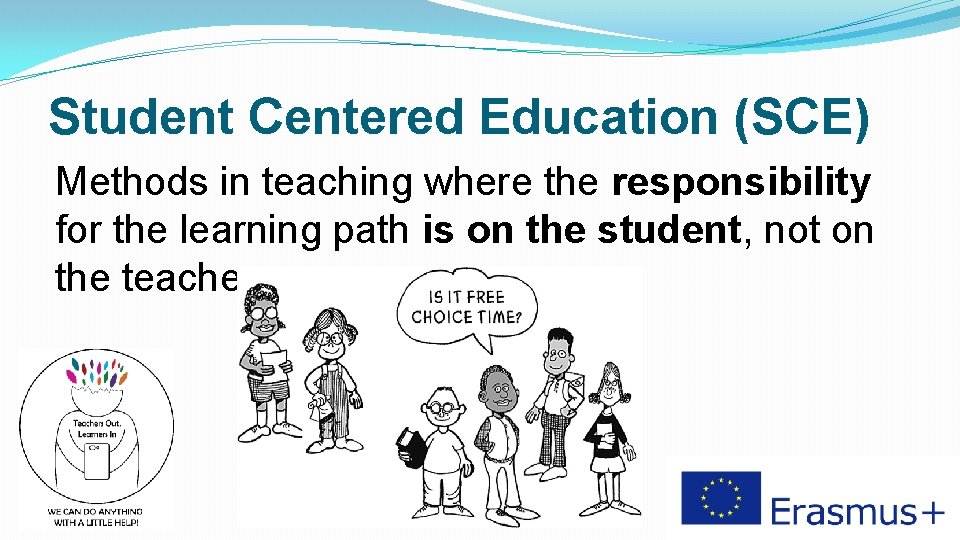
Student Centered Education (SCE) Methods in teaching where the responsibility for the learning path is on the student, not on the teacher.
“who does the work is who does the learning. ” The results of recent neuroscience, biology and cognitive psychology studies about how individuals learn can be summarized as “who does the work is who does the learning. ” This means that the students need more than being a passive listener to learn effectively.
Basic principles of SCE by Mc. Donough (2012) 1. Students are included in decisions regarding what and how they will learn and how they are assessed. 2. All students’ unique backgrounds, interests, abilities and experiences are valued and respected. 3. Each student is treated as a partner in teaching and learning process.
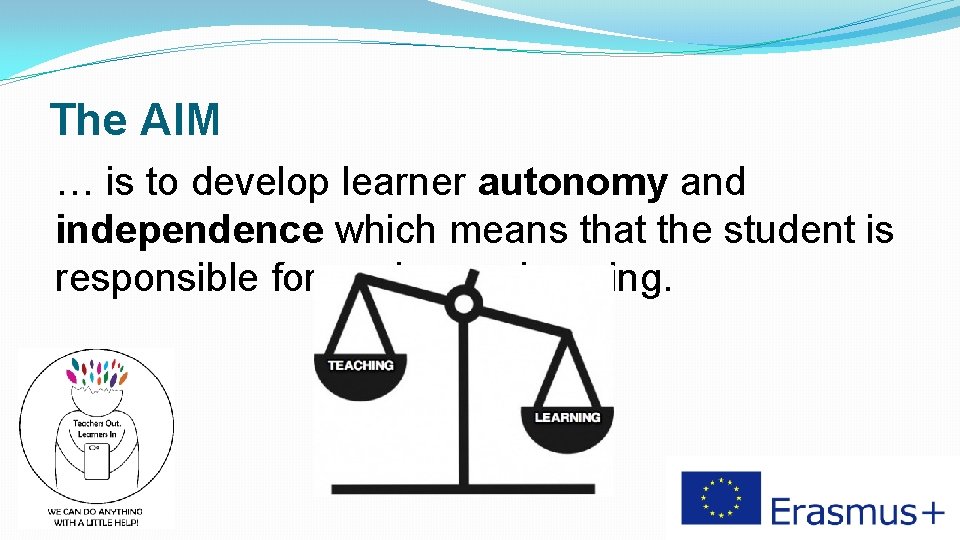
The AIM … is to develop learner autonomy and independence which means that the student is responsible for one’s own learning.
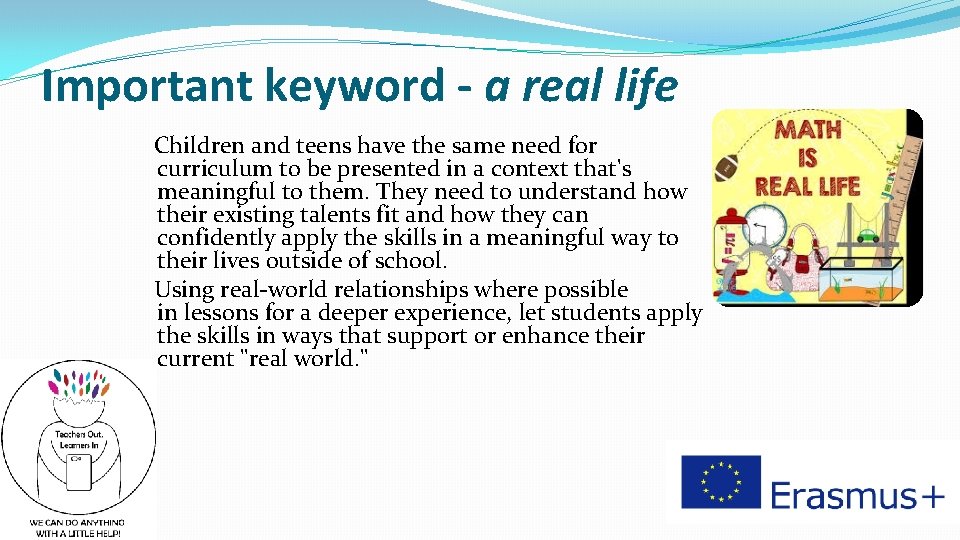
Important keyword - a real life Children and teens have the same need for curriculum to be presented in a context that's meaningful to them. They need to understand how their existing talents fit and how they can confidently apply the skills in a meaningful way to their lives outside of school. Using real-world relationships where possible in lessons for a deeper experience, let students apply the skills in ways that support or enhance their current "real world. "
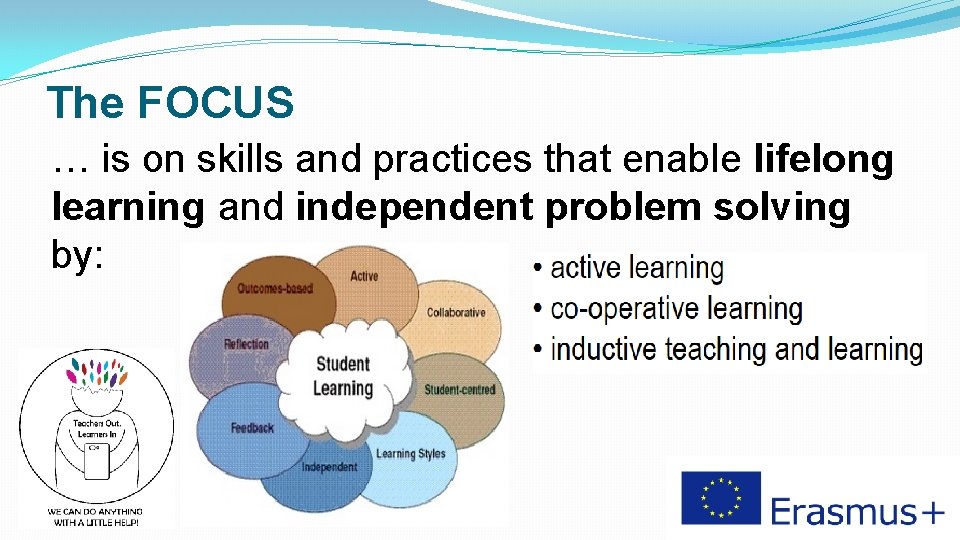
The FOCUS … is on skills and practices that enable lifelong learning and independent problem solving by:
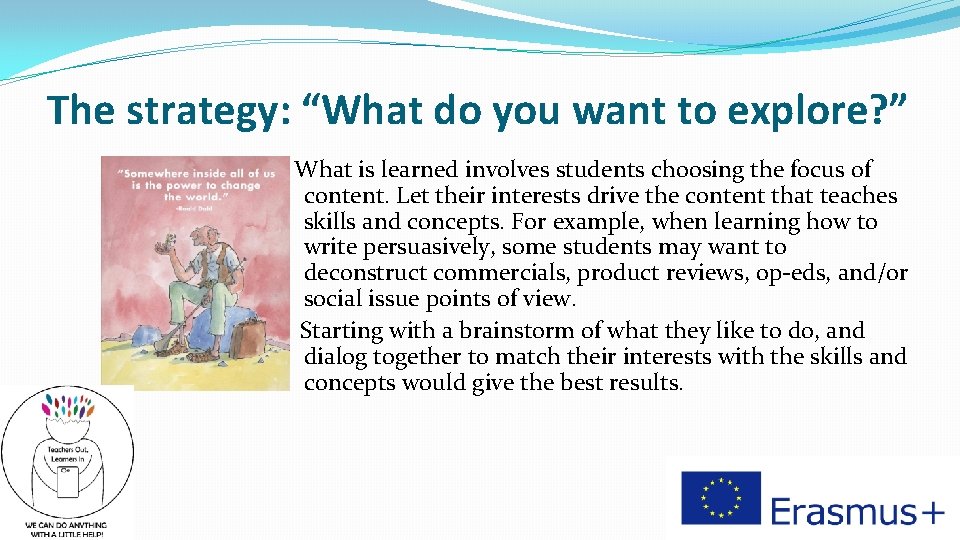
The strategy: “What do you want to explore? ” What is learned involves students choosing the focus of content. Let their interests drive the content that teaches skills and concepts. For example, when learning how to write persuasively, some students may want to deconstruct commercials, product reviews, op-eds, and/or social issue points of view. Starting with a brainstorm of what they like to do, and dialog together to match their interests with the skills and concepts would give the best results.
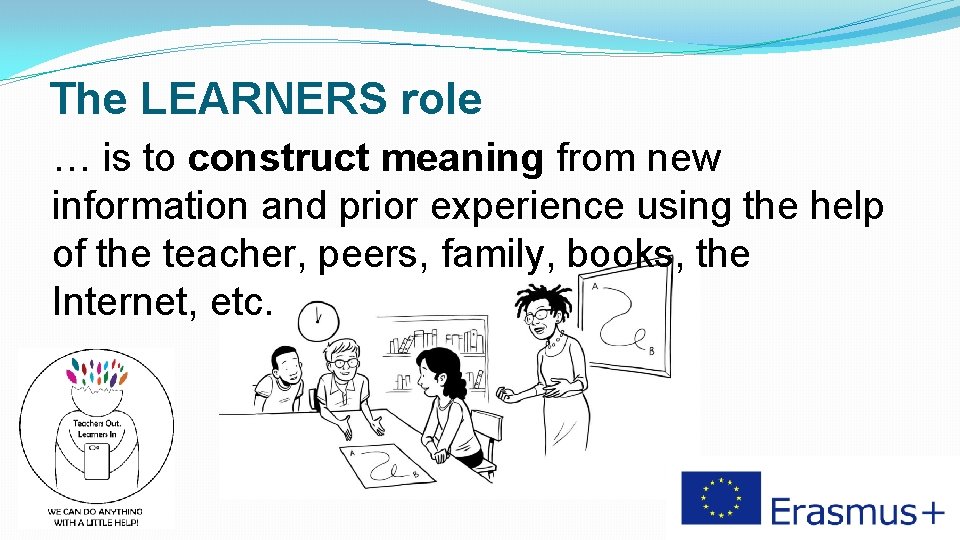
The LEARNERS role … is to construct meaning from new information and prior experience using the help of the teacher, peers, family, books, the Internet, etc.
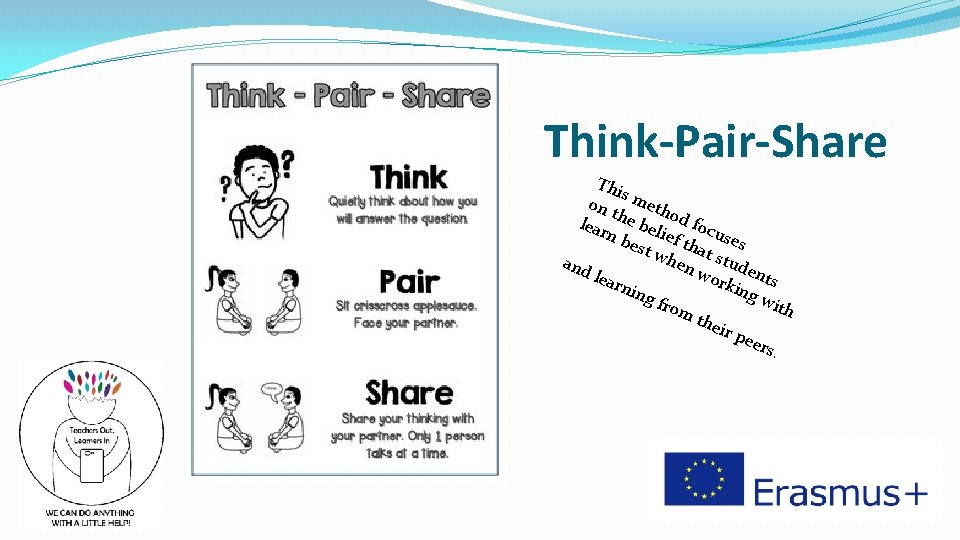
Think-Pair-Share Thi s on meth t lear he bel od foc u i n b est ef that ses wh and en stude wor n lea kin ts rnin g w g fr ith om the ir p eer s.
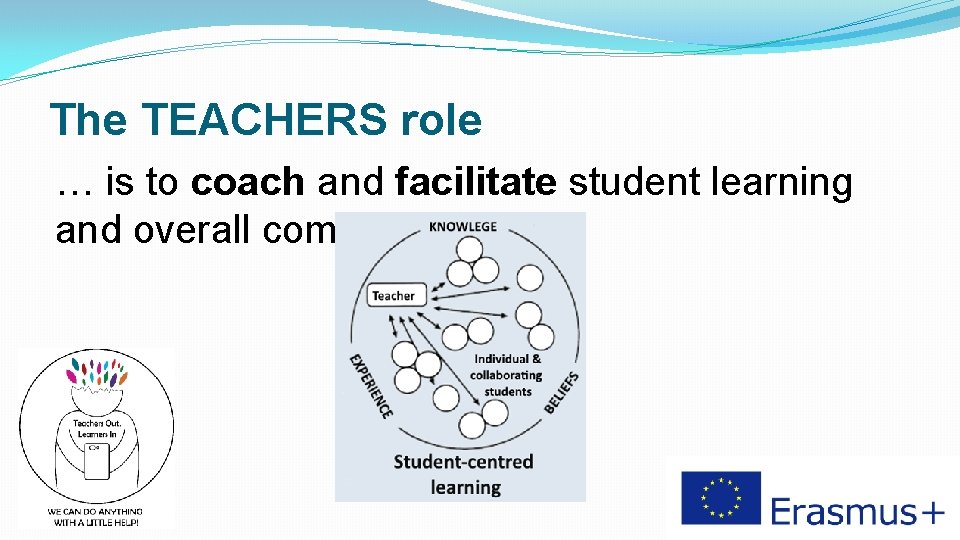
The TEACHERS role … is to coach and facilitate student learning and overall comprehension.
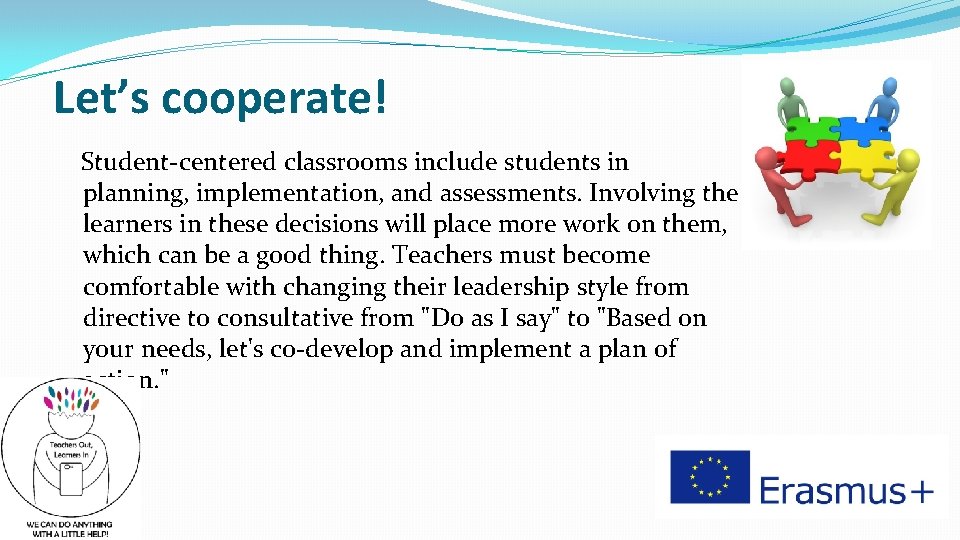
Let’s cooperate! Student-centered classrooms include students in planning, implementation, and assessments. Involving the learners in these decisions will place more work on them, which can be a good thing. Teachers must become comfortable with changing their leadership style from directive to consultative from "Do as I say" to "Based on your needs, let's co-develop and implement a plan of action. "
Evaluation �The assessment should be formative with constructive feedback. peer assessment self-assessment �Students should be encouraged to justify their answers. �Authentic assessment is used throughout. �What to assess? �projects; �portfolios; �participation, etc.
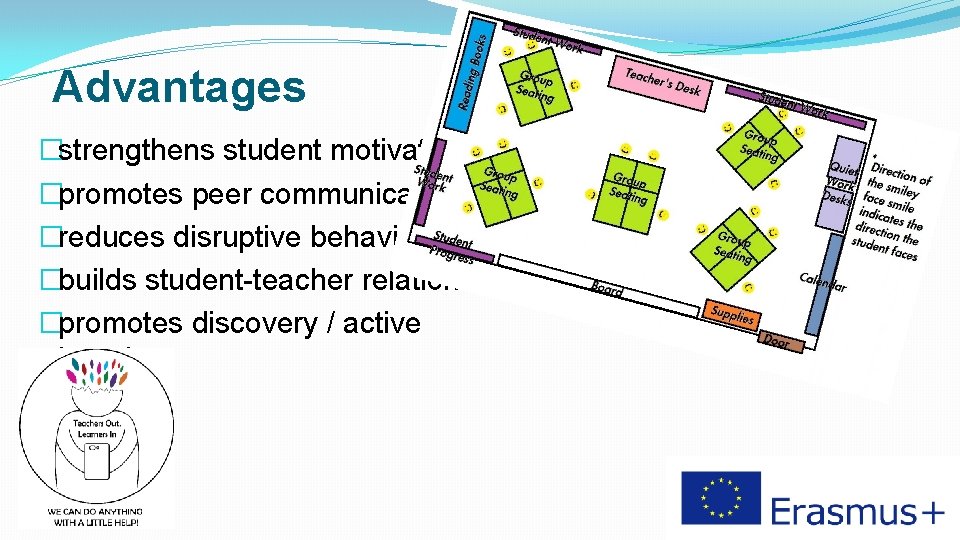
Advantages �strengthens student motivation �promotes peer communication �reduces disruptive behavior �builds student-teacher relations �promotes discovery / active learning
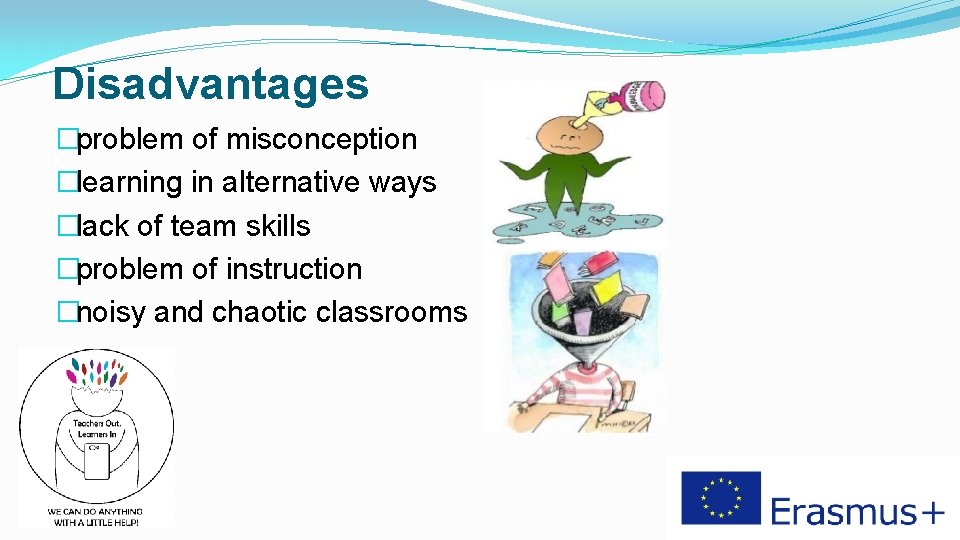
Disadvantages �problem of misconception �learning in alternative ways �lack of team skills �problem of instruction �noisy and chaotic classrooms
Why choose student-centered education? �The substance can be chosen and the activities arranged in line with the learners. �Training is provided in thinking process, management and how to face various situations. �Learners are enabeled to think critically. �Both learners and teachers may learn together. �Individuals can learn at all times and in all places and use the knowledge they have gained.
Learner-centered teaching encourages. . . students to reflect on what they are learning and how they are learning it. Learner-centered teachers include assignment components in which students reflect, analyze and critique what they are learning and how they are learning it. The goal is to make students aware of themselves as learners and to make learning skills something students want to develop.
Learner-centered teaching motivates. . . students by giving them some control over learning processes Learner-centered teachers search out ethically responsible ways to share power with students. They might give students some choice about which assignments they complete. They might make classroom policies something students can discuss. They might let students set assignment deadlines within a given time window. They might ask students to help create assessment criteria.
Learner-centered teaching encourages collaboration It sees classrooms (online or face-to-face) as communities of learners. Learner-centered teachers recognize, and research consistently confirms, that students can learn from and with each other. Certainly the teacher has the expertise and an obligation to share it, but teachers can learn from students as well. Learner-centered teachers see learning individually and collectively as the most important goal of any educational experience.
Tell me, and I’ll forget. Show me, and I’ll remember. Involve me, and I’ll learn. - Chinese proverb
References http: //education. cu-portland. edu/blog/classroom-resources/which-is-best-teacher-centered-or-student-centerededucation/ https: //en. wikipedia. org/wiki/Student-centred_learning https: //i. dell. com/sites/imagecontent/videos/en/Publishing. Images/future-ready-education-student-centeredlearning. jpg http: //learner-centered-design. weebly. com/uploads/2/2/9/1/22918750/1141391_orig. jpg https: //lo. unisa. edu. au/pluginfile. php/916023/mod_book/chapter/102030/Student%20 centered%20 learning. png http: //sk. sagepub. com/images/begin-with-the-brain-2 e/9781412971584 -p 167 -1. jpg https: //s-media-cache-ak 0. pinimg. com/736 x/c 0/00/3 b/c 0003 bf 329 d 01938 af 80911 ef 29 c 9282. jpg https: //teach. com/what/teachers-teach/teaching-methods/ http: //www. ressources. univ-rennes 2. fr/service-relationsinternationales/optimale/attachments/article/50/Tallinn. Teacherstudent-centred. pdf https: //www. slideshare. net/ashwinikamath/student-centred-learning-in-management-education https: //www. slideshare. net/abdeslambadre/student-centered-teaching https: //www. edutopia. org/blog/student-centered-learning-starts-with-teacher-john-mccarthy http: //www. readingquest. org/strat/tps. html Mc. Donough, M. (2012). Applying learner-centered principles: From face to face instruction to a hybrid course learning format. Journal of Learning in Higher Education, 8(2), 31 -39.