
Structuring Arguments Classical Oration Structure in arguments defines
- Slides: 27
Structuring Arguments Classical Oration
� Structure in arguments defines which parts go where. � People don’t always agree about what parts an argument should include or what the arrangement should be.
� In arguments, a method of leading a reader to a logical conclusion must be employed: ◦ inductive reasoning ◦ deductive reasoning � In most arguments, these two structures work together.
Quick review of the types of reasoning Induction & Deduction
Inductive Reasoning � The process of generalizing on the basis of a number of specific examples. � In making inductive arguments, first present the evidence and then the inductive conclusion.
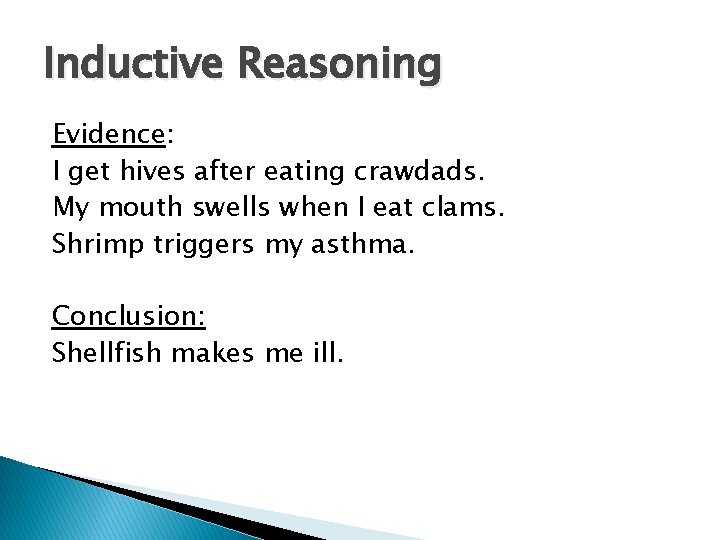
Inductive Reasoning Evidence: I get hives after eating crawdads. My mouth swells when I eat clams. Shrimp triggers my asthma. Conclusion: Shellfish makes me ill.
Deductive Reasoning �A conclusion is reached by assuming a general principle (major premise) and then applying that principle to a specific case (minor premise). This forms a chain of reasoning called a syllogism.
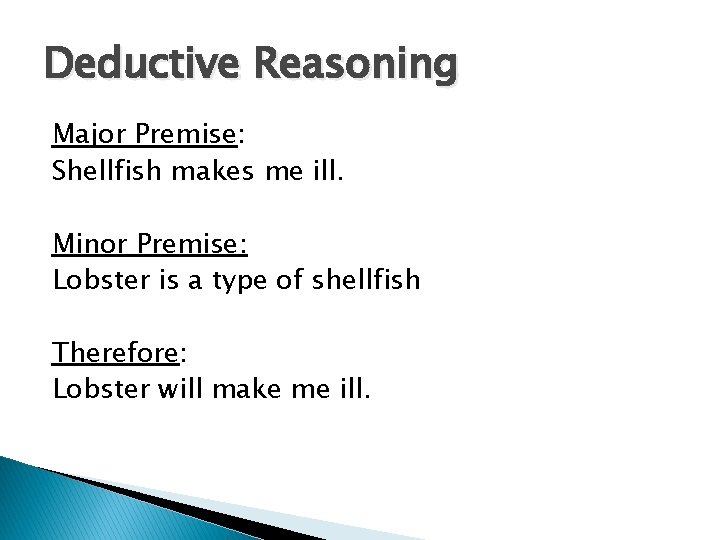
Deductive Reasoning Major Premise: Shellfish makes me ill. Minor Premise: Lobster is a type of shellfish Therefore: Lobster will make me ill.
Deductive Reasoning � Most people shorten syllogisms by leaving out the middle term when it seems obvious. � Example: Since all shellfish makes me ill, eating lobster will make me ill. Syllogisms shortened this way are called enthymemes.
� Constructing sound inductive and deductive arguments and presenting them clearly will influence most audiences. � But arguments involve more than just tight reasoning.
� You ◦ ◦ ◦ will also need to: define claims, explain contexts, defend your assumptions, offer convincing evidence, deal with people who may disagree with you, and more.
The Classical Oration An Ancient Greek and Roman Structure
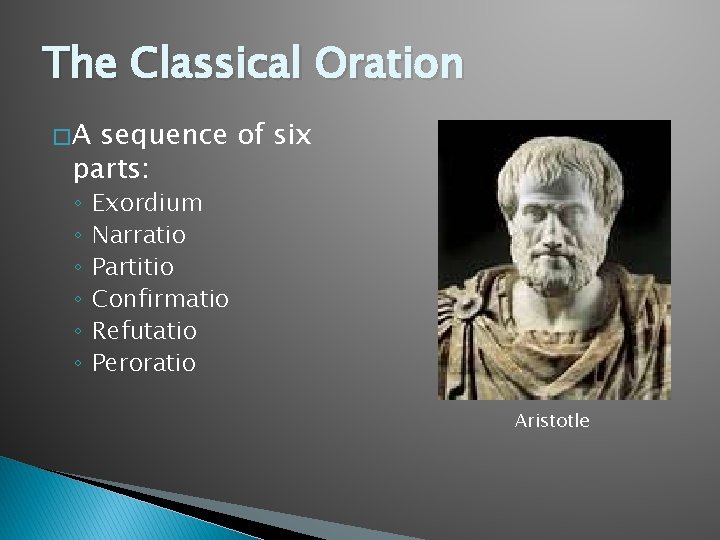
The Classical Oration �A sequence of six parts: ◦ ◦ ◦ Exordium Narratio Partitio Confirmatio Refutatio Peroratio Aristotle
Exordium � Win the attention and goodwill of an audience while introducing a subject or problem.
Narratio � Present the facts of the case, explaining what happened when, who is involved, and so on. � Puts an argument into context.
Partitio � Divide the subject, explaining what the claim is, what the key issues are, and in what order the subject will be treated.
Confirmatio � Offer detailed support for the claim, using both logical reasoning and factual evidence.
Refutatio � Acknowledge and then refute opposing claims or evidence.
Peroratio � Summarize to action. the case and move the audience
Classical Pattern An Updated Version
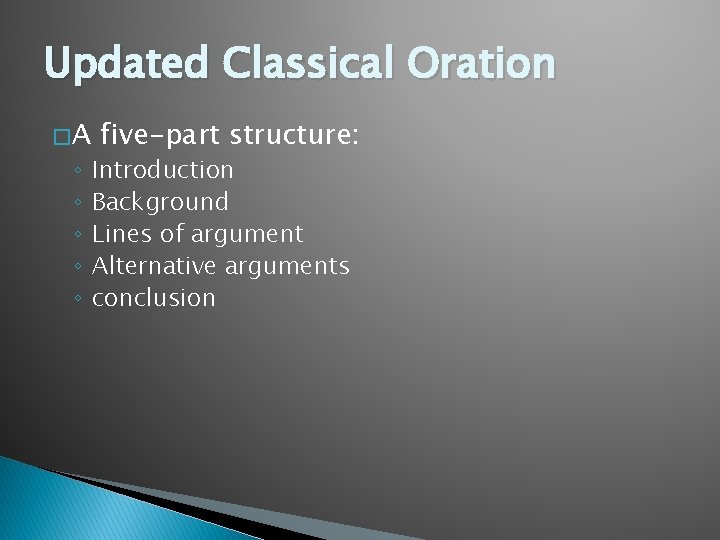
Updated Classical Oration �A ◦ ◦ ◦ five-part structure: Introduction Background Lines of argument Alternative arguments conclusion
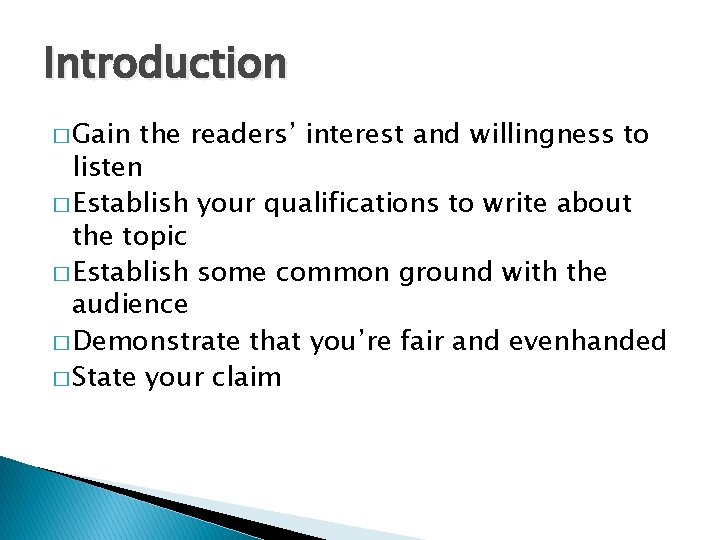
Introduction � Gain the readers’ interest and willingness to listen � Establish your qualifications to write about the topic � Establish some common ground with the audience � Demonstrate that you’re fair and evenhanded � State your claim
Background � Present any necessary information, including personal narrative, that’s important to the argument
Lines of argument � Present good reasons, including logical and emotional appeals, in support of your claim
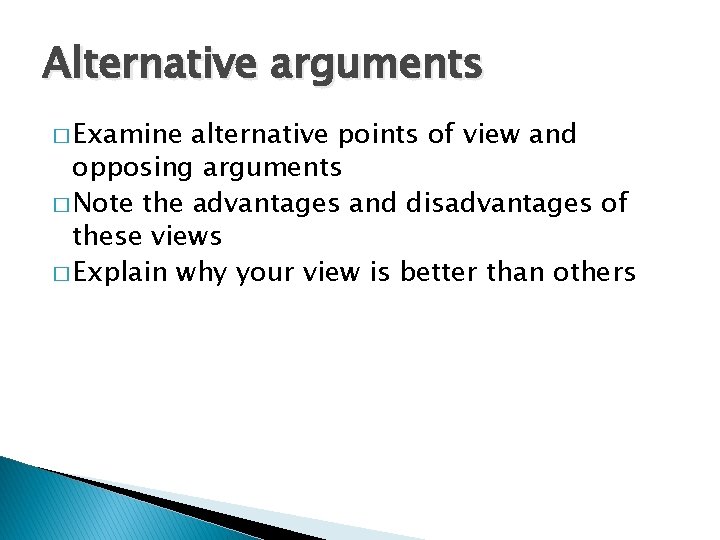
Alternative arguments � Examine alternative points of view and opposing arguments � Note the advantages and disadvantages of these views � Explain why your view is better than others
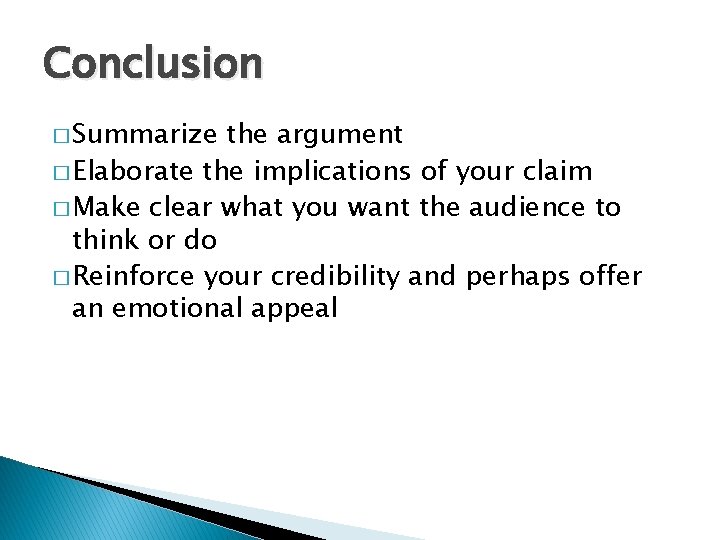
Conclusion � Summarize the argument � Elaborate the implications of your claim � Make clear what you want the audience to think or do � Reinforce your credibility and perhaps offer an emotional appeal
� Not every piece of rhetoric, past or present, follows the structure of the oration or includes all of its components. � But, you can likely identify some of its elements in successful arguments if you pay attention to their design.